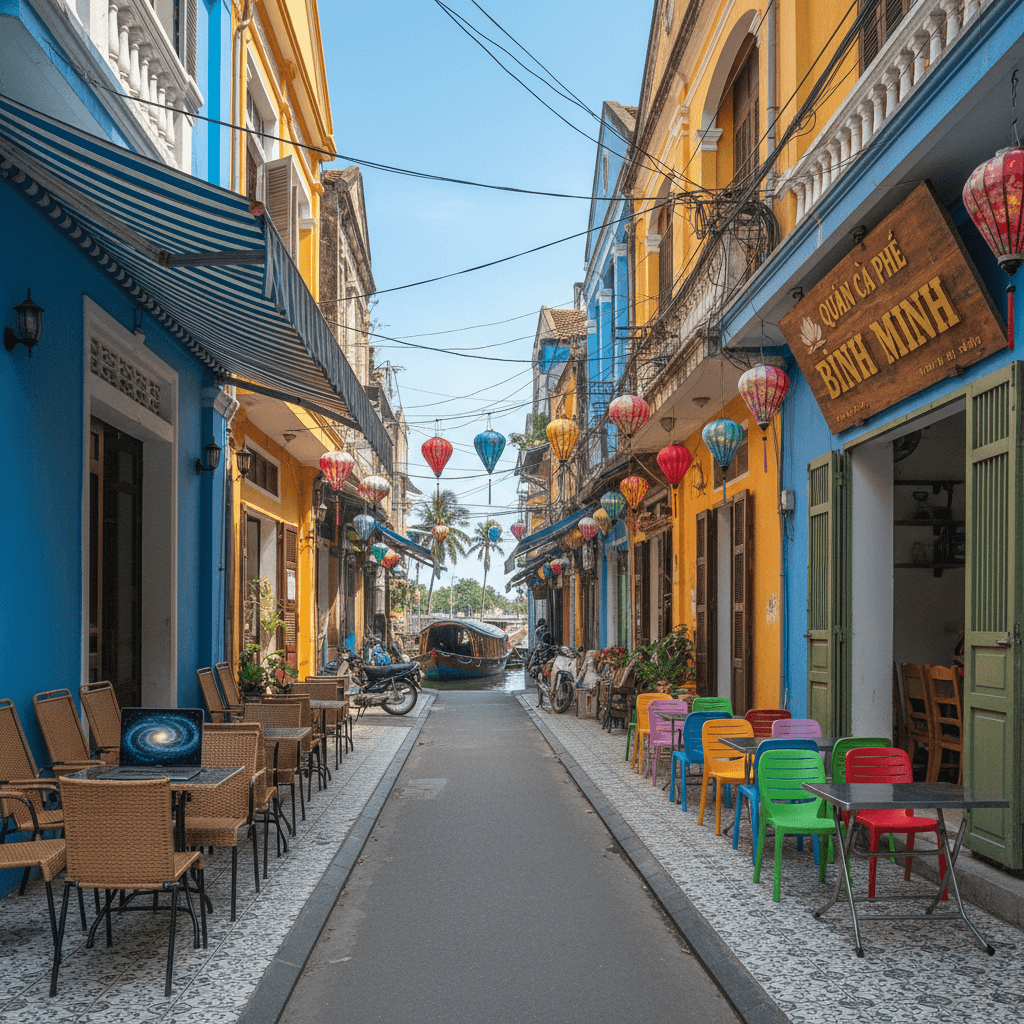
Da Nang
🇻🇳 Vietnam
The Balanced Alternative
While Hanoi feels like a fever dream and Ho Chi Minh City is a relentless engine of commerce, Da Nang is where Vietnam finally exhales. It's the only major city in the country where you can finish a deep-work session at a high-end cafe and be in the ocean five minutes later. For the digital nomad crowd, it has become the goldilocks zone: developed enough to have 80+ Mbps fiber optic internet, yet chill enough that people still take afternoon naps and traffic rarely reaches the chaotic "wall of sound" levels found up north.
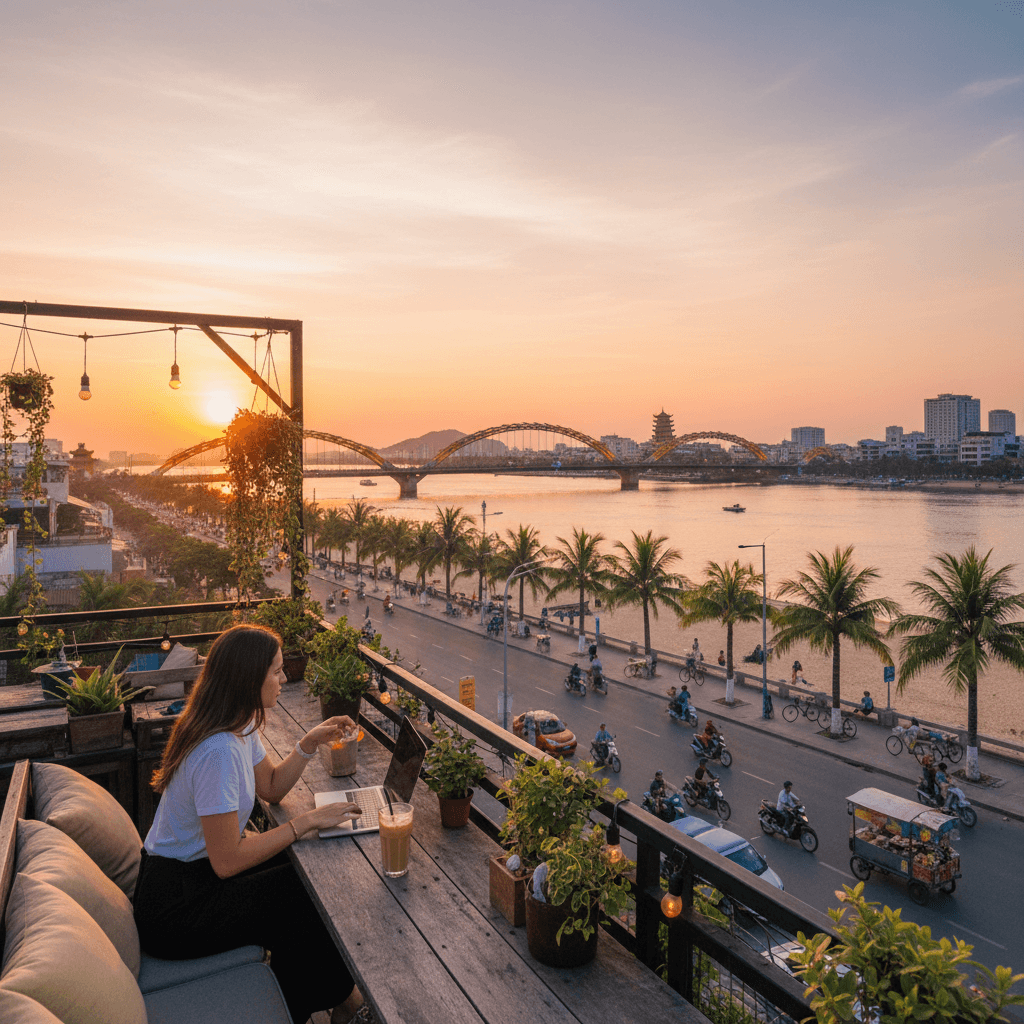
The city is physically split by the Han River. On the west side, you have the traditional city center with its local markets and administrative buildings. On the east side, the My An and My Khe beach areas have evolved into a dedicated nomad village. The vibe here is noticeably more mature than the party scenes in Bali or Thailand. You'll see expats in their 30s and 40s meeting for $2 craft coffees or coconut lattes, focusing on their laptops during the day, and hitting the beach for a sunrise swim or a sunset beer. It’s a place for people who want to actually get work done without sacrificing their quality of life.
The Cost of Living Breakdown
Your money goes incredibly far here, even with the recent influx of remote workers. A single person can live quite well on $1,000 to $1,500 per month, while those on a tighter budget can scrape by on $600 to $700 if they stick to street food and shared housing.
- Studio Apartments: Expect to pay $200 to $300 for a modern studio. If you want a view of the ocean in My An, prices jump to $400 or $600.
- Daily Food: A bowl of local Pho or a Banh Mi costs between $1 and $3. A mid-range Western meal at a place like Roots Plant-Based Cafe will run you about $7 to $10.
- Connectivity: A 4G SIM card with plenty of data is roughly $5 to $10 a month, and a dedicated coworking desk costs around $75 to $140 monthly.
The Neighborhood Personality Map
Choosing where to plant your flag depends entirely on how much "Western comfort" you need versus "Local immersion."
- My An (The Nomad Hub): This is the most popular choice for a reason. It's walkable, filled with specialty coffee shops, and home to the An Thuong tourist area. You'll find the highest concentration of English speakers and coworking spaces here.
- Hai Chau (The Real City): Located on the west side of the river, this is where you go for cheaper rent and the best local food. It feels more like "real" Vietnam, though you'll need a motorbike to get to the beach.
- Son Tra (The Quiet Retreat): If you prefer being surrounded by jungle and monkeys rather than cafes and bars, the base of Son Tra Peninsula is stunning. It's peaceful, but you'll feel isolated if you don't have your own transport.
The Reality Check
It isn't all sunshine and surf. The "Great Damp" arrives between September and February. During the rainy season, the city can feel gray and soggy for weeks at a time, which can be a grind if you moved here specifically for the outdoor lifestyle. Also, unlike Thailand, Vietnam doesn't currently offer a specific long-term digital nomad visa, so most people navigate their stay on tourist visas or business arrangements.
Despite those hurdles, the community remains one of the most welcoming in Southeast Asia. There's a shared sense of having found a "secret" that the rest of the world hasn't quite caught onto yet. Whether it's the $1 beers on the sidewalk or the way the Dragon Bridge breathes fire on the weekends, Da Nang has a way of making you want to extend your stay indefinitely.
Da Nang is currently one of the most wallet friendly hubs for remote workers in Southeast Asia. It’s roughly 60% cheaper than mid sized American cities like Austin or Denver. Most nomads find they can live a high quality life here for about $1,200 to $1,500 a month without really trying to save. If you're on a tighter budget, you can get by on $700, while $2,000 buys you a luxury high rise with ocean views and daily steak dinners.
Monthly Housing Breakdown
Rent is your biggest variable. Prices spiked slightly recently, but they're still a steal compared to Thailand or Bali. Most expats gravitate toward My An or the An Thuong area for the proximity to the beach and the high concentration of English speaking businesses.
- Studio Apartments: Expect to pay $200 to $300 for a modern, furnished studio. These usually include high speed internet but rarely include electricity.
- One Bedroom Apartments: A nice unit in the city center runs $350 to $500. If you want to be right on the sand in the My Khe beach area, prices jump to $600 or $800 for premium buildings.
- Two Bedroom Homes: Larger units or small houses for families or roommates typically range from $500 to $1,200 depending on how "Western" the amenities are.
- Luxury Options: High end condos with infinity pools and gym access can reach $1,500, but you'll be living in the best real estate the city has to offer.
The Food Scene
Eating out is often cheaper than cooking for yourself in Vietnam. The local street food culture is massive, and you can grab a bowl of Pho or a Banh Mi for $1 to $3. If you prefer sitting in an air conditioned restaurant with a cocktail, expect to pay $8 to $15 for a meal.
- Local meal (Pho/Bun Cha): $1.50 to $3.00
- Mid range Western entree: $6.00 to $10.00
- Craft beer or cocktail: $3.00 to $7.00
- Specialty coffee (Latte/Cold Brew): $2.00 to $4.00
- Weekly groceries: $30 to $50 for basic local produce and some imported snacks.
Utilities and Connectivity
Digital nomads often overlook electricity costs. If you run the AC 24/7 during the humid months, your bill will surprise you. Most rentals handle the water and trash fees, but electricity is metered separately.
- Electricity: $40 to $80 per month depending on AC usage.
- High speed Home Internet: $10 to $20 per month if not included in rent.
- Mobile Data: $5 to $10 for a Viettel or Vinaphone SIM with 10GB+ of daily data.
- Coworking: A monthly hot desk at spots like Seaview or ACE Coworking costs between $75 and $95.
Transportation and Lifestyle
Most residents rent a motorbike to get around. It's the standard way to navigate the bridges and coastal roads. If you aren't comfortable riding, the Grab app is your best friend. It’s the Uber of Southeast Asia and is incredibly cheap for short hops across the city.
- Motorbike Rental: $50 to $80 per month for a standard Yamaha Janus or Honda Vision.
- Grab Car/Bike: Most rides within the city cost $1 to $4.
- Gym Membership: Local "iron" gyms are $15 a month, while premium fitness centers with pools cost $40 to $60.
For a comfortable mid range lifestyle, you'll want to budget roughly $450 for a nice apartment, $400 for food and drinks, and $200 for transport and fun. This leaves you plenty of breathing room for weekend trips to Hoi An or Da Lat.
For Digital Nomads: My An (The Beach District)
If you're coming to Da Nang to work and meet people, this is your home base. My An is the undisputed heart of the nomad scene, centered around the An Thuong tourist area. It's the most walkable part of the city, packed with specialty coffee shops, craft beer bars, and vegan eateries.
Most nomads choose this area because you're never more than a ten minute walk from My Khe Beach. You'll find the highest concentration of coworking spaces here, including Seaview and Hana's. It's the kind of place where you can finish a Zoom call and be in the ocean five minutes later.
- The Vibe: Social, coastal, and very international.
- Monthly Rent: $350 to $600 for a modern studio or one bedroom apartment.
- Best For: Networking, beach access, and Western comforts.
- Top Spots: Grab a coffee at The Hideout or a post work drink at 7 Bridges Brewing.
The only real downside is the price. You'll pay a premium to be this close to the water, and the area can feel a bit like a "foreigner bubble" compared to the rest of the city.
For Expats & Long Termers: Hai Chau (City Center)
Expats who plan to stay for a year or more often migrate across the Dragon Bridge to Hai Chau. This is the "real" Da Nang. It's more urban, more Vietnamese, and significantly more affordable than the beach side. You'll be closer to the major hospitals like Vinmec and the administrative heart of the city.
Living here means trading the sound of waves for the hum of motorbikes. It's the best spot for foodies who want to master the local street food scene, as Han Market and Con Market are right in your backyard. The riverside promenade along the Han River is perfect for evening walks when the city lights up.
- The Vibe: Authentic, busy, and convenient.
- Monthly Rent: $250 to $450 for a spacious apartment.
- Best For: Cultural immersion, local prices, and proximity to services.
- Top Spots: Work from DNC Danang or grab a morning bowl of Pho for $1.50 near the market.
For Families: Son Tra & North My Khe
Families usually look for a bit more breathing room and quieter streets. The northern end of the beach, heading toward the Son Tra Peninsula, offers a slower pace. The air is cleaner here, and there's less nightlife noise to deal with at 2:00 AM.
You'll find larger multi bedroom houses and high end apartments in this area. It's close enough to the international schools but far enough from the backpacker bars to feel like a proper neighborhood. The proximity to Monkey Mountain means you have easy weekend escapes for hiking or visiting the Linh Ung Pagoda.
- The Vibe: Peaceful, scenic, and residential.
- Monthly Rent: $600 to $1,200 for two or three bedroom units.
- Best For: Quiet nights, nature access, and larger living spaces.
For Solo Travelers & Budget Seekers: Linh Diem
Linh Diem is an emerging pocket that sits just south of the main My An hub. It's currently the sweet spot for solo travelers who want to stay near the action without paying "An Thuong prices." It's a bit more "rough around the edges" with more construction and fewer paved sidewalks, but the value is unbeatable.
You can still reach the beach in five minutes by motorbike, but your rent will be about 20% lower than in the center of My An. It's a great choice if you're planning a one month stay and want a nice apartment while keeping your overhead low.
- The Vibe: Up and coming, quiet, and budget friendly.
- Monthly Rent: $200 to $350 for a decent studio.
- Best For: Solo travelers on a budget and those who don't mind a short commute.
Digital Speed and Connectivity
You won't have to worry about dropping off a Zoom call in Da Nang. The city is wired with surprisingly robust fiber optic infrastructure. Most apartments and cafes average around 80 Mbps to 100 Mbps, but it's not uncommon to find spots pushing 300 Mbps. If you're working with large files or video editing, you'll find the speeds here rival many Western cities.
For a backup, grab a local SIM card from Viettel or Vinaphone. You can pick these up at the airport or any small tech shop for about $5 to $10. They offer massive data packages, often 10GB or more per day, which makes tethering your phone a reliable Plan B during the occasional power flicker or neighborhood maintenance.
Top Coworking Spaces
The coworking scene is concentrated in the My An area, just a few blocks back from the sand. These spaces act as the social glue for the nomad community, hosting everything from networking drinks to pickleball tournaments.
- ACE Coworking: This is a favorite for those who need a professional setup. It costs about $130 to $140 a month or $6 for a day pass. They've got dedicated phone booths for private calls, ergonomic standing desks, and a social lounge where people actually talk to each other.
- Seaview: Located right on My Khe Beach, this spot is hard to beat for the views. For $75 to $80 a month, you get 24/7 access, free coffee, and a community that leans toward long-term expats.
- Hana's Coworking: A newer addition to the My An neighborhood. It's modern, sleek, and runs between $75 to $80 a month depending on your desk requirements. It's popular with the tech-heavy crowd.
- DNC Danang: If you're staying on the city side (Hai Chau), this is your best bet. It's more of a traditional corporate workspace with meeting rooms and conference halls, but it's very affordable and quiet.
The Cafe Office Culture
If you prefer a change of scenery, Da Nang's cafe culture is tailor-made for remote work. Unlike some cities where laptops are frowned upon, many local business owners welcome "laptop nomads" as long as you keep the coffee orders coming. Most drinks range from $2 to $4.
- Danasol Eatery: This is a hybrid spot in My An. The downstairs is a lively cafe, while the upstairs is a dedicated workspace. It's famous for hitting speeds of 140 Mbps and having plenty of power outlets.
- The Hideout Cafe: A staple for the community. It’s spacious, has reliable AC, and the staff won't bother you if you stay for a few hours.
- Lapin Bakery: This spot is great if you want a bright, aesthetic environment. The internet sits around 50 Mbps, which is plenty for standard admin tasks and emails.
- Wonderlust: A beautiful, multi-level space in the city center. It’s plant-filled and bright, though it can get a bit loud during the weekend rush.
Most nomads find that a mix works best. They'll use a dedicated coworking space for deep focus and client meetings, then migrate to a beachside cafe in the afternoon to wrap up the day. Just remember to bring a universal adapter, though many modern buildings now use sockets that fit both US and European plugs.
Da Nang is widely considered one of the safest cities in Southeast Asia. Unlike the chaotic energy of Ho Chi Minh City, the vibe here is noticeably more relaxed and organized. You won't find the same level of aggressive street solicitation or "tourist traps" that plague other regional hubs. Most nomads feel perfectly comfortable walking home from a coworking space at 2:00 AM or leaving their laptop on a cafe table while they order another coffee.
Staying Safe on the Streets
While violent crime is extremely rare, petty theft like phone snatching can happen, particularly in the An Thuong tourist area or near My Khe Beach. It's usually a crime of opportunity. Keep your phone away from the edge of the road when checking maps, and don't hang your bag loosely off your shoulder while riding a motorbike. If you're walking, keep your bag on the side of your body away from the street.
The biggest safety concern for most expats is actually the traffic. While it's much lighter than in the capital, local driving logic can be unpredictable. If you're renting a scooter, always wear a helmet and stay off the phone. If you aren't confident on two wheels, use the Grab app. It's the local equivalent of Uber; it's incredibly cheap, and the drivers are generally very professional.
Healthcare and International Hospitals
If you get sick or injured, you're in good hands. Da Nang has matured into a medical hub for Central Vietnam, and several facilities meet international standards with English-speaking staff and modern equipment. Most expats avoid the local public clinics in favor of private international hospitals that accept foreign insurance.
- Vinmec Danang International: Located on 30 Thang 4 Street, this is the gold standard. It's JCI certified, which means it meets global safety and quality benchmarks. It's the most expensive option but offers the best care for serious emergencies.
- Family Medical Practice: Situated on Nguyen Van Linh, this clinic is a favorite for the expat community. They have foreign doctors on staff and are excellent for routine checkups, vaccinations, or minor illnesses. They also offer a 24/7 emergency line.
- Hoan My Da Nang: A reliable mid-range option on Nguyen Van Linh. It's ACHSI accredited and handles everything from dental work to surgeries at a lower price point than Vinmec.
Pharmacies and Medication
Pharmacies are everywhere in Da Nang, often every few blocks in the My An and Hai Chau districts. Many pharmacists speak basic English and can provide over-the-counter medication for common nomad woes like "Hanoi Belly" or respiratory issues from seasonal dust. For more specialized prescriptions, head to the pharmacies attached to Vinmec or Family Medical Practice to ensure you're getting genuine, high-quality medication.
Health Tips for Nomads
Don't drink the tap water. Even locals boil it or buy large 20-liter jugs for home use. Most cafes and restaurants use purified ice, so you don't need to worry about your iced coffee, but it's always better to ask if you're at a very rural street stall. During the peak summer months from May to August, the heat can be intense. Heat exhaustion is a real risk for newcomers, so stay hydrated and try to do your outdoor activities before 9:00 AM or after 4:00 PM like the locals do.
Getting Around the City
Da Nang is a breath of fresh air compared to the chaotic traffic of Hanoi or Saigon. The streets are wider, the bridges are iconic, and the grid layout makes it surprisingly hard to get lost. Most nomads settle in the My An area, where you can walk to most cafes and coworking spots, but you'll eventually need wheels to explore the city or head up to the Son Tra Peninsula.
The Grab App: Your Best Friend
If you aren't comfortable driving, Grab is the gold standard here. It works just like Uber or Lyft and saves you from haggling over prices. Most locals and expats use GrabBike for quick trips because it's cheap and cuts through what little traffic exists during rush hour.
- GrabBike: Expect to pay $0.60 to $1.50 for most trips within the city.
- GrabCar: Averages $2.50 to $5.00 for a 15 minute ride, perfect for when the afternoon heat is too much or you're heading out in a group.
- Xanh SM: A newer competitor using bright blue electric cars and bikes. They are known for being exceptionally clean and having professional drivers.
Renting a Motorbike
For true freedom, renting a scooter is the way to go. It's the primary way expats get around. You can find rental shops on almost every corner in the An Thuong tourist area. Most shops will ask for a copy of your passport or a small cash deposit.
- Monthly Rental: $50 to $80 for a standard 125cc bike like a Honda Vision or AirBlade.
- Daily Rental: $5 to $7.
- Fuel: A full tank usually costs less than $4 and will last you several days of city driving.
Be aware that police occasionally set up checkpoints, especially near the bridges. While many people ride without a local license, you should have an International Driving Permit (IDP) that covers motorcycles to stay legal and ensure your travel insurance actually covers you in an accident.
Walking and Cycling
The beach boardwalk is fantastic for a morning stroll or a sunset run. However, Da Nang isn't a "walkable" city in the traditional sense once you leave the beach or the immediate city center. The heat can be brutal between 11:00 AM and 3:00 PM, and sidewalks are often used for motorbike parking or small street food stalls.
Bicycles are popular for short hops within My An. Many homestays and hotels offer them for free, or you can rent a decent cruiser for about $2 a day. Just stick to the side streets, as the main roads can feel a bit intimidating on a bike.
Public Buses and Taxis
The DanaBus system is available and very affordable, with fares around $0.25. There is an app called DanaBus you can download to track routes, though most nomads find it easier to just use Grab. If you prefer traditional taxis, look for the white Vinasun or green Mai Linh cars. They are reputable and always use a meter, but they'll usually be slightly more expensive than a GrabCar.
Getting to Hoi An
A trip to the ancient town of Hoi An is a staple for anyone living in Da Nang. It's about a 30 to 45 minute drive south. You can take a GrabCar for roughly $12 to $15 each way, or hop on a shared shuttle bus for about $5. If you're feeling adventurous, the coastal road on a motorbike is a beautiful, straightforward ride.
The Language Landscape
You can get by in Da Nang with English much easier than in rural Vietnam, but don't expect everyone to be fluent. In the My An and An Thuong tourist areas, most cafe staff and restaurant servers speak decent English. Once you cross the bridge into Hai Chau or head to local markets like Cho Han, the language gap widens. Most expats find that a mix of basic Vietnamese, hand gestures, and a smile goes a long way.
The local dialect in Central Vietnam is distinct from the North or South. It's often described as having a heavier, more rhythmic tone. While it might sound intimidating at first, locals are incredibly patient with foreigners trying to learn. Even a simple "Cam on" (Thank you) or "Xin chao" (Hello) changes the energy of an interaction instantly.
Digital Tools for Daily Life
Technology is your best friend for communication here. You'll see almost every business using Zalo, which is the Vietnamese equivalent of WhatsApp. It's the primary way to talk to landlords, book hair appointments, or order water delivery. Most nomads recommend setting up an account as soon as you get a local SIM card.
- Google Translate: The camera feature is a lifesaver for reading menus at local "Quan" (eateries) or deciphering utility bills.
- Grab: Since the app has a built in translator for messages, you won't need to worry about explaining your location to drivers.
- Facebook Groups: Join "Danang Hoi An Expats" to ask specific questions; the community is active and usually responds within minutes.
Key Phrases to Know
While you don't need to be fluent, knowing these basics will make your life significantly easier at the street food stalls. Vietnamese is a tonal language, so the meaning of a word changes based on your pitch. Don't stress too much about getting it perfect; people will usually understand the context.
- Oi! (pronounced like "oy"): Used to get someone's attention, like "Excuse me!" Use it as "Em oi!" for younger staff or "Chi oi!" for older women.
- Bao nhieu?: How much?
- Tinh tien: Check please / Bill please.
- Khong duong: No sugar (vital for coffee and fruit juices if you aren't a fan of condensed milk).
- Khong cay: Not spicy.
Body Language and Etiquette
Communication in Da Nang isn't just about what you say. It's a relatively conservative culture, so keeping your cool is important. Raising your voice or showing extreme frustration is seen as "losing face" and rarely gets results. If there's a misunderstanding at a restaurant or with a bike rental, stay calm and use a translation app to bridge the gap.
Physical touch is less common in social settings than in the West. A slight nod of the head is a respectful way to greet elders. When paying for items, it's a nice gesture to hand over your cash or card with both hands; it shows respect and is widely appreciated by local shop owners.
Learning the Language
If you're staying for more than a month, taking a few classes is a great way to meet people and feel more grounded. Various private tutors in the My Khe area offer 1 on 1 lessons. Expect to pay around $10 to $15 per hour for private tutoring. Most nomads find that just two weeks of basic lessons helps them navigate the city with much more confidence.
Timing Your Stay: Dry vs. Wet Seasons
Da Nang operates on a binary weather system. You're either basking in tropical sunshine or dodging heavy downpours. The dry season runs from February to mid-September, while the wet season takes over for the remainder of the year. If you're planning a three or six month stint, your experience will depend entirely on which side of that calendar you land on.
Most nomads aim for the February to May window. During these months, the humidity is manageable, temperatures hover between 22°C and 28°C (72°F to 82°F), and the skies are consistently blue. It's the sweet spot for morning surfs at My Khe Beach before heading to a coworking space. By June and July, the heat cranks up significantly, often hitting 35°C (95°F). You'll find yourself living from one air conditioned cafe to the next during peak daylight hours.
The Reality of the Rainy Season
While the rain usually starts in September, it's October and November that catch people off guard. We aren't talking about light afternoon showers; these are persistent, heavy tropical rains that can last for days. The city is prone to occasional flooding in low lying areas, and the dampness can make your apartment feel a bit musty if you don't keep the AC running on "dry" mode.
Expats who stay year round often use the rainy season as their "deep work" period. Since the beach is off limits and the social scene moves indoors, it's a great time to grind on projects. Just be prepared for grey skies and a significant drop in temperature to around 18°C to 20°C (64°F to 68°F) in December and January. You'll actually need a light jacket or hoodie, which surprises many first timers.
Key Events and Peak Travel Times
If you're looking for the most electric atmosphere, keep an eye on these periods:
- Tet (Lunar New Year): Falling in late January or early February, this is the biggest holiday in Vietnam. The city transforms with flower displays, but keep in mind that many local shops and restaurants close for a full week. Prices for short term rentals usually spike.
- Da Nang International Fireworks Festival: Usually held over several weekends in June or July, this event draws massive crowds. It's spectacular, but the city center becomes packed and traffic on the bridges can get messy.
- Da Nang Ironman 70.3: Held in early May, this brings a huge influx of fitness enthusiasts and expats from across Southeast Asia.
Monthly Climate Breakdown
- January to March: Cool and pleasant. Great for exploring the Son Tra Peninsula or riding up the Hai Van Pass without breaking a sweat.
- April to August: Peak beach weather. Expect high heat, high humidity, and plenty of sunshine. This is when the city feels most alive.
- September to December: The wet season. Expect heavy rain, potential typhoons, and much cooler temperatures. It's the quietest time for tourism and the cheapest time to negotiate long term rent.
For the best balance of cost and comfort, try arriving in late February. You'll miss the Tet chaos, avoid the worst of the summer heat, and get a solid six months of outdoor living before the rains arrive in the fall.
Making the Move: Visas and Logistics
Vietnam doesn't have a specific digital nomad visa yet, so most remote workers rely on the 90 day e-visa. It's a straightforward online process; you should check current fees on evisa.gov.vn, which are approximately $25-$50. You'll need to leave the country and re-enter to reset it, but with Da Nang's airport so close to the city, a quick "visa run" to Bangkok or Kuala Lumpur is easy to pull off.
When you land, skip the airport taxis and use Grab. It's the Southeast Asian version of Uber and it's the gold standard here for both cars and motorbikes. A car ride from the airport to the beach usually costs around $4 to $6. If you're staying longer, most expats rent a 125cc scooter for about $50 to $70 per month. The traffic is much tamer than Saigon, but still, wear a helmet and stay alert.
Money and Connectivity
Cash is still king for street food and local markets, but most cafes and "Western" spots in My An accept cards or Apple Pay. ATMs are everywhere; look for TPBank or VPBank if you want to avoid high international withdrawal fees. For your phone, grab a Viettel or Vinaphone SIM card at the airport or a local shop. You can get 10GB of daily data for less than $10 a month, and the 4G coverage is surprisingly solid even when you're hiking up Monkey Mountain.
The internet in Da Nang is some of the best in the region. You'll regularly see speeds of 80 Mbps to 100 Mbps in apartments and coworking spaces. Power outages are rare, but it's always smart to have that local SIM as a hotspot backup just in case.
The Digital Nomad Workspace
The work culture here is split between dedicated coworking spaces and "work cafes." If you need a second monitor or a quiet booth for calls, head to one of the big names:
- Seaview: Located right by My Khe Beach for about $75 a month. The view is unbeatable and the community is very active.
- ACE: A bit pricier at $95 a month, but it has the best ergonomic setup and even pickleball meetups for networking.
- Hana's Coworking: A newer spot in My An that's popular with the tech crowd for its modern, quiet vibe.
If you prefer the cafe hopping lifestyle, The Hideout and Wonderlust are nomad favorites. They have plenty of outlets and won't kick you out if you stay for a few hours, provided you keep the coffee orders coming. Expect to pay about $2 to $3 for a high quality brew.
Staying Healthy and Safe
Da Nang is remarkably safe. You can walk around most neighborhoods at night without a second thought. The biggest risk is usually a "beach tax" from a local vendor or a minor scooter scrape. If you do get sick or injured, the city has top tier medical care that rivals Western standards. Vinmec International and Family Medical Practice are the go to spots for expats because they have English speaking doctors and streamlined insurance processing.
One thing many newcomers overlook is the air quality and the sun. The UV index here can be brutal, so do your outdoor exploring before 10:00 AM or after 4:00 PM like the locals do. During the rainy season from September to February, invest in a high quality raincoat and a dehumidifier for your apartment to keep the dampness at bay.
Monthly Budget Breakdown
Your lifestyle determines your spend, but here is what most nomads experience:
- The Budget Setup ($600 to $800): You're eating local street food like Banh Mi ($1) or Pho ($2), living in a studio a few blocks from the beach, and working from cafes.
- The Mid Range Life ($1,000 to $1,500): This covers a nice one bedroom apartment with a balcony, a full coworking membership, and dining out at Western spots a few times a week.
- The Luxury Tier ($2,000+): You'll have a high floor ocean view apartment, daily upscale dining, and plenty of weekend trips to places like Hoi An or Hue.
Need visa and immigration info for Vietnam?
🇻🇳 View Vietnam Country GuideEasy Landing
Settle in, no stress
Monthly Budget Estimates
More cities in Vietnam
Ho Chi Minh City
🇻🇳 Vietnam
Ha Long City
🇻🇳 Vietnam
Vung Tau
🇻🇳 Vietnam