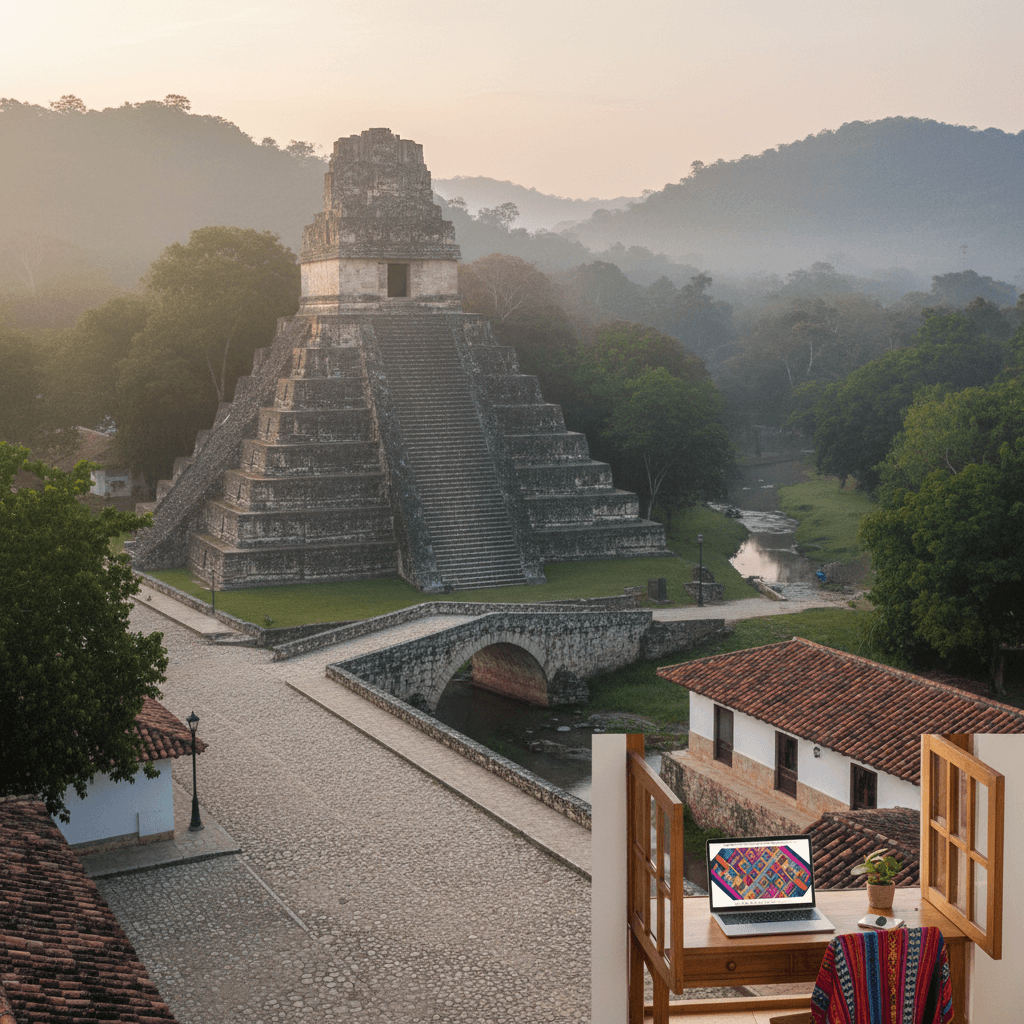
Copán Ruinas
🇭🇳 Honduras
The Vibe: Colonial Charm Meets Ancient History
Stepping into Copán Ruinas feels like you've finally found the version of Central America you were promised in books. It is a town of steep cobblestone hills, whitewashed walls, and red-tiled roofs, all tucked into a lush valley near the Guatemalan border. While most people come for the world class Mayan ruins, nomads stay for the slow, intentional pace of life that is becoming harder to find in more commercialized hubs like Antigua or Medellín.
The atmosphere is undeniably tranquil. You won't find a frantic nightlife scene or high rise glass towers here. Instead, life revolves around the central plaza, where locals gather under the shade of massive trees and the air smells of roasting coffee and woodsmoke. It is an authentic pocket of Honduras that manages to be welcoming to foreigners without losing its soul to tourism. You'll likely spend your mornings working from a cafe porch and your afternoons watching scarlet macaws fly overhead.
The Nomad Experience
Living here requires a bit of a pioneer spirit. It is the perfect spot for the "slowmad" who wants to disappear into a culture rather than just observe it. You'll quickly become a regular at the local pulperias, and the lack of overwhelming commercial noise makes it an incredible place for deep work or creative projects. The community is tight knit; expats and locals mingle easily, though you'll find that having at least some Spanish is the key to unlocking the best parts of the town.
The cost of living is a major draw for those looking to stretch their budget without sacrificing quality of life. You can live comfortably on $1,500 to $2,500 per month, though high end spenders can push that toward $5,000 if they opt for luxury villas and frequent private tours. It is a place where your money goes a long way, especially when it comes to fresh produce from the markets and local services.
Logistics and Daily Life
While the infrastructure is improving, it is still a small town in rural Honduras. You should expect the occasional power flicker during a heavy rainstorm and internet speeds that are reliable but not exactly lightning fast. Most nomads find that a local SIM card with a data plan is a necessary backup for those 9:00 AM Zoom calls. Healthcare is basic but accessible for minor issues, though most expats budget around $100 a month for private insurance or out of pocket costs at local clinics.
- Vibe: Quiet, historic, and deeply green.
- Social Scene: Low key bars, coffee tastings, and weekend hikes.
- Language: Spanish is dominant; English is common in tourist areas but limited elsewhere.
- Food: Heavy on fresh corn, beans, avocados, and some of the best coffee in the world.
What Sets It Apart
What defines Copán Ruinas is the proximity to the past. Having a UNESCO World Heritage site as your backyard isn't just a weekend activity; it shifts the energy of the whole town. There is a sense of permanence and history here that makes the digital world feel a little less urgent. It is one of the few places where you can spend your lunch break walking through a 2,000 year old archaeological park and be back at your laptop by 2:00 PM.
If you need a 24/7 gym and a different co-working space for every day of the week, this might not be your spot. But if you want to wake up to the sound of birds, drink world class coffee for a couple of dollars, and live in a community where people actually know their neighbors, Copán Ruinas is a standout choice.
The Monthly Bottom Line
Copán Ruinas is one of those rare spots where your dollar stretches remarkably far without forcing you to sacrifice the small comforts of life. Most nomads find that a budget between $1,500 and $2,200 per month covers a very high quality of life, including a private colonial style apartment, daily cafe visits, and frequent dinners out. If you are living more like a local and shopping at the markets, you can easily get by on $1,000 to $1,200, though the higher end of the scale allows for the air conditioning and imported goods that make long term stays more comfortable.
Housing and Neighborhoods
Rent will be your biggest variable. While there are not many formal apartment complexes, the town is filled with beautiful colonial homes that have been converted into studios or suites. You will rarely find these on major booking platforms; instead, expats recommend walking the streets and looking for "Se Alquila" signs or joining local community groups on social media.
- El Centro: This is the heart of the action near the Central Plaza. It is convenient for walking to cafes like ViaVia or Cafe Welchez. Expect to pay $500 to $800 for a furnished one bedroom with reliable utilities.
- Barrio El Sol: A bit quieter and slightly uphill, offering better views and a more residential feel. Prices here are lower, usually ranging from $350 to $600 for a decent sized space.
- Outskirts (Towards Santa Rita): If you want more land and greenery, you can find small houses for $300 or less, but you will likely need a motorbike or to rely on frequent tuk-tuk rides into town.
Food and Drink
Eating out is a way of life here. A traditional "plato típico" at a local comedor will set you back about $4 to $6. If you are heading to more established spots like The Tea & Chocolate Place or San Rafael for high quality cheese and wine, expect to pay $12 to $20 for a full meal with drinks.
- Local Beer: $1.50 to $2.50 at a standard bar.
- Specialty Coffee: $2.00 to $3.50 for a high end pour over or latte.
- Weekly Groceries: $40 to $60 if you stick to the local markets for fresh produce, eggs, and beans. Imported items like peanut butter or specific cheeses will double this quickly.
Connectivity and Utilities
Electricity is notoriously expensive in Honduras compared to the rest of the region. If you run an air conditioner 24/7, your bill could easily hit $100 to $150. Most nomads find that the thick stone walls of colonial buildings and a good ceiling fan keep things cool enough for much less. Internet is generally included in "nomad friendly" rentals, but if you are setting up your own, a decent 50Mbps fiber connection costs around $40 to $60 per month.
Healthcare and Wellness
There are several reliable clinics in town for routine issues and dental work. A consultation with a local doctor usually costs between $25 and $40. For anything major, you would head to San Pedro Sula, but for day to day life, many expats budget about $100 a month to cover out of pocket costs and basic insurance premiums. Gym memberships at local spots are very affordable, typically around $20 to $30 a month for a basic setup.
Transportation
The town is incredibly walkable, so you will likely spend very little on transport. When the heat gets intense or you are carrying groceries, the ubiquitous motor-taxis (tuk-tuks) charge a flat rate of about $1.00 to $1.50 for most trips within the town limits. If you are heading out to the Macaw Mountain bird reserve or the hot springs, expect to pay $5 to $10 for a round trip.
The Central Core (Digital Nomads)
Most nomads choose to stay within a four block radius of the Parque Central. This is the heartbeat of the town where you'll find the most reliable fiber optic connections and the highest concentration of cafes. Staying here means you can walk to Cafe Welchez for a morning brew or hit The Tea & Chocolate Place for an afternoon session overlooking the valley.
- Rent: Expect to pay $450 to $700 for a furnished studio or a room in a boutique guesthouse.
- Vibe: Social, convenient, and slightly louder during weekend festivals.
- Internet: Most rentals here offer 20 to 50 Mbps, which is the best you'll find in the region.
If you need a dedicated workspace, Cowork Copan is the go to spot. They offer daily passes for $15 or monthly memberships for $180. It is the most reliable way to ensure you don't drop out of a Zoom call when the afternoon tropical rains hit.
El Centro and Barrio El Calvario (Expats)
Expats who plan to stay for six months or longer usually migrate toward Barrio El Calvario. It sits just west of the main plaza, climbing slightly up the hill. It offers a bit more privacy and a residential feel while still being a five minute walk from the grocery stores and pharmacies. You'll find more traditional houses here with interior courtyards that keep the air cool during the humid months.
- Rent: Long term leases for two bedroom homes run between $500 and $900.
- Pros: Authentic neighborhood feel, less foot traffic from day trippers, and better views of the surrounding mountains.
- Cons: The cobblestone hills can be a workout, and you'll want to brush up on your Spanish to chat with the neighbors.
The North Outskirts (Families)
For families, the area heading north toward Macaw Mountain is the preferred choice. It is significantly quieter and offers more green space for kids to run around. The air feels fresher here, and the properties tend to be larger, often including gated gardens or small pools. You are further from the bars, which means quiet nights and early mornings.
- Rent: Large family homes or villas can range from $1,000 to $1,500.
- Transportation: You'll likely want to budget for regular Mototaxi rides, which cost about $1 to $2 per trip into the town center.
- Schooling: This area provides easier access to private bilingual tutoring services that many expat families utilize.
South of the Plaza (Solo Travelers)
Solo travelers on a tighter budget often stick to the southern edge of town near the Copan Ruinas Soccer Field. This area is packed with hostels and budget friendly comedores where you can grab a Baleada for less than $2. It is a high energy area where it's easy to meet people, though the infrastructure for deep work is a bit spottier.
- Rent: Private rooms in hostels or basic apartments go for $300 to $450 a month.
- Food: This is the best zone for cheap eats; look for the street stalls near the market for the best $4 lunch plates.
- Safety: It is generally safe, but like any town, it's better to stick to the well lit main streets after 10:00 PM.
The Connectivity Reality
Working from Copan Ruinas requires a bit of a strategy shift. You aren't going to find blazing fiber optics on every street corner, but the situation has improved significantly for those who need to stay online. Most hotels and cafes around the Parque Central offer speeds between 10 Mbps and 20 Mbps. It is enough for emails and Slack, but you might struggle with high definition video calls if the town is busy or if there is a local power flicker.
Power outages do happen, usually during the rainy season when a quick tropical storm rolls through. Most seasoned nomads here invest in a local SIM card as a backup. Tigo and Claro are the two main providers. You can pick up a SIM for about $2 and load a weekly data plan for around $10. Tigo generally has better 4G coverage within the town limits, often reaching speeds of 15 Mbps, which is plenty for a hotspot emergency.
Coworking and Work-Friendly Cafes
There isn't a dedicated, corporate style coworking space with ergonomic chairs and soundproof booths in Copan Ruinas yet. Instead, the nomad community gravitates toward "work-friendly" spots that understand the slow stay lifestyle. Cafe ViaVia is the unofficial headquarters for remote workers. The Wi-Fi is reliable, the coffee is strong, and the staff won't hover if you stay for three hours with your laptop. They have plenty of outlets near the back tables.
Another excellent spot is Cafe San Rafael. It is famous for its locally produced cheeses and wines, but it also has some of the most consistent internet in town. It is a bit more upscale, so it is better for focused deep work rather than loud Zoom meetings. If you need a view while you grind, La Casa de Todo has a lovely garden area and decent connectivity, plus a gift shop if you need a break from the screen.
Home Internet and Setup
If you are renting an apartment or staying long term in neighborhoods like El Centro or Las Sepulturas, ask your landlord specifically about the provider. Cable Color is the most common residential ISP. You can get a 25 Mbps plan for approximately $40 per month. If you are staying further out toward the hills, the signal can drop off, so always run a speed test before signing a monthly lease.
- Average Coffee Shop Speed: 10 to 15 Mbps
- Best Mobile Provider: Tigo (for 4G stability)
- Typical Data Cost: $10 per week for 10GB to 15GB
- Top Work Spot: Cafe ViaVia
Digital Nomad Community
You won't find a massive tech scene here, but you will find a tight knit group of slow travelers and archaeologists. Networking happens naturally at the bars around the plaza rather than through apps. Most nomads find that the lack of "hustle culture" actually makes them more productive during their working hours so they can spend the afternoons exploring the ruins or hiking the nearby trails. If you need a more robust digital community, there are several Facebook groups for expats in Honduras that provide real time updates on internet outages or new cafe openings.
Safety in the Village
Copán Ruinas is a breath of fresh air compared to the gritty reputations of San Pedro Sula or Tegucigalpa. It feels more like a sleepy mountain village than a major transit hub. You'll find that the local community is tight knit, and there is a collective effort to keep the area safe for the travelers who keep the local economy humming. Walking around the central plaza or the cobblestone streets near Parque Central at night is generally fine, though you should stick to the well lit areas where the cafes and bars are clustered.
Petty theft is the most common concern, though even that is relatively rare if you use common sense. Don't leave your MacBook unattended at a cafe table while you go to the restroom, and keep your phone tucked away when you are walking the quieter backstreets near the El Atabal neighborhood. Most nomads find that the biggest "danger" is actually the uneven cobblestones, which are a twisted ankle waiting to happen if you aren't watching your step after a few drinks.
If you are heading out to the ruins or the Macaw Mountain bird sanctuary, stick to the registered tuk tuks. They are cheap, usually costing around 20 to 30 Lempiras for a trip within town. While the border with Guatemala is close, avoid crossing at unofficial points or wandering too deep into the outskirts alone after dark. Locals are incredibly friendly and will often go out of their way to help you if you look lost, so don't be afraid to strike up a conversation in your best broken Spanish.
Healthcare and Medical Services
While Copán Ruinas is charming, its medical infrastructure is basic. For minor ailments, stomach issues, or infections, the local pharmacies (farmacias) are excellent. You can find them scattered around the town center, and the pharmacists can often recommend over the counter treatments for common "traveler's belly" or respiratory issues. Expect to pay about $10 to $20 for a standard consultation and basic meds.
For something more serious, there are private clinics in town like Clinica Medica Copán. These facilities are fine for stitches, blood tests, or a quick IV drip if dehydration hits. However, they aren't equipped for major surgeries or complex emergencies. If you have a serious medical crisis, you will likely need to be transported to San Pedro Sula, which is about three to four hours away by road. This is where the high quality private hospitals are located.
- Travel Insurance: This is a non negotiable here. Make sure your policy covers medical evacuation to a larger city or even back to your home country.
- Prescriptions: Bring a healthy supply of any specific meds you need. While you can get many things over the counter, specific brands or specialized medications can be hard to track down in the mountains.
- Water Safety: Do not drink the tap water. Most expats and nomads buy the five gallon jugs (garrafones) for about $2 to $3. Use filtered water even for brushing your teeth if you have a sensitive stomach.
- Vaccinations: Beyond the standard shots, most long term travelers recommend having Hepatitis A and Typhoid updated before arriving in rural Honduras.
Budgeting about $100 a month for general health maintenance and insurance is a safe bet. This covers your premium and the occasional out of pocket expense for a local clinic visit or pharmacy run. It is a small price to pay for peace of mind while you are enjoying the slow pace of life in the highlands.
Navigating the Cobblestones
Copán Ruinas is a compact, walkable town where your own two feet are usually the best way to get around. Most of the nomad-friendly cafes, hotels, and the central plaza are concentrated within a few square blocks. The streets are made of traditional, uneven cobblestones, so leave the high heels or flimsy dress shoes in your suitcase. You will want sturdy sandals or sneakers to handle the hills and the occasional loose stone.
Walking from the Parque Central to the main entrance of the Copán Archaeological Site takes about 15 to 20 minutes along a dedicated pedestrian path. It is a safe, scenic stroll that many residents do daily for exercise. If you are heading out after dark, the town is generally well lit around the square, but carrying a small flashlight or using your phone light is smart for spotting potholes.
The Moto-Taxi Experience
When you are carrying groceries from the Mercado Municipal or just don't feel like hiking up the incline to the El Cuartel neighborhood, hop in a moto-taxi. These are the bright red three-wheeled tuk-tuks that buzz around town constantly. They are the heartbeat of local transit and incredibly convenient for short hops.
- Standard Fare: Expect to pay about 20 to 30 Lempiras ($0.80 to $1.20) for a ride within the town limits.
- Night Rates: Prices usually double after 9:00 PM, so clarify the price before you climb in.
- Hailing: Just wave your hand at any passing driver; you rarely have to wait more than a minute on any main street.
Drivers generally don't use GPS, so it helps to know local landmarks. Instead of giving a specific street number, tell them you are going "near the Cafe via via" or "behind the soccer field." Most drivers are friendly and can act as a quick source of local gossip or weather tips if your Spanish is up to par.
Regional Travel and Shuttles
For getting in and out of town, you have a few distinct tiers of transport. Most nomads arriving from Guatemala City or Antigua use private international shuttles. These are door-to-door services that handle the border formalities at El Florido for you, which saves a massive amount of stress. A seat on a shared shuttle usually costs between $30 and $45.
If you are heading toward San Pedro Sula or La Ceiba, the Hedman Alas bus line is the gold standard for comfort. Their terminal is slightly outside the town center. These buses have reclining seats, air conditioning, and onboard WiFi that is surprisingly stable for a moving vehicle. A luxury ticket to San Pedro Sula typically runs around $25 to $35.
Local Chicken Buses
For the adventurous or budget-conscious, the "chicken buses" (retired North American school buses) leave from the area near the market. These are loud, crowded, and slow, but they cost pennies. Use these for short trips to nearby villages like Santa Rita. Just be aware that they stop frequently and don't follow a strict digital schedule; you just show up and ask the helpers standing in the doorway where the bus is headed.
Car Rentals and Scooters
You really do not need a car if you are staying within Copán Ruinas. Parking is a nightmare on the narrow colonial streets, and the town is too small to justify the expense. If you want to explore the Luna Jaguar Hot Springs or the surrounding coffee fincas, it is more cost-effective to hire a moto-taxi driver for a half-day or join a small group tour. Some local spots offer scooter rentals for about $25 to $40 per day, but be cautious, the mountain roads outside of town can be slick and steep during the rainy season.
The Spanish Reality
In Copán Ruinas, Spanish isn't just the official language; it's the currency of daily life. While the town survives on tourism, the English proficiency you'll find in Roatán or even San Pedro Sula doesn't quite reach these cobblestone streets. You'll hear plenty of English at the Macaw Mountain Bird Park or among the guides at the Copán Ruinas Archaeological Site, but once you step into the local Mercado Municipal to buy your produce, you're going to need your verbs.
Most nomads find that the language barrier is the steepest hill to climb here. Unlike more international hubs, the locals in Copán are patient but won't always have the vocabulary to meet you halfway. If you arrive with zero Spanish, you'll likely find yourself stuck in a "tourist bubble" at places like Cafe ViaVia or The Tea & Chocolate Place where the staff are used to foreigners. To really settle in, you'll need at least a functional, "survival" level of Spanish.
Learning the Local Tongue
If your Spanish is rusty, this is actually one of the best places in Central America to fix it. The accent in western Honduras is relatively clear and slower than the rapid-fire slang you'll hear in the Caribbean. Expats often recommend Guacamaya Spanish School. They offer immersive lessons that are significantly cheaper than what you'd pay in Antigua, Guatemala, often starting around $150 to $200 per week for intensive one-on-one sessions.
For a more casual approach, look for language exchanges. These aren't always formalized into "events," but hanging out at Sol de Copán or the central plaza in the evenings is a great way to meet locals who are eager to practice their English in exchange for helping you with your Spanish. It's a low-pressure environment where a beer and a conversation go a long way.
Communication and Connectivity
Since you'll likely be relying on translation apps during your first few weeks, getting a local SIM card is a priority. Tigo and Claro are the two main providers. Tigo generally has better coverage within the town and around the ruins. You can pick up a SIM card at any "pulperia" (small corner store) for about $2 to $5. Data packages are affordable; you can get a 7-day "super recarga" with several gigabytes of data for around $10.
Messaging is dominated by WhatsApp. Whether you're booking a table at La Casa de Todo, arranging a mototaxi, or talking to a landlord about an apartment, it's all done through WhatsApp. Make sure your account is set up before you land. For official business or translating documents, Google Translate works well enough, but DeepL is often more accurate for the specific nuances of Honduran Spanish.
Navigating Social Norms
Communication here is deeply rooted in politeness. A simple "Buenas" when entering a shop or passing someone on a quiet street in the El Centro neighborhood is expected. It's a small town where reputations matter, and being "educado" (polite) goes a lot further than being efficient. If you're struggling with a word, don't stress. The locals are incredibly friendly and will usually appreciate the effort you're making to speak their language rather than just shouting English at them.
- Greeting: Use "Buenas" as a catch-all greeting during the day.
- Essential App: WhatsApp is non-negotiable for all local communication.
- Best SIM: Tigo offers the most reliable 4G coverage in the valley.
- Translation: Download the Spanish offline dictionary on Google Translate for areas with spotty signal.
The Seasonal Rhythm
Timing your stay in Copán Ruinas is mostly about managing the rain and the humidity. Because it sits at an elevation of about 600 meters, it stays a bit cooler than the scorching coastal lowlands, but it is still very much a tropical environment. Most nomads find the sweet spot to be between December and March. This is the dry season, where you can count on clear blue skies for your morning coffee on the plaza and manageable temperatures for hiking to the ruins before the midday sun hits.
The transition months of April and May are the hottest of the year. Temperatures often climb into the high 80s or low 90s Fahrenheit, and the air gets heavy. If you are sensitive to heat, you will want to ensure your rental has high quality ceiling fans or AC, though many traditional adobe homes in town stay surprisingly cool on their own. By late May, the first rains arrive, bringing a much needed drop in temperature and turning the surrounding hills an electric shade of green.
The Rainy Season Reality
From June through October, the landscape is stunning, but you have to plan your work day around the clouds. It usually doesn't rain all day; instead, you will get bright, humid mornings followed by intense afternoon downpours. This is actually a great time for deep work. Expats here often head to cafes like Cafe ViaVia or Welchez in the morning and retreat to their laptops when the thunder starts around 3:00 PM.
Travelers often say that October is the trickiest month. It is the peak of the hurricane season in the Caribbean, and while Copán is inland, it can still see several days of persistent, grey drizzle and occasional power flickers. If you are running a tight meeting schedule, having a backup power bank and a local SIM card is a smart move during these months.
Key Events and Crowds
If you prefer a quiet town, avoid Semana Santa (Holy Week) and the Christmas to New Year window. These are the two times when the town fills up with domestic tourists and prices for short term rentals can double. However, the atmosphere is festive, and the sawdust carpets created for Easter processions are incredible to see in person.
- High Season (December to April): Best weather, most expensive housing, lively social scene.
- Shoulder Season (May to June): Hotter days, fewer tourists, lush greenery starts to return.
- Green Season (July to November): Daily afternoon rains, lowest prices, very quiet ruins.
What to Pack
Even in the height of summer, bring a light hoodie or a denim jacket. The temperature can dip into the low 60s at night during the winter months, and the mountain air feels crisp. For the rest of the year, focus on breathable fabrics. You will be walking on cobblestones every day, so leave the flimsy sandals behind and bring sturdy sneakers or hiking shoes. If you arrive during the rainy season, a high quality umbrella is more practical than a raincoat, which will just make you sweat in the humidity.
Language and Communication
Spanish is the heartbeat of Copan Ruinas. While you can get by with English at the entrance to the ruins or high end hotels like Hotel Marina Copan, the rest of the town operates in Spanish. Expats living here suggest that your quality of life improves drastically once you can handle basic transactions at the market. If you are starting from zero, check out the Guacamaya Spanish School. They offer immersive lessons that help you move past the "language barrier" phase quickly.
Money and Budgeting
Honduras uses the Lempira, and while it is an affordable destination, Copan Ruinas is a cash heavy society. You will find ATMs around the Central Plaza, specifically Banco Occidente and BAC Credomatic, but they occasionally run out of bills during festival weekends. Most nomads find that a monthly budget between $1,500 and $2,000 covers a very comfortable lifestyle, including a private apartment, eating out frequently, and weekend trips.
- Local Beer: 40 to 60 Lempiras ($1.60 to $2.40)
- Typical Lunch (Plato Tipico): 120 to 200 Lempiras ($5 to $8)
- Monthly Grocery Bill: $250 to $400
- Private Healthcare Visit: $40 to $60 for a consultation
Connectivity and Coworking
Internet reliability has improved, but it is not perfect. Most cafes and hotels offer Wi-Fi, but speeds often hover around 10 to 20 Mbps. For a stable connection, Cafe San Rafael is a favorite for nomads; the coffee is world class and the seating is comfortable for a few hours of laptop work. Another solid option is Welchez Cafe near the park. If you need 100% uptime for video calls, we recommend getting a local SIM card from Tigo or Claro. Data packages are cheap, and 4G coverage is generally strong throughout the town center.
Getting Around
The town is incredibly walkable due to its compact size and charming cobblestone streets. For longer distances or when you are carrying groceries, look for the "Tuk-Tuks" (three wheeled mototaxis) buzzing around. A ride anywhere within the town limits usually costs a flat rate of 20 to 30 Lempiras per person. If you are heading to the ruins, it is a pleasant 15 minute walk on a dedicated pedestrian path, so there is rarely a need for a car.
Health and Safety
Copan Ruinas feels like a safe, tight knit village compared to the larger Honduran cities. Violent crime is rare here because the local economy depends so heavily on tourism. That said, the streets are dark at night, so stick to well lit areas when walking home from the bars. For medical needs, there are several local clinics like Clinica Medica Copan that can handle minor issues. For anything serious, expats typically head to San Pedro Sula, which has international standard hospitals about three hours away.
Best Time to Visit
The dry season runs from November to April, offering clear skies and manageable humidity. This is the peak time for nomads. If you visit during the rainy season from May to October, expect heavy afternoon downpours. While the rain turns the surrounding jungle a brilliant green, it can lead to occasional power outages, so make sure your devices are always charged.
Need visa and immigration info for Honduras?
🇭🇳 View Honduras Country GuideOff the Radar
Pioneer territory