Changwon
🇰🇷 South Korea
The Industrial Garden City
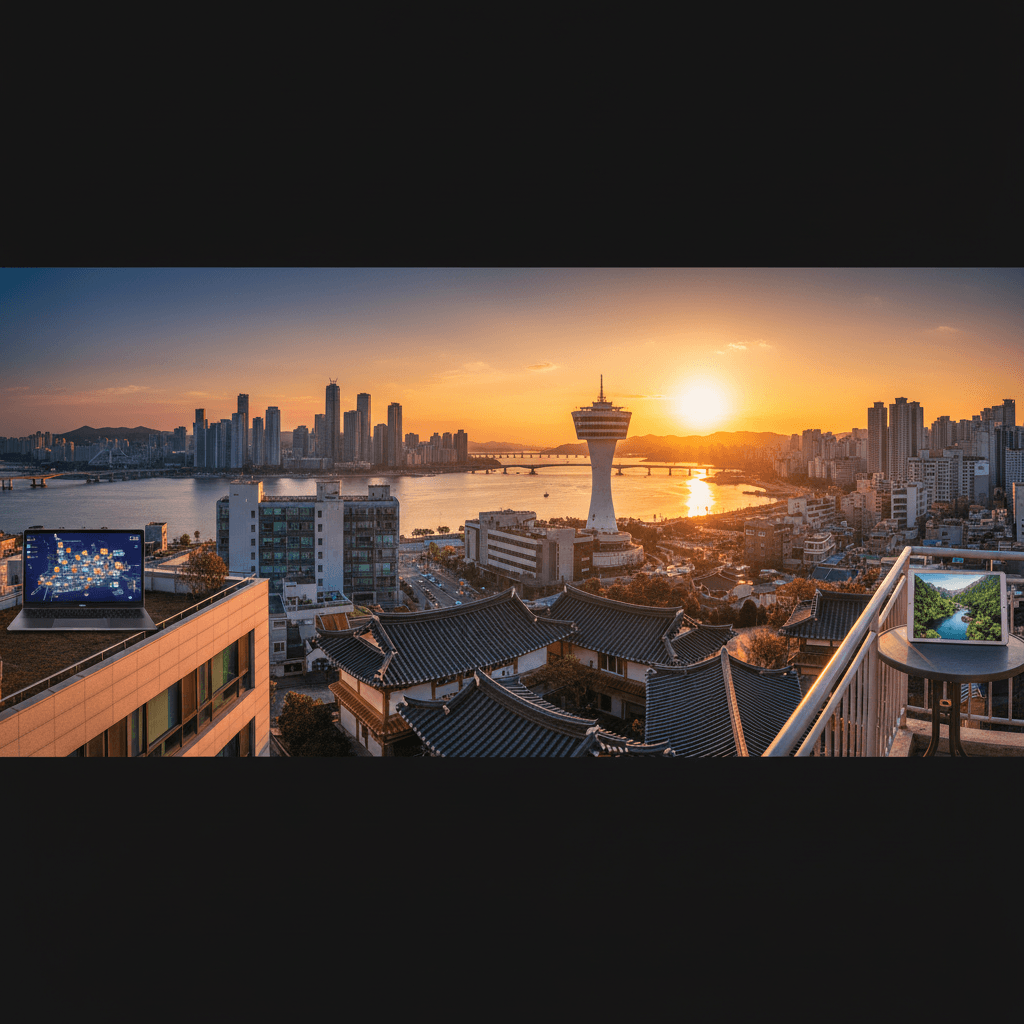
Changwon is a rare breed of city. While Seoul is a neon blur and Busan is a coastal party, Changwon feels intentional. It was South Korea's first planned city, and you can feel that legacy in the wide boulevards, abundant green spaces, and a grid system that actually makes sense. It’s where heavy industry meets a surprisingly soft, poetic soul. You might spend your morning working from a high tech cafe and your afternoon wandering through the Changdong Artist Village, where old houses have been converted into quiet galleries and mural lined studios.
The vibe here is relaxed but disciplined. It’s a city that values its quiet moments, from the pink explosion of cherry blossoms in the spring to the panoramic views at the Changwon Solar Tower. You won't find the frantic nightlife of Hongdae here. Instead, you'll find a community that appreciates a good hike, a fresh seafood meal by the coast, and the kind of safety that lets you walk home at 2:00 AM without a second thought. For nomads, it’s a place to actually get work done without the constant FOMO of a larger metropolis.
Living Costs & Budgeting
Your money goes significantly further here than in the capital. Most nomads find that they can maintain a high quality of life for 20% to 30% less than they would pay in Seoul. Rent is the biggest saver, with modern studios in central areas often ranging from ₩600,000 to ₩1,000,000 ($450 to $750) per month. If you’re on a budget, you can get by on $1,500 to $2,000 by sticking to local markets and public transport. For a more comfortable lifestyle with private office space and frequent dining out, aim for $2,500 to $3,500.
- Street Food Snack: ₩5,000 to ₩10,000 ($4 to $7.50)
- Mid-range Meal: ₩15,000 to ₩25,000 ($11 to $19)
- Monthly Transport Pass: ₩55,000 ($41)
- High-speed Broadband: ₩27,000 ($20)
Where to Set Up Base
Choosing a neighborhood in Changwon depends on whether you want creative inspiration or coastal views. Since there isn't a massive expat bubble, you'll be living a very local life regardless of where you land.
Changdong Artist Village
- The Vibe: Creative, nostalgic, and quiet. It’s perfect for writers or designers who want to be surrounded by art and history.
- Pros: Highly walkable, unique cafes, and a slower pace of life.
- Cons: Fewer modern amenities and limited nightlife options.
Changwon Marine Park Area
- The Vibe: Scenic and breezy. This area feels more like a getaway, with the sea always in sight.
- Pros: Great for nature lovers, families, and those who want to be near the water.
- Cons: Can feel a bit touristy on weekends and is further from the city center.
Connectivity & The Nomad Reality
The internet in Changwon is nothing short of legendary. With average speeds often exceeding 100 Mbps, you’ll never struggle with a video call or a massive upload. While dedicated coworking spaces are still catching on compared to Seoul, the cafe culture is elite. You can park yourself in a multi story cafe for hours with a ₩6,000 iced americano and nobody will bat an eye. Most nomads recommend using Kakao T for getting around and Papago for translating, as English isn't as widely spoken here as it is in the bigger hubs.
The trade off for the peace and affordability is the social scene. You won't find a new nomad meetup every Tuesday night. You have to be proactive, joining national Facebook groups or taking the one hour KTX trip to Busan when you need a dose of expat energy. But for those who want to experience the "real" Korea, away from the tourist traps, Changwon offers a grounded, authentic, and incredibly productive home base.
The Price of Balance
Living in Changwon feels like getting a loyalty discount on the South Korean experience. While Seoul often demands a premium for its fast pace, Changwon allows your budget to stretch significantly further without sacrificing the world class infrastructure the country is known for. Most digital nomads find they can live a high quality life here for 20% to 30% less than they would in the capital.
For a comfortable, mid range lifestyle, you'll want to budget between $2,500 and $3,500 per month. This covers a modern studio, frequent dining out, and plenty of weekend trips to the coast. If you're more budget conscious, sharing an apartment and sticking to local markets can bring your monthly burn down to the $1,500 to $2,000 range.
Monthly Budget Breakdown
- Housing: A modern one bedroom studio (officetel) typically runs between ₩600,000 and ₩1,000,000 ($450 to $750) depending on the neighborhood.
- Utilities and Tech: High speed broadband is a steal at roughly $20, while a robust mobile data plan costs around $48.
- Transportation: A monthly transit pass for the bus system is about $41. If you're coming from the airport in Busan via Kakao T, expect to pay around $37 for the ride.
- Food: A mid range meal at a local spot costs $11 to $19, while a quick street food fix near the Marine Park will only set you back $4 to $7.
Where to Plant Your Flag
Choosing a neighborhood in Changwon usually comes down to whether you want artistic quiet or coastal views. Expats often look for rentals in central areas to maintain walkability, as the city can feel sprawling if you're too far from the core.
Changdong Artist Village
- Vibe: Creative, poetic, and quiet. It's full of renovated old houses and small galleries.
- Pros: High walkability and plenty of unique cafes to work from.
- Cons: Limited nightlife and fewer large supermarkets.
Changwon Marine Park Area
- Vibe: Scenic and relaxed with a heavy focus on the coastline.
- Pros: Great air quality and easy access to sea life exhibits and naval history.
- Cons: Can feel touristy on weekends and is further from the main business hubs.
Connectivity and Work
You won't have to worry about your Zoom calls dropping. South Korea's internet speeds are legendary, with average broadband speeds exceeding 200 Mbps. While Changwon doesn't have the massive coworking franchises found in Seoul, the cafe culture is elite. Most nomads set up shop in local cafes where the Wi-Fi is free and the coffee is strong.
If you prefer a dedicated desk, look for local "study cafes" or small independent coworking hubs. Prices for these usually range from $75 to $150 per month. For your phone, skip the physical SIM card hunt and grab an eSIM from Cellesim or RapideSIM before you land. It's much easier than navigating the paperwork at a local shop.
The Expat Lifestyle
Daily costs are manageable, but the social scene requires some effort. Since there isn't a massive expat hub here like there is in Busan's Haeundae district, you'll likely use apps like Kakao T for transport and Papago for translating menus. For groceries and local deliveries, Kakao Pay and Naver Pay are the standard. Most travelers recommend joining national Facebook groups for meetups, as Changwon's local nomad community is small but welcoming.
For Creative Nomads: Changdong Artist Village
If you're looking for a neighborhood that prioritizes aesthetics and a slower pace of life, Changdong Artist Village is the spot. It's a district transformed from old, poetic houses into a maze of galleries, workshops, and cozy cafes. Unlike the high energy of Seoul, this area feels like a living museum where you can actually hear yourself think. Most digital nomads find the cafe culture here perfect for deep work sessions, especially since South Korea's internet speeds average over 100 Mbps.
- Rent: Expect to pay between $450 and $700 for a modest studio nearby.
- Vibe: Artistic, quiet, and walkable.
- Pros: High creative inspiration and plenty of unique coffee shops with reliable WiFi.
- Cons: The nightlife is almost non-existent; you'll need to head to Busan for a real party.
For Families: Marine Park Vicinity
Families usually gravitate toward the Jinhae-gu area near the Changwon Marine Park. It's scenic, safe, and offers plenty of educational activities like the naval history exhibits and the 136m high Solar Tower. The streets are wider here, and the proximity to the coast provides a refreshing break from the industrial core of the city. You'll also find more spacious housing options, though prices for larger apartments can climb toward $1,000 a month.
- Food: Street food near the park is affordable, with snacks ranging from $4 to $7.50.
- Vibe: Scenic and educational with a focus on nature.
- Pros: Best views of the coastline and plenty of space for kids to run.
- Cons: It can get touristy during the cherry blossom peak in March and April.
For Solo Travelers: Jungang-dong and Sangnam-dong
If you want to be where the action is, these central districts are your best bet. While Changwon isn't a K-pop hub, this is where you'll find the highest concentration of restaurants, bars, and shops. It's the most urban part of the city, making it easier to meet people. Solo travelers often recommend this area because of the convenience; you're close to the main bus lines and the Kakao T ride-hailing services are always available. A mid-range meal here typically costs between $11 and $19.
- Transport: Monthly passes for local buses cost around $41.
- Vibe: Urban and convenient.
- Pros: Best access to public transport and English-speaking staff in larger venues.
- Cons: It lacks the historic charm of the Artist Village.
For Long-term Expats: Masan-hoewon-gu
Expats moving to Changwon for work or a long-term stay often look for a balance between local life and modern amenities. This area offers a more authentic Korean living experience with traditional markets and local BBQ spots. Since there isn't a massive expat community like you'll find in Seoul's Itaewon, you'll likely rely on apps like Papago to navigate daily life. It's a great place to settle if you want to keep your monthly budget between $1,500 and $2,000 while still enjoying a comfortable lifestyle.
- Rent: Older apartments can be found for as low as $400, though modern builds are higher.
- Vibe: Authentic and residential.
- Pros: Lower cost of living than the central tourist zones.
- Cons: Very limited English; learning basic Korean phrases is a must here.
The Connection Standard
You'll find that the internet in Changwon isn't just fast; it's a way of life. South Korea consistently ranks at the top of global speed charts, and this industrial hub is no exception. With average broadband speeds exceeding 200 Mbps, you can handle 4K video calls or heavy code deployments without a hint of lag. Most apartments come pre-wired with high-speed fiber for about $20 to $22 a month.
For your mobile setup, skipping the physical SIM card queue at the airport is the move. Digital nomads typically opt for eSIM providers like Cellesim or RapideSIM to get data the moment they land. If you prefer a local carrier, KT and SK Telecom offer reliable 4G and 5G coverage across the entire city, even inside the elevators and deep in the mountain parks. A solid monthly mobile plan will run you roughly $48.
Coworking and the Cafe Culture
Changwon doesn't have the massive density of dedicated coworking brands you'll see in Seoul or Busan, but the infrastructure is still there. Most remote workers here utilize "study cafes" or sleek local offices that double as community hubs. Expect to pay between $75 and $150 a month (about 100,000 to 200,000 KRW) for a dedicated desk. These spaces are usually pin-drop quiet, reflecting the local emphasis on focus and productivity.
If you prefer a more relaxed environment, the city's cafe culture is your best friend. In areas like the Changdong Artist Village, you'll find plenty of spots where it's perfectly acceptable to camp out with a laptop for a few hours. Free, high-speed WiFi is the default, and power outlets are usually easy to find. Just remember the local etiquette: buying a fresh coffee every couple of hours is the standard way to pay your "rent" for the table.
Top Tools for Staying Connected
- Kakao T: This is the non-negotiable app for getting around. Use it to hail taxis or check bus schedules when you're moving between your home office and a cafe.
- Portable Hotspots: While public WiFi is everywhere, many nomads carry a "egg" (portable router) as a backup for working in more scenic spots like the Changwon Marine Park.
- Papago: Since English isn't as common here as it is in the capital, this translation app is vital for reading WiFi passwords on chalkboards or navigating local router settings.
- Kakao Pay and Naver Pay: These are the dominant digital wallets. Linking these to your local accounts makes paying for your coworking space or coffee seamless.
Practical Workflow Tips
The work culture in Changwon is disciplined and punctual. If you're meeting a local collaborator or joining a shared office, arriving exactly on time is expected. You might find that the expat community is smaller here than in Busan, so joining national Facebook groups for nomads in Korea is the best way to troubleshoot tech issues or find desk-sharing opportunities.
If you're planning a heavy work week, look for housing in the central districts near the Artist Village. You'll be within walking distance of the best cafes and won't have to rely on the bus system to find a stable connection. For those who need a change of scenery, the KTX train can zip you to Busan in under an hour, giving you easy access to the larger coworking hubs in Haeundae if you ever feel the need for a more "big city" networking vibe.
Peace of Mind on the Southern Coast
Changwon is one of those rare places where you can actually forget to lock your bike and find it right where you left it the next morning. South Korea is famous for its safety, but Changwon takes it a step further. Because it lacks the chaotic nightlife of Seoul or the heavy tourist crowds of Busan, the vibe here is incredibly calm. You can comfortably walk through the Changdong Artist Village or along the waterfront at night without a second thought.
Violent crime is statistically almost non-existent for expats and travelers. Most nomads find that the biggest "danger" is simply getting used to the local traffic or navigating the occasional hilly sidewalk. While there aren't specific "no-go" zones, it's always smart to stay aware in less familiar industrial areas at night, though these aren't places you'd likely be staying anyway. Stick to the well-lit central districts and you'll be perfectly fine.
World-Class Care Without the Headache
The healthcare system in Changwon is a major perk for long-term stays. South Korea's medical facilities are top-tier, and Changwon is home to several large, modern hospitals that rival anything you'd find in a capital city. You'll find that doctors are highly trained, often having studied internationally, which means you can usually find English-speaking staff in the larger university hospitals.
- Samsung Changwon Hospital: This is a go-to for many expats. It's a massive, high-tech facility with a wide range of specialists.
- Gyeongsang National University Hospital: Another reliable option for more complex medical needs or emergencies.
- Local Clinics: For a quick check-up or a cold, look for neighborhood "Naegwa" (internal medicine) clinics. They’re efficient, and you're usually in and out in under 30 minutes.
Pharmacy Access and Costs
Pharmacies are everywhere, marked by a big red or green sign that says "Yak" (약). They handle everything from basic painkillers to filling prescriptions. Most pharmacists speak enough English to help with basic symptoms, though having the Papago translation app ready is a life-saver for specific ailments. For digital nomads on a budget, the costs are a pleasant surprise. A standard consultation at a clinic might only set you back $10 to $20 out of pocket, and prescriptions are equally affordable, often costing less than $10.
Emergency Essentials
If you do run into trouble, the emergency system is streamlined and efficient. While you hope you never need them, here are the numbers to save in your phone immediately:
- 112: Police (they have translation services available if you don't speak Korean).
- 119: Ambulance and Fire Department.
- 1339: Korea Travel Helpline (great for medical referrals or general assistance in English).
Expats recommend keeping your passport or a digital copy of your alien registration card (ARC) handy if you're heading to a major hospital. If you haven't received your local health insurance yet, make sure your international nomad insurance is active, as they'll ask for payment or insurance details upfront. Overall, the combination of low crime and high-tech medical care makes Changwon one of the most stress-free bases for remote work in East Asia.
The Daily Commute
Changwon is a planned city, which means it lacks the chaotic, winding alleys you will find in older Korean hubs. The grid like layout makes it surprisingly straightforward to navigate. Most nomads rely on the city bus system, which is punctual and covers almost every corner of the district. You will want to grab a T-Money or Cashbee card at any convenience store like GS25 or CU. It costs about ₩3,000 ($2.25) for the card itself, and you can tap on and off to get free transfers between lines. A single ride usually sits around ₩1,500 ($1.10).
The city is also rolling out more eco friendly options. You will spot local buses and even some trams connecting the main hubs like the Solar Tower and Marine Park. If you are staying in the central areas, walking is often the most pleasant way to see the sights, especially around the Changdong Artist Village where the streets are designed for foot traffic rather than cars.
Apps You Actually Need
Forget Google Maps here. It often gives wonky walking directions or outdated bus schedules in South Korea. Instead, download KakaoMap or Naver Map. Both have English interfaces now and are incredibly precise, down to telling you exactly which subway exit or bus stop pillar to stand by.
For those nights when you miss the last bus or just don't feel like walking, Kakao T is the go to ride hailing app. It works just like Uber. You can link a card or pay the driver in cash. A typical 10 minute trip across town will run you about ₩8,000 to ₩12,000 ($6 to $9). If you prefer two wheels, look for Kakao Mobility bikes and scooters parked on street corners. You just scan the QR code with the app and go.
Regional Connections
Changwon is perfectly positioned for weekend trips, but it doesn't have its own international airport. Most expats head to Gimhae International Airport (PUS) in nearby Busan. It is about 40km away. You have a few choices to get there:
- The Airport Limousine Bus: This is the most popular choice for nomads. It costs roughly ₩8,000 ($6) and takes about an hour depending on traffic.
- The KTX Train: If you are heading into Busan proper or up to Seoul, the high speed KTX is king. It is clean, has free WiFi, and gets you to Seoul in about 2.5-3 hours for ₩60,000 ($45).
- Taxi or Kakao T: A direct ride to the airport is convenient but pricey, usually landing around ₩50,000 ($37). It is a solid option if you are splitting the fare with friends.
Transport Budget at a Glance
- Monthly Transit Pass: Approximately ₩55,000 ($41) for heavy bus users.
- Short Taxi Ride: ₩5,000 to ₩10,000 ($3.75 to $7.50).
- Bike Rental: Roughly ₩1,000 ($0.75) per 30 minutes.
- KTX to Seoul: ₩50,000 to ₩60,000 ($37 to $45).
While the city is sprawling, the core is manageable. Most nomads find that a combination of the local bus for daily errands and the occasional Kakao T for social outings keeps their transport budget well under $100 a month. If you plan on exploring the coastal areas or the Marine Park frequently, just keep an eye on the bus schedules, as service to the outskirts can thin out after 10:00 PM.
The Linguistic Landscape
While Seoul and Busan feel increasingly international, Changwon remains a place where Korean is the undisputed king. You'll find that English proficiency drops off significantly once you leave the major tourist hubs like the Changwon Solar Tower or the Changwon Marine Park. Most locals are incredibly helpful, but they might be shy about speaking English for fear of making a mistake.
Expats living here find that the language barrier is part of the city's slower, more authentic charm. In the Changdong Artist Village, for instance, many of the gallery owners and shopkeepers primarily communicate in Korean. You can get by with smiles and gestures, but having a few key phrases in your back pocket will change your experience from being a mere observer to feeling like part of the community.
Digital Survival Tools
Since English isn't widely spoken in local markets or smaller neighborhood cafes, technology is your best friend. Nomads in Changwon swear by a few specific apps to get through the day. Don't rely on Google Translate; it often struggles with the nuances of Korean grammar and honorifics.
- Papago: This is the gold standard for translation in Korea. It handles voice and image translation much better than its competitors, which is a lifesaver when you're staring at a menu of 5,000 KRW street food items without pictures.
- Naver Dictionary: If you're serious about learning the language, this provides the best context for how words are actually used in daily life.
- Kakao T: Even if you don't speak a word of Korean, this app allows you to hail taxis by inputting your destination in English, avoiding the awkwardness of trying to explain a specific street corner to a driver.
Cultural Nuance and Etiquette
Communication in Changwon is about more than just words; it's about social hierarchy and respect. Even if you're just staying for a few months on a digital nomad visa, understanding the basics of Nunchi (the art of sensing others' moods) goes a long way. Punctuality is viewed as a form of respect here, so if you're meeting a local contact or a landlord, being five minutes early is considered being on time.
You'll notice that greetings involve a slight bow. A simple Annyeonghaseyo (hello) combined with a nod of the head is the standard way to enter a shop or greet a neighbor. When you're paying for your 15,000 KRW lunch, try to hand over your card or cash with both hands. It's a small gesture that signals you understand and respect the local customs.
Practical Phrases for Nomads
You don't need to be fluent to have a great time, but mastering these basics will earn you plenty of "service" (free extra food or perks) from friendly restaurant owners. Most nomads recommend learning the Hangul alphabet before arriving; it only takes a few hours to learn and makes reading signs at bus stops much easier.
- Annyeonghaseyo: Hello. Use this for everyone, from the barista to the bus driver.
- Gamsahamnida: Thank you. You'll use this dozens of times a day.
- Jebal: Please. Useful when asking for a favor or a specific seat in a cafe.
- Yeogiyo: "Over here!" Use this to get a server's attention in a restaurant. It's not considered rude in Korea.
- Olmayeyo?: How much is it? Essential for the traditional markets.
While the learning curve is steeper here than in the capital, the payoff is a deeper connection to a city that hasn't been over-sanitized for tourists. Most travelers find that after a few weeks, the "limited English" they feared becomes an opportunity to engage with the culture on its own terms.
The Seasonal Sweet Spot
Changwon is a breath of fresh air for those tired of the biting Siberian winds that often grip Seoul. Situated in the southern reaches of the peninsula, the city enjoys a milder, more temperate climate. If you're planning your stay, the absolute peak window is late March through April. This is when the city transforms into a pink and white cloud of cherry blossoms. While most people flock to the Jinhae Gunhangje Festival nearby, nomads in Changwon get the same stunning views with slightly fewer crowds and easier access to high-speed WiFi.
The shoulder season of September to November is the second best time to land. The humidity of the summer breaks, replaced by crisp air and clear blue skies. It's the ideal weather for taking your laptop to a cafe near the Changdong Artist Village or hiking the trails surrounding the city without breaking a sweat.
Navigating the Four Seasons
While the city is manageable year-round, each season brings a different vibe for your remote work setup:
- Spring (March to May): Expect temperatures between 10°C and 20°C. It's the most pleasant time for walking between coworking spots, but keep an eye on the "yellow dust" reports. Most expats use apps like AirVisual to check air quality before heading out for a park session.
- Summer (June to August): It gets sticky. July and August bring the monsoon rains and humidity that can make a ten-minute walk feel like a marathon. Temperatures often hover around 30°C. This is the season to embrace Korea's "officetel" life or camp out in air-conditioned cafes where the internet is blazing fast.
- Autumn (September to November): Many long-term residents argue this is the best time to be in Gyeongsangnam-do. The weather is stable, dry, and cool. It's perfect for weekend trips to the Changwon Solar Tower to catch panoramic views of the coastline.
- Winter (December to February): It's cold, but rarely brutal. Unlike the north, Changwon doesn't see as much heavy snow. Temperatures frequently dip to -2°C or -5°C at night, but daytime sun usually keeps things above freezing. Just make sure your apartment has "ondol" (underfloor heating), which is a standard lifesaver here.
When to Watch Your Budget
Because Changwon isn't a primary global tourist hub like Seoul, you won't see dramatic seasonal price hikes for short-term rentals. However, during the peak cherry blossom weeks in April, local guesthouses and hotels near the Jinhae district will book up months in advance and double their rates. If you're moving in during the spring, secure your housing by January or February to avoid the "blossom tax."
For those looking to save, the winter months are often the quietest. While the city feels a bit more subdued, you'll have your pick of the best cafes and more leverage when negotiating a mid-term stay through apps like Zigbang. Most digital nomads find that a monthly budget of $1,500 to $2,000 goes much further here than in the capital, regardless of the month you arrive.
The "Avoid" List
If you have the flexibility, try to avoid arriving during Chuseok (the autumn harvest festival) or Lunar New Year. The dates shift every year, but during these windows, the city practically shuts down. Public transport like the KTX to Busan or Seoul becomes impossible to book, and many local restaurants close their doors for several days. It's a great time for a quiet retreat, but a frustrating time to try and get a new SIM card or set up a bank account.
Connectivity and Tech
South Korea's internet is arguably the best on the planet, and Changwon is no exception. You can expect broadband speeds averaging over 100 Mbps, which makes video calls and heavy uploads seamless. Most nomads skip the physical SIM card hassle and opt for an eSIM like Cellesim or RapideSIM before they land. If you prefer a local physical card, KT or SK Telecom booths at Gimhae Airport are your best bet.
While Changwon doesn't have the massive coworking hubs found in Seoul, the cafe culture is a reliable backup. You'll find free, fast WiFi in almost every coffee shop. For a more structured environment, look for "study cafes" near the university districts, which typically cost between $75 and $150 per month. For payments, download Kakao Pay or Naver Pay. Most expats also use Wise to manage international transfers without getting hammered by bank fees.
Cost of Living
Living here is significantly more affordable than in Seoul or Busan, with rent often 20% to 30% lower. You can live a very comfortable life on a mid-range budget, though your biggest expense will be housing if you want a modern studio in a central area.
- Budget Tier ($1,500 to $2,000/month): This covers a room in a shared house, plenty of street food, and using the local bus system.
- Mid-Range ($2,500 to $3,500/month): A private 1BR studio will run you between ₩600,000 and ₩1,000,000 ($450 to $750). You'll have plenty left over for mid-range meals at ₩15,000 to ₩25,000 ($11 to $19).
- Daily Essentials: Street food snacks like tteokbokki cost ₩5,000 to ₩10,000 ($4 to $7.50), and a monthly transport pass is about ₩55,000 ($41).
Getting Around
The city is sprawling, so you'll rely on the efficient bus system and taxis more than you might in a denser city. Download Kakao T immediately; it's the local version of Uber and works flawlessly for hailing cabs. For shorter hops around the parks, use Kakao Mobility to grab an electric bike or scooter.
If you're coming from abroad, you'll likely fly into Gimhae International Airport in Busan. From there, a KTX train or an express bus takes about an hour to reach Changwon. A taxi via Kakao T from the airport will cost roughly ₩50,000 ($37). Within the city, the Changdong Artist Village area is quite walkable, but you'll want the bus for trips to the Solar Tower or Marine Park.
Local Nuances and Language
English proficiency is lower here than in the capital. You'll definitely want Papago or Naver Dictionary on your phone for real-time translation. Learning a few basics like Annyeonghaseyo (hello) and Gamsahamnida (thank you) goes a long way, especially since Korean culture places a high value on politeness and hierarchy.
Expect a quieter social scene. While Seoul has a wild nightlife, Changwon is more about evening strolls and late-night dinners. If you're looking for an expat community, you'll find it's much smaller here. Most nomads connect through national Facebook groups or take the one-hour trip to Busan on weekends to hit the beach clubs in Haeundae or the bars in Seomyeon.
Safety and Health
South Korea is incredibly safe, with very low crime rates. You can comfortably walk through most neighborhoods at night without a second thought. If you do run into trouble, dial 119 for an ambulance or 112 for the police. Healthcare is world-class; pharmacies are everywhere and usually have staff who can help with basic ailments, though hospitals in the city center are the best choice for anything serious.
When to Visit
Spring is the undisputed champion. March and April bring the famous cherry blossoms, and the weather is mild enough for long days outside. Avoid the summer months of June through August if you can, as the humidity and rainy season can make outdoor exploration uncomfortable. Winters are cool but generally manageable compared to the freezing temperatures in the north.
Need visa and immigration info for South Korea?
🇰🇷 View South Korea Country GuideHidden Gem
Worth the effort