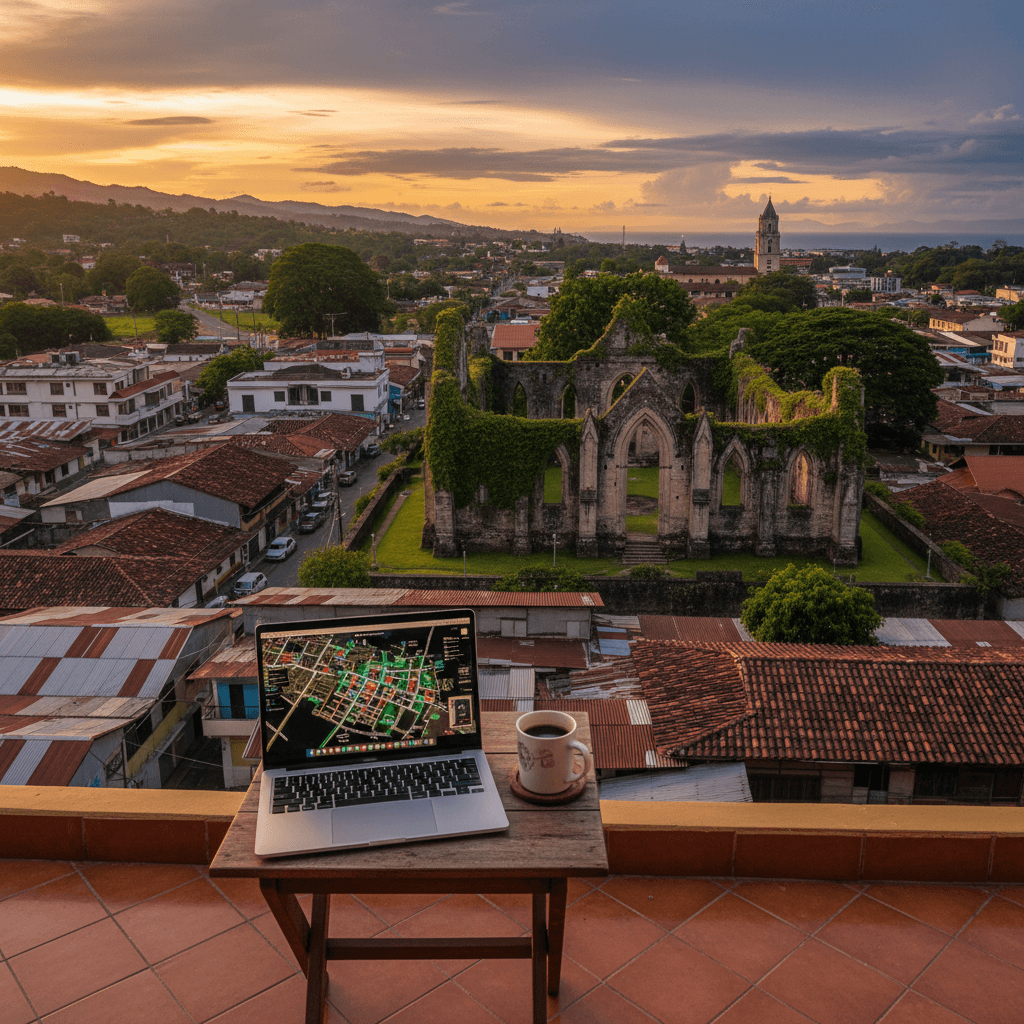
Cartago
🇨🇷 Costa Rica
The High-Altitude Alternative
If you're tired of the humidity and the tourist crowds of the Pacific coast, Cartago is the breath of cool, mountain air you've been looking for. Sitting at a higher elevation than San José, this former capital feels like a genuine Costa Rican city rather than a nomad playground. It's a place where the "Pura Vida" lifestyle isn't a marketing slogan but a daily rhythm. You'll trade surfboards for hiking boots and air conditioning for a light jacket, especially when the evening mist rolls down from the surrounding volcanoes.
The vibe here is decidedly local. While places like Tamarindo feel like an extension of California, Cartago is where you'll find families gathering at the Basilica de Nuestra Señora de los Ángeles or shopping at the central markets. It’s perfect for the nomad who wants to disappear into a real community, improve their Spanish, and enjoy a pace of life that actually lets you get work done without the constant distraction of beach parties.
Cost of Living Breakdown
Living in Cartago is significantly easier on the wallet than staying in the popular coastal hubs. You're looking at Greater Metropolitan Area prices without the "gringo tax" often found in the beach towns. Most solo nomads can live comfortably on $2,000 a month, while those on a tighter budget can make $1,200 work by sticking to local sodas and public transit.
- Budget Tier ($1,200): A basic studio, frequenting local markets, and using the bus system.
- Mid-range Tier ($2,000): A modern 1BR apartment, dining out a few times a week, and using Ubers for convenience.
- Comfortable Tier ($3,000+): A fully furnished premium apartment, upscale dining in San José, and a dedicated coworking setup.
Where to Plant Your Flag
The city is compact, but your choice of neighborhood changes the experience. Downtown Cartago is the historic heart. It’s walkable and puts you right next to the markets and the train to San José. Rent here for a 1BR sits around $400 to $800. It’s convenient, though you’ll want to keep an eye on your belongings in crowded areas after dark.
For a quieter, greener experience, expats often look toward the suburbs of Oriental or Agua Caliente. You can find 1BR rentals for around $500, and the air feels even fresher. These areas are family friendly and peaceful, though you'll likely rely on Uber more often since they're less walkable than the core. Avoid the very remote edges of the city if you don't have a car, as they can feel isolated once the sun goes down.
Work, WiFi, and Weather
Internet is reliable across the urban areas. Home fiber plans from providers like Kolbi or Claro typically offer 50Mbps+ for about $50 a month. While you won't find a Selina on every corner, the café culture downtown is growing. When you need a professional office environment, many nomads take the 45 minute trip into San José to use hubs like Impact Hub or Selina, which offer day passes for $10 to $20.
The weather is the biggest selling point for many. Forget the sweltering 35°C (95°F) heat of the coast. Cartago stays a comfortable 20 to 23°C (68 to 74°F) year round. The dry season from January to March is spectacular, offering clear views of the Irazú Volcano. Just be prepared for the rainy season from May to November; September and October bring heavy afternoon downpours that are perfect for hunkering down with a laptop and a cup of local coffee.
The Social Landscape
You won't find a massive expat community here, which is exactly why people choose it. Socializing happens at the local "sodas" over a $5 plate of gallo pinto or at the weekend markets. For a big night out, most people head into San José via a $15 Uber or the $2 bus. To meet other remote workers, your best bet is joining the "Digital Nomads Costa Rica" Facebook groups or connecting with the smaller expat circles through local real estate networks like Coldwell Banker.
Healthcare is a major plus. The Hospital Max Peralta is right in the center of town and provides excellent emergency care. Pharmacies are on almost every block, and you’ll find that many doctors in the metropolitan area speak English. It’s a safe, functional city that offers a soft landing for those who want the Costa Rican experience without the tourist price tag.
The Price of Pura Vida in the Highlands
Cartago is often overlooked by the beach-bound crowd, but for nomads who prefer mountain air and colonial history over humidity and surf lessons, it's one of the most affordable corners of the Greater Metropolitan Area (GAM). You're trading the high costs of Tamarindo for a more authentic Tico experience where your dollar stretches significantly further. Most nomads find they can live comfortably here for about $2,000 a month, though a frugal solo traveler can easily make $1,200 work by sticking to local sodas and bus routes.
Rent is the biggest win here. While a sleek apartment in San José or a beach bungalow might drain your budget, central Cartago offers 1-bedroom apartments for $400 to $800. If you move toward the greener outskirts like Oriental or Agua Caliente, you can find quiet, family-friendly spots for as low as $500. These areas are favorites for those who want more space and a garden without the capital's price tag.
Monthly Budget Tiers
- The Budget Nomad (~$1,200): You're living in a basic studio, cooking most meals with produce from the central market, and using the bus system. You'll eat at local sodas where a plate of gallo pinto costs $3 to $5.
- The Mid-Range Lifestyle (~$2,000): This covers a modern 1-bedroom apartment, frequent Uber rides, and dining out at spots like Restaurante La Casona, where a full casado runs about $10. You'll also have room for weekend trips to Irazú Volcano.
- The "Coast-Style" Comfort (~$3,000): You're in a fully furnished, high-end rental, eating at upscale fusion restaurants in nearby San José, and likely paying for a dedicated coworking desk and private gym membership.
Connectivity and Remote Work Costs
You won't find a massive coworking scene directly in downtown Cartago yet. Most remote workers set up a home office or head to nearby San José hubs like Selina or Impact Hub for the day, which usually costs $10 to $20. For your home setup, 50Mbps fiber plans from providers like Kolbi or Tigo cost around $50 a month and are generally very stable.
For mobile data, skip the international roaming. Grab a prepaid SIM from Claro or Kolbi at a local pharmacy. You can get 1-3GB of data for about $7-$10, which is sufficient for navigation and messaging while exploring the Orosi Valley.
Dining and Socializing
Feeding yourself in Cartago is as cheap or expensive as you want it to be. The local markets are gold mines for fresh fruit and coffee, keeping grocery bills low. If you're eating out, casual spots are the way to go. A mid-range dinner for two will rarely top $25, while a high-end meal with drinks might hit $40. Since the nightlife is quiet, you'll save money on club covers and expensive cocktails, though a few local bars downtown offer cheap Imperial beers for a couple of dollars.
Getting Around
The city is compact enough to walk, but the hilly terrain might make you rethink that after a mile. Local buses are incredibly cheap at roughly $1 per ride and can get you into San José for $2 in under an hour. When the rain hits, Uber and DiDi are the standard; short trips around the city center usually cost between $5 and $10. If you're heading to the airport (SJO), expect to pay around $35 for a direct Uber ride.
For Digital Nomads: Downtown Cartago (Centro)
If you need to be within walking distance of a reliable caffeine fix and a grocery store, the historic core is your best bet. It’s the most connected part of the city, sitting right near the Basilica de Nuestra Señora de los Ángeles. You’ll find the most consistent fiber optic internet here, which is vital since dedicated coworking spaces are thin on the ground compared to San José.
Most nomads set up shop in local coffee spots or small sodas for a few hours, though a home office is better for deep work. Living here means you’re close to the train and bus stations, making it easy to hit San José for a weekend or a day at a coworking hub like Selina or Impact Hub. It’s affordable, but keep your wits about you in the crowded central markets where petty theft can happen if you’re flashing a MacBook.
- Average Rent: $400 to $800 for a 1BR apartment.
- Vibe: Urban, historic, and busy during the day.
- Best for: Short-term stays and those without a car.
For Long-Term Expats: Oriental
Oriental is one of the more established districts and a favorite for those sticking around for more than a few months. It feels a bit more polished than the immediate downtown area but keeps you close enough to the action. Expats often choose this spot because it balances local Tico life with a bit more quiet at night.
You’ll find better-quality housing here, often with small gated entries or more secure apartment complexes. It’s a great home base if you plan on exploring the Irazú Volcano or Orosi Valley on your days off. Since the expat community is smaller than what you’d find in Tamarindo, you’ll likely meet people at the local feria (farmers market) rather than a dedicated meetup group.
- Average Rent: $500 to $900 for a well-furnished space.
- Vibe: Residential, safe, and conveniently located.
- Best for: Remote workers looking for a stable, quiet home base.
For Families: Agua Caliente and San Rafael
Families usually head toward the suburbs like Agua Caliente or the greener fringes of San Rafael. These areas offer more space, often featuring houses with small yards rather than cramped apartments. It’s significantly quieter, and the air feels a bit fresher as you move toward the mountains.
The trade-off is that you’ll definitely want a car or a reliable Uber budget, as these neighborhoods aren't as walkable as the center. Rents are surprisingly low for the amount of space you get; a decent family home can often be found for around $600. It’s a very local experience, so expect to practice your Spanish with the neighbors over the fence.
- Average Rent: $500 to $700 for a 2 or 3BR house.
- Vibe: Green, suburban, and very peaceful.
- Best for: Those with kids or anyone who wants a garden and a mountain view.
For Solo Travelers: Near the University (ITCR)
The area around the Instituto Tecnológico de Costa Rica (ITCR) has a younger, more energetic feel. While Cartago isn't known for a wild nightlife scene, this is where you’ll find more casual bars and cheaper eats. Solo travelers often find it easier to meet people in this pocket because of the student population and the density of affordable sodas like Restaurante La Casona.
Safety is generally good here, though like any university area, it can get a bit deserted during school breaks. If you're on a budget, you can find basic studios for as low as $350. It’s a great spot to soak up the "Pura Vida" lifestyle without the high price tag of the coastal tourist traps.
- Average Rent: $350 to $550 for a basic studio or room.
- Vibe: Youthful, budget-friendly, and active.
- Best for: Socializing on a budget and solo explorers.
Connectivity in the Old Capital
Cartago doesn't have the flashy fiber optic marketing you see in beach towns like Santa Teresa, but it benefits immensely from being part of the Greater Metropolitan Area (GAM). You're plugged into the same infrastructure as San José, which means internet reliability is high. A solid home plan with 50Mbps+ typically costs around $35-$50 per month through providers like Kolbi or Claro.
Power outages are rare but can happen during the peak of the rainy season in September and October. Most nomads working here find that a simple backup power bank for their router is enough to stay online. If you're handling heavy video calls or large uploads, the stability here beats almost any coastal location in the country.
Coworking Realities
If you're looking for a dedicated coworking space with ergonomic chairs and networking events every Friday, you won't find much within Cartago's city limits. The local scene is much more traditional. Most remote workers here choose to work from home or head into San José or San Pedro for a professional office environment. The commute to major hubs like Impact Hub San José or Selina takes about 45 minutes by bus or Uber, costing anywhere from $2 to $15 depending on how you travel.
For those who just need a change of scenery for a few hours, the downtown area has a growing café culture. You'll find plenty of local sodas and coffee shops near the Basilica de Nuestra Señora de los Ángeles where the WiFi is free and the coffee is world-class. It's a "bring your own hotspot" kind of town if you're planning to stay all day, just to be safe.
Mobile Data and SIM Cards
Don't rely on your international roaming plan here; it's expensive and often throttled. Instead, grab a local prepaid SIM card as soon as you arrive. You can find them at the airport, but they're often cheaper at pharmacies or small "pulperias" downtown. Kolbi generally has the best coverage if you plan on exploring the mountains or volcanoes, while Claro offers great data packages for urban users.
- Starter SIM Cost: Approximately $2 to $5 for the chip.
- Data Packages: $10 will usually get you around 20GB of data, which lasts most nomads a few weeks.
- Top-up Apps: Use the Mi Claro or Mi Kolbi apps to add credit using a credit card or Wise account.
The Best Remote Work Setups
Since dedicated desks are scarce, your choice of neighborhood determines your work-life quality. Many expats recommend the Oriental or Agua Caliente suburbs because the houses are larger and quieter, allowing for a proper home office setup. Rents in these areas for a one bedroom apartment hover around $500, leaving you plenty of budget to upgrade your home internet speed.
If you prefer being near the action, Downtown Cartago puts you within walking distance of markets and bakeries. It's noisier, so a pair of noise-canceling headphones is mandatory for meetings. Most nomads find that the trade-off for lower cost of living and high-speed urban internet makes Cartago a smart "base camp" while they save money for weekend trips to the coast.
Practical Tech Tips
- Backup Internet: Use your phone as a hotspot. A $10 prepaid card is the cheapest insurance policy for a "must-attend" Zoom call.
- VPN: While the internet is open, a VPN is recommended for accessing home-based streaming services or secure banking via Revolut.
- Power Adapters: Costa Rica uses the same Type A and B plugs as the US and Canada, so North American travelers won't need adapters.
Staying Safe in the Old Capital
Cartago generally feels much safer and more relaxed than the frantic pace of San José. It's a city where families still walk to the park in the afternoon, and the overall vibe is one of quiet stability. Most nomads find they can walk around during the day without a second thought, though you should still keep your wits about you in high traffic areas like the central markets or the plaza around the Basilica de Nuestra Señora de los Ángeles. Petty theft, like phone snatching or pocket picking, is the main thing to watch for here.
Expats recommend keeping your valuables out of sight and avoiding the use of your laptop in open street side cafes that aren't specifically geared toward work. If you're staying in the Oriental or Agua Caliente suburbs, the streets get very quiet and dark after sunset. It's better to call an Uber or DiDi for a few dollars rather than walking home through unlit outskirts at night. Violent crime is rare, but isolation is your biggest risk factor after dark.
- Emergency Services: Dial 911 for any immediate police, fire, or medical needs.
- Tourist Police: They are generally helpful and often speak some English, though they are less common here than in beach towns like Tamarindo.
- Street Smarts: Don't leave bags hanging on the back of chairs in public sodas; keep them on your lap or between your feet.
Healthcare and Medical Facilities
One of the biggest perks of living in the Greater Metropolitan Area is the access to high quality medical care. Cartago is home to Hospital Max Peralta, a major public facility right in the center of town. While the public system can have long wait times for non emergencies, it's reliable for urgent care. For specialized treatment or English speaking specialists, many nomads take the 45 minute trip into San José to visit private hospitals like CIMA or Clínica Bíblica.
Pharmacies, or farmacias, are on almost every corner downtown. You'll find that pharmacists in Costa Rica can provide a lot of basic medical advice and even dispense certain medications that would require a prescription in the US or Europe. Look for the green cross signs; most are open until 8:00 PM or 9:00 PM, and some offer 24 hour service.
Health Tips for Nomads
The climate in Cartago is cooler and damp, which is a nice break from the coastal heat but can lead to a few more seasonal colds. The altitude is around 1,435 meters, so if you're coming straight from the coast, give yourself a day or two to adjust before hitting a heavy workout. While the tap water in the GAM is generally considered safe to drink, many long term travelers prefer using a filtered pitcher or buying large jugs to avoid any stomach upsets while their system gets used to the local minerals.
- Health Insurance: Most digital nomad visa holders carry private international insurance, which is accepted at all major private clinics in the area.
- Cost of Care: A standard walk in consultation at a private clinic usually runs between $60 and $100.
- Pharmacies: Common chains like Fischel or La Bomba often have apps for delivery, which is a lifesaver if you're stuck at home with a fever.
Getting Around Cartago
Cartago is remarkably compact compared to its sprawling neighbor, San Jose. Most nomads find the city center easy to manage on foot, especially if you're staying near the Basilica de Nuestra Señora de los Angeles or the central market. However, the city sits at a higher elevation than the coast, meaning you'll deal with some hilly inclines that can turn a quick walk into a workout.
Public Transit and the Train
The bus system is the backbone of local travel. It's affordable and surprisingly efficient for getting between neighborhoods or heading into the capital. You'll usually pay about $1 to $2 for a ride, and the Lumaca buses to San Jose run frequently, taking about 45 minutes depending on the notorious GAM traffic. For a more scenic and less congested route, the commuter train connects Cartago to San Jose and Heredia, though it primarily runs during peak morning and afternoon hours.
Ride-Hailing and Taxis
Uber and DiDi are the go-to apps here. They are widely available and generally safer and cheaper than flagging down a random street taxi. Expect to pay between $5 and $10 for most trips within the city limits. An Uber to the airport (SJO) typically costs $30-$40 and takes about an hour. Alternatively, the Tuasa bus is much cheaper at around $1-$2 but has luggage restrictions. Regardless of your choice, you should always buffer extra time for the heavy congestion around the San Pedro area.
Biking and Scooters
While you won't see a massive bike-share infrastructure like in Europe, local shops offer rentals for around $5 a day. Cycling is popular for exercise in the surrounding mountains, but using a bike for daily errands in the downtown core requires some grit due to the narrow streets and aggressive bus drivers. If you're staying in quieter suburbs like Agua Caliente, a bike is a great way to reach local pulperias without needing a car.
Out-of-Town Excursions
To reach the natural wonders that make Cartago famous, you'll need a bit more planning. Most expats recommend a mix of public buses and ride-hailing for day trips. Getting to the Irazu Volcano or the Orosi Valley usually costs between $10 and $20 if you're using a combination of transit and a short Uber leg. If you're planning to explore the rugged terrain of Turrialba for rafting, renting a car for the weekend is often the most practical choice, though the mountain roads require a confident driver.
- Bus to San Jose: ~$2 per trip
- Uber across town: ~$5 to $8
- Daily Bike Rental: ~$5
One thing travelers often mention is the "Pura Vida" pace of the transit. Buses might not always stick to a digital schedule, so it's best to ask locals at the stops or use the Moovit app to track routes. If you're out after dark, especially on the rural edges of the city, skip the walk and call an Uber directly to your door; it's the standard safety move for nomads in the area.
The Language Barrier
In Cartago, Spanish is the undisputed king. Unlike the surf towns of Guanacaste or the tourist corridors of Manuel Antonio, this is a city where life happens in the local tongue. While you'll find English speakers in professional settings or among younger crowds, the day to day rhythm of the city requires a bit of effort on your part. Most nomads find that a basic grasp of Spanish isn't just helpful; it's the key to moving beyond the surface level of the city.
Expats living in the Oriental or Agua Caliente suburbs often report that neighbors are incredibly patient with learners. Don't be surprised if a simple "Buenos días" turns into a ten minute conversation where you're both using hand gestures and translation apps. It's a friendly environment for practicing, but you'll definitely want Google Translate or Duolingo downloaded for offline use when you're navigating the central markets or catching a bus to the Irazú Volcano.
Pura Vida and Local Slang
You cannot live in Cartago without mastering "Pura Vida." It translates literally to "pure life," but in practice, it's a linguistic Swiss Army knife. Use it as a hello, a goodbye, a way to say everything is okay, or even a shrug when the bus is ten minutes late. It sets the tone for the entire Tico interaction style, which is generally indirect, polite, and non confrontational.
To sound less like a tourist and more like a local, try incorporating these common terms:
- Tico / Tica: What Costa Ricans call themselves.
- Soda: A small, locally owned restaurant serving traditional food like gallo pinto.
- Gallo: Not just a rooster, but a snack or small meal served on a tortilla.
- Cuesta mucho: Used when something is difficult or expensive.
- ¿Cuánto cuesta?: The standard way to ask for a price at the Mercado Central.
Communication Tools and Connectivity
Staying connected is rarely an issue in the urban parts of the Greater Metropolitan Area (GAM). For your phone, skip the international roaming fees. Travelers recommend picking up a local SIM card from Kolbi or Claro. You can find these at pharmacies or small kiosks downtown for about $10, which usually nets you around 20GB of data. It's much cheaper than any travel plan from home.
For remote work, the city's infrastructure is solid. Home internet plans via Tigo or Cabletica easily reach 50Mbps or higher for around $50 a month. While dedicated coworking spaces are thin on the ground within Cartago itself, many nomads head to nearby San José for hubs like Impact Hub or Selina. If you're staying local, look for cafes with "WiFi Gratis" signs, though most long termers prefer a stable home setup for video calls.
Practical Interactions
When you're out and about, keep a few social norms in mind. Ticos are generally formal with strangers. Use "Usted" instead of "Tú" until you're on friendly terms with someone. If you need a doctor, the staff at Hospital Max Peralta are excellent, though you might need a translation app if you don't speak Spanish. In emergencies, dial 911; the operators in the GAM are often used to dealing with English speakers, but speaking slowly and clearly is your best bet.
If you're looking for a community of English speakers to bridge the gap, join Facebook groups like Digital Nomads Costa Rica. Since the expat scene in Cartago is smaller than the coast, these digital spaces are where you'll find tips on the best English speaking dentists or lawyers for your residency paperwork.
The Eternal Spring Vibe
Cartago is often called the city of eternal spring, and for good reason. Because it sits at a higher elevation than the coastal beach towns, you can forget about the sweltering, humid heat that defines places like Tamarindo. Here, the air is crisp and the temperature stays remarkably consistent, usually hovering between 20°C and 23°C (68°F to 74°F) throughout the year. It is the kind of weather where you will actually want a light jacket in the evenings, especially if you are heading up toward the base of the Irazu Volcano.
Most nomads find this climate much more conducive to productivity than the tropics. You aren't constantly searching for the nearest air conditioning unit just to send a few emails. Instead, you get bright, sunny mornings that are perfect for a hike in the Orosi Valley followed by cool, breezy afternoons that make sitting in a local cafe with your laptop actually enjoyable.
Dry Season: The Peak Window
If you want the best possible experience, aim to arrive between January and March. This is the heart of the dry season. The skies are a deep blue, the mountain views are clear, and you can rely on the weather for outdoor adventures. During these months, daytime highs might hit 26°C (79°F), but the lack of humidity keeps it comfortable. It is the ideal time for exploring the ruins of the Santiago Apóstol Parish or taking the bus up to the Irazu crater without getting fogged out.
Expats recommend this window for anyone who plans on doing a lot of weekend travel. Since Cartago is a major hub in the Greater Metropolitan Area, having dry roads and clear skies makes it much easier to hop on a bus to San José or drive out to Turrialba for white water rafting. Just keep in mind that because the weather is so pleasant, this is also when the city feels the most alive with local festivals and events around the Basilica.
Rainy Season: The Green Transition
The rainy season kicks off in May and runs through November. Do not let the "rainy" label scare you off entirely; it usually follows a predictable pattern. You will wake up to sun and clear skies, and then around 2:00 PM or 3:00 PM, the clouds roll over the mountains for a heavy afternoon downpour. Most long term residents use those rainy afternoons as their deep work blocks, hunker down in a soda with a coffee, and wait for the rain to stop by dusk.
The landscape turns an incredible, deep green during this time, which makes the surrounding coffee plantations look spectacular. However, there are a few months you might want to avoid if you aren't a fan of the damp. September and October are notoriously the wettest months. During this peak, the rain can be relentless, sometimes lasting all day and making the mountain roads a bit sketchy for travel. If you are a fan of cozying up with a book and don't mind the sound of rain on a tin roof, you can find some great deals on stays during this period, but for most, it is the least favorable time to visit.
What to Pack
Packing for Cartago is different than packing for the rest of Costa Rica. Since the weather is milder, you should prioritize layers rather than just board shorts and flip flops. Here is what locals suggest keeping in your bag:
- A high quality rain shell: Even in the dry season, a stray mountain shower can happen. In the rainy season, it is your most important piece of gear.
- Light sweaters or hoodies: Temperatures can drop to 17°C (62°F) at night, and the mountain breeze is real.
- Sturdy walking shoes: Cartago is walkable but hilly, and the terrain around the volcanoes requires more than just sneakers.
- Sunscreen: The elevation means the sun is much stronger than it feels. You will burn quickly even when it is breezy and cool.
Life in the Old Capital
Cartago feels a world away from the humid heat of the coast or the frantic energy of San José. It is higher up, cooler, and frankly, a bit more honest. You are trading beach clubs for volcanic views and a pace of life that actually lets you breathe. Most nomads find this is the spot to settle if they want to save money while staying within striking distance of the capital city perks.
Cost of Living Breakdown
Your colon goes much further here than in Tamarindo. You can live well without constantly checking your bank app. Here is what to expect for your monthly budget:
- Budget Nomad: Around $1,200. This covers a basic studio, eating at local sodas, and using the bus system.
- Mid-range: Around $2,000. This gets you a nice one bedroom apartment, more frequent Uber rides, and dining out at decent spots.
- Comfortable: $3,000+. Think a fully furnished modern flat, upscale dinners, and regular weekend trips.
Where to Set Up Base
The city is compact, but your choice of neighborhood changes the vibe significantly. Central areas are walkable, while the outskirts offer more silence and greenery.
Downtown Cartago
- Rent: $400 to $800 for a one bedroom.
- Vibe: Historic and busy. You are right by the Basilica and the central markets.
- Pros: No car needed; everything is at your doorstep.
- Cons: Traffic noise and the usual city risk of petty theft.
Oriental and Agua Caliente
- Rent: $500 to $700 for a one bedroom.
- Vibe: Quiet, residential, and family friendly.
- Pros: More space for your money and closer to nature.
- Cons: You will likely need to rely on Uber or DiDi to get around.
Internet and Remote Work
The WiFi in Cartago is surprisingly solid. Most urban rentals offer fiber optic speeds of 50Mbps or higher for about $50 a month through providers like Kolbi or Claro. While you won't find a massive coworking scene directly in the city center, many nomads head into San José for a day at Selina or Impact Hub when they need a community fix. For daily work, local cafes with free WiFi are common downtown, but a stable home setup is your best bet for video calls.
Getting Around
Public buses are the lifeblood of the region. A ride into San José takes about 45 minutes and costs around $2. For shorter hops, Uber and DiDi are everywhere; expect to pay $5 to $10 for most cross city trips. The Tuasa bus is a steal at around $1-$2, though it has luggage restrictions.
Health and Safety
Cartago is generally safer than San José, but don't get complacent. Keep your phone tucked away in crowded markets and avoid unlit outskirts after dark. If you get sick, Hospital Max Peralta is right in the center and handles emergencies well. Pharmacies are on almost every corner, and you can usually find an English speaking doctor if you head closer to the capital.
Practical Essentials
- Phone Service: Grab a Kolbi prepaid SIM at a pharmacy for about $10. 20GB of data should keep you connected.
- Banking: Use Wise or Revolut for daily spending, but Banco de Costa Rica is the standard for local accounts.
- Weather: It is cooler here, averaging 20 to 23°C (68 to 74°F). You will want a light jacket for the evenings.
- Language: Spanish is the default. While people in the Greater Metropolitan Area often speak some English, knowing how to ask "¿Cuánto cuesta?" will earn you a lot of respect.
- The Mindset: Embrace the Pura Vida lifestyle. Things move slowly, and a 10% tip is standard at restaurants.
Need visa and immigration info for Costa Rica?
🇨🇷 View Costa Rica Country GuideHidden Gem
Worth the effort