Busan
🇰🇷 South Korea
The Vibe: Seoul’s Laid-Back Coastal Cousin
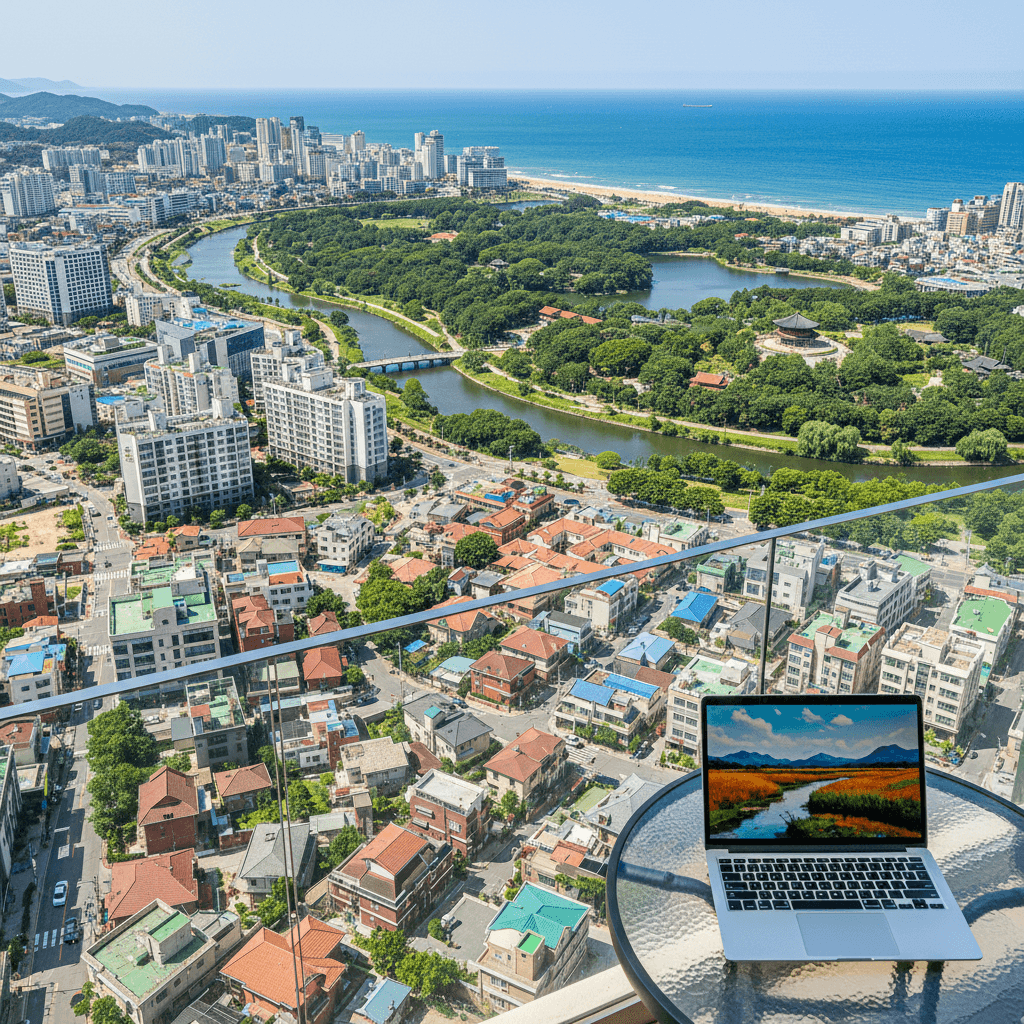
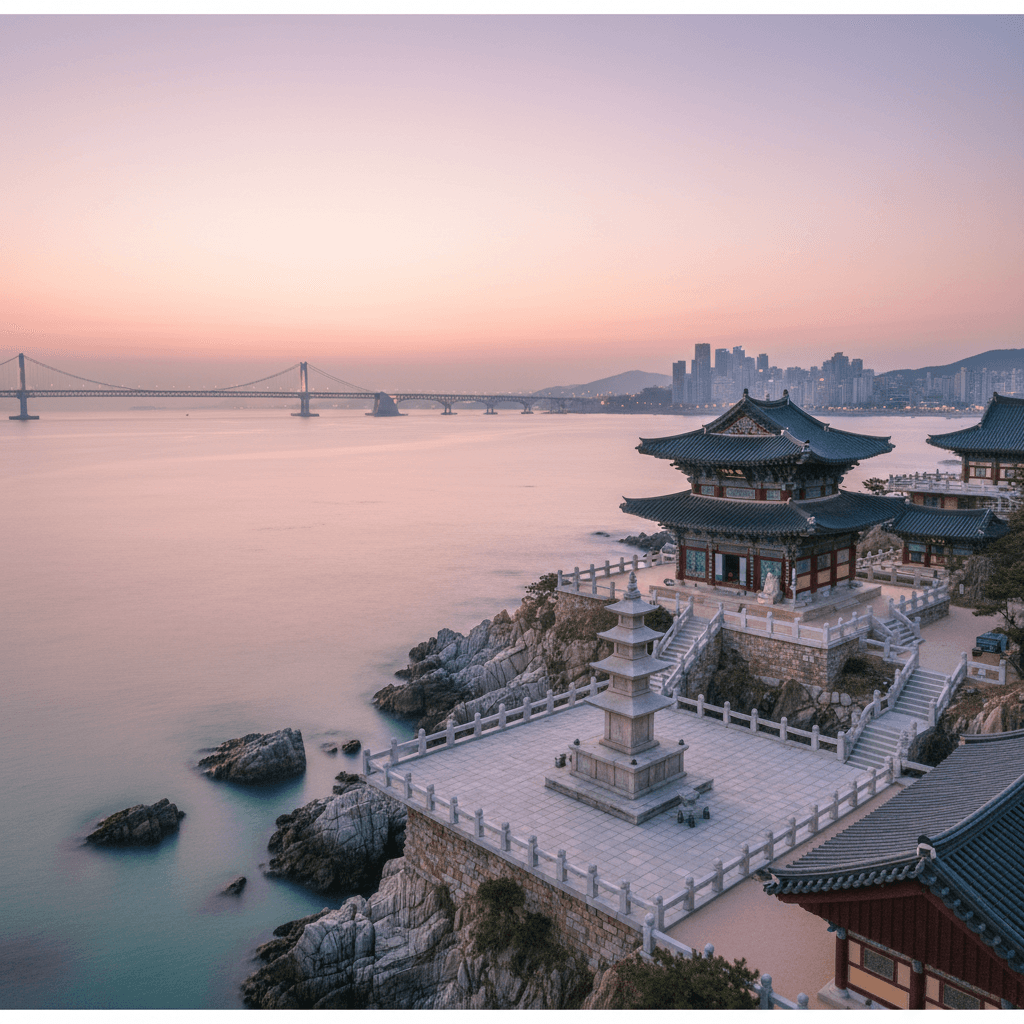
If Seoul is the high-octane, caffeine-fueled engine of South Korea, Busan is its breezy, salt-sprayed soul. It’s a city where you can finish a deep-focus work session in a high-rise cafe and be standing on the sand at Haeundae Beach five minutes later. Nomads often find that the pace here feels more human; there’s a distinct "ocean energy" that softens the edges of the typical Korean grind.
The city’s personality is built on a rugged port history, which translates today into a gritty but welcoming local charm. You’ll feel it in the Jagalchi Fish Market where the vendors are loud and proud, or in the steep, colorful alleys of Gamcheon Culture Village. It’s less about polished perfection and more about a raw, lived-in beauty. For those escaping the sweltering humidity of Southeast Asia in the summer, Busan’s coastal winds and world-class infrastructure make it an elite alternative.
The Nomad Lifestyle: High Tech, Low Friction
Living here is incredibly seamless. You won’t need a car; the subway system is surgical in its precision, and the Kakao T app makes grabbing a taxi effortless for about $3 for a short cross-town hop. While Busan doesn't have a massive "nomad hub" like Canggu or Chiang Mai, it makes up for it with a cafe culture that is arguably the best in the world. Every street corner has a spot with 99% 4G coverage, blazing WiFi, and ergonomic chairs designed for staying a while.
The downside? You have to be proactive to find your tribe. Most nomads lean on groups like Digital Nomads Korea (DNK) or join specific workation programs like Hoppin, which runs organized coliving stints from August to October. If you’re looking for a pre-packaged community, you might find it quiet, but if you enjoy a mix of solo focus and easy access to local life, it’s a powerhouse destination.
Cost of Living Breakdown
Busan is remarkably affordable for a city of its caliber. You can live a comfortable, middle-class life for around $2,500 a month, though budget-conscious travelers can definitely squeeze by on $1,500 if they stick to university areas.
- The Budget Tier ($1,500/month): Best for those staying in Gimhae or shared housing. You’ll eat $3 to $6 street food at Gwangbokdong and use a T-money card for all transport.
- The Mid-Range Tier ($2,500/month): This covers a nice studio in Seomyeon for about $700 to $1,000, daily cafe visits, and frequent dinners out at $10 a plate.
- The Comfortable Tier ($4,000+/month): This gets you a high-floor apartment overlooking the water in Haeundae, upscale seafood dinners, and a dedicated desk at a coworking space.
Where to Plant Your Flag
Each neighborhood serves a different flavor of the nomad experience. Choosing the right one depends on whether you want the surf or the skyscraper views.
Haeundae
- Best For: Expats and beach lovers who want high-end amenities.
- Rent: $1,000+ for beachfront spots.
- Pros: Incredible parks, English-friendly shops, and the best beach access in Korea.
- Cons: It gets swamped with tourists in July and August, and prices are the highest in the city.
Seomyeon
- Best For: Urbanites who want to be in the center of the action.
- Rent: $700 to $1,000 for modern studios.
- Pros: The ultimate transit hub where subway lines 1 and 2 meet. Best nightlife and shopping.
- Cons: It’s loud, concrete-heavy, and lacks the nature found on the coast.
Gwangalli
- Best For: Creatives and younger nomads.
- Rent: $600 to $900.
- Pros: A more "local" beach vibe than Haeundae with incredible views of the Gwangan Bridge. Plenty of vintage shops and live music.
- Cons: Can feel a bit "student-heavy" due to the nearby universities.
Practical Essentials
Healthcare is top-tier; if you’re under the weather, head to Pusan National University Hospital or grab basics at an Olive Young. For translation, skip the big-name apps and download Papago; it handles the nuances of Korean much better. When it comes to money, Wise and Revolut work at most ATMs, but keep a T-money card topped up with cash for the subway. Finally, remember the local etiquette: take your shoes off indoors and use two hands when giving or receiving anything, from business cards to beer bottles.
The Bottom Line on Busan
Living in Busan feels like a smart hack for nomads who want the high tech infrastructure of Seoul without the crushing pace or price tag. It is a city where you can finish a deep work session at a world class cafe and be on a beach with a $3 beer in ten minutes. Most nomads find they can live comfortably here for around $2,500 a month, though you can easily shave $1,000 off that if you opt for local neighborhoods over beachfront luxury.
Monthly Budget Tiers
Your biggest variable will be housing. While the city is walkable, you pay a premium for the convenience of being right on the sand or in the heart of the nightlife districts.
- The Budget Nomad ($1,500): You'll likely stay in areas like Gimhae or shared housing. This covers $500 to $700 for rent, plenty of $5 street food meals in Gwangbokdong, and a $50 T-money card for the subway.
- Mid-Range Professional ($2,500): This is the sweet spot. You can afford a modern studio in Seomyeon for $700 to $1,000, eat out at mid-range spots for $10 a meal, and keep a dedicated desk at a coworking space for about $160.
- The High Life ($4,000+): This gets you a high floor apartment overlooking Haeundae Beach for $1,000+, upscale dining, and frequent taxi trips via Kakao T.
Daily Expenses and Lifestyle Costs
Daily life in Busan is surprisingly affordable if you live like a local. A 10GB mobile data plan with a provider like KT or SK Telecom runs about $8, and a 3km taxi ride is usually under $4. If you are a coffee lover, expect to pay around $3 for a solid Americano. Groceries can be pricey, especially fruit, so most expats recommend eating out at local "kimbap" shops where a filling meal costs less than a latte back home.
Where to Plant Your Flag
Each neighborhood has a distinct price point and personality. Choose based on what you want to see when you look out your window in the morning.
- Haeundae: The most expensive and expat friendly. It's perfect for families or solo travelers who want immediate beach access and English menus. Expect higher rent and crowded summers.
- Seomyeon: The central nervous system of the city. It is where the two main subway lines meet. It's noisy and neon soaked, but it's the best spot for nightlife and shopping.
- Gwangalli: The creative heart. It's slightly cheaper than Haeundae but still offers a beach vibe. It's packed with vintage shops, craft beer bars, and students from nearby universities.
- Nampo: Great for culture junkies. It's close to the famous Jagalchi Fish Market and street food alleys. It is hilly and touristy, but the rent is often more negotiable here.
Work and Connectivity
You won't find a faster internet connection on the planet. Broadband is usually around $20 a month, and the 4G/5G coverage is nearly 100 percent. While dedicated nomad coworking spaces are still catching up, the Busan Workation Center offers incredible panoramic views for those who need a professional setup. Most nomads just lean into the cafe culture. As long as you buy a coffee, you can usually camp out for a few hours with reliable WiFi and plenty of power outlets.
Apps and Practicalities
To keep your costs down, download Kakao T for rides and Papago for translation. Most ATMs are foreigner friendly, and you won't deal with foreign transaction fees at 7-Eleven machines. If you are looking for long term stays, check out EnkoStay or the Zigbang app, though you might need a Korean speaker to help you navigate the latter. Remember that tipping isn't a thing here, which helps keep your dining budget predictable.
The Nomad Crowd: Seomyeon and Gwangalli
If your priority is a mix of high speed internet and a social pulse, Seomyeon is the undisputed heavy hitter. It is the city's central transit hub where Subway Lines 1 and 2 intersect, making it the most convenient base for exploring. The vibe here is pure neon energy; think endless rows of themed cafes, late night barbecue spots, and underground shopping malls. Most nomads find the convenience outweighs the noise, with mid range studios averaging $700 to $1,000 per month. It is the best spot for those who want to walk out of their door and be seconds away from a Kakao T pickup or a 24 hour convenience store.
For a more creative, laid back atmosphere, head to Gwangalli. This area sits right on the water and is popular with the university crowd from nearby Kyungsung and Pukyong. You will find vintage clothing shops, indie music venues, and arguably the best cafe culture in the city. Working from a coffee shop with a view of the Gwangan Bridge is a rite of passage here. While dedicated coworking spaces are still catching up, the Busan Workation Center offers panoramic views that make the $159 monthly hot desk fee feel like a bargain. It is less corporate than the city center and perfect for those who prefer a surf board to a suit.
Expats and Long Term Residents: Haeundae
Haeundae is where you go when you want the comforts of home with a coastal upgrade. It is the most international district in Busan, home to high end apartments, luxury hotels, and a large English speaking community. Rent is steeper here, often exceeding $1,000 for beachfront views, but the infrastructure is top tier. You will find plenty of gyms, international grocery stores, and Olive Young branches on every corner.
Expats recommend this area for its walkability and cleaner air. While the main beach gets packed during the peak summer months of July and August, the residential backstreets remain relatively calm. It is a polished version of Busan life where the transition is easy, even if your Korean is limited to a few basic phrases like Gamsahamnida.
Families and Professionals: Centum City
If you need order, modern amenities, and proximity to business hubs, Centum City is the place to be. It feels like a city of the future, dominated by the world's largest department store and sleek glass skyscrapers. It is a highly organized neighborhood with wide sidewalks and easy access to Subway Line 2. Families often choose this area for its safety and the abundance of green spaces like APEC Naru Park.
The vibe is more professional and less "backpacker" than the beach districts. You are close enough to Haeundae for a weekend beach trip but far enough away to avoid the tourist traps. Expect a very high standard of living, though the "corporate" feel might be a bit sterile for those seeking traditional Korean grit. Prices here are comparable to Haeundae, but you often get more modern square footage for your money.
Budget Seekers and Solo Explorers: Nampo and Gimhae
Nampo is the soul of old Busan. It is perfect for solo travelers who want to be immersed in the city's history and street food culture. The Gwangbokdong food stalls and Jagalchi Fish Market are right at your doorstep, with meals ranging from $3 to $6. The terrain is hilly and the buildings are older, but the rent is significantly lower than the eastern districts. It is a chaotic, charming area that feels authentically local.
For those who really want to stretch a budget or prefer total quiet, Gimhae is an overlooked alternative. Located on the outskirts near the airport, it offers a much slower pace of life.
- Gimhae Rent: Often as low as $500 for a decent studio.
- Atmosphere: Quiet, residential, and surrounded by nature.
- Trade off: You will spend 40 minutes on the light rail or subway to reach the central action.
Internet Speed and Connectivity
South Korea is famous for having some of the fastest internet on the planet, and Busan doesn't disappoint. You'll find 4G and 5G coverage is almost universal, even when you're hiking in the hills or lounging on the sand at Gwangalli Beach. Most nomads find that basic broadband costs around $20 a month, but you likely won't even need a dedicated home setup if you're staying short term.
For mobile data, grab a SIM card from KT or SK Telecom. You can pick these up at Gimhae Airport or any GS25 convenience store. Expect to pay about $8 for 10GB of data. If you prefer the digital route, Airalo eSIMs work perfectly here, though they can be slightly pricier than local physical cards. Most expats recommend using Kakao Pay or Naver Pay for daily transactions, as they're integrated into almost every aspect of Korean life.
Coworking Spaces and Workations
If you're looking for a traditional "nomad hub" with a pool and a community manager, you might find Busan a bit different. The coworking scene is largely geared toward local startups rather than international travelers. However, the Busan Workation Center is a major exception. It's known for its incredible panoramic views of the harbor and hosts workation programs. It's one of the few places where you'll find a concentrated group of remote workers and organized networking events.
For a more standard office environment, hot desks usually run around $159 per month, while a dedicated desk can jump to $300 or more. If you're staying in Centum City, you'll find plenty of corporate style spaces, but they lack the relaxed beach vibe many nomads come here for. Most people find that the lack of dedicated nomad spaces is easily solved by the city's incredible cafe culture.
The Cafe Culture
In Busan, cafes are the unofficial offices of the city. Unlike in some European cities where you might feel pressured to leave after an hour, Korean cafe culture is very welcoming to laptop users. It's common to see people hunkered down for hours with a single $3 coffee. The WiFi is almost always free, stable, and fast enough for video calls without a stutter.
- Haeundae: Great for upscale cafes with views, though it gets crowded and loud during the summer peak.
- Gwangalli: This is the sweet spot for many creatives. The cafes lining the beach offer great views of the Gwangan Bridge and a more laid back, artistic atmosphere.
- Seomyeon: If you need to be in the heart of the action, this central district has massive, multi story cafes where you can easily blend into the background.
Productivity Apps and Tools
To stay productive and mobile in Busan, there are a few apps you'll need to download immediately. Forget Google Maps; it doesn't work well for walking directions in Korea. Use Naver Maps or KakaoMap instead. For communication and translation, Papago is far more accurate for the local dialect than other translators. If you need to get to a meeting across town, Kakao T is the go to for ride hailing, with most short trips costing around $3 to $5.
Digital Nomads Korea (DNK) is the main community group to join. They host events and meetups that help bridge the gap between the local startup scene and the international nomad community. While the "community vibe" isn't as obvious as it is in places like Bali or Chiang Mai, it's there if you look for it, especially during the August to October window when workation programs are in full swing.
A Safe Haven for Nomads
Busan consistently ranks as one of the safest cities in the world for solo travelers and digital nomads. You'll quickly notice a local culture built on high levels of social trust. It is common to see people leave their laptops or smartphones unattended at a cafe in Seomyeon while they grab a refill or use the restroom. While you should still use basic common sense, the risk of petty theft or violent crime is remarkably low.
Walking alone at night is generally safe across the city, including popular beach stretches like Haeundae and Gwangalli. If you're out late in the nightlife districts, you might see some rowdy crowds around the bars, but police presence is consistent and helpful. If you ever run into trouble, the emergency number for police is 112, and the fire or medical emergency line is 119. Both services have English speaking operators available to assist foreigners.
World Class Medical Care
The healthcare system in South Korea is highly efficient and technologically advanced. In Busan, you have access to several major university hospitals that provide specialized care and English speaking international clinics. Pusan National University Hospital and Dong-A University Hospital are the top choices for complex issues or emergencies. These facilities are clean, modern, and surprisingly affordable compared to Western standards.
For minor ailments like a cold, skin irritation, or a small injury, skip the hospital and head to a local clinic. These are everywhere, usually located on the upper floors of commercial buildings near subway stations. You can typically walk in without an appointment and see a doctor within 20 minutes. A standard consultation for a non resident usually costs between $20 and $40, and the service is incredibly fast.
Pharmacies and Everyday Health
Pharmacies, marked by a bright red or green "Yak" (약) sign, are easy to find on almost every street corner. Most pharmacists speak enough English to help you find over the counter meds for headaches or allergies. If you need something specific like a particular brand of skincare or basic vitamins, Olive Young is the go-to chain. It's essentially the Korean version of Sephora mixed with a drugstore, and you'll find branches in every major neighborhood from Nampo to Centum City.
- Emergency Ambulance: Dial 119 (free service)
- Medical Interpretation: Dial 1330 for the Korea Travel Helpline if you need help translating symptoms to a doctor
- Pharmacy Hours: Most are open 9:00 AM to 9:00 PM, though some "late night" pharmacies stay open until midnight in busy areas like Seomyeon
- Health Insurance: While the quality is high, always carry private travel insurance like SafetyWing or World Nomads, as the national health plan is only for long term residents on specific visas
Practical Safety Tips
The biggest physical "danger" you'll likely face in Busan is the traffic. Delivery scooters often zip onto sidewalks or fly through pedestrian crossings, so keep your eyes open when walking in crowded areas. When it comes to natural safety, be aware that July and August can bring typhoons. The city is well prepared with sea walls and drainage systems, but it's smart to monitor weather apps during the summer months.
For digital security, the public WiFi in Korea is generally secure, but using a VPN is still a standard recommendation for nomads working on sensitive projects. Most cafes will have the WiFi password printed on the receipt or taped to the wall near the counter. You won't find many "scams" here, but always double check your change at traditional markets like Jagalchi, where things move fast and math errors can happen in the heat of the moment.
The Logistics of Getting Around
Moving through Busan is surprisingly intuitive for a city of over 3.4 million people. Most nomads find they rarely need a car, thanks to a transit system that ties the mountains to the sea with surgical precision. The city feels less frantic than Seoul, but the infrastructure is just as robust.
The Subway System
The metro is your lifeline here. It is clean, fast, and remarkably easy to use since all signage and announcements are in English. Line 1 (orange) and Line 2 (green) do the heavy lifting for most travelers. Line 2 is particularly popular because it connects the central hub of Seomyeon to the beach districts of Gwangalli and Haeundae.
- Cost: Single rides usually run between $1 and $2.
- Payment: Grab a T-money card at any convenience store like GS25 or CU. You can tap it for subways and buses, and even use it to pay for snacks at the counter.
- Hours: Trains generally run from 5:30 AM until just after midnight.
Buses and Ride-Hailing
Buses fill the gaps where the subway doesn't reach, like the steep hills of Gamcheon Culture Village. They are efficient but can be a bit of a wild ride; Busan bus drivers are famous for their "spirited" driving style. Always hold on to the rails until the bus stops completely.
For late nights or grocery runs, download Kakao T. It is the local equivalent of Uber. You can link a card or pay the driver in cash. A typical 3km trip costs about $3, making it an affordable fallback when you miss the last train. Avoid standard Uber here; it is far less reliable than the local Kakao fleet.
Walking and Micromobility
Busan is a city of distinct pockets. Once you are in a neighborhood like Nampo or Haeundae, your best tools are your own two feet. The beach boardwalks are wide and flat, perfect for a morning stroll before opening your laptop. However, be prepared for some serious inclines if you venture into the residential hills.
For shorter trips that are too long to walk, look for shared electric scooters and bikes. Apps like Swing are everywhere. Rentals usually cost around $1 per hour. Just keep in mind that Korean traffic laws for scooters are strictly enforced, so stay off the sidewalks in busy pedestrian zones.
Getting to and from Gimhae Airport (PUS)
Getting into the city from the airport is straightforward. You have three main options depending on your budget and luggage situation:
- Light Rail and Subway: The cheapest way. Take the Busan-Gimhae Light Rail to Sasang Station, then transfer to Line 2. It takes about 45 to 60 minutes to reach the beach areas and costs under $3.
- Taxi: A direct ride to Haeundae takes 40 to 50 minutes depending on traffic and costs roughly $20 to $25. It is worth the splurge if you are carrying heavy bags.
- Limousine Bus: These comfortable coaches run to major hotels and hubs. They cost about $6 to $8 and offer more luggage space than the subway.
Regional Travel
If you want to escape the city for a weekend, Busan Station is your gateway to the rest of the country. The KTX bullet train can whisk you to Seoul in about 2.5 hours or to the historic temples of Gyeongju in just 30 minutes. Expats recommend booking weekend tickets a few days in advance, as popular times sell out quickly.
The Language Barrier
In Busan, the linguistic landscape is a bit different than in Seoul. While the capital is a global hub, Busan feels more authentically local. You'll find that English is widely spoken in upscale pockets like Haeundae and Centum City, but it drops off quickly once you head into the traditional markets or quieter residential areas. Most younger locals and university students have a decent grasp of English, though they might be shy about using it until you break the ice.
The local dialect, known as Satoori, is famous across Korea for its aggressive, rhythmic, and soulful tone. Don't be intimidated if a shopkeeper in Jagalchi Market sounds like they're shouting; it's usually just the Busan way of being friendly. Nomads often find that learning even five or six basic words opens doors and earns genuine smiles from the older generation.
Must-Have Translation Tech
Don't rely on Google Translate here. It often struggles with Korean syntax and the specific nuances of the Busan dialect. Instead, download Papago immediately. It's the gold standard for translation in Korea, offering much more accurate voice-to-text and image translation for menus and street signs. For looking up specific terms or nuances, Naver Dictionary is the go-to resource for expats living in the city.
- Annyeonghaseyo: Hello (polite)
- Gamsahamnida: Thank you
- Jebal: Please
- Olmayeyo?: How much is it?
- Yeogi-yo!: Over here! (Used to call a server in a restaurant)
Digital Communication and Connectivity
Everything in Busan runs on KakaoTalk. It's not just a messaging app; it's the infrastructure of daily life. You'll use it to talk to landlords, join nomad meetups, and even receive notifications for package deliveries. If you're staying for more than a week, setting up a Kakao account is the first thing you should do after landing.
For getting around, Kakao T is your best friend for hailing taxis. Even if you don't speak a word of Korean, you can input your destination in the app, and the driver will follow the GPS without needing a verbal exchange. Most taxis cost around $3 for a 3km trip, making it an affordable backup to the subway system.
Staying Connected
You'll rarely find a "dead zone" in this city. South Korea's internet infrastructure is world-class, with 4G and 5G coverage reaching even the most remote hiking trails in the Busan mountains. For your phone, you have a few easy options:
- Physical SIM Cards: Pick these up at Gimhae Airport or any GS25 convenience store. Expect to pay around $8 for 10GB of data. Major providers like KT, SK Telecom, and LG U+ all offer foreigner-friendly prepaid plans.
- eSIMs: Many nomads recommend Airalo for an instant connection the moment the plane touches down, though local SIMs are usually cheaper for long-term stays.
- Public WiFi: It's everywhere. From the subway cars to the sands of Gwangalli Beach, you can usually find a free "Public WiFi" signal, though it's best to use a VPN for security.
Social Nuances
Communication in Busan is as much about what you do as what you say. Punctuality is taken very seriously here. If you're meeting a local contact or a real estate agent at 2:00 PM, being five minutes early is considered on time. When paying for things or receiving a business card, use two hands as a sign of respect. It's a small gesture that goes a long way in building rapport with the locals in your neighborhood.
While there isn't a massive dedicated coworking scene yet, the "workation" trend is growing. You'll find plenty of English-speaking nomads at the Busan Workation Center or through Digital Nomads Korea events. These spaces are your best bet for finding a community that speaks your language while you're still getting the hang of the local tongue.
The Seasonal Sweet Spot
If you're planning your stint in Busan, timing is everything. Most nomads find the shoulder seasons of May to June and September to October to be the goldilocks zones. During these months, temperatures hover between 20°C and 28°C (68°F to 82°F). It is the perfect weather for taking your laptop to a seaside cafe in Gwangalli or hiking the trails around Beomeosa Temple without breaking a sweat.
The fall is particularly spectacular. The humidity drops, the air gets crisp, and the city's parks turn shades of burnt orange and red. It is also the time when the community vibe peaks, with workation programs like Hoppin running from August through October to take advantage of the mild evenings.
Summer: Beaches and Humidity
July and August are a different beast. This is when Busan truly earns its reputation as Korea's summer capital. Temperatures sit between 25°C and 32°C (77°F to 90°F), but the humidity makes it feel much hotter. Haeundae Beach becomes a sea of yellow parasols, and the city pulses with energy.
Expats recommend staying near the coast during this time to catch the sea breeze, but be prepared for the rain. Monsoon season typically hits in July, bringing heavy downpours and the occasional typhoon. If you're escaping the sweltering heat of Southeast Asia, Busan's summer might feel familiar, though significantly more crowded as half of Seoul descends on the city for vacation.
Winter: Mild but Brisk
Winter in Busan is much kinder than the soul-crushing cold of Seoul. From December to February, you can expect highs of 5°C to 10°C (41°F to 50°F). It rarely snows here; instead, you get bright, blue-sky days that are quite dry. While it is too cold for a swim, the lower rental prices and lack of crowds make it a strategic time for a focused deep-work sprint. Just make sure your Airbnb has floor heating, known as ondol, which is a lifesaver during the chilly nights.
Monthly Climate Breakdown
- January to March: Cool and dry. Highs of 8°C to 12°C. You will need a proper coat, but the city is quiet and affordable.
- April to June: Pleasant and blooming. Highs of 18°C to 25°C. This is prime festival season and arguably the best time for outdoor digital nomad meetups.
- July to September: Hot, humid, and rainy. Highs of 26°C to 30°C. Great for beach lovers, but keep an eye on typhoon warnings in late August.
- October to December: Mild to cool. Highs of 15°C to 20°C. Excellent visibility for those panoramic views from the Busan Workation Center.
What to Pack
If you are arriving in the spring or fall, layers are your best friend. A light jacket is necessary for the coastal winds that pick up after sunset. For summer, pack breathable fabrics and a solid umbrella; you will need it for the July rains. If you're brave enough for a Busan winter, a heavy parka is still recommended, even if it isn't as extreme as the north of the country. Regardless of the season, bring comfortable walking shoes. Between the hills of Gamcheon Culture Village and the long stretches of beach boardwalks, you will be hitting your step goals daily.
Getting Around the City
Busan is incredibly easy to navigate without a car. The subway system is the backbone of the city, with Line 1 and Line 2 connecting the major hubs like Seomyeon, Gwangalli, and Haeundae. You'll want to grab a T-money card at any convenience store like GS25 or CU as soon as you land. It works for buses and trains, and rides usually cost between $1 and $2.
For those times when the subway doesn't quite reach your destination, download Kakao T. It’s the local version of Uber and works flawlessly. A typical 3km ride will only set you back about $3. If you're feeling active, apps like Swing let you rent electric scooters for around $1 per hour, which is perfect for cruising the flat coastal paths.
Cost of Living Breakdown
Your budget in Busan goes much further than it would in Seoul. Most nomads find they can live comfortably on $2,500 per month, though you can certainly squeeze by on $1,500 if you stick to quieter areas and street food.
- Housing: Expect to pay $700 to $1,000 for a modern studio in Seomyeon. If you want to wake up to the ocean in Haeundae, prices jump to $1,000+. For a budget win, look at Gimhae where you can find spots for under $600.
- Food: Street food in Gwangbokdong is a steal at $3 to $6. A mid range dinner out is usually $10, and a pint of beer or a latte will both cost you about $3.
- Connectivity: A 10GB mobile data plan from KT or SK Telecom is roughly $8. High speed home internet is usually around $20 per month.
Where to Set Up Your Desk
Busan doesn't have a massive dedicated coworking scene yet, so most nomads treat the city’s incredible cafes as their offices. The WiFi is universally fast and stable. If you need a professional environment, the Busan Workation Center is the current favorite, offering panoramic views of the harbor. A hot desk there or at similar startup hubs typically costs around $159 per month.
For those looking for a community, keep an eye on Hoppin. They run seasonal workation programs that include coliving and events. Digital Nomads Korea (DNK) also hosts meetups that are great for breaking the ice when you first arrive.
Health, Safety, and Language
Safety is a non issue here. You can walk alone at night in almost any neighborhood, including the nightlife district of Seomyeon, without a second thought. If you do get sick, Pusan National University Hospital provides excellent care. For minor issues, look for an Olive Young; they are everywhere and stock most basic health supplies.
English is common in tourist heavy Haeundae, but it thins out quickly elsewhere. You'll want Papago or Naver Dictionary on your phone for translations. Learning a few basics like Annyeonghaseyo (hello) and Gamsahamnida (thank you) goes a long way with the locals.
Weather and Timing
The sweet spots for Busan are May to June and September to October. The weather is a perfect 20°C to 28°C, making it ideal for beach days and hiking. July and August are the months to watch out for; it gets incredibly humid, and typhoons can occasionally disrupt travel. Winters are chilly but rarely see heavy snow, with averages staying around 5°C to 10°C.
Local Etiquette and Tips
- Banking: Use Wise or Revolut for daily spending. If you need cash, 7-Eleven ATMs generally don't charge foreign transaction fees.
- Social Norms: Always remove your shoes when entering a home or certain traditional restaurants. Tipping isn't a thing here, so don't worry about adding extra to your bill.
- Apps to Download: Naver Maps is much more accurate than Google Maps in Korea. For food delivery, try Shuttle if your Korean isn't fluent yet.
Need visa and immigration info for South Korea?
🇰🇷 View South Korea Country GuideNomad Haven
Your home away from home
Monthly Budget Estimates
More cities in South Korea
Andong
🇰🇷 South Korea
Daegu
🇰🇷 South Korea
Cheongju
🇰🇷 South Korea