Budva
🇲🇪 Montenegro
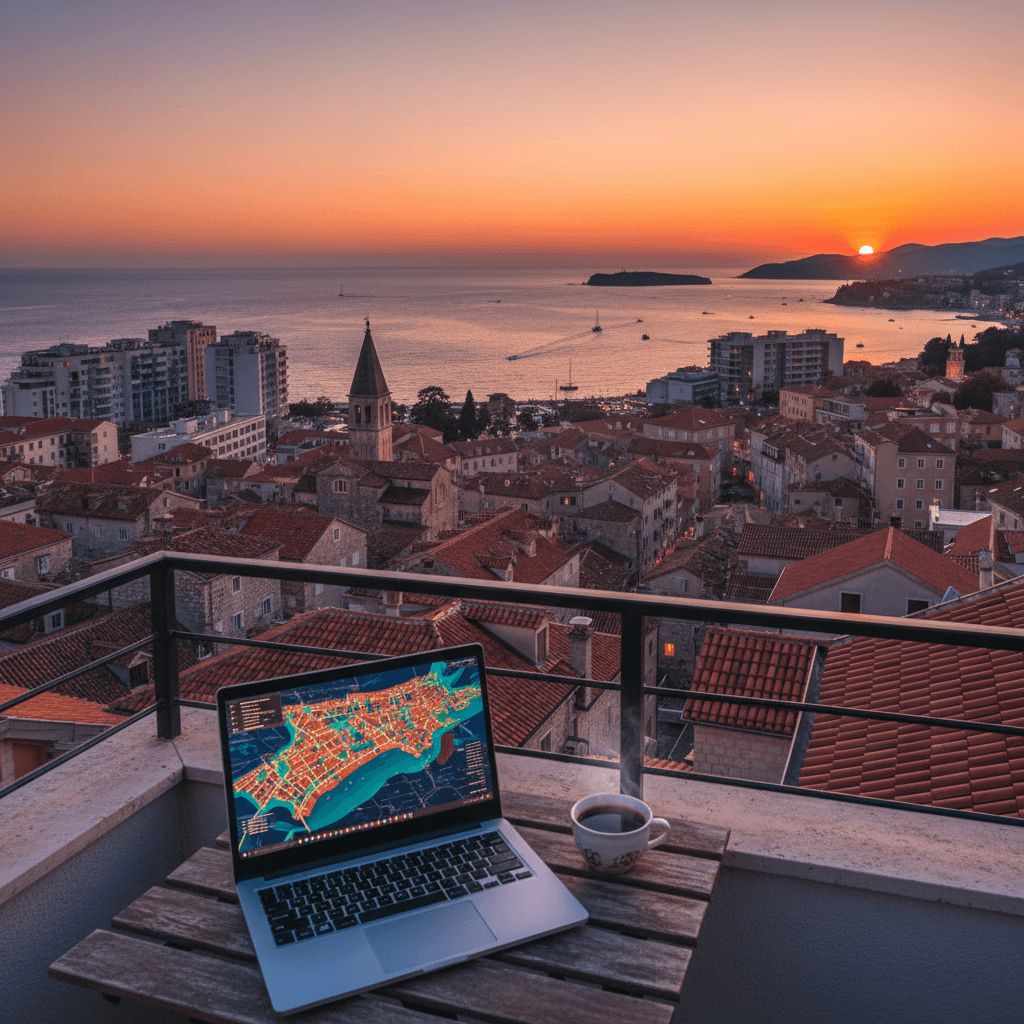
Budva feels like a beach town that never quite learned to slow down. Old Town has stone alleys, church bells, grilled fish and scooters buzzing past café tables, then you walk ten minutes and you’re on Slovenska Plaža with DJs, sunburn and families dragging towels through the heat. It’s pretty, loud and a little shameless, honestly.
For nomads, that mix is the appeal and the headache. You get sea views, decent internet in town, a social expat scene and easy day trips, but July and August can get grindy fast, with tourist prices, packed sidewalks and English that drops off the second you leave the main drag. The place works best if you like structure in the morning and beach time after, because Budva can feel like one long summer weekend.
Old Town is the classic choice, but it’s not calm.
- Best for: Solo nomads, short stays, nightlife
- Rent: €600 to €750 for a studio or 1BR in peak areas
- Tradeoff: Crowded, noisy and expensive in summer
Becici is where a lot of remote workers end up after a week in the center, weirdly enough.
- Best for: Work-life balance, quieter beach days, longer stays
- Rent: €400 to €650 outside the center
- Tradeoff: Less social, farther from the late-night scene
Slovenska Plaža sits in the middle of it all, which, surprisingly, isn’t always a good thing.
- Best for: Beach access, restaurants, WiFi hunting
- Watch for: Tourist traffic, parking headaches, summer noise
Money adds up quickly here. A basic month for one person usually lands around €1,200 to €1,400 and if you want to live comfortably, you’ll probably feel closer to €2,000 once you add rent, eating out, transport and a coworking desk at Monteco or similar. Street food like burek is cheap, but a proper dinner by the water, with salt in the air and traffic humming behind you, can climb fast.
Budva’s best days are the shoulder season ones, May, June, September and October, when the sea still looks absurdly blue and the humidity hasn’t turned sticky yet. In winter it gets quieter, more local and honestly more livable, though some visitors find it a bit too sleepy after the summer chaos.
Cost of Living
Budva isn’t cheap in summer. June through August, the town gets loud, sweaty and expensive, with beach bars pumping music, scooters buzzing past and the smell of grilled fish drifting out over packed terraces.
A single person usually spends about €1,200 to €1,400 a month with rent included, though you can get by on €800 to €1,000 if you share and stay outside peak season. Want a softer landing? Budget closer to €2,000 and you won’t be counting every coffee.
Rent is the big swing factor and Old Town prices can sting, honestly, because you’re paying for location, nightlife and postcard views. Becici is calmer and usually easier on the wallet, though it’s a bit less social and you’ll trade convenience for quieter nights and cleaner sleep.
Typical Monthly Costs
- Studio or 1BR in city center: €600 to €750, especially around Old Town and Slovenska Plaza.
- Studio or 1BR in outskirts: €400 to €650, with Becici often the better value.
- Meals: €5 to €10 for burek or fast food, €25 to €30 at a mid-range restaurant, €50+ if you sit down somewhere upscale.
- Transport: €35 to €40 for a monthly bus pass, taxis start around €1 and meter up fast.
- Coworking: €15 a day or €280 a month at Monteco for shared desk; €300+ for private office.
Food is manageable if you eat like a local and the cheap stuff is actually decent, fresh burek, grilled meat, pizza slices, simple salads, all of it cheap enough that you won’t hate your grocery bill. Go beachfront for dinner and the price jumps fast, which, surprisingly, still doesn’t always buy you better service.
Internet is solid in town, with home broadband and 5G often hitting 60Mbps or better and sometimes much faster, though tourist congestion can make it crawl at the worst possible moment. Most nomads pick up a local SIM from One, Mtel or Crnogorski Telekom for €10 to €20 and that usually keeps you online without drama.
Where Nomads Usually Land
- Old Town: Best vibe, best walkability, highest noise and prices.
- Slovenska Plaza: Handy for beaches, cafes and people-watching, but tourist-heavy.
- Becici: Better for work-life balance, less chaos, better sleep.
- Rafailovici: Quieter and scenic, though it can feel a bit isolated.
If you want the cheapest version of Budva, come off-season and skip the beachfront premium. That’s the real trick, because the city can feel relaxed in spring and autumn, then turn into a noisy, sunscreen-scented cash machine once the summer crowds hit.
Nomads
Old Town is where most remote workers end up first and for good reason, you can walk everywhere, grab coffee by the stone lanes and catch a swim before lunch if the crowds don’t scare you off. It’s loud in summer, scooter engines buzz past café tables and the place gets pricey fast, but the vibe is hard to beat.
Slovenska Plaza works better if you want beach access and a bit more everyday convenience, though it feels touristy and parking is a headache. Internet is decent in town and Monteco is the name people keep dropping when they need a proper desk, not a laptop-on-a-beach-chair fantasy.
Expats
Becici is usually the smarter pick for longer stays, honestly, because it’s calmer, easier on the nerves and a better fit if you’re trying to work without hearing club music at 2 a.m. The beach is wide, the air smells like salt and sunscreen and you’ll still be close enough to Budva for dinner or coworking.
- Rent: About €400 to €650 for a studio or 1BR
- Best for: Quiet routines, beach walks, family-style buildings
- Downside: Less nightlife, fewer casual hangouts
Old Town can work for expats too, but only if you like being in the middle of everything and don’t mind summer noise, rent spikes and the occasional language barrier when you’re dealing with repairs. Frankly, many long-stayers split the difference, sleep in Becici, socialize in Budva.
Families
Rafailovici is the sleepier choice and that’s the point, it’s scenic, a bit more polished and less chaotic than central Budva. You’ll get fewer restaurant options and less of a scene, but the tradeoff is a quieter coastline and fewer drunk shout-fights outside bars.
Becici is also solid for families because the beach is gentler and the hotel zone makes life easier, though the vibe can feel a little resort-heavy and, weirdly, a bit detached from actual neighborhood life. If you want supermarkets, pharmacies and a calmer evening walk, it wins.
Solo Travelers
Old Town is the social choice and it’s the best place if you want easy dinners, late drinks and a steady stream of people to talk to in the alleyway cafés. It’s also the easiest area to walk around at night, though pickpockets do work the tourist crush, so keep your phone zipped away.
If you want less noise and more space, stay near Slovenska Plaza or slide down toward Becici, then take buses or taxis into the center when you actually want the energy. Bus fare is cheap, taxis start around €1 and the city’s small enough that you won’t feel stranded, just slightly sunburned and a little overpaying for iced coffee.
Budva’s internet is decent, but summer can make it flaky when the town gets packed and every café in sight is full of laptops, beach bags and people trying to upload the same sunset reel. On a normal day, home broadband and 5G can hit around 200Mbps, so working from an apartment or a proper desk usually feels fine, honestly, but don’t expect perfect consistency in July and August. The air smells like sunscreen, grilled fish and exhaust near the promenade and the WiFi sometimes feels just as mixed as the crowd.
For coworking, Monteco is the name most nomads end up hearing first. Day passes €15, monthly shared plans €280 and private office space gets pricier fast, so it makes sense for short stays or if you need quiet calls and a predictable chair, because café WiFi can be hit-or-miss once the lunch rush starts.
- Monteco: best bet for focused work, paid desks, private offices and fewer beach-bar distractions.
- Cafés: workable in shoulder season, noisy and crowded in summer, especially near Slovenska Plaža and the Old Town.
- Mobile data: tourist SIMs from One, Mtel or Crnogorski Telekom usually cost €10 to €20 for 10GB or more.
- Home internet: monthly packages often sit around €25 to €40, which is fair until you hit a building with weak coverage.
Where to Work
- Old Town: pretty and central, but the church bells, scooters and nightlife noise get old fast if you’re on calls.
- Slovenska Plaža: easy for cafés and seaside breaks, though tourist crowds make it messy by midday.
- Bečići: better for work-life balance, quieter and more practical if you want a calmer base.
Most nomads end up treating Budva like a split-screen setup, work in the morning, beach later, then maybe a late dinner and one drink too many. That rhythm works, weirdly, because the city isn’t trying to be a polished tech hub, it’s just a seaside town with enough signal, enough cafés and enough backpackers to keep you going.
If you need reliability, get a local SIM on arrival and keep a backup hotspot ready. That’s the real move, because when the promenade fills up and everyone’s online at once, the connection can slow down just enough to annoy you, not enough to ruin the day, which, surprisingly, is very Budva.
Safety & Healthcare
Budva feels safe overall, especially around the promenade, Old Town and the main beach areas, but pickpockets do work the summer crowds, so keep your phone zipped away and don’t leave bags hanging off a café chair. Crowds, scooters, cigarette smoke and the constant clatter of plates on terraces can make the center feel hectic, though not dangerous. Not exactly serene.
If you’re out late in Stari Grad after the bars spill onto the cobbles, stay alert, because drunk tourists and tight lanes are a worse combo than locals. There aren’t real no-go zones and honestly that’s part of why nomads stick around, but petty theft is the main annoyance, not street crime.
Healthcare basics
- Primary care: JZU Health Center Budva handles checkups, minor illnesses and basic prescriptions.
- Serious care: Clinical Center Podgorica is the main option for bigger problems, about an hour away by car.
- Emergency numbers: 112 for emergencies, 122 for police, 124 for ambulance.
- Pharmacies: Easy to find, with plenty of late-day options near central Budva.
Private clinics are usually the smoother route if you want English-speaking staff and insurance is a smart idea because out-of-pocket treatment can get annoying fast, especially if you need imaging or specialist care. Weirdly, the biggest healthcare stress here isn’t quality, it’s paperwork and timing, so keep your passport, policy details and any prescriptions handy.
Best areas to stay
- Old Town: Safe, walkable, lively, but noisy and crowded in summer.
- Slovenska Plaza: Handy for beaches and cafés, though tourist traffic is heavy.
- Bečići: Calmer, better for sleep and usually the pick for work-life balance.
- Rafailovići: Quiet and scenic, but fewer services and less social energy.
Most nomads keep a lighter mood about safety once they’ve settled into the right neighborhood, because a calm base changes everything. Bečići is the sensible pick if you need sleep and steady workdays, while Old Town is better if you want to be in the middle of the action and don’t mind bass thumping through your window at 2 a.m.
Practical health habits
Carry cash for taxis and smaller pharmacies, keep a local SIM and use Google Translate when a pharmacy counter gets busy and everyone starts talking over each other. The heat can hit hard in July and August, honestly, so drink water constantly, wear sunscreen and don’t assume the sea breeze means you’re fine. It doesn’t.
Budva looks walkable on a map and the center mostly is, but once you start heading toward the beaches or out to Becici, the hills and traffic make the picture messier. The old town lanes are easy on foot, though they get noisy fast in summer, with scooter engines, clattering heels and that mix of sea salt and grilled fish drifting off the promenade. Not everything needs a ride. But sometimes it does.
For short hops, buses are the cheapest option and they’re fine if you’ve got patience. Tickets are €2.50, monthly passes are about €35 to €40 and the main station, Autobuska Stanica, connects you to nearby beaches and towns without much drama, though timetables can feel loose and summer crowds squeeze everyone in like sardines. Honestly, if you’re carrying groceries or hauling a laptop bag in heat that clings to your back, a taxi starts sounding pretty reasonable.
Best ways to move around
- Walk: Best for Old Town, Slovenska Plaza and quick beach runs, especially early morning before the tourist crush.
- Bus: Cheap, basic and useful for longer local trips, but don’t expect slick frequency or flawless English at the station.
- Taxi: Metered only, with taxis start around €1, €1.50-1.80/km, so agree on the meter before you get in.
- Bike or scooter: Handy for flatter stretches, though Budva’s traffic, heat and patchy shoulder space can make it feel a bit sketchy.
There’s no Uber or Bolt here, so metered taxis and local dispatch apps are what you get, which, surprisingly, works better than it sounds once you learn the usual pickup spots. For airport runs, Tivat Airport is only about 17 km away, so you’re looking at roughly 30 minutes and €25-50 by taxi, €4-6 by bus, depending on traffic and how hard the coast is packed that day.
Neighborhood movement
- Old Town: Easiest for walking, hardest for parking and loud late into the night.
- Slovenska Plaza: Good for beach access and cafes, but cars crawl here in peak season.
- Becici: More spread out, calmer and better if you want a slower pace, though you’ll ride more often.
If you’re staying a month or longer, rent a place where you can walk to a supermarket, a bakery and the beach, because daily taxi rides add up fast and the midday heat can be brutal. The whole system isn’t fancy, but it’s workable and once you settle into the rhythm, Budva gets easier to move through, weirdly enough, than it first looks.
Budva’s language scene is simple on paper, messy in real life. Montenegrin and Serbian carry the city, English shows up in tourist spots and with younger locals, but plenty of shopkeepers, taxi drivers and landlords still prefer to talk fast and keep moving.
That can be charming or annoying. In July, with scooters buzzing past the Old Town walls and beach bars thumping bass into the evening air, you’ll get by on gestures, prices and a few useful words, but don’t expect every errand to feel smooth.
What actually works: learn a handful of phrases, keep Google Translate open and don’t be shy about repeating yourself. Hvala means thanks, koliko means how much and those two alone will save you time and a little money.
How English feels by area
- Old Town: Most tourist-facing spots speak some English, though staff can be rushed in summer.
- Slovenska Plaza: Better odds for English at cafés, rentals and beach bars, especially around younger workers.
- Becici: Mixed, with hotel staff usually fine and small local places less reliable.
- Rafailovici: More limited, so expect a few awkward hand signals and a lot of pointing at menus.
For daily life, that usually means English is enough for ordering coffee, booking a room or asking for a taxi, but apartment hunting, internet issues and anything bureaucratic can turn clunky fast, honestly. Expats who stick around longer usually pick up survival Serbian, then everything gets easier, even if the grammar never fully cooperates.
Best helpers: Google Translate for live conversations, Duolingo for basics and a notes app with saved phrases, because you’ll use them more than you think. A friendly “Hvala” goes a long way here and a clear “Koliko?” keeps price conversations from dragging on.
If you’re working remotely, don’t assume every café laptop user is a local. Budva has a mixed expat crowd, plenty of Russians and Ukrainians and the social scene often shifts into English once people realize you’re not just another sunburned tourist asking for WiFi.
The short version is this, language won’t block you in Budva, but it will slow you down if you’re lazy about it. Bring patience, speak plainly and don’t expect the whole town to switch into English just because it’s summer.
Budva gets hot, loud and sticky in summer and the whole place feels like it’s running on beach towels, espresso and late-night club music. June through August is peak season, with daytime highs around 25 to 31°C, packed promenades and prices that jump fast, so if you hate crowds and taxi hassles, skip the core summer stretch.
The sweet spot is May, June, September and October. Days sit closer to 18 to 25°C, rain is lighter and you can still swim without fighting for a patch of sand, which, surprisingly, makes the city feel more local and less like a cruise ship stop. Honestly, that’s when Budva feels easiest to live in.
Best months at a glance:
- May: Warm enough for beach days, calmer streets, better prices
- June: Great sea weather, before the full tourist crush
- September: Still swim-friendly, softer crowds, easier coworking
- October: Mild, slower, good for long stays and day trips
Winter is mild, but it’s damp and a bit sleepy, with temperatures around 6 to 13°C from December to February. January can feel especially grim, wet pavement, gray water and that cold tile-floor feeling in apartments with mediocre heating, so if you’re chasing sun, don’t pick it unless you’re getting a bargain.
Rain and reality:
- Wettest stretch: November to March
- Rainy days: About 10 to 15 per month in the wetter season
- Worst month: January, coldest and wettest
For nomads, shoulder season is the move. Internet is solid in town, coworking at Monteco is still open and cafes around Slovenska Plaza and Old Town are less frantic, so you can work without hearing chair legs scraping and tourists shouting over the music.
If you want nightlife, go late summer. If you want sanity, go earlier or later. Becici is usually the better bet for balance, while Old Town, frankly, gets noisy fast once the beach bars fill up and the sidewalks smell like sunscreen, grilled fish and exhaust.
Budva looks relaxed on postcards, then summer hits and the place starts humming, horns bouncing off apartment blocks, music leaking from beach bars and tourists packing the Old Town lanes shoulder to shoulder. It’s still one of the easiest coastal bases in Montenegro, but you’ll want to plan around the heat, the crowds and the fact that prices jump fast once June rolls in.
Money: a single person usually spends about €1,200 to €1,400 a month if they’re living normally, not scraping by and that drops if you come in shoulder season or split a place. A simple studio in Old Town or near Slovenska Plaža can run €600 to €750, while Becici often sits lower, around €400 to €650, though honestly the nicer, quieter places still don’t come cheap.
Good base areas:
- Old Town: best for walkability, nightlife and character, but it gets noisy and overpriced in peak season.
- Slovenska Plaža: handy for beaches, restaurants and quick cafe-working, though tourist traffic is constant.
- Becici: better for work-life balance, calmer in the evenings and usually the smarter pick if you need sleep.
- Rafailovici: quieter and scenic, but it feels a bit limited if you want more social life.
Internet’s decent, turns out, with home broadband and 5G often reaching 60Mbps or more and some spots pushing much higher when the network isn’t getting crushed by summer demand. Monteco is the coworking name most nomads mention and cafes around town will usually let you linger, though a noisy espresso machine and a smoky terrace aren’t exactly ideal for deep work.
Getting connected:
- SIM cards: buy One, Mtel or Crnogorski Telekom at the airport or in town, plans usually start around €10.
- Banking: card acceptance is patchy, so keep Wise or Revolut handy and carry cash.
- Transport: buses are cheap, taxis are metered and there’s no Uber or Bolt to bail you out.
Safety is pretty good, though pickpockets like crowded tourist streets, especially around the Old Town gates and busy beachfronts. Healthcare basics are covered by the local health center, pharmacies are easy to find and for anything serious you’ll probably end up in Podgorica, so insurance isn’t optional if you’re staying a while.
People tip around 10 percent, dress casually but not sloppily and don’t act loud in churches or Orthodox spaces. For short stays, use Flatio or Vrbo, because deposit-free rentals are easier on your nerves and for day trips, Kotor and Sveti Stefan are the obvious moves, though Lovćen is better if you want a break from beach noise and sunburn.
Frequently asked questions
How much does it cost to live in Budva as a digital nomad?
Which neighborhood is best for digital nomads in Budva?
How much is rent in Budva for a studio or 1BR?
Is the internet good enough to work remotely in Budva?
Where can I cowork in Budva?
When is the best time to visit Budva for remote work?
Need visa and immigration info for Montenegro?
🇲🇪 View Montenegro Country GuideEasy Landing
Settle in, no stress