Boquete
🇵🇦 Panama
The Highland Vibe
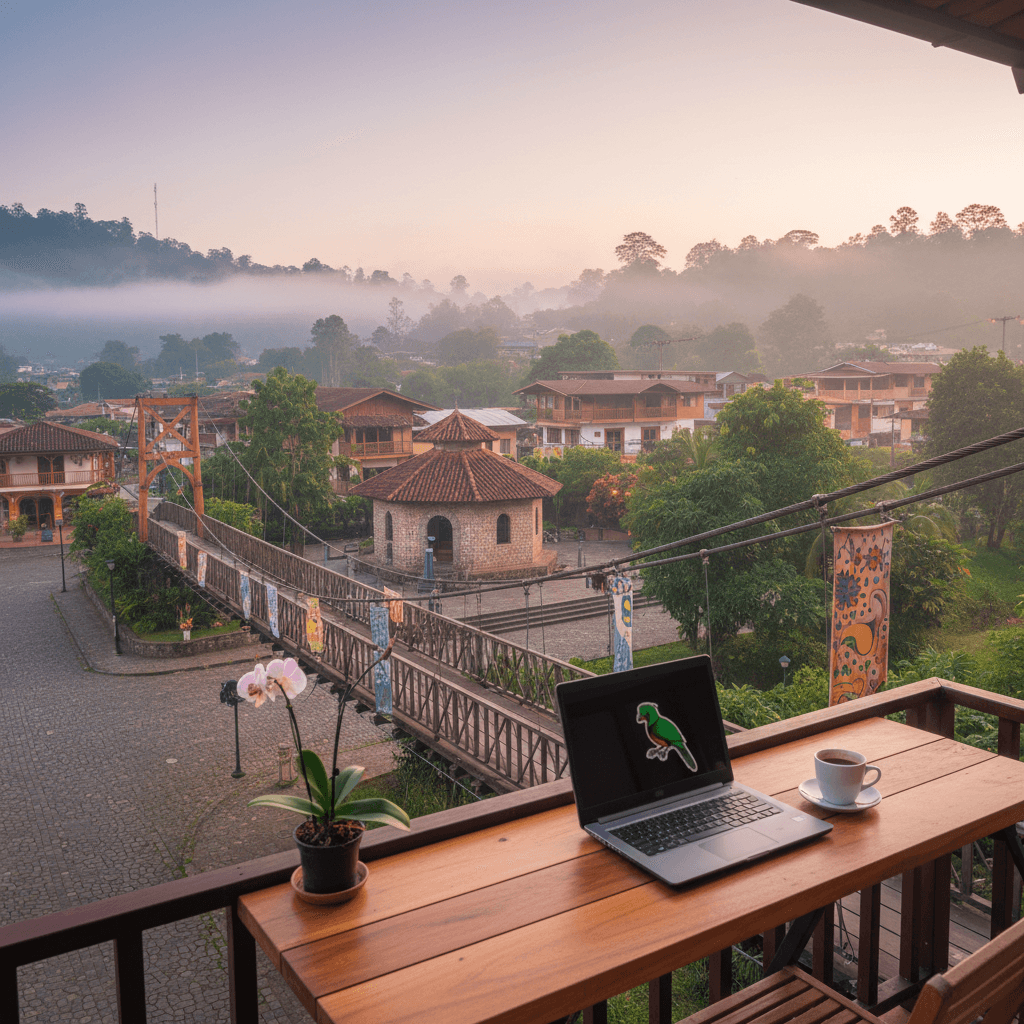
Boquete feels like a deep breath of fresh mountain air. It is the antithesis of the humid, frantic energy of Panama City. Nestled in a valley surrounded by the Chiriquí highlands, this town trades skyscrapers for coffee plantations and traffic jams for hiking trails. While many nomad hubs are defined by late night parties and beach clubs, Boquete is defined by its "eternal spring" climate and a culture that revolves around nature and community.
The atmosphere is undeniably tranquil, but don't mistake that for boredom. There is a specific rhythm here: mornings are for productive work sessions in sun-drenched cafes, while afternoons are reserved for trekking toward the Volcán Barú or meeting friends for a craft beer. The town attracts a unique mix of adventurous retirees and digital nomads who prioritize wellness and scenery over urban grit. It is one of the few places in Central America where you can comfortably wear a light sweater in the evening while the rest of the country swelters.
The Social Fabric
What sets Boquete apart from other mountain escapes is its massive international community. Roughly 20% of the population is made up of expats, which creates a low barrier to entry for newcomers. You'll find that English is spoken widely in shops and restaurants, and the social scene is incredibly organized. Instead of scouring apps for meetups, you’ll likely find your tribe through local book clubs, volunteer groups, or the Tuesday Morning Market.
The demographic leans slightly older than the typical nomad "party" towns like Medellín or Playa del Carmen. This makes for a more grounded, respectful community. Residents here are deeply invested in the local environment, and the vibe is more about sharing a bottle of wine at a high-end bistro than searching for the nearest nightclub. It is a place where people actually know their neighbors' names.
Cost of Living Breakdown
Boquete is widely considered the "jewel" of the highlands, and the prices reflect that status. While it remains significantly cheaper than North America or Western Europe, it is one of the pricier spots in Panama. You are paying for the infrastructure, the safety, and the curated amenities that make nomad life easy.
Monthly Budget Estimates
- Budget Nomad: $1,200 to $2,000. This involves living in local Panamanian neighborhoods, eating at "fondas" (local eateries), and sticking to free outdoor activities like hiking.
- Mid-Range: $2,000 to $3,000. This is the sweet spot for most. It covers a comfortable apartment near the town center, regular dining out at international restaurants, and a few guided tours.
- High-End: $3,500+. For those wanting a modern villa in a gated community with mountain views, a private vehicle, and frequent upscale dining.
Daily Expenses
- Housing: Expect to pay $800 to $1,200 for a decent one-bedroom apartment. Modern homes with panoramic views in expat enclaves can easily reach $1,500 to $2,500.
- Dining: A meal at a local spot costs around $8 to $12, while a dinner at a popular international restaurant will run $25 to $35 per person.
- Groceries: Fresh produce from the local markets is incredibly cheap. If you stick to local coffee and seasonal fruits, $400 a month goes a long way.
- Connectivity: Reliable high-speed internet is standard, costing about $40 to $60 per month for a home setup.
The Reality Check
Living here isn't without its quirks. While the infrastructure is solid, there is no private hospital directly in Boquete. For serious medical issues, you have to drive about 45 minutes down the mountain to David. The popularity of the town has also led to "price creep," where costs for rentals and services are noticeably higher than in nearby towns like Volcán.
The rainy season from May to December can be intense. While the mornings are often clear, the afternoon downpours can turn trails into mud slides and keep you indoors. However, for those who love the "cozy" aesthetic, there is something magical about watching the clouds roll over the mountains from a coffee shop window while you knock out your to-do list.
The Price of Paradise
Boquete sits in a sweet spot for those looking to trade the high costs of North America for a spring like mountain retreat. While it is certainly pricier than rural Panamanian towns like David or Volcan, you are paying for a high level of infrastructure and a community that speaks your language. Most solo nomads find they can live a respectable life here on $1,200 to $2,000 a month, while couples usually aim for the $2,500 to $3,500 range to maintain a lifestyle that includes modern comforts and frequent social outings.
The local economy is heavily influenced by the large expat population, which makes up about 20% of the town. This means you will find specialty coffee, international cuisine, and reliable services, though it also keeps prices from bottoming out. If you are coming from a major city like Vancouver or Seattle, expect your expenses to drop by roughly 30% to 50% across the board.
Monthly Budget Breakdowns
Your biggest variable will always be housing. Whether you want to be walkable to the town center or tucked away in a gated community with a view of Volcan Baru will dictate your final tally.
The Budget Nomad ($1,200 to $1,800/month)
- Housing: $800 for a studio or small apartment in more traditional Panamanian neighborhoods just outside the center.
- Food: $300 to $400, sticking mostly to local produce markets and the legendary Boquete coffee.
- Dining: $8 to $12 per meal at local "fondas" or street food stalls.
- Transport: $50 for occasional taxis and walking.
The Mid-Range Professional ($2,000 to $3,000/month)
- Housing: $1,200 to $1,500 for a central one bedroom or a modern condo in a popular expat area.
- Food: $400 to $500 for a mix of local markets and imported goods from the supermarket.
- Dining: $12 to $25 per meal at mid range restaurants and cafes.
- Utilities: $150 to $250 covering high speed internet, water, and electricity.
The Comfortable Expat ($3,000+/month)
- Housing: $1,500 to $2,500 for a large home in a gated community with manicured gardens and mountain views.
- Food: $500+ with a focus on premium imports and organic selections.
- Dining: $25 to $35 for upscale international dining and wine pairings.
- Transport: $200+ to cover the costs of owning or long term leasing a compact car.
Key Expenses and Practicalities
Utilities are generally manageable because the climate is so mild. You won't need air conditioning or heating, which keeps electricity bills significantly lower than in the sweltering lowlands. Expect to pay between $40 and $60 for reliable high speed internet, which is a non negotiable for the digital nomad crowd here.
Groceries are a tale of two baskets. If you shop at the local markets for fresh fruit, vegetables, and world class coffee, you will be shocked at how little you spend. However, if you crave specific brands from back home, those imported items will eat through your budget quickly. Most residents recommend balancing the two to keep costs under $500 a month.
Getting around is simple if you stay near the town center, which is highly walkable. Taxis are cheap for short hops, but if you plan on exploring the surrounding coffee plantations or trailheads frequently, a car becomes a worthwhile investment. Keep in mind there are no ride hailing apps like Uber here, so you will be relying on local taxi drivers or your own wheels.
One final thing to factor in is healthcare. While routine visits and pharmacies are very affordable, Boquete lacks a private hospital. Most expats budget for trips to nearby David for specialized care or emergencies, which adds a small but necessary buffer to the monthly medical overhead.
Digital Nomads and Solo Travelers
If you're landing in Boquete with a laptop and a need for caffeine, the Town Center (Bajo Boquete) is your base camp. It is the only part of town where you can realistically ditch the car. You’ll be within a five minute walk of the best workspace substitutes like Kotowa Coffee or Perfect Pair, where the Wi-Fi is strong enough for Zoom calls and the coffee is world class.
Living in the center means you are close to the social heartbeat. Most solo travelers gravitate toward the small apartments and lofts tucked behind the main street. You should expect to pay $1,200 or more for a decent one bedroom here. It gets a bit noisy during the flower festival or on weekend nights, but the trade off is being able to walk to every brewery and bistro in town.
- Rent: $1,200 to $1,500 for modern, central apartments.
- Vibe: Social, walkable, and slightly touristy.
- Connectivity: Best access to high speed fiber and cafe culture.
Budget Seekers and Long Term Nomads
For those planning to stay six months or longer and wanting to keep the burn rate low, look toward the Local Neighborhoods just outside the immediate commercial strip. Areas like Alto Boquete offer a more authentic Panamanian feel and significantly lower price tags. You’ll find modest casas and duplexes where the neighbors are locals rather than retirees.
The rent in these pockets often sits between $800 and $1,200. You will likely need a car or a reliable taxi contact, as the hills are steep and the sidewalks disappear quickly. It’s a great choice if you want peace, quiet, and a garden without the "expat tax" found in the gated communities.
- Rent: $800 to $1,200 for local style homes.
- Vibe: Quiet, residential, and culturally immersive.
- Pro Tip: Use local Facebook groups or word of mouth to find these deals before they hit the major rental sites.
Expats and Remote Professionals
If you have a higher budget and want the "million dollar view" Boquete is famous for, the Expat Outskirts are the way to go. These are often gated or semi gated communities located at higher elevations. You get sweeping views of Volcán Barú and the Pacific coastline in the distance. The air is noticeably cooler here, so you'll never think about turning on an air conditioner.
Homes in these areas are built to North American standards with modern kitchens and backup power systems. Prices for these premium spots range from $1,500 to $2,500. It’s a tight knit community where you’ll meet neighbors at the local golf club or during organized hiking groups. You are paying for the security, the views, and the immediate proximity to other English speakers.
- Rent: $1,500 to $2,500+ for luxury homes or villas.
- Vibe: Secure, upscale, and scenic.
- Transportation: A 4x4 vehicle is highly recommended for some of the steeper mountain roads.
Families
Families usually find their rhythm in the residential clusters between the town center and the higher slopes. These spots offer larger yards for kids to play and are close enough to the private schools and community centers. The social life for families often revolves around volunteering and outdoor clubs, making it easy to integrate into the local scene.
A comfortable three bedroom home for a family typically runs about $2,000 a month. Most families opt for the outskirts where there is less traffic and more greenery. While Boquete doesn't have a private hospital, the clinics in town handle the basics, and the city of David is only a 45 minute drive away for anything more serious.
- Rent: $1,800 to $2,500 for 3+ bedroom homes.
- Vibe: Safe, active, and community oriented.
- Key Advantage: Massive outdoor "classrooms" with coffee farms and hiking trails in your backyard.
Connectivity in the Highlands
Boquete isn't the place you go for ultra-low latency gaming or fiber-optic overkill, but it's remarkably stable for a mountain town. Most nomads find the infrastructure surprisingly robust, thanks to the heavy presence of North American expats who demand reliable service. You can expect to pay between $40 and $60 per month for a home setup that comfortably handles Zoom calls and large file uploads.
The town center is the heart of the digital scene. Because Boquete lacks a dedicated, corporate-style coworking franchise, the work culture has shifted into the local cafes. These spots are upscale, comfortable, and accustomed to people lingering over a laptop for a few hours. The spring-like weather means you rarely need air conditioning, so many workspaces are semi-open to the fresh mountain air.
Top Spots to Set Up Shop
- The Local Cafe Scene: Most remote workers congregate in the town center. While specific names of dedicated coworking hubs are currently sparse, the high-end coffee shops serve as the de facto offices. You'll usually spend about $10 a day on coffee and snacks to "rent" your seat.
- Your Own Rental: If you're staying in the more modern expat neighborhoods like Valle Escondido or the gated communities on the outskirts, your internet will likely be as fast as what you're used to back home. Just verify the speeds with your landlord before signing, as some older "casitas" in rural areas might still rely on spotty microwave signals.
- David (The Backup Plan): If you ever run into a major outage or need specialized tech services, the city of David is only 45 minutes away. It's a much larger urban hub with more intensive infrastructure if you find yourself in a pinch.
Mobile Data and SIM Cards
Don't rely solely on your accommodation's WiFi. Power outages can happen during the peak of the rainy season from May to December, though they usually don't last long. Having a local SIM card is a mandatory backup. You can pick one up from local providers in town for about $10 to $20 to get started.
The signal is strongest in the town center and thins out as you head into the higher elevation hiking trails. If you're planning on living in the local Panamanian neighborhoods to save on rent, double-check your cell reception inside the house, as thick concrete walls can sometimes be a signal killer.
Digital Nomad Practicalities
- The Cost of Living: Budget about $150 to $250 for a full utility package if you're in a mid-range rental. This usually covers your water, electricity, and high-speed internet.
- The Community: You won't find a "tech-bro" vibe here. The nomad community leans a bit older and more nature-focused. Networking happens at the Tuesday Market or during volunteer events rather than at formal "pitch nights."
- Hardware: Panama uses the same 110v plugs as the U.S. and Canada. However, the mountain environment is humid. Keep your electronics in a sleeve when you aren't using them to prevent moisture buildup, especially during the wetter months.
Overall, Boquete is a "work-to-live" destination. You'll get your tasks done efficiently during the day so you can spend your afternoons at a coffee cupping or hiking the Quetzal Trail. It's reliable enough for full-time remote employees, provided you have a backup data plan for the occasional tropical storm interference.
A Community Watch Mentality
Boquete feels more like a tight-knit village than a transit hub, which works heavily in your favor regarding safety. The town is widely considered one of the safest spots in Panama for solo travelers and digital nomads alike. You'll notice a distinct lack of the "big city" edge found in Panama City; here, people look out for one another, and the 20% expat population means there's a constant flow of familiar faces at the local coffee shops and markets.
Violent crime is rare, though property theft can happen if you're careless. Expats generally recommend keeping your electronics out of sight when you're not using them and ensuring your rental has secure locks. If you're staying in the more remote outskirts or gated communities, it's standard practice to have a reliable outdoor lighting setup. You won't find specific "no-go" zones, but walking alone on unlit mountain trails after dark isn't the smartest move simply due to the terrain and lack of visibility.
Healthcare: Local Care and Specialized Facilities
While Boquete is perfect for a healthy, active lifestyle, its medical infrastructure is geared toward routine care and immediate needs. You'll find several local pharmacies and private clinics in the town center that are excellent for minor ailments, flu shots, or basic consultations. These visits are refreshingly affordable, often costing a fraction of what you'd pay in the U.S. or Canada.
While Boquete historically lacked a private hospital, Centro Médico Mae Lewis Boquete opened in October 2025 in Plaza Los Senderos, offering general consultations, laboratory testing, radiology, and emergency services. For specialized procedures or major emergencies, Hospital Chiriquí in David (45 minutes away) remains the primary option. Most long-term nomads carry international health insurance that covers these facilities, as they offer modern equipment and many English-speaking specialists.
Practical Health and Safety Tips
- Emergency Logistics: With the opening of Centro Médico Mae Lewis Boquete, residents have access to emergency services and short-stay observation rooms locally, though many still keep a car or taxi contact available for trips to specialized facilities in David.
- Pharmacy Access: Local pharmacies are well-stocked, but if you require specific maintenance medications, it's wise to bring a three-month supply or check availability in David first.
- Water Safety: While many locals drink the tap water, most expats prefer filtered water or bottled jugs to avoid stomach upsets, especially when first arriving.
- Altitude and Sun: Don't let the 60 to 75 degree temperatures fool you. The sun is intense at this elevation. Wear high-SPF sunscreen even on cloudy days to avoid a nasty burn during your coffee farm tours.
- Insurance: Ensure your policy includes medical evacuation if you plan on doing deep-wilderness hiking in the nearby Volcán Barú National Park.
Overall, the peace of mind you get in Boquete is a major selling point. You can walk to dinner in the town center at 8:00 PM without looking over your shoulder, provided you use the same common sense you'd use in your hometown. The biggest "danger" here is usually a slippery trail during the rainy season or a stray dog blocking the sidewalk.
Navigating the Highlands
Boquete is a rare breed of mountain town where you can genuinely survive without a car, provided you choose your base wisely. The town center, known as Bajo Boquete, is compact and incredibly walkable. You can easily bounce between cafes, the Tuesday Market, and local grocery stores on foot. Most nomads find that living in the center saves them the $100 to $200 monthly cost of maintaining a vehicle, though you trade that convenience for a bit more street noise.
If you're eyeing a villa in the hills of Alto Boquete or a gated community further out, the logistics change. The terrain is steep and the "Bajo" (low) to "Alto" (high) transition isn't something you'll want to hike with groceries. For those living on the outskirts, a compact car is the standard choice. Fuel and basic maintenance are relatively affordable, typically running around $50 to $100 a month if you aren't commuting long distances. Just keep an eye on the rainy season from May to December, when mountain roads can get slick and misty.
Taxis and Local Transit
Don't bother looking for Uber or other ride-hailing apps here; they haven't made it to the highlands yet. Instead, Boquete relies on a fleet of ubiquitous yellow taxis. They are the lifeblood of local transport and surprisingly affordable. A quick hop around town usually costs between $1 and $2, while trips to the outskirts might run you $3 to $5. It's common practice to share a taxi with others heading in the same direction, so don't be surprised if your driver picks up another passenger along the way.
- Town Center Trips: $1 to $2
- Outskirts/Alto Boquete: $3 to $5
- After Dark: Prices may tick up slightly, but it's always best to agree on the fare before you get in.
Getting to and from David
Since Boquete doesn't have its own airport, your gateway to the rest of Panama is the city of David, located about 45 minutes south. David is where you'll find the Enrique Malek International Airport and the nearest private hospitals. Most expats and travelers opt for a taxi transfer from the airport, which generally costs around $30 to $40. If you're on a budget, local buses (often colorful "chicken buses" or smaller vans) run frequently between Boquete and David for just a few dollars, though they are much slower and stop often.
Alternative Wheels
While you won't see many people commuting on scooters due to the steep inclines and occasional heavy rain, bicycles are gaining some traction for fitness. However, for daily errands, the hills are a serious deterrent unless you're in peak athletic shape. If you're planning on exploring the surrounding coffee farms or hiking trailheads like the Los Quetzales trail, renting a 4WD vehicle for the day is a smart move. Many of the most scenic spots are tucked away behind rugged dirt roads that a standard sedan simply won't handle.
For most digital nomads staying for a few months, the winning strategy is to live near the park in Bajo Boquete and rely on taxis for the occasional trip to a trailhead or a big grocery run in David. It keeps your overhead low and your stress levels even lower, letting you focus on the mountain views rather than mountain traffic.
The Linguistic Landscape
You can get by in Boquete with significantly less Spanish than almost anywhere else in Panama. Because roughly 20% of the population is made up of international expats, English has become a secondary language of commerce in the town center. You will find that most restaurant servers, real estate agents, and tour operators speak it fluently.
That said, don't let the "expat bubble" fool you into thinking Spanish isn't necessary. Once you step away from the upscale bistros or head into local neighborhoods like Los Naranjos, the English proficiency drops off quickly. Most nomads find that while they can survive with English, they can't truly thrive or handle logistics like car repairs or utility issues without at least a "survival" level of Spanish.
Day-to-Day Communication
Panamanians are generally patient with learners, but they appreciate the effort of a formal greeting. Always start an interaction with a "Buenas" or "Buen día" before diving into your request. It's considered a bit abrupt to start a conversation with a question without acknowledging the other person first.
- In the Town Center: English is common in cafes and high-end eateries where digital nomads congregate.
- Government and Utilities: Expect these interactions to be 100% Spanish. If you're setting up a lease or a local bank account, bring a bilingual friend or use a translation app.
- Service Providers: Many gardeners, housekeepers, and taxi drivers speak limited English, so having a few key phrases ready is helpful.
Staying Connected
The infrastructure in Boquete is surprisingly robust for a mountain town. You won't struggle to find a signal in the valley, though it can get spotty if you head deep into the coffee plantations or up toward Volcán Barú. For your phone, grab a local SIM card from providers like Tigo or Más Móvil. You can usually pick these up for about $5 to $10, with data packages ranging from $10 to $20 depending on your needs.
WhatsApp is the undisputed king of communication here. Whether you're booking a table at a restaurant, messaging a landlord about a rental, or joining a local hiking group, it all happens on WhatsApp. Most local businesses don't even use traditional email for customer service; they'll just put a WhatsApp button on their social media pages.
The Social Connection
If you're looking to meet people, the language of the social scene is almost entirely English. The community is incredibly active with book clubs, volunteer organizations, and weekly markets. Most expats and nomads recommend joining local Facebook groups or checking community bulletin boards at popular spots like the Tuesday Market. It’s the easiest way to find out about events that aren't necessarily advertised on traditional travel sites.
For those looking to bridge the gap, there are several casual Spanish conversation groups that meet in local cafes. It's a low-pressure way to practice your verbs while sipping some of the best coffee in the world. Expect to pay around $10 to $15 for informal tutoring sessions if you want something more structured than a coffee chat.
Practical Tools for Nomads
- Google Translate: Essential for reading menus in local "fondas" or translating lease agreements on the fly.
- WhatsApp: Download this before you land; you'll use it for everything from ordering pizza to calling a taxi.
- Duolingo or Babbel: Even a few weeks of prep will make your interactions at the local grocery stores much smoother.
The Eternal Spring
Boquete is famous for its "eternal spring" climate, a refreshing break from the sweltering humidity found in Panama City or the coastal surf towns. Because of its elevation in the Chiriquí highlands, temperatures consistently hover between 60°F and 75°F. You can ditch the heavy winter parka and the expensive air conditioning bills; most homes here don't even have A/C or heating because the mountain breeze does all the work for you.
The air is crisp and the soil is incredibly fertile, which explains why the landscape is constantly exploding with bougainvillea and hibiscus. Nomads often find the climate ideal for productivity because you never feel that afternoon tropical slump caused by intense heat. However, the higher you go into the mountains, the mistier it gets. Local residents call this fine, ethereal mist "bajareque," and it's responsible for the frequent rainbows arching over the valley.
Dry Season: The Peak Experience
The best time to plant your flag in Boquete is during the dry season, which typically runs from January through April. This is when the town is at its most social. The skies are clear, the hiking trails are firm, and the coffee harvest is in full swing. If you're a fan of outdoor festivals, the Feria de las Flores y del Café in January transforms the town into a massive botanical display that draws visitors from all over the country.
Expect plenty of sunshine and breezy days during these months. It is the most expensive time to find a short term rental, so if you're planning a stay for 2025 or 2026, try to book your housing at least three to four months in advance. The "windy season" also peaks in February, where gusts can get surprisingly strong, so bring a windbreaker if you're heading out for a morning coffee cupping.
The Rainy Season: Lush and Quiet
From May through December, the landscape turns a deep, vivid green. While it's called the rainy season, it rarely rains all day. A typical day starts with a bright, sunny morning followed by a predictable downpour in the mid afternoon. Most digital nomads structure their day by hitting the trails or running errands before 2:00 PM, then settling into a cozy cafe like Kotowa or Perfect Pair to work while the rain falls.
- May to August: Light afternoon showers, very manageable for travelers.
- September to November: The heaviest rainfall. Trails can get muddy and "bajareque" becomes more frequent.
- December: The transition month where the rain tapers off and the festive holiday energy begins.
The perk of visiting during the "green season" is the price drop. You can often negotiate better rates on monthly rentals, sometimes saving 20% to 30% compared to the January peak. Just make sure your apartment has a good dehumidifier; the moisture in the air during October and November can be tough on electronics and clothes if you aren't prepared.
What to Pack
Boquete requires a different wardrobe than the rest of Panama. You'll want to layer your clothing to handle the temperature swings between the sunny afternoons and the chilly mountain nights. Most expats recommend a sturdy pair of waterproof hiking boots and a high quality raincoat. Since you'll likely be walking to dinner or local markets, a light fleece or sweater is a must for when the sun goes down and the temperature dips toward 60°F.
Connectivity and Digital Essentials
You won't find a dedicated WeWork here, but the local infrastructure is surprisingly robust for a mountain town. Most nomads set up shop in upscale cafes like Perfect Pair or Kotowa Coffee, where the Wi-Fi is reliable and the beans are world-class. Expect to pay between $40 and $60 a month for a home fiber connection if you are leasing long-term.
For mobile data, grab a SIM card from +Móvil or Tigo as soon as you arrive. You can usually get a starter kit with a decent data bucket for $10 to $20. Coverage is solid in the town center, though it can get spotty if you head deep into the coffee fincas or higher up the Volcán Barú trails.
Money and Banking
Panama uses the U.S. Dollar, which makes budgeting incredibly straightforward for North Americans. While many restaurants and grocery stores in the center take credit cards, Boquete still runs on cash for smaller transactions. You will need physical bills for taxis, local vegetable stands, and tips for guides.
Most expats maintain their home bank accounts and use local ATMs like Banco General or Global Bank. Just be aware of the $5 to $7 transaction fees often charged by Panamanian banks on top of whatever your home bank hits you with. It is a good idea to carry a mix of small denominations; trying to break a $50 bill at a local fonda is a quick way to make an enemy.
Getting Around the Highlands
The town center is compact and very walkable. If you live near the Bajo Boquete area, you can reach most gyms, markets, and social hubs on foot. For everything else, there are the ubiquitous yellow taxis. A ride within the town limits usually costs between $1 and $3, though prices go up slightly after dark.
- Car Rentals: If you plan on living in neighborhoods like Alto Boquete or Jaramillo, a car is almost mandatory. Expect to pay $500 to $700 a month for a long-term rental, or stick to a rugged compact if you are just visiting.
- Airport Transfers: The nearest airport is in David, about a 45-minute drive away. A taxi from the airport to Boquete typically runs about $30 to $50.
- Public Transit: Local buses (colectivos) are cheap but can be confusing for newcomers. They are great for a budget-friendly trip to David, but most nomads stick to taxis for daily errands.
Healthcare and Safety
Boquete is widely considered one of the safest spots in Panama. The community is tight-knit, and the heavy expat presence means people look out for one another. Standard travel common sense applies, but you can generally walk home from dinner without a second thought.
Healthcare is the one area where you need a plan. There are several quality pharmacies and private clinics in town for minor ailments and routine check-ups, which are very affordable. For specialized procedures or emergency surgery, you will need to go to private hospitals in David (45 minutes away), though Centro Médico Mae Lewis Boquete (opened October 2025) can handle general emergencies and consultations. Most residents keep a local health insurance policy or a high-deductible international plan just in case.
Practical Logistics
Finding an apartment often happens through word of mouth or local Facebook groups rather than polished booking sites. If you want a local rate of $800 to $1,200, it is best to book a week in a guest house and pound the pavement. Real estate signs are common, and many of the best deals aren't listed online.
The pace of life here is noticeably slower. Whether you are waiting for a plumber or your check at a restaurant, things happen when they happen. Embrace the "mañana" culture early on to avoid frustration. Also, remember that while English is common in the expat circles, a little Spanish goes a long way when dealing with utilities or local landlords.
Need visa and immigration info for Panama?
🇵🇦 View Panama Country GuideEasy Landing
Settle in, no stress
Monthly Budget Estimates
More cities in Panama
Panama City
🇵🇦 Panama
Bocas del Toro (Isla Colon)
🇵🇦 Panama
David
🇵🇦 Panama