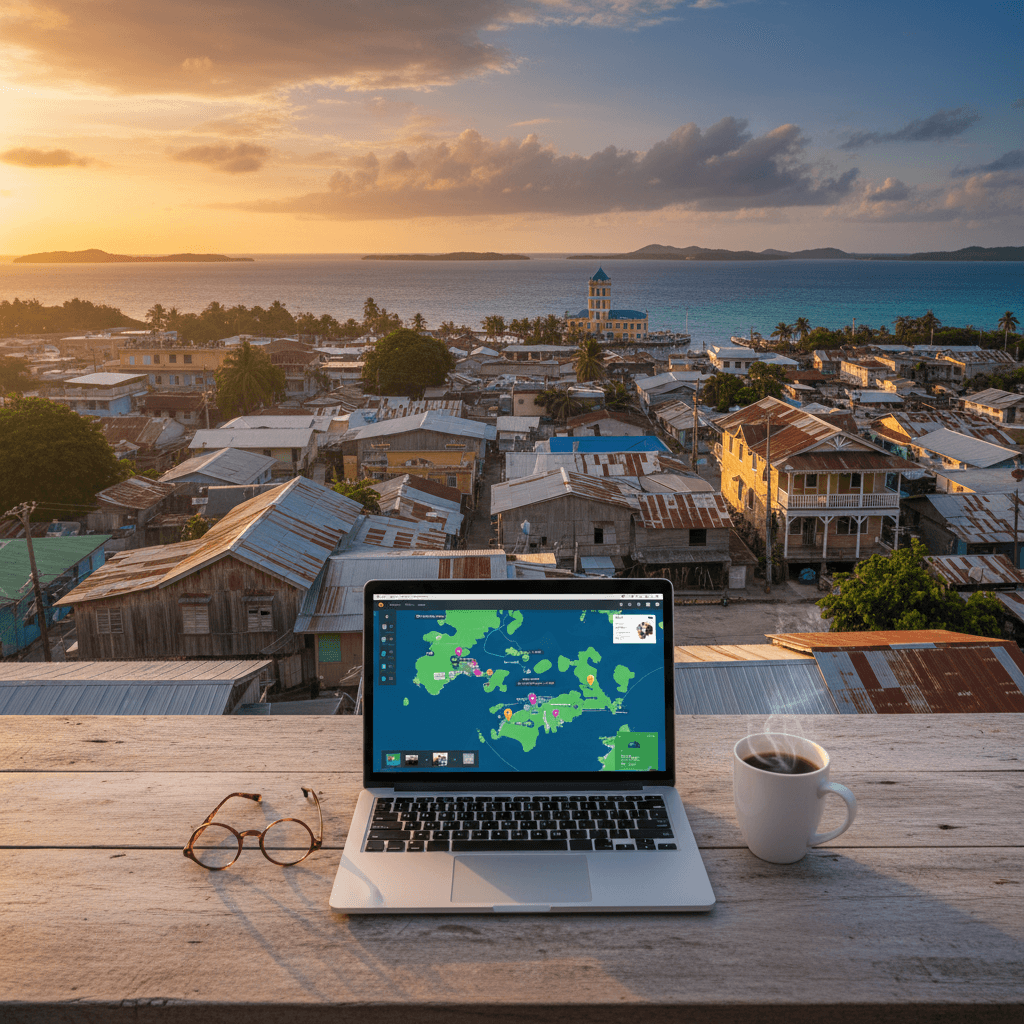
Bocas del Toro (Isla Colon)
🇵🇦 Panama
The Archipelago State of Mind
Bocas del Toro isn't your typical polished digital nomad hub. It's a raw, colorful, and unapologetically rustic archipelago where the commute involves a wooden water taxi rather than a subway. Centered on Isla Colón, the vibe is a distinct blend of Caribbean soul, Panamanian grit, and a surf-obsessed expat community. If you're looking for glass skyscrapers and high speed rail, you're in the wrong place. If you want to take a Zoom call from an over-water deck while dolphins break the surface in the distance, you've found your home.
The energy here is dictated by the tides and the rain. Most nomads congregate in Bocas Town, where the streets are lined with brightly painted colonial houses, dive shops, and open-air bars playing a mix of reggae and reggaeton. It feels like a Jimmy Buffett song come to life, but with better coffee and a growing community of remote workers. You'll find a mix of hardcore surfers chasing the next swell, researchers from the Smithsonian site, and nomads who came for a week and stayed for a year.
The Daily Rhythm
Life in Bocas is about finding a balance between productivity and the inevitable "island time" slowdown. Most people start their mornings early to beat the tropical heat, hitting Skully’s for a beachside work session or grabbing a stool at Amaranto for some of the best coffee in town. By 3:00 PM, the laptops usually close. The social scene revolves around the water; you might head to Starfish Beach for a sunset beer or take a $2 to $5 boat ride over to Isla Carenero to watch the surfers at The Point.
The "why" behind Bocas is the accessibility of nature. It’s one of the few places where you can finish a project and be snorkeling in a reef containing 95% of Caribbean coral species within twenty minutes. It’s not without its frustrations, though. The backpacker crowd can get loud on weekends, and the humidity is a constant companion that will eventually claim your electronics if you aren't careful. Locals and expats often warn about petty theft, so keeping an eye on your gear in public spaces is a habit you'll learn quickly.
Where You'll Land
Choosing where to plant your flag depends on how much "town" you can handle. Most newcomers start in the heart of the action to get their bearings before migrating to the quieter islands.
- Bocas Town (Isla Colón): This is the functional heart of the archipelago. It’s walkable, has the only ATMs and major grocery stores, and is where the nightlife happens. It’s convenient but can feel a bit crowded and tourist-heavy during peak season.
- Isla Carenero: Just a two minute boat ride from town, this island offers a more relaxed, residential feel. Many nomads prefer the over-water bungalows here for a quieter work environment while staying close to the amenities of Isla Colón.
- Isla Bastimentos: For those who truly want to unplug. It’s rugged, has no paved roads, and is home to the famous Red Frog Beach. It’s spectacular but the limited infrastructure makes it a challenge for those with heavy meeting schedules.
The Cost of Paradise
While Panama uses the US Dollar, Bocas is slightly pricier than the mainland due to the logistics of shipping everything to an island. However, it remains very affordable compared to US or European coastal towns. A solo nomad can live comfortably on $1,500 to $2,000 a month, though you can easily spend more if you’re frequenting the upscale over-water grills or taking private boat charters every weekend.
- Monthly Rent (Studio/1BR): Expect to pay $800 to $1,200 for a decent spot with air conditioning and reliable WiFi. Luxury beachfront villas can climb well over $2,000.
- Daily Meals: Local "sodas" serve hearty plates of chicken, rice, and beans for $3 to $5. A mid-range seafood dinner at a waterfront spot will run you about $12 to $18.
- Transportation: There is no Uber here. You'll rely on yellow truck taxis in town for $1 to $2 or water taxis for $3 to $10 depending on the distance. Many nomads simply rent a cruiser bike for about $50 a month.
Ultimately, Bocas del Toro attracts a specific type of person. It’s for the nomad who doesn't mind a little salt on their skin, a little mud on their shoes, and the occasional power outage in exchange for a lifestyle that feels authentically disconnected from the corporate grind.
Living in Bocas del Toro feels like a trade-off between modern convenience and raw Caribbean charm. While it is certainly more expensive than mainland Panamanian towns like David or Las Tablas, it remains significantly more affordable than most coastal hubs in the US or Europe. You are paying a premium for the island logistics, everything from your morning eggs to your building materials arrives by boat, but the lifestyle ROI is high.
Monthly Budget Breakdowns
Your monthly burn rate depends heavily on how much you rely on imported comforts. Most nomads find they fall into one of three tiers:
- The Budget Backpacker: $995 to $1,200 per month. This covers a bed in a shared house or a very basic studio in the backstreets of Bocas Town, eating at local "sodas," and sticking to bicycle transport.
- The Mid-Range Nomad: $1,500 to $2,200 per month. This is the sweet spot for most. It covers a private studio or one bedroom apartment with AC, regular meals at waterfront restaurants, and a few weekend boat excursions to the outer cays.
- The Upscale Expat: $2,500+ per month. At this level, you are looking at luxury beachfront villas on Isla Colon or Isla Carenero, frequent private water taxis, and a diet heavy on imported cheeses and wines from the specialty markets.
Housing and Rent
Rent is your biggest variable. Prices fluctuate based on your proximity to the water and how long you plan to stay. If you're looking for a Studio or 1BR in Bocas Town, expect to pay between $800 and $1,200 for something modern. If you want to wake up to the sound of waves on the beach, those luxury spots start at $1,500 and climb quickly.
Expats often recommend checking local Facebook groups or walking the streets of Isla Carenero to find "For Rent" signs, as the best deals rarely make it to Airbnb. Keep in mind that electricity is notoriously pricey here because the islands rely on diesel generators. While a $100 million grid upgrade is currently in the works to connect the archipelago to the mainland, you should still budget for high utility bills if you run the air conditioning 24/7.
Food and Dining
Eating out is a central part of the social scene. You can find a "Plate of the Day" (usually chicken, rice, and beans) at a local soda for $3 to $5. Mid-range seafood spots and waterfront grills usually charge between $8 and $15 for a main course. If you're heading to one of the upscale over-water restaurants for a sunset dinner, expect to pay $20 to $30 per person.
Groceries can be tricky. Basic staples are affordable, but anything imported, think berries, specific cereals, or Greek yogurt, comes with a hefty island markup. Most residents do their heavy shopping at the larger markets in Bocas Town and supplement with fresh fruit from street vendors.
Transport and Connectivity
You won't find Uber here. Transport is a mix of land and sea. Within Bocas Town, everything is walkable or reachable by a $5 to $10 daily bike rental. To get between islands, you'll rely on water taxis. A short hop from Bocas Town to Isla Carenero usually costs $2 to $5, while trips to more remote spots like Bastimentos or the Zapatilla Cays can run $20 or more depending on the weather and your negotiation skills.
For work, most nomads rely on their accommodation's WiFi or local SIM cards. A prepaid data plan from Claro or Movistar costs about $10 to $20 and offers solid coverage in town. If you need a dedicated workspace, local cafes with beachfront views are the go-to, as formal coworking spaces are still limited. Expect to pay about $10 to $15 for a day pass if you find a structured setup, but most people just buy a few coffees and work from a deck.
The "Hidden" Costs
Don't forget to factor in the small stuff. While there is a basic hospital on Isla Colon and plenty of pharmacies, any major medical issue will require a flight to Panama City. Additionally, the salt air is brutal on electronics and bicycles. Expats suggest budgeting a little extra for maintenance and "island tax," the reality that things simply break faster in a tropical, humid environment.
For Digital Nomads: Bocas Town (Isla Colón)
If you need to be within walking distance of a stable internet connection and a strong espresso, Bocas Town is your base camp. It’s the heartbeat of the archipelago where the paved roads, banks, and grocery stores live. Most nomads congregate here because it’s the only spot where you can reliably hop between a seaside cafe and a coworking setup without needing a boat.
The vibe is high energy and social. You'll find community hubs like Hacker Paradise or Noma Collective often hosting groups here. While there aren't many formal coworking offices, the waterfront restaurants are very welcoming to laptops during the day. Just keep an eye on your gear; petty theft happens in the busier parts of town, especially after dark.
- Rent: Expect to pay $800 to $1,200 for a decent mid range studio.
- Connectivity: Best in the region, usually 20 to 50 Mbps, though it can dip during tropical storms.
- Transport: Highly walkable or a $2 to $5 bike rental for the day.
For Long Term Expats: Isla Carenero
Expats who want the "island life" without the constant noise of Bocas Town’s nightlife usually migrate to Carenero. It’s a two minute water taxi ride from the main docks, but it feels worlds away. You get over water apartments and a tighter knit community of people who actually live here year round.
It’s a pedestrian island with no cars, which keeps things quiet and breezy. You’ll sacrifice some convenience since you’ll have to boat over for groceries or the ATM, but the trade off is private beaches and better surf access right at your doorstep. Many long termers recommend checking local Facebook groups or the Bocas del Toro Panama Properties site to find deals that aren't listed on major platforms.
- Rent: $700 to $1,500 depending on how close you are to the water.
- Daily Life: Budget about $2 to $3 for every water taxi trip back to the main island.
- Pros: Incredible seafood spots and a more authentic, relaxed atmosphere.
For Families: Isla Bastimentos
Families looking for space and nature tend to prefer the southern side of Isla Bastimentos. It’s the spot for those who want their kids to grow up around jungle trails and pristine beaches rather than souvenir shops. It is significantly more remote, so you won't find paved roads or a fleet of taxis here.
The lifestyle here revolves around the outdoors. You’re closer to Wizard Beach and Red Frog Beach, which are stunning but require a bit of a hike or a dedicated boat ride. Because amenities are limited, most families here cook at home and buy bulk supplies in Bocas Town once a week. It’s a serene, eco conscious choice for those who don't mind a bit of isolation.
- Rent: Larger homes can go for $1,500 to $2,000 or more.
- Atmosphere: Quiet, nature focused, and very low traffic.
- Cons: Limited healthcare and schooling options compared to the mainland or Bocas Town.
For Solo Travelers and Explorers: Isla Solarte and the Cays
If you're solo and looking to truly disconnect, Isla Solarte or the Zapatilla Cays are the go to spots for shorter stays or off grid living. These areas are famous for bat caves, hiking, and some of the best snorkeling in Panama, covering 95% of Caribbean coral species. There is virtually no infrastructure here, so it isn't a place to "live" in the traditional sense unless you're staying at a specific eco lodge.
Solo travelers often use Bocas Town as a launchpad for day trips here. You can grab a water taxi for $20 to $50 for a full day of island hopping. It’s the best way to see the "wild" side of the archipelago before heading back to the comforts of town for dinner.
- Cost: Day trips range from $20 to $50 including gear.
- Top Activities: Snorkeling, deep boarding, and exploring mangrove tunnels.
- Best for: Short term adventures and photography.
Connectivity in the Archipelago
Working from Bocas del Toro requires a bit of a mindset shift. You aren't in Panama City anymore; you're on a collection of islands where the salt air and occasional tropical downpour dictate the pace of life. That said, if you stick to Isla Colón, you'll find the infrastructure surprisingly capable of handling a Zoom call or a heavy upload.
Most rentals and cafes in Bocas Town offer speeds between 20 and 50 Mbps. Fiber optic cables have reached the main island, making the connection much more stable than it was a few years ago. However, once you hop on a water taxi to Isla Bastimentos or Isla Carenero, the reliability drops. If your work depends on being online 24/7, your best bet is to live in town and use the outer islands for your weekend escapes.
Power outages used to be the bane of every nomad's existence here. While the local grid is currently undergoing a $100 million upgrade to connect it to the mainland, brief flickers still happen during heavy storms. Many long-term expats recommend keeping a power bank charged and a local SIM card ready as a backup hotspot.
Coworking Spaces and Neighborhood Hubs
Bocas del Toro doesn't have a massive selection of traditional, corporate-style coworking offices. Instead, the scene is dominated by community-focused hubs and "work-from-hotel" setups. Many nomads choose to join organized retreats like Hacker Paradise or Noma Collective, which take over local boutique hotels and provide guaranteed high-speed mesh networks and dedicated desks.
- Bocas Town: This is the nerve center for remote work. You'll find the most reliable WiFi here, along with easy access to banks and groceries. Most formal coworking options are located within a 5 to 10 minute walk of the main pier.
- Isla Carenero: Just a $2 boat ride away, this island is quieter but still close enough to the main signal towers to offer decent speeds. It's a favorite for those who want a "beach office" vibe without the noise of the town's nightlife.
- Klika Bocas del Toro (formerly Selina): Located right on the water in Bocas Town, this property remains a central meeting point for the nomad community under new management. It continues to offer dedicated workspace options and a social atmosphere for those looking to connect while they work.
The Best Laptop-Friendly Cafes
If you prefer the "cafe hopping" lifestyle, Bocas Town has several spots where you won't be kicked out for staying a few hours. Just remember that the tropical humidity is tough on electronics; try to find spots with fans or air conditioning to keep your laptop from overheating.
- The Bocas Garden: A lush, shaded spot that offers a quiet atmosphere away from the main street's noise. It's great for deep work sessions.
- Amaranto: Known among the expat community for having some of the best coffee in town and a steady WiFi connection. It's a smaller space, so arrive early to snag a table near a power outlet.
- Cafe del Mar: A classic waterfront choice where you can work with a view of the water taxis buzzing by. It's better for light admin work than intense video calls due to the ambient noise.
Mobile Data and SIM Cards
Don't rely solely on your accommodation's WiFi. Getting a local SIM card is the first thing you should do after landing at the Isla Colón International Airport. The two main providers are Claro and Movistar (now part of the Tigo network).
Most nomads find that Claro has slightly better coverage across the archipelago, especially when you're out on a boat. You can pick up a SIM card at small shops in town for a few dollars. Data plans are very affordable, usually costing between $10 and $20 for a week or two of "unlimited" data. It is a lifesaver when the island's electricity decides to take a siesta. Just look for the signs in shop windows or visit the kiosks near the central park.
Practical Tips for Staying Online
- Test Before You Check In: If you're booking an Airbnb for a month, ask the host for a screenshot of a recent speed test. Speed levels can vary wildly from one street to the next.
- VPNs: Some banking apps and streaming services can be finicky with Panamanian IP addresses. Most expats use a reliable VPN to keep their workflow seamless.
- Waterproof Your Gear: You'll be spending a lot of time on boats. Invest in a high-quality waterproof laptop sleeve or a dry bag. A sudden splash from a passing wave can end your work week very quickly.
Staying Safe in the Archipelago
Bocas del Toro generally feels like a relaxed Caribbean enclave where most visitors never encounter anything worse than a sunburn. That said, the island's party reputation brings some predictable risks. Petty theft is the most common headache for nomads, especially in Bocas Town. Most expats suggest keeping a close eye on your belongings at the beach and never leaving your phone or laptop unattended at a waterfront cafe while you go to the restroom.
Walking around Bocas Town is fine during the day, but once the sun goes down, it's best to stick to well lit main streets. Solo night walks on isolated stretches of beach or through dark alleys aren't recommended, especially if you've had a few drinks at the local bars. Local police are present, and you can reach them by dialing 911, but their response times can be island paced. If you're staying on Isla Carenero or Isla Bastimentos, remember that you're reliant on water taxis. After dark, these boat rides get more expensive and require a bit more caution when boarding and disembarking on wet docks.
- Common Scams: Watch out for overcharging on informal water taxi rides; always agree on the price before the boat leaves the dock.
- Solo Travelers: Stick to the popular social hubs like Selina or The Skully's area to meet people and avoid wandering alone into unlit residential zones.
- Property Safety: If you're renting a long term villa, ensure it has sturdy locks and a safe for your electronics. Nomads often recommend choosing places with a bit of elevation or gated entries.
Healthcare and Wellness
For a small island, the medical infrastructure is surprisingly functional, though it's definitely not a hub for complex procedures. The Hospital Guillermo Sánchez Borbón in Bocas Town handles basic emergencies, minor injuries, and common tropical ailments. It's located right on the water near the airport. For anything serious, you'll likely need a flight to Panama City or a trip to David on the mainland, where the facilities are world class.
Pharmacies are plentiful in Bocas Town, and you can find most standard over the counter medications without much trouble. If you have a specific prescription, it's smarter to bring a several month supply from home, as certain brands might not be in stock. Expats often use Farmacia Botica for their needs, as the staff is used to dealing with the international community.
- Water Safety: Don't drink the tap water. Most nomads rely on five gallon jugs of purified water, which cost about $2 to $3 for a refill.
- Tropical Health: Mosquitoes and "no-see-ums" are the real locals here. Use repellent, especially at dusk, to avoid the risk of Dengue, which pops up occasionally during the rainy season from May to December.
- Insurance: Most nomads here carry SafetyWing or Genki. While a local clinic visit might only cost you $30 to $50 out of pocket, you'll want coverage for an emergency medical evacuation just in case.
Practical Emergency Contacts
Keep these numbers saved in your phone before you arrive. While the community is tight knit and people are generally helpful, having the direct lines is a lifesaver when the Wi-Fi is spotty.
- General Emergency: 911
- Police (Bocas Town): +507 757-9217
- Hospital Guillermo Sánchez Borbón: +507 757-9201
- Tourist Police: Look for the white and blue uniforms in the main park; they are specifically trained to assist visitors.
Overall, the "Bocas vibe" is one of mutual respect. If you're friendly with your neighbors and don't flash expensive jewelry or stacks of cash, you'll likely find the islands to be a safe, welcoming home base. The biggest health risk for most nomads is simply forgetting to hydrate between surf sessions and sunset cocktails.
The Archipelago Rhythm
Life in Bocas del Toro is dictated by the water. While Isla Colon is the main hub, the reality of living here means you will spend a significant amount of time jumping between islands. There is no Uber or Lyft in the archipelago; instead, your primary mode of transport is the water taxi. These fiberglass pangas congregate at the various docks in Bocas Town, ready to whisk you away to neighboring islands.
For short hops from Bocas Town to Isla Carenero, expect to pay between $2 and $5. If you are heading further out to Isla Bastimentos or Red Frog Beach, the price climbs closer to $10 or $20 depending on the time of day and how many people are on board. It is always smart to agree on the price with the captain before you step into the boat. Most nomads find that while the boats are efficient, they can be weather dependent. If a tropical storm rolls in, the waves get choppy and transport might pause until the sky clears.
Navigating Bocas Town
Bocas Town itself is small, colorful, and incredibly walkable. Most of the grocery stores, banks, and pharmacies are clustered within a ten block radius of the main park. You can easily walk from the Isla Colon International Airport to the center of town in about 10 minutes, though if you have heavy luggage, a taxi will cost you around $5.
While walking is the default for errands, many expats and long term travelers prefer two wheels for exploring the rest of Isla Colon. You can find several rental shops along the main street where bikes go for $5 to $10 per day. If you are staying for a month or more, it is often cheaper to buy a used cruiser and sell it before you leave.
Exploring the Mainland and Beyond
If you want to reach the surf breaks at Paunch or the famous Starfish Beach at Boca del Drago, you have a few land based options:
- The Colectivo: These are white passenger vans that leave from the central park in Bocas Town every 30 minutes. They cost about $3 and are the most authentic way to get across the island.
- Bicycles: The road to Paunch is relatively flat and scenic, making it a popular 20 minute ride for those looking for a workout.
- E-Bikes and Scooters: For a faster commute, you can rent electric bikes or gas scooters for roughly $40 to $50 per day. They are ideal for exploring the dirt roads that lead deeper into the jungle.
- Taxis: Yellow pickup truck taxis roam the streets of Bocas Town. They operate on a per person pricing model rather than a meter, so don't be surprised if the driver stops to pick up more passengers along the way.
Practical Transit Tips
Expats recommend carrying small bills, specifically $1 and $5 notes, as boat captains and colectivo drivers rarely have change for a twenty. If you are staying on a remote island like Solarte or Bastimentos, you'll need to factor the "boat tax" into your daily budget. Living off the main island is serene, but those $10 round trips to the grocery store add up quickly.
Safety on the roads is generally fine, but keep an eye out for potholes and wandering dogs if you are on a scooter. At night, stick to the well lit areas of Bocas Town. If you have had a few drinks at a waterfront bar, it is always better to take a quick taxi back to your rental rather than walking home on the darker outskirts of town.
The Linguistic Landscape
In Bocas del Toro, you'll find a unique linguistic cocktail that reflects its history as a Caribbean trading hub. While Spanish is the official language of Panama, the archipelago operates with a heavy lean toward English, especially within Bocas Town on Isla Colón. Between the long-standing West Indian community, the influx of North American expats, and the global backpacker crowd, you can comfortably order a meal or book a water taxi without knowing a word of Spanish.
However, the local flavor comes from Guari-Guari. This is a rhythmic, soulful patois that blends English, Spanish, and indigenous Ngäbe words. You'll hear it spoken among locals on the docks or in the residential backstreets of town. While you aren't expected to speak it, recognizing the cadence helps you understand the local culture. On the outer islands like Bastimentos, indigenous dialects like Ngäbere are also common among the local communities.
Daily Interactions and Proficiency
Most nomads find that a "Spanglish" approach works best. In the main tourist areas, restaurants like The Point or El Ultimo Refugio staffed by bilingual teams make communication seamless. If you're staying for more than a few weeks, learning the basics is more than just a courtesy; it's your ticket to better prices and deeper connections. Locals appreciate the effort, even if it's just a "Buenas" as you walk past someone's porch.
- Bocas Town: High English proficiency. Most service workers, dive instructors, and boat captains speak functional to fluent English.
- Isla Bastimentos and Carenero: Moderate English. You'll find plenty of English speakers in the hostels and over-water restaurants, but Spanish becomes more useful in the smaller local shops.
- Government and Utilities: Low English. If you’re dealing with the local police (DIJ) or trying to sort out a residency paper, bring a Spanish-speaking friend or have a translation app ready.
Practical Tools for Nomads
While the vibe is analog, your communication shouldn't be. Reliability is key when you're trying to coordinate a boat pick-up or a grocery delivery. Most expats recommend downloading WhatsApp immediately if you don't already use it. It is the primary way everyone from your landlord to your favorite surf instructor communicates.
For those moments when you venture off the beaten path to places like Starfish Beach or the deeper jungles of Solarte, having Google Translate with an offline Spanish pack is a lifesaver. It’s particularly helpful for reading menus at local "sodas" (small traditional eateries) where the daily specials are often handwritten on chalkboards in rapid-fire Spanish script.
Staying Connected
Communication isn't just about the spoken word; it’s about your data. To stay in the loop, grab a local SIM card as soon as you land at the Bocas del Toro Isla Colón International Airport or at one of the small electronics shops in town. Claro and Mas Movil (formerly Movistar) are the heavy hitters here. Most nomads spend between $10 and $20 for a prepaid data plan that lasts a week or two. Coverage is surprisingly strong in Bocas Town, but expect it to drop the moment your water taxi rounds a mangrove corner toward the outer cays.
Essential Phrases to Know
While you can get by with English, these few phrases will smooth over almost any social interaction in the archipelago:
- ¿Cuánto cuesta? (How much does it cost?): Use this for water taxis before you jump in the boat to avoid the "tourist tax."
- ¿A qué hora sale el bote? (What time does the boat leave?): Crucial for island hopping.
- Todo bien / Pura Vida: While "Pura Vida" is more Costa Rican, the sentiment is understood here. "Todo bien" is the standard response to "How are you?"
- La cuenta, por favor: (The check, please).
Living the dream in Bocas del Toro means embracing the rhythm of the Caribbean, and that rhythm is dictated almost entirely by the clouds. While the archipelago stays warm year round, with temperatures hovering between 27°C and 32°C (81°F to 90°F), the distinction between "dry" and "wet" seasons will define your daily workflow and your weekend island hopping.
The Golden Window: December to April
This is the prime time for digital nomads to plant roots on Isla Colón. During these months, you can expect 8 to 10 hours of daily sunshine and significantly less humidity. It is the ideal window for surfing at Paunch Beach or taking the water taxi out to the Zapatilla Cays without worrying about a sudden squall ruining your laptop bag.
- Rainfall: Only 5 to 10 days of rain per month.
- Vibe: High energy, more social events, and peak nomad community activity.
- Water Conditions: Crystal clear, making it the best time for diving and snorkeling among the mangroves.
The downside to this perfect weather is the crowd. Bocas Town fills up with backpackers and travelers, which can drive up short term rental prices and make the popular waterfront bars a bit louder than usual. If you value peace and quiet, consider looking for a spot on Isla Carenero or the quieter north end of Isla Colón during this peak period.
The Tropical Soak: May to November
The rainy season in Bocas is no joke. Rainfall spikes significantly, often reaching 200mm to 400mm per month. October and November are notoriously the wettest, sometimes seeing over 20 days of rain in a single month. This is when the "rustic" side of Bocas becomes very apparent.
Heavy storms can occasionally disrupt the local power grid or slow down the satellite internet many rentals rely on. Logistics also get tricky; rougher seas mean water taxis to Bastimentos or Solarte can be a bumpy, soaking ride. However, for the focused nomad, this is "deep work" season. The town slows down, the heat breaks slightly, and you can often snag better deals on mid range apartments.
Monthly Weather Snapshot
- Dry Season (Dec to Apr): Expect highs of 30°C (86°F). Rainfall is minimal, typically 50 to 100mm. This is the most reliable time for outdoor adventure.
- Rainy Season (May to Nov): Highs stay around 29°C (84°F) but the humidity makes it feel much hotter. Rain is frequent and heavy, especially in the afternoons.
Most long term expats recommend arriving in late November or early December. This allows you to settle in just as the weather turns, securing a good rental before the January rush hits. If you are a surfer, you will likely prefer the winter months when the Caribbean swells are most consistent, though some breaks still work well during the mid summer "mini dry season" in July.
Regardless of when you visit, pack high quality rain gear and waterproof covers for your electronics. Even in the dry season, a Caribbean tropical shower can pop up out of nowhere, and nothing kills the nomad buzz faster than a salt water soaked MacBook.
Connectivity and Communication
Staying online in the archipelago is easier than it used to be, but it still requires a bit of strategy. Most nomads head straight to a Claro or Más Móvil (formerly Movistar) shop in Bocas Town to grab a local SIM card. Expect to pay between $10 and $20 for a data plan that will cover you for a few weeks. While 4G coverage is solid in Bocas Town and parts of Isla Carenero, it drops off quickly once you're deep in the mangroves or on the outer islands.
Fiber optic internet is slowly rolling out, with many Airbnbs and hotels now hitting speeds between 20 and 50 Mbps. If you're planning on heavy Zoom calls, always ask for a speed test screenshot before booking. For a dedicated workspace, Hacker Paradise and Noma Collective often run programs here, and the cafe culture is the backbone of the local remote work scene. You'll find plenty of laptops open at waterfront spots where the breeze replaces the need for AC.
Money and Budgeting
Bocas isn't the cheapest corner of Panama, but it's manageable if you avoid the tourist traps. A solo nomad can live comfortably on $1,500 to $2,000 a month. If you're on a tighter budget, sticking to local "sodas" (small family run eateries) for $5 lunches and sharing a house can bring your costs down closer to $1,000.
- Rent (1BR): $800 to $1,200 in Bocas Town; higher for luxury beachfront spots.
- Daily Transport: $2 to $5 for most water taxi hops.
- Groceries: Prices are higher than the mainland because everything arrives by boat. Shop at the local markets in town for the best deals on produce.
Cash is still king for water taxis and small vendors. There are a few ATMs in Bocas Town, but they're notorious for running out of money on long weekends or during festivals. It's a smart move to carry a backup card like Wise or Revolut to keep exchange fees low, and always have a stash of $1 and $5 bills for boat rides.
Getting Around the Islands
Forget Uber or car rentals. In Bocas Town, you'll mostly get around on foot or by bicycle. You can rent a cruiser for about $5 to $10 a day, which is the best way to reach Playa Bluff. For everything else, you'll be using the yellow water taxis. These boats act as the local bus system, and you can usually find one just by standing on a dock and waving.
The airport on Isla Colón is incredibly convenient, located just a 10 minute walk or a $5 taxi ride from the heart of town. If you're heading to Isla Bastimentos or Isla Solarte, the boat ride will cost you between $5 and $15 depending on the distance and the time of day. Prices often double after dark, so try to get your island hopping done before sunset.
Health and Safety
The vibe is generally relaxed, but petty theft is the most common headache for expats. Don't leave your phone or bag unattended on the beach while you go for a swim, and keep your electronics out of sight in ground floor apartments. While the town is walkable, it's better to take a taxi if you're heading home late at night after a few drinks.
For medical needs, there's a basic hospital and several well stocked pharmacies on Isla Colón that can handle minor issues. For anything serious, you'll likely need to fly to Panama City. The tap water isn't recommended for drinking; most locals and long term travelers rely on 5 gallon purified water jugs which are delivered by truck or boat for a few dollars.
When to Visit
The weather is tropical and unpredictable. The "dry" season typically runs from December to April, which is also when the town is at its liveliest and most expensive. If you hate the rain, avoid October and November, which are the wettest months. Even in the rainy season, storms tend to be heavy but brief, though they can occasionally make the sea too choppy for smaller boats to navigate safely.
Need visa and immigration info for Panama?
🇵🇦 View Panama Country GuideEasy Landing
Settle in, no stress
Monthly Budget Estimates
More cities in Panama
Boquete
🇵🇦 Panama
Panama City
🇵🇦 Panama
David
🇵🇦 Panama