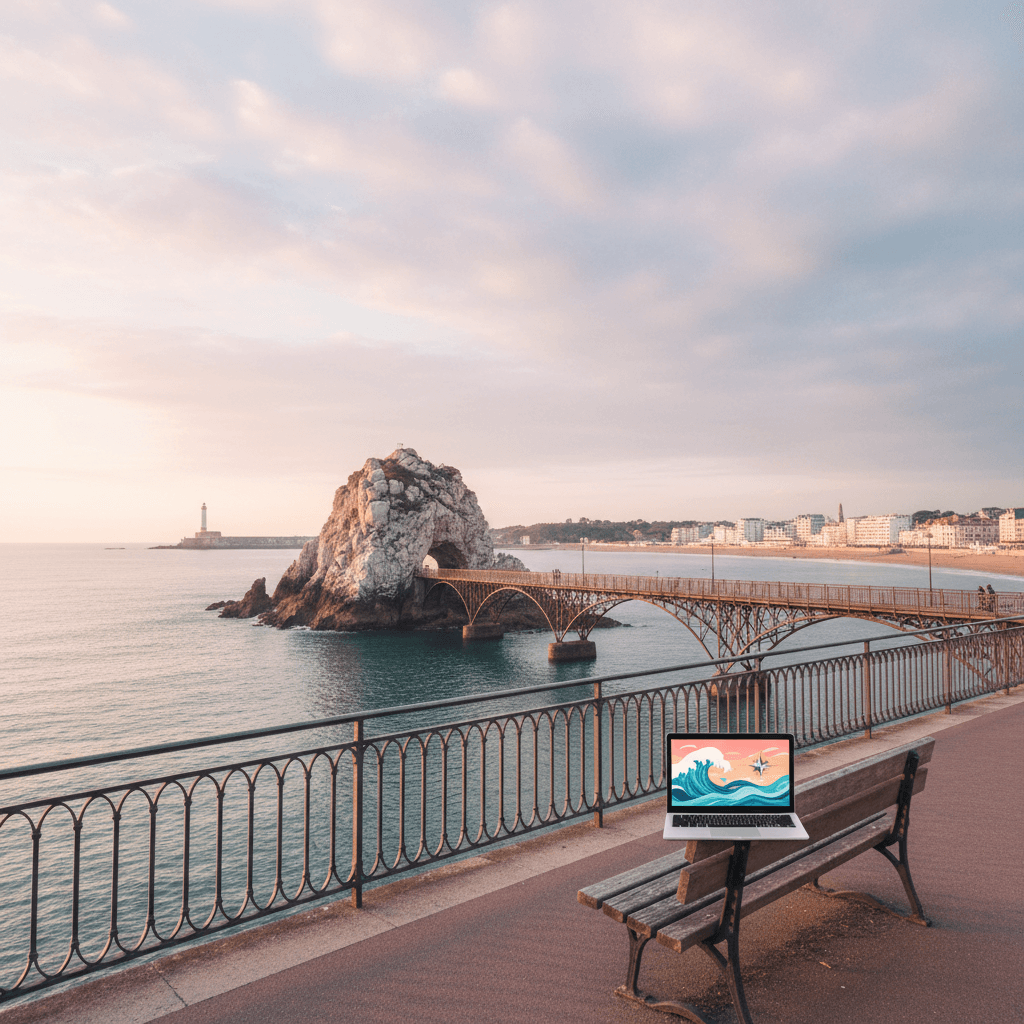
Biarritz
🇫🇷 France
Biarritz isn't your typical French resort town. It has a specific, high energy pulse that comes from being the birthplace of European surfing, yet it maintains a polished, aristocratic backbone left over from its days as a playground for royalty. For nomads, it hits a rare 100/100 quality of life score because it balances a laid back Atlantic lifestyle with a surprisingly robust tech scene. You can spend your morning on a 249 Mbps video call and your lunch break catching waves at La Grande Plage.
The Daily Grind and Cost
Living here isn't the cheapest option in France, but many remote workers find the trade off for the air quality and scenery worth the price tag. Expect a monthly burn of around $2,900 to $4,500 depending on lifestyle. If you want a beachfront studio, you're looking at $800 to $1,400 in rent. Most expats find that a $3,500 monthly budget allows for a comfortable mid range life with plenty of Basque cider and tapas at the local markets.
- Budget Tier ($2,000 to $2,500): Focus on shared housing and grabbing €5 to €10 street food.
- Mid Range ($2,700 to $3,500): Private one bedroom apartments and regular dinners along Rue Gambetta.
- Comfortable ($4,000+): High end rentals in Port Vieux and upscale dining.
Where to Set Up Camp
The city is compact and walkable, but each pocket has a distinct personality. Most newcomers gravitate toward La Grande Plage for the sheer convenience of being near the surf shops and cafes, though it can get crowded with tourists during the peak summer months. If you want something more historic and slightly quieter, Port Vieux is the go to for its stunning architecture and art galleries.
For the best social atmosphere, look at Les Halles. It is the modern heart of the city, packed with retail and the best nightlife. It is where you'll find the most consistent crowd of solo travelers and remote workers grabbing drinks after hours. While it lacks the direct ocean views of the beach districts, the convenience for grocery shopping and dining is unmatched.
Connectivity and Community
Coworking is a growing industry here. You can secure a hot desk through Novad for about €250 a month, or join the Digital Nomad Hub to find the best laptop friendly cafes. The Biarritz Digital Nomads Facebook group is active with over 1,000 members, making it easy to find a community quickly. Events like Biarritz Startup Weekend and Surf and Tech bridge the gap between the beach bums and the entrepreneurs.
Getting around is simple. The city is highly walkable, and you can rent a bike for about €10 a day. For longer trips, the Chronoplus bus system is reliable at €1.50 per ride. If you're arriving from the airport, a quick €4 bus ride gets you into the center in about 20 minutes.
Weather and Timing
The "sweet spot" for Biarritz is June through September. The weather stays between 15°C and 25°C, perfect for outdoor work and surfing. Winters can be a bit of a damp squib, with heavy rain from November to March and temperatures dipping as low as -4°C. If you hate the cold and rain, plan your stay for the summer or early autumn when the Basque festivals are in full swing.
Practical Essentials
- Connectivity: Grab a prepaid SIM from Orange or SFR at a tabac shop for €20.
- Healthcare: The Centre Hospitalier de la Côte Basque is nearby and offers high quality care.
- Safety: It is incredibly safe, though it is smart to avoid isolated beach spots late at night.
- Language: English is common in the surf districts, but learning a few French basics will go a long way with the locals.
Budgeting for the Basque Coast
Living in Biarritz feels like a premium upgrade compared to other French surf towns, but it is surprisingly manageable if you know where to look. Most nomads find they need roughly $2,684 per month to cover the basics. If you are eyeing a beachfront lifestyle with all the bells and whistles, that figure can climb closer to $4,366. It is a price point that reflects the high quality of life, where the air is clean and the commute usually involves a surfboard or a bike.
Your biggest expense will be housing, especially during the sun-drenched months from June to September. For a studio or one bedroom apartment near the action at La Grande Plage, expect to pay between $1,200 and $2,000. If you are on a tighter budget, shared housing or looking slightly inland can bring your monthly costs down to the $2,000 to $2,500 range, while those spending $4,000 or more can secure upscale pads with Atlantic views.
Neighborhood Breakdown
Where you plant your flag determines your daily spending and your morning view. Each pocket of the city caters to a different pace of life.
- La Grande Plage: This is the heart of the nomad scene. You are steps from the surf shops and cafes, but you pay for the privilege. It is walkable and lively, though the crowds can get thick in mid summer.
- Port Vieux: Expats and families often gravitate here. It is historic and full of art galleries. While it is well connected for day trips, be prepared for some uphill walks that will give your legs a workout.
- Les Halles: If you want to be near the best food and nightlife, this is the spot. Rue Gambetta is the local artery for dining and retail. It is convenient and modern, even if it lacks the immediate ocean vistas of the coast.
Daily Expenses and Dining
Eating out is a highlight of the Basque experience. You can grab quick street food for €5 to €10, but the real magic happens in the mid range bistros along Rue Gambetta, where a solid meal costs €15 to €25. Upscale dining in Port Vieux starts around €40. For groceries, nomads often hit the local markets for fresh seafood and regional produce to keep costs down.
Getting around is cheap if you use your feet. The city is highly walkable, and the Chronoplus bus system is efficient at €1.50 per ride. Many travelers recommend renting a bike for about €10 per day to explore the coastline. If you are arriving from the airport, the bus is a steal at €4, while a taxi will run you about €30.
Working and Connectivity
Biarritz is a heavy hitter for remote work. Internet speeds are impressive, averaging 249 Mbps, which is more than enough for seamless video calls. While cafe culture is strong, serious focus usually happens at dedicated coworking spots.
- Coworking Spaces: Expect to pay €200 to €400 per month. Spaces found via Novad often list hot desks around €250.
- Mobile Data: Pick up an Orange or SFR SIM card at a local tabac shop. You can get 20GB of data for €10 to €20.
- Fintech: Most nomads use Revolut or N26 here. ATMs are plentiful, but card payments are the norm almost everywhere.
Healthcare and Safety
Safety is rarely a concern here. Crime rates are low, and the air quality is fantastic with an AQI usually between 30 and 40. If you need medical attention, the Centre Hospitalier de la Côte Basque is high quality and nearby. Just make sure you have comprehensive travel insurance, as France requires it for most long term stays. For emergencies, the EU wide number is 112.
For Digital Nomads: La Grande Plage
If you want to wake up, check the surf from your window, and walk two minutes to a cafe with 249 Mbps fiber, this is your base. It is the heartbeat of Biarritz. Most nomads gravitate here because it eliminates the need for a car or even a bike. Everything is walkable, from the surf rentals at Jo Moraiz to the coworking desks at Novad.
The vibe is high energy and unapologetically coastal. You will be surrounded by people in wetsuits carrying boards and remote workers on laptops. Rent for a studio or one bedroom apartment usually lands between $1,200 and $2,000 per month. While it is the most expensive part of town, the convenience of having the ocean and the best WiFi spots at your doorstep justifies the price for most short term stays.
- Pros: Immediate beach access, high density of English speakers, best networking at local meetups.
- Cons: It gets crowded during the summer peak, and prices for groceries and coffee are marked up for tourists.
- Coworking: Expect to pay around €250 per month for a hot desk in nearby professional spaces.
For Solo Travelers and Nightlife Seekers: Les Halles
Les Halles is the place to be if you prefer a social atmosphere over a quiet ocean view. Centered around the famous daily food market, this neighborhood is where the city feels most alive after dark. It is less about the "resort" feel and more about the local Basque lifestyle. You can spend your mornings grabbing fresh pastries at the market and your evenings bar hopping along Rue Gambetta.
Solo travelers find it easy to meet people here because the bars are intimate and the street culture is social. It is a bit further from the sand than La Grande Plage, but the trade off is better access to affordable dining. Mid range meals here typically cost between €15 and €25. It feels more like a lived in city neighborhood than a vacation rental zone.
- Best for: Meeting locals, foodies, and those who want a central hub for public transport.
- Local Tip: Check out the bars around the market on Friday nights; it is the unofficial meeting spot for the Biarritz Digital Nomads Facebook group members.
- Budget: You can find street food for €5 to €10 if you stick to the stalls around the market.
For Expats and Long Term Residents: Port Vieux
Port Vieux offers a more refined, historic experience. It is popular with expats who want the beauty of Biarritz without the frantic pace of the main beach. The architecture here is stunning, featuring older buildings and art galleries that give the area a sophisticated character. It feels more permanent and less transient than the northern parts of the city.
The beach here is a small, sheltered cove, which is perfect for swimming when the Atlantic swells make La Grande Plage too rough for anyone but pro surfers. Expats recommend this area for its sense of community and proximity to high quality pharmacies and boutiques. Keep in mind that the terrain is hilly; you will definitely get your steps in walking back from the waterfront.
- Atmosphere: Quiet, historic, and culturally rich.
- Dining: Home to some of the city's more upscale seafood restaurants where dinner can easily exceed €40.
- Connectivity: Well connected by the Chronoplus bus system, making day trips to Bayonne or Saint Jean de Luz easy for €1.50 per ride.
For Families: The Residential Outskirts
Families often find the city center a bit too cramped and loud. Moving just ten to fifteen minutes inland or toward the southern cliffs provides more space for the same budget. You can find larger apartments or small villas for the price of a cramped studio in La Grande Plage. These areas are incredibly safe, with an AQI around 30 to 40, providing some of the freshest air in France.
Bikes are the preferred way to get around here. For about €10 a day, you can rent a cruiser to get the kids to the beach. The lack of ride hailing apps like Uber means families usually rely on the efficient bus system or their own feet. It is a slower pace of life that focuses on outdoor activities and quiet evenings.
- Safety: Very high, though it is always smart to avoid isolated beach paths after dark.
- Healthcare: Close to the Centre Hospitalier de la Côte Basque, which provides top tier medical care.
- Education: Proximity to local schools and parks makes it the practical choice for those staying six months or longer.
Connectivity and Infrastructure
You won't have to worry about your Zoom calls dropping while watching the Atlantic swells. Biarritz punches well above its weight for a seaside town, boasting average internet speeds of 249 Mbps. Most apartments and rentals come with reliable fiber optics, and the 4G/5G coverage across the city is excellent. Local nomads suggest picking up a prepaid SIM card from Orange or SFR at a local "tabac" shop; you can usually grab 20GB of data for around €10 to €20.
While the city is famous for its outdoor lifestyle, the indoor infrastructure is robust. If you're staying long-term, banking through Revolut or N26 is the standard move for most expats here, as they handle Euro transactions without the heavy fees of traditional French banks. ATMs are easy to find, especially around Les Halles and Rue Gambetta, but almost every cafe and surf shop now accepts contactless payments.
Coworking Spaces
The coworking scene in Biarritz reflects its laid-back, professional-yet-salty vibe. You won't find many corporate glass towers here; instead, expect bright, open spaces with plenty of natural light and surfboard racks in the lobby. Most spaces are concentrated near the center or just a short bike ride away in the neighboring district of Anglet.
- Novad Listings: This is the go-to platform for finding hot desks in the area. A typical monthly pass will set you back about €250, while daily rates usually hover around €20 to €25.
- Surf and Tech: More of a community than just a desk, this group organizes events that blend business networking with morning surf sessions. It's the best way to integrate into the local professional scene quickly.
Cafe Culture and Remote Work
If you prefer the hum of a coffee machine to a quiet office, Biarritz has a thriving cafe culture. However, the French etiquette for working in cafes is a bit different than in the US or UK. Most spots are happy to let you linger for an hour or two with a laptop, but it's polite to keep the coffee orders coming and pack up during the busy lunch rush from 12:00 PM to 2:00 PM.
The areas around La Grande Plage and Port Vieux have several cafes with free Wi-Fi and stunning ocean views. Les Halles is another favorite for nomads because you can grab a quick lunch at the market and then find a nearby terrace to clear your inbox. Just keep in mind that during the peak months of July and August, these spots get incredibly crowded with tourists, making it harder to find a quiet corner for a phone call.
The Nomad Community
One of the biggest draws of Biarritz is the community. It's easy to feel isolated in some French cities if you don't speak the language perfectly, but the surf culture here creates an immediate common ground. The Biarritz Digital Nomads Facebook group has over 1,000 members and is the best place to find out about impromptu meetups or weekend trips to Saint-Jean-de-Luz.
For those looking to network while staying active, joining a surf school like Jo Moraiz is a common strategy. You'll meet plenty of other remote workers who spend their mornings in the water and their afternoons on Slack. The city also hosts the Biarritz Startup Weekend, which attracts a younger, tech-focused crowd from across France and Spain, proving there's real substance behind the town's relaxed exterior.
Safety in the Surf City
Biarritz feels more like a high end village than a city, and that reflects in the safety levels. Most nomads find they can walk home from a late dinner at Les Halles without a second thought. It is the kind of place where you will see people leaving their surfboards on the roof of their cars while they grab a coffee, though we still suggest keeping your tech locked up.
The crime rate is notably low for a major tourist destination. Petty theft like pickpocketing can happen during the peak summer months when La Grande Plage is packed with visitors, but it is rarely an issue in the off season. The only real "danger zones" to keep in mind are the isolated stretches of beach or rocky coves after dark. While they aren't necessarily dangerous, the lack of lighting and the powerful Atlantic tides make them better to avoid when you are alone.
One thing travelers often overlook is the ocean itself. The waves here are world class for a reason, they are powerful. If you are hitting the water, stick to the flagged zones and respect the local surf etiquette. The AQI usually sits around 30 to 40, meaning the air is some of the cleanest you will find in France, a massive perk if you are coming from a polluted metro hub.
Healthcare and Medical Services
If you get sick or have a surfing mishap, you are in good hands. The healthcare in the Basque Country is top tier. The main facility is the Centre Hospitalier de la Côte Basque, located just a short drive away. For non emergencies, you will find plenty of independent doctors and specialists right in the center of town, particularly around Rue Gambetta.
Pharmacies are everywhere and easy to spot by their bright green neon crosses. They can handle most minor ailments and even provide some basic medical advice without a doctor's appointment. If you need a prescription filled, the pharmacists are generally helpful and many speak solid English. Just remember that pharmacies often close for a long lunch break, usually between 12:30 PM and 2:00 PM.
Insurance and Emergency Basics
Standard French healthcare rules apply here. While the system is excellent, it isn't free for non residents. Expats recommend carrying comprehensive private insurance that covers sports injuries if you plan on surfing. If you are an EU citizen, your EHIC card will cover the basics, but everyone else should have a policy that covers medical evacuation just in case.
- General Emergency Number: Dial 112 (EU wide) for any urgent help.
- Local Pharmacy: Look for shops near the Les Halles market for central access.
- Hospital: Centre Hospitalier de la Côte Basque handles 24/7 emergencies.
Practical Wellbeing Tips
Biarritz is a very walkable city, which keeps the stress levels low. Most nomads find that the biggest threat to their productivity is the "surf's up" mentality rather than any safety concerns. To stay healthy, take advantage of the local markets. Buying fresh produce at the Halles de Biarritz is a nomad staple for keeping costs down while eating better than you would back home. Tap water is perfectly safe to drink, so skip the bottled water and use a reusable flask to save a few Euros and reduce plastic waste.
Getting Around Biarritz
Biarritz is one of those rare coastal spots where you can genuinely ditch the car. The town center is compact and incredibly walkable, designed for a slow pace that suits the surf culture. Most nomads find they can handle 90 percent of their daily errands on foot, especially if they're based near La Grande Plage or the Les Halles market area. Just keep in mind that the terrain isn't perfectly flat; you'll encounter some brisk uphill climbs when moving from the beach back toward the historic center of Port Vieux.
Public Transit: The Chronoplus Network
When your legs need a break or you're heading further afield, the Chronoplus bus system is your best friend. It's efficient, clean, and covers the entire BAB area (Biarritz, Anglet, and Bayonne). Most travelers find the routes easy to track via local transit apps.
- Standard fare: €1.50 per ride.
- Airport connection: You can grab a bus from the Biarritz-Anglet-Bayonne Airport for about €4, which takes roughly 15 to 30 minutes depending on traffic.
- Tickets: You can buy them directly from the driver or at automated kiosks at major stops.
Cycling and Scooters
Biking is the local gold standard for getting to the best surf breaks. The city has invested in decent cycling paths, and riding along the coast at sunset is a rite of passage here. You can find rental shops near the main beaches, like Jo Moraiz, where daily rates typically hover around €10 to €15. If you're staying for a month or more, it's often cheaper to buy a used board rack for your bike and sell it before you leave.
Ride-Hailing and Taxis
Don't expect to rely on Uber here. While the app technically exists, drivers are notoriously scarce, especially during the off-season. Traditional taxis are available but expensive; a short ride from the airport into the center can easily run you €30. If you're planning a night out at the bars near Rue Gambetta and staying further out in the residential districts, it's smarter to check the night bus schedule or pre-book a local taxi service.
Regional Travel and Day Trips
One of the perks of being a nomad in Biarritz is the proximity to other Basque highlights. The local TER trains are reliable for quick trips. Expats frequently recommend taking the bus or train to Bayonne for a dose of medieval architecture or Saint-Jean-de-Luz for a quieter beach day. If you're feeling adventurous, the Euskotren (locally known as the "Topo") can take you across the Spanish border to San Sebastian for world-class tapas in under an hour from the Hendaye station.
- Bayonne: 20 minutes by bus or 10 minutes by train.
- San Sebastian: About 50 minutes by car or an hour via the Topo train from the border.
- Hossegor: 45 minutes by car, though public transit here is trickier and usually requires a combination of bus and train.
Practical Navigation Tips
If you're moving here for a few months, download the Chronoplus app immediately. It provides real-time updates that are much more accurate than Google Maps for local bus timings. For those planning to drive, parking in the center is a nightmare and very expensive during the summer months. Most long-term nomads suggest looking for housing that includes a "place de parking" or sticking to the outskirts where street parking is more manageable.
The Linguistic Landscape
While French is the official language and the heartbeat of daily life, Biarritz is surprisingly accessible for English speakers. Because of its long history as a premier surf destination and a playground for international travelers, you'll find that English proficiency is quite high in the shops, surf schools, and cafes around La Grande Plage. Most nomads find they can get by with English for basic transactions, though the vibe shifts the further you move away from the coast.
You'll also notice a distinct regional identity here. Biarritz sits in the French Basque Country, and while you aren't expected to speak Basque (Euskara), you'll see it on street signs and shopfronts. Locals are fiercely proud of this heritage. Using a few French basics will get you much further than just relying on English, especially when you're ordering a coffee at Les Halles or chatting with vendors at the market.
Communication Essentials
If your French is rusty or nonexistent, don't sweat it. Digital nomads in the area recommend a few specific tools to bridge the gap. DeepL is generally preferred over Google Translate for more natural French phrasing, and it's a lifesaver when you're trying to read a complex lease agreement or a menu filled with specific seafood terms.
- Bonjour: Use this every single time you enter a shop or cafe. It is the golden rule of French etiquette.
- Merci: A simple thanks goes a long way.
- Où est la plage?: Where is the beach? You'll likely use this your first day, though the ocean is hard to miss.
- Je ne parle pas très bien français: I don't speak French very well. Saying this in French usually makes people more willing to switch to English.
Staying Connected
Reliable internet is a non issue in Biarritz. With average speeds hitting 249 Mbps, your Zoom calls and heavy uploads won't be a problem. Most rentals and coworking spaces like those listed on Novad offer high speed fiber. For mobile data, skip the international roaming fees and grab a local SIM card as soon as you arrive.
Expats and long term travelers usually recommend Orange or SFR. You can find their prepaid cards at tabac shops (small convenience stores) throughout the city center. Expect to pay between €10 and €20 for 20GB of data, which is usually enough for a month if you're using home or cafe WiFi for the heavy lifting. If you need more juice, some unlimited data plans are available for around €20.
Social Circles and Networking
The nomad community here is active but decentralized. You won't find one single massive "hub," but rather several small circles that overlap at surf spots and tech events. The Biarritz Digital Nomads Facebook group has over 1,000 members and is the best place to find out about impromptu meetups or apartment leads. If you're into the intersection of tech and the outdoors, keep an eye out for Surf and Tech events or the Biarritz Startup Weekend.
For day to day socializing, the cafe culture near Rue Gambetta is where the action is. It's common to see people working on laptops during the morning and then grabbing a beer together by sunset. Surfing is the ultimate icebreaker here; joining a school like Jo Moraiz is often a faster way to make friends than any networking app.
Cultural Nuances
Communication in Biarritz isn't just about the words you use, it's about the rhythm of the day. Respecting la bise (the cheek kiss) is common when you get to know people, though a handshake or a nod is fine for first meetings. Also, be mindful of surf etiquette. The locals are welcoming to nomads, but the lineup in the water has its own unspoken language. Respect the priority rules, and you'll find the community opens up to you much faster.
The Seasonal Sweet Spot
Biarritz follows the rhythm of the Atlantic. If you're coming for the surf and the digital nomad community, aim for the window between June and September. This is when the city truly wakes up, with temperatures hovering between 15°C and 25°C. The sun is out, the water is warm enough for a session at La Grande Plage without a thick winter suit, and the outdoor cafe culture along Rue Gambetta is at its peak.
Most nomads find that September is the ultimate "goldilocks" month. The heavy summer tourist crowds thin out, but the water remains warm and the weather stays balmy. You'll get more reliable sunshine for those sunset laptop sessions at Etxola Bibi than you would in the early spring. It's also the best time for networking, as events like the Biarritz Startup Weekend often take place when the air is still warm but the frantic pace of July has cooled down.
Chasing Swells in the shoulder Season
If you prefer a quieter vibe and don't mind a bit of a breeze, May and October are excellent alternatives. Expect mild weather and significantly lower prices on Airbnbs and local rentals. While the water starts to bite a bit more in October, the surf is often more consistent for experienced boarders. You'll find plenty of space at coworking hubs like the ones listed on Novad, without the mid-summer scramble for a desk.
The Winter Reality
The period from December to February is Biarritz at its most quiet and moody. Temperatures rarely drop below 0°C, averaging 10°C to 12°C during the day. This is the rainy season, and the Atlantic doesn't hold back. Many of the seasonal shops and surf schools near Port Vieux close their doors, and the town takes on a sleepy, local feel.
While the cost of living might dip slightly during these months, the frequent rain can make the city feel a bit isolating for remote workers. If you do visit in winter, stick to the Les Halles neighborhood so you're within walking distance of the indoor market and year-round bars. You'll definitely need a solid wetsuit and a high-quality raincoat if you plan on being outdoors.
Climate Quick-Look
- Summer (June to August): Highs of 25°C, low rainfall, peak social activity. Ideal for surfing and outdoor meetups.
- Autumn (September to November): Highs of 18°C to 22°C, increasing rain in late November. Great for focused work and consistent waves.
- Winter (December to February): Highs of 12°C, frequent rain, very quiet. Best for those who enjoy a moody, coastal atmosphere and lower rents.
- Spring (March to May): Highs of 14°C to 17°C, unpredictable showers. The city begins to bloom and cafes start reopening their terraces.
Travelers often say that regardless of the month, the weather here changes fast. One hour it's pouring, the next you're sitting in the sun with a €15 plate of calamari. Always check the local forecast on apps like Météo-France before planning a day trip to nearby Bayonne or Saint-Jean-de-Luz.
The Bottom Line on Costs
Biarritz isn't the cheapest corner of France, but for a coastal town in Western Europe, it's surprisingly manageable if you're smart about where you hang your wetsuit. Most nomads find they can live comfortably on about $2,700 to $3,500 per month. If you're on a tighter budget, sticking to shared housing and hitting the local markets for food can bring that down to around $2,000.
Rent will be your biggest hurdle. A studio near the action at La Grande Plage typically runs between $1,200 and $2,000. For dining, a quick bite on Rue Gambetta usually costs €10 to €25, while a morning coffee and croissant won't set you back more than a few Euros. Public transport is a steal at €1.50 per bus ride, though you'll likely spend €10 to €15 a day on bike rentals if you want to get around like a local.
Where to Set Up Your Base
Choosing a neighborhood in Biarritz is mostly about how much you want to hear the ocean from your window. These are the three areas expats and remote workers gravitate toward:
- La Grande Plage: This is the heart of the surf scene. It's walkable, packed with cafes, and puts you right next to the water. It gets crowded and pricey during the summer, but the convenience is hard to beat.
- Port Vieux: If you prefer history over surf shops, this is the spot. It's the older part of town with beautiful architecture and art galleries. It's a bit of a climb in some areas, but it feels more authentic and less like a tourist resort.
- Les Halles: This is the functional hub of the city. It's perfect for solo travelers who want to be near the nightlife and the best retail on Rue Gambetta. It isn't as scenic as the beach, but everything you need is right outside your door.
Connectivity and Coworking
The internet in Biarritz is fast enough for any Zoom call or heavy upload, averaging around 249 Mbps. While the cafe culture is strong, some spots can get a bit loud during the lunch rush. For a dedicated desk, look into the Novad listings or the Biarritz Digital Nomad Hub. A hot desk usually goes for about €250 a month, which is a fair price for reliable air conditioning and a community of like minded people.
For mobile data, skip the international roaming. Grab a prepaid SIM from Orange or SFR at a local tabac shop. You can usually get 20GB for about €10 to €20. For banking, most nomads use Revolut or N26 to avoid pesky exchange fees at the ATMs scattered throughout the city center.
Getting Around and Staying Safe
You don't need a car here. The city is incredibly walkable, and the Chronoplus bus system is efficient for longer hauls. If you're coming from the airport, a bus ride is only €4, while a taxi will run you about €30. There isn't a major Uber presence, so keep a local taxi number saved in your phone just in case.
Safety is rarely an issue. The air is clean, the crime rate is low, and the biggest danger is usually a sunburn or a tricky current at the beach. Stick to well lit areas at night and use common sense. If you need medical help, the Centre Hospitalier de la Côte Basque is nearby and provides top tier care. Just make sure you have solid travel insurance, as you'll need it to navigate the French healthcare system as a foreigner.
Social Life and Language
While French is the main language, you'll find that English is widely spoken in the surf schools and nomad hubs around La Grande Plage. Learning a few basics like "Bonjour" and "Merci" goes a long way with the locals. To meet people, join the Biarritz Digital Nomads Facebook group or keep an eye out for Surf and Tech meetups. The Biarritz Startup Weekend is another great way to plug into the local professional scene.
The best time to visit is undoubtedly June through September, when temperatures hover between 15°C and 25°C. The winter months can be grey and rainy, so if you're looking for sun, aim for the summer window. Just remember that the French greet each other with la bise (kisses on the cheek) and they take their surf etiquette very seriously. Respect the lineup in the water and you'll fit right in.
Need visa and immigration info for France?
🇫🇷 View France Country GuideEasy Landing
Settle in, no stress