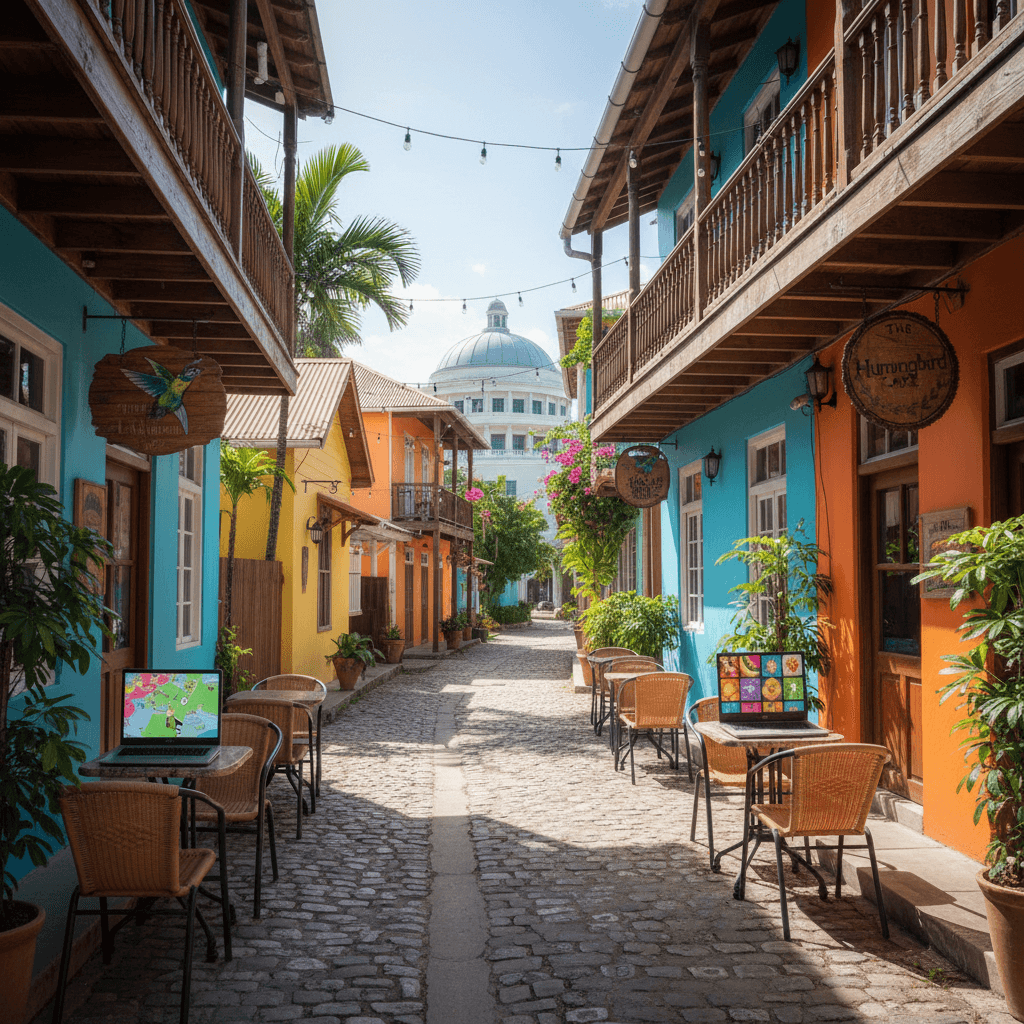
Belmopan
🇧🇿 Belize
The Garden City Vibe
Belmopan isn't your typical capital city. While most seats of government are frantic hubs of noise and concrete, Belmopan feels more like a quiet university town that just happens to run a country. It was built from scratch in the 1970s after a hurricane devastated the former capital, Belize City, and that planned heritage is obvious the moment you arrive. It's spacious, green, and moves at a pace that makes "island time" look hurried.
For a digital nomad, the appeal here is the lack of distraction. You won't find the aggressive party scenes of San Pedro or the constant tourist chatter of Caye Caulker. Instead, you get a lush, inland atmosphere where the morning soundtrack is more likely to be tropical birds than sirens. It's a place for deep work, punctuated by afternoon walks through Ring Road or a quick trip to the nearby jungle. It’s functional, safe, and incredibly affordable, serving as the perfect "home base" for those who want to explore the mainland's caves and ruins without paying coastal premiums.
A Cultural Crossroads
Because it's the administrative heart of the country, Belmopan is a melting pot. On any given day at the central market, you'll hear a symphony of English, Kriol, Spanish, and even some Garifuna or Mayan dialects. The locals are approachable and the vibe is community oriented; you'll likely find yourself chatting with government workers over a plate of rice and beans by your second day.
The city doesn't try to impress you with flashy infrastructure. It’s humble and straightforward. Expats often describe it as "Belize Lite" because it offers the conveniences of a city, like reliable hospitals and government offices for visa renewals, without the grit of Belize City. You'll feel like a resident here, not a tourist, which is a rare commodity in a country so heavily geared toward vacationers.
Living and Budgeting
Your money goes significantly further here than it does on the islands. While a total monthly budget of $2,779 is a solid mid-range estimate, savvy nomads can easily live comfortably on $1,800 to $2,200 if they lean into local life. Housing is the biggest win, with central apartments often costing half of what you’d pay in San Pedro.
- Budget Lifestyle: $1,500 to $2,000 per month. This covers a basic studio in a central area, plenty of street food like $3 salbutes, and using the local bus system.
- Mid-Range Lifestyle: $2,000 to $2,800 per month. This gets you a modern 1BR near the University of Belize, regular meals at sit down restaurants, and occasional car rentals for weekend trips.
- Comfortable Lifestyle: $3,000+ per month. You'll have a large, fully furnished home with air conditioning, a private vehicle, and frequent upscale dining or guided jungle tours.
The Neighborhood Breakdown
Belmopan is compact enough that you're never truly far from the action, but choosing the right pocket changes your experience significantly.
Central Belmopan
- The Vibe: Professional and convenient. This is the heart of the "Garden City" design, located near the University of Belize and the government plaza.
- Rent: $600 to $900 for a decent 1BR.
- Pros: Most walkable area, best access to fiber optic internet, and close to the few cafes where you can actually get work done.
The Outskirts
- The Vibe: Quiet, residential, and very green. These areas are popular with families and long term expats who want a yard and more privacy.
- Rent: $400 to $700 for larger, older homes.
- Pros: Extremely quiet and offers a true "local" feel away from the administrative buildings.
- Cons: You'll definitely need a bike or a car to get groceries or reach the bus terminal.
Market Area / Downtown
- The Vibe: The most energetic part of the city. It's the transit hub where the buses pull in and the street food is best.
- Rent: $400 to $600 for basic units.
- Pros: Immediate access to the best food prices and easy transport to the rest of the country.
- Cons: Can be a bit noisier and lacks the "garden" feel of the more residential zones.
The Price of Quiet Efficiency
Belmopan is the ultimate budget hack for anyone moving to Belize. While tourists flock to the islands and pay a premium for the sea breeze, the capital allows you to stretch your dollar significantly further. You can expect a total monthly burn of around $2,779 for a comfortable lifestyle, though thrifty nomads frequently get by on $1,500 to $2,000 by eating local and skipping the car rental.
The biggest advantage here is the disconnect between "capital city" status and "capital city" prices. Because it lacks the high demand of San Pedro or Placencia, you aren't competing with vacationers for short-term housing. Most expats find that their money goes about 30 percent further here than it would on the coast.
Monthly Budget Tiers
- The Budget Nomad ($1,500 to $2,000): This covers a basic studio in a central area, meals from the local market, and using the reliable bus system to get around. You'll be working from your kitchen table or local cafes.
- The Mid-Range Professional ($2,000 to $2,800): This tier gets you a modern 1-bedroom apartment near the University of Belize, regular dinners at seated restaurants, and occasional taxi rides. You'll likely have a dedicated desk setup and high-speed fiber internet.
- The Comfortable Expat ($3,000+): At this level, you're looking at a fully furnished home in the residential outskirts, a rental car for weekend trips to the jungle, and frequent upscale dining.
Housing and Neighborhoods
Rent is your primary variable. Unlike the coastal markets where prices are quoted in USD to target tourists, Belmopan still retains a more local pricing structure. You'll find the best luck searching local Facebook groups or walking the neighborhoods to spot "For Rent" signs.
Central Belmopan (Near Government Offices)
- Rent: $400 to $700 for a 1-bedroom.
- Vibe: Very walkable and safe, though it gets eerily quiet after 5:00 PM when the office workers head home.
- Internet: Reliable fiber-optic access is standard here.
University Area / Residential Outskirts
- Rent: $600 to $900+ for larger or newer builds.
- Vibe: More space and closer to nature. It's popular with families and long-term expats who prefer a yard.
- Transport: You'll likely want a bike or a car, as it's a bit far to walk to the central market in the heat.
Daily Expenses and Lifestyle
Eating out is where you can really control your costs. Street food and market stalls offer Creole staples like rice and beans for $3 to $5. If you prefer a mid-range sit-down meal, expect to pay between $12 and $18. Upscale dining is limited in the capital, but when you find it, a nice dinner with drinks will run you $30 to $50.
Connectivity is surprisingly affordable given the speeds. A solid fiber-optic plan with 80 Mbps usually costs around $60 per month. For your phone, a Digicell or Smart SIM card with a data bundle is the standard move. Most nomads spend about $40 to $60 a month on mobile data and local calls to stay connected while exploring the nearby caves and ruins.
Transport is another area where you'll save. The central bus station is a hub for the entire country. You can catch a bus to Belize City for about $5 to $10. Within the city, short taxi hops usually cost between $10 and $20, though many people find the core of the city manageable on foot or with a cheap second-hand bicycle.
Young Professionals and Digital Nomads
If you are in Belmopan to get work done, Central Belmopan is your best bet. This area sits near the government offices and the University of Belize, making it the most functional part of the capital. You can find 1BR apartments here for $600 to $900 per month, and most modern buildings are already wired for fiber optic internet.
Most nomads find the pace here incredibly slow, but the reliability of the infrastructure makes up for it. You won't find dedicated coworking spaces yet, so the local strategy is to rotate between cafes or use a high speed home setup. Speeds average around 68 Mbps, which is plenty for video calls. The main drawback is the lack of a social scene; after 6:00 PM, the streets get very quiet, and your dining options are usually limited to a few local eateries.
- Rent: $600 to $900 for a 1BR
- Internet: Reliable fiber up to 150 Mbps
- Vibe: Academic and administrative
Expats and Long Term Residents
For those looking to settle in for six months or more, the areas surrounding the University of Belize are the gold standard. Expats recommend this neighborhood because it balances safety with proximity to services. It is walkable enough that you can handle your immigration paperwork or bank visits without needing a car every day.
Living here puts you in the middle of the city's intellectual hub. You will mostly be rubbing shoulders with professors, government employees, and international NGO workers. While there isn't much "nightlife" to speak of, this is where you will find the most consistent power grid and the best access to private clinics if you need basic healthcare.
- Best for: People who value stability and safety over parties
- Housing: Furnished apartments and small houses
- Networking: Focus on Facebook expat groups and university events
Families and Nature Lovers
If you have kids or just want more elbow room, look at the Residential Outskirts. These neighborhoods offer much larger homes, often with yards and lush greenery, for about the same price as a central apartment. You can find spacious family homes starting around $900, though you will definitely need to rent a car or a scooter to get around.
The trade off for the extra space is the commute. Public transport is less frequent here, and you are further from the market. However, travelers often say the peace and quiet are worth it, especially with easy access to weekend trips like the ATM Cave or the Xunantunich ruins. It is a more suburban lifestyle where you will mostly interact with your neighbors rather than a transient tourist crowd.
- Rent: $900+ for larger furnished homes
- Transport: Car rental or taxis ($10 to $20 per trip) required
- Perks: Proximity to jungles and hiking trails
Solo Travelers and Budget Seekers
The area near the Market and Downtown is where the action is, at least by Belmopan standards. This is the heart of the city's transport network. You are steps away from the bus terminal, where $5 to $10 gets you a ride to Belize City or the airport. It is the best spot if you are only staying for a few weeks and want to keep costs low.
Budget travelers can find basic rooms or studios for $400 to $600. You will be living right next to the street food stalls where a meal of Creole rice and beans costs just $3 to $5. It can be a bit noisy and the amenities are basic, but it is the most authentic way to experience the local culture. Just keep in mind that street lighting can be spotty, so most people avoid walking alone in unlit areas late at night.
- Rent: $400 to $600
- Food: Cheap street eats and local markets
- Convenience: Immediate access to national bus lines
Connectivity and Speed
Belmopan is the administrative heart of the country, which means it gets priority when it comes to infrastructure. You'll find fiber-optic internet is widely available across the central districts. While the advertised speeds can reach 150 Mbps, real-world speeds often 20-50 Mbps depending on plan/location. It is reliable enough for Zoom calls and uploading large files, but it lacks the lightning-fast consistency of major global hubs.
Expect to pay $30-60 per month for 20-50 Mbps fiber plans. This usually bundles a small mobile data allowance and some local minutes. Local providers like Digicell and Smart are the main players. Most expats suggest getting a local SIM card immediately to use as a mobile hotspot. It is a necessary safety net for those rare moments when the local grid blinks.
Power outages aren't a daily occurrence, but they happen often enough that a Uninterruptible Power Supply (UPS) is a smart investment for your home office. If the power goes out, having your router plugged into a backup battery keeps you online while the rest of the neighborhood goes dark. This simple piece of hardware is what separates the professionals from the tourists in Belize.
Coworking and Workspaces
If you are looking for a dedicated coworking brand with ergonomic chairs and networking mixers, you won't find it here yet. Belmopan is still catching up to the digital nomad trend. There are no formal coworking spaces in the city center. Most remote workers here set up shop in their apartments or head to the coast when they need a more social work environment.
When you need a change of scenery, the local cafes and hotel lobbies are your best bet. Nomads often congregate in the following spots:
- The University of Belize Area: The cafes near the campus offer a younger, studious vibe and decent WiFi. It’s the most likely place to find other people on laptops.
- Central Belmopan Hotels: Larger hotels near the government offices usually have reliable internet in their common areas. They are generally quiet during the day, making them perfect for deep work.
- Local Market Eateries: These are great for a quick email check over lunch, but they are too loud and basic for a full eight-hour shift.
Mobile Data and SIMs
Grabbing a SIM card is straightforward. You can find Digicell or Smart kiosks at the airport or in the shops near the Belmopan market. A typical prepaid plan with enough data for a week of heavy usage costs about $15 to $20. Most travelers recommend Digicell for better coverage if you plan on taking weekend trips into the jungle or out to the caves.
Since public WiFi in parks or squares is virtually non-existent, your mobile data plan is your lifeline. Always keep your VPN active when jumping on hotel or cafe networks. It is a standard precaution here, especially since you will likely be accessing banking or client portals on public connections.
The Nomad Setup
Most long-termers in Belmopan choose to rent a furnished one-bedroom or studio near the city center for $400 to $900. Since dedicated workspaces are scarce, the quality of your home internet becomes the most important factor in your housing search. Always ask the landlord for a speed test screenshot before signing a lease. If you need a more robust community, many nomads spend their weekdays in Belmopan for the low cost of living and head to Noma Collective in Placencia for social events and structured networking.
A Safer Pace of Life
Belmopan is widely considered one of the safest hubs in the country, especially when compared to the grit of Belize City. Because it serves as the administrative capital, there is a heavy presence of government officials, diplomats, and university students, which keeps the atmosphere calm and orderly. Most nomads feel comfortable walking through the central areas and government plazas during the day without a second thought.
That said, it is still a capital city in Central America. Common sense goes a long way here. Expats generally recommend avoiding unlit side streets after dark and keeping your tech gear tucked away while you are on the move. While violent crime targeting foreigners is rare in the city center, petty theft can happen if you leave valuables visible in a car or unattended at a cafe. If you are working on your laptop in public, stick to established spots near the University of Belize or the main market area where foot traffic is steady.
Digital safety is just as important as physical safety. Public WiFi networks in local cafes or guesthouses aren't always secure. Most long term travelers suggest using a reliable VPN and ensuring your devices are encrypted, particularly if you are accessing banking apps or sensitive work portals while connected to shared routers.
Healthcare Infrastructure
As the seat of government, Belmopan houses the main public medical facilities for the region. While these clinics are capable of handling basic ailments, infections, or minor injuries, the quality is best described as functional rather than high tech. For anything specialized or serious, most expats and wealthy locals make the 90 minute drive to private hospitals in Belize City.
- Public Facilities: The Western Regional Hospital provides 24 hour emergency services. Expect long wait times and basic amenities.
- Pharmacies: You will find plenty of well stocked pharmacies around the city center and near the market. Most common medications are available over the counter, but it is smart to bring a supply of specific prescriptions from home.
- Emergency Services: In a pinch, the national emergency number is 911. For administrative or visa related emergencies, the Immigration offices are centrally located in the government complex.
Insurance and Health Tips
Don't rely on local public health systems for anything beyond a quick checkup. Nomads staying for a few months typically carry international health insurance that includes medical evacuation to the United States or Mexico for major procedures. Since Belmopan is inland, you won't deal with as much salt air, but the tropical heat and humidity are intense. Dehydration is the most common "health issue" for newcomers, so keep a bottle of filtered water on you at all times.
Mosquito borne illnesses like Dengue can occasionally flare up during the rainy season from June to November. Most apartments in the residential outskirts have screens, but it is worth investing in a good repellent if you plan on hiking the nearby caves or jungle trails on your weekends. If you feel a sudden fever, head to a private clinic early rather than waiting it out.
Safety Checklist for Nomads
- Stay Central: If you are solo, look for housing in Central Belmopan near the government offices. It is better lit and more frequently patrolled.
- Transport: Stick to registered taxis for nighttime travel. A short trip across town usually costs between $10 and $20.
- Connectivity: Keep a local Digicell or Smart SIM card with an active data plan so you aren't reliant on finding a WiFi signal if you get lost or need a ride.
- Water: Stick to bottled or filtered water. While the city water is treated better than in rural areas, most foreigners find it easier on the stomach to avoid the tap.
The Layout of the Capital
Belmopan is a planned city, which makes it feel distinct from the organic, tangled streets of Belize City or the sandy paths of the cayes. The core is designed around a Ring Road that circles the government offices and the University of Belize. Most of what you'll need is concentrated within this central hub, making it surprisingly accessible for those who prefer to explore on foot.
If you're staying in Central Belmopan, you can walk to the market, the bus terminal, and most government buildings within 15 to 20 minutes. However, as you move toward the residential outskirts or newer developments, the tropical heat and humidity become a factor. While it's a safe city to walk, most expats and long term nomads eventually find themselves relying on a mix of taxis and local buses to avoid arriving at meetings drenched in sweat.
The Local Bus System
The Belmopan Bus Terminal is the city's heartbeat. Since Belmopan sits at the junction of the Hummingbird and George Price Highways, it's the primary transit point for the entire country. You won't find a complex metro system here; instead, you'll use the colorful, refurbished school buses that locals call "chicken buses."
- Fares: Local trips usually cost around $1 to $2 BZD, while longer hauls to Belize City or San Ignacio run between $5 and $10 USD.
- Reliability: Buses are frequent, usually departing every 30 to 60 minutes throughout the day.
- The Experience: They can get crowded and loud, but they're the most authentic and affordable way to see the countryside.
Taxis and Getting Around Town
You won't find Uber or Lyft here. Instead, Belmopan relies on a network of collective and private taxis. You can spot them by their green license plates. Most drivers hang out near the market or the bus terminal, but you can also hail them from the street in the central district.
A short trip within the city limits typically costs between $5 and $10 USD. It's always smart to agree on the price before you get in, as meters aren't used. For nomads living in the quieter residential outskirts, keeping a few reliable taxi drivers' WhatsApp numbers is a standard move. Many drivers are happy to act as personal chauffeurs for airport transfers to Philip Goldson International, which usually takes about 90 minutes and costs between $20 and $50 USD depending on your negotiation skills.
Two Wheels: Bikes and Scooters
Because the city is relatively flat and the Ring Road is easy to navigate, cycling is a popular choice for the student population and budget conscious nomads. You can often find basic bike rentals near the University of Belize or the market area for $10 to $20 USD per day. If you're staying for a few months, buying a second hand cruiser is a better investment. It gives you the freedom to pop over to the market for fresh produce without worrying about bus schedules.
Car Rentals and Driving
If you plan on using Belmopan as a base to explore the nearby ATM caves, Mountain Pine Ridge, or the ruins at Xunantunich, renting a car is the most comfortable option. The roads in Belmopan are generally well maintained, but once you head into the jungle, you'll want a vehicle with high clearance.
- Rental Costs: Expect to pay $60 to $100 USD per day for a decent SUV.
- Parking: Generally easy and free throughout the city, except for a few congested spots near the main market on Friday and Saturday mornings.
- Fuel: Gas is more expensive than in the US or Mexico, so factor that into your weekend trip budget.
Most nomads find that a combination of walking the central core and using taxis for evening trips or grocery runs is the most efficient way to live. It's a slow paced system that matches the city's vibe; you'll get where you're going, just don't expect it to happen in a New York minute.
The Linguistic Landscape
One of the biggest draws for nomads landing in Belmopan is the lack of a language barrier. English is the official language of Belize, which makes everything from negotiating a lease in the Central Belmopan area to discussing fiber-optic installation with a technician incredibly straightforward. You won't need to spend your first month fumbling through a translation app just to buy groceries or open a bank account.
While English is the standard for government business and education, the city is a melting pot. You'll hear Belizean Creole (Kriol) on every street corner. It's an English-based language that's fast, rhythmic, and expressive. Most locals are bilingual or trilingual, switching seamlessly between English, Creole, and often Spanish, which is widely spoken due to the proximity to the Guatemalan border and the diverse backgrounds of the capital's residents.
Practical Communication for Daily Life
You'll find that communication in Belmopan is deeply rooted in social etiquette. It's a small town at heart; people greet each other when passing on the sidewalk. A simple "Mahnin" (Good morning) or "Gud aftanon" goes a long way in establishing rapport with your neighbors or the vendors at the local market. Expats recommend leaning into this friendliness, as the social network in the capital is tight-knit and word of mouth is often the best way to find unlisted apartment deals.
- Official Business: Stick to English for all interactions at the Immigration Office or the University of Belize.
- Social Settings: You'll hear plenty of Creole. You don't need to speak it to fit in, but understanding a few phrases helps you follow the vibe of a conversation.
- Market Days: Spanish is very helpful at the produce markets, where many vendors come from surrounding rural communities.
Staying Connected: Data and SIMs
Don't expect to rely on public Wi-Fi while wandering between government buildings. While fiber-optic internet is becoming the standard for home setups, mobile data is your lifeline when you're out. The two main providers are Digicell and Smart. Most nomads head straight to the shops near the city center to grab a prepaid SIM card.
- Digicell Tourist Plans: You can find plans for around $20 USD that include 25GB of data and 500 minutes/texts.
- Coverage: Signal strength is generally excellent within the city limits, though it can dip if you head out on weekend trips to nearby caves or ruins.
- Physical Stores: Both providers have offices in the center of town where you can top up your credit or troubleshoot issues.
Digital Tools and Nuances
While English is the default, Google Translate remains a handy tool for its camera feature, especially when reading some older signs or menus that might have Spanish origins. For messaging, WhatsApp is the undisputed king. Whether you're booking a taxi, checking if a cafe has a table available, or joining local expat Facebook groups, you'll do it through WhatsApp.
If you're planning to stay long-term on a nomad visa, keep in mind that "Belizean time" is a real factor. Communication might be clear in terms of language, but "I'm coming now" rarely means "I am arriving this second." It's a relaxed culture, so a little patience is just as important as knowing the right words.
The Tropical Rhythm
Belmopan sits in a tropical sweet spot where the humidity of the jungle meets the organized layout of a capital city. You can expect a consistent average of 26°C (79°F) throughout the year, but the experience changes drastically depending on the humidity levels and rainfall patterns. Unlike the coastal cayes where the breeze keeps things cool, Belmopan's inland location means the heat can feel a bit more stagnant during the peak of the afternoon.
The Golden Window: December to April
The dry season is undoubtedly the best time to base yourself here. From December through April, the skies stay clear and the temperatures hover between a comfortable 25°C and 32°C. This is when the city feels most accessible. You'll find it much easier to walk between the government buildings or bike over to the University of Belize without getting caught in a sudden downpour.
Expats generally recommend this window for anyone planning to tackle the local bureaucracy or apply for long-term residency. Since the weather is predictable, you won't have to worry about power fluctuations or flooded roads interfering with your meetings at the Immigration office. It's also the prime season for weekend trips to nearby attractions like the Actun Tunichil Muknal caves or the Xunantunich ruins, as the trails remain dry and safe.
The Green Season: June to November
The rainy season begins in June and stretches through November. While the name sounds daunting, it usually manifests as heavy, short-lived afternoon thunderstorms rather than constant gray skies. October is historically the wettest month, often seeing the most consistent rainfall and the occasional tropical depression.
- Humidity: It climbs significantly during these months, making air conditioning a non-negotiable for most nomads working from home.
- Hurricane Risk: Belize is in the hurricane belt, and while Belmopan was specifically chosen as the capital because its inland location provides better protection than Belize City, you should still stay alert to weather reports during the peak months of August and September.
- Nature Access: Some river-based tours and cave systems may close temporarily if water levels rise too quickly.
Seasonal Practicalities
If you're looking for a deal, arriving during the "shoulder" months of May or November can sometimes yield better rates on mid-range rentals. However, because Belmopan isn't a primary tourist hub like San Pedro, prices for housing and food stay relatively stable for a comfortable lifestyle regardless of the month.
Travelers often say that the heat in May is the most intense, as it's the bridge between the dry and rainy seasons. If you struggle with high temperatures, you might find this month particularly draining. Regardless of when you arrive, the city's pace remains slow and steady. Just remember to pack a high-quality raincoat if you're staying through the fall, and always keep a backup power bank for your devices, as the occasional heavy storm can cause brief blips in the local grid.
Connectivity and the Digital Workspace
Internet in the capital is surprisingly reliable, though you shouldn't expect the blistering speeds of a Silicon Valley hub. Realistically, speeds are plenty for Zoom calls and standard workflows.
You won't find a dedicated, glass-walled coworking space in Belmopan just yet. Most remote workers set up shop in their apartments or head to local cafes near the University of Belize. If you need a professional backup, hotels in the city center are accustomed to guests hovering over laptops and generally have the most stable WiFi. It's a good idea to invest in a UPS (Uninterruptible Power Supply) or a solid power bank; while outages aren't frequent, they do happen during the rainy season.
Getting Around the Garden City
Belmopan is a planned city with a compact core, making the central government and market areas quite walkable. However, if you're staying in the residential outskirts, you'll want some wheels. Since there are no ride-hailing apps like Uber or Lyft here, you'll rely on the local taxi network. Short trips within the city typically cost between $10 and $20 BZD.
- Public Buses: The central station is your gateway to the rest of the country. Buses to Belize City or San Ignacio run frequently and cost a modest $5 to $10.
- Car Rentals: If you plan on exploring the nearby caves or ruins on your own schedule, rentals are available but expect to pay $100+ per day for a decent vehicle.
- Bikes: Many expats and students use bicycles to navigate the ring road. You can often find rentals near the market for about $15 a day.
Safety and Wellness
The capital feels significantly safer than the commercial bustle of Belize City. It has a small-town atmosphere where people tend to know their neighbors. Standard common sense applies: don't leave your laptop unattended at a cafe and avoid walking through unlit areas of the periphery alone late at night. For digital security, nomads recommend using a VPN when hopping on public networks at the market or hotels.
Healthcare is centered around the government facilities here, as it's the administrative heart of the country. While these are fine for basic needs and prescriptions, most expats head to private clinics in Belize City for anything specialized. Pharmacies are easy to find and well-stocked with familiar brands.
Money and Practicalities
Cash is still king for street food and market stalls, but you'll find that many mid-range restaurants and grocery stores accept major credit cards. ATMs are scattered throughout the center, though they can occasionally run out of cash on holiday weekends. Using a fintech card like Wise or Revolut is a smart move to keep conversion fees low.
- SIM Cards: Grab a local SIM from Digicell or Smart. A combo plan with data and minutes usually runs around $60.
- Tipping: A tip of 10 to 15 percent is standard in sit-down restaurants, though it's always worth checking if a service charge was already tacked onto the bill.
- Visa Extensions: One of the perks of living in the capital is proximity to the Immigration Office. If you aren't on a specific nomad visa, renewing your 30-day tourist stamp is much faster here than in the crowded coastal offices.
The Social Landscape
Don't come to Belmopan looking for a wild nightlife scene. The social life here is built around afternoon drinks at local bars, weekend market trips, and community gatherings. To find your tribe, look for Belize expat groups on Facebook; they are the primary way people organize meetups, sell furniture, or find apartment leads. For a change of pace, most residents head to San Ignacio or the coast on weekends to find a more social atmosphere.
Need visa and immigration info for Belize?
🇧🇿 View Belize Country GuideWild Card
Expect the unexpected