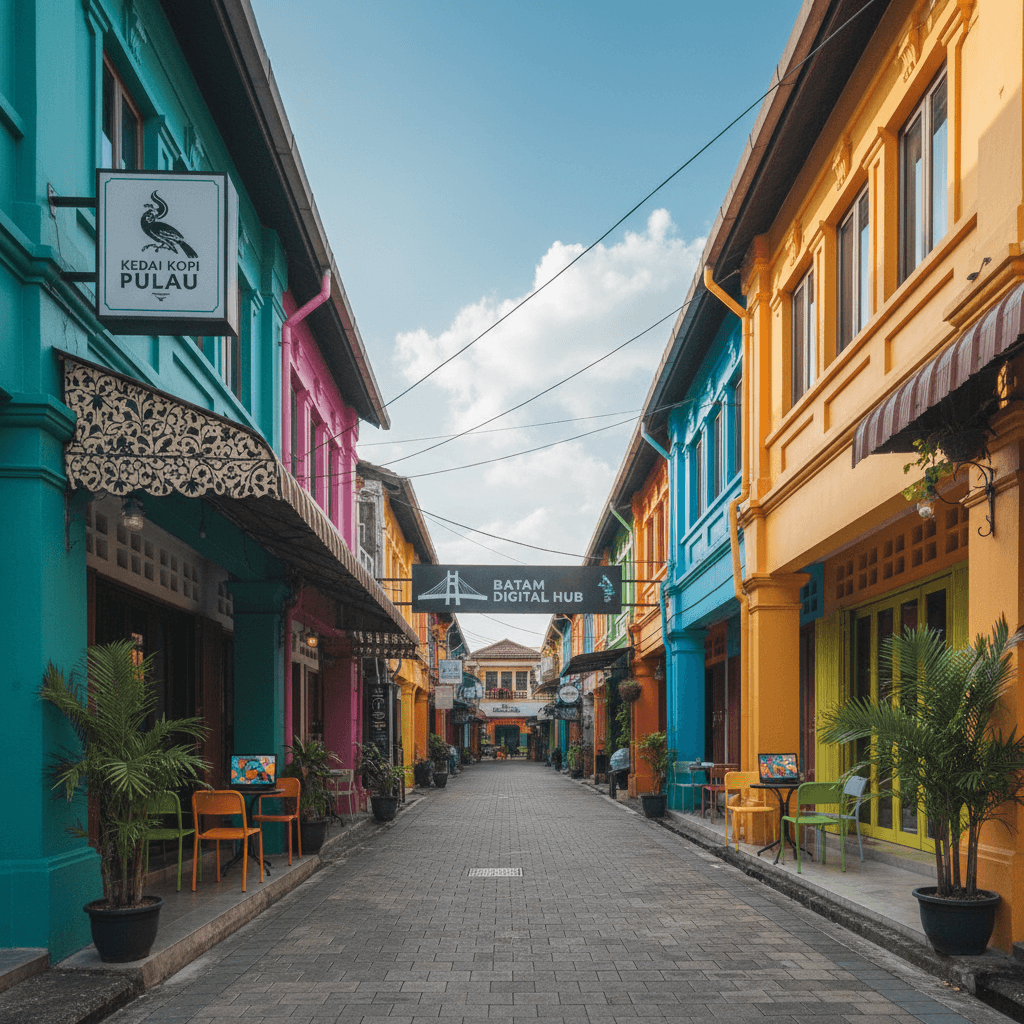
Batam
🇮🇩 Indonesia
The Lowdown
Batam is the pragmatic cousin to Bali's spiritual influencer. It’s an industrial island with a gritty, entrepreneurial spirit that happens to be sitting on some of the most strategic real estate in Southeast Asia. While most travelers only see the ferry terminal on a quick day trip from Singapore, a growing community of nomads is realizing that Batam is one of the most affordable gateways to the region. You aren't here for ancient temples or jungle yoga; you're here for $500 monthly budgets, reliable 50Mbps internet, and the ability to be in downtown Singapore in under an hour.
The vibe is a unique blend of Indonesian warmth and duty free commerce. It’s a place where you can spend your morning on a Zoom call at Ruang Kreasi, your afternoon eating $2 beef rendang at a street stall, and your evening at a high end golf course or a rooftop bar in Nagoya. It lacks the polish of more famous nomad hubs, but it makes up for it with a raw, "anything goes" energy and locals who are genuinely happy to see you.
The Cost of Living
Batam is arguably one of the cheapest urban centers in Indonesia. You can live a comfortable, middle class life here for less than the price of a single month's rent in most Western cities. Most nomads find that a budget of $800 to $1,200 per month buys a high quality of life, including a modern apartment and daily meals out.
- Budget ($500 to $800): You'll likely stay in a studio in suburbs like Sukajadi for around $150. You'll eat mostly street food for $1 to $3 per meal and use the Trans Batam bus system.
- Mid-range ($800 to $1,200): This gets you a nice one bedroom in Batam Centre or Nagoya for about $260. You can afford daily Grab rides and frequent dinners at mid-range spots where a meal for two costs roughly $9.
- Comfortable ($1,500+): You're looking at gated communities like Villa Panbil or Nongsa where rents start at $300. This budget covers private office spaces, car rentals, and upscale dining at $15+ per person.
Where to Plant Your Flag
Your experience in Batam depends entirely on which pocket of the island you choose. Each neighborhood serves a different purpose.
- Nagoya (Lubuk Baja): This is the heartbeat of the island. It’s noisy, traffic heavy, and packed with malls and nightlife. It's the best spot if you want everything within walking distance and don't mind a bit of urban chaos.
- Batam Centre: The administrative hub. It feels more organized and suburban than Nagoya. It’s popular with families and expats who want easy access to the ferry terminals and modern amenities without the constant roar of the nightlife district.
- Nongsa: Located on the northeastern tip, this is where the beaches and resorts are. It’s quiet and beautiful but isolated. You’ll need a scooter or car to do anything, but it’s the place to be if you want to wake up to sea views.
- Villa Panbil & Sukajadi: These are the premier gated estates. They offer gyms, pools, and high security. They aren't very walkable, so most residents here rely on Gojek or Grab to get around.
Work, Connectivity, and Gear
The internet in Batam is surprisingly stable, though seasoned nomads always keep a Telkomsel SIM card as a backup. A 30GB data plan will only set you back about $10. For a dedicated workspace, Ruang Kreasi is the local favorite with hot desks for $48 a month and 24/7 access. If you prefer a cafe vibe, Upnormal Space and Titik Mulai offer solid Wi-Fi and plenty of power outlets.
Getting around is dominated by apps. Grab and Gojek are your lifelines, with rides starting at just $0.50. Just be aware that these apps are sometimes restricted at the airport or ferry terminals, so you might need to use a local taxi or walk a short distance to meet your driver. For daily commutes, the Trans Batam buses are incredibly cheap at $0.30 a ride, while a scooter rental costs about $6 a day for those brave enough to handle the local traffic.
The Real Talk
Living here isn't always a breeze. The weather is aggressively hot and humid, especially from May to July. You’ll deal with occasional power blips and a lack of high end entertainment compared to Singapore or Jakarta. However, the trade off is a community where you can actually afford to take risks, a culture that values hospitality, and the ability to hop on a ferry for a weekend of luxury in Singapore whenever the island fever kicks in.
The Lowdown on Batam Budgets
Batam is one of the few places left where you can live a high quality life for a fraction of what you would spend in Bali or Jakarta. Most nomads find they can get by comfortably on $542 a month, including a decent place to stay. If you are watching your pennies, you can even drop that to $303 plus rent, making it a top contender for those looking to extend their runway while working remotely.
The island operates on a tiered system of comfort. Budget travelers usually land in the $500 to $800 range, sticking to studio apartments in suburbs like Sukajadi and eating at local warungs where a meal costs $1 to $3. Mid-range living sits between $800 and $1,200, allowing for a city center apartment in Nagoya and frequent Grab rides. If you want the "expat bubble" experience with a gated villa in Nongsa and private office space, expect to budget $1,500 or more.
Neighborhood Breakdown
Where you plant your flag depends on whether you want urban chaos or coastal quiet. Nagoya, also known as Lubuk Baja, is the heartbeat of the island. It is noisy and the traffic is a headache, but it is the most expat friendly area with the best nightlife and cheapest street food. Batam Centre is the more organized sibling, popular with families because of its proximity to ferry terminals and malls.
- Nagoya: Best for solo nomads. Expect to pay around $263 for a one bedroom apartment in the thick of the action.
- Batam Centre: Great for a balanced urban feel. Housing is affordable and the infrastructure is slightly more reliable than the older parts of town.
- Nongsa: The luxury choice. It is far from the center but offers beaches and golf courses. You will need a car or a healthy Grab budget to live here.
- Villa Panbil and Sukajadi: These gated communities are nomad favorites. They offer pools, gyms, and modern security for roughly $300 to $400 a month.
Connectivity and Workspace
Reliable internet is the lifeline for any nomad, and Batam delivers better than you might expect. Most setups average 50Mbps for about $25 a month. While it is stable enough for Zoom calls, seasoned remote workers usually keep a Telkomsel SIM as a backup for the occasional power blip. You can snag a 25GB data plan for about $10 at almost any shop.
For a professional environment, Ruang Kreasi is the go to spot. A hot desk there runs about $48 a month, or you can spring for a private office starting at $144. Other solid options include Titik Mulai and Upnormal Space. If you prefer the cafe route, the coffee culture is strong, and most owners don't mind you camping out for a few hours if you are buying lattes.
Daily Expenses and Getting Around
Transport is dominated by the Grab and Gojek apps. A quick ride across town usually costs between $0.50 and $6. If you are feeling adventurous, the Trans Batam BRT buses are incredibly cheap at $0.15 per trip, though they aren't exactly on a Swiss schedule. Many expats end up renting a scooter for $5 to $7 a day to avoid the "no-go zones" where ride-hailing drivers aren't allowed to pick up passengers, like near the ferry terminals.
Dining out is a highlight here. You can grab a local lunch for under $3, or take a date to a mid-range spot for a full dinner for two for about $9. Even upscale seafood dinners rarely cross the $15 mark per person. Utilities and home internet usually bundle into a $25 to $100 monthly bill depending on how much you blast the air conditioning to combat the 32°C heat.
Practical Survival Tips
Cash is still useful, but the island has moved quickly toward digital payments. Set up GrabPay or GoPay, and use Wise for your international transfers to avoid bank fees. For healthcare, BP Batam Hospital is the current standard for emergencies, with a doctor visit costing around $14. Keep in mind that while English is common in Nagoya and the resorts of Nongsa, having a translation app ready for the suburbs will save you a lot of frustration.
For Nomads and Solo Travelers: Nagoya (Lubuk Baja)
If you want to be where the action is, Nagoya is your base. This is the city's urban heartbeat, packed with malls like Nagoya Hill and Grand Batam. Most nomads gravitate here because everything is within walking distance or a $1 Grab ride away. It is the best spot for those who want to finish a work session and immediately find a cheap plate of Nasi Goreng or a craft beer.
- The Vibe: High energy, slightly chaotic, and very social. It has the best nightlife on the island with spots like No Name Bar and Ice Pub.
- Cost of Living: Expect to pay around $263 for a decent one bedroom apartment in the center. Street food is everywhere for $1 to $3 per meal.
- Connectivity: You are close to Ruang Kreasi, the go-to coworking space where a hot desk runs about $48 a month.
The downside is the noise. Between the traffic and the general city hum, it is not the place for a quiet retreat. However, for solo travelers looking to meet people and keep costs under $800 a month, it is unbeatable.
For Expats and Remote Professionals: Batam Centre
Batam Centre is the administrative hub and offers a more organized, suburban feel than Nagoya. It is the favorite for expats who want a balance of modern amenities and local prices. You have easy access to the Mega Mall and the main ferry terminal, making those weekend hops to Singapore incredibly simple.
- Living Standards: Housing here is modern and affordable. You can find comfortable condos or small houses for $250 to $400 a month.
- Work Life: Many residents use coworking spaces like Titik Mulai or Upnormal Space. Internet is generally stable at 50Mbps, costing about $25 monthly.
- Transport: It is the hub for the Trans Batam BRT buses, which cost only $0.15, though most expats stick to Gojek or Grab.
While it feels a bit more "corporate" than Nagoya, the infrastructure is slightly more reliable. It is the middle ground for someone who wants a real apartment rather than a hotel room but still needs to be near a grocery store that stocks international goods.
For Families and Luxury Seekers: Nongsa
Nongsa feels like a different island altogether. Located on the northeastern tip, it is where you find the resorts, golf courses, and private beaches. Families often choose this area to escape the city’s humidity and congestion, opting for the sea breeze and gated communities.
- The Lifestyle: It is quiet, green, and upscale. You will spend your weekends at places like Turi Beach or playing a round of golf.
- The Cost: This is the priciest part of Batam. A comfortable villa or high end apartment can easily exceed $1,500 a month when you factor in car rentals and resort memberships.
- Tech Hub: Nongsa Digital Park is located here, making it a unique spot for tech professionals who want to work near the beach.
You will definitely need your own wheels here. Public transport is scarce, and Grab rides into the city center can take 30 to 45 minutes. It is a trade off: you get the resort lifestyle, but you lose the $1 street food convenience of the city.
For Long-Term Residents: Villa Panbil and Sukajadi
If you are planning to stay for six months or more, look at these managed estates. Sukajadi and Villa Panbil are the gold standard for gated living in Batam. They are popular with expats working in the industrial sectors and digital nomads who prioritize security and fitness facilities.
- Amenities: Most of these communities include private gyms, swimming pools, and 24/7 security.
- Pricing: Budget around $300 to $500 for a high quality house or apartment. Sukajadi is particularly well known for its central location and proximity to the Kepri Mall.
- Environment: These neighborhoods are much more walkable than the rest of the city, with paved sidewalks and less through traffic.
Living here feels "suburban" in a Western sense. You sacrifice the grit and local flavor of Nagoya for a predictable, comfortable environment where the power is less likely to flicker during a Zoom call.
Connectivity and Speed
Batam is a solid choice for remote work because it shares much of the infrastructure backbone used by its neighbor, Singapore. You can expect average speeds of 50Mbps or higher for a standard home setup, which usually costs around $25 a month. While the connection is generally stable enough for Zoom calls and heavy uploads, the island does experience occasional power blips or service outages. Most nomads keep a local SIM card as a hotspot backup to stay online during these short gaps.
For mobile data, Telkomsel is the gold standard for coverage, offering 25GB packages for about $10. If you are on a tighter budget, XL provides 30GB for as little as $3, though the signal can be spotty once you head toward the quieter beaches in Nongsa. You can pick up these SIMs at Hang Nadim Airport or any small cell shop in Nagoya. If you prefer to hit the ground running, an eSIM like Holafly offers unlimited data for $27 per week, but it is significantly more expensive than local options.
Top Coworking Spaces
The coworking scene in Batam is practical and affordable, catering more to local startups and serious remote workers than the "influencer" crowd you might find in Bali. These spaces are concentrated in the urban hubs of Nagoya and Batam Centre.
- Ruang Kreasi: This is the most popular hub for the nomad community. A hot desk goes for $48 a month, while a dedicated desk is $60. It is one of the few places offering 24/7 access, which is a lifesaver if you are working for clients in North American or European time zones.
- Nongsa Digital Park: Located on the northeastern tip of the island, this is a massive tech campus. It is a bit of a trek from the city center, but it provides a high end corporate environment and is great if you want to network with tech talent from Singapore. Monthly rates start around $50.
- Titik Mulai: A more relaxed, community focused space in Batam Centre. It is a favorite for those who want a professional desk without the stiff office vibe.
- Upnormal Space: Often found attached to the popular Warunk Upnormal cafe chain, these spaces offer a mix of social atmosphere and functional work areas.
Cafe Culture and Laptop Friendly Spots
If you prefer the hum of a coffee shop, Batam has a growing cafe culture. In the Nagoya area, you will find plenty of spots with reliable Wi-Fi and air conditioning. Most shop owners are happy to let you linger for a few hours if you are ordering coffee and food. Prices at mid range cafes are very manageable, with lunch usually costing under $3.
Expats frequently recommend working from cafes within the major malls like Grand Batam Mall or Nagoya Hill Shopping Centre. These areas have the most consistent power grids and excellent air conditioning, which is a necessity given the island’s humidity. Just keep in mind that these spots can get noisy during the lunch rush and on weekends when families head out to shop.
Practical Tips for Remote Workers
To make the most of your workdays in Batam, keep these local insights in mind:
- Grab and Gojek: Download these apps immediately. They are essential for getting between your apartment and coworking spaces. A typical ride costs between $0.50 and $6.
- Digital Payments: While cash is still used at street stalls, most cafes and coworking spaces prefer GrabPay, Gojek, or QRIS (the local QR code system). Wise is the preferred tool for transferring funds into local accounts or paying rent.
- Backup Power: If you are staying in a budget studio in the suburbs like Sukajadi, consider buying a small power bank for your laptop. Infrastructure in the gated communities like Villa Panbil is more robust, but it never hurts to be prepared.
Stay Smart on the Streets
Batam is generally safe for nomads and expats, provided you use the same common sense you would in any major Southeast Asian city. Most visitors find the locals friendly and welcoming, but it is wise to avoid flashy displays of wealth. Keep your high end jewelry or expensive electronics tucked away when walking in crowded areas like Nagoya or Batam Centre.
At night, stick to well lit areas and use ride hailing apps like Grab or Gojek rather than walking through unfamiliar, remote spots alone. Petty theft like bag snatching is rare but not unheard of, especially in busy markets. Travelers often say that the biggest safety "threat" is actually the traffic. Pedestrian infrastructure is limited, so be extra cautious when crossing the street in industrial zones or near the ferry terminals.
Healthcare and Hospitals
If you get sick, you are in decent hands for routine issues. BP Batam Hospital is the primary facility for advanced referrals, particularly for cardio or trauma cases. For something less urgent, a standard doctor visit usually costs around $14. Pharmacies are easy to find across the island and are well stocked with most over the counter basics.
While local care is fine for minor ailments, many expats take advantage of the 45 to 60 minute ferry ride to Singapore for major procedures or specialist consultations. It is a unique perk of living here; you get Indonesian living costs with world class medical access just a boat ride away. Looking ahead, the Mayapada Batam International hospital is slated to open in 2027, which should significantly level up the local healthcare scene.
- Police: Dial 110
- Ambulance: Dial 118
- Standard Consultation: Approximately $14
- Health Insurance: Most nomads recommend a plan that covers medical evacuation to Singapore for peace of mind.
Practical Wellness Tips
The tropical heat is no joke. With temperatures regularly hitting 32°C and high humidity, dehydration is a common pitfall for newcomers. Always carry water and don't rely on tap water for drinking; stick to bottled or filtered options. Most modern apartments in gated communities like Villa Panbil or Sukajadi provide water dispensers for this reason.
Mosquitoes can be a nuisance, particularly during the rainy season from October to January. While malaria isn't a major concern in the urban centers of Batam, dengue fever pops up occasionally. Use repellent if you are hanging out at the beach bars in Nongsa or trekking near the reservoirs. If you have a specific prescription you can't live without, bring a few months' supply and your physical prescription, as specific brand names can vary in Indonesian pharmacies.
The Ride-Hailing King
In Batam, your smartphone is your best friend. Forget trying to flag down a car on the street. The local transport scene is dominated by Grab and Gojek. These apps are incredibly reliable and cost-effective, with most short trips around Nagoya or Batam Centre costing between $0.50 and $6. It is the default way most nomads move between cafes and apartments.
There is a small catch with the "red zones." Local taxi drivers often restrict ride-hailing pickups at ferry terminals and Hang Nadim Airport. If you are arriving from Singapore, you might need to walk a few minutes away from the terminal or use a more expensive "official" taxi for the initial leg. Once you are at your hotel or a mall, the apps work perfectly. For those who prefer a more traditional route, you can often book taxis via WhatsApp, which many long-term expats recommend for airport runs, usually costing around $10.
Public Transit and Local Flavor
If you are on a tight budget or want to see the city like a local, the Trans Batam BRT buses are your best bet. They are surprisingly cheap, with fares ranging from $0.15 to $0.30. They cover the main arteries of the city well, and you can even grab a monthly pass for about $16 if you are staying long-term.
For a more adventurous commute, look for angkot minivans. These follow set routes but don't have fixed stops; you just wave them down. They cost between $0.15 and $0.70 depending on the distance. While they aren't the most comfortable way to travel in the midday heat, they are a staple of Batam life.
Wheels of Your Own
Many nomads find that renting a scooter provides the ultimate freedom, especially if you are staying in quieter areas like Nongsa or gated communities like Villa Panbil. Expect to pay $5 to $7 per day for a decent bike. Just be prepared for the traffic in Nagoya, which can get congested during peak hours. If you prefer four wheels and air conditioning, car rentals typically run between $25 and $50 daily.
Walkability and Layout
Batam is not a city designed for pedestrians. Sidewalks can be inconsistent or non-existent once you leave the main commercial hubs. However, certain pockets are quite walkable. If you base yourself in Nagoya (Lubuk Baja), you can easily walk between malls, pharmacies, and bars. Outside of these central hubs, you will likely find yourself relying on a vehicle for almost every trip.
- Grab/Gojek: Best for daily errands and safety.
- Trans Batam: Cheapest way to traverse the main city lines.
- Scooter Rental: Ideal for exploring the beaches in Nongsa.
- Ferry: Your gateway to Singapore for weekend runs.
Getting to the City
Most travelers arrive via the Batam Centre or Harbour Bay ferry terminals from Singapore. From there, it is a quick 10 to 15 minute drive to the main nomad hubs. If you are flying in, the airport transfer to the city center is straightforward and takes about 30 minutes. Most expats suggest having your Grab or Gojek app set up with a local SIM card (Telkomsel is the favorite) before you even leave the terminal to ensure you can coordinate your ride easily.
The Linguistic Landscape
Bahasa Indonesia is the heartbeat of Batam. Because the island is a melting pot of migrants from across the archipelago, you will hear a standard version of the language mixed with Riau Malay influences. For digital nomads, the good news is that Batam is heavily influenced by its proximity to Singapore. In business hubs like Batam Centre and tourist corridors like Nagoya or Nongsa, English is common enough to get you through a dinner order or a lease negotiation without much stress.
Once you step away from the malls and international resorts, English proficiency drops off quickly. If you are exploring local markets or grabbing street food in the suburbs of Sukajadi, expect to rely on gestures and translation apps. Locals are incredibly patient and friendly; they generally appreciate any effort you make to speak the local tongue, even if it is just a few words.
Essential Phrases for Daily Life
You do not need to be fluent to live comfortably, but mastering a handful of basics will change the way locals interact with you. It turns you from a transient tourist into a respected resident. Start with these:
- Halo: Hello (Universal and easy).
- Terima kasih: Thank you (You will use this dozens of times a day).
- Apa kabar?: How are you? (A great conversation starter).
- Sangat baik: Very good (Perfect for praising that $2 plate of Nasi Goreng).
- Berapa?: How much? (Vital for market stalls without price tags).
- Maaf: Sorry/Excuse me.
Digital Communication and Apps
In Batam, your smartphone is your primary translator and bridge to the community. Google Translate is the gold standard here, especially the camera feature for deciphering menus or government signs. For actual communication, WhatsApp is the undisputed king. Whether you are messaging a landlord at Villa Panbil, booking a table at a seafood joint, or coordinating with a driver, it happens over WhatsApp.
For getting around and ordering food, Grab and Gojek are your lifelines. The interfaces are available in English, which removes the language barrier for transport and deliveries. Most expats find that between these apps and basic Bahasa, they can manage 90% of their daily interactions without a hitch.
Social Etiquette and Nuance
Communication in Indonesia is as much about body language as it is about words. Use your right hand for everything, giving, receiving, or eating. Using the left hand is considered disrespectful. If you need to point at something, use your thumb instead of your index finger to be extra polite.
Expats often mention the "Indonesian smile." If a local does not understand your English, they might smile or nod politely rather than saying they are confused. If you get a "yes" that feels hesitant, try rephrasing your question. Keeping your tone calm and relaxed is key; raising your voice or showing frustration will usually result in the other person shutting down rather than helping you faster.
Staying Connected
To keep the translation apps running, you will need a local SIM. Telkomsel is the most reliable provider on the island, offering about 25GB of data for roughly $10. You can pick these up at Hang Nadim Airport or any small "Pulsa" shop in town. If you prefer the convenience of an eSIM and do not mind paying a premium, Holafly offers unlimited data for a week for around $27, though local SIMs are significantly cheaper for long term stays.
The Tropical Forecast
Batam sits just north of the equator, so you can forget about packing a sweater. You're looking at a consistent tropical climate where temperatures hover between 24°C (75°F) at night and 32°C (90°F) during the day. The humidity is the real factor here; it stays high year round, which makes the air feel thick but keeps the island's greenery looking lush.
Expats living in Nagoya or Batam Centre usually plan their days around the heat. Most nomads find that the midday sun is best spent in air conditioned coworking spaces like Ruang Kreasi or Nongsa Digital Park. If you're out and about, you'll want to stick to the shade or duck into one of the many modern shopping malls to cool off.
Best Times to Visit
While there isn't a traditional "winter," the island does have distinct dry and wet patterns. If you want the most reliable weather for island hopping or hitting the golf courses in Nongsa, aim for these windows:
- February to April: This is often considered the sweet spot. The heavy year end rains have tapered off, and the humidity feels slightly more manageable. It's the best time for clear skies and smooth ferry crossings to Singapore.
- August to September: Another solid window for digital nomads. You'll get plenty of sunshine for weekend trips to the nearby islands, though you should still expect the occasional afternoon downpour.
The Rainy Season Reality
Batam sees two main spikes in rainfall. The first occurs from October to January, with about 8 to 9 rainy days per month. These are usually consistent, cooling showers that help break the heat. The second peak happens between May and July, where you might see 15 to 19 days of rain per month. This is generally considered the "worst" time to visit if you're looking for outdoor adventure.
Rain in Batam isn't usually a day long affair. It tends to come in heavy, dramatic bursts that last an hour or two, followed by steam rising off the pavement. Locals and long term residents just carry a sturdy umbrella and use Grab or Gojek to get around when the clouds open up. If you're working remotely, these rainy afternoons are actually quite productive for hunkering down in a cafe with a $3 coffee.
Planning Around the Calendar
Beyond the weather, keep an eye on the Singaporean calendar. Because Batam is a popular weekend getaway for people living in Singapore, ferry terminals and hotels get crowded during Singaporean public holidays. Prices for short term rentals might tick up, and the usually quiet beaches in Nongsa can get busy.
Most nomads recommend arriving during the shoulder months like March or September. You'll avoid the peak monsoon rains and the holiday crowds, making it easier to negotiate long term stays in gated communities like Villa Panbil or Sukajadi. During these months, you get the best of the island: hot enough for the pool, but dry enough to explore the street food stalls without getting soaked.
Getting Settled and Staying Connected
Batam is one of the most budget-friendly hubs in Southeast Asia. Most nomads find they can live comfortably on $800 to $1,200 per month, while those on a tighter budget can scrape by on $500 to $800 if they stick to local neighborhoods like Sukajadi. Expect to pay around $144 to $170 for a basic studio, or closer to $260 for a modern one bedroom apartment in the city center.
For work, the internet is generally reliable with speeds hitting 50Mbps for about $25 a month. However, power blips happen. Expats recommend keeping a backup power bank and a local SIM card handy. Telkomsel offers the best coverage for about $10 for 25GB, though XL is a cheaper alternative if you are staying central. If you need a professional desk, Ruang Kreasi is the go-to spot with 24/7 access for $48 a month. Other solid options include Titik Mulai and Upnormal Space.
Where to Plant Your Flag
- Nagoya (Lubuk Baja): This is the heart of the action. It is perfect for solo travelers who want to be near malls, nightlife like No Name Bar, and endless cheap eats. It gets noisy and the traffic is thick, but you won't need a car to find a good meal.
- Batam Centre: A favorite for long-term expats. It feels more organized and has great transport links to the ferry terminals. Housing is affordable, though you might deal with occasional infrastructure hiccups.
- Nongsa: If you have a higher budget and want a view of the sea, head here. It is home to luxury resorts and golf courses. It is quiet and beautiful, but you will be far from the city's main social scene.
- Villa Panbil and Sukajadi: These gated communities are popular with digital nomads who prioritize security and amenities like gyms and pools. You will need a scooter or a Grab account to get around, as these areas aren't walkable.
Daily Life and Logistics
Getting around is simple thanks to Grab and Gojek. Short rides usually cost between $0.50 and $6. Just keep in mind that these apps are often restricted at the airport and ferry terminals, where you will need to use a local taxi. If you're feeling adventurous, the Trans Batam buses are incredibly cheap at about $0.30 a ride.
The food scene is a massive perk. You can grab street food for $1 to $3, or enjoy a mid-range dinner for two for under $10. For social life, join the Batam Healthy Fun Meetup or check out expat groups on Facebook. People often meet up for golf, coffee, or weekend trips to Singapore, which is just a short ferry ride away.
Health and Safety
Batam is generally safe, but use common sense. Don't flash expensive tech in crowded areas and stick to well-lit streets at night. If you get sick, BP Batam Hospital is the primary facility for serious issues. A standard doctor visit will run you about $14. For minor ailments, pharmacies are easy to find in every major mall.
Local Etiquette
The weather is hot and humid year-round, usually hovering around 30°C. While the vibe is relaxed, remember that Batam is part of a conservative country. Dress modestly when you aren't at the beach, always use your right hand for transactions, and take your shoes off before entering someone's home. Most people in tourist areas speak some English, but learning basic phrases like Terima kasih (thank you) goes a long way with the locals.
Need visa and immigration info for Indonesia?
🇮🇩 View Indonesia Country GuideEasy Landing
Settle in, no stress