Bansko
🇧🇬 Bulgaria
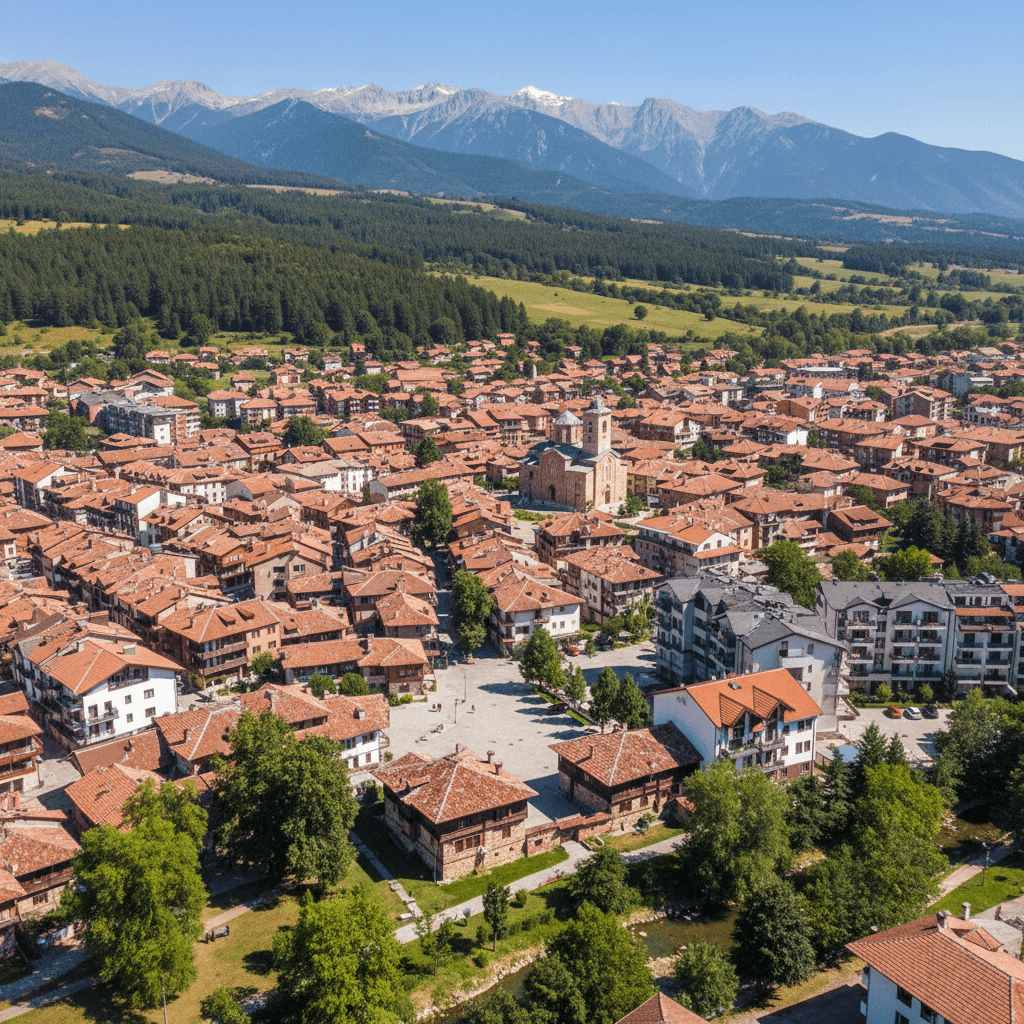
Bansko is, honestly, a strange little town that somehow works perfectly for remote workers. It's a ski resort that doesn't feel like a ski resort for most of the year, a Bulgarian mountain village that's quietly become one of Europe's most established nomad hubs and a place where you can have coffee with a founder from Berlin and a shepherd from the next valley on the same morning.
The pace here is genuinely slow. Outside ski season, the streets smell like woodsmoke and fresh banitsa, the Pirin Mountains sit heavy and green above the old stone houses and nobody's in a particular hurry. That's either exactly what you need or quietly maddening, depending on your personality.
What makes Bansko different from other cheap European nomad spots is the community infrastructure that's actually grown up around nomads rather than just tolerating them. Bansko Nomad Fest draws hundreds of remote workers every summer, coworking spaces like Coworking Bansko and Alt Space run regular social events and the "Good Morning Bansko" WhatsApp group is, turns out, a genuinely useful daily fixture rather than just noise. You won't feel like you're figuring it out alone.
The terrain is worth mentioning upfront. The town is hilly, more than it looks on a map and walking everywhere gets old fast, especially when you're carrying a laptop bag in July heat. Most nomads who stay longer than a month grab an e-bike or lean on the Taxistar app for short rides.
English is fine in the cafes and coworking spaces, it drops off sharply everywhere else. Learn a few words of Bulgarian, the locals genuinely appreciate it and you'll get warmer service at the small bakeries and corner shops that don't cater to tourists.
The vibe shifts dramatically by season. Winter brings skiers, packed bars and inflated short-term rents. Summer is quieter, cheaper and frankly better for actually getting work done, with cool mountain evenings and easy access to Pirin hiking trails and the Banya hot springs nearby.
It's not cosmopolitan. It's not trying to be. Bansko is a small mountain town with a surprisingly tight nomad scene, affordable living and enough going on socially that you won't feel isolated, that combination is rarer than it sounds.
Bansko is, honestly, one of the most affordable mountain towns in Europe for remote workers. A single nomad spending sensibly comes in around €980 a month and you can do it for less if you're willing to cook and skip the coworking space some days.
Rent does most of the heavy lifting in your budget. Studios and one-bedrooms in central spots near Pirin Street or the Gondola area run €200 to €650 depending on season and how much you negotiate. Summer is cheaper, ski season isn't. Landlords know the difference and they'll price accordingly.
Budget Tier (€600-800/month)
- Rent: €200-300 via Facebook groups, private apartments
- Food: Groceries plus banitsa and soups from local bakeries
- Transport: Buses and occasional taxis, roughly €29/month
Mid-Range Tier (€900-1,200/month)
- Rent: €300-550, coliving options like Four Leaf Clover included
- Food: Eating out at Tasty or Pirin 75 a few times a week, €10-15 a meal
- Coworking: Coworking Bansko or Alt Space, both around €100/month
Comfortable Tier (€1,500+/month)
- Rent: €550-650 at places like Valentina Heights with pool and sauna access
- Food: Regular dinners at 5M, the upscale spot with volcanic stone meats and vegan pasta
- Extras: E-bike rentals at €40/day, spa days at Banya hot springs for around €20
Food costs are weirdly low compared to Western Europe. A proper sit-down lunch at a mid-range place won't break €15, street food and bakery runs cost almost nothing, the smell of fresh banitsa from Le Petit Nicola is genuinely hard to walk past without stopping. Groceries for a month land around €319 if you're cooking regularly.
Transport is cheap because Bansko's walkable core means you don't need much. Taxis via the Taxistar app run €6-8 a ride, there's no Uber, cash is preferred. Getting to Sofia Airport costs approximately €1 by bus (3.5 hours), €19-25 by shared shuttle (2.5 hours), or €80-96 by private taxi (2 hours) if you want the door-to-door convenience.
The bottom line: turns out you can live comfortably here for what you'd spend on rent alone in Lisbon or Barcelona. That's the real draw.
Bansko's small enough that neighborhood choice honestly shapes your whole experience here. The core areas are walkable, but the hills are real, the ski season crowds are real and picking the wrong spot means a sweaty uphill trudge every time you want coffee.
Best for Nomads and Solo Travelers
Pirin Street and the Main Square is where most nomads land and for good reason. You're within a few minutes of Coworking Bansko, the cafe strip and whatever WhatsApp-organized meetup is happening that evening, the social density here is hard to beat anywhere else in town. It's noisier in peak ski season, touristy in patches, but if you want to actually meet people fast, this is your zone.
Rent runs €300 to €550 for a studio or one-bedroom, it's not the cheapest option but you're paying for convenience. Most nomads find the tradeoff worth it, especially during Nomad Fest when the whole area turns into one long street party.
Best for Expats and Longer Stays
The Gondola Area and Old Town suits people who want quiet mornings and mountain views without fully escaping the town center. Alt-Space coworking is nearby, the trails into Pirin are practically at your door and the smell of pine actually drifts in through open windows in summer. The catch is the uphill walks, which, turns out, get old fast if you're hauling groceries or coming home late.
The Four Leaf Clover and Valentina Heights zones cater to expats who want coliving perks baked in. Shared pools, saunas and on-site community make settling in easier, Valentina starts around €550 a month. Less private than a standalone apartment, but the infrastructure is solid.
Best for Families
The Gondola Area wins here too. It's quieter, the pace is slower and you're closer to outdoor space than you are to bar noise. Families staying longer term tend to rent direct through Facebook groups rather than coliving platforms, which drops costs considerably.
What to Skip
Anywhere far from the center without an e-bike is, frankly, a mistake. Bansko's hills are deceptively punishing and taxis via Taxistar run €6 to €8 a ride, those costs stack up quickly if you're relying on them daily.
Bansko's internet is, honestly, better than you'd expect for a mountain town. Speeds average 80-90+ Mbps download, with A1 hitting around 90 Mbps consistently. Bulgaria ranks among Europe's fastest for broadband. Older buildings can be patchy, so if you're renting a cheap apartment on the outskirts, test the connection before you commit.
The coworking scene is small but genuinely good, it punches well above the town's size. Most nomads rotate between two or three spots depending on mood and budget.
- Coworking Bansko: €100/month, near the main social hub on Pirin Street; regular events and meetups built into the membership, so you're not just renting a desk, you're getting plugged into the community
- Alt Space: €100/month, multiple locations including the Gondola area; meeting rooms available, good for calls without bothering everyone around you
- The Nest: €130/month, the premium option; quieter, more focused atmosphere if you need to actually get work done
Coliving spaces like Valentina Heights bundle coworking into the rent, which can make the math work out, especially if you're staying a full month and want the community pool and sauna without paying separately for a desk.
Cafe working is solid too. Cherry Berry does smoothies and has decent wifi, Lubanitsa is a good shout if you want something quieter with vegan banitsa that smells incredible fresh out of the oven. Neither will kick you out after an hour, which, surprisingly, isn't guaranteed everywhere in Bulgaria.
For SIMs, A1 is the strongest network here, pick one up at their shop for €10-20 and you'll get 20-50GB of data. Vivacom and Yettel are alternatives, they're fine, don't expect the same coverage once you're hiking up into Pirin though. eSIM options exist if you want to sort it before landing.
One thing worth knowing: the WhatsApp group "Good Morning Bansko" is, turns out, where a lot of the practical nomad intel actually lives. Coworking space recommendations, apartment tips, last-minute hiking plans. It's informal but more useful than most official resources.
- Best network: A1 (strongest signal, fastest speeds)
- Budget coworking: Coworking Bansko or Alt Space at €100/month
- Premium desk: The Nest at €130/month
- Best cafe option: Lubanitsa for focused work, Cherry Berry for a social vibe
Bansko is, honestly, one of the safer places you'll land as a nomad in Europe. Petty crime is low, the tourist and nomad areas feel relaxed and most people report no issues walking around at night in the central zones near Pirin Street or the Main Square. That said, don't get complacent on unlit mountain paths after dark, the terrain gets sketchy fast and there's nobody around to help if you twist an ankle.
The bigger practical concern is healthcare. It's functional, not impressive. Bulgaria's public health system has been underfunded for years, costs have risen sharply and the local options in Bansko itself are limited to small clinics and pharmacies. For anything beyond a minor issue, you're looking at a trip to Razlog or Blagoevgrad for a proper hospital.
Pharmacies are easy to find, there's one near the Main Square and others scattered through town and they're well-stocked for standard medications. Staff sometimes speak basic English, don't count on it though. For emergencies, the number is 112, it works across Bulgaria and connects to police, ambulance and fire.
What most nomads do and what you should do, is carry solid travel insurance before arriving. The NHIF (Bulgaria's national health insurance) covers basics for residents, but as a visitor you won't have access to it, turns out even some long-term expats skip the public system entirely and just pay out of pocket at private clinics because costs are low enough to make it worthwhile.
- Emergency number: 112 (police, ambulance, fire)
- Local pharmacies: Near Main Square and throughout town; good stock, limited English
- Nearest hospital: Razlog (closest) or Blagoevgrad (better facilities), both under an hour away
- Private clinic visits: Weirdly affordable compared to Western Europe; many expats prefer this over the public system
- Travel insurance: Non-negotiable if you're not an EU resident with EHIC coverage
Street safety is genuinely not something most nomads think about twice here. The mountain hiking trails are a different story, weather changes fast in Pirin, so tell someone your route, carry water and don't underestimate the altitude. Basic mountain sense goes a long way.
Bansko's core is small, honestly smaller than most people expect. You can walk from the Main Square to the Gondola area in about 30 minutes, which sounds fine until you remember the terrain is relentlessly uphill in one direction. Most nomads don't mind it in summer, but after a full day of work and a few rakias, that climb back to your apartment feels a lot longer than it looks on a map.
For getting around town, most people end up on foot or grabbing a taxi. Taxis run approximately €2.50-€5 for short within-town rides, with longer distances costing more. Taxistar app is the main booking method, cash only and there's no Uber. E-bikes are genuinely worth renting if you're staying more than a few days, around €40 per day or €15 for a regular bike per week, they turn that punishing uphill into something almost enjoyable.
Getting to and from Sofia Airport is where your options start to matter more:
- Public bus: €16, around 3.5 hours via the bus station. Cheap, slow, fine if you're not in a hurry.
- Shared shuttle: €19-25, cuts it to about 2.5 hours. Most nomads use this, it's the sweet spot.
- Private taxi: €80-96, roughly 2 hours. Worth it with luggage or if you're splitting the cost.
Local buses exist but they're limited, turns out most people just don't bother with them for daily use. Taxis are cheap enough that it's rarely worth figuring out the bus schedule, especially when English signage is sparse and the timetables, weirdly, aren't always posted anywhere obvious.
Day trips are easy enough by taxi or shuttle. Banya hot springs is about 5-8 km away, roughly 7-10 minutes by taxi or 30 minutes by bus, the Bear Sanctuary at Belitsa is a short ride and Rila Monastery is doable in a half-day if you coordinate transport in advance. None of these are walkable, so budget for a taxi or join a group trip through the nomad WhatsApp groups.
One honest heads-up: Bansko isn't built for cars if you're renting one. Parking near the Old Town is frustrating, the streets are narrow and frankly confusing and you won't need a car for anything within town itself. Skip it unless you're planning serious day-tripping.
Bulgarian is the official language and outside the tourist-facing cafes and coworking spaces, English gets thin fast. Most shop owners, taxi drivers and older locals won't speak it, the Cyrillic script on menus and street signs adds another layer of friction and honestly, that catches a lot of nomads off guard in their first week.
That said, anywhere nomads actually spend time, like Coworking Bansko, Alt Space or the restaurants around Pirin Street, English works fine. Staff at most cafes and coliving spaces are used to it, turns out the nomad community here is big enough that businesses have adapted.
A few Bulgarian phrases go a long way. Locals genuinely appreciate the effort, even a badly pronounced attempt gets a warmer response than just pointing at things.
- Zdravei: Hello (casual)
- Blagodarya: Thank you
- Kolko struva?: How much does it cost?
- Moля: Please (also used to say "you're welcome")
- Izvinete: Excuse me / Sorry
Russian is weirdly common here, a holdover from the Soviet era and decades of Russian ski tourism. If you speak any, it'll actually get you further than English in some of the older shops and guesthouses. Turkish is spoken in parts of the wider Blagoevgrad region too, though less so in Bansko itself.
For getting around the language barrier day-to-day, download the Google Translate offline Bulgarian pack before you arrive. The camera translation feature handles Cyrillic menus and signs well enough, it's not perfect, but it removes most of the guesswork. A local SIM from A1 or Vivacom costs €10 to €20 for 20 to 50GB, so you won't be hunting for WiFi just to use it.
One thing that trips people up: Bulgarians shake their head to mean yes and nod to mean no. It's the opposite of most Western conventions. You'll misread a transaction at least once, everyone does, just laugh it off and clarify verbally.
The communication barrier here isn't a dealbreaker, it's a minor daily friction. Most nomads adapt within a week, especially with the app support and the fact that the nomad community itself runs largely in English.
Bansko has two very distinct personalities and which one you experience depends almost entirely on when you show up. Get the timing wrong and you'll either be fighting ski tourists for a table at every bar or shivering through a grey February with half the town shuttered.
Summer is, honestly, the sweet spot for nomads. June through September brings highs of 20 to 26°C, low humidity compared to the coast and the kind of crisp mountain air that makes working from a cafe terrace feel almost unfair. July averages around 42mm of rainfall, most of it short afternoon storms that clear fast, the smell of wet pine coming through every open window. Trails into Pirin National Park are fully accessible, the nomad community is at peak density and Bansko Nomad Fest runs June 20-30, 2026 and draws remote workers from across Europe.
Spring and autumn are trickier. May and October can hit 65mm of rainfall, trails get muddy and the shoulder season crowds are gone but so are a lot of the social events. Still, rents drop and the town feels genuinely local again, which some nomads prefer.
Winter is a different calculation entirely. Ski season runs roughly December through March and the town transforms. Prices spike, accommodation books out weeks in advance, the Gondola area gets loud on weekends and that normally relaxed mountain vibe turns into something closer to a resort town. January highs sit around 2°C with lows hitting minus 5°C, snow is frequent, it's beautiful but cold in a way that gets old fast if you're not skiing.
Quick breakdown by traveler type:
- Nomads and remote workers: June to September, the community is largest and conditions are best for productivity and hiking
- Skiers: January to March for reliable snow, book early and expect to pay peak rates
- Budget travelers: Late May or October, turns out you can get great deals, just pack layers and don't count on consistent sunshine
- Avoid: February if you're not skiing, it's weirdly dead and cold without much payoff
Most long-term nomads land in July or August, stay two or three months and quietly plan to come back the following summer. That's probably the clearest endorsement of the timing.
Get a local SIM on day one. A1 is, honestly, the most reliable network in the area and a prepaid card with 20-50GB runs €10-20 from any A1 or Vivacom shop near the main square. Download the offline Bulgarian pack on Google Translate before you arrive, because English drops off fast once you're outside the nomad cafes and coworking spaces.
For banking, ATMs are easy to find and cards work fine at most restaurants, but smaller shops and market stalls are cash-only, don't assume otherwise. Revolut and Wise work well here, most nomads use one or both to avoid conversion fees on everyday spending.
Getting around the core is walkable, about 30 minutes end to end, but Bansko is hilly and that gets old quickly. E-bikes rent for around €40 a day, regular bikes for €15 a week and they're worth it if you're staying near the Gondola area where the uphill walks start to grind. Taxis through the Taxistar app run €6-8 per ride and are cash only, there's no Uber here.
Getting to Sofia Airport costs, turns out, a lot less than most people expect. The bus is €16 and takes about 3.5 hours; shuttles run €19-25 and shave an hour off the trip. A private taxi is around €80-96 if you want door-to-door.
A few customs worth knowing before you accidentally offend someone:
- Service: Direct and no-frills, don't expect the server to check in on you repeatedly.
- Shoes: Remove them when entering someone's home, it's not optional.
- Cash: Small purchases at bakeries and local shops expect it, carry small bills.
- Language: A few words go a long way. Zdravei (hello), Blagodarya (thank you), Kolko struva? (how much?) will get you genuine warmth from locals who aren't used to tourists trying.
The nearest hospital is in Razlog or Blagoevgrad, so for anything serious you're looking at a drive. Local pharmacies near the main square handle minor stuff fine and emergency services are reached at 112. Travel insurance that covers mountain activities isn't optional if you're hiking Pirin, a twisted ankle on a trail is a real scenario, not a remote one.
Need visa and immigration info for Bulgaria?
🇧🇬 View Bulgaria Country GuideHidden Gem
Worth the effort
Monthly Budget Estimates
More cities in Bulgaria
Veliko Tarnovo
🇧🇬 Bulgaria
Burgas
🇧🇬 Bulgaria
Plovdiv
🇧🇬 Bulgaria