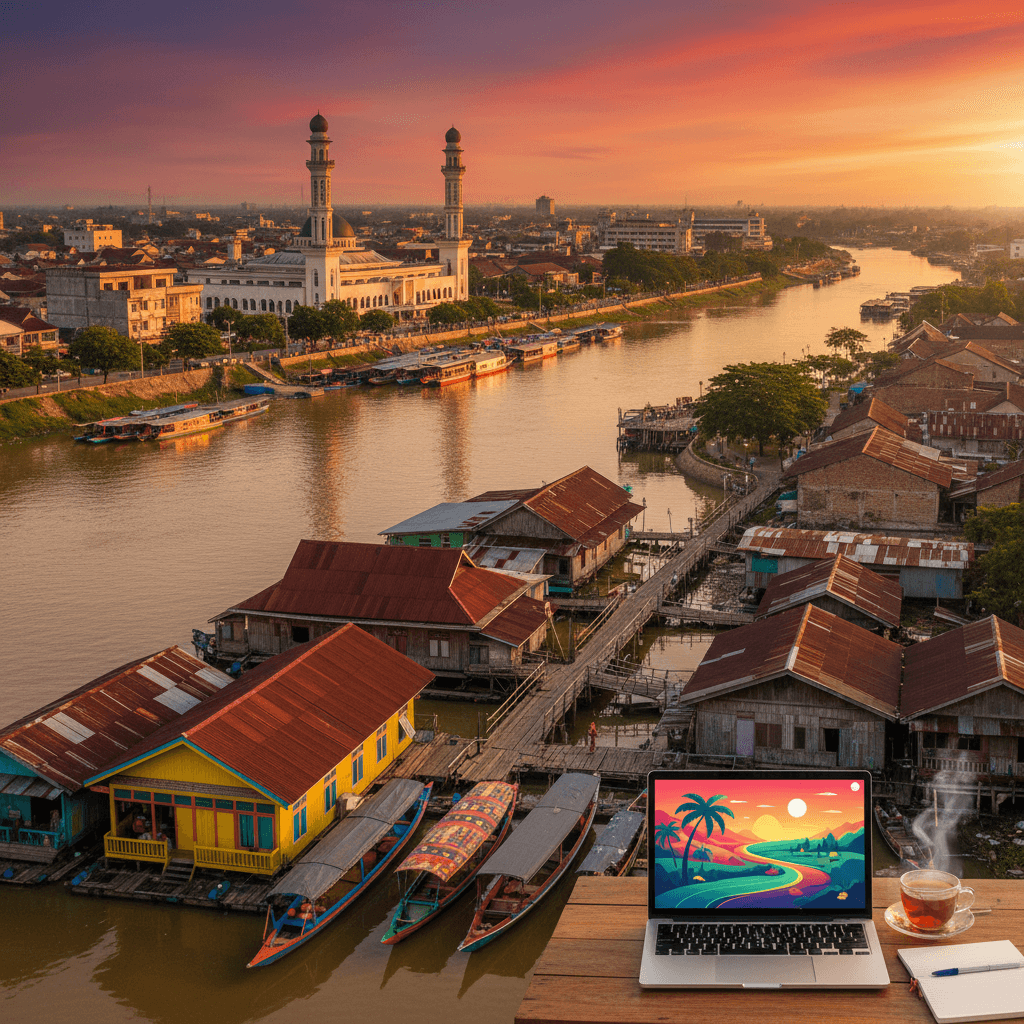
Banjarmasin
🇮🇩 Indonesia
The Venice of Borneo
Banjarmasin is a city defined by water. While Bali offers beaches and Jakarta offers concrete, this South Kalimantan capital provides a lifestyle built on stilts and river currents. It's often called the Venice of the East, but don't expect gondolas and marble; expect colorful wooden klotok boats, sprawling floating markets, and a community that lives, shops, and eats on the Martapura River. It’s a slow, humid, and deeply authentic slice of Indonesia that hasn't been polished for mass tourism yet.
For digital nomads, the vibe is a mix of extreme affordability and "pioneer" living. You won't find a community of thousands here. Instead, you'll find a city where locals are genuinely curious about your presence and the cost of living is so low it feels like a typo. It’s a place for deep focus or cultural immersion rather than networking events and avocado toast. If you can handle the limited English and the lack of a dedicated coworking scene, the reward is a truly unique, water-centric daily rhythm.
Cost of Living
Living here is incredibly cheap, with most solo nomads spending well under $500 a month. Your biggest expense will be finding a modern apartment, as the local market caters more to traditional housing. Prices are based on 2025 estimates.
- Budget ($300 to $400): You'll stay in the outskirts like Banjarmasin Selatan where studios go for $133. You'll eat street food for $1.30 a meal and use local buses for $0.72 a trip.
- Mid-range ($450 to $600): This gets you a 1BR in the city center for about $213. You can enjoy mid-range dinners for two at $9 and rely on Gojek rides for a few dollars.
- Comfortable ($700+): At this level, you’re living in the best available housing for $250+, eating at upscale spots like Steak Industry, and moving around via private cars.
Neighborhoods for Nomads
Banjarmasin doesn't have an "expat bubble," so your choice of neighborhood depends on how close you want to be to civilization versus the river.
Banjarmasin Utara
- Best For: Nomads who need central access and better WiFi.
- The Vibe: More urban and busy. You’ll find rentals for around $450 a month and easier access to malls.
- The Downside: The traffic can get frustrating during peak hours.
Banjarmasin Selatan
- Best For: Families or extreme budget travelers.
- The Vibe: Quiet, residential, and very affordable. You can find houses for $200 a month.
- The Downside: It's a bit of a trek to the airport and the main city action.
Sungai Jingah
- Best For: Solo travelers looking for the "authentic" Borneo experience.
- The Vibe: Traditional stilt houses, wooden walkways, and stunning river views.
- The Downside: Basic amenities and a real risk of flooding during the rainy season.
Connectivity and Work
Internet isn't as seamless as it is in Canggu. While home plans average 50Mbps for about $20 a month, you’ll likely be working from your accommodation or a cafe. Alka Coffee and Instant WP are the go-to spots for nomads, offering day passes between $5 and $10 with reliable plugs and decent speeds. For mobile data, grab a Telkomsel SIM at the airport; 4GB for a week costs less than $6 and generally offers the best coverage for video calls.
Getting Around
The city isn't built for walking unless you're on the riverside boardwalks. Download Gojek or Grab immediately. For longer trips, inDrive is popular because you can bid on your fare, usually around $3.50 for an 8km ride. To see the markets, you'll need a river taxi. The airport is 23km away, and a Gojek there will run you about $7.
Food, Safety, and Weather
The food is a highlight. You haven't lived until you've had Soto Banjar at Bang Amat for $2. For a social fix, head to Effronte, though don't expect much nightlife. Alcohol is pricey and hard to find; a beer at a pub will set you back $6.
Safety is a non-issue here. Crime rates are very low, and walking around during the day is safe. Just be prepared for the heat. It’s a tropical 32°C year-round with 85% humidity. The rainy season hits hard from November to February, so if you hate getting wet, aim for the drier window between May and October. Wear modest clothing to respect local Banjar customs, and always use your right hand for greetings.
If you are looking to stretch your budget to its absolute limit while soaking in an authentic Borneo atmosphere, Banjarmasin is hard to beat. Often called the Venice of the East, this river city offers a lifestyle that costs a fraction of what you would pay in Bali or Jakarta. You can realistically live here for under $500 a month without feeling like you are pinching pennies, though you will be trading Western comforts for stilt houses and floating markets.
The Monthly Breakdown
Living costs in Banjarmasin are remarkably low. A single person can expect to spend around $459 per month, covering everything from rent to weekend river tours. Your biggest expense will be food, averaging $171, while transport and utilities rarely cross the $100 mark combined. Local salaries hover around $218, so showing up with a remote income makes you feel quite wealthy here.
- Budget Tier ($300 to $400): This covers a studio in Banjarmasin Selatan for about $133. You will eat mostly street food like Soto Banjar for $1.30 a meal and use the local bus for $0.72 a trip.
- Mid-range Tier ($450 to $600): Most nomads land here. You can snag a 1BR in the city center for $213. A nice dinner for two at a spot like Alka Coffee runs about $9, and you will rely on Gojek rides for $2 to $7.
- Comfortable Tier ($700+): This buys you an upscale 1BR for $250 or more, high end meals at Steak Industry for $10, and a monthly transport pass for $22.
Where to Plant Your Flag
Banjarmasin is divided by its waterways, and where you live dictates your daily pace. Nomads generally stick to the north for convenience, while those seeking a "real" Borneo experience head for the riverbanks.
Banjarmasin Utara: This is the urban heart. It is the best spot for expats because you have easier access to markets and modern rentals. Expect to pay around IDR 7 million ($450) for a decent monthly setup. The trade off is the traffic, which can get sluggish during peak hours.
Banjarmasin Selatan: If you are on a strict budget, look here. Rent for a small house can drop to $200. It is quieter and feels more like a residential suburb, but it is a longer haul to the airport and main city sights.
Sungai Jingah: This area is famous for its traditional stilt houses. It is perfect for solo travelers who want to wake up to river views and wooden walkways. It is incredibly authentic, but be aware that these areas are flood prone and the amenities are very basic.
Connectivity and Workspace
Internet is surprisingly decent for a city that feels this remote. A 50Mbps home plan costs about $20.50 a month. You won't find a massive coworking hub like you would in Canggu, so most nomads work from cafes. Alka Coffee and Instant WP are the go to spots, offering day passes for $5 to $10 with reliable plugs and fast WiFi. For mobile data, Telkomsel is the gold standard. You can pick up a starter SIM for $1 to $6 and get 4GB of data for a week.
Getting Around
Forget walking; the city is not designed for it, and the 33°C (91°F) heat makes it a chore. Gojek and Grab are your best friends here. A typical 8km ride on inDrive will cost you about $3.50. If you are heading to the floating markets like Lok Baintan, you will need a river taxi, which usually costs between $10 and $20 for a morning tour. From the BDJ airport, a Gojek into the city is roughly $7.
Eating and Socializing
The social scene revolves around food and coffee rather than bars. Alcohol is expensive and hard to find; a beer at a local pub can cost $6, which is nearly five times the price of a meal. Expats recommend Bang Amat for the best Soto Banjar in town, where a bowl costs just $1 to $2. For a more "Western" cafe vibe, Effronte or Alka Coffee are the local favorites. Since nomad meetups are rare, you will find most of your community through Indonesia wide Facebook groups or by chatting with friendly locals at the early morning river markets.
For Digital Nomads
If you're working remotely, Banjarmasin Utara is your best bet. It's the most developed part of the city and serves as the unofficial central hub. You'll find the best concentration of modern cafes and reliable infrastructure here. Most nomads gravitate toward the area near Alka Coffee or Instant WP, which are the go-to spots for a stable connection and a desk for the day.
- Rent: Expect to pay around $450 (IDR 7M) per month for a decent rental in this district.
- Connectivity: 50Mbps home plans run about $20.50 monthly, though many nomads just tether to a Telkomsel SIM, which costs about $6 for a 4GB weekly starter.
- Vibe: It's urban and a bit frantic with traffic, but it puts you within striking distance of the best food and the few coworking options available.
For Expats and Long-Termers
Expats looking for a more "neighborhood" feel often look toward Banjarmasin Selatan. It's further from the airport and the main city bustle, offering a quieter pace of life that suits those staying for six months or more. You won't find a dedicated expat enclave here, so be prepared to brush up on your Bahasa Indonesia or Banjar as English proficiency is quite low.
- Rent: You can find entire houses for roughly $200 a month, making it incredibly affordable if you're on a local contract or a tight budget.
- Amenities: This area is close to Moch Anshari Saleh hospital, which has 5-star accreditation and is the most reliable spot for healthcare.
- Social: Since there's no real nightlife, social life revolves around dinner at places like Effronte or Steak Industry, where a high-end meal costs around $10.
For Solo Travelers and Culture Seekers
If you're here for the "Venice of the East" experience, look at the stilt house areas like Sungai Jingah. This isn't where you come for luxury; it's where you come for the view. Living over the water on wooden walkways provides an authentic glimpse into South Kalimantan life. It's perfect for a short stint if you want to be first in line for the early morning floating market tours which usually cost between $10 and $20.
- Rent: Small rooms or local guesthouses can be found for as low as $45 (IDR 690K) a month on apps like OLX.
- Pros: Unbeatable river views and immediate access to the "klotok" river taxis.
- Cons: These areas are flood-prone during the rainy season from November to February and amenities are very basic.
For Families
Families generally prefer the outskirts of Banjarmasin Selatan or the quieter pockets of the Utara district. Safety is a major plus here; the crime rate is remarkably low, and locals are famously welcoming to children. You'll likely rely on Gojek or Grab for everything, as the city isn't very walkable. A 5-mile trip across town usually costs less than $4.
- Budgeting: A family can live very comfortably on $700 a month, including a spacious rental and frequent meals out.
- Food: Local staples like Soto Banjar at Bang Amat cost just $1 to $2, keeping grocery and dining bills low.
- Essentials: Make sure to use BCA or BNI ATMs for the most reliable banking, and keep GoPay or OVO topped up for easy payments at most shops.
Connectivity Overview
Banjarmasin isn't Bali. You won't find a sea of bamboo coworking spaces with oat milk lattes here. Instead, you'll find a gritty, authentic river city where the internet is surprisingly capable if you know where to look. Most nomads find that the local infrastructure handles video calls and heavy uploads well enough, provided they have a backup plan for the occasional tropical storm outage.
The city's digital backbone relies on fiber optics that typically deliver speeds around 50Mbps for a monthly cost of roughly $20.50. While that sounds great on paper, hotel and cafe WiFi can be hit or miss. Expats usually recommend getting a local SIM card immediately to tether when the "free" WiFi inevitably chokes during peak hours.
Coworking and Work-Friendly Cafes
Dedicated coworking spaces are scarce in South Kalimantan. You won't find a global chain like WeWork or Outpost here. Instead, the community gravitates toward "work-friendly" cafes that have embraced the laptop culture. These spots usually offer stable power outlets and decent seating, though you should expect a lively background hum of local chatter.
- Instant WP: This is the closest you'll get to a traditional office vibe. It's popular for its affordable day passes, which usually run between $5 and $10. It's reliable, has fast plugs, and the air conditioning is a lifesaver when the Borneo humidity kicks in.
- Alka Coffee: A favorite for those who prefer a more relaxed environment. The WiFi is generally consistent enough for standard tasks, and the mid-range prices (meals for $5 to $10) make it an easy place to camp out for an afternoon.
- Effronte: A bit more upscale, this spot is better for deep work sessions where you want a proper meal alongside your coffee. It's quieter than the street-side stalls and offers a more professional atmosphere.
Mobile Data and SIM Cards
Don't rely on your international roaming here; it's expensive and often throttled. Local SIM cards are dirt cheap and easy to find at Syamsudin Noor Airport (BDJ) or any small "pulsa" shop on the street. You'll need your passport for registration due to Indonesian law.
- Telkomsel: The gold standard for coverage. It has the best reach if you're planning to take a boat out to the floating markets or explore the outskirts. A starter pack with 4GB of data for 7 days typically costs between $1 and $6.
- XL Axiata: A solid runner-up. It's often cheaper than Telkomsel and works perfectly within the city limits of Banjarmasin Utara and the central districts.
- Data Packages: Most travelers opt for a Rp22,000 ($1.40) weekly 4GB top-up. If you're staying a month, you can get much larger bundles for under $15.
Digital Nomad Reality Check
Living here means adapting to a different rhythm. While the internet is workable, the "nomad scene" is almost non-existent. You won't find weekly networking events or digital nomad meetups. Most remote workers here are solo travelers or expats working in industry who happen to need a laptop connection.
If you're doing high-stakes live streaming or need 100% uptime for server management, the local infrastructure might feel a bit thin. However, for the average freelancer or remote employee, the 20 to 50Mbps speeds reported by locals are more than enough. Just remember to bring a universal power adapter and perhaps a power bank for those long afternoons spent working from a riverside cafe where outlets might be claimed by others.
Personal Safety
Banjarmasin is remarkably safe, even by Southeast Asian standards. With a crime index sitting around 16.67/100, it’s the kind of place where you can walk around during the day without constantly checking your pockets. Local residents are generally hospitable and curious about foreigners rather than predatory. Most travelers feel very safe exploring the city on foot, reporting an 83% safety rating for daytime solo walks.
You won't find specific "no go" zones here, though it's smart to keep your wits about you at the crowded floating markets where petty pickpocketing can happen. Corruption is a moderate concern in administrative dealings, but it rarely affects the average nomad beyond occasional traffic stops. If you're out late, stick to using apps like Gojek or Grab instead of wandering poorly lit riverside alleys, simply because the infrastructure can be uneven.
Healthcare Standards
While Banjarmasin doesn't have the "medical tourism" glitz of Kuala Lumpur or Bangkok, the local healthcare system is reliable for most needs. RSUD Moch Anshari Saleh is the top choice for expats; it holds a 5 star accreditation and strives for international standards.
For minor issues, you can find a local pharmacy (Apotek) on almost every major street. A standard consultation with a doctor will set you back about $11, making out of pocket care very affordable. If you have a complex chronic condition, you might prefer the more specialized hospitals in Jakarta or Singapore, but for stitches, stomach bugs, or routine checkups, the city is well equipped.
Staying Healthy
The biggest health hurdles here are the environment and the heat. Humidity stays around 85%, and the tropical sun is intense. Dehydration and heat exhaustion are common if you're out on the river all day. Always carry bottled water and apply high SPF sunscreen before heading to Lok Baintan.
- Emergency Numbers: Dial 112 for general emergencies or 118 for an ambulance.
- Water Safety: Never drink the tap water. Stick to bottled or filtered water for drinking and brushing your teeth.
- Mosquitoes: Since it's a river city, mosquitoes are everywhere. Use repellent with DEET, especially during the rainy months of November and December.
Insurance and Logistics
Most nomads here use global providers like SafetyWing or World Nomads. While local clinics are cheap, a serious medical evacuation to Singapore could cost tens of thousands, so don't skip the insurance. If you need specific medications, bring a decent supply with you. While pharmacies are widespread, they may not carry specific Western brand names, and English proficiency among pharmacists is often low.
When visiting a hospital, it's helpful to have Google Translate ready on your phone. Most younger doctors speak some English, but the administrative staff and nurses likely won't. Having your passport or a clear digital copy of it is required for registration at any major medical facility.
Getting Around the Venice of the East
Banjarmasin is a city defined by its relationship with water. While most Indonesian hubs rely on gridlocked streets, life here often flows through a network of canals and the massive Martapura River. You'll find that getting from point A to point B is a mix of standard Southeast Asian ride-hailing and traditional wooden boat rides.
Ride-Hailing and Apps
For daily land travel, Gojek and Grab are your lifelines. They're the most reliable way to get around without needing to haggle over prices. Most digital nomads prefer Gojek for quick scooter trips, which usually cost between $1 and $3 for short hops around the city center. If you're traveling with luggage or want to escape the humidity, a car ride through these apps typically costs around $3.50 to $7 for an 8km trip.
- inDrive: This app is popular locally because it lets you bid on your fare. It can be cheaper than Grab during peak hours, but it requires a bit more back-and-forth with the driver.
- Taxis: Traditional metered taxis exist, but they're becoming rarer. If you use one, always make sure the driver turns the meter on before you pull away.
- Airport Transfers: Syamsudin Noor International Airport (BDJ) is about 23km from the city. A Gojek or Grab car into town will set you back roughly $7.
The River Network
You can't live in Banjarmasin without hopping on a Klotok. These are traditional motorized wooden boats that serve as the city's aquatic taxis. While they're mostly used by travelers to reach the Lok Baintan or Muara Kuin floating markets, they're also a practical way to reach stilt-house neighborhoods like Sungai Jingah.
Expect to pay between $10 and $20 for a private river tour or a morning trip to the markets. If you're just crossing the river, local commuters use shared boats for just a few cents. It's a slow way to travel, but it's the only way to see the authentic side of the city that isn't visible from the road.
Public Transit and Walking
Banjarmasin isn't a walkable city in the Western sense. Sidewalks are often uneven or nonexistent, and the 33°C (91°F) heat makes any walk longer than ten minutes a sweaty endeavor. The exception is the riverside walkways in Banjarmasin Utara, which are pleasant for a late afternoon stroll when the temperature drops.
- Local Buses: Public buses are incredibly cheap at $0.72 per trip. They're fine if you're on a strict budget, but they don't follow a strict schedule and rarely have air conditioning.
- Monthly Passes: If you're staying long-term, a monthly transport pass costs about $22, though most expats find the convenience of ride-hailing apps worth the extra few dollars.
- Scooter Rentals: Unlike Bali, there isn't a massive infrastructure for tourist scooter rentals. Most nomads rely on Gojek drivers rather than driving themselves, as the local traffic patterns can be unpredictable and chaotic for newcomers.
Key Logistics for Nomads
Traffic in the city center can get congested during the morning and afternoon school runs. If you have a video call scheduled at a cafe like Alka Coffee, give yourself an extra 20 minutes of travel time. Most locals are incredibly helpful if you get lost, but have Google Translate ready, as English proficiency among drivers is generally low. Keep small bills of Rp2,000 or Rp5,000 handy for quick cash payments, though most app-based rides are handled digitally through GoPay or OVO.
While Banjarmasin is welcoming, don't expect the English proficiency you'd find in Bali or Jakarta. This is a city where the local Banjar dialect and Bahasa Indonesia reign supreme. For digital nomads and expats, the language barrier is often the biggest hurdle to long term stays, but it's also what keeps the city feeling authentic and free from the typical tourist traps.
The Language Landscape
Most locals speak Bahasa Indonesia fluently, but in the markets and stilt villages, you'll mostly hear Banjar. It's a Malayic language that sounds similar to Indonesian but has its own distinct vocabulary and rhythm. Outside of major hotels or upscale spots like Alka Coffee, English speakers are few and far between. You'll find that younger students are often eager to practice their English with you, but for daily transactions, you'll need a different strategy.
- Survival Level: You can get by at the Lok Baintan floating market with gestures and pointing, but knowing your numbers in Indonesian is a lifesaver for bargaining.
- Digital Tools: Since English isn't widely spoken, Google Translate is your best friend. Download the Indonesian language pack for offline use because cell signals can dip when you're deep in the river canals.
- Local Reception: People here are incredibly patient. If you're struggling to order Soto Banjar at a street stall, locals will usually jump in to help you out with a smile.
Communication Essentials
Staying connected is relatively cheap and straightforward. You'll want to handle your connectivity as soon as you land at Syamsudin Noor Airport (BDJ) or head to a central shop in Banjarmasin Utara.
- Best Carrier: Telkomsel is the gold standard here. It has the most reliable coverage when you're out on the water. A weekly 4GB starter pack usually costs around Rp22,000 ($1.50).
- Alternative Options: XL Axiata is a solid backup, with monthly plans often sitting around $6 for decent data caps.
- Daily Apps: You absolutely need Gojek or Grab. These apps are the heartbeat of communication for transport and food delivery. They have built in translation features in their chat functions, which makes talking to drivers much easier.
Key Phrases for Nomads
Learning a few words goes a long way in building rapport with the community. Start with these basics to make your daily life smoother:
- Greetings: "Selamat pagi" (Good morning) or "Halo" works everywhere.
- Shopping: "Berapa harganya?" (How much is this?) is vital for the markets.
- Gratitude: "Terima kasih" (Thank you) is the most important phrase you'll use.
- Dining: "Tidak pedas" (Not spicy) is a smart one to remember if you aren't ready for the local chili heat.
Social Connections
Since there isn't a dedicated nomad hub or a cluster of coworking spaces, socializing requires more effort. Most expats connect through Facebook groups or by frequenting "laptop friendly" cafes. Instant WP is a rare spot where you might run into other remote workers. If you're looking to meet locals, the riverside docks in the evenings are the natural social centers. Don't be surprised if people approach you just to say hello; it's part of the city's slow, friendly charm.
The Tropical Reality
Banjarmasin is a city defined by water, and the weather follows suit. It is hot, humid, and predictably tropical. You can expect temperatures to hover between 31°C and 33°C (88-91°F) throughout the year. The humidity usually sits around 85%, which means you will want a "kost" or apartment with reliable air conditioning if you plan on getting any deep work done during the day.
The city experiences a distinct wet and dry cycle. The rainy season hits its peak in November and December, when the city sees between 17 and 21 days of rain per month. During this time, downpours are heavy and can dump over 12 inches of water in four weeks. Because much of the city is built on wetlands and riverbanks, localized flooding in areas like Sungai Jingah is common during these months.
When to Plan Your Stay
The sweet spot for nomads and long term travelers is the dry season, specifically from May to October. August is typically the driest month of the year, making it the best time to explore the river networks without getting caught in a monsoon. During this window, the early morning boat trips to the Lok Baintan floating market are much more enjoyable, and the light is better for photography.
If you arrive between November and February, your mobility will be limited. While the rain often comes in short, intense bursts, it can turn the narrow walkways of the stilt neighborhoods into slippery hazards. Most expats in the region suggest sticking to the mid year window to make the most of the outdoor lifestyle and river culture.
Seasonal Survival Tips
Living in the "Venice of the East" requires a few practical adjustments to your daily routine. Locals and seasoned travelers usually follow these habits to stay comfortable:
- The Early Start: Most of the social and commercial life happens before 9:00 AM. The floating markets start at dawn to beat the midday heat. If you are working a Western time zone, the cooler mornings are your best bet for errands or sightseeing.
- Dress for the Humidity: While the city is conservative and requires modest dress (covering shoulders and knees), you will want breathable fabrics like linen or light cotton. Avoid heavy denim unless you enjoy being permanently damp.
- App Based Commuting: When the rain starts, don't try to walk. Use the Gojek or Grab apps to call a car. A ride across town usually costs around $3.50 and will keep you dry when the sky opens up.
- Ramadan Awareness: Check the lunar calendar before booking. During Ramadan, many local eateries close during the day, and the pace of the city slows down significantly. While it is a culturally fascinating time to visit, it can make finding lunch a bit of a mission for non fasting nomads.
The best time to visit is undoubtedly the May to October window. You will get the most reliable weather for river tours and won't have to worry about your laptop getting soaked during a dash to Alka Coffee or Instant WP for a work session.
Getting Started in the River City
Living in Banjarmasin requires a shift in mindset. It is a place where life follows the tides of the Barito River rather than a corporate clock. You won't find the polished nomad infrastructure of Canggu here, but you will find a monthly burn rate that rarely touches $500. It is raw, authentic, and incredibly affordable for those who can handle a bit of humidity and spotty WiFi.
Budgeting for the Bayou
Your money goes a long way in South Kalimantan. A solo traveler can live comfortably on $450 to $600 a month, covering a private apartment, daily dining out, and plenty of river trips. If you are on a strict budget, you can scrape by on $350 by sticking to local guesthouses and street food stalls.
- Housing: A studio on the outskirts like Banjarmasin Selatan runs about $133, while a central 1BR in Banjarmasin Utara averages $213.
- Food: Street meals like Soto Banjar cost around $1.31. A mid-range dinner for two at a place like Effronte is roughly $9.
- Transport: Local bus trips are $0.72, but most expats rely on Gojek or Grab, with typical rides costing between $2 and $7.
Where to Plant Your Roots
Banjarmasin Utara is the go-to for most newcomers. It is the urban heart of the city, offering the easiest access to modern grocery stores and the few digital-friendly cafes available. Expect to pay around IDR 7 million ($450) for decent monthly rentals in this area.
For a quieter, more residential feel, Banjarmasin Selatan offers houses for as low as $200 a month. It is farther from the airport but much easier on the wallet. If you want the true "Venice of the East" experience, look toward Sungai Jingah. The stilt houses and walkways offer incredible river views, though you will have to deal with more basic amenities and the occasional flood during the rainy season.
Staying Connected
Internet is the biggest hurdle for remote work. While home plans offer 50Mbps for about $20.50 a month, reliability varies. Dedicated coworking spaces are rare, so most nomads set up shop in cafes. Alka Coffee and Instant WP are the local favorites; they offer fast plugs and day passes for $5 to $10.
Grab a Telkomsel SIM card as soon as you land. It has the best coverage in Borneo. You can get a starter pack with 4GB of data for about $1 to $6. Most travelers find the 20-50Mbps speeds sufficient for Zoom calls, provided you aren't trying to upload massive 4K video files.
Health and Safety
Banjarmasin is remarkably safe. Crime rates are very low, and walking around during the day feels secure. You should still keep an eye on your phone in crowded spots like the Lok Baintan floating market, but violent crime is almost unheard of. For medical needs, Moch Anshari Saleh is the top choice for international standards, while Urip Sumoharjo is reliable for outpatient visits. A standard doctor consultation will cost you about $11.
Navigating the City
Forget walking; the city isn't designed for it unless you are on the riverside boardwalks. Download Gojek, Grab, and inDrive immediately. These apps are the lifeblood of local transport. If you are heading to the floating markets, you will need to negotiate a river taxi, which usually costs between $10 and $20 for a morning tour.
Cultural Etiquette
This is a conservative region where Banjar traditions and Islamic customs are central to daily life. Dress modestly, especially when visiting markets or residential stilt villages. Use your right hand for greetings and transactions, and always remove your shoes before entering a home. During Ramadan, be mindful of fasting hours; many local eateries will close or use curtains out of respect until sunset.
The Weather Factor
It is hot and humid year-round, usually hovering around 32°C (90°F). The best window to visit is May through October. Avoid November to February if you can; the monsoon rains are intense, often dumping over 12 inches of water in a month, which can turn the "Venice of the East" into a very soggy experience.
Need visa and immigration info for Indonesia?
🇮🇩 View Indonesia Country GuideHidden Gem
Worth the effort