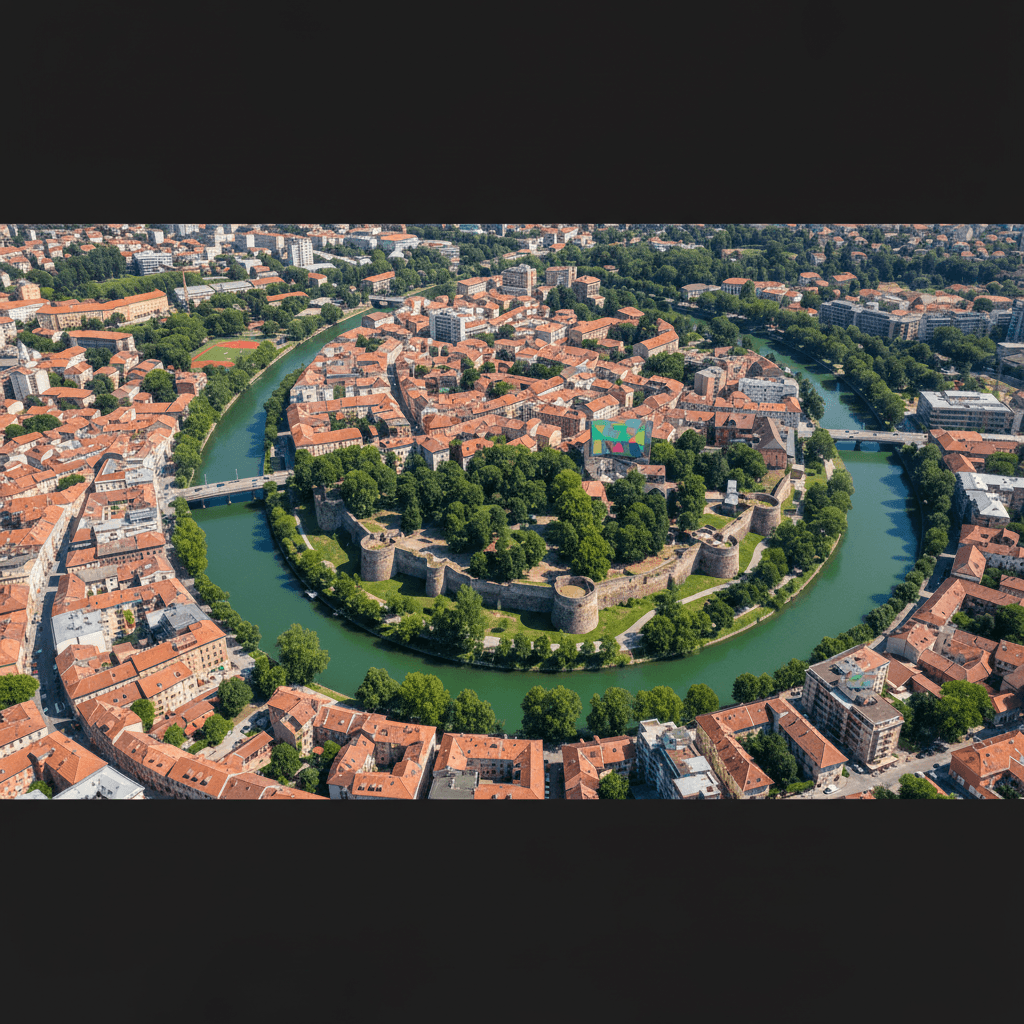
Banja Luka
🇧🇦 Bosnia and Herzegovina
Banja Luka feels calm in a way that can be addictive, then a little maddening if you’re used to faster cities. There’s a leafy, low-key Balkan rhythm here, with Kastel Fortress, riverside walks and café terraces where people linger over coffee while cars hum past and the air smells faintly of grilled meat, exhaust and wet pavement after rain.
It’s a resilient city with a strong Serb identity and that gives it a different mood than the more touristed parts of the region, frankly. You get a lot of friendly nods, slow service and a pace that says nobody’s in a rush, which works beautifully if you want a cheaper base and a quieter headspace, but gets old fast if you need constant stimulation.
Monthly budget: A single nomad usually lands around $1,839 a month, though you can squeeze by on $1,000 to $1,500 if you keep rent down and skip extras. Comfortable living starts around $2,500+, because utilities, food out and the odd weekend taxi add up faster than people expect.
- 1BR in center: about 600 BAM
- 1BR outside center: about 442 BAM
- Utilities: around 290 BAM
- Monthly transport pass: 57 BAM
- Coworking hot desk: about 137 BAM
The center is the move if you want to walk everywhere and stay close to cafés, bars and the main sights, but it’s pricier and noisier, with scooters buzzing by and the occasional hard brakes at night. Student areas are cheaper and more social, though the party noise can be relentless, especially near university zones. Out in the suburbs, you’ll get more space and greenery and honestly, that’s where a lot of families and long-stay expats end up.
Internet is reliable for most remote work needs. Average speeds sit around 43-50 Mbps, which is fine for video calls and uploads, and many nomads use a mix of home internet, mobile data and coworking spots like Quo Room or cafés such as Dionis.
Daily life: Food is cheap, taxis are easy with Bolt or MojTaxi and the public buses get the job done even if they don’t always come when you want them to. Safety is generally fine in the center, though petty theft happens and the city gets cold in winter, the kind of damp chill that hits the tile floors and hangs around until spring.
- Best for: quiet routines, low costs, park walks
- Not great for: nightlife, harsh winters
- Local feel: relaxed, friendly, practical
Banja Luka is cheap, but not that cheap. A single nomad usually lands around $1,839 a month and that number climbs fast if you want a central flat, regular café work sessions and a few nights out, so budget with a bit of breathing room. The city feels calm, green and a little old-school, with tram-less streets, parked-up sedans and smoke from grill houses drifting across the center.
For housing, the center near Kastel Fortress is the easiest place to live and the priciest. A one-bedroom in the center runs about 600 BAM, while the outskirts drop closer to 442 BAM and honestly the cheaper places often mean more space, quieter nights and a longer bus ride.
Typical Monthly Costs
- Rent: 600 BAM in the center, 442 BAM outside it.
- Utilities: Around 290 BAM for a standard setup.
- Transport pass: 57 BAM for monthly buses.
- Lunch or fast food: 9.50 to 15 BAM, which is pretty decent.
Food won’t wreck your budget, unless you eat out like a tourist every day. A mid-range dinner for two is about 70 BAM, cevapi is everywhere and the smell of grilled meat and onions hangs around the pedestrian streets in the evening, which, surprisingly, makes the city feel bigger than it's.
Where Nomads Usually Live
- City Center: Best for walkability, cafés and quick errands, though rent’s higher and it gets noisy.
- Student Areas: Cheaper and social, but expect late-night noise and a more chaotic feel.
- Outskirts: Better for quiet and green space, with studios often around 350 to 600 BAM.
Internet is good for calls and most work, average speeds sit around 43-50 Mbps and that can be irritating when you’re trying to send large files. Home plans can reach 60 Mbps for about 38 BAM a month and cafés like Dionis work well enough for lighter days, though you’ll still notice the hum of espresso machines and the occasional clatter of cups.
Bolt and MojTaxi make getting around easier, bus rides are cheap and the airport transfer is straightforward if you don’t mind paying more for convenience. Budget travelers can scrape by on 1,000 to 1,500 USD, mid-range nomads usually spend 1,800 to 2,200 USD and if you want comfort, better furniture and fewer compromises, 2,500 USD plus is the safer target.
Banja Luka is easy to read once you know the split: the center works best for nomads and solo travelers, student-heavy pockets suit social people on a budget and the quieter edges are where expats and families usually settle. It feels green, calm and a little sleepy, with tramless streets, chestnut shade, the smell of ćevapi drifting out of grills and not much of the late-night chaos you’d get in bigger Balkan cities.
Nomads
If you want to work, walk and grab coffee without thinking too hard, stay around the city center near Kastel Fortress. That’s where you’ll find the easiest cafe hopping, the most reliable day-to-day convenience and the best chance of meeting other travelers, though the rent is higher and the noise from traffic and weekend drinks can get old fast.
- Best fit: Walkable, central, practical
- Typical rent: About 600 BAM for a 1BR in the center
- Work setup: Quo Room, Co-Working Banja Luka and cafe work at places like Dionis
- Downside: Petty theft is more of a center problem, so keep an eye on your bag
The internet is reliable with current speeds of 43-50 Mbps, so if your work involves heavy uploads, you can generally expect your connection to behave. A 60 Mbps home plan costs about 38 BAM, which helps and Bolt or MojTaxi are handy when the rain starts hammering down on the pavement.
Expats
Expats usually end up in quieter residential areas or the broad outskirts, because the apartments are cheaper, the pace is slower and you’re less likely to hear scooters revving under your window at midnight. These neighborhoods feel more local, with apartment blocks, small shops and long walks under bare winter trees, but you’ll trade convenience for a longer commute into the center.
- Best fit: Longer stays, lower costs, less noise
- Typical rent: Studios outside the center often run 442 BAM, sometimes 350 to 600 BAM
- Food access: Fewer cafes and late options, so plan ahead
- Daily life: Better for people who want space and don’t mind bus rides
Families
Families should look away from the center and toward the suburbs, because the streets are calmer, there’s more greenery and you’re less likely to deal with nightlife noise bleeding through thin walls. Winters are cold enough to make tiled floors feel brutal, though, so pick an apartment with decent heating and don’t expect every building to feel polished.
Public buses are cheap at 57 BAM for a monthly pass, but they can be infrequent and that’s the tradeoff, you get more space for less money, just not always the smoothest routine.
Solo Travelers
Solo travelers should stick close to the center or the student areas, especially if you want easy social contact, quick dinners and a bit of evening life without going far. Student pockets near the universities are cheaper and more outgoing, with a younger crowd, but they can be noisy and frankly, the party atmosphere gets tired if you’re trying to sleep early.
- Best fit: Center for convenience, student areas for social energy
- Best nightlife: Low-key pubs, not club-heavy weekends
- Good for: Walkability, easy food, simple short stays
- Skip if: You want quiet, because center streets can stay lively
For a short stay, the center wins. For a longer one, the suburbs make more sense.
Banja Luka’s internet is decent for everyday work, but it’s slow enough to annoy you if you upload heavy files or live on video calls. The city averages around 43-50 Mbps for broadband internet, which is adequate for most remote work, though you might still feel the lag when waiting on a client deck to crawl through at 9 p.m., with the fan humming and traffic noise drifting in through the window. Home plans can reach 60 Mbps for about 38 BAM a month, so most people who stay a while just get fixed internet and stop gambling on cafe WiFi.
The coworking scene, turns out, is small but usable. Quo Room is the main name people bring up, while Smart Office runs closer to 180 EUR a year equivalent and Co-Working Banja Luka gets mentioned in nomad circles, though details can be patchy. Honestly, if you need quiet focus, go for a coworking space, if you just need a laptop, caffeine and free WiFi, cafes like Dionis do the job without making a fuss.
Best setups for working online
- Best for reliability: Home internet with a 60 Mbps plan, then use a cafe or coworking space as backup.
- Best for focus: Quo Room, especially if you hate chatter, clinking cups and someone watching Reels next to you.
- Best for short stays: Dionis or similar cafes, free WiFi, a coffee and no monthly commitment.
SIMs are easy enough to grab from mTel or BH Telecom at kiosks and shops and short-stay tourist eSIMs usually come with 15GB, which is fine for maps, email and the odd hotspot emergency. Don’t expect blazing speed, though, because even when the connection holds, it can feel a bit sluggish, like the whole city is taking a slow breath before answering.
What to expect
- Internet speed: Good enough for writing, calls and browsing, not great for huge uploads.
- Monthly home internet: About 38 BAM for 60 Mbps.
- Coworking: Around 137 BAM for a hot desk at the lower end, though some options cost more.
- Mobile data: Easy to buy, handy for backup, especially if your apartment WiFi acts up.
Most nomads end up mixing setups, a flat with fixed internet, a cafe for afternoons and coworking only when they need silence or a proper desk. That mix works here because Banja Luka is relaxed and cheap, but the internet isn’t the place to be romantic, it’s workable, just not impressive.
Banja Luka feels calm on the surface, but safety here is more about petty theft and bad lighting than serious street crime. The center is generally fine during the day, though pickpockets do work the busy café strips and busier corners, honestly, especially when people are distracted by phones, shopping bags or the noise around Kastel.
Keep your guard up after dark. Unlit outskirts get sketchy fast and the cold months make that worse because the streets empty out, the wind cuts through your coat and even a short walk can feel longer than it should. There aren’t real no-go zones for visitors, still, I wouldn’t wander around half-asleep with a flashy laptop bag.
- Best bets: City Center, especially near cafés and main pedestrian streets.
- Be careful: quiet side streets, parks late at night and anywhere poorly lit.
- Do this: keep your phone zipped away, use Bolt or MojTaxi after dark and don’t leave stuff on chairs while you’re paying.
Healthcare is basic, not terrible, just basic. The Clinical Centre in Banja Luka handles emergencies, but expats and nomads often say the experience feels dated, with slower service and a more old-school system than you’d want if you’re dealing with anything serious, weirdly enough for a city this livable.
Pharmacies are easy to find and that’s the part that actually makes day-to-day life simpler. For minor stuff, you can usually get sorted quickly with over-the-counter medicine, a pharmacist who knows their shelves and maybe a few gestures if your Bosnian isn’t great, because English support drops off fast once you leave tourist-facing spots.
- Emergency numbers: 124 for police, 125 for ambulance.
- Pharmacies: common across central neighborhoods and open enough to be useful.
- Hospitals: fine for basics, but don’t expect slick private-clinic energy.
If you need proper care, plan ahead, bring your insurance details and know where you’d go before you’re sick. The city’s slow pace is lovely for coffee and river walks, but when you’re dealing with a fever, a sprain or a stressful late-night issue, that same slowness can feel like a drag and honestly, that’s when having a local contact helps most.
Banja Luka is easy to get around, but it won’t wow you with transport. The city center is walkable, buses are cheap and taxis are still low enough that most nomads don’t bother renting a car unless they’re heading out often. Honestly, that’s the sweet spot here, simple, cheap and a little slow.
Public buses cover most of the city and a single ride costs about 2.30 BAM, with a monthly pass around 57 BAM. They’re reliable, but they don’t come every five minutes, so if you miss one, you’re waiting, sometimes in cold wind that cuts right through your jacket in winter.
Walking: Best in the center, especially around Kastel Fortress, Gospodska Street and the cafe-heavy core.
Buses: Cheap and useful for longer cross-town trips, though schedules can feel stingy.
Taxis and Bolt: Good for late returns, rainy days or when you’re carrying groceries.
Taxis start around 2.50 BAM and Bolt or MojTaxi are the apps people actually use, which, surprisingly, makes things easier than you’d expect in a smaller city. Drivers are usually fine, though not every car is spotless and some will have that faint mix of cigarette smoke and air freshener that lingers in the back seat.
Where to stay, if getting around matters
- City Center: The best base if you want to walk to cafes, coworking spots and the river, though rents are pricier and nights can get noisy.
- Near the universities: Better if you want cheaper flats and more students around, but expect scooter noise, late-night chatter and less peace.
- Outskirts: Quieter and greener, with lower rents, but you’ll spend more time on buses or in taxis.
Bikes and scooters exist, but don’t expect a slick shared system everywhere. If you’re planning to stay a while, a basic bike works well in warmer months, though the roads can be patchy and drivers aren’t always generous. Winters are the real problem, cold pavement, grey slush and a kind of damp that clings to your hands.
From BNX airport, the bus takes approximately 45-60 minutes, while a taxi takes roughly 24 minutes. That’s the standard trade-off, cheap and slow or quick and pricey and frankly most people pick the taxi if they’ve got luggage or arrive late.
Banja Luka runs on Serbian, Bosnian and Croatian, with both Cyrillic and Latin signs around town, so you’ll see the same word twice and still need a second look. English is patchy. In the center, around Kastel Fortress and the cafes nearby, you’ll get by, though outside the student zones people may smile and gesture before they switch to a few cautious words.
The useful basics are simple: Hvala for thank you, Molim for please and Izvinite when you need to interrupt someone. Say them clearly and people soften fast, because locals can be reserved at first, then warm up once they hear you trying, honestly even a clumsy phrase gets you farther than perfect grammar.
Translation apps help a lot, especially for menus, leases and bus schedules, which, surprisingly, can still be printed in tiny text or posted with mixed scripts. Turn on Google Translate before you leave your apartment, then screenshot everything, because your phone will be doing real work here.
Where English Works Best
- City center: Cafes, coworking spots and newer restaurants usually have the best English.
- Student areas: Younger locals tend to speak more English and they’re usually quicker to help.
- Outskirts: Expect much less English, especially in shops, markets and taxi stops.
Ordering coffee is easy enough, but dealing with a landlord, a mechanic or a doctor can get messy fast, so don’t assume your request was understood just because someone nodded. Repeat addresses, prices and dates out loud, write them down, then check the reply, because tiny mistakes turn into annoying phone calls later.
Locals are usually patient if you’re polite, though they won’t always stop to puzzle things out for you. The conversation style is direct, sometimes blunt and frankly that’s better than fake friendliness, especially when you need a bus time, a SIM card or help finding the right office.
Practical Language Tips
- For taxi rides: Show the destination in writing, don’t rely on pronunciation alone.
- For apartments: Ask for the price in BAM and confirm whether utilities are included.
- For daily errands: Keep your phone charged and save key phrases offline.
If you’re staying longer than a week, learn the numbers and the words for rent, bill, receipt and bank, because those come up constantly and nobody wants a five-minute guesswork session at the counter. The language barrier isn’t a dealbreaker, it’s just friction and you’ll feel it most in paperwork, older neighborhoods and any place where the clerk looks tired before you even open your mouth.
Banja Luka is best in late spring through early autumn, when the parks are green, the cafés spill onto sidewalks and the river air feels warm instead of sticky. May to September is the sweet spot, with July and August running around 29 to 30°C, honestly hot enough that you’ll want shade, cold drinks and a slow afternoon pace.
Winter is a different city. January hovers near 5°C, the air gets damp and raw and the mornings can feel brutal on cold tile floors, so if you hate grey skies and quiet streets, skip December through February. Rain shows up most in May, June and October, which, surprisingly, can make the place feel even greener, but it also means you’ll be dodging showers and waiting out the occasional drizzly afternoon.
Best Times to Go
- May to June: Mild, leafy and good for walking the center without sweating through your shirt.
- July to August: Warmest months, great for long evenings outside, though the heat can sit heavy by midafternoon.
- September: My pick, because the weather stays pleasant and the city feels a bit calmer after summer.
- December to February: Cold, damp and a little bleak, which some people don’t mind, but most nomads do.
If you’re working remotely, spring and early fall are the easiest seasons for Banja Luka. Modern connectivity makes working from the city reliable, so you’re not wrestling with winter gloom and short days on top of it and that matters more than people admit.
For day-to-day comfort, the city’s mild months make everything easier, from a stroll around Kastel Fortress to a cheap lunch of cevapi after a rain shower. Summer evenings smell like grilled meat, dust and wet pavement and the whole place settles into that slower rhythm Banja Luka does better than almost anywhere else in Bosnia and Herzegovina.
Banja Luka is cheap by European standards, but it isn't a bargain in the way people imagine when they hear Bosnia. A solo nomad usually lands around $1,839 a month and if you want a central one-bedroom, plan on about 600 BAM, which is fine until you add utilities, coffee runs and the odd taxi when the bus doesn't show up.
Banking is straightforward if you keep it light. Use Wise or Revolut for most spending, keep a little cash for bakeries and taxis and pull BAM from local ATMs instead of relying on card acceptance everywhere, because some smaller spots still look at cards like they're a new invention, honestly.
- SIM cards: mTel and BH Telecom are the usual picks, grab one at the airport or a kiosk and if you're only here briefly, a tourist eSIM with around 15GB is usually enough.
- Internet: Home plans can reach 60 Mbps for about 38 BAM a month, though the city average is much slower, so don't expect blazing uploads.
- Coworking: Quo Room is the most talked-about option at roughly 270 BAM monthly, with other spaces like Co-Working Banja Luka and Smart Office filling the gap.
- Shopping: Apartments show up on Booking.com, OLX.ba and Njuskalo.ba and the better listings go fast, weirdly fast for a place this calm.
Pick your neighborhood carefully. The city center near Kastel Fortress is the easiest base, walkable, close to cafés and noisy enough that you'll hear scooters, church bells and the occasional late-night shout, while student areas are cheaper and social but can get messy on weekends.
Out on the outskirts, rent drops and the air feels greener, with more yards and fewer horns, but you'll spend more time on buses or in Bolt and MojTaxi and that gets old in winter when the sidewalks are cold tile under your shoes.
- City center: Best for first-timers, higher rent, easy errands.
- Student areas: Cheaper, lively, louder at night.
- Suburbs: Quiet and green, but you'll need patience for commuting.
The city is generally safe, though petty theft happens in the center and unlit streets feel sketchy after dark, so keep your bag zipped and don't wander half-asleep with your phone out. Hospitals are basic, pharmacies are everywhere and if you need help, remember 124 for police and 125 for an ambulance.
Day-to-day manners are simple, take your shoes off when you enter someone's home, tip around 10% in restaurants and learn a few words like Hvala and Molim, because people appreciate the effort even if your pronunciation is rough. For a break, head out to Krupa Waterfalls by bus, the ride is easy enough and the air smells like wet stone and pine.
Frequently asked questions
How much does it cost to live in Banja Luka as a digital nomad?
How much is rent in Banja Luka?
Is the internet in Banja Luka good for remote work?
Where do digital nomads usually stay in Banja Luka?
What are the best coworking options in Banja Luka?
Is Banja Luka safe for solo travelers and nomads?
How do people get around Banja Luka without a car?
Need visa and immigration info for Bosnia and Herzegovina?
🇧🇦 View Bosnia and Herzegovina Country GuideOff the Radar
Pioneer territory