Bandung
🇮🇩 Indonesia
The Paris of Java Experience
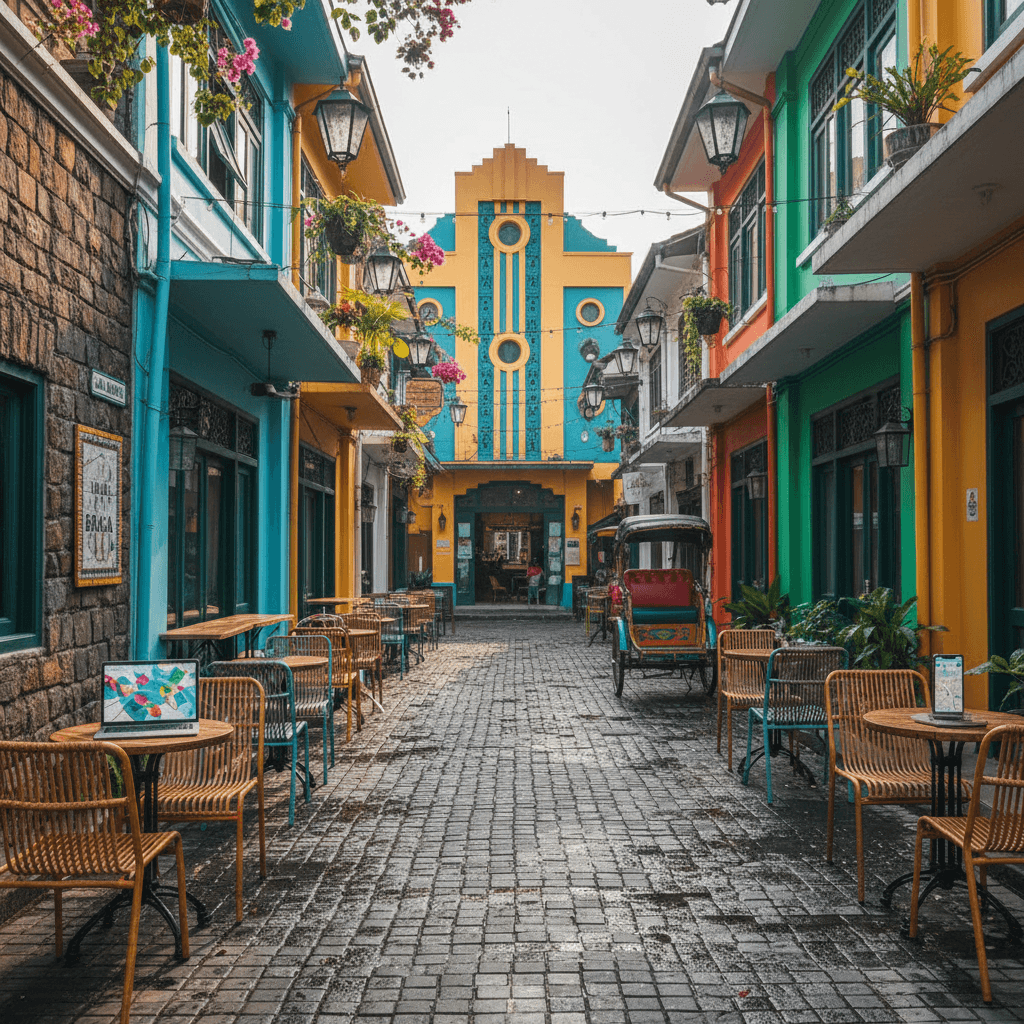
Bandung feels like a breath of fresh air, literally. Perched in the highlands of West Java, it trades the suffocating humidity of Jakarta for a misty, cool climate that hovers around 23 to 29°C. It has a distinct creative soul, shaped by a massive student population and a long history of art and fashion. Most nomads find that while the city feels crowded and the traffic can be a nightmare, there is a lingering colonial charm in the architecture and a relaxed Sundanese pace that makes it easy to settle into a deep work groove.
The vibe here is less about beach clubs and more about late night conversations over local coffee. It is a city of "factory outlets" and mountain views, where you can spend your morning in a high tech coworking space and your afternoon trekking through a volcanic crater. While it is incredibly affordable, it is a place that requires a bit of patience. You will deal with heavy rain from October to May and a lower level of English than you might find in Bali, but the genuine friendliness of the locals usually makes up for the language gap.
The Cost of Living
Your money goes a long way here. A solo nomad can live quite comfortably on $900 to $950 a month, while expats who have settled in long term often report spending closer to $600 by avoiding the "nomad tax" on short term rentals. If you are coming with a family, expect your budget to sit around $1,160.
- Budget Tier ($900): This covers a shared living arrangement or a basic studio for about $100 to $150, plenty of $1 street food meals, and getting around via Gojek for about $50 a month.
- Mid-range Tier ($1,200): This gets you a nice 1BR apartment in a central area for $170, regular cafe hopping, and a full time membership at a coworking space for $125.
- Comfortable Tier ($1,500+): You will be looking at upscale housing in the Dago highlands for $300 or more, dining at mid-range restaurants daily, and frequent weekend trips to resorts in Lembang.
Where to Plant Your Flag
Most expats and remote workers gravitate toward North Bandung because the air is cleaner and the traffic is slightly more manageable. Dago Atas is the gold standard for nomads; it is upscale, surrounded by nature, and stays much cooler than the city center. The only downside is the weekend congestion when tourists from Jakarta swarm the area.
If you want peace and quiet, Ciumbuleuit offers incredible city views and a more suburban feel that suits solo travelers or families. For those who need to be near the action, Setiabudi is a solid middle ground. It is packed with malls, trendy cafes, and the UNPAR university crowd, though you will notice a bit more smog here than in the higher elevations.
Work and Connectivity
Bandung has a healthy laptop culture. While home WiFi averages about 10 Mbps, the coworking spaces are reliable and social. Ruangreka is a favorite for its 24/7 access and community events, costing about $32 a month. EduPlex and Workspace 53 are also popular, with daily rates as low as $5.
For mobile data, grab a Telkomsel or Indosat SIM at the airport for about $20 for 10GB. If you have a newer phone, an Airalo eSIM is the smoothest way to get connected the moment you land. Most cafes are work friendly, but always check for power outlets before you get too comfortable.
Daily Life and Safety
Getting around is almost exclusively done via Gojek or Grab. A 3km ride usually costs around $1, and it is the only sane way to navigate the gridlock. While the city is walkable in small pockets like the historic Jalan Braga, the lack of consistent sidewalks makes long walks a challenge. For local flavor, you can hop on an Angkot (minibus), though they can be confusing for newcomers.
Safety is generally a non-issue, as Bandung is considered very safe compared to other major Indonesian cities. However, it is a conservative environment. It is not particularly LGBTQ+ friendly, and solo women should stay aware in poorly lit areas at night. Healthcare is functional but basic; Santosa Hospital is the top choice for anything serious, but many expats head to Singapore or Jakarta for major procedures.
Food and Socializing
The food scene is a highlight. You haven't experienced Bandung until you have tried Batagor (fried fish dumplings) at Batagor Kingsley for about $1. For a night out, Jalan Braga is the place to be, filled with bars, live performers, and a mix of old world charm and modern nightlife. If you are looking to meet people, Yellow Truck Coffee Lab acts as an informal social hub for the creative and tech crowd.
The Price of the Paris of Java
Living in Bandung feels like a clever hack for your bank account. You get the cool highland breeze and a creative, university town energy for a fraction of what you would pay in Jakarta or Bali. Most digital nomads find they can live quite well on $900 to $950 a month, while expats who have settled in for the long haul often get that number down to $600 by signing longer leases and eating like locals.
If you are coming with a family, expect your budget to sit closer to $1,160. While it is one of Indonesia's most affordable hubs, the "foreigner tax" usually comes in the form of housing. If you want a modern apartment in a trendy area like Dago, you will pay a premium compared to the $334 a local might spend on their entire monthly lifestyle.
Budget Tiers
- Budget Nomad ($900/month): This lifestyle involves a shared living space or a basic studio for around $100 to $150. You will be eating plenty of street food at $1 per meal and using Gojek motorbikes for $50 a month to get around.
- Mid-range Nomad ($1,200/month): This is the sweet spot. You can afford a private 1BR apartment for $170, spend $300 on nice cafe meals and coffee, and keep a dedicated desk at a coworking space for $125.
- Comfortable Living ($1,500+/month): This tier buys you a high end apartment in Dago Atas for $300 or more. You will likely spend $400 on mid-range restaurants and have plenty left over for weekend trips to the volcanoes.
Daily Expenses and Lifestyle Costs
Your daily burn rate in Bandung is remarkably low if you embrace the local scene. A solid dinner or a plate of batagor from a street stall will only set you back $1. Even a fancy dinner for two at a mid-range spot usually tops out at $9. If you need your caffeine fix, a high quality latte at a specialty shop like Yellow Truck Coffee Lab is about $2.
The biggest variable is often your thirst for imported goods or alcohol. A beer at an upscale bar will cost you $3, which is expensive relative to a meal. For your digital setup, 10GB of mobile data through Telkomsel is roughly $20, and a hot desk at a place like EduPlex or Ruangreka ranges from $5 a day to $125 a month.
Housing and Neighborhood Variations
Where you park your bags changes your cost of living significantly. North Bandung is where about 90 percent of the expat community lives because the air is cleaner and the traffic is slightly more manageable.
Dago (Atas)
- Rent: $250 to $400 for upscale units.
- Vibe: Nature focused and international, though weekend traffic from Jakarta tourists can be a nightmare.
Setiabudi and Setra Sari
- Rent: $170 to $300 for modern apartments.
- Vibe: Convenient and close to malls and UNPAR university, making it a favorite for those who want everything within reach.
Ciumbuleuit
- Rent: $150 to $250 for quiet studios.
- Vibe: Peaceful with great city views, though you will spend more on Gojek rides since there is less entertainment within walking distance.
Getting around is one of the cheapest parts of life here. A 3km trip on a Gojek or Grab costs about $1. Most nomads avoid driving themselves because the local traffic is chaotic and the air quality can be poor during peak hours. If you are staying long term, using apps like Rumah123 to find local apartment listings can save you hundreds of dollars compared to booking through international sites.
For Digital Nomads: Dago and Setiabudi
Dago is the undisputed king for the remote work crowd. It sits at a higher elevation, meaning you actually get that famous cool Bandung breeze instead of just humidity. Most nomads gravitate toward Dago Atas (Upper Dago) for its creative energy and concentration of laptop friendly cafes. You'll find Ruangreka here, a solid coworking choice at roughly $32 a month for 24/7 access. It's a social hub where the local creative scene mixes with international workers.
Setiabudi is the best alternative if you want to be closer to the action without living in the smoggy city center. It's home to UNPAR university, so the neighborhood stays young and relatively affordable. You've got easy access to Setra Sari mall and plenty of specialty coffee shops like Yellow Truck Coffee Lab. Expect to pay around $170 to $200 for a decent studio or one bedroom apartment in these northern hubs. The main downside is the weekend traffic; when Jakarta residents flock to the hills on Saturdays, the roads turn into a parking lot.
For Expats and Long Termers: Ciumbuleuit
If you're moving to Bandung for the long haul and want a break from the high density living found downtown, Ciumbuleuit is the spot. It feels more like a residential retreat than a city neighborhood. Expats recommend this area because it balances modern apartment complexes with lush, green views of the valley. It's quieter than Dago but still close enough to grab a Gojek into the center for $1 or $2.
Living here usually requires a slightly higher budget, often landing in the $1,200 to $1,500 monthly range for a comfortable lifestyle including mid range dining. You'll find better air quality here, which is a major win since Bandung's overall AQI can get pretty rough. The vibe is sophisticated and relaxed, though you'll definitely need the Grab or Gojek apps installed since it's not a walkable neighborhood by any means.
For Families: Lembang and Setra Sari
Families usually head as far north as possible. Lembang is technically a separate area just above the city, offering a resort like atmosphere with actual backyard space and cooler temperatures. It's perfect if you want your kids to have access to nature and fresh air. The trade off is the commute; if you need to be in the city daily, the mountain roads will eventually test your patience.
For those needing to be closer to international schools and Western style amenities, Setra Sari is the go to. It's cleaner and more organized than the southern districts. A full family budget here typically runs around $1,160 a month. You'll be near the better grocery stores and cleaner parks, though you should still keep Santosa Hospital on speed dial, as it's widely considered the only reliable facility for serious medical needs in the region.
For Solo Travelers: Braga and the City Center
If you're only in town for a few weeks and want to soak up the "Paris of Java" history, stay near Jalan Braga. This is the heart of the old colonial district. It's one of the few places where you can actually walk between bars, art galleries, and cafes without risking your life in traffic. You'll find plenty of social spots like Workspace 53, which offers daily passes for about $5.
The food scene here is unbeatable for a solo diner. You can grab batagor or street snacks for under $1, then head to a bar on Braga Street for a $3 beer and live music. While it's noisier and the air is thicker with exhaust, the convenience and social access make it the best base for short stays. Just keep your wits about you at night in poorly lit alleys, as solo travelers can occasionally be targets for petty theft in the crowded downtown core.
Digital Speed and Connectivity
Bandung is a major tech and university hub, so you will find a culture that's very comfortable with people laptop-camping in cafes for hours. That said, the infrastructure can be a bit hit or miss. While average home WiFi speeds are 50-100 Mbps, it is enough for standard Zoom calls and Slack, though you might struggle with heavy 4K video uploads. Most nomads rely on a mix of fiber internet at their apartments and a solid mobile data backup.
For your phone, Telkomsel is the gold standard for coverage, especially if you plan on heading up to Lembang or the tea plantations on weekends. You can grab a SIM at the airport, but you will pay a premium. It is smarter to visit a local provider shop in town where 10GB of data will run you about $20. If your phone supports it, an eSIM via Airalo is the path of least resistance, though it is usually more expensive than local physical cards.
Top Coworking Spaces
The coworking scene here is surprisingly mature and much more affordable than Bali or Jakarta. Most spaces are concentrated around the northern side of the city near the universities, which keeps the energy high and the prices low.
- Ruangreka: Located on Jl. Raden Patah, this is the local favorite for serious work. It is open 24/7 and costs roughly $32 per month (Rp500k). It has a strong community vibe and frequently hosts networking events for the Bandung startup scene.
- Work@ Coworking: A great budget option on Jl. Tubagus Ismail. At about $25 per month (Rp400k), it is one of the cheapest professional desks you will find in Southeast Asia.
- EduPlex: Situated in a prime location, this spot is popular with the student and freelancer crowd. A hot desk here goes for around $70-75 per month and it stays open 24 hours, making it a lifesaver if you are working on US or European time zones.
- Workspace 53: If you just need a place for the day, this spot on Jl. Pelajar Pejuang is excellent. A day pass is only about $5 (Rp75k), and the atmosphere is quiet and focused.
The Cafe Culture
If you prefer a change of scenery, Bandung’s cafe game is elite. Because of the cooler mountain air, many cafes have beautiful open-air designs that would be too hot in Jakarta. Expats and nomads gravitate toward Yellow Truck Coffee Lab for its social atmosphere and reliable speeds. In the Dago and Ciumbuleuit neighborhoods, you will find dozens of "work-friendly" spots with plenty of power outlets and staff who won't bug you if you stay for three hours on a single latte.
Just keep in mind that Bandung is a very social city. On Friday nights and weekends, these cafes transform from quiet workspaces into loud hangout spots for local students. If you have a deadline, stick to dedicated coworking spaces during the weekend rush to avoid the noise and the notorious weekend traffic that can make getting to your favorite cafe a chore.
A High-Level Look at Personal Safety
Bandung is generally one of the safest cities in Indonesia for foreigners. Most expats and nomads find the atmosphere much more relaxed than Jakarta; it has a university town energy that keeps things feeling approachable. While a bombing occurred in late 2022, such events are extremely rare and not the norm for daily life here.
Street crime is low, but you still need to keep your wits about you in crowded markets or on Jalan Braga at night. Pickpocketing is the main concern in these areas. While violent crime against tourists is almost unheard of, the city isn't particularly progressive. Solo female travelers and LGBTQ+ individuals often report feeling a bit more scrutinized. It's best to dress modestly to respect local Sundanese customs and avoid unwanted attention.
The biggest physical danger you'll likely face is the infrastructure. Sidewalks are often uneven or nonexistent, and the traffic is chaotic. If you're walking at night, stick to well lit main roads in Dago or Setiabudi. Poor air quality is another silent safety issue; the AQI can see an annual average AQI around 150, so sensitive travelers might want to wear a mask on heavy traffic days.
Healthcare Standards and Facilities
Healthcare in Bandung is a bit of a mixed bag. For minor ailments, stomach issues, or infections, you'll find plenty of Apotek (pharmacies) like Kimia Farma on almost every major corner. Most pharmacists speak basic English and can help with over the counter needs.
If you need a hospital, Santosa Hospital is widely considered the best option for expats. It’s more modern than the state facilities and has staff accustomed to dealing with international patients. That said, for anything truly serious or complex, most long term nomads and expats head to Jakarta or even hop on a short flight to Singapore or Kuala Lumpur.
- Emergency Number: Dial 112 for general emergencies.
- Top Facility: Santosa Hospital Bandung Central is the go-to for most foreigners.
- Insurance: Always carry a digital and physical copy of your policy; private hospitals usually require proof of payment or insurance before starting treatment.
Staying Healthy in the Highlands
The cooler climate is a relief, but the humidity stays high, often between 80% and 95%. This can lead to mold issues in cheaper apartments, which can trigger respiratory problems if you aren't careful. Always check the ventilation in your 1BR or studio before signing a monthly lease.
Tap water is a hard no. Don't even use it to brush your teeth if you have a sensitive stomach. Stick to bottled water or the large 19-liter Aqua jugs that most apartments provide. Food safety is generally good at established spots like Batagor Kingsley, but be cautious with street food that hasn't been cooked fresh in front of you. Most "Bali Belly" cases here come from ice made with unfiltered water or raw salads washed in tap water.
Practical Safety Tips
- Digital Security: Use a VPN when working from cafes like Yellow Truck Coffee or coworking spaces like Ruangreka.
- Transport Safety: Stick to Gojek or Grab rather than hailing random motorbikes. The apps track your journey and provide driver details, which adds a necessary layer of security.
- Local Laws: Indonesia has incredibly strict drug laws. Avoid anything related to illegal substances entirely, as penalties are severe and there is zero leniency for foreigners.
Moving through Bandung requires a bit of patience and a solid data plan. While the city earned the nickname Paris of Java for its colonial charm, the infrastructure hasn't quite kept pace with the population density. You'll find that the streets are often narrow and packed, making traditional car rentals more of a headache than a help.
Ride-Hailing: The Local Lifeline
Most nomads and expats rely almost exclusively on Gojek and Grab. These apps are the gold standard for getting from point A to point B without haggling over prices. A typical 3km trip in a car will only set you back about $1, though prices can spike slightly during the heavy tropical downpours between October and May.
- Motorbike Taxis (Ojek): If you're traveling solo and want to beat the notorious weekend traffic, hop on the back of a motorbike. It's the fastest way to weave through gridlocked lanes in areas like Dago or Setiabudi.
- Payment: Link your GoPay or OVO account to the apps. While drivers accept cash, digital payments save you the trouble of hunting for small change.
- Blue Bird: For a more "premium" taxi experience with professional drivers, the Blue Bird app is a reliable alternative to ride-hailing startups.
The Angkot Experience
If you want to travel like a local, look for the Angkot. These are small, color-coded minibuses that follow set routes. There are no official stops; you just wave them down and hop out whenever you're ready. While they cost pennies, they can be confusing for newcomers because there's no English signage and the routes are largely tribal knowledge. Most nomads skip these in favor of the convenience of Gojek, but they're an option if you're on a strict budget.
Walking and Micromobility
Bandung is a mixed bag for pedestrians. In historical pockets like Jalan Braga or the city center, you'll find decent sidewalks and a pleasant, European-style walking environment. However, once you head north toward the hills of Ciumbuleuit, sidewalks disappear and the incline gets steep. The air quality can also be a deterrent, with an AQI often hovering around 153, so many people prefer enclosed transport for longer distances.
Arriving and Day Trips
If you're flying into Kertajati International (KJT) or Husein Sastranegara (BDO), getting to your accommodation is straightforward. You can book a Jayride shuttle or a private transfer in advance, or simply use the airport's designated transport desk. For weekend escapes to the Tangkuban Perahu volcano or the tea plantations in Lembang, hiring a private driver for the day is the most comfortable route. You can usually arrange this through Klook or by negotiating a daily rate with a Grab driver you like, usually around $30 to $50 for a full day of service.
Navigation Tips
- Google Maps: It's fairly accurate for car routes but often underestimates the "Macat" (traffic jams) on Friday afternoons.
- Safety: Traffic follows the right-hand drive system. Be extra cautious when crossing streets, as motorbikes often ignore lanes.
- Connectivity: Ensure you have a Telkomsel SIM or an Airalo eSIM active before you leave your hotel. You don't want to be stranded without the ability to call a ride.
The Linguistic Landscape
Expect a bit of a language barrier when you touch down in the highlands. While Jakarta feels international, Bandung stays true to its roots. You will mostly hear a mix of Bahasa Indonesia and Sundanese, the local regional language. Most nomads find that while younger locals in the creative districts or university students near UNPAR might speak some English, the general level across the city is quite low. People are incredibly friendly and will try to help, but they often do not speak English well enough for complex conversations.
Expats recommend learning the basics before you arrive. You will get much further with a smile and a few local words than you will by speaking louder in English. It is the kind of place where effort goes a long way in building rapport with your "Ibu" (landlady) or the guy selling you batagor on the street.
Vital Phrases to Know
- Terima kasih: Thank you (Standard Indonesian)
- Hatur nuhun: Thank you (Sundanese; locals love when foreigners use this)
- Selamat pagi: Good morning
- Berapa?: How much?
- Punten: Excuse me / Sorry (Sundanese)
Digital Tools and Communication
Since English isn't widespread, Google Translate is your best friend here. The camera feature is particularly helpful for deciphering menus at local warungs or reading signs in smaller neighborhoods like Ciumbuleuit. For daily life, you will need a local SIM card. Telkomsel is the gold standard for coverage, though Indosat and XL are decent alternatives. Expect to pay around $20 for 10GB of data if you buy at the airport or a major store.
For getting around and ordering food, Gojek and Grab are non negotiable. The apps are in English, which bypasses the need to negotiate prices with drivers in broken Indonesian. Most communication with landlords or coworking spaces happens over WhatsApp. It is the primary way the city functions; if you want to book a desk at Ruangreka or check a table at a cafe in Dago, send a text rather than calling.
Cultural Nuances in Conversation
Communication in Bandung is indirect and polite. The Sundanese culture is known for being soft spoken and refined. You will rarely hear people shouting or being confrontational, even in the middle of a Jl. Tubagus Ismail traffic jam. Travelers often say that a "yes" does not always mean "yes" in the Western sense; it can sometimes be a polite way to avoid saying "no" or "I don't know."
Always use your right hand when shaking hands or handing over money, as the left is traditionally considered unclean. If you are heading to social hubs like Yellow Truck Coffee Lab, you will find a younger, more "Westernized" crowd where English is more common, but keeping a translation app open is still a smart move for the ride home.
The Highland Microclimate
Bandung is a bit of an anomaly in Indonesia. While Jakarta and Bali often feel like a sauna, this city sits in a volcanic basin about 768 meters above sea level. This elevation keeps things significantly cooler, with temperatures typically hovering between 23°C and 29°C. It is the primary reason why locals from the capital flock here on weekends to escape the heat.
The air has a crispness you won't find on the coast, though it is worth mentioning that the city struggles with air quality due to its high density and traffic. Most nomads find the "feels like" temperature perfect for working from open air cafes without needing the AC cranked to the max. You will definitely want a light jacket for the evenings, especially if you head further north into the hills of Dago Atas or Lembang.
Dry Season: The Sweet Spot (June to September)
If you are planning your arrival, aim for the window between June and September. This is the dry season, and it is easily the best time to be in the city. Humidity levels drop slightly, and you will get the most consistent sunshine for exploring the volcanic craters at Tangkuban Perahu or Kawah Putih.
During these months, rainfall is at its lowest, dipping to between 50mm and 179mm per month. It is the ideal time for digital nomads who enjoy "cafe hopping" along Jalan Braga or those who want to commute via Gojek without getting soaked. Even in the dry season, an afternoon shower isn't impossible, but they are usually brief and refreshing rather than disruptive.
Rainy Season: What to Expect (October to May)
The wet season is long and can be quite intense. It usually kicks off in October and stretches through May. If you are living here during this time, you will need to get used to the "Bandung afternoon downpour." It often starts clear in the morning, with heavy rain moving in by 2:00 PM or 3:00 PM.
- Peak Rain: November and December are the wettest months, seeing upwards of 415mm to 484mm of rainfall.
- Frequency: Expect about 19 rainy days per month during the peak.
- Humidity: Moisture levels stay high, often between 80% and 95%.
Expats usually recommend shifting your schedule during these months. Get your errands and outdoor sightseeing done before noon, and save your deep work sessions at Ruangreka or EduPlex for the rainy afternoons. The heavy rain can turn the city's notorious traffic into a standstill, so it is best to stay put once the clouds break.
When to Avoid the Crowds
Timing your visit isn't just about the weather; it is about the traffic. Bandung is a weekend playground for people from Jakarta. From Friday night through Sunday evening, the city swells in population. Prices for short term rentals can spike, and the roads in Dago and Setiabudi become congested.
Most long term nomads prefer to stay tucked away in their neighborhoods during the weekends and do their exploring on Tuesday or Wednesday. If you hate crowds, avoid visiting during Lebaran (Eid al-Fitr) or the December holiday period, as the city reaches maximum capacity and many local spots may close or become prohibitively busy.
Making the Move
Bandung is a breath of fresh air compared to the stifling humidity of Jakarta, but don't let the "Paris of Java" nickname fool you. It is a dense, creative highland city where colonial history meets a massive student population. Most nomads find they can live comfortably on $900 to $950 a month, though you should budget an extra $300 if you want a modern apartment in the hills and daily cafe visits.
The vibe here is undeniably artistic. You'll find a community that values slow mornings and late night coffee sessions. However, the infrastructure hasn't quite caught up to the population growth. Traffic is a local pastime, and the air quality can get surprisingly gritty for a mountain town.
Choosing Your Base
Where you live determines your quality of life in Bandung. Most expats and remote workers gravitate toward the north, where the air is cooler and the views are better.
- Dago (Atas): This is the gold standard for nomads. It's upscale and surrounded by nature. You'll find international schools and the best cafes here, though weekend traffic from Jakarta tourists can be brutal.
- Ciumbuleuit: A solid choice if you want peace and quiet. It's popular with families and solo travelers who prefer city views over nightlife.
- Setiabudi: This area strikes a balance. It’s close to UNPAR university, meaning plenty of cheap eats, but it also has modern malls and cleaner air than the city center.
Connectivity and Workspace
Internet speeds average around 10 Mbps, which is plenty for Zoom calls but might frustrate heavy video editors. If your home Wi-Fi fails, the cafe culture is your safety net. Locals are very used to people working from laptops for hours.
- Ruangreka: A favorite for serious work. It costs about $32 (Rp500k) a month and stays open 24/7.
- Work@ Coworking: Located on Jl. Tubagus Ismail, this spot is budget friendly at roughly $25 a month.
- EduPlex: A high energy spot that offers hot desks for around $71 a month.
For mobile data, grab a Telkomsel SIM card at the airport or use Airalo for an eSIM. A 10GB package usually runs about $20. It’s best to set up GoPay or OVO for digital payments early on.
Money and Logistics
Cash is still king for street food and small shops, but you'll use apps for everything else. Use Wise for transfers and Rumah123 if you're hunting for a long term apartment. A 1-bedroom in the center averages $172, but prices in Dago can climb higher.
- Budget Tier ($900/month): Shared housing, street food meals for $1, and relying on Gojek bikes.
- Mid-range Tier ($1,200/month): Private studio, regular cafe meals at $9 for two, and a dedicated coworking membership.
- Comfortable Tier ($1,500+/month): Upscale apartment in the north, frequent rideshares, and Western style dining.
Getting Around and Staying Safe
Don't bother with the Angkot minibuses unless you're feeling adventurous and have time to spare. Download Gojek or Grab immediately. A 3km ride usually costs about $1. Walking is only viable in small pockets like Jalan Braga; otherwise, the lack of sidewalks and heavy traffic make it a contact sport.
Bandung is generally safe, but it’s a conservative city. Dress modestly to avoid unwanted attention. Healthcare is a bit of a weak point; Santosa Hospital is the most reliable option for expats, but for anything serious, most people head to Singapore or Jakarta. Always keep 112 saved for emergencies.
Climate and Culture
The best weather hits between June and August. If you arrive in November or December, prepare for heavy daily rain. It’s also worth noting that English levels are lower here than in Bali. Learning basic phrases like "Terima kasih" (thanks) goes a long way with the friendly Sundanese locals. For socializing, head to Yellow Truck Coffee Lab or join nomad groups on the Nomax app.
Need visa and immigration info for Indonesia?
🇮🇩 View Indonesia Country GuideHidden Gem
Worth the effort