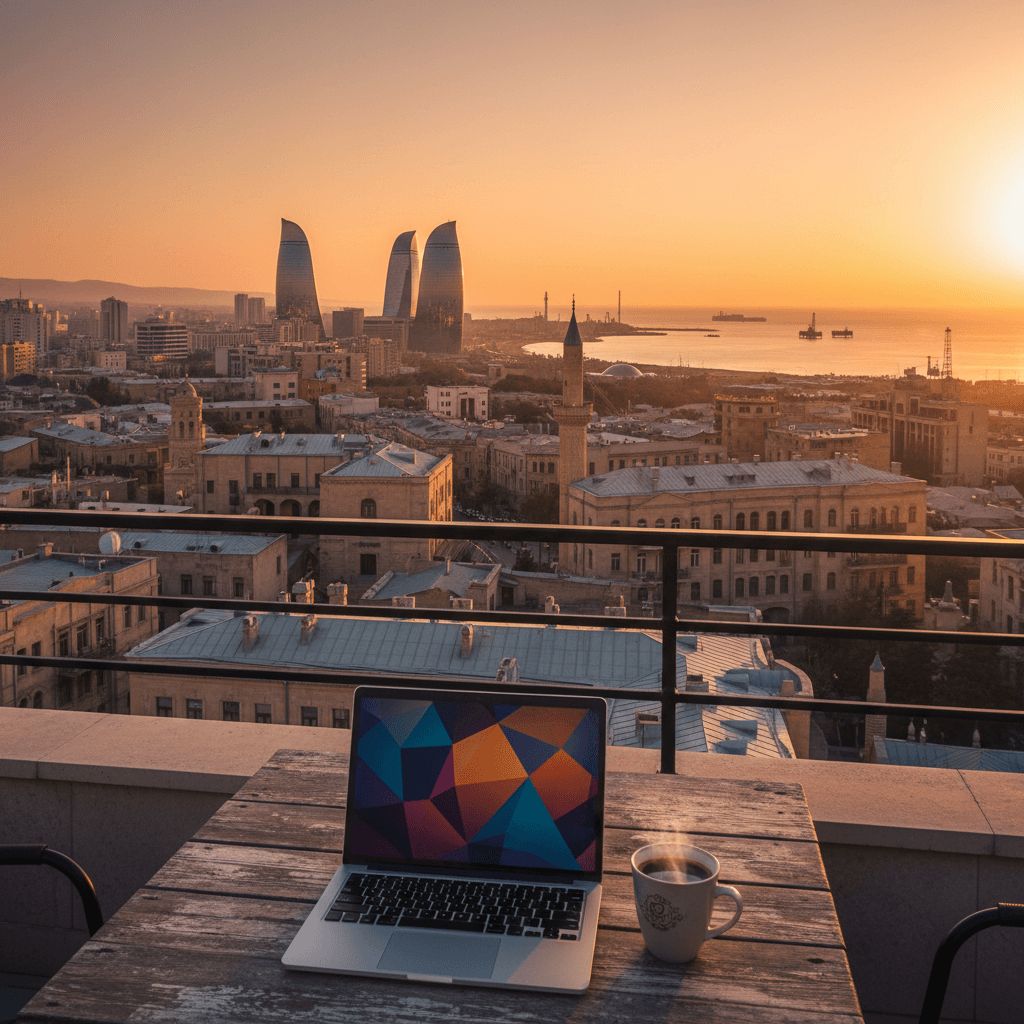
Baku
🇦🇿 Azerbaijan
The Vibe: Where Silk Road Soul Meets Cyberpunk Ambition
Baku is a city of jarring, beautiful contradictions. It feels like someone dropped a slice of Paris into the Persian Gulf, then let a futuristic architect from 2050 finish the job. One moment you are wandering through the limestone alleys of Icherisheher (the Old City), smelling fresh plov and seeing carpets dried on centuries-old walls. The next, you look up to see the Flame Towers glowing like digital embers against the Caspian Sea.
For nomads, the real draw is the "frontier" energy. It is far less crowded than Tbilisi or Istanbul, but it offers a high-tech infrastructure that has earned it the nickname "the new Dubai." You get the benefit of a strategic time zone that straddles Europe and Asia, paired with a local hospitality that is genuinely warm rather than transactional. The pace is uniquely Baku: people are in a hurry to modernize, but never too busy to sit for a glass of pear-infused tea.
Cost of Living: Your Budget Goes Further
Baku is remarkably affordable for the quality of life it provides. Most digital nomads find they can live comfortably on $1,500 to $2,000 a month, though budget travelers can certainly scrape by on closer to $1,100 if they stick to local neighborhoods and street food.
- Budget Tier: ~$1,087/month. Best for those staying in outer districts and eating $2 to $5 kebabs. You will rely on the metro, which is a steal at 0.30 AZN ($0.18) per ride.
- Mid-range Tier: ~$1,500/month. This covers a nice apartment in a central area, regular coworking access, and dining out at mid-range spots for $10 to $15 per meal.
- Comfortable Tier: ~$2,194+/month. This gets you a high-rise apartment with Caspian views, nightly dinners at upscale waterfront restaurants, and private car services.
The Neighborhood Breakdown
Choosing where to plant your laptop depends on whether you want historic charm or modern convenience. Traffic can be heavy, so being near a metro station or within the walkable core is a major win.
The Old City (Icherisheher)
- Best For: History buffs and solo travelers who want everything within walking distance.
- Rent: $800+ for smaller, unique spaces.
- Pros: Incredible atmosphere, home to the Maiden Tower, and very safe.
- Cons: Can feel touristy and noisy during the day; prices for groceries and coffee are higher here.
Central Baku (Near 28 May / Nizami)
- Best For: Working nomads who need to be near the action.
- Rent: $500 to $800 for a solid one-bedroom.
- Pros: Excellent transport links, close to major malls, and home to most coworking hubs.
- Cons: Busy, urban feel with significant traffic congestion.
Baku Boulevard / Waterfront
- Best For: Expats with families or those who prioritize morning runs and sea views.
- Rent: $900+ for modern builds.
- Pros: Scenic strolls, fresh air, and high-end dining options.
- Cons: Less of a "residential" community feel; can be expensive.
Connectivity and Workspace
The internet in Baku is surprisingly reliable. You will find speeds ranging from 10 to 88 Mbps, which is plenty for video calls and heavy uploads. While the coworking scene is still growing, spaces like Lotfi Zadeh Technology Center or the various hubs near the city center offer professional environments for about $100 to $200 a month.
For mobile data, grab an eSIM from Azercell or Bakcell. You can get 20GB plans that activate almost instantly. If you prefer working from cafes, the city is full of "tea culture" spots that are becoming increasingly laptop-friendly, especially in the more European-style districts.
The Reality Check
It is not all sleek glass and ancient stone. The air quality can dip at times, with AQI levels occasionally hitting the 140 to 150 range due to the surrounding industry and heavy traffic. You also have to navigate an emerging market where English is common among the youth but less so with the older generation. Carrying a translation app is a must. However, the trade-off is a city that feels safe, costs half as much as Western Europe, and offers a front-row seat to one of the most interesting cultural blends on the planet.
The Price of the Caspian Lifestyle
Baku is one of those rare cities where your dollar stretches significantly further without sacrificing the perks of a modern, high tech capital. Most nomads find they can live a very comfortable life here for between $1,087 and $2,194 per month. It is a strategic alternative to expensive European hubs, offering a unique blend of Silk Road history and "New Dubai" infrastructure at a fraction of the cost.
The local currency is the Azerbaijani Manat (AZN). While prices are rising as the city gains popularity, it remains an incredibly affordable base for remote work. You can grab a quick street food kebab for $2 to $5, or settle into a mid range restaurant for a full meal and spend about $10 to $15. Even at the higher end, a splurge at a rooftop bar or a luxury waterfront spot usually tops out around $50 per person.
Monthly Budget Breakdowns
Your total spend will mostly depend on how close you want to be to the Flame Towers and the historic center. Here is what you can expect based on your lifestyle tier:
- The Budget Nomad (~$1,087/month): You will likely stay in outer residential areas where rent sits between $300 and $500. You will stick to the metro, eat local favorites like plov from neighborhood spots, and work from laptop friendly cafes or free public spaces.
- The Mid-Range Nomad (~$1,500/month): This is the sweet spot for most expats. You can afford a nice apartment in popular areas for $500 to $800. This budget covers a dedicated coworking desk for $100 to $200 and frequent use of ride hailing apps for convenience.
- The Comfortable Nomad (~$2,194/month): At this level, you are looking at premium central apartments for $800+. You will be eating at upscale international restaurants, using private transport daily, and likely maintaining a private office in a top tier coworking space.
Housing and Neighborhoods
Rent is your biggest variable. If you want to be in the heart of the action, the Old City (Icherisheher) is the most atmospheric choice. You will be steps away from the Maiden Tower and the Palace of the Shirvanshahs, but you will pay a premium for the history. It is walkable and artsy, though it can get crowded with tourists and a bit noisy on weekends.
For a more modern vibe, look toward the Central areas near the metro stations. These hubs are the best for digital nomad life because they balance transport access with modern amenities. Traffic in Baku can be heavy, so being near a metro line is a major lifestyle upgrade. If you prefer views and morning walks, the Waterfront and Baku Boulevard area is scenic and family friendly, though it is more expensive and has fewer residential apartment options than the city center.
Connectivity and Working
Internet is generally reliable with speeds ranging from 10 to 88 Mbps. While the coworking scene is still growing, spaces in central Baku offer professional environments for around $100 to $200 a month. Most nomads recommend picking up a local SIM or an eSIM from Azercell or Bakcell. You can get data plans ranging from 1GB to 20GB quite easily, and 4G coverage is solid throughout the city.
Getting Around
Public transport is a steal. A single ride on the metro costs 0.30 AZN ($0.18) and the bus is even cheaper at 0.20 AZN ($0.12). You will need to buy a BakiKart for 2 AZN to use the system. When you don't feel like the metro, ride hailing apps are the way to go. Most expats recommend using them to avoid the "tourist tax" sometimes found with street taxis, especially during heavy traffic hours. Expect to spend about $50 to $100 a month if you use apps and public transit frequently.
Practical Perks
The entry barrier for Baku is quite low. An e-visa costs roughly 20 AZN ($11.60) for a 30 day stay, making it a low risk destination to test out. Between the low cost of living, the high tech skyline, and the legendary hospitality, it is an easy place to settle into for a month or three without breaking the bank.
For the Digital Nomad: Central Baku (Nizami & Sahil)
If you want to be in the thick of the action, the area surrounding Nizami Street and Sahil metro station is your best bet. This is where Baku feels most like a European capital, with pedestrianized streets, grand architecture, and a high concentration of cafes where you can actually get work done. Nomads typically gravitate here because the internet is reliable, hitting speeds between 10 and 88 Mbps, and you are never more than a five minute walk from a coworking space.
Expect to pay between $500 and $800 for a decent mid range apartment in this district. While the traffic in Central Baku can be a nightmare, living here means you can mostly rely on your own two feet or the metro, which costs a mere 0.30 AZN per ride. For coworking, Lotfi Zadeh Lab and Colab are popular spots where you can find a desk for roughly $100 to $200 a month. You'll also be close to the best international food and the city's growing specialty coffee scene.
For the Solo Traveler: Icherisheher (The Old City)
Living inside the ancient fortress walls of the Old City is a unique experience that feels worlds away from the skyscrapers. It is perfect for solo travelers who want a safe, walkable environment steeped in history. You'll be steps away from the Maiden Tower and the Palace of the Shirvanshahs. The vibe is quiet and artistic, though it can get crowded with tourists during the day.
Pros and cons of the Old City include:
- Pros: Incredible atmosphere, very safe, easy access to local museums and traditional tea houses.
- Cons: Higher prices for groceries and rent, can be noisy on weekends, and the narrow streets make taxi access difficult.
Rents here are on the higher side, often starting at $800 for small, character filled flats. It is the best place to immerse yourself in Azerbaijani hospitality, but you might find yourself heading to the Central district for better grocery prices and faster gym access.
For the Expat: Port Baku & The Waterfront
Expats looking for modern luxury usually head toward the White City or the area around Port Baku. This is the "new Dubai" side of the city, featuring high tech high rises and floor to ceiling windows overlooking the Caspian Sea. It is polished and professional, though it lacks the historic soul of the older neighborhoods.
Living here puts you right on the Baku Boulevard, a massive promenade perfect for morning runs or evening strolls. You'll have easy access to the Port Baku Mall and high end dining where a meal might cost $20 to $50. Rent in these modern towers is the most expensive in the city, frequently exceeding $1,000 a month for premium units. It is a bit more isolated, so you will likely rely on ride hailing apps like Bolt to get around, which is affordable but subject to the city's heavy afternoon congestion.
For Families: Baku Boulevard & Surrounds
Families often prefer the residential pockets just behind the main waterfront. These areas offer a bit more breathing room and proximity to green spaces. The Boulevard itself is a massive win for parents, featuring a Ferris wheel, plenty of ice cream kiosks, and wide paths for strollers. It is one of the safest parts of the city, with a heavy security presence and a very relaxed pace of life.
A typical family budget in these neighborhoods looks like this:
- Comfortable Rent: $900 to $1,500 for a multi bedroom apartment.
- Groceries: $400 to $600 a month using local markets for fresh produce.
- Entertainment: Low cost public transport and free park access keep weekend spending down.
The main trade off is that you are further from the quirky cafes and nomad hubs. However, the peace and quiet, combined with the sea breeze that helps alleviate some of the city's air quality issues, makes it the top choice for those relocating with children.
Staying Connected in the Caspian Capital
Baku is rapidly carving out a reputation as a tech savvy hub where the internet is surprisingly reliable for an emerging nomad destination. You can expect download speeds ranging from 10 to 88 Mbps depending on your setup. While the infrastructure is still catching up to Western Europe in some residential pockets, the central districts are well equipped for video calls and heavy data lifting.
Most nomads opt for a local SIM or an eSIM immediately upon arrival to avoid roaming headaches. Azercell and Bakcell are the two heavy hitters here. If you prefer hitting the ground running, Nomad eSIM offers convenient 4G plans ranging from 1 GB to 20 GB that you can activate before your plane even touches the tarmac. For those staying longer, grabbing a physical SIM at a local shop is cheap and straightforward, usually requiring just your passport.
Top Coworking Spaces
The coworking scene in Baku is concentrated in the city center, often nestled among modern skyscrapers or refurbished historic buildings. These spaces are your best bet for consistent high speed fiber and a community of like minded professionals.
- Lotfi Zadeh Technology Center: Named after the famous Azerbaijani scientist, this is a favorite for the tech crowd. It has a sleek, industrial vibe and hosts frequent networking events.
- Colab.az: A more intimate and creative environment located near the central metro stations. It is popular for its flexible hot desking options and quiet zones.
- Fabrika: Situated in a converted space with plenty of natural light, this spot draws a mix of local entrepreneurs and international freelancers.
Monthly memberships for a dedicated desk typically run between $100 and $200. If you only need a spot for a day, expect to pay around $10 to $15 for a drop in pass.
Work Friendly Cafes
Baku has a deep rooted tea culture, but the third wave coffee movement is firmly established in the downtown core. Many cafes are welcoming to laptop users as long as you keep the caffeine flowing. The "Old City" (Icherisheher) has several spots with great views, though they can get a bit loud with tourists during the afternoons.
- Coffee Moffie: A trendy spot with plenty of power outlets and a menu that caters to international tastes. It is a reliable choice for a few hours of deep work.
- United Coffee Beans: Known for having some of the best roasts in the city, this cafe offers a professional atmosphere and stable Wi-Fi.
- Baku Book Center: While primarily a bookstore, it features a spacious cafe area that is perfect for reading or light administrative tasks. It is one of the most aesthetic places to work in the city.
Digital Nomad Logistics
The administrative side of working from Baku is relatively painless. Azerbaijan offers an E-visa that costs roughly $26 (including service fees) and allows you to stay for 30 days. If you fall in love with the Caspian lifestyle and want to stay longer, you will need to look into temporary residence permits, which are becoming more accessible as the government courts the digital nomad community.
One thing to keep in mind is the power grid. While outages are rare in the city center, it is always smart to keep a power bank charged. Most modern apartments and coworking spaces have stable electricity, but if you are staying in an older building in the outskirts, the occasional flicker isn't unheard of. Stick to the central areas or the waterfront if your work requires 100% uptime.
Most expats find that the combination of low costs and decent speeds makes Baku a strategic base, especially if you are working on a European or Middle Eastern time zone. You get the benefit of a high tech environment without the "New Dubai" price tag.
Street Safety and Local Vibes
Baku is remarkably safe, often surprising visitors with its low crime rates and relaxed atmosphere. Most nomads feel comfortable walking through the city center or along the Caspian promenade well after dark. The police presence is visible but generally hands-off, contributing to a sense of order without feeling restrictive. While violent crime is rare, you should still keep an eye on your belongings in crowded areas like the Old City or Nizami Street, just as you would in any major capital.
The biggest safety hurdle you'll actually face is the traffic. Baku drivers can be aggressive, and pedestrian crossings are sometimes treated as suggestions rather than rules. Stick to the underground marble tunnels when crossing major roads; they're cleaner and much safer than trying to sprint across the asphalt. If you're heading home late, stick to ride-hailing apps like Bolt or Uber AZ. They provide a digital trail and fixed pricing, which saves you from the "tourist tax" sometimes applied by street taxis.
Healthcare Infrastructure
The healthcare system in Baku is a mix of older state facilities and modern private clinics. For anything beyond a minor check-up, expats and nomads almost exclusively head to private hospitals. These facilities are high-tech, and you'll find plenty of English-speaking staff who are used to working with international patients. Bona Dea International Hospital and Liv Bona Dea Hospital are the top choices for Western-standard care, featuring modern equipment and specialists trained abroad.
For routine issues or prescriptions, pharmacies (known locally as Aptek) are on nearly every corner in the center. Many are open 24/7. You'll find that many medications that require a prescription in the US or EU are available over the counter here, though it's always better to have your paperwork ready. If you need a specific brand from home, bring a supply with you, as local stock can vary and may be sold under different regional names.
Environmental Considerations
One thing to keep on your radar is the air quality. Baku is an industrial hub with a heavy focus on oil and gas, and the AQI can occasionally fluctuate. If you have sensitive lungs or asthma, check air quality apps before planning long outdoor runs. The city's famous winds, which earned it the nickname "City of Winds," usually do a good job of clearing the haze, but they can be intense during the winter months.
Tap water is generally a no-go for drinking. While it's fine for showering and brushing your teeth, most locals and nomads rely on bottled water or high-quality filtration systems. You can get 19-liter jugs delivered to your apartment for a few AZN, which is the most sustainable and cost-effective way to stay hydrated.
Emergency Contacts and Insurance
Before you land, make sure your travel insurance specifically covers Azerbaijan. Many nomads use SafetyWing or World Nomads, as they handle the logistics of private hospital billing more smoothly than standard health plans. In the event of a serious medical emergency, dial 103 for an ambulance, though if you're mobile, taking a ride-hailing app to a private clinic is often faster.
- General Emergency: 112
- Ambulance: 103
- Police: 102
- Fire: 101
Overall, the "supportive nomad environment" here means you're rarely truly alone. The local community is incredibly hospitable, and if you look lost or confused, someone will likely step in to help. It's an emerging market, so while there are occasional infrastructure gaps, the safety and modern medical options in the city center make it a very manageable base for remote work.
The Transit Landscape
Baku is a city of two speeds. On one hand, you have the ultra modern metro and the breezy, walkable promenade of Baku Boulevard. On the other, you have the notorious surface traffic that can turn a ten minute cross town hop into a forty minute crawl during rush hour. Most nomads quickly learn that the secret to staying sane here is choosing a home base within walking distance of a metro station or staying strictly within the walkable confines of the Old City.
The city is surprisingly affordable to navigate. Whether you are taking the underground or hopping on a red bus, your primary tool will be the BakiKart. You can pick up this plastic transit card at metro stations or orange terminals for 2 AZN. Once you have it, you just tap and go. It is a seamless system that keeps you from fumbling with coins while trying to board a crowded bus.
The Baku Metro
The metro is the most efficient way to bypass the gridlock on the streets. It is deep, grand, and very Soviet in its architecture, though the trains themselves are a mix of vintage cars and sleek, air conditioned newer models. A single ride costs 0.60 AZN, roughly $0.35, making it one of the cheapest subway systems you will ever use.
- Operating Hours: 6:00 AM to Midnight.
- Peak Times: Avoid 8:00 AM to 10:00 AM and 5:00 PM to 7:00 PM unless you enjoy being packed like a sardine.
- Coverage: The Green and Red lines cover most areas a nomad would care about, including the 28 May hub and Icherisheher for the Old City.
Buses and Minibuses
The bus network is extensive and reaches the corners of the city where the metro doesn't go. Newer red buses are modern and accept the BakiKart. Buses cost around 0.60 AZN ($0.35) on modern cashless routes. You will also see smaller, older buses that might still require cash, though the city is phasing these out in favor of the card system. If you are heading out to the suburbs or specific coworking spots in the central district, the bus is a reliable, if slower, backup.
Ride-Hailing and Taxis
When the metro is closed or you are carrying groceries, ride hailing apps are the way to go. Avoid the "purple cabs" at the airport or flagging down random cars on the street, as you will almost certainly pay a "tourist tax." Instead, download Bolt or Yango. These apps are the gold standard here and offer incredibly low rates.
- Short city hops: 2 to 4 AZN ($1.20 to $2.35).
- Cross-town trips: 5 to 8 AZN ($3.00 to $4.70).
- Airport to City Center: 10 to 15 AZN ($6.00 to $9.00).
Expats generally recommend opting for the "Premium" or "Select" tiers in the apps. The price difference is usually less than a dollar, but you get much newer cars with working seatbelts and air conditioning, which is a lifesaver during the humid Caspian summers.
Walking and Micromobility
Baku is a fantastic city for walking, provided you stay in the right zones. The Old City (Icherisheher) is almost entirely pedestrianized and full of winding alleys that are best explored on foot. Likewise, Baku Boulevard offers miles of paved pathways along the sea, perfect for a long sunset stroll or a morning run. While you might see some electric scooters popping up near the waterfront, the city isn't yet fully optimized for bikes or scooters due to the aggressive driving style of local motorists and the lack of dedicated lanes.
Getting to and from GYD Airport
Heydar Aliyev International Airport is about 25 kilometers from the center. The Aero Express bus is the most budget friendly option, running every 30 minutes to an hour and dropping you off at the 28 May Metro station for 1.30 AZN with BakiKart. However, most nomads find that for $8 or $9, taking a Bolt directly to their apartment door is a much better use of time, especially after a long flight.
The Linguistic Landscape
In Baku, the air is filled with the sounds of Azerbaijani, a Turkic language that shares deep roots with Turkish. While it is the official tongue, the city's Soviet past means Russian is still widely spoken, especially among older generations and in professional circles. For digital nomads, this creates a unique linguistic layer. You'll hear Azerbaijani in the markets and Russian in the boardrooms, with English rapidly gaining ground among the younger, tech savvy population.
Most nomads find that English proficiency is moderate in the city center. In hip cafes, coworking spaces, and tourist hubs like the Old City, you can get by quite easily. However, once you step into local grocery stores or travel to the outskirts, the language barrier becomes more noticeable. It's a city where a smile and a few local words go a long way, especially given the legendary hospitality for which Azerbaijanis are known.
Staying Connected
Reliable internet is the lifeblood of remote work, and Baku generally delivers. Download speeds typically range from 10 to 88 Mbps, which is plenty for video calls and heavy uploads. Most modern apartments and central cafes offer stable Wi-Fi, though it's always smart to have a backup plan for those occasional infrastructure gaps.
For mobile data, expats recommend grabbing a local SIM or an eSIM immediately upon arrival. The primary providers are Azercell and Bakcell. If you want to skip the airport kiosks, Nomad eSIM is a popular choice among travelers, offering data packages from 1 GB to 20 GB that activate via a QR code. It provides solid 4G coverage throughout the capital, so you can work from a bench on the Baku Boulevard without worry.
Navigating Daily Life
While you can navigate the modern parts of the city with English, using translation apps is a game changer for daily errands. Google Translate works well for Azerbaijani, and the camera feature is particularly useful for reading menus or signs in the metro. If you're using ride hailing apps to avoid the heavy traffic, the interfaces are usually available in English, making communication with drivers much smoother.
Learning a few basic phrases in Azerbaijani will earn you massive respect from the locals. Even a simple "thank you" or "hello" can transform a standard transaction into a warm exchange. Here are a few basics to keep in your back pocket:
- Salam: Hello (Universal and easy to remember)
- Sag ol: Thank you (Literally means "stay healthy")
- Beli / Xeyir: Yes / No
- Ingilisce danisirsiniz?: Do you speak English?
- Hesab, zehmet olmasa: The bill, please
Communication Norms
Communication in Baku is often polite and indirect. People value hospitality and will often go out of their way to help a visitor who looks lost. Digital nomad communities are growing on platforms like Facebook and Telegram, where you can find meetups or advice on the best places to work. If you find yourself in a local home or a traditional restaurant, expect the conversation to flow over endless cups of tea; it's the unofficial language of social bonding in Azerbaijan.
For administrative tasks like getting your $26 e-visa (including service fees) or dealing with official paperwork, expect things to be a bit more formal. While the digital nomad infrastructure is still an emerging market, the government's push to attract remote workers means processes are becoming more streamlined and accessible to English speakers every year.
The Caspian Climate
Baku is famously known as the City of Winds, and you'll understand why the moment you step onto the Boulevard. The city's weather is dictated by its position on the Absheron Peninsula, sitting 28 meters below sea level. This creates a unique semi-arid environment where the breeze from the Caspian Sea is your constant companion, sometimes as a refreshing mist and other times as a fierce gust.
Currently, temperatures hover around 13 to 15 degrees Celsius (55 to 59 Fahrenheit). It is a transitional period where the air is crisp but the sun still has some bite. Nomads living here year round suggest packing layers; a windbreaker isn't just a fashion choice in Baku, it is a survival tool for the unpredictable drafts that funnel between the Flame Towers and the stone walls of the Old City.
When to Visit
If you want the sweet spot for productivity and exploration, aim for the shoulder seasons. April to June and September to October are the goldilocks months. During these windows, the thermometer stays between 20 and 25 degrees Celsius. It is perfect for working from a cafe terrace in Fountain Square without melting or shivering. The air quality also tends to be better during these months, as the moderate winds keep the city's atmosphere from feeling stagnant.
Summer, specifically July and August, can be punishing. Temperatures often climb above 35 degrees Celsius, and the humidity from the sea makes it feel even heavier. Many locals retreat to dachas in the northern mountains or along the coast, and you might find the city a bit sluggish. On the flip side, winter is rarely freezing, but the damp cold combined with the Khazri (the cold northern wind) can make 5 degrees Celsius feel like sub-zero. Snow is rare and usually disappears within a day, but the rain can make the limestone streets of Icherisheher quite slick.
Planning Around the Calendar
Beyond the thermostat, you should time your arrival based on the city's energy. Most digital nomads recommend arriving in late March to catch Novruz. It is the Persian New Year and the biggest celebration in Azerbaijan. The city comes alive with fire jumping, traditional sweets like shekerbura, and public festivities that last for days. It is the best time to experience the hospitality the region is known for, though keep in mind that many government offices and some smaller businesses will close for the week.
Another major event to watch for is the Baku Formula 1 Grand Prix, usually held in the spring or early summer. If you aren't a racing fan, you might want to avoid these dates. The city center turns into a labyrinth of concrete barriers, traffic becomes a nightmare, and short term rental prices for central apartments can triple overnight. However, if you enjoy a high energy atmosphere and don't mind the roar of engines while you're on a Zoom call, it is one of the most exciting times to be in town.
What to Pack
- Windproof Outerwear: A high quality windbreaker or light trench coat is essential regardless of the season.
- Comfortable Walking Shoes: You will spend a lot of time on the marble floors of the Boulevard and the uneven cobbles of the Old City.
- Moisturizer and Lip Balm: The semi-arid air and constant wind can dry out your skin surprisingly fast.
- Modest Layers: While Baku is quite secular and modern, having a light scarf or long trousers is respectful when visiting the mosques or more traditional neighborhoods outside the city center.
Most expats find that the autumn months offer the most stable environment for a long term stay. The Mediterranean-style evenings stay warm well into October, allowing for late night dinners and social meetups at rooftop bars without needing a heavy coat. It is the season when the city feels most balanced, between the scorching heat of the desert and the biting winds of the Siberian north.
Visa and Entry
Most travelers and nomads enter Azerbaijan using the ASAN e-visa. It costs $26 and usually lands in your inbox within three days. It gives you 30 days to explore the country. If you plan to stay longer than 15 days, you must register your place of stay with the State Migration Service; most hotels do this automatically, but if you're in an Airbnb, make sure your host handles it.
Cost of Living Breakdown
Baku is remarkably affordable compared to most European hubs. You can live quite comfortably on a mid-range budget of $1,500 per month, though many budget-conscious nomads make it work for closer to $1,100.
- Budget Tier: Around $1,087 per month. This covers a modest apartment in outer districts, plenty of $2 to $5 street food like doner kebabs, and heavy use of the metro.
- Mid-Range Tier: Around $1,500 per month. This gets you a nice flat in a central area, regular meals at local bistros for $10 to $15, and a hot desk at a coworking space.
- Comfortable Tier: $2,200+ per month. Expect a high-end apartment with Caspian views, fine dining at $30 to $50 per person, and frequent private car rides.
Connectivity and Remote Work
Internet speeds in Baku are generally reliable, ranging from 10 to 88 Mbps. While the infrastructure is still maturing, you won't have trouble with Zoom calls in the city center. For mobile data, skip the airport kiosks if you can and grab a SIM from Azercell or Bakcell. If your phone supports it, Nomad eSIM offers quick 4G activation for around $10 to $20 depending on the data package.
The coworking scene is growing fast. You'll find a community of local entrepreneurs and international remote workers at hubs in the central district. If you prefer the cafe route, Baku has a strong tea and coffee culture, and many spots are happy to let you linger with a laptop for a few hours.
Getting Around the City
Traffic in Baku can be a headache, especially during rush hour. The Baku Metro is your best friend for avoiding gridlock. It costs just 0.30 AZN ($0.18) per ride. You'll need to buy a BakiKart for 2 AZN and top it up at the stations.
- Buses: These are even cheaper at 0.20 AZN, but they’re subject to the same traffic as cars.
- Ride-Hailing: Apps like Bolt are the standard here. They are very affordable, but always check the license plate before hopping in.
- Walking: The Old City and the Baku Boulevard are best explored on foot. The Boulevard is a massive waterfront promenade perfect for a sunset stroll or a morning run.
Language and Culture
Azerbaijani is the official language, and while many younger people and hospitality staff speak English, it isn't universal. It's smart to have a translation app ready. Locals are famously hospitable and will often go out of their way to help you even if there is a language barrier. When visiting religious sites or more traditional neighborhoods, dressing modestly is a sign of respect, though Baku itself is quite cosmopolitan and modern.
Health and Safety
Baku is a very safe city for solo travelers and nomads. Violent crime is rare, and you'll feel comfortable walking around most central areas at night. For healthcare, pharmacies are on almost every corner and are well-stocked. While the air quality can occasionally dip due to the city's industrial roots and Caspian winds, most visitors find the environment pleasant for the majority of the year.
Need visa and immigration info for Azerbaijan?
🇦🇿 View Azerbaijan Country GuideEasy Landing
Settle in, no stress