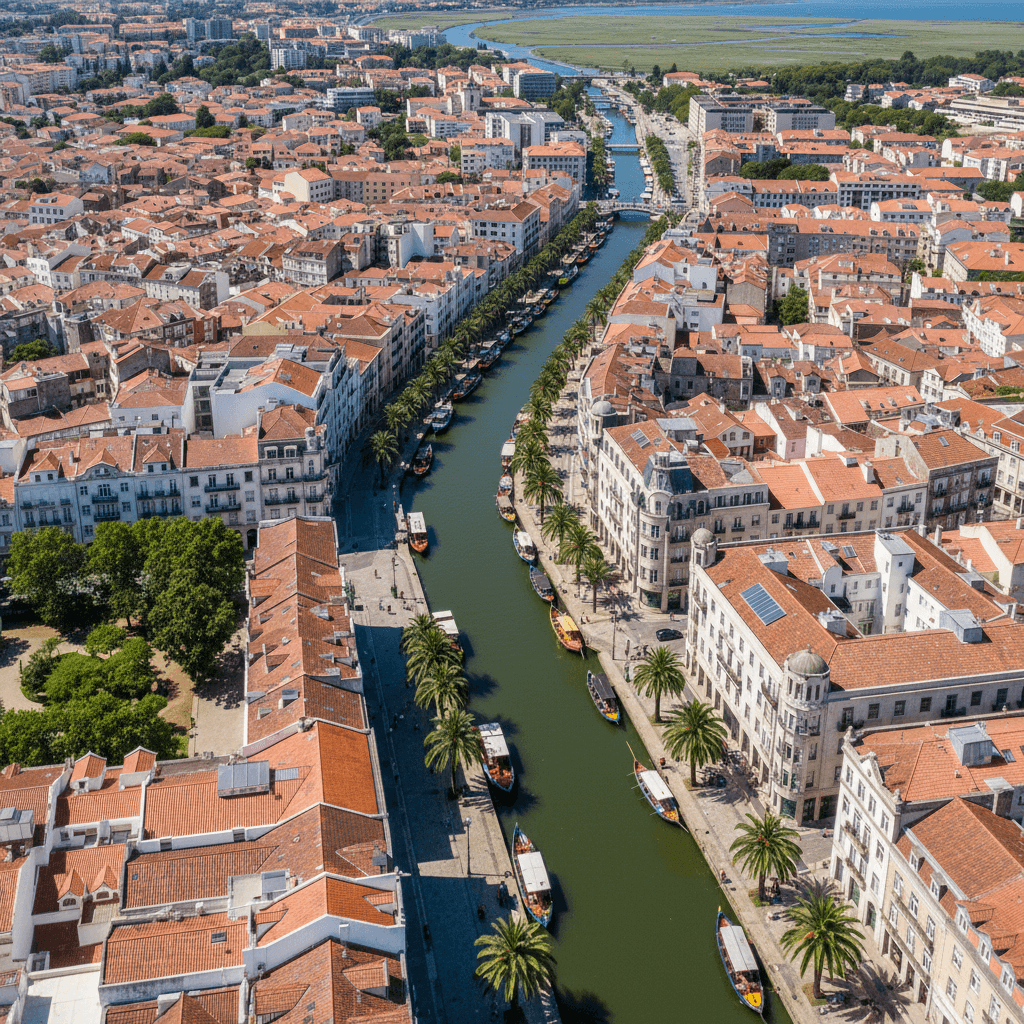
Aveiro
🇵🇹 Portugal
The Venice of Portugal with a Student Soul
If you're expecting a carbon copy of Italy, you'll be pleasantly surprised by the reality of Aveiro. While the "Venice of Portugal" tag is hard to shake, this city feels less like a museum and more like a lived-in maritime hub. You'll see the moliceiros, traditional seaweed-harvesting boats, gliding through the canals, but they're framed by stunning Art Nouveau facades and a gritty, salt-of-the-earth history that keeps the vibe grounded.
The atmosphere here is a unique blend of heritage and youthful energy. On one side of the canal, you have the historic salt pans and the smell of fresh Atlantic fish; on the other, a massive university population that keeps the cafes full and the prices low. It's a place where you can spend your morning working from a 100 year old bakery and your afternoon watching the sunset over the lagoons of Costa Nova.
The Nomad Experience
Nomads usually land here when they're burnt out by the frantic pace and skyrocketing rents of Lisbon or Porto. Aveiro is compact and remarkably walkable, meaning you won't waste half your day on a metro. It's safe, quiet, and feels like a community where the locals actually recognize you after your second visit to the coffee shop.
The pace of life is the main draw. It's a "slow living" destination where the biggest stress is deciding which ovos moles pastry shop is actually the best. However, it isn't for everyone. If you need a different underground club every Tuesday night, you'll find the scene here a bit thin. The nightlife is cozy and centered around wine bars and student hangouts rather than mega-clubs.
Cost of Living Breakdown
Your Euro goes significantly further here than in the capital. Most nomads find they can live a very comfortable lifestyle for a fraction of the cost of other European hubs.
- Budget Tier: Around €1,500 per month. This covers a room in a shared apartment, plenty of street food like €5 to €8 bifanas, and local transport.
- Mid-Range Tier: Roughly €2,500 per month. This gets you a private 1BR apartment in the center, regular mid-range dining at €10 to €15 per meal, and occasional weekend trips.
- High-End Tier: €4,000+ per month. You'll enjoy a premium apartment, upscale seafood dinners at €25+ per person, and private car rentals for coastal exploration.
Where to Plant Your Roots
The city is small, but the vibe shifts significantly depending on which corner you choose for your base.
City Center (Centro)
- Rent: €600 to €900 for a studio or 1BR.
- Vibe: Historic, touristy, and incredibly convenient for canal-side walks and cafes.
- Pros: Everything is on your doorstep; the architecture is beautiful.
- Cons: Can get noisy during summer tourist peaks.
University Area
- Rent: €500 to €700 for modern apartments.
- Vibe: Modern, energetic, and budget-friendly.
- Pros: Best concentration of cheap eats and reliable WiFi cafes.
- Cons: Occasional student party noise on Thursday nights.
Salt Pans & Costa Nova
- Rent: Varies; often higher for short-term vacation rentals.
- Vibe: Relaxed, beachy, and surrounded by nature.
- Pros: Peaceful and scenic with those iconic striped houses.
- Cons: Requires a bike or Uber to get into the city for amenities.
Connectivity and Practicalities
Internet speeds in Aveiro typically range from 16 to 87 Mbps. While it's not the lightning-fast fiber you might find in a dedicated tech hub, it’s more than enough for Zoom calls and heavy uploads. Most nomads work from cafes in the city center or head to nearby Porto for dedicated coworking spaces like Porto i/o if they need a formal office environment for a few days.
Getting around is effortless. A monthly public transport pass is only about €30, but you'll likely do most of your exploring on foot or via apps like Bolt and Uber, which are very affordable here. For a change of scenery, the train to Coimbra takes only 30 minutes, and Porto is just an hour away, making Aveiro a perfect, quiet base for exploring Northern Portugal.
The Price of the Portuguese "Venice"
If you've been eyeing Lisbon or Porto but felt a bit priced out by the recent rental spikes, Aveiro is the tactical alternative. It delivers that same coastal Portuguese charm at a significant discount. Most nomads find they can live a very comfortable life here for about $2,500 a month, though you can definitely squeeze that down to $1,500 if you’re happy in a shared house and stick to local tascas.
The city's compactness is its biggest financial asset. Since the center is almost entirely walkable and the terrain is flat, you'll rarely find yourself shelling out for Ubers or Bolts. When you do need a ride, a cross-town trip usually sits between €5 and €10. For longer stays, a monthly bus pass is a steal at €30.
Housing and Neighborhoods
Rent will be your biggest variable. Prices fluctuate depending on whether you want to be overlooking the Moliceiro boats or tucked away near the university. While Lisbon studios are pushing four figures, Aveiro remains more grounded.
Centro (City Center)
- Rent: Expect to pay €600 to €900 for a one-bedroom apartment.
- Vibe: You're in the heart of the Art Nouveau district. It's beautiful and walkable, but you'll pay a premium for the location.
- Best for: Short-term nomads who want to be steps away from the best cafes and canals.
University Area
- Rent: Generally cheaper, ranging from €500 to €700 for a decent flat.
- Vibe: High energy and younger crowds. This area is packed with affordable eateries and study-friendly spots.
- Best for: Long-term expats looking for a community feel and lower daily costs.
Costa Nova and Salt Pans
- Rent: Variable; often higher for short-term vacation rentals.
- Vibe: Quiet, scenic, and right by the striped houses and beaches.
- Best for: Families or remote workers who prioritize nature over being near the bars.
Dining and Social Life
Eating out is where Aveiro really shines. You can grab a quick street food lunch for €5 to €8. If you’re sitting down for a mid-range dinner with wine, you’re looking at €10 to €15. For the high-end maritime cuisine the region is famous for, expect to pay €25 or more.
Groceries follow standard Portuguese pricing, which is some of the lowest in Western Europe. If you shop at local markets for produce and fish, your weekly bill will stay lean. Don't forget to budget a few Euros for Ovos Moles; these local egg-yolk sweets are addictive and everywhere.
Connectivity and Coworking
While Aveiro doesn't have the massive coworking hubs found in Porto, the infrastructure is solid. Most apartments come with reliable fiber, and local cafes are generally welcoming to laptop users. If you need a dedicated desk, expect to pay between €150 and €250 a month, which is the standard rate across Portugal. Mobile data is cheap and fast; picking up a SIM from MEO or Vodafone will cost you about €10 to €20 for a generous 20GB to 50GB data package.
Healthcare and Practicalities
Safety is a non-issue here. It’s a peaceful city where you’ll feel comfortable walking home at night. For healthcare, the Hospital Infante D. Pedro provides quality public care, and pharmacies are on almost every corner. If you’re planning to stay long-term and rent a traditional apartment, remember you'll need to apply for a NIF (tax number), which is a standard part of the Portuguese bureaucracy.
Aveiro is small enough that you can walk across its core in twenty minutes, but each pocket of the city serves a different rhythm. Whether you are here to grind through a freelance project or want to wake up to the smell of salt air, where you drop your bags matters. The city is generally more affordable than Porto, but prices are creeping up as more remote workers discover the canals.
For Nomads and Remote Workers: Centro
If you want to be in the thick of it, the Centro is your best bet. This is where the iconic Art Nouveau architecture meets the canal front. Most nomads gravitate here because the WiFi in cafes is reliable and you are never more than a few minutes from a fresh batch of ovos moles. It is the most walkable part of the city, meaning you won't need a car or even a bus pass to get through your daily routine.
Living in the center puts you near the best spots to work, like Mercado do Peixe, where the surrounding cafes are accustomed to people on laptops. While there aren't many dedicated coworking spaces right in the heart of town yet, the local cafe culture fills the gap. Keep in mind that this is the most touristy area, so expect some noise from the moliceiro boat tours during the day.
- Rent: €600 to €900 for a one bedroom apartment.
- Vibe: Historic, social, and very photogenic.
- Best for: People who want to walk everywhere and be near the action.
For Expats and Long-Term Residents: University Area
Just south of the historic center lies the University of Aveiro district. This area feels younger and more modern than the rest of the city. Expats often prefer this neighborhood because the infrastructure is newer and the prices for groceries and dining are lower than in the tourist zones. It has a high energy during the semester, though it gets significantly quieter during the summer break.
The dining scene here is geared toward students, so you can find a solid meal for €8 to €12. There is a strong international community here, making it easier to meet people if you are staying for six months or longer. The only downside is the Festa de São Gonçalinho or student parties, which can get rowdy if your apartment faces a main square.
- Rent: €500 to €700 for a studio or shared flat.
- Vibe: Energetic, diverse, and budget friendly.
- Best for: Socializing on a budget and finding modern apartment builds.
For Families and Nature Lovers: Costa Nova and the Salt Pans
If the city center feels too cramped, look toward the Salt Pans or the nearby coastal strip of Costa Nova. This area is famous for its striped wooden houses and proximity to the Atlantic. Families tend to enjoy the slower pace and the easy access to the beaches. It is much quieter than the center, offering a backyard feel that you won't find in the city apartments.
The trade off is the commute. While you can use apps like Bolt or Uber for about €5 to €10, you will likely want a car if you live out here full time. Public transport exists but isn't as frequent as most travelers would like. It is the perfect spot if your priority is morning runs by the ocean rather than being near a late night wine bar.
- Rent: €800 to €1,200 for larger family homes.
- Vibe: Coastal, breezy, and very relaxed.
- Best for: Those who prioritize nature and quiet over urban convenience.
For Solo Travelers: Beira Mar
Technically part of the old town, Beira Mar is the traditional fisherman’s quarter. It is the soul of Aveiro and perfect for solo travelers who want an authentic experience. The streets are narrow, the houses are covered in colorful tiles, and the neighbors still chat across balconies. It is incredibly safe for solo night walks, and the local bars are welcoming even if you show up alone.
You'll find plenty of small guesthouses and lofts here. It is the best place to immerse yourself in the local culture without feeling like a total outsider. Just be prepared for smaller living spaces and older buildings that might get a bit chilly during the rainy season from October to March.
- Rent: €550 to €850 for traditional lofts.
- Vibe: Authentic, cozy, and community oriented.
- Best for: Cultural immersion and meeting locals.
Connectivity and Speed
Aveiro might feel like a sleepy canal town, but its digital infrastructure is surprisingly robust. The city benefits from Portugal's nationwide push for high speed fiber, though the actual speeds you'll experience can be a bit of a mixed bag depending on your choice of accommodation. Most nomads find that download speeds typically hover between 16 Mbps and 87 Mbps. While that's a wide range, it's generally stable enough for Zoom calls and heavy file uploads.
If you're staying in the historic Art Nouveau buildings in the City Center, the thick stone walls can sometimes play havoc with your internal WiFi signal. Expats recommend checking the router placement before signing a mid term lease. If your rental's connection isn't cutting it, the mobile network is a rock solid backup. MEO, Vodafone, and NOS all offer excellent 4G and 5G coverage throughout the city, often reaching speeds of 75 Mbps. You can grab a local SIM card with 20GB to 50GB of data for roughly €10 to €20.
Coworking Spaces and Community
Unlike Lisbon or Porto, Aveiro doesn't have a massive selection of dedicated coworking brands. You won't find a Regus on every corner here. Instead, the scene is more intimate and integrated into the local university culture. Most remote workers gravitate toward the University Area or the central cafes where the "laptop lifestyle" is widely accepted. Expect to pay between €10 and €20 for a day pass or roughly €150 to €250 for a monthly desk if you join a local hub.
For those who need a dedicated office environment, many professionals take the short one hour train ride to Porto to access larger spaces like Porto i/o or CRU for networking events. However, staying local has its perks. The community in Aveiro is tight knit and welcoming. You'll likely meet other nomads through the Punta App or by hanging out at the university cafes where the energy is high and the coffee is cheap.
Work Friendly Cafes
If you prefer the hum of a coffee shop over the silence of an office, Aveiro delivers. The city center is packed with spots that are happy to let you linger over a galão and a pastry. Most cafes have reliable, free WiFi; just look for the "WiFi senha?" sign or ask the barista. Since the town is so walkable, it's easy to hop between spots if one gets too crowded with tourists during the afternoon rush.
- University Area Cafes: These are the best for long sessions. They are used to students studying for hours, so you won't feel pressured to leave after one espresso.
- Beira Mar Neighborhood: Great for a change of scenery. You can work with a view of the canals and then take a quick walk to the salt pans during your lunch break.
- Mercado do Peixe: The area surrounding the fish market has several modern spots with outdoor seating that are perfect for light admin work when the weather is nice.
Practical Tech Tips
Before you settle in, there are a few logistical hurdles to clear. For mobile data, travelers often recommend Airalo for an immediate eSIM to get you from the airport to your apartment. Once you're settled, visit a physical MEO or Vodafone shop in the Forum Aveiro mall to get a more cost effective local plan. If you're planning on staying long term and renting a private flat, you'll need to secure a Portuguese NIF (tax number) before you can set up your own home internet contract.
Power outlets in Aveiro are the standard European Type F, so bring a surge protector if you're coming from North America. The electricity is generally very reliable, with power outages being a rare occurrence even during the rainy season from October to March.
Staying Safe in the Venice of Portugal
Aveiro is remarkably laid back. While larger hubs like Lisbon or Porto have the typical big city edge, this canal side town feels more like a large village where people actually look out for one another. Most nomads find they can walk home alone at 2:00 AM after a few drinks in the University district without a second thought. It consistently ranks as one of the safer spots in a country that is already one of the most secure in the world.
You won't find specific "no go" zones here. The City Center and the areas around the salt pans are peaceful around the clock. Like any place with a tourist pulse, you should keep an eye on your bag near the Moliceiro boat docks or during the Festa de São Gonçalinho when crowds get thick, but violent crime is almost unheard of. The local police, the GNR and PSP, are approachable and usually speak enough English to help you out if you lose your wallet.
Healthcare Infrastructure
If you get sick, you're in good hands. The city is home to Hospital Infante D. Pedro, a high quality public facility that handles everything from minor stitches to major emergencies. Expats recommend having private insurance like SafetyWing or Allianz to access the private clinics, as wait times at public hospitals for non emergencies can be a bit of a drag.
- Emergency Services: Dial 112 for police, fire, or ambulance. It is the standard number across the EU and operators usually speak English.
- SNS24: If you aren't sure if you need a doctor, call 808 24 24 24. This is a 24 hour health line where nurses can advise you in English and even schedule appointments.
- Pharmacies: Look for the green illuminated crosses. Most "Farmácias" have at least one pharmacist on staff who speaks excellent English. If it's late, check the door of any closed pharmacy; they always post a list of the nearest 24 hour "Farmácia de Serviço."
Daily Wellness and Practical Tips
The air quality is generally good, though it can get humid and salty given the proximity to the Atlantic. For those with respiratory sensitivities, keep an eye on the AQI during the hotter summer months when it can fluctuate between 27 and 85. The biggest "safety" hazard you'll likely face is the Calçada Portuguesa (the traditional stone pavement). These white and black stones look beautiful but become incredibly slick when it rains, which happens often between October and March. Wear shoes with decent grip if you're exploring the canals on a drizzly afternoon.
Tap water in Aveiro is perfectly safe to drink. You'll see locals buying bottled water in bulk at the Pingo Doce or Continente supermarkets, but that is usually just a preference for taste. Save your Euros and use a refillable bottle; the water undergoes strict testing and won't cause you any trouble.
Nomad Specific Support
Since the nomad community here is tight knit, the best way to stay informed is through the Punta App or local Facebook groups like "Expats in Aveiro." If you ever feel uneasy or need a recommendation for a specific specialist, these digital communities are usually faster and more reliable than a Google search. Most residents are incredibly welcoming to remote workers, provided you show the usual respect for local customs and quiet hours.
The Walkability Factor
Aveiro is a dream for anyone who hates being stuck in traffic. The city center is remarkably compact, and most nomads find they can handle 90% of their daily life on foot. Between the Art Nouveau architecture and the canals, walking isn't just a way to get from A to B; it's the best way to soak in the local atmosphere. The terrain is flat, making it easy to wander from the central Praça do Peixe to the university area without breaking a sweat.
For those times when your legs need a break, the city offers BUGA bikes (Bicicleta de Utilização Gratuita de Aveiro), a bike-sharing system provided by the municipality. You can pick one up at any of the 20 stations throughout the city using the BUGA app. Rides are paid (€0.10-€1.00 for up to 30 minutes depending on user type), making them an affordable option for quick trips to the salt pans or cruising along the water. If you prefer something with a motor, apps like Jump and Spin operate in the city, with scooter rentals usually costing around €1 for every 10 minutes of ride time.
Public Transit and Ride-Hailing
While the center is walkable, you'll occasionally need to head further out, perhaps to the beaches at Costa Nova or the retail parks on the outskirts. The local bus network is reliable and affordable. A single ride typically costs between €1.50 and €2.50, but if you’re staying for a month or more, expats recommend grabbing a monthly pass for around €30. It’s a significant saver if you aren't living right in the heart of the Centro.
Ride-hailing is well-established here. Both Uber and Bolt are active and surprisingly cheap compared to North American or UK prices. A quick cross-town trip usually lands in the €5 to €10 range. It’s often the most convenient way to get home after a late dinner or a few drinks in the university district when the buses start running less frequently.
Getting to and from the Airport
Aveiro doesn't have its own commercial airport, so you'll likely be flying into Francisco Sá Carneiro Airport (OPO) in Porto. Getting to Aveiro from there is straightforward and won't break the bank. You have three main options depending on your budget and luggage situation:
- The Train: This is the nomad favorite. Take the metro from the airport to Porto-Campanhã station, then hop on a regional or Alfa Pendular train to Aveiro. The train ticket costs between €5 and €10, and the journey takes about an hour.
- Ride-Hailing: If you’re traveling with a lot of gear or in a group, a Bolt or Uber directly from Porto airport to your door in Aveiro usually costs between €20 and €30. It’s a 45 to 50 minute drive.
- Shuttle Services: There are private shuttle operators that run direct transfers, though these often need to be booked in advance and can be pricier than a standard app-based ride.
Day Trips and Regional Travel
One of the perks of living in Aveiro is its position on the main northern rail line. The train station itself is a local landmark, famous for its blue and white tile work. From here, the rest of Portugal is at your fingertips. You can reach the student city of Coimbra in about 30 minutes, or be in the heart of Porto in under an hour for a change of scenery. Prices for these regional hops are low, making it easy to explore the coast on weekends without needing to rent a car.
If you do decide to head to the coast, specifically the striped houses of Costa Nova or the sands of Barra, the local bus is your best bet. It’s a short, scenic journey that takes about 15 to 20 minutes from the city center, giving you easy access to the Atlantic whenever the digital nomad life feels a bit too sedentary.
The Language Barrier (Or Lack Thereof)
You won't need to be fluent in Portuguese to survive a month in Aveiro, but knowing a few words goes a long way with the locals. Because Aveiro is a university town and a growing tech hub, English is widely spoken among the younger crowd and anyone working in the service industry. Most nomads find they can get by just fine in the city center and the University of Aveiro area using English alone.
That said, the vibe changes once you step into the more traditional "tascas" or head out toward the salt pans. In these older neighborhoods, the older generation might only speak Portuguese. It isn't a barrier so much as an opportunity. The locals are notoriously patient and friendly; a smile and a clumsy "Bom dia" usually earns you a lot of grace. If you're planning to stay long-term or sign a formal rental lease, having a translation app ready is a smart move.
Digital Communication and Connectivity
Staying connected is rarely an issue here, though speeds can be a bit more "coastal" than the lightning-fast fiber you'll find in Lisbon. Expect download speeds to range between 16 Mbps and 87 Mbps depending on your neighborhood. Most cafes in the Centro and near the canals are work-friendly and happy to share their "WiFi senha" (password) if you're buying coffee or an order of ovos moles.
For your mobile data, don't rely on international roaming. It's much cheaper to grab a local SIM card. You have three main choices in Portugal:
- MEO: Great coverage even in more rural spots near the lagoons.
- Vodafone: Often cited by nomads for having the most reliable high-speed mobile data, averaging around 75 Mbps.
- NOS: Competitive pricing and solid performance within the city limits.
You can pick up a SIM at the Porto airport when you land or at branded shops in the Forum Aveiro shopping mall. Expect to pay between €10 and €20 for a prepaid plan that gives you 20GB to 50GB of data. If your phone supports it, Airalo is a popular eSIM alternative for immediate data the second you cross the border.
Social Etiquette and Local Lingo
The social language in Aveiro is relaxed but polite. When you walk into a small shop or a cafe, it is standard practice to greet the staff with "Bom dia" (Good morning) or "Boa tarde" (Good afternoon). It is a small gesture that marks you as a guest rather than just another tourist.
If you're looking to meet people, most expats recommend joining local Facebook groups or using the Punta App to find meetups. Since Aveiro doesn't have the massive nomad infrastructure of Porto, social life often revolves around the university cafes and the wine bars in the city center. People here are generally open to conversation, especially during local festivals like the Festa de São Gonçalinho in January.
Key Phrases for Your Pocket
While Google Translate handles the heavy lifting, memorizing these few basics will make your daily interactions much smoother:
- Olá: Hello (Universal and easy).
- Obrigado/a: Thank you (Use "obrigado" if you identify as male, "obrigada" if female).
- Por favor: Please.
- A conta, por favor: The bill, please (Essential for those long lunches by the canal).
- Fala inglês?: Do you speak English?
- Tudo bem?: How's it going? / Is everything good?
If you're serious about immersion, Duolingo or Memrise are the standard starting points, but many nomads in Aveiro eventually sign up for casual "Portuguese for Foreigners" classes at the university to sharpen their skills and meet fellow expats.
The Seasonal Sweet Spot
Aveiro is a coastal city through and through, meaning the Atlantic Ocean dictates the rhythm of your workday. For most nomads, the window between May and September is the gold standard. During these months, you can expect consistent sunshine and temperatures hovering between 20°C and 31°C (68°F to 88°F). It is the perfect climate for taking a laptop to a canal-side cafe or heading out to the salt pans after a deep-work session.
The summer peak in July and August can occasionally see spikes up to 32°C (90°F). While this is great for afternoon trips to the striped houses of Costa Nova, the city center gets noticeably more crowded with day-trippers from Porto. If you prefer a quieter vibe, aim for the shoulder months of May, June, or September. You will get the same blue skies with a bit more breathing room at your favorite coffee shops.
The Rainy Season Reality
If you are planning a winter stay, pack a high-quality raincoat and prepare for some gray days. The rainy season typically stretches from October through March. While it rarely gets "freezing" by Northern European standards, with temperatures usually staying around 20°C (68°F) during the day, the humidity from the lagoon can make the air feel much nippier than the thermometer suggests.
December, January, and February are the wettest months. Many nomads find this time of year a bit isolating if they aren't fans of indoor hobbies. On the plus side, rental prices in the city center often drop during the off-season, and you will have the local bars and bakeries all to yourself. It is a productive time to hunker down and focus on a big project while the rain hits the cobblestones outside.
Timing Your Trip Around Local Life
Beyond the thermostat, the best time to visit often depends on what you want to experience socially. Aveiro is a university town, so the energy shifts significantly when students are in session. From September to June, the area around the University of Aveiro is alive with cheap eats and social meetups. If you visit in mid-summer, the student population thins out, and the city takes on a more traditional, tourist-focused atmosphere.
If you want to see the city at its most spirited, try to be there in January for the Festa de São Gonçalinho. It is a unique local tradition where people throw "cavacas" (hard sugar cookies) from the top of a chapel to the crowds below. It is chaotic, fun, and a great way to feel like a local rather than just another remote worker passing through.
Air Quality and Coastal Breezes
One thing to keep an eye on is the Air Quality Index (AQI), which can fluctuate between 27 and 85. While generally fresh thanks to the ocean breeze, the coastal mist and local industrial activity can occasionally cause hazy days. Most expats find the air quality significantly better than in Lisbon or Porto, especially if you spend your weekends out by the dunes of the Reserva Natural das Dunas de São Jacinto.
A Quick Seasonal Breakdown
- Spring (April to June): Bright, breezy, and the best time for outdoor activities. Daytime highs around 22°C (72°F).
- Summer (July to September): Peak beach weather and festival season. Expect highs of 30°C (86°F) and higher rental demand.
- Autumn (October to November): The transition into the rainy season. Cooling down to 18°C (64°F) with occasional storms.
- Winter (December to March): Cool and damp. Highs of 20°C (68°F) but frequent rain. Great for budget-conscious long-term stays.
Getting Settled and Staying Connected
You'll find Aveiro is one of the easiest transitions in Portugal. Most nomads grab a SIM card from MEO or Vodafone at the airport or one of the shops in the Forum Aveiro mall. A prepaid plan with 20GB to 50GB of data usually runs between €10 and €20. If you prefer digital, Airalo works well here for immediate data upon arrival.
While the city doesn't have a massive "factory" style coworking space yet, the cafe culture is strong. You'll see plenty of people working from laptops at University area cafes. Internet speeds in apartments typically range from 16 to 87 Mbps, which is plenty for Zoom calls, though it's a step below the lightning fast fiber in Lisbon. For banking, stick with Revolut or Wise for daily spending, but you'll need a Portuguese NIF (tax number) if you're looking to sign a long term lease via Idealista or Uniplaces.
The Cost of Living
Your Euro goes significantly further here than in the capital. A comfortable mid range lifestyle usually costs around €2,500 per month, though budget conscious travelers can make it work on €1,500 if they opt for shared housing near the university.
- Housing: A private one bedroom in the Centro averages €600 to €900. Look near the university for spots as low as €500.
- Dining: A quick lunch or street food runs €5 to €8. A nice dinner with wine in the fish market area will cost about €15 to €25.
- Transport: A monthly bus pass is €30, while a typical Bolt ride across town rarely exceeds €7.
Choosing Your Neighborhood
Aveiro is compact, so you're never truly far from the action, but the vibe shifts quickly between districts.
City Center (Centro)
- The Vibe: Historic, tourist friendly, and picturesque with constant views of the canals.
- Best For: First timers and solo travelers who want to be steps away from wine bars and Art Nouveau architecture.
- Trade off: Rents are higher and the streets get crowded during the summer peak.
University Area
- The Vibe: High energy, diverse, and filled with affordable tascas (traditional taverns).
- Best For: Expats and nomads looking for a social community and cheaper cost of living.
- Trade off: It can get noisy on Thursday nights when students are out in force.
Salt Pans & Costa Nova
- The Vibe: Scenic and breezy with those iconic striped houses.
- Best For: Families or those who want a beach town feel and don't mind a short commute.
- Trade off: You'll likely want a car or a reliable bike, as urban amenities are sparse.
Navigating the City
The city center is almost entirely walkable. For longer trips, Uber and Bolt are the go to apps. If you want to blend in with the locals, use the Jump or Spin apps to grab an e-scooter for about €1 per 10 minutes. When you need a break from the canals, the train to Coimbra takes only 30 minutes, and Porto is an easy one hour ride for about €5 to €10.
Health and Safety
Aveiro is remarkably safe. It's the kind of place where you'll feel comfortable walking home alone after a late dinner at 11:00 PM. For any medical needs, Hospital Infante D. Pedro is the main public facility. Pharmacies are easy to spot by their green neon crosses; most staff speak excellent English. In any serious emergency, dial 112.
Local Etiquette
A simple "Bom dia" (good morning) goes a long way when entering a shop. While English is widely spoken, especially by the younger crowd and university staff, learning a few phrases shows respect. Don't forget to try the ovos moles, the local pastry obsession. Tipping isn't mandatory, but rounding up the bill or leaving 5 to 10% at a sit down restaurant is a nice gesture for good service.
Need visa and immigration info for Portugal?
🇵🇹 View Portugal Country GuideEasy Landing
Settle in, no stress