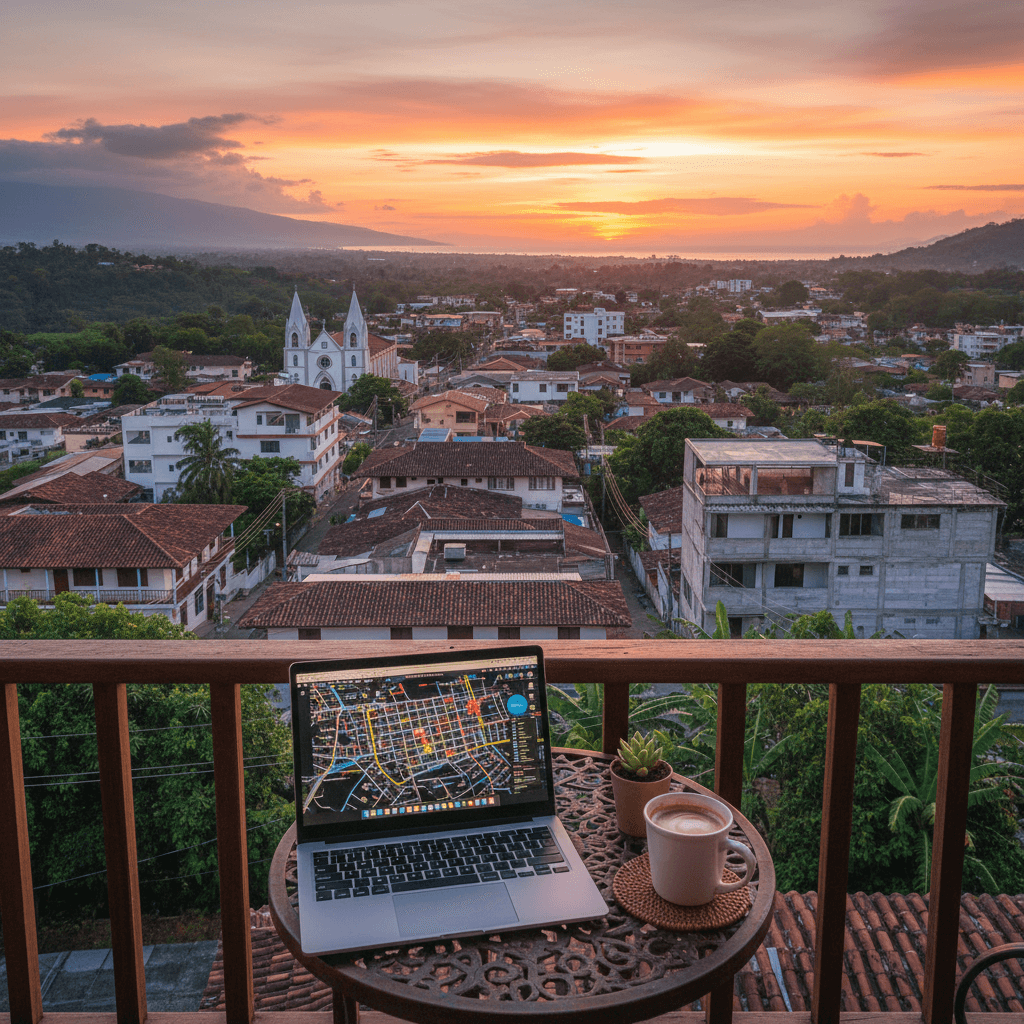
Atenas
🇨🇷 Costa Rica
The Pura Vida Sweet Spot
If you're looking for the high energy beach clubs of Tamarindo or the grit of San José, Atenas isn't it. This is a town that breathes slowly. Perched in the mountains of the Central Valley, it has spent decades riding the reputation of having the best climate in the world. It's a place where the air stays a comfortable 75°F to 85°F year round, and the humidity never hits that stifling, coastal "wall of heat."
The vibe is distinctly rural and community focused. You'll see farmers in rubber boots hauling coffee beans alongside retired expats from North America grabbling lattes. For nomads, the draw isn't a massive networking scene; it's the ability to live a quiet, high quality life for a fraction of the price of the coast. It feels like a genuine Costa Rican village that just happens to have great coffee and reliable enough WiFi to take a Zoom call from a porch overlooking a valley.
The Living Experience
Living in Atenas means trading nightlife for nature. Most nomads here opt for a "casita" on the outskirts of town rather than a central apartment. You'll likely spend your mornings at the Feria (the local farmers market) on Fridays, stocking up on exotic fruits and artisanal cheeses. The social life revolves around backyard BBQs, hiking groups, and the central park, where the community gathers as the sun dips.
While the infrastructure is more "local" than "luxury," it's functional. You won't find dedicated coworking spaces like Selina here yet, so most remote workers rely on home setups or spend afternoons at spots like La Fabrica. It's the kind of place where you learn your neighbor's name and the local "soda" owner remembers your order of a $6 casado after your third visit.
Cost of Living Breakdown
- The Budget Tier ($1,500 to $2,000/month): This is for the solo nomad living like a local. You're looking at a modest one bedroom for about $500, eating mostly at sodas, and using the public bus system.
- The Mid-Range Tier ($2,000 to $3,000/month): This is the sweet spot. You can snag a nice house with a view for $800, eat out at fusion restaurants a few times a week, and keep a small car or SUV for weekend trips.
- The Comfortable Tier ($3,000+): At this level, you're living in a premium villa in San Isidro, likely with a pool, and spending $1,000+ on rent. You're dining at the best spots in town and making frequent trips to the private hospitals in Escazú for high end care.
Neighborhood Personalities
Downtown Atenas
- The Vibe: Walkable, convenient, and traditional.
- Rent: $400 to $700 for a standard apartment.
- Best for: Nomads who don't want to rent a car and prefer being steps away from the market and cafes.
San Isidro
- The Vibe: Lush, quiet, and elevated.
- Rent: $600 to $1,200 for houses.
- Best for: Those who want those famous valley views and a bit of distance from the town noise. You'll definitely need a vehicle here.
Alajuela Outskirts
- The Vibe: Suburban and practical.
- Rent: $500 to $900.
- Best for: Travelers who need to be within 20 minutes of the SJO airport or want easier access to the malls and coworking hubs of the city.
Why Nomads Choose Atenas
The emotional pull of Atenas is its lack of pretension. In the beach towns, there's a constant pressure to be "on" or part of the scene. In Atenas, you're invited to just exist. It's a strategic base. You're approximately 35-40 minutes from central San José and about one hour from the Pacific beaches. You get the peace of the mountains during the work week and the chaos of the coast on your own terms. It's a town for the nomad who has graduated from the party phase and is looking for a home base that feels, well, like home.
The Price of Pura Vida
Atenas is often called the best value in the Central Valley. While coastal hotspots like Santa Teresa or Tamarindo can easily drain a $3,500 monthly budget, Atenas keeps things grounded. It is a place where your money stretches further, especially if you favor local farmers' markets over imported goods. Most solo nomads find they can live comfortably here on $2,000 to $2,500 per month, though budget travelers often squeeze by on closer to $1,500 by sticking to local sodas and modest studios.
The real savings come from the lifestyle. You aren't paying "beach tax" on every beer or surf lesson. Instead, you're paying local prices for some of the best produce in the country. Expats frequently mention that the lower cost of living doesn't feel like a sacrifice because the quality of life, particularly the air and climate, feels so premium.
Monthly Budget Tiers
- The Budget Tier ($1,500 to $2,000): This covers a modest 1BR apartment or studio in the $400 to $600 range. You'll be eating mostly at home or at local sodas, using the public bus system, and keeping your "extras" to a minimum.
- The Mid Range Tier ($2,000 to $3,000): This is the sweet spot for most digital nomads. It allows for a nicer, furnished home in areas like San Isidro for about $700 to $900. You can afford a few trips into San Jose for coworking, regular dinners at spots like La Fabrica, and perhaps a small car or frequent Uber rides.
- The Comfortable Tier ($3,000+): At this level, you're looking at a premium villa with a view, likely costing $1,000 to $1,500. You'll probably want a rental car, which adds about $400 to $600 a month, and you can dine out at upscale fusion restaurants without checking the menu prices first.
Housing and Utilities
Rent is your biggest variable. In the center of town, a simple 1BR usually sits between $400 and $700. If you head to the outskirts for more greenery, you can find rustic spots for as low as $300, but you will almost certainly need a car. Most rentals include water, but always double check the electricity and internet situation. High speed fiber is becoming the standard in the Central Valley, and a solid 100 Mbps connection via Kolbi or Claro usually runs around $50 to $60 per month.
Because the weather is so mild, you rarely need air conditioning or heating. This keeps your electric bill significantly lower than it would be on the coast. Most residents find their utilities, excluding internet, stay well under $100.
Food and Dining
Eating like a local is the secret to staying under budget. A casado (a traditional plate with protein, rice, beans, and salad) at a local soda will cost you $5 to $8. If you prefer a mid range sit down meal with a drink, expect to pay $15 to $20. For those who miss a bit of luxury, upscale dining in the area or nearby Alajuela will run $30 or more per person.
- Weekly Grocery Haul: $50 to $80 for one person, depending on how many imported items you buy.
- Local Beer (Imperial): $2 to $3 at a local bar; slightly more at a restaurant.
- Coffee: $2 to $4 for a high quality local brew.
Transportation
Atenas is very walkable if you live right in the center, but the hills of the Central Valley make a car or at least an Uber account necessary for exploring. Local buses are incredibly cheap, usually $1 to $2 for trips to neighboring towns. If you need to get to the airport or San Jose, an Uber usually costs between $30 and $50. Gas prices hover around $5 per gallon, so keep that in mind if you plan on frequent road trips to the coast.
The Solo Nomad: Downtown Atenas (Centro)
If you're landing in Atenas without a car and need to stay connected, the town center is your best bet. It’s the heartbeat of the community, centered around a classic palm fringed park and the iconic church. Living here means you're within a five minute walk of the central market, local sodas, and the bus station for quick trips to San José.
The vibe is authentically Costa Rican but with a noticeable international layer. You won't find dedicated coworking spaces like those in the beach towns, so you'll likely be working from home or setting up at a local cafe. Most nomads find the internet reliable enough for video calls, typically clocking in between 50 and 100 Mbps via Kolbi or Claro.
- Monthly Rent: $400 to $700 for a furnished studio or one bedroom apartment.
- Vibe: Walkable, social, and convenient.
- The Trade off: It can get noisy on Friday nights or during the weekly street markets, and the nightlife is limited to a few local bars.
The Long Term Expat: San Isidro
Expats looking for that famous "best climate in the world" usually head slightly uphill to San Isidro. This neighborhood sits at a higher elevation than downtown, offering cooler breezes and sweeping views of the Central Valley. It’s a quieter, more residential area where the community is tight knit and people actually know their neighbors.
You’ll find more spacious villas and standalone homes here, often with gated entries and lush gardens. Because it’s tucked away, you will definitely need a car or a reliable taxi contact to get into town for groceries. It’s the kind of place where you trade walking distance for privacy and a stunning sunset view every evening.
- Monthly Rent: $600 to $1,000 for a two or three bedroom house.
- Vibe: Peaceful, green, and breezy.
- The Trade off: Zero walkability; you’re dependent on wheels for every errand.
Families and Slow Travelers: Sabana Larga and Barrio Jesus
For families or those staying for six months or more, these outskirts provide a safe, suburban feel. These areas are popular because they offer larger yards and a sense of security that appeals to parents. There’s a high concentration of English speaking families here, making it easier for kids to find playmates and for parents to plug into the local expat social scene.
The infrastructure is solid, with paved roads and easy access to local private schools or clinics. Travelers often say these neighborhoods feel the most like "home" because they lack the transient energy of the town center. You’re close enough to grab a $5 casado at a nearby soda but far enough away to avoid the downtown traffic.
- Monthly Rent: $800 to $1,200+ for family sized homes with modern amenities.
- Vibe: Family oriented, secure, and quiet.
- The Trade off: Requires a higher budget and a long term commitment to snag the best properties.
The "Hybrid" Option: Alajuela Outskirts
If the quiet life in Atenas starts to feel a bit too slow, some nomads choose the outskirts of Alajuela, about a 20 minute drive east. This isn’t technically Atenas, but it’s a strategic choice for those who need to commute to San José for coworking hubs like Impact Hub or Selina. You get the benefit of being closer to the SJO airport while still enjoying the Central Valley greenery.
- Monthly Rent: $500 to $900 for modern apartments.
- Vibe: Semi urban and strategic.
- The Trade off: Higher traffic volume and a slight increase in petty crime compared to the sleepy streets of Atenas.
Connectivity and Speeds
In Atenas, you aren't going to find the fiber optic saturation of San Jose, but the infrastructure is surprisingly resilient for a mountain town. Most modern rentals and villas in the hills now offer speeds between 50 Mbps and 100 Mbps through providers like Kolbi or ICE. This is plenty for video calls and heavy uploads, though you should always ask your host for a Speedtest screenshot before booking, as some older homes still rely on copper lines that struggle during heavy rain.
The Central Valley generally ranks well for stability. While the occasional power flicker happens during a tropical downpour, it rarely knocks out the grid for long. Local nomads often keep a backup power bank or a mobile hotspot ready just in case. If you're planning on staying in the more rural San Isidro outskirts, verify the line of sight for wireless internet, as the rolling topography can sometimes create dead zones.
Coworking Realities
If you're looking for a dedicated coworking space with ergonomic chairs and networking events within the Atenas town limits, you'll be disappointed. There are currently no formal coworking hubs in the center of town. Most remote workers here embrace the "work from home" lifestyle or set up shop in local cafes. For a true office environment, you'll need to make the 35-40 minute drive into San José.
In the city, high end spots like Impact Hub or Selina offer daily passes ranging from $15 to $25. Monthly memberships in these urban hubs typically run between $150 and $300. Many nomads living in Atenas find that a once a week trip into the city for "deep work" days provides the perfect balance of rural peace and professional networking.
Laptop Friendly Cafes
Atenas has a strong cafe culture, but it's more about slow sipping than digital grinding. However, several spots are welcoming to the laptop crowd if you're respectful. Local "sodas" (small family restaurants) often have free WiFi, though they can be noisy during the lunch rush. For a more productive atmosphere, try these spots:
- La Fabrica: This is a favorite for its fusion menu and reliable connection. It's a bit more upscale, with prices for a meal landing between $12 and $20, but the atmosphere is conducive to an afternoon of emails.
- Kay’s Gringo Postres: A legendary expat hangout. While it's more of a social hub, it's a great place to meet other remote workers and get the latest tips on local tech support.
- Balcon del Cafe: Offers great views and decent speeds, perfect for those who want the "best climate in the world" experience while they work.
Mobile Data and SIM Cards
Don't rely solely on your home country's roaming plan; it'll be slow and expensive. Pick up a local SIM card as soon as you arrive. Kolbi and Claro are the two heavy hitters here. You can grab a prepaid SIM for about $10 and load it with 20GB of data for a very reasonable price. Coverage in downtown Atenas is excellent, usually providing 4G or LTE speeds.
For those with newer phones, Holafly offers eSIM options that save you the hassle of a physical card, though you'll pay a premium for the convenience. If you are staying long term, Liberty (formerly Movistar) also has competitive data packages. Most expats recommend having a dual SIM setup if your work is mission critical, using Kolbi as the primary for its superior coverage in the mountains.
Digital Nomad Community
The social scene for remote workers in Atenas is less about organized "coliving" and more about organic meetups. You won't find the young, party centric nomad crowds of Santa Teresa here. Instead, you'll find seasoned professionals, families, and "slowmads" who value quiet evenings. The Atenas Expats Facebook group is the primary digital bulletin board for the community. It's the best place to find reliable tech help, second hand monitors, or just to ask which cafe has the strongest signal this week.
Expect to pay around $50 a month for a solid home internet package if it isn't included in your rent. Overall, Atenas is a place where you bring your job with you rather than a place that builds its identity around your job. It's the perfect setup if you want to close your laptop at 5:00 PM and immediately disappear into the greenery.
A Local’s Perspective on Safety
Atenas is widely considered one of the safest corners of Costa Rica. While coastal nomad hubs like Tamarindo or Santa Teresa sometimes struggle with a higher volume of opportunistic crime, Atenas maintains a small town atmosphere where neighbors generally look out for one another. Expats often mention that the sense of community here acts as a natural security system.
That said, being smart is still part of the pura vida lifestyle. Petty theft, such as "tachonazo" (car break-ins), is the most common issue. Most nomads find that as long as they don't leave a laptop bag on the passenger seat of a rental car or leave smartphones unattended at a local soda, they won't have any trouble. Walking around the central park during the day is perfectly safe, but locals recommend taking an Uber if you are heading back to a more remote rental in San Isidro after dark, simply because many rural roads lack streetlights.
If you find yourself in an emergency, the number to dial is 911. The response times in the Central Valley are generally better than in the remote jungle regions, and the local police station (Fuerza Pública) is located right in the heart of town near the municipal building.
Healthcare Infrastructure
One of the biggest perks of living in Atenas is the proximity to world class medical care. You get the peace of mind of a rural lifestyle without being hours away from a specialist. For day to day needs, there are several farmacias (pharmacies) in the town center, like Farmacia Atenas, where pharmacists can consult on minor ailments and provide over the counter medications.
For more serious issues or routine checkups, you have two main paths:
- Public System (Caja): The local EBAIS clinic handles basic public healthcare. While it is affordable, it often involves long wait times and is primarily used by legal residents and citizens.
- Private Healthcare: This is the preferred route for most digital nomads and expats. Hospital CIMA in Escazú is approximately 30-35 minutes away and is JCI accredited, meaning it meets international standards. It feels more like a high end hotel than a hospital, and most doctors there speak fluent English.
- Local Private Clinics: There are smaller private practitioners in Atenas for dental work and general medicine that charge roughly $50 to $80 for a consultation.
Staying Healthy in the Central Valley
The tap water in Atenas is generally safe to drink, which is a huge relief compared to other parts of Latin America. However, during the transition into the rainy season in May, some expats prefer using a filtered pitcher just to be extra cautious. The biggest health "risk" you'll likely face is the sun. Even though the "best climate in the world" feels mild and breezy, the elevation means the UV rays are intense.
Most travelers recommend getting a local insurance policy or an international nomad plan like SafetyWing or World Nomads. While a visit to a local doctor won't break the bank, having coverage for a major event at a place like CIMA is a smart move. If you need a prescription filled, bring your original bottle; many local doctors can write a Costa Rican equivalent prescription for a small fee if the pharmacy requires it.
Safety and Health Essentials
- Emergency Number: 911
- Top Rated Hospital: Hospital CIMA (Escazú), approximately 30km away.
- Common Cost: Private GP visit $60; Dental cleaning $70.
- Water Quality: Potable and safe in the town center.
- Best Practice: Use Uber for late night transport to hilly outskirts.
Navigating the Best Climate in the World
Atenas is a compact town where your daily movement depends heavily on whether you are staying in the central grid or perched on one of the surrounding ridges. While the town center is remarkably walkable, the steep hills of neighborhoods like San Isidro or Barrio Jesus require a bit more horsepower. Most nomads find that a mix of walking, occasional Ubers, and the local bus system covers the basics without the need for a full time rental car.
The Downtown Footprint
If you choose a rental within the four or five blocks surrounding the Parque Central, you can get away with a car free lifestyle. The grocery stores, the weekly farmers market (feria), and the local sodas are all clustered together. Walking here is pleasant, though you should keep an eye on the sidewalks which can be uneven or narrow in spots. It is the best way to soak in the local pace and grab a $5 casado at a nearby soda without worrying about parking.
Ride-Hailing and Taxis
Uber is widely available and remains the most convenient way to get around if you are heading to the outskirts or need a lift to the airport. A ride from SJO Airport to Atenas usually costs $40-55 and takes about 25-30 minutes depending on the Route 27 traffic. For shorter hops within town, expect to pay $3 to $7. You will also see formal red taxis at the park; they use meters (la maria), but most tech savvy travelers prefer the transparency of the Uber app.
Public Buses
The bus system is the backbone of travel for locals and budget conscious expats. Buses to Alajuela and San Jose run frequently, often every hour or half hour during peak times. Fares are incredibly cheap, usually between $1 and $3. While there isn't a massive central terminal like you would find in a major city, the stops are well known to locals. Just look for the covered benches near the park. It is a reliable way to reach the city for a day of coworking at Impact Hub or Selina without dealing with the stress of San Jose traffic.
Private Wheels: Rentals and Scooters
If you plan on exploring the Poas Volcano or heading down to the Pacific beaches on weekends, a rental car is your best bet. Be prepared for the cost; a mid range SUV can run $400 or more per week during the high season when insurance is factored in. For those staying long term, some local shops offer basic bike or scooter rentals for around $5 per day. Just be cautious on the main roads. The winding turns and lack of shoulders make cycling a bit of an adrenaline sport in the Central Valley.
Getting Around Cheat Sheet
- Uber to SJO Airport: Expect to pay $40 to $55.
- Local Bus Fare: Usually $1 to $3 per trip.
- Walkability: High in the center, low in the hills.
- Car Rental: Roughly $60 to $100 per day for short term stays.
- Gas Prices: Averaging around $5 per gallon.
Most expats recommend downloading the Waze app immediately. Even if you aren't driving, it is the gold standard for navigating Costa Rica. It provides the most accurate data on road closures, heavy rain delays, and those frequent "only in Costa Rica" traffic jams caused by slow moving agricultural vehicles.
The Language Barrier (or Lack Thereof)
In Atenas, you'll find a linguistic landscape that reflects its status as a premier expat hub. Spanish is the heartbeat of daily life, but because the town has hosted a significant North American and European population for decades, English is remarkably common in the town center. You can usually get through a grocery run at Coopeatenas or order a coffee at any cafe using English, though the experience becomes much richer when you can toss out a few local phrases.
Most nomads find that while the service industry and real estate agents speak English, the local "Sodas" (traditional eateries) and hardware stores are Spanish first. If you're planning to stay for more than a month, learning the basics isn't just a courtesy, it's a way to unlock better prices and deeper connections with the Tico community. The locals are incredibly patient with learners and will often wait for you to find the right word rather than jumping in to correct you.
Mastering the Pura Vida Dialect
Costa Rican Spanish is famous for being clear and relatively slow compared to Caribbean or Chilean dialects, making it a great place for beginners to practice. However, there are a few "Ticoisms" you need to know to sound like a local rather than a tourist:
- Pura Vida: This is more than a slogan. It means hello, goodbye, everything is good, and you're welcome. Use it liberally.
- Tico/Tica: This is what Costa Ricans call themselves. It's a term of pride and you'll hear it constantly in daily conversation.
- Upe: Instead of knocking on a gate or ringing a bell at a private home, locals shout "Upe!" to see if anyone is home.
- Gringo/Gringa: In Atenas, this isn't usually an insult. It's a standard descriptor for anyone from North America or Europe, often used even by expats to describe themselves.
Connectivity and Staying Online
Communication isn't just about what you say, it's about staying connected to your clients and family. While the Central Valley has some of the best infrastructure in the country, you still need a local setup to avoid massive roaming fees. Most travelers recommend grabbing a physical SIM card or an eSIM the moment they land at SJO airport.
- Kolbi (ICE): This is the state owned provider. It has the best coverage if you plan on trekking into the mountains or heading to more remote coffee farms outside the Atenas center. Expect to pay about $10 for 20GB of data.
- Claro and Liberty: These are private competitors. They often have better speeds in the heart of town and more flexible prepaid packages for heavy data users.
- Holafly: For those who want to be online the second the plane touches the tarmac, an eSIM is the way to go. It's slightly more expensive than a local SIM but saves you the hassle of finding a shop.
Digital Communication and Apps
If you aren't already using WhatsApp, you'll need to download it before you arrive. In Atenas, WhatsApp is the primary way to communicate with everyone from your landlord to your Uber driver. Businesses often don't check their emails, but they'll reply to a WhatsApp message within minutes. It's also the main hub for the "Atenas Expats" groups, which are vital for finding local recommendations or emergency help.
For translation, Google Translate is the standard, but make sure to download the Spanish dictionary for offline use. The "Conversation Mode" is particularly helpful when you're trying to explain a specific maintenance issue to a local handyman. Most nomads also find Waze more reliable than Google Maps for navigating the winding roads of the Central Valley, as it accounts for local traffic patterns and the occasional road closure due to rain.
Language Learning Resources
If you want to move beyond "Hola" and "Gracias," Atenas has several options for formal study. Many expats recommend hiring a private tutor for $15 to $25 per hour. This allows you to focus on the specific vocabulary you need for your lifestyle, whether that's business terminology or just enough Spanish to navigate the weekly farmers market. There are also informal language exchanges that meet at local cafes, providing a low pressure environment to practice with Ticos who want to improve their English.
The "Best Climate in the World"
Atenas famously claims to have the best climate on earth, and while that is a bold marketing pitch, the reality for nomads is pretty close to perfect. Sitting at an elevation that avoids the sweltering humidity of the Guanacaste coast and the chilly dampness of higher mountain peaks, you are looking at consistent temperatures between 70°F and 85°F (21°C to 29°C) year round. It is the kind of place where your windows stay open and your AC bill stays low.
The year is split into two distinct chapters: the dry season and the green season. For those working remotely, this cycle dictates everything from your afternoon hiking plans to whether you need to worry about a sudden power flicker during a Zoom call.
Dry Season (December to April)
This is the peak window for most travelers and the time when the town feels most alive. You can expect clear blue skies and a steady breeze that keeps the heat manageable. This is the best time for exploring the nearby coffee farms or taking a quick 45 minute drive down to the Central Pacific beaches.
- Vibe: Sunny, social, and busy. The expat community is most active now, with frequent meetups at local spots like La Fabrica.
- Nomad Tip: Because this is high season, short term rentals go fast. If you are looking for a furnished villa in San Isidro, book at least three months in advance.
- Pros: Guaranteed outdoor weather and zero rain to interrupt your weekend trips.
- Cons: Dust can kick up on the unpaved backroads, and prices for short term stays are at their highest.
Green Season (May to November)
Don't let the "rainy season" label scare you off. In the Central Valley, the rain usually follows a predictable pattern; sunny mornings followed by a heavy downpour for a few hours in the late afternoon. By evening, things often clear up again. Most nomads find this is actually the most beautiful time to be in Atenas because the surrounding hills turn an intense, deep emerald green.
- Vibe: Lush, quiet, and cozy. It is the perfect atmosphere for deep work sessions while listening to the rain hit the roof.
- Nomad Tip: October is typically the wettest month. If you aren't a fan of grey skies, this is the month to plan a trip elsewhere or head to the Caribbean side, which follows a different weather pattern.
- Pros: Lower rent prices, fewer crowds at the feria (farmers market), and stunning landscapes.
- Cons: Afternoon storms can occasionally cause brief power outages in more rural outskirts, so a backup battery or a good data plan on your Kolbi or Claro SIM is a must.
When to Visit
If you want the absolute best balance of weather and value, aim for the shoulder months of May or November. During these times, you get the lush scenery of the green season without the daily deluges of October. You will also find that landlords are more willing to negotiate on monthly rates compared to the January rush.
For those who prioritize social life and want to meet other expats and nomads, the window from December through March is unbeatable. The town square is lively, the festivals are in full swing, and the breezy "verano" weather makes every day feel like a vacation even when you are clocked in.
Connectivity and Tech Setup
Staying connected in Atenas is easier than you might expect for a mountain town. Most rentals offer fiber optic speeds between 50 and 100 Mbps through providers like Kolbi or ICE. While the town lacks a dedicated, fancy coworking space, the local soda culture fills the gap. You'll find plenty of nomads working from local cafes with a coffee and a reliable connection.
If you need a professional office environment for a day of intense meetings, the 45 minute drive to San Jose is your best bet. Impact Hub and Selina in the city offer day passes for $15 to $25. For mobile data, skip the roaming charges and grab a local SIM card. Kolbi has the best coverage in the hills, while Claro is a solid runner up. You can get a 20GB starter pack for about $10 at most small shops in the town center.
Money and Budgeting
Atenas is one of the more affordable pockets of the Central Valley, especially compared to the inflated prices in beach towns like Tamarindo. A solo nomad can live comfortably here on $2,000 to $3,000 per month. If you're on a tighter budget, sticking to local farmers markets and small sodas can keep your monthly spend closer to $1,500.
- Local Casados: Expect to pay $4 to $7 for a hearty plate of rice, beans, and protein.
- Mid-range Dining: Fusion spots like La Fabrica cost around $15 to $20 per person.
- Monthly Rent: A furnished one bedroom in the center goes for $400 to $700, while larger villas in San Isidro can top $900.
- Transport: Local bus rides are a steal at $1 to $2, and an Uber to the SJO airport usually lands between $30 and $50.
Getting Around
The town center is highly walkable, but if you choose a villa in the hills for the views, you'll want a car or a reliable Uber budget. Uber is active here and generally more convenient than traditional taxis for quick trips. For longer hauls, the bus system is frequent and connects you to Alajuela and San Jose for just a few dollars.
If you're planning to stay for a few months, consider renting a scooter from a local shop for about $5 a day. It's the easiest way to zip between the mountain ridges without worrying about parking in the narrow downtown streets.
Health and Safety
Expats and nomads consistently rank Atenas as one of the safer spots in Costa Rica. It doesn't have the same level of petty theft seen in the high traffic tourist hubs, but you should still use common sense. Don't leave your laptop visible in a car and keep an eye on your phone in crowded markets.
For medical needs, there are plenty of pharmacies and small clinics right in town. If anything serious comes up, you're only 30 minutes away from Hospital CIMA in Escazu. It's a world class facility that feels more like a hotel than a hospital, and most of the staff speak perfect English. Most travelers use Wise for daily spending and keep a bit of cash for the smaller fruit stands that don't take cards.
The Social Scene
Don't expect a wild nightlife scene here. Social life in Atenas revolves around the weekly farmers market, yoga classes, and expat meetups. The Atenas Expats Facebook group is the go to resource for finding out where the Friday afternoon drinks are happening. It's a community where people actually recognize each other at the grocery store, making it easy to plug in if you're staying for more than a couple of weeks.
Need visa and immigration info for Costa Rica?
🇨🇷 View Costa Rica Country GuideHidden Gem
Worth the effort