Ashgabat
🇹🇲 Turkmenistan
The White Marble Mirage
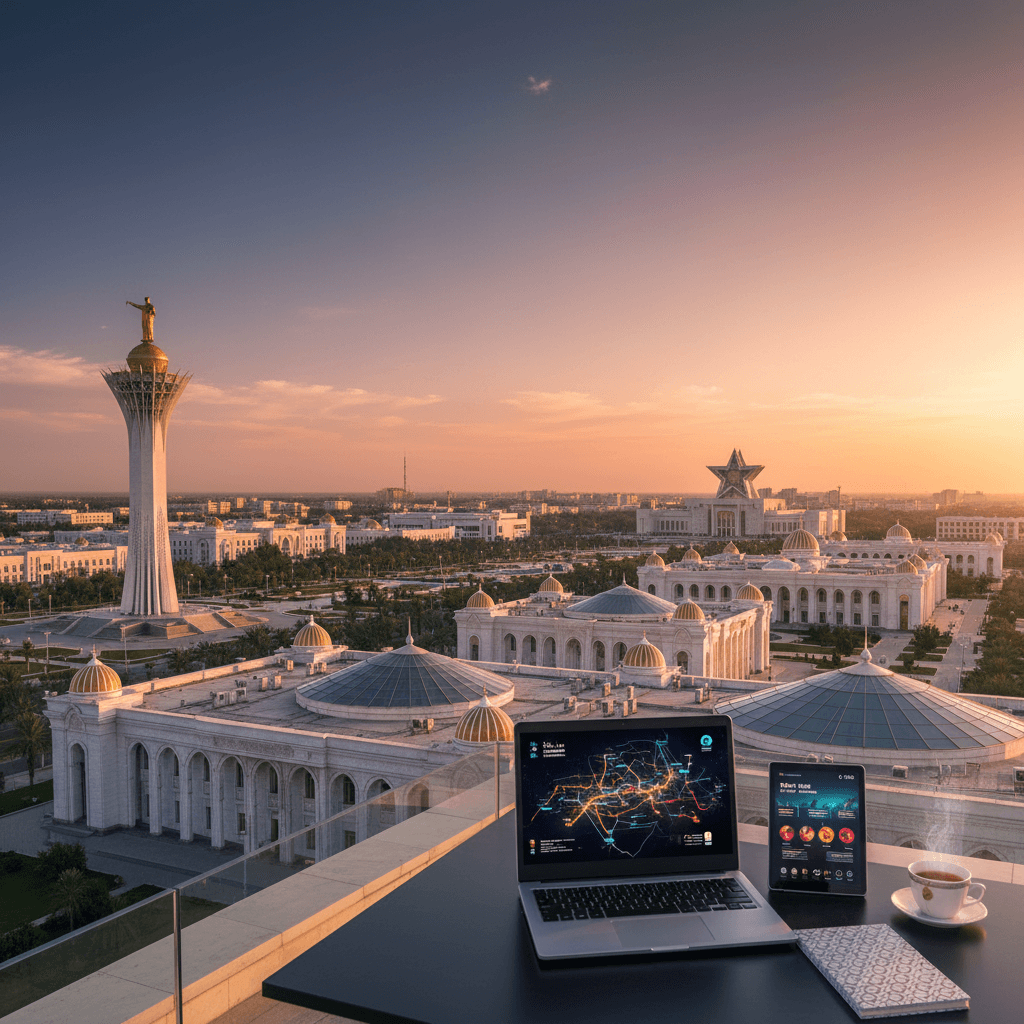
Stepping into Ashgabat feels less like arriving in a capital city and more like walking onto a high-budget sci-fi film set. It is a place of staggering, surreal uniformity, where almost every building is clad in white marble and the streets are so clean they practically glow. For the nomad who has seen every generic coworking hub in Southeast Asia, Ashgabat offers a complete sensory reset. It is quiet, grandiose, and deeply controlled, blending ancient Silk Road heritage with a futuristic, isolated ambition.
The vibe here is subdued and slow. You won't find the frantic energy of Bangkok or the grit of Berlin. Instead, you'll find wide, empty avenues and massive monuments like the Arch of Neutrality and the Independence Monument. It is a city of superlatives, home to the world's largest indoor Ferris wheel at the Alem Cultural Center. Living here means embracing a certain level of performance; even the cars are required to be white or silver to match the aesthetic of the city.
The Nomad Reality Check
Let's be clear: Ashgabat is not a typical nomad destination. You can't just show up with a laptop and find a studio on Airbnb. Because of strict government regulations, your entire stay, including your accommodation, must be arranged through a licensed tour operator. You'll have freedom to wander the city center on your own during the day, but leaving the city limits requires a guide and a driver. It is an "extreme" nomad experience for those who value bragging rights and architectural photography over high-speed fiber optics.
The emotional experience is one of constant wonder mixed with a dash of isolation. You'll spend your evenings watching the city light up like a neon playground, often with very few people around to share the view. It is safe, peaceful, and utterly unlike anywhere else on the planet.
Cost of Living Breakdown
While the logistics of getting in are pricey due to mandatory tours, the day to day costs within the city are surprisingly low, especially if you understand the local currency quirks. Most travelers rely on cash and the unofficial exchange rates to make their money go further.
- Monthly Budget (Estimated): A mid-range experience, including your required tour-booked hotel and meals, typically lands between $800 and $1,200.
- Dining out: You can grab a quick shawarma at a local market for a couple of dollars, while a multi-course dinner at an upscale restaurant will rarely exceed $10.
- Transport: Public buses and taxis are incredibly cheap. You can often flag down a local driver for a few manat to get across town.
- Connectivity: Expect to pay for a SIM card through your tour agency. There are no coworking spaces, and internet speeds are notoriously inconsistent and heavily filtered.
Navigating the City
Ashgabat doesn't have "gentrified" or "hipster" neighborhoods in the traditional sense. The city is treated as one cohesive unit. Most visitors stay in the central areas near the State Museum of Turkmenistan or the various shopping malls. This puts you within walking distance of the major parks and the dramatic night-time light displays. While you won't find a "nomad hub," the Berkarar Shopping Mall is a common haunt for locals and visitors looking for a more modern, social atmosphere.
Safety is a non-issue here. Crime rates are nearly non-existent, and you can walk through the city at night without a second thought. The main "risk" is simply navigating the bureaucracy and ensuring you follow local customs, like not taking photos of government buildings or military personnel. If you can handle the restricted freedom and the digital hurdles, Ashgabat offers a level of authenticity and "off-the-map" energy that is becoming increasingly rare in a hyper-connected world.
The Art of the Black Market
Living in Ashgabat is a lesson in dual realities. On paper, the official exchange rates can make the city look pricey, but savvy nomads know the real economy happens on the street. By utilizing the black market exchange rates, your purchasing power skyrockets. A high end, multi course dinner at an upscale restaurant in the city center will often only set you back about $10. If you are grabbing a quick lunch, look for local shawarma spots near the markets; they are filling, delicious, and cost a fraction of what you would pay for a sit down meal.
The financial system is strictly cash based. Forget about using credit cards for your hotel or earning points on your stay. You will need to carry enough physical currency to cover your entire trip. Since all accommodation must be booked through official tour operators, you won't find independent studio apartments on typical rental platforms. Instead, your "rent" is usually bundled into a tour package that includes your hotel and often some meals.
Monthly Budget Tiers
Because you cannot simply show up and rent a flat, your monthly burn depends entirely on the level of service your tour operator provides. Most travelers find that even with the mandatory guide fees, the daily cost of living remains surprisingly low compared to other capital cities.
- Budget Tier: $500 to $800 per month. This covers basic hotels booked through a tour operator, sticking to local markets for food, and using the very affordable public bus system to get around the city.
- Mid Range Tier: $800 to $1,200 per month. This allows for standard hotel rooms, regular dining at mid tier restaurants, and hiring private drivers for city tours to see the marble monuments at night.
- Comfortable Tier: $1,200+ per month. This tier is for those who want the best hotels in the city, upscale dining every night, and extended tours that might include luxury yurts or specialized excursions outside the city limits.
Getting Around the White Marble City
Transport within the city is one of the few areas where you have a bit of independence. The public buses are efficient and dirt cheap, and flagging down a local car is a common way to get from point A to point B. There are no ride hailing apps like Uber here, so you will need to rely on your negotiation skills or have your guide arrange your transfers. If you are arriving at Ashgabat International Airport (ASB), your tour representative will usually be waiting for you with a name board to whisk you to your hotel.
Walking is a great option in the central areas, especially around the State Museum and the various parks. The city is incredibly safe with very low crime rates, though you will notice a heavy police presence. It is a surreal experience to wander past massive white marble buildings on wide, empty avenues, just keep in mind that certain government buildings are off limits for photos.
The Connectivity Trade-Off
While the cost of physical goods is low, the "digital" part of being a nomad is the real challenge. Internet is inconsistent and often slow, which is why you won't find a flourishing coworking scene or laptop friendly cafes. You can't just walk into a shop and buy a SIM card; your tour operator has to facilitate the paperwork for you. Most nomads treat a stay in Ashgabat as a "deep work" or "semi offline" period rather than a place to take back to back Zoom calls. If your job requires high speed, reliable fiber, you might find the infrastructure here frustrating.
Daily Essentials and Local Prices
- Fancy Dinner: Approximately $10 (using unofficial exchange rates).
- Quick Lunch: Local shawarma or market snacks for $2 to $4.
- Transport: Public buses and local "taxis" are usually under $1 for short city hops.
- Accommodation: Must be pre arranged; no independent rental market exists for foreigners.
Ashgabat isn't your typical city for neighborhood hopping. It functions more as a unified, surreal experiment in architecture than a collection of distinct districts. Because the government requires you to book all accommodation through official tour operators, you won't be scrolling through rental sites to find a trendy loft. Instead, you'll be choosing between state-run hotels that all sit within the city's gleaming white marble core.
The central district is the heartbeat of the experience. It's where the Independence Monument and the Arch of Neutrality dominate the skyline. Living here feels like being on a movie set; the streets are impeccably clean, the cars are almost exclusively white, and the pace is remarkably quiet. While you can't choose your apartment, the location of your assigned hotel significantly impacts how you'll spend your free time between guided excursions.
For Digital Nomads
Nomads in Ashgabat face a unique set of hurdles, primarily the inconsistent internet and the lack of dedicated coworking spaces. Most find that staying near the Berkarar Shopping Mall area is the best bet. It's one of the few places where you can find a sense of modern "normalcy" with cafes and shops that feel familiar. Since you can't easily pop into a Starbucks to work, your hotel room becomes your office. Travelers recommend staying in the central marble district to ensure you're within walking distance of the major sights when you need a break from the screen.
- Rent: Included in tour packages, typically $80 to $150 per night for mid-range hotels.
- Connectivity: Expect slow speeds; a local SIM card must be arranged by your guide.
- Vibe: Quiet and structured, with heavy surveillance that keeps things predictable.
For Solo Travelers
If you're traveling alone, the area surrounding the Russian Bazaar (Gulistan) is the most rewarding. This is where the polished marble facade cracks just enough to show the local soul. It's safe, walkable, and the best spot for spontaneous interactions with locals. Solo travelers often spend their free afternoons here grabbing a $1 shawarma or browsing for textiles. The proximity to public bus stops and the ease of flagging down a local "taxi" make this the most accessible home base for those who want to see the city on their own terms during their allotted free time.
- Food: Local market meals for $2 to $5; upscale dinners around $10.
- Transport: Very affordable; flagging a local car is common and costs just a few Manat.
- Safety: Extremely high, with virtually no street crime reported by visitors.
For Expats and Long-Term Residents
True expat life in Ashgabat is a small, tight-knit circle usually tied to diplomatic or energy sectors. Most live in high-end apartments near the southern edge of the city, closer to the foothills of the Kopet Dag mountains. This area feels slightly more open and less claustrophobic than the dense monument district. While there aren't "expat bars" in the traditional sense, the larger international hotels in this area serve as the primary social hubs where you can find a drink and a late-night meal.
- Housing: Strictly regulated and usually handled by an employer or government liaison.
- Social Life: Centered around hotel bars and private gatherings; nightlife options are very limited.
- Atmosphere: Prestigious and quiet, with views of the Turkmenistan Tower lit up at night.
For Families
Families usually prefer staying near the Alem Cultural Center. It's home to a massive indoor Ferris wheel and surrounding park spaces that provide plenty of room for kids to run around. The wide, paved avenues are stroller-friendly, though the sheer scale of the city means you'll be using taxis more than walking. The lack of crowds and high safety levels make it a stress-free environment for parents, even if the entertainment options are more traditional, like the local circus or puppet theaters.
- Activities: Park walks, the indoor Ferris wheel, and museum visits.
- Environment: Clean, smoke-free public spaces and very little traffic noise.
- Convenience: Best to stay in a central hotel with an on-site restaurant to avoid hunting for family-friendly food late at night.
The Connectivity Reality Check
If your remote work depends on high-speed fiber or seamless Zoom calls, Ashgabat will be your most challenging destination yet. The city is a digital paradox; you are surrounded by futuristic white marble and gold, but the internet speeds feel like a trip back to the early 2000s. Most nomads find that the connection is inconsistent, slow, and heavily filtered. You won't be streaming 4K video here, and even basic email can occasionally feel like a test of patience.
The most important thing to understand is that you won't be walking into a local shop to grab a SIM card on your own. Because of the country's strict regulations, your tour operator is your gatekeeper for connectivity. You will need to coordinate with your guide to secure a local SIM card upon arrival. Don't expect 5G or even reliable 4G coverage everywhere; it is best to treat any high-bandwidth tasks as "offline work" until you can find a stable signal at your hotel.
Coworking and Workspaces
There are currently no dedicated coworking spaces in Ashgabat. The nomad infrastructure that you might find in Tbilisi or Almaty simply doesn't exist here. You won't find sleek hubs with ergonomic chairs or community managers. Instead, your "office" will almost certainly be your hotel room or the lobby of one of the major state-run hotels.
While the city has a growing number of cafes, the culture of "laptop lounging" isn't established. Most cafes are social spaces for tea and conversation rather than remote work. If you do try to work from a cafe, be prepared for two things: the lack of power outlets and the likelihood that there is no public Wi-Fi available. If you absolutely must work outside your room, the larger luxury hotels are your best bet, though even their Wi-Fi is often restricted to guests and requires a login code.
Essential Digital Preparation
Since you are required to book your entire stay through a tour operator, use that relationship to your advantage. Ask your agent specifically about the Wi-Fi quality at the hotels they are booking for you. Travelers often say that the higher-end hotels in the city center provide the most stable connections, though "stable" is a relative term in Turkmenistan.
- Download everything: Offline maps, translation dictionaries, and all your work documents should be on your hard drive before you land at ASB Airport.
- VPNs are vital: Many social media platforms and global news sites are blocked. Most nomads recommend having multiple VPNs installed on both your phone and laptop before you arrive, as downloading them once you're inside the country is nearly impossible.
- Cash is king: Forget about using banking apps or digital wallets for daily expenses. You will be operating in a cash-based economy, often utilizing the black market exchange rate to keep your costs down. Fancy dinners might only cost you $10, but you'll be paying for that meal with physical bills.
The Bottom Line for Nomads
Ashgabat is a place to visit for the surreal atmosphere and the architectural wonder, not to crush a 40-hour work week. Expats recommend front-loading your deadlines before you arrive so you can focus on the unique experience of being in one of the world's most isolated capitals. If you have to stay connected, keep your expectations low and your patience high. The low cost of living, with monthly budgets often falling between $500 and $1,200 depending on your tour package, is the trade-off for the digital hurdles you'll face.
Safety in the White Marble City
Ashgabat is arguably one of the safest capitals you'll ever visit, though the reasons for that are unique. The city is characterized by a heavy security presence and strict government oversight, which results in exceptionally low crime rates. You won't find the typical petty theft or scams common in other regional hubs. Travelers often report feeling perfectly comfortable wandering the central districts after dark, where the illuminated monuments and white marble facades create a surreal, quiet atmosphere.
While physical safety isn't a concern, the definition of safety here includes following local regulations to the letter. Most of your stay will be facilitated by a tour operator, and while you have the freedom to roam Ashgabat independently during the day, you're still under a specialized form of monitoring. It's a city of rules. For instance, you'll notice a strict requirement for white cars only, and certain government buildings are strictly off-limits for photography. Dress modestly to respect local customs, and always keep your passport or a copy of your visa on you, though you likely won't be hassled if you stay within the main tourist areas.
Navigating Healthcare
Medical infrastructure in Ashgabat is modern in appearance but can be difficult for foreigners to navigate independently. Most nomads and long term travelers rely heavily on their tour guides to facilitate any medical needs, from finding a pharmacy to visiting a clinic. Because you cannot easily book your own logistics, your guide acts as your primary liaison for any health emergencies.
- Pharmacies: Basic supplies are available in the city center, but specific western brands are rare. Bring a full supply of any prescription medications you need, as well as a basic first aid kit with antibiotics and stomach meds.
- Insurance: You must have travel insurance that covers medical evacuation. While the city has hospitals, complex procedures often require a flight to Istanbul or Dubai.
- Water Safety: Do not drink the tap water. Stick to bottled water, which is cheap and available at any small grocery store or market.
Emergency Contacts and Practicalities
Since there are no local ride-hailing apps like Uber or specialized emergency apps for expats, your phone's contact list should be prepared before you land. Connectivity is notoriously spotty, so don't rely on cloud-based documents. Save everything offline.
- Your Tour Agency: This is your number one point of contact for everything from a lost bag to a fever. They are available 24/7 and have the local connections to solve problems quickly.
- Local Taxis: While you can flag down locals for a ride, stick to official yellow taxis or those arranged by your hotel for an extra layer of security.
- Cash is King: Healthcare and pharmacies will likely require cash payments in the local Manat. Credit cards are rarely accepted outside of large international hotels, so keep a stash of USD to exchange on the black market for better rates.
Expats and frequent visitors suggest staying in the central areas near the State Museum of Turkmenistan or the major shopping malls. These areas are well lit, heavily patrolled, and close to the few amenities that cater to international visitors. If you find yourself needing a doctor, ask your guide to take you to one of the newer "Medical Centers" in the southern part of the city, which are built to international standards even if the bureaucracy inside remains a bit opaque.
Navigating the White Marble Capital
Moving through Ashgabat feels like stepping into a futuristic, highly curated film set. The city is defined by its wide, impeccably clean avenues and a strict aesthetic code that even extends to the vehicles on the road. You will notice almost every car is white or silver; it is a local requirement that adds to the city's surreal, uniform atmosphere. While the scale of the architecture is massive, getting from point A to point B is surprisingly straightforward once you understand the local rhythm.
Public Buses and Local Transit
The public bus system is the backbone of local transit. It is incredibly affordable and the buses themselves are modern, air conditioned, and well maintained. Most routes connect the major residential areas with the central monument districts and shopping centers. If you are planning to use the bus, it helps to have your destination written down or pinned on an offline map, as English signage at stops is limited.
For a more informal experience, you can try flagging down a local driver. In Ashgabat, many private cars operate as unofficial taxis. You simply stand by the side of the road and hold out your hand. A driver will pull over, you tell them your destination, and if it is on their way, you negotiate a small fee. It is a common way for locals to get around and is generally very safe, though you should always agree on the price before getting in.
Taxis and Hailing Rides
Official taxis are available and recognizable by their distinctive markings. Unlike most nomad hubs, you won't find Uber, Bolt, or Grab here. You will need to rely on your hotel to call a cab for you or find one at designated taxi stands near major malls and markets. Because tourism is heavily regulated, many nomads find that their tour operator provides a dedicated driver for most excursions. This is often the most stress free way to navigate, especially when heading to the outskirts for sights like the Nisa Fortress or the Turkmenistan Tower.
Walking and Accessibility
The city center is remarkably walkable, provided the weather is on your side. The sidewalks are wide and paved in marble, connecting major landmarks like the Independence Monument and the Arch of Neutrality. However, the sheer scale of the city can be deceptive. What looks like a short walk on a map can take 30 minutes because of the massive plazas and monumental distances between buildings.
Walking at night is a highlight for many travelers. The city transforms into a neon playground with buildings glowing in various colors. It is exceptionally safe to wander after dark, though you should keep your passport or a copy of your visa on you at all times, as police presence is high and checks can happen.
Arrival and Logistics
Your entry into the country starts at Ashgabat International Airport (ASB). Since independent travel is restricted, you likely won't be navigating the airport transfer on your own. Most travelers are met at the arrivals hall by a representative from their tour company holding a name board. They will handle your luggage and drive you directly to your pre booked accommodation.
- Airport Transfers: Typically included in your mandatory tour package; drivers meet you at the gate.
- Official Taxis: Cheap and reliable, though no mobile apps are available for booking.
- Local Etiquette: Only white or light colored cars are permitted in many parts of the city; keep this in mind if you are looking for your ride.
- Pedestrian Safety: Drivers generally respect traffic signals, but always use the designated underground walkways to cross the massive boulevards.
While you won't find bike sharing schemes or electric scooters here, the combination of cheap buses and the convenience of your tour driver makes getting around relatively painless. Just remember that any travel outside the city limits requires your official guide to be present, so save your independent wandering for the marble streets of the center.
The Linguistic Landscape
In the marble-clad streets of Ashgabat, your primary tool for communication is Turkmen. It is the official language and the heart of local identity. While it uses a Latin-based script that might look vaguely familiar, the grammar and vocabulary are distinct. You will also hear plenty of Russian, which remains the lingua franca for many older residents and serves as a bridge for business and inter-ethnic communication.
English proficiency is generally low among the general public. You won't find many shopkeepers or bus drivers who speak it fluently. However, because the government requires you to book through a tour operator, you will almost always have an English-speaking guide at your side. These guides act as your cultural translators, helping you navigate everything from ordering $10 upscale dinners to haggling for a carpet at the local markets.
Digital Communication and Connectivity
Staying connected in Ashgabat is a unique challenge that requires some forward planning. You cannot simply walk into a shop and buy a SIM card on your own. Most nomads and travelers have their tour providers arrange a local SIM card in advance. Even with a local card, the internet is notoriously inconsistent and significantly slower than what you might be used to in other digital nomad hubs.
- Internet Speeds: Expect slow loading times and frequent dropouts. It is not the place for heavy video conferencing or uploading large files.
- Social Media: Many global platforms are restricted. If you need to stay in touch with family or manage work tasks, make sure your communication tools are set up before you cross the border.
- Coworking: There are no dedicated coworking spaces in the city. Most people get their work done in hotel lobbies or private rooms, though the lack of a strong cafe culture means you won't find many "laptop-friendly" spots with reliable Wi-Fi.
Practical Interaction Tips
Since you'll likely spend a fair amount of time with a driver or guide, the communication barrier is less about survival and more about depth. Travelers often find that learning a few basic Turkmen phrases goes a long way in breaking the ice during "free days" when you are allowed to wander central Ashgabat independently. Despite the formal atmosphere of the city, locals are often friendly and curious when approached respectfully.
Banking and fintech are almost non-existent for foreigners here. Forget about using Apple Pay or tapping a credit card at a restaurant. Ashgabat is a cash-heavy society. You will need to carry physical bills for almost every transaction, including meals and transport. Many travelers use the unofficial exchange rates to make their money go further, often turning a modest budget into a comfortable stay where a full meal feels incredibly affordable.
Essential Navigation
Because there are no ride-hailing apps like Uber or Bolt, getting around requires a bit of old-school communication. You can flag down a local car or use the public bus system, which is remarkably cheap and efficient. If you are flagging a ride, it helps to have your destination written down in Turkmen or Russian, or marked on a map that works offline. Most central sights, like the Alem Cultural Center or the Independence Monument, are well-known landmarks that even a non-English speaking driver will recognize immediately.
Climate Realities in the White Marble City
Ashgabat sits on the edge of the Karakum Desert, which means you are dealing with a climate of extremes. The city is defined by intense, dry heat for much of the year and surprisingly biting cold during the short winter. Because the city is built almost entirely of white marble, the glare and heat reflection during peak sunlight can be overwhelming if you aren't prepared.
Most travelers find the heat from June through August nearly unbearable. Temperatures frequently soar above 40°C (104°F), and the wide, open boulevards offer very little shade. During these months, the city feels even more like a ghost town than usual during the day, as everyone stays indoors under heavy air conditioning. If you visit during this window, plan your exploration for the early morning or after the sun sets when the monuments are illuminated.
The Sweet Spot: Spring and Autumn
The best time to visit Ashgabat is undoubtedly during the shoulder seasons. April to May and September to October offer the most comfortable conditions for walking between the massive monuments and exploring the outdoor markets. During these windows, you can expect mild, pleasant days and cool evenings, perfect for a night drive to see the Arch of Neutrality or the Turkmenistan Tower.
- Spring (April to May): This is arguably the most beautiful time. You might catch a rare desert bloom, and the temperatures sit comfortably in the 20°C to 25°C (68°F to 77°F) range.
- Autumn (September to October): The summer heat breaks quickly in September. It is the best time for foodies, as the local markets are flooded with the famous Turkmen melons and fresh produce.
- Winter (December to February): It gets colder than many expect. While snow isn't constant, the desert wind makes 5°C (41°F) feel much chillier. It is a quiet time to visit, but you will need a heavy coat for the wind-swept plazas.
Timing Your Visit with Local Events
Since your entire itinerary must be coordinated through a tour operator, it is worth checking if your dates align with major national holidays. Independence Day in September and the Day of Neutrality in December often feature massive parades, choreographed performances, and public festivities that provide a rare glimpse into the country's highly organized cultural life.
Keep in mind that these holidays can also mean certain streets or government districts are closed off for rehearsals. Your guide will usually handle these logistics, but it pays to be flexible with your daily schedule. Most nomads prefer visiting in late September to balance the great weather with the chance to see these large scale celebrations.
Practical Packing for the Desert
Even in the height of summer, Turkmenistan is a conservative country. You will want light, breathable fabrics like linen or cotton that cover your shoulders and knees. This serves a dual purpose: it respects local norms and protects your skin from the intense desert sun. If you are visiting in the shoulder seasons, always pack a versatile jacket. The temperature drop once the sun dips behind the Kopet Dag mountains is swift and noticeable.
For those planning to head into the desert to see the Darvaza gas crater (a common add-on to an Ashgabat stay), the temperature swing is even more dramatic. Even if Ashgabat feels warm, the desert floor at night can drop toward freezing, so bring layers regardless of what the city forecast says.
Connectivity and the Digital Grind
Working from Ashgabat is a unique challenge that requires a bit of a mindset shift. You won't find sleek coworking spaces or high speed fiber optics here. Most nomads find the internet inconsistent and significantly slower than what they're used to in other hubs. Since you have to book your entire stay through a tour operator, you'll want to coordinate with them to secure a local SIM card early on, as buying one independently is nearly impossible.
Expect to do most of your heavy lifting from your hotel. While the city's white marble cafes are visually stunning, they aren't set up for the "laptop lifestyle." Plan your deep work sessions around the city's subdued pace, and don't rely on finding a Starbucks or a dedicated work hub. It's a place where you'll want to have your offline tools ready to go.
The Cost of Living
Ashgabat is surprisingly affordable if you can navigate the local economy. While there are no independent rental platforms like Airbnb or Couchsurfing, your tour operator handles the lodging logistics. Travelers often find that once they're on the ground, daily expenses are remarkably low. Here is a breakdown of what to expect:
- Budget Tier: $500 to $800 per month. This covers tour-mandated basic hotels, local transport, and street food like shawarma.
- Mid-range Tier: $800 to $1,200 per month. This buys you more comfortable hotel rooms and more frequent guided city tours.
- High-end Tier: $1,200+ per month. This includes upscale dining and more extensive excursions beyond the city limits.
- Dining: A quick shawarma from a local market is just a few dollars, while a fancy, multi-course dinner at a top tier restaurant will only set you back about $10 if you're using black market exchange rates.
Getting Around the Marble City
The city is a surreal landscape of wide, empty avenues and gleaming monuments. Navigating it is fairly straightforward. Public buses and taxis are the gold standard here. You can also flag down locals who act as unofficial taxis; it’s a common way to get around and very cheap. Just remember that if you're heading out of the city, you'll need your assigned driver or guide with you.
Walking is a great option for the central district, especially around the Independence Monument and the various shopping malls. One quirk you’ll notice immediately: almost every car is white. It’s a city regulation, and it adds to the strangely uniform, futuristic vibe of the place. For airport arrivals at ASB, your tour representative will meet you with a name board to handle the transfer, as independent airport transit isn't the norm.
Safety and Social Life
Ashgabat is incredibly safe with very low crime rates. You can wander the central areas freely during the day and enjoy the impressive light displays at night without much worry. However, the social scene is quiet. Nightlife is limited, and you won't find many bars or clubs open into the early hours. Most social interactions happen at the markets, museums, or through the small community of other travelers on organized tours.
Money and Practicalities
Cash is king in Turkmenistan. Forget about using credit cards for hotels or meals; the system just doesn't support them. Most savvy travelers rely on the black market for currency exchange to get the best value, as official bank rates are much less favorable. Make sure you bring enough USD in crisp, new bills to last your entire trip. You won't find many ATMs that accept international cards, so being self-sufficient with your cash is the only way to go.
Need visa and immigration info for Turkmenistan?
🇹🇲 View Turkmenistan Country GuideWild Card
Expect the unexpected