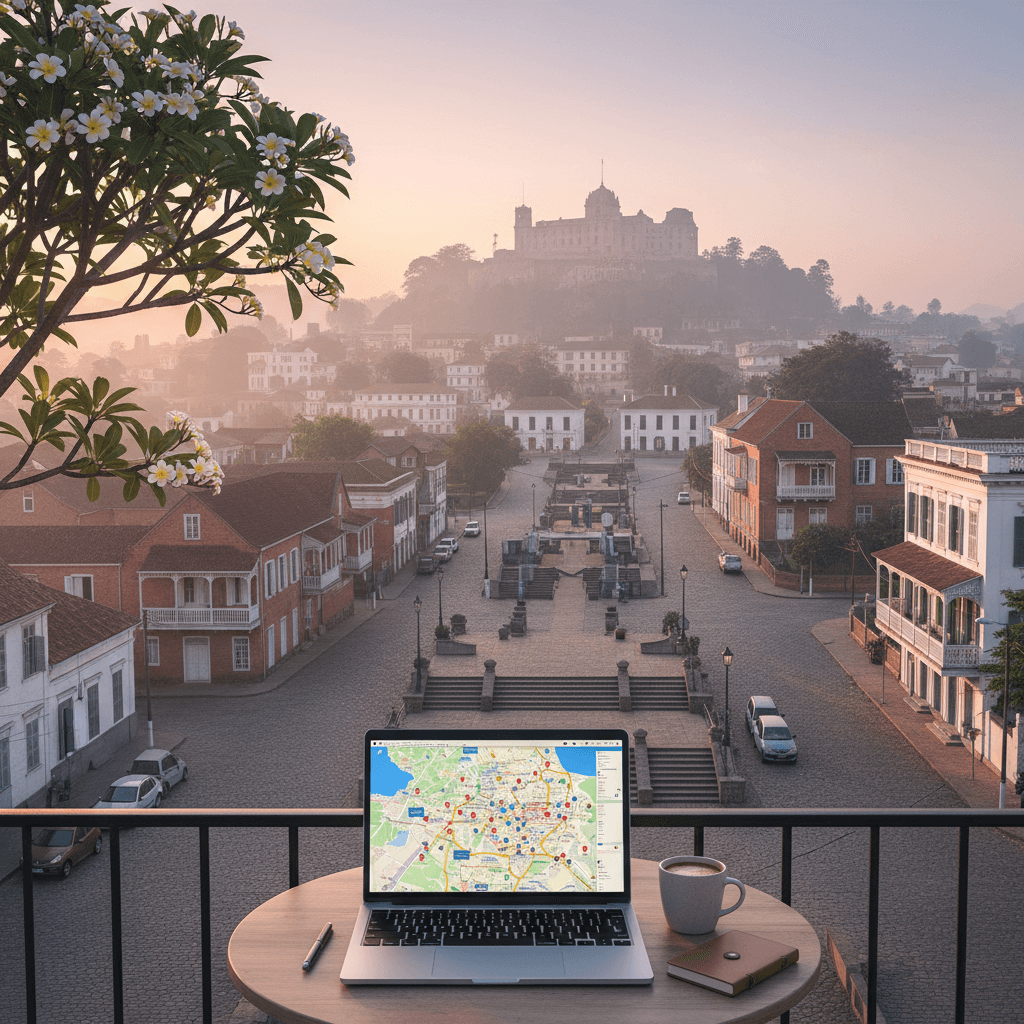
Antananarivo
🇲🇬 Madagascar
The Gritty Heart of the Red Island
Antananarivo, or Tana as everyone calls it, isn't a city that tries to impress you with polish. It is a vertical, chaotic, and deeply sensory experience built across steep hillsides. You will spend your days looking at crumbling French colonial architecture and your nights listening to the hum of a city that feels like it is constantly on the edge of a power outage. It is tough, it is loud, and the traffic is legendary for all the wrong reasons.
What makes Tana different from the usual nomad hubs in Southeast Asia or Europe is the raw immersion. You aren't here for high speed fiber and air-conditioned malls; you are here because you want to see a side of the world that hasn't been smoothed over for tourists. Expats often describe it as a love-hate relationship. You will hate the smog and the infrastructure, but you will love the $2 meals, the Malagasy hospitality, and the fact that you are the jumping-off point for some of the most unique biodiversity on the planet.
The Financial Reality
Living here is incredibly affordable if you can handle the lifestyle trade-offs. A comfortable monthly budget sits around $1,200 to $1,500, which covers a decent apartment and plenty of dining out. If you are willing to rough it in shared housing and stick to the local taxi-brousse, you can survive on $800 to $1,000.
- Studio/1BR Rent: Average $550 per month in decent areas.
- Street Food: A quick snack or meal costs 5,000 to 10,000 MGA ($1-2).
- Mid-range Dinner: Expect to pay 20,000 to 30,000 MGA ($4-6).
- Local SIM Data: Around 30,000 MGA ($7) per GB via Telma.
Where to Set Up Camp
Most nomads gravitate toward Central Tana or the Isoraka neighborhood. These areas put you within walking distance of the few reliable amenities and the historic Rova palace. Safety is a major factor here, so choosing a spot with a security guard and a backup generator is non-negotiable.
Isoraka & Central Tana
- Rent: $500 to $800 for nomad-friendly flats.
- Pros: Best access to restaurants, history, and the Madagascar Underground hostel for socializing.
- Cons: High theft risk at night, constant noise, and heavy traffic congestion.
The Digital Grind
Working from Tana requires a backup plan for your backup plan. While speeds can reach 19 to 49 Mbps, the connection is fickle. Most professionals rely on Telma for mobile data because home WiFi is prone to cutting out during the frequent "délestage" (rolling blackouts). There are currently 2 dedicated coworking spaces in the city, but they aren't the high-concept hubs you see in Bali. Most people end up working from their apartments or quiet corners of guesthouses like Le Karthala.
Staying Safe and Moving Around
Safety is the biggest hurdle for newcomers. The poverty in Tana is visible and extreme, which leads to high rates of petty theft. You should never walk alone at night, and during the day, keep your phone out of sight. Most travelers use private taxis for short hops, as the taxi-brousse buses are crowded, slow, and prime targets for pickpockets. If you are heading out of town, a 7-hour haul to Toamasina will cost you about 30,000 MGA, while a 12-hour trek to Mahajanga is roughly 40,000 MGA.
The best time to visit is the dry season from May to October. Avoid the January to March window at all costs; the rains are torrential, roads turn to mud, and the city's infrastructure struggles to stay upright. If you can handle the grit, Tana offers a cultural depth that few other cities can match.
The Reality of Your Wallet in Tana
Antananarivo, or Tana as you'll quickly start calling it, is one of those rare capitals where your dollars stretch remarkably far, provided you can handle the grit. It is a city of extremes; you can grab a local snack for less than the price of a coffee back home, but you might pay a premium for a reliable generator backed apartment. Most nomads find that a monthly budget of $1,200 to $1,500 buys a very comfortable lifestyle, while those on a tighter grind can get by on $800 to $1,000 if they are willing to live like a local.
The local currency is the Malagasy Ariary (MGA). While the exchange rate fluctuates, the cost of daily life remains low for foreigners. You will find yourself carrying thick stacks of cash, as Madagascar is still very much a cash heavy society. ATMs are available in the city center, but they often run out of bills or have low withdrawal limits, so plan your banking runs accordingly.
Housing and Neighborhoods
Rent will be your biggest overhead, and in Tana, you aren't just paying for square footage; you're paying for security and infrastructure. Expats and digital nomads generally gravitate toward Central Tana or areas near the Rova palace for the best proximity to amenities. While platforms like Airbnb exist, many long termers find better deals through local connections or expat Facebook groups.
- Mid-range Studio/1BR: Expect to pay around $550 to $600 per month for a decent spot in a safe area.
- Budget/Shared Housing: If you are staying at a spot like Madagascar Underground or Le Karthala, you can drive your housing costs down to $300 or $400.
- Utilities: Electricity and water are notoriously spotty. Always ask if your rent includes a "groupe electrogene" (generator) or if you'll be working by candlelight during the frequent load shedding.
Eating and Drinking
Food is where Tana really shines for the budget conscious. The city has a unique culinary blend of French technique and African ingredients. Street food is everywhere and incredibly cheap, with snacks like mofogasy (rice bread) costing between 5,000 and 10,000 MGA ($1 to $2). It is delicious, but keep an eye on hygiene.
For a proper sit down meal at a mid range restaurant, you are looking at 20,000 to 30,000 MGA ($4 to $6). Avoid eating at the major international hotels unless you want to pay double or triple those prices for the exact same quality. If you prefer cooking at home, hit the local markets for fresh produce, but stock up on imported comforts at supermarkets like Jumbo or Supermaki, though be prepared for "import tax sticker shock" on things like cheese or wine.
Staying Connected
In Tana, data is your lifeline. Since home WiFi is often unreliable, most nomads rely on local SIM cards for hotspots. Telma is generally considered the gold standard for coverage and speed. A SIM card costs about 4,000 MGA, and you can load up 1GB of data for roughly 30,000 MGA. If you need a professional environment, there are at least two coworking spaces in the city, though many people choose to work from their apartments or the occasional quiet cafe in the Isoraka district.
Getting Around
Transport is cheap but slow. The city is famous for its "taxi-brousse" (bush taxis), which are essentially crowded minivans. A trip across town is pennies, but it is a chaotic experience not for the faint of heart. For longer hauls to other provinces, a taxi-brousse seat might cost 30,000 to 40,000 MGA for a 7 to 12 hour journey. Within the city, private taxis are available, but you must negotiate the price before getting in as meters are nonexistent. Expect to pay more after dark, though most travelers recommend avoiding travel after sunset entirely due to safety concerns.
The Monthly Breakdown
- Budget Tier ($800): Shared room, heavy reliance on street food and taxi-brousses, minimal nightlife.
- Mid-Range Tier ($1,200): Private 1BR apartment, mix of cooking and dining out, regular private taxis, and a solid data plan.
- Comfort Tier ($1,500+): Modern apartment with a generator, upscale dining, weekend trips to nearby lemur parks, and private drivers for city errands.
For Digital Nomads: Central Tana (Isoraka and Haute-Ville)
If you are working remotely, you want to stay in the upper elevations of the city center. Isoraka is the unofficial hub for nomads because it is one of the few walkable pockets where you can find decent cafes and reliable power. It feels more like a hillside village than a capital city, with narrow streets and colonial architecture that keeps you away from the worst of the lowland smog.
Most nomads aim for a monthly budget of around $1,200 to $1,500 here. This covers a private apartment and frequent meals at mid-range spots where a plate of romazava (meat stew) or zebu steak costs between 20,000 and 30,000 MGA. For work, you will likely end up at one of the two main coworking hubs like Regus, though many people prefer working from Madagascar Underground, a popular hostel with a social vibe and some of the most consistent internet in town.
- Average Rent: $550 to $650 for a serviced 1BR apartment.
- Connectivity: 19 to 49 Mbps via Telma; expect occasional outages.
- Vibe: Historic, social, and slightly more secure than the lower districts.
For Expats and Long-Term Residents: Ivandry and Ankorondrano
Expats looking for modern comforts usually head north to Ivandry. This is the diplomatic quarter, home to several embassies and the city’s more "Western" amenities. It is much more expensive than the city center, but you get better security and proximity to high-end supermarkets that stock imported goods. If you are staying for several months, this area provides a necessary buffer from the city's grit.
Ankorondrano is the adjacent business district where you will find the most modern office buildings and shopping malls. While it lacks the historic charm of the Rova palace area, it is practical. You can grab a SIM card for 4,000 MGA and load up 1GB of data for about 30,000 MGA at the nearby service centers without fighting through the downtown crowds.
- Pros: Gated communities, international schools, and better infrastructure.
- Cons: Heavy traffic congestion during peak hours; very high rents compared to local averages.
- Daily Transport: Private taxis are the standard here, as the local taxi-brousse buses are often too crowded for comfort.
For Solo Travelers: Near the Rova and Haute-Ville
Solo travelers usually prefer the Upper Town (Haute-Ville) for its views and proximity to the Rova of Antananarivo. It is the most scenic part of the city, sitting on the highest hill. Living here allows you to explore the local markets and historical sites on foot during the day. However, solo travelers need to be vigilant; theft is common in crowded areas, and you should never walk these streets after dark.
Budget-conscious soloists can survive on $800 to $1,000 a month by sticking to street food, which typically costs 5,000 to 10,000 MGA per meal. Staying at a place like Le Karthala or a central guesthouse puts you in a position to meet other travelers for day trips out to the lemur parks or along the RN7 road.
- Safety Tip: Always keep your phone and wallet out of sight in public.
- Social Scene: Live music venues are scattered around the center, often featuring local Malagasy artists.
- Movement: Use private taxis for any travel after 6:00 PM.
For Families: Outskirts and Boutique Guesthouses
Tana is a challenging city for families due to the pollution, lack of sidewalks, and general chaos. Most families choose to stay in the quieter outskirts or in gated boutique hotels that offer more space and green areas. You won't find traditional "neighborhoods" with playgrounds, so choosing a spot with a private courtyard is a must. The pace of life is much slower once you get away from the central markets, which helps when traveling with children.
- Rent: $800+ for larger multi-bedroom villas in secure compounds.
- Food: Stick to supermarkets for groceries to avoid the digestive issues sometimes associated with street stalls.
- Best Time to Visit: May to October is the dry season, which is much easier for family logistics than the flooded roads of January or February.
Connectivity Realities
Working from Tana requires a mindset shift. You aren't going to find lightning-fast fiber optics on every street corner, but the situation is better than the city's gritty reputation suggests. Speeds generally hover between 19 and 49 Mbps. While that's plenty for video calls and standard workflows, the real challenge is stability. Power outages and infrastructure hiccups are part of daily life here, so having a backup plan isn't just a good idea, it is a requirement for staying employed.
Most seasoned nomads skip the hotel WiFi and go straight for a local SIM. Telma is the undisputed heavyweight for data reliability. You can pick up a SIM card for about 4,000 MGA, and data packages usually run around 30,000 MGA per GB. If you are planning to stay for a month or more, it is worth buying a portable 4G router (locally called a "domino") to keep your laptop connected when the grid decides to take a nap.
Where to Work
The coworking scene in Antananarivo is small but functional. You won't find a dozen options like in Bali or Lisbon, but the existing spaces provide the two things you need most: stable power and a professional environment. Most expats and digital nomads gravitate toward the central Tana area, specifically around the business districts, to stay close to these hubs.
- Regus: Located in the Ivandry district, this is the most corporate and reliable option in the city. It provides the high-end infrastructure you'd expect from the brand, which is a lifesaver if you have high-stakes meetings.
- Madagascar Underground: While primarily a hostel, this spot has a dedicated following of remote workers. It is the best place to find the nomad community and grab a coffee while you knock out some emails in a social setting.
The Cafe Culture Gap
If you are the type of nomad who likes to "cafe hop" every two hours, Tana will be a challenge. The city doesn't really have a widespread "laptop-friendly" cafe culture. Many local spots are small, crowded, or lack the power outlets needed for a long session. However, if you stick to the more upscale French-influenced bakeries and hotel lounges in the Isoraka or Antaninarenina neighborhoods, you can usually find a corner to work in for an hour or two.
Always check for a "WiFi" sign before you order, and don't expect the staff to be thrilled if you sit for four hours on a single espresso. It is better to use cafes for light admin work and save the heavy lifting for your dedicated workspace or a rental with a proven connection.
Practical Setup Tips
Since power cuts are common, your gear list should prioritize battery life. A high-capacity power bank that can charge a laptop is the best investment you can make before arriving. Most nomads find that a Telma backup combined with a Starlink setup (if your accommodation allows it) is the gold standard for 100% uptime, though Starlink is still a relatively new and premium addition to the local landscape.
When searching for an apartment, don't just ask if they have WiFi. Ask if they have a generator or an inverter system. In neighborhoods like Ivandry or Ambatobe, many mid-to-high-range rentals include these as standard features to attract expats. If you are on a budget and staying in a guesthouse, expect to do your heavy uploading during the day at a coworking space and use your mobile data for evening browsing.
Staying Safe in Tana
Antananarivo is a city of sharp contrasts where extreme poverty lives alongside beautiful colonial architecture. For nomads, the safety situation is manageable but requires a level of vigilance you might not be used to in Southeast Asia or Europe. Most travelers find the city relatively safe during the day, provided you aren't flashing a $1,200 iPhone or wearing expensive jewelry in crowded markets like Analakely.
The golden rule here is to avoid walking anywhere after dark. Even in central areas, the streets become poorly lit and empty, making pedestrians easy targets for opportunistic theft. If you're heading out for dinner or drinks, always have your accommodation call a taxi for you rather than wandering the streets. Pickpocketing is the most common issue, especially in crowded areas and on the taxi-be (local minibuses). Keep your backpack on your front and your phone tucked away.
- Street Smarts: Don't carry large amounts of cash. Keep a "decoy" wallet with a few small bills if it makes you feel better, but generally, staying alert is your best defense.
- Crowds: Be extra cautious during festivals or public gatherings, such as the March 8 Women's Day celebrations, where large crowds can attract professional pickpockets.
- Transport: Stick to registered taxis for night travel. While the taxi-brousse is fine for long-haul day trips to places like Toamasina for about 30,000 MGA, they aren't the place to display high-end tech.
Healthcare and Medical Realities
The healthcare infrastructure in Madagascar is limited. While you'll find pharmacies on almost every corner in the city center stocking basic French medications, the public hospitals often lack the equipment and hygiene standards expats expect. For anything serious, you'll want to head to a private clinic, though many expats choose to fly to Reunion Island or South Africa for major procedures.
Pharmacies are generally well-stocked for minor ailments like stomach issues or respiratory infections, which are common due to the city's heavy pollution. Most pharmacists speak French and can give basic medical advice. If you have specific prescriptions, bring a full supply with you, as finding exact brand matches can be hit or miss.
- Water Safety: Never drink the tap water. Stick to bottled water, which is cheap and available at every supermarket and small stall.
- Vaccinations: Ensure you're up to date on Hepatitis A and Typhoid. Malaria isn't a huge risk in the high-altitude climate of Tana itself, but if you're taking a weekend trip to Andasibe or the coast, you'll definitely need prophylaxis.
- Emergency Prep: Keep a basic first aid kit with rehydration salts and antibiotics. If you're heading out of the city center, stock up on snacks and water, as reliable shops become scarce once you hit the rural roads.
Practical Wellness
Living in Tana can be draining due to the noise, traffic, and air quality. Many nomads find that staying in greener, slightly more elevated neighborhoods like Isoraka or near the Rova palace provides a much-needed break from the grit. To keep your sanity and health in check, prioritize accommodation with backup generators. Power outages are frequent, and losing your AC or internet in the middle of a work day is a quick way to spike your stress levels.
If you need to stock up on familiar comforts or health foods, stick to larger supermarkets like Jumbo or Supermaki. They carry imported goods and basic toiletries that you won't find in the local street markets. While street food is tempting and costs as little as 5,000 MGA, those with sensitive stomachs should stick to busier stalls where the food is cooked fresh in front of you.
The Tana Traffic Reality
Movement in Antananarivo is defined by two things: steep hills and legendary gridlock. The city is built across a series of ridges, meaning a destination that looks close on a map might actually involve a grueling climb or a long, winding detour. Most nomads find that "Tana time" is a real factor; a five kilometer trip can easily take an hour during peak periods. You'll need to plan your day around the traffic rather than fighting it.
Walking is the best way to see the historic center, especially around the Rova of Antananarivo, but it's physically demanding. The sidewalks are often uneven or nonexistent, and the fumes from older vehicles can be intense. Stick to daylight hours for any strolls. Once the sun sets, even short distances should be covered by vehicle for safety reasons.
Taxi-Brousse: The Local Experience
The taxi-brousse (bush taxi) is the backbone of Malagasy transport. These are typically minibuses that cram in as many passengers as possible. They aren't for the faint of heart or those who value personal space, but they're incredibly cheap and provide a front row seat to local life. For getting around the city, look for the white vans with specific route numbers displayed on the dash.
- Local city fares: Usually around 500 to 1,000 MGA depending on the distance.
- Intercity travel: A trip from Tana to Toamasina costs roughly 30,000 MGA for a seven hour journey.
- Long hauls: Heading south to Mahajanga will run you about 40,000 MGA and takes at least twelve hours.
Expats recommend using the "Premium" taxi-brousse services like Cotisse Transport for longer trips. They have dedicated terminals, fixed schedules, and much more comfortable vehicles than the standard regional stations like Gare Routière de Maki.
Private Taxis and Ridesharing
You won't find Uber or Grab here. Instead, the city is filled with iconic cream colored Renault 4s and Citroën 2CVs that serve as private taxis. These don't have meters, so you must negotiate the price before you get in. If you don't speak French or Malagasy, expect the "tourist tax" to be applied liberally. A short hop within the city center usually costs between 10,000 and 20,000 MGA.
For a more modern experience, some travelers use local apps like Let's Go or Lisy, which are the closest things to ride hailing available in the capital. They offer more accountability and fixed pricing, which saves you the headache of haggling after a long flight. If you find a driver you trust, ask for their WhatsApp number; most nomads keep a "regular" driver on speed dial for airport runs and night outings.
Two Wheeled Alternatives
If you're feeling brave, scooter rentals are gaining traction for those who want to bypass the stationary lines of cars. You can find second hand scooters for sale if you're staying long term, or rent through local agencies for about 50,000 to 80,000 MGA per day. Be warned that the combination of potholes, steep inclines, and aggressive taxi drivers makes this a high stakes way to get around. Most digital nomads prefer to sit in the back of a car and use the traffic time to catch up on podcasts or emails via a Telma SIM card.
Regional Connections
Antananarivo is the hub for the RN7, the country's most famous paved road. If you're looking to escape the city for a weekend in Andasibe-Mantadia National Park, your best bet is hiring a private 4x4 with a driver. This typically costs around $50 to $70 per day plus fuel. It's the most reliable way to ensure you actually reach the lemur parks without a breakdown, as the infrastructure outside the capital remains fragile and prone to washouts during the rainy season from November to April.
The Linguistic Landscape
In Antananarivo, you’ll be balancing two worlds. Malagasy is the heartbeat of the streets, while French remains the administrative and social bridge for the professional class. If you speak French, you’ll find life significantly easier; it’s the default for menus, signage, and business interactions. English proficiency remains quite low across the city, largely confined to high-end hotels and specific tour operators.
Most nomads find that while locals are patient, relying solely on English can be isolating. Learning a few Malagasy basics goes a long way in the local markets. A simple Manao ahoana (Hello) or Misaotra (Thank you) can shift the tone of an interaction from a transaction to a connection. For anything complex, keep a translation app with offline capabilities ready on your phone.
Staying Connected
Internet in Tana is a game of strategy. While the city boasts speeds between 19 and 49 Mbps, the real challenge is reliability. Frequent power outages mean your home fiber connection might go dark just as you’re starting a Zoom call. Expats recommend having a secondary mobile data source at all times to bridge these gaps.
Telma is generally considered the most stable provider for nomads. You can pick up a SIM card for about 4,000 MGA, and data packages typically run around 30,000 MGA per GB. It’s a small price to pay for a backup that works when the grid doesn't. If you’re planning to work from your apartment, prioritize places in central neighborhoods like Isoraka that might have better infrastructure, though no area is completely immune to the occasional blackouts.
Coworking and Laptop Culture
The "cafe office" culture hasn't fully taken root in Tana yet. While you’ll find plenty of spots to grab a coffee, they aren't always equipped with the power outlets or the quiet environment needed for a deep-work session. Instead, most remote workers head to dedicated professional spaces. Regus in Ankorondrano provides reliable high-speed fiber, offering the stability that local cafes often lack.
- Regus (Explorer Business Park): The most reliable spot for high-speed fiber and backup generators.
- Madagascar Underground: This hostel is a popular social hub where you’ll find other travelers on their laptops in the common areas.
- Local SIMs: Stick with Telma for the best 4G coverage across the city center.
Social Integration
Communication here is often face-to-face. Since there isn't a massive, organized nomad scene with weekly Meetups, you’ll need to be proactive. Joining expat groups on social media or hanging out at spots like Madagascar Underground is your best bet for finding community. People are generally warm, but the "gritty" reputation of the city means social circles often form within the safety of known hubs or through shared interests like weekend trips to the lemur parks or the Rova palace.
Keep in mind that communication extends to physical safety. Locals and seasoned travelers suggest keeping your phone out of sight while walking. If you need to check a map or send a text, step inside a shop or cafe. It’s a simple habit that prevents "snatch and grab" incidents in crowded areas.
Timing Your Arrival
Antananarivo sits at a high altitude, which keeps the tropical heat in check compared to the coastal regions. You will generally find a temperate climate with an average temperature of 25°C (77°F) throughout the year. However, the calendar is strictly divided into two seasons, and picking the wrong one can turn your remote work setup into a logistical nightmare.
The dry season runs from May to October. This is widely considered the best time to visit. The air is cooler, the skies are clear, and the humidity drops significantly. It is the ideal window for exploring the city center or heading out on day trips to the Rova palace without getting caught in a downpour. If you are planning to use Tana as a base for the RN7 road trip toward Ranomafana or Isalo, these months ensure the roads remain passable.
The Rainy Season Reality
From November to April, the city faces its monsoon period. While the rain usually comes in heavy afternoon bursts, the peak months of January, February, and March can be brutal. Cyclones are a real threat during this window, often leading to severe flooding in the lower parts of the city and landslides on the steep hillsides.
For a digital nomad, the rainy season brings more than just wet shoes. Infrastructure in Tana is fragile; heavy storms frequently trigger power outages and knock out internet towers. If you are relying on a stable connection for Zoom calls, the wet season will test your patience. Most expats recommend having a backup power bank and a local Telma SIM card with plenty of data, as landline internet is the first thing to fail when the lightning starts.
What to Pack and When
Because Tana is hilly and elevated, winter nights (June to August) can get surprisingly chilly, sometimes dropping to 10°C (50°F). Most budget accommodations and mid-range rentals do not have central heating, so you will want a solid fleece or light jacket for those early morning deep-work sessions.
- May to September: Best for trekking and city exploration. Bring layers for cool evenings.
- October to December: Warmer temperatures, but the humidity starts to climb. Great for seeing lemurs as many species are more active.
- January to March: High risk of travel delays and power cuts. Expect prices for some fresh produce to rise if supply routes from the coast are blocked by mudslides.
The Sweet Spot
If you want to balance pleasant weather with lower crowds, aim for the shoulder months of May or October. You will avoid the worst of the dust that plagues the peak dry season, and you will get out before the heavy rains turn the "taxi-brousse" stations into mud pits. During these months, you can comfortably wander through the markets or sit outside at spots like Madagascar Underground without sweating through your shirt or running for cover from a thunderstorm.
Keep an eye on the local calendar too. While weather is the main driver, arriving around March 8th for Women's Day or during the various carnival periods allows you to see the city's social side. Just keep in mind that during major festivals and the peak dry season, the already legendary traffic jams in the city center become even more stagnant, so plan your transit times accordingly.
Cost of Living
Living in Tana is undeniably affordable, but your budget will swing wildly depending on how much you try to insulate yourself from the local infrastructure. Most digital nomads find that $1,200 to $1,500 per month buys a comfortable lifestyle with a private apartment and frequent meals out. If you are willing to go local, you can squeeze by on $800 to $1,000, though this usually means sacrificing some reliability.
- Housing: Expect to pay around $560 for a decent one bedroom in a secure building. Central areas near the Rova or the business districts are preferred to avoid massive commute times.
- Food: Street food like mofo gasy (rice cakes) or brochettes will only set you back 5,000 to 10,000 MGA ($1 to $2). A mid range dinner at a proper restaurant costs between 20,000 and 30,000 MGA ($4 to $6). Avoid eating at high end hotels unless you want to pay double for the same quality.
- Transport: Local taxi brousse rides are incredibly cheap, but long hauls across the country, like Tana to Toamasina, cost about 30,000 MGA.
Internet and Staying Productive
The internet situation is a bit of a gamble. While speeds can reach 49 Mbps, the real issue is the frequent power outages that plague the city. You need a backup plan. Most expats recommend getting a local SIM card immediately. Telma is generally considered the most stable provider. A SIM card costs about 4,000 MGA, and data packages run around 30,000 MGA per GB.
Coworking spaces are limited. While there are a couple of spots in the city center, many nomads prefer to work from hostels like Madagascar Underground, which has a more social, laptop friendly atmosphere. Always ask about a generator before signing a lease on an apartment; having a "power backup" is more important than the view.
Safety and Health
Tana has a gritty reputation for a reason. While it is relatively safe during the day, you should never walk around after dark. Petty theft and pickpocketing are common in crowded markets, so keep your phone tucked away and don't flash expensive jewelry or cameras. Most travelers use taxis to get around after sunset rather than testing the poorly lit streets.
Healthcare is basic. Pharmacies are easy to find and well stocked with essentials, but for anything serious, you will want to head to the larger private clinics. It is a good idea to stock up on snacks and any specific medications before leaving the capital for more remote parts of the island, as options disappear quickly once you hit the rural roads.
Getting Around
The city's layout is chaotic and traffic is heavy, making walkability low. For short distances, local taxis are the way to go, but you will need to negotiate the fare before getting in. If you are feeling adventurous, you can find second hand scooters for rent to explore the outskirts, but the road conditions are often brutal.
For day trips or moving between cities, the taxi brousse is the standard. They are crowded and slow, sometimes taking 12 hours to reach Mahajanga, but they are the best way to see the landscape on a budget. For more comfort, many nomads hire a private driver for trips down the RN7 to visit the national parks like Ranomafana or Andasibe.
Language and Culture
Malagasy is the primary language, but French is widely used in business and government. You will find that English proficiency is quite low outside of the main tourist hubs and high end hotels. Learning a few basic Malagasy phrases goes a long way with the locals, but having a translation app that works offline is a lifesaver.
The social scene is centered around live music and local festivals. If you are here on March 8, the Women's Day celebrations are massive. For a more laid back vibe, the local markets are the heart of the city's social life. It is a culture that rewards patience; everything moves at a slower pace here, so don't expect Western efficiency.
When to Go
The best time to base yourself in Tana is during the dry season from May to October. The weather is cooler and much more manageable for getting work done. Try to avoid the rainy season from November to April, especially January through March. The rainfall often leads to flooding and can turn the already difficult roads into impassable mud tracks.
Need visa and immigration info for Madagascar?
🇲🇬 View Madagascar Country GuideWild Card
Expect the unexpected