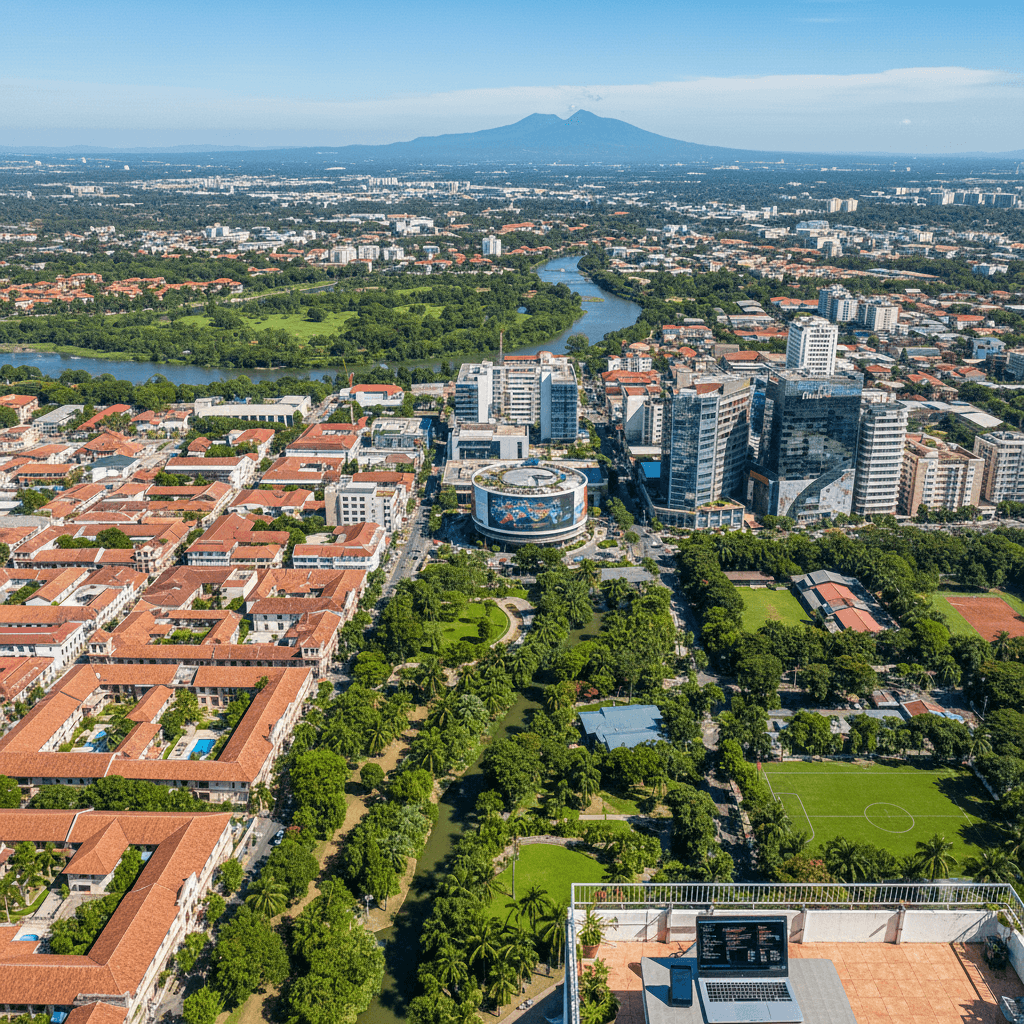
Angeles City
🇵🇭 Philippines
The Pulse of the Pampanga Hub
Angeles City doesn't try to be Manila, and it certainly isn't trying to be Bali. It has a gritty, high-energy personality that thrives on the friction between its military past and its future as a tech-adjacent satellite. Walking through the city, you'll feel a specific kind of kinetic energy, a mix of neon-lit nightlife, world-class culinary heritage, and the quiet, manicured order of the nearby Clark Freeport Zone. It is a place of contrasts where you can grab a $1 plate of legendary sisig on a street corner and then take a $5 Grab ride to a high-end golf course or a modern shopping mall fifteen minutes later.
For nomads, the draw isn't just the low cost of living, which typically sits between $1,200 and $2,000 for a comfortable mid-range lifestyle. It is the convenience. With Clark International Airport right next door, you're connected to the rest of Asia without the soul-crushing traffic of Manila. However, the city carries a reputation for being a party town. While the "Fields Area" is famous for its bars and late-night revelry, many remote workers are shifting their focus toward the Friendship area or Clark itself, seeking a more balanced, work-friendly environment.
The Local Vibe: What to Expect
Life here moves at the pace of a jeepney, fast, loud, and colorful. The locals take immense pride in their food, rightfully so, as this is the culinary capital of the Philippines. You'll find that social life often revolves around "unlimited" dining spots like 19 Copung-Copung Grill, where $10 gets you a feast of native dishes. It is a community-oriented city where English is spoken fluently by almost everyone, making it incredibly easy to integrate compared to other Southeast Asian hubs.
The emotional experience of Angeles is one of transition. You'll see digital nomads huddled in cafes like Cartel Coffee Deli or Manila Cafe, battling the notoriously patchy internet with dual-SIM backups and pocket WiFi. There is a sense of being on the ground floor of something new. While the infrastructure is still catching up to the demand, extended tourist visa options allow stays up to 36 months via Bureau of Immigration extensions, bringing a fresh wave of remote workers looking for an alternative to the overcrowded streets of Makati.
Living Costs & Neighborhoods
Your budget will go surprisingly far here, but quality varies wildly depending on which pocket of the city you call home. Most expats recommend booking an Airbnb for two weeks to scout neighborhoods in person before committing to a long-term lease.
- Fields Area (Balibago): This is the heart of the action. You'll find studio apartments for $200 to $400. It is walkable and social, but the noise levels and "red-light" reputation mean it isn't for everyone.
- Clark Freeport Zone: The premium choice. It is gated, green, and quiet. Rents for modern condos usually start at $700 and go up quickly. The internet is generally more stable here, and the streets are paved for cycling.
- Friendship Area: A favorite for solo travelers and Korean expats. It is full of trendy cafes and resorts like Royal Garden Estate. It is more affordable than Clark but requires a scooter or Grab to get around effectively.
The Nomad Reality Check
You have to be proactive to work here. The city doesn't hand you a perfect coworking setup on every corner yet. Most nomads treat the internet like a tactical operation, carrying both Globe and Smart SIM cards to ensure they stay online during the frequent local outages. If you need a dedicated professional space, some make the two-hour trek to Manila's Acceler8 for a few days of deep work, though the local cafe culture is slowly evolving to fill the gap.
The heat is a constant factor, with temperatures often hitting 33°C (91°F). You'll spend your midday hours in air-conditioned malls or cafes, saving your explorations for the cooler evenings when the street food stalls come alive. It is a city that rewards the patient and the hungry. If you can handle the occasional WiFi hiccup and the chaotic energy of a town on the rise, Angeles offers a level of hospitality and affordability that is getting harder to find elsewhere in the region.
For Digital Nomads: Fields Area (Balibago)
If you want to be in the heart of the action, Balibago is the default choice. Most nomads flock here because it is the most walkable part of the city, packed with bars, 24/7 diners, and affordable guesthouses. You are never more than a five minute walk from a cold San Miguel or a cheap plate of sisig. It is the social engine of Angeles, making it easy to meet other travelers at spots like Cartel Coffee Deli when you need a caffeine hit.
- Rent (Studio): $450 to $700 for older apartments or guesthouses.
- Vibe: High energy, noisy, and unashamedly focused on nightlife.
- Connectivity: Decent mobile signals, but you will want a Globe or Smart backup for when the cafe WiFi dips.
The downside is the noise. If you have early morning Zoom calls, the thumping bass from the bars might be a dealbreaker. It is a gritty, fun area, but it is definitely not for those seeking a quiet workspace. Many nomads use this as a base for a few weeks while scouting more permanent spots in the suburbs.
For Expats and Long-Termers: Friendship Area
Located along the Fil-Am Friendship Highway, this area has become the trendy alternative to the chaos of Balibago. It is often referred to as the Korean Town of Angeles. Expats love it here because the air feels a bit clearer and the lifestyle is more relaxed. You will find better quality condos and gated communities, often called subdivisions, that offer more security and modern amenities.
- Rent (Modern 1BR): $400 to $800 depending on the building age.
- Lifestyle: Massive selection of Korean BBQ spots, specialty grocery stores, and quiet cafes like Royal Garden Estate Cafe.
- Transport: You will need Grab or a scooter here, as it is not very walkable compared to downtown.
This is where you go if you want a "real" life rather than a vacation vibe. The internet tends to be more stable in the newer developments, and you are close enough to the action to visit Balibago without having to live in it.
For Families and Corporate Professionals: Clark Freeport Zone
Technically its own jurisdiction, Clark is right next door and feels like a different country. It used to be a U.S. airbase, so the streets are wide, the grass is manicured, and the traffic rules are actually enforced. Families and high budget expats choose Clark for the safety and the international schools. It is the only place in the area where you can go for a morning jog without dodging trikes and jeepneys.
- Rent (House/Luxury Condo): $800 to $1,500+.
- Safety: Extremely high; the zone has its own security and gated entry points.
- Amenities: Proximity to Clark International Airport, high end malls, and duty free shopping.
The trade off is the cost and the soul. It can feel a bit sterile and "suburban America" compared to the vibrant chaos of the city proper. You will also pay a premium for everything from rent to groceries. However, for those with kids or a corporate allowance, the peace of mind is worth the price tag.
For Solo Travelers and Budget Explorers: Near 19 Copung-Copung
If you are looking to stretch your dollars while soaking up local culture, look at the residential pockets near the 19 Copung-Copung Grill area. This puts you within reach of some of the best traditional food in the city while keeping your rent low. It is a more authentic Filipino experience where you will be living among locals rather than in an expat bubble.
- Daily Food Cost: $5 to $12 if you stick to local grills and all-you-can-eat spots.
- Transport: Easy access to jeepneys which cost about $0.20 per ride.
- Atmosphere: Residential, friendly, and very local.
Solo travelers often find this area rewarding because it forces you to interact with the community. Just be aware that street lighting can be spotty at night. It is best to stick to the main roads after dark and use Grab if you are heading back late from a night out.
The Connectivity Reality Check
In Angeles City, the internet situation is a bit of a mixed bag. While the Philippines has seen significant infrastructure upgrades recently, local speeds usually hover between 20Mbps and 50Mbps in most cafes and rental units. The real issue isn't always the top speed, it's the reliability. Outages happen, and seasoned nomads here have learned the hard way that a single connection isn't enough to guarantee a smooth Zoom call.
Most remote workers in the area rely on a dual SIM strategy. You'll want to pick up both a Globe and a Smart SIM card at one of the local malls. For about $20 a month, you can get unlimited data promos that serve as a lifeline when the fiber line at your Airbnb inevitably flickers. If you're planning on staying long term, investing in a portable pocket WiFi device is a standard move for the expat community.
Top Spots to Get Things Done
Dedicated coworking spaces within Angeles City proper are surprisingly scarce compared to the dense hubs of Manila or Cebu. Many nomads find themselves commuting into the Clark Freeport Zone for a more professional environment and more stable power grids. If you don't mind a bit of a trip, Acceler8 by UnionSPACE in Manila is the gold standard, but for daily work in Angeles, the cafe culture is your best bet.
- Cartel Coffee Deli: This is the go to spot for what locals call "offline productivity." It's great for deep work where you don't need a constant high speed stream, plus the coffee is excellent.
- Manila Cafe: A reliable choice for those who need a bit of a social buzz while they type. It's common to see a handful of laptops open here throughout the afternoon.
- Royal Garden Estate Cafe: Located in the Friendship area, this spot is a favorite for solo travelers who want a quieter, greener backdrop than the neon lights of Balibago.
Digital Nomad Visa and Logistics
For those looking to plant roots in Pampanga, the standard process involves regular tourist visa extensions, which can be handled at the local Bureau of Immigration office. This allows for a flexible stay, which is perfect if you plan on using Clark International Airport as a base to explore the rest of Southeast Asia.
For day to day digital life, download GCash or Maya immediately. These fintech apps are the lifeblood of the local economy. You can use them to pay for everything from your Grab rides to your $10 buffet at 19 Copung-Copung Grill. Most nomads find that while the city's reputation is built on its nightlife, the actual business of working here requires a bit of a DIY spirit and a very reliable backup battery.
Connectivity Costs at a Glance
- Monthly SIM Data: Approximately $20 for unlimited local promos.
- Coworking Day Pass: Expect to pay around $5 in cafe purchases or up to $15 for formal spaces.
- Home Fiber: Mid range plans for apartments typically run $30 to $50 per month, though installation can be a hurdle for short stays.
- Grab Rides: Most short trips between coworking spots and cafes cost between $3 and $5.
If you're someone who needs 100% uptime for high stakes trading or constant video streaming, the Friendship area or the modern condos inside Clark are your safest bets. The closer you get to the Fields Area, the more you're trading bandwidth for proximity to the party.
Staying Safe in the City
Angeles City feels moderately safe for most visitors, but it requires a different kind of awareness than Manila or Cebu. The city is largely defined by its two faces: the high energy of the Fields Avenue nightlife district and the polished, suburban feel of the Clark Freeport Zone. Most nomads find the daytime hours perfectly fine for walking around, but the vibe shifts after dark.
Expats generally recommend sticking to well lit main roads in the Balibago area. While violent crime against foreigners is rare, petty theft and pickpocketing can happen in crowded spots. Avoid walking solo through the unlit outskirts of the red light zones or deep into residential barangays late at night. If you are out late, use Grab rather than walking, even for short distances; it is cheap, tracked, and saves you the hassle of negotiating with tricycle drivers in the dark.
Scams are another factor to watch for. You might encounter overfriendly locals or "street guides" offering unsolicited help. A polite but firm "No, thank you" or "Salamat" usually does the trick. Keep your phone and wallet tucked away when you are in a jeepney or walking through high traffic markets to avoid opportunistic "snatch and grab" incidents.
Healthcare Infrastructure
If you get sick, you are in good hands compared to many other regional hubs. The healthcare in Pampanga is quite high quality, especially within the Clark area. Facilities here often cater to the expat community and have modern equipment and English speaking staff.
- Angeles Medical Center: A reliable go to for general emergencies and consultations located right in the city.
- The Medical City Clark: Located just inside the Freeport Zone, this is often cited as the top choice for complex issues or high end inpatient care.
- Pharmacies: You will find Mercury Drug or Watsons on almost every major corner. They are well stocked, though you should bring your own specific prescriptions from home just in case.
For emergencies, dial 911. It is also smart to keep the Angeles City Tourism Office number (+63 45 625 2286) saved in your phone; they are surprisingly helpful with local information and navigating municipal services.
Insurance and Preparedness
Most nomads here use specialized travel insurance like SafetyWing or Genki, which cover the Philippines. Local hospitals usually expect upfront payment or a guarantee of payment from your provider before starting treatment, so keep digital copies of your policy and a credit card with a decent limit handy. Costs for a standard GP visit usually run between $15 and $30, while a trip to the ER might cost $100 to $300 depending on the tests required.
Tap water is a no go here. Stick to bottled water or the large blue five gallon jugs that most long term rentals provide. Brushing your teeth with tap water is generally fine for most travelers, but those with sensitive stomachs might want to stick to filtered water for everything.
Emergency Contacts and Resources
- National Emergency: 911
- Angeles City Police: +63 45 322 7711
- Tourism Office: 2nd Floor, City Hall, Pulung Maragul
- Digital Nomad Visa Support: For those staying long term on the new 2025 visa, keep your 12 month multi entry paperwork digitized for quick verification at medical facilities.
The Local Commute
In Angeles City, your daily transit is a mix of old school charm and modern app based convenience. The most iconic way to get around is the jeepney. These colorful, open air vehicles follow set routes and cost about $0.20 per ride. They're great for short hops through the Fields Area or Balibago, but they can get cramped and sweaty during the midday heat. If you're heading somewhere specific and don't want to decipher the route painted on the side of a jeepney, flag down a tricycle. It's essentially a motorcycle with a sidecar. Expect to pay between $1 and $2 for a short trip, but always agree on the price before you hop in to avoid the "tourist tax."
Ride-Hailing and Apps
For most digital nomads, Grab is the absolute gold standard. It works just like Uber or Lyft and takes the guesswork out of pricing. A typical ride across town usually lands between $3 and $5. It's safer, air conditioned, and saves you from haggling in the humidity. If you're staying within the Clark Freeport Zone, you'll find the roads are much wider and better maintained than in the city center. Some travelers use bike or scooter rental apps here for about $5 a day, which is a fantastic way to explore the greener, quieter parts of Clark without relying on a driver.
Walkability and Layout
Angeles isn't exactly a walker's paradise, but it's manageable if you pick your spots. The Fields Area is quite walkable, especially if you're bouncing between bars, cafes, and cheap eateries. However, the sidewalks can be uneven or nonexistent in places. Between the 25°C to 33°C temperatures and the intense humidity, you'll probably find yourself opting for a car for anything longer than a ten minute stroll. If you're based in the Friendship Area, you'll definitely need wheels, as the trendy cafes and Korean BBQ spots are spread out along the main road.
Airport Transfers
Getting to and from Clark International Airport is surprisingly painless. Since the airport is only about 15 minutes from the main nomad hubs, a Grab or taxi will only set you back $5 to $10. There isn't a direct public rail system connecting the airport to the city yet, so don't waste time looking for a train station. Most expats recommend booking your ride through the app rather than using the white taxis waiting at the terminal, as it's easier to track your route and pay digitally.
Regional Travel
When you need a break from the city, Manila is roughly a 2 hour drive away depending on the notorious Philippine traffic. You can take a premium "P2P" (Point-to-Point) bus for about $4 to $8, which offers a much more comfortable experience than the standard public buses. For beach runs or mountain treks like Mt. Pinatubo, most nomads prefer to rent a private car or join a small tour group. If you're planning on staying long term, look into the GCash or Maya apps; they're the local fintech giants and make paying for transport and small errands much smoother than carrying heaps of coins.
Communication Basics
You'll find that communication in Angeles City is surprisingly seamless compared to other Southeast Asian hubs. While Tagalog is the national language and Kapampangan is the local tongue of the Pampanga region, English is the primary language for business, government, and education. Most nomads find they can navigate daily life, from negotiating tricycle fares to discussing lease terms, without ever hitting a significant language barrier.
Locals are famously hospitable and generally speak English with high proficiency. If you're staying in the Fields Area or Clark Freeport, you'll rarely meet someone who isn't fluent. That said, learning a few phrases in the local dialect goes a long way in building rapport at the neighborhood sari-sari store or with your favorite sisig vendor. Use Salamat for thank you and Magkano? when asking for a price. If you want to impress the locals, try the Kapampangan word for delicious: Manyaman!
Staying Connected
Internet reliability is the one area where you'll need a solid strategy. While fiber is becoming more common in modern condos around the Friendship area, outages happen. Experienced nomads recommend a "redundancy" approach. Don't rely on a single connection; instead, carry two local SIM cards from different providers, usually Globe and Smart, to ensure you always have a backup signal.
- Local SIM Cards: You can pick these up at Clark International Airport or any SM City Clark kiosk. Expect to pay around $13 (Php 749) a month for a 30-day unlimited data promo.
- Mobile Apps: Download GCash or Maya immediately. These are the lifeblood of local commerce and are used for everything from paying utility bills to sending money to a landlord. Grab is the go-to for ride-hailing and food delivery, while Google Translate handles any complex Kapampangan signs you might encounter.
- Pocket WiFi: Many expats keep a Smart Bro or Globe at Home prepaid device as a fail-safe for those days when the building WiFi decides to take a nap.
The Digital Nomad Setup
If you're planning on heavy Zoom calls or data-intensive work, the cafe scene in Angeles is your best bet for a stable environment. Cafe Noelle and various spots in the Clark Freeport Zone offer better infrastructure than the older residential pockets. While dedicated coworking spaces are still catching up to the Manila standard, many travelers use local cafe environments for a few hours of productivity.
Speeds usually hover between 20 and 50Mbps, but latency can be an issue for gamers or traders. If you're moving into a long-term rental, always ask for a speed test during the walkthrough. Most modern apartments in the Royal Garden Estate or near Friendship Highway are now pre-wired for high-speed fiber, which is a massive upgrade from the DSL lines of a few years ago.
Social Etiquette and Nuance
Communication here isn't just about the words you use; it's about the tone. The Filipino "Bahala na" mindset means things are often relaxed and flexible. If a meeting starts ten minutes late, don't sweat it. Digital nomads often mention that a smile and a patient attitude get you much further than being demanding. When you're out at 19 Copung-Copung Grill or a bar in Balibago, you'll find that the social vibe is loud, friendly, and very inclusive. Joining local Facebook groups like Digital Nomads Philippines is the fastest way to get real-time updates on which cafes currently have the best upload speeds or where the next expat meetup is happening.
The Ideal Window: November to April
If you're planning your stint in Angeles City, timing is everything. Most nomads aim for the dry season, which kicks off in November and stretches through April. This is when the humidity drops to manageable levels and you can actually walk from your condo in the Friendship area to a cafe without needing a second shower by the time you arrive.
The sweet spot within this window is December through February. The air is slightly cooler, hovering around 25°C to 28°C (77°F to 82°F), making it the peak time for outdoor activities like trekking Mt. Pinatubo. It's the most comfortable period for exploring the street food scene or grabbing a table at 19 Copung-Copung Grill without the sweltering heat ruining your appetite for unlimited sisig.
By March and April, the heat cranks up significantly. Temperatures often hit 33°C (91°F) or higher. You'll find yourself retreating into the air-conditioned malls of the Clark Freeport Zone or sticking close to the pool at your resort during the afternoons. This is also when the local festival energy peaks, but be prepared for the dust and the intensity of the tropical sun.
The Rainy Season: May to October
The weather shifts dramatically around May as the monsoon season approaches. While it doesn't rain every single day, the downpours are heavy and sudden. July and August are typically the wettest months and represent the peak of typhoon season. If you're staying in the Fields Area during a storm, expect localized flooding and the occasional power flicker, which can be a nightmare if you're on a deadline.
Expats often use this "low season" to snag better deals on long term rentals. Since tourism slows down, you might find more leverage when negotiating a monthly rate for a studio. Just make sure your accommodation has a solid backup power plan; nothing kills a work session faster than a monsoon-induced blackout.
Planning Around the Climate
- High Season (Nov to Feb): Best weather, highest prices for short term stays, and a lively social scene. Perfect for your first visit.
- Shoulder Season (Mar to May): It's hot and dry. Great for beach trips from Clark International Airport, but you'll live and die by your AC bill.
- Low Season (Jun to Oct): Frequent rain and typhoon risks. Expect humidity to stay around 80% to 90%. This is "hibernation" mode for nomads who focus on deep work indoors.
What to Pack
Angeles City is casual. You'll want lightweight, breathable fabrics like linen or moisture-wicking tech gear. Even in the "cool" months, it's rarely actually cold. A light hoodie is only necessary for the freezing air conditioning in malls or the long bus rides to Manila. If you're here during the rainy months, a high quality waterproof bag for your laptop is more important than a raincoat; the tropical rain usually wins against an umbrella anyway.
Most travelers recommend keeping a close eye on weather apps like Windy or PAGASA (the local weather bureau) during the mid-year months. Since the city is a major hub for Clark International, flight delays are common during the height of typhoon season, so give yourself a 24 to 48 hour buffer if you have an international connection to catch.
Connectivity and Tech Setup
Internet reliability is the biggest hurdle you'll face in Angeles. While fiber is becoming more common in modern condos around the Friendship area, speeds usually hover between 20 and 50Mbps and can drop without warning. Most nomads carry two phones or a dedicated pocket WiFi device as a backup.
- SIM Cards: Pick up both a Globe and a Smart SIM at a mall like SM City Clark. Plans with high data allowances run about $13 (Php 749) per 30 days. Having both networks ensures you stay online when one tower goes down.
- Digital Wallets: Download GCash or Maya immediately. These apps are the lifeblood of local transactions, from paying at small eateries to settling utility bills.
- Power: Keep a beefy power bank in your bag. While brownouts aren't a daily occurrence, they happen enough to ruin a Zoom call if you aren't prepared.
Productivity Hubs
Dedicated coworking spaces are still catching up in Angeles, so many remote workers commute into the Clark Freeport Zone for a professional setup. If you need a serious office vibe, some nomads make the two hour trek to Manila for spaces like Acceler8 by UnionSPACE, which offers flexible desks for around $100 a month.
For a more local rhythm, Cartel Coffee Deli is a favorite for deep work sessions. If the WiFi is acting up, treat it as an offline day and head to Cioccolo Cafe in the Friendship area. It's affordable, green, and perfect for clearing your inbox without the distractions of the Fields Avenue noise.
Visa Logistics
For long term stays, most travelers use visa-free entry (30 days) extendable up to 36 months at Bureau of Immigration. The standard tourist visa is easy to extend at the local Bureau of Immigration office, making it a flexible option for those not ready to commit to a permanent move.
Logistics and Getting Around
Angeles is compact, but the heat makes walking long distances a chore. For short hops, Grab is the gold standard. A quick ride usually costs between $3 and $5. It's safer and more transparent than haggling with tricycle drivers who might overcharge newcomers.
- Jeepneys: These iconic colorful buses are the cheapest way to get around at roughly $0.20 per ride. They follow set routes, so ask a local which one goes toward Balibago or Friendship.
- Airport Access: Clark International Airport is a massive perk. You can bypass the chaos of Manila's airport and fly directly to regional beaches or international hubs. A Grab from the city center to the terminal takes 15 minutes and costs about $5 to $10.
- Bikes: Within the Clark Freeport Zone, you can use apps to rent scooters or bikes for about $5 a day, which is great for exploring the greener, quieter side of the city.
Budgeting for the City
Your monthly burn rate depends heavily on your lifestyle. A budget traveler can scrape by on $800 to $1,200, but most nomads aiming for a comfortable life with AC and decent food should budget between $1,500 and $2,000.
Monthly Cost Estimates
- Housing: $400 to $700 for a nice studio near Clark; $800+ for modern condos in the Friendship area.
- Dining: $1 to $3 for street side sisig; $10 for the legendary all you can eat spread at 19 Copung-Copung Grill.
- Coworking: $5 a day for cafe hopping or $100+ for a shared desk in a formal space.
Safety and Health
Angeles is generally safe, but it has a gritty side. Stick to well lit areas in Balibago and avoid wandering into unlit outskirts alone at night. If you need medical care, the Angeles Medical Center and facilities within the Clark Zone are high quality. Always keep a 3 to 6 month financial buffer in a high yield account; unexpected costs like medical emergencies or last minute flights happen, and having that cushion makes the "Bahala na" (come what may) local attitude much easier to embrace.
Need visa and immigration info for Philippines?
🇵🇭 View Philippines Country GuideEasy Landing
Settle in, no stress