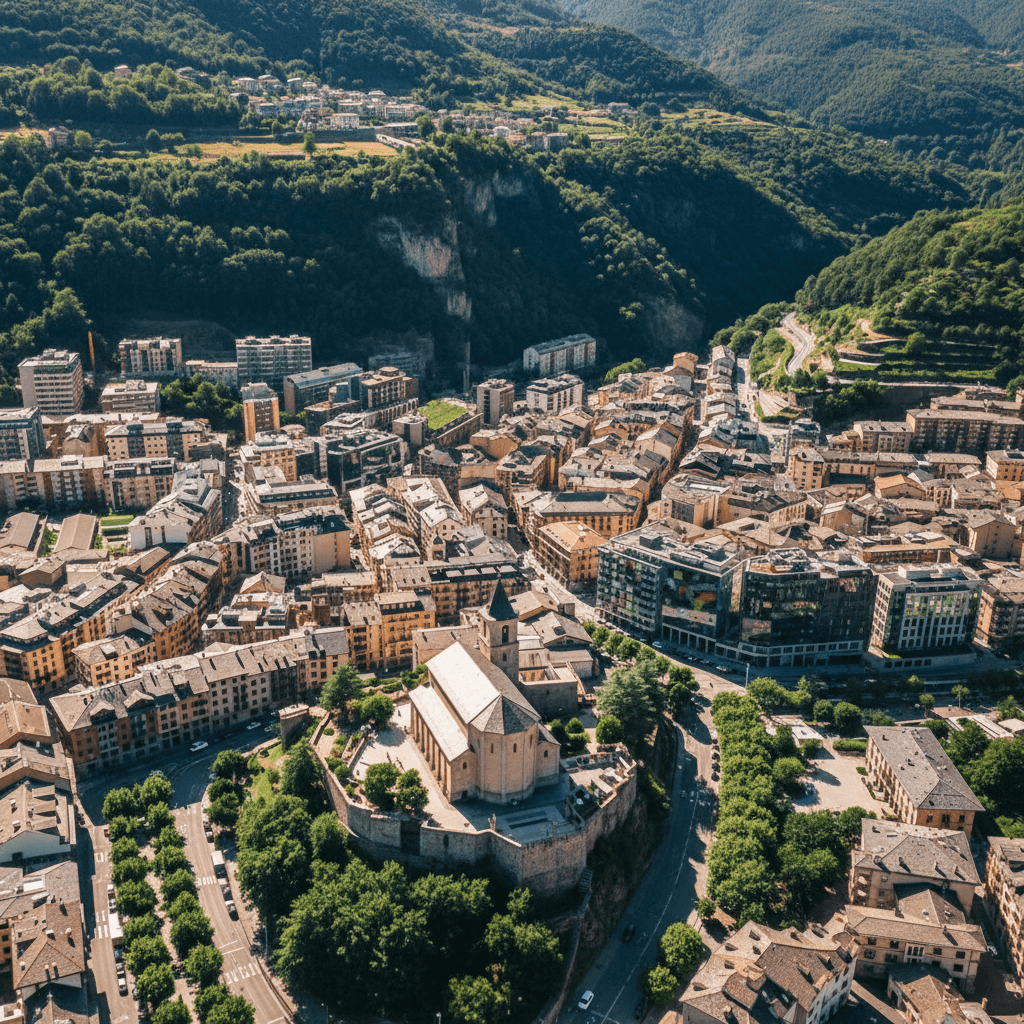
Andorra la Vella
🇦🇩 Andorra
The High-Altitude Tax Haven
Andorra la Vella feels like a contradiction that somehow works. It is the highest capital city in Europe, tucked into a narrow valley where glass shopping malls reflect jagged Pyrenean peaks. You aren't just coming here for the scenery; you're coming for a lifestyle that balances mountain air with a high-tech, low-tax infrastructure. While most of Europe deals with rising security concerns and aging networks, this microstate offers near-zero crime and total fiber optic coverage that reaches even the most remote corners.
The vibe is polished and efficient. It lacks the chaotic energy of Barcelona or the gritty charm of Marseille. Instead, you get a clean, quiet, and incredibly safe environment where the local Catalan culture mixes with a heavy Spanish and French influence. It is a place for the focused nomad, someone who wants to spend their mornings crushing deep work with 189 Mbps internet and their afternoons skiing or hiking the Madriu-Perafita-Claror Valley.
The Price of Paradise
Let's be real about the cost: Andorra la Vella is expensive. You can expect to spend between $3,942 and $4,185 per month to live comfortably here. This isn't a destination for the budget-conscious traveler looking for five-dollar hostels. It attracts a crowd of established entrepreneurs and remote professionals who value the 0% to 10% income tax rates and the fact that the first €24,000 to €40,000 of income is often untaxed for residents.
Most nomads choose between two main areas:
Andorra la Vella (The Central Hub)
- Best for: Socializing, networking, and being in the middle of the action.
- Rent: €800 to €1,500 for a one-bedroom apartment.
- Pros: You're walking distance to Hive Five CoWorking and the best cafes.
- Cons: It can feel a bit more enclosed by the valley walls and busier with shoppers.
Escaldes-Engordany (The Wellness Retreat)
- Best for: Families and those who want a slower, spa-focused pace.
- Rent: Similar to the capital, but you often get more modern builds.
- Pros: Home to the Caldea thermal spa and quieter streets.
- Cons: Fewer networking events and a bit of a walk to the main coworking hubs.
Productivity and Connection
Working here is a dream for anyone who hates spotty WiFi. The national provider, Andorra Telecom, ensures that "dead zones" basically don't exist. You'll find a small but dedicated nomad community at Smart Coworking or Hive Five, where monthly desks run between €150 and €250. These spaces are where the social magic happens, as the city doesn't have a sprawling nightlife scene. Socializing usually revolves around long Catalan lunches, mountain biking groups, or meeting for a "Bon dia" and a coffee at a local cafe.
English is common in the tech and tourism sectors, but knowing a bit of Spanish or French will go a long way. If you can manage a few phrases in Catalan, you'll earn immediate respect from the locals. It is a transition from the typical "nomad circuit" of Southeast Asia or Mexico, but for those who want safety, speed, and the ability to breathe fresh mountain air every single day, it is hard to beat.
The Price of Mountain Living
Andorra la Vella isn't a destination for the budget-conscious traveler looking to stretch a few dollars. It's a premium mountain enclave where the high quality of life comes with a matching price tag. Most digital nomads find they need between $3,942 and $4,185 per month to live comfortably here. While that's steep compared to parts of Spain or Portugal, the trade-off is a ultra-safe, tax-efficient environment with some of the fastest internet in Europe.
The local economy is heavily influenced by its status as a shopping and ski hub, so prices stay relatively consistent year-round, though you'll see a spike in short-term rental costs during the peak winter season. If you're planning a stay, it's best to think of your budget in three distinct tiers:
- Budget Nomad ($2,000 to $2,500): You're likely sharing an apartment or living slightly outside the city center, sticking to street food like €5 to €10 snacks, and keeping paid activities to a minimum.
- Mid-Range ($3,000 to $3,500): This covers a private one-bedroom apartment, regular meals at local Catalan spots, and a dedicated desk at a spot like Hive Five.
- Comfortable ($4,000+): You're looking at a modern flat in the heart of the capital, frequenting upscale restaurants, and taking full advantage of the thermal spas in neighboring Escaldes-Engordany.
Rent and Accommodation
Housing is your biggest hurdle. The market is tight, and because the country is so small, there isn't a massive supply of nomadic-style studios. In the capital, expect to pay between €800 and €1,500 for a decent one-bedroom apartment. If you prefer a quieter vibe, Escaldes-Engordany offers similar pricing but often features more modern builds near the wellness centers.
Expats often recommend checking local platforms or Idealista to find listings. Be aware that many apartments come unfurnished, so short-term nomads usually stick to serviced apartments or Airbnb, which can drive monthly costs toward the higher end of the $4,000 range.
Dining and Groceries
Eating out is a highlight if you enjoy hearty Pyrenean cuisine. A mid-range dinner for one usually lands between €15 and €25. If you're looking for a quick bite, local bakeries and small cafes offer sandwiches and Catalan snacks for under €10. Groceries are surprisingly reasonable because of the low tax environment; many residents from France and Spain actually drive here specifically to stock up on alcohol, tobacco, and luxury goods.
Coworking and Connectivity
The infrastructure is world-class. You'll get fiber optic coverage almost everywhere, with nomad reports consistently showing speeds between 128 and 189 Mbps. If you need a professional environment, coworking spaces are the way to go:
- Smart Coworking: A central hub with flexible plans typically ranging from €150 to €250 per month.
- Hive Five CoWorking: Known for its networking events and modern setup, it's a favorite for those looking to meet other professionals.
- Andorra Work Center: Offers a more corporate, quiet atmosphere for focused deep work.
Transport and Extras
One area where you'll save money is transportation. Andorra la Vella is incredibly walkable, and the bus system connecting the different parishes is both efficient and cheap. Since there's no Uber, you'll rely on local taxis if you're out late, but most nomads find they rarely need them. For weekend trips, a bus to Barcelona or Toulouse takes about three hours and is the most common way to access major international airports.
Don't forget to budget for mountain life. A day pass for skiing or a session at the Caldea thermal spa can set you back €40 to €60, so if you're an outdoor enthusiast, add a "play" buffer of at least $300 to your monthly estimates.
For the Social Nomad: Andorra la Vella (Center)
If you want to be at the heart of the action, the capital center is your base. It is the only part of the country that feels truly urban, packed with duty free shopping, high end tech stores, and the highest concentration of remote workers. Most nomads congregate here because it is where the networking happens, specifically around spaces like Hive Five CoWorking and Smart Coworking.
Living here means you are steps away from the best cafe culture in the Pyrenees. You'll find yourself working from places like The Coffee Corner or local spots along Meritxell Avenue. The vibe is productive but relaxed, with total fiber optic coverage ensuring you never drop a Zoom call. It is the priciest area, but the convenience of being able to walk everywhere justifies the cost for most short term stays.
- Rent: expect to pay between €1,000 and €1,500 for a modern one bedroom apartment.
- Vibe: energetic, central, and tech forward.
- Top Perk: immediate access to community events and the best 128 to 189 Mbps internet speeds.
For Families: Escaldes-Engordany
Just a short walk from the capital center, Escaldes-Engordany blends into Andorra la Vella so seamlessly you might not realize you've crossed a border. However, the atmosphere shifts toward something much more tranquil. It is the top choice for expat families who want a residential feel without sacrificing proximity to the city's amenities.
The neighborhood is famous for its thermal waters, anchored by the massive Caldea spa complex. Expats often recommend this area for its safety and the abundance of parks and playgrounds. It is quieter at night, making it ideal if you have kids or just prefer a silent workspace. You still have access to Andorra Work Center nearby, providing a professional environment when you need to escape the home office.
- Rent: slightly more varied than the center, ranging from €900 to €1,400.
- Vibe: peaceful, wellness oriented, and family friendly.
- Top Perk: world class thermal spas and easy access to the Madriu-Perafita-Claror Valley for weekend family hikes.
For Solo Travelers and Outdoorsy Expats: The Periphery
If you are in Andorra specifically for the mountains, solo travelers often look toward the edges of the capital. These areas offer a bit more "mountain soul" and quicker access to the trailheads. It is a favorite for those who spend their mornings coding and their afternoons mountain biking or skiing.
While there are fewer dedicated coworking spaces here, the high speed internet is just as reliable. Solo travelers find it easy to meet people through outdoor gear shops and local bars that cater to the hiking crowd. The cost of living remains high, averaging around $3,942 to $4,185 per month for a comfortable lifestyle, but the trade off is having the Pyrenees as your backyard.
- Rent: €800 to €1,200 for studios or smaller apartments.
- Vibe: adventurous, quiet, and scenic.
- Top Perk: direct access to the bus lines that head straight to the ski lifts and hiking trails.
Neighborhood Comparison at a Glance
Choosing your spot depends heavily on your tolerance for "city" noise versus your desire for mountain silence. While Andorra la Vella is small, the micro climates of each parish matter.
- Andorra la Vella Center: best for those who need a social life and a desk at Hive Five. It is the most expensive but keeps you in the loop.
- Escaldes-Engordany: best for a "work-relax" balance. You get the peace of the suburbs with the perks of the capital just ten minutes away.
- Upper Parishes (Short Bus Ride Away): best for budget conscious solo travelers who don't mind a commute in exchange for lower rent and better views.
Connectivity and Speed
Andorra might be tucked away in the mountains, but its digital infrastructure is world class. The entire country is blanketed in fiber optic coverage via Andorra Telecom, making it one of the most connected spots in Europe. You'll rarely face the frustration of a dropped Zoom call here.
Most nomads report reliable speeds between 128 Mbps and 189 Mbps, though many apartments and offices offer dedicated lines reaching up to 1 Gbps. Whether you're uploading large video files or managing a complex dev environment, the lag is virtually nonexistent. Just keep in mind that because Andorra isn't in the EU, your standard European roaming plan probably won't work. To avoid massive charges, pick up a local SIM from Andorra Telecom or set up an eSIM through Holafly before you cross the border.
Top Coworking Spaces
The coworking scene in Andorra la Vella is tight knit but professional. It's less about the "laptop on the beach" party vibe and more about serious productivity and high level networking. You'll find a mix of local entrepreneurs, tax expats, and remote tech workers.
- Hive Five CoWorking: This is arguably the most popular hub in the capital. It's modern, bright, and offers everything from hot desks to private booths. They host regular events and networking sessions that make it easier to meet people in a city that can sometimes feel a bit quiet. Expect to pay around €150 to €250 for a monthly pass.
- Smart Coworking: Located right in the heart of Andorra la Vella, this spot is known for its flexible plans. It's a great choice if you only need a desk for a few days a week. Monthly rates usually hover between €150 and €250, depending on how much access you need.
- Andorra Work Center: Situated near the border of Andorra la Vella and Escaldes-Engordany, this space offers a more corporate, polished environment. It's perfect if you need a quiet, professional backdrop for client meetings or deep focus sessions.
Cafe Culture and Remote Work
If you prefer a change of scenery, the cafe culture in the capital and nearby Escaldes-Engordany is surprisingly work friendly. While you won't find a massive "laptop cafe" on every corner, many local spots are happy to let you work for an hour or two if you're ordering coffee and snacks.
Expats often frequent the cafes near the Vivand shopping area or the thermal spas in Escaldes-Engordany. The vibe is generally relaxed, and WiFi is standard in most mid range establishments. Just be respectful during the busy lunch rush, typically between 1:30 PM and 3:30 PM, when tables are in high demand for diners. For a longer session, stick to the dedicated coworking spaces where the chairs are better for your back and the internet is guaranteed.
Practical Considerations
Living and working here comes with a premium price tag. While the tax benefits are a huge draw for long term residents, short term nomads will feel the pinch of the $3,900+ monthly cost of living. However, most find the trade off worth it for the peace of mind, the crisp mountain air, and the sheer reliability of the tech setup.
If you're planning to stay long term, look into the Digital Nomad Residence permit. Introduced recently, it's designed for people who work for companies outside of Andorra or run their own remote businesses. It's a more streamlined path than the traditional residency routes, though it still requires government approval for "innovative" profiles. For most, the standard 90 day tourist stay is plenty of time to soak up the mountain views while clearing through a heavy backlog of work.
A Sanctuary of Safety
Andorra la Vella is arguably one of the safest places you'll ever set foot in. For digital nomads and solo travelers, the peace of mind here is a massive draw. Crime is virtually non-existent; it's the kind of place where you can walk through the city center at 3:00 AM without a second thought. Women and LGBTQ+ travelers consistently report feeling entirely comfortable in any part of the capital or neighboring Escaldes-Engordany.
There aren't any "bad neighborhoods" to avoid. Even in the more crowded shopping districts like Avinguda Meritxell, pickpocketing is a rarity compared to nearby Barcelona or Toulouse. Most nomads find that the biggest safety concern isn't crime, but rather the steep, winding mountain roads if you're driving in the winter. If you're staying within the city limits, it's a pedestrian's dream where the biggest risk is perhaps a bit of ice on the sidewalk during January.
Healthcare Standards and Access
The healthcare system in Andorra is world-class, often ranked among the best globally for its efficiency and quality. For expats and long-term residents, the Caixa Andorrana de Seguretat Social (CASS) manages the national system. It's a co-payment model where the government covers about 75% to 90% of medical costs, while residents pay the remainder. If you're on the new digital nomad residence permit, you'll likely need to show private health insurance coverage as part of your application.
For emergencies or specialized care, Hospital Nostra Senyora de Meritxell in Escaldes-Engordany is the primary facility. It's modern, well-equipped, and just a short walk or five-minute drive from the center of Andorra la Vella. English proficiency among doctors is generally good, though knowing a few medical terms in Spanish or French can be a lifesaver if you're dealing with support staff.
- Emergency Number: Dial 112 for all emergency services. It's the standard EU number and operators can usually assist in multiple languages.
- Pharmacies: Look for the "Farmàcia" signs. They are everywhere in the capital and are highly regulated. Many pharmacists can give basic medical advice and provide over-the-counter remedies for minor ailments.
- Mountain Safety: If you're heading out to the Madriu-Perafita-Claror Valley for a hike, travelers recommend downloading the Alpify (now Safe365) app, which is widely used in the Pyrenees for GPS emergency tracking.
Practical Tips for Nomads
While the risk of illness is low, the high altitude can occasionally catch people off guard. Andorra la Vella sits at about 1,023 meters. It's not extreme, but you might feel a bit more tired or dehydrated during your first week. Drink plenty of water and don't be surprised if your tolerance for those local Catalan wines is a bit lower than usual.
If you're visiting for a short stint, your standard travel insurance like SafetyWing or World Nomads will work perfectly here. Just ensure your policy specifically mentions Andorra; because it's not in the EU or the EEA, some budget European policies occasionally exclude it. Double-checking your fine print before you arrive at the border is a smart move to avoid out-of-pocket expenses for a simple doctor's visit, which can run you around €50 to €100 without insurance.
Navigating the Capital
Andorra la Vella is one of those rare European capitals where your primary mode of transport is simply a sturdy pair of shoes. The city is incredibly compact, and most nomads find they can get from a morning deep-work session at Hive Five CoWorking to a late lunch in the historic center within a 10 to 15 minute walk. The streets are safe, clean, and well-maintained, though you should prepare for some steep inclines given the Pyrenean topography.
While the capital is walkable, the country's verticality means you'll likely want to venture into the higher parishes for hiking or skiing. The national bus network, operated by Clipol, is the lifeline of the microstate. It's efficient, surprisingly cheap, and covers the main arteries between Andorra la Vella, Escaldes-Engordany, and the ski resorts. Most local trips cost around €1.90 to €2.00, and buses generally run every 15 to 30 minutes during peak hours.
Getting In and Out
The most important thing for newcomers to realize is that Andorra has no international airport or train station of its own. You're going to be relying on mountain roads to reach the outside world. Most travelers fly into Barcelona-El Prat (BCN) or Toulouse-Blagnac (TLS) and then take a shuttle.
- AndBus and DirectBus: These are the two heavy hitters for airport transfers. A one-way ticket from Barcelona typically costs around €35, and the journey takes roughly 3 hours depending on the border queue.
- Private Transfers: If you're traveling with a group or heavy gear, a private car can cost upwards of €250, but it shaves off the wait times at the bus terminals.
- Driving: Many expats choose to keep a car for weekend trips into Spain or France. Just keep in mind that parking in the city center is notoriously difficult and can cost €20 to €30 per day in public garages if your apartment doesn't include a spot.
Taxis and Ridesharing
Don't bother looking for Uber or Bolt here; they don't exist in the principality. Instead, the city relies on a traditional taxi system. You can find ranks near the Pyrenee’s Department Store or the main bus station. While they're reliable, they aren't exactly a budget option. A short hop across town will usually set you back €8 to €12. For late-night returns from bars or moving groceries, it's often better to use the Taxi Andorra app to book a ride in advance.
Micro-Mobility and Cycling
Electric bikes have seen a massive surge in popularity among the local nomad community. Given the altitude, a standard pedal bike is a serious workout, but an e-bike makes the commute between Andorra la Vella and the quieter cafes of Escaldes-Engordany a breeze.
- Cicland: This is the national electric bike-sharing scheme. You'll see the red docking stations scattered around the city. It's a great way to get around for €1 to €2 per ride, though you'll need the app to unlock them.
- Mountain Biking: On weekends, many locals swap the city streets for the Vallnord Bike Park. You can rent high-end downhill bikes for about €60 to €80 per day, including your lift pass.
- Walking: Stick to the Rec del Solà or Rec de l'Obac paths if you want to traverse the city with a view. These flat, elevated trails run along the edge of the valley and provide a scenic, traffic-free way to move between neighborhoods.
Transport Costs at a Glance
- Single Bus Ticket: €1.90 - €2.00
- Monthly Bus Pass: Approximately €30 for unlimited local travel
- Airport Shuttle (Barcelona/Toulouse): €35 per person
- Taxi (City Center): €10 average trip
- E-Bike Rental (Daily): €15 - €25
The Linguistic Landscape
Andorra la Vella is a fascinating linguistic crossroads. While it sits between France and Spain, the only official language is Catalan. You'll see it on every street sign, government document, and restaurant menu. If you’ve spent time in Barcelona, you'll feel right at home with the local "Bon dia" (good morning) and "Gràcies" (thanks).
That said, you won't struggle to make yourself understood. Because of the country's history and its diverse expat population, almost everyone is trilingual. Spanish is spoken fluently by nearly the entire population, and French is incredibly common given the proximity to the border. You'll also hear a surprising amount of Portuguese, thanks to a large immigrant community that has shaped the city's culture over the last few decades.
English Proficiency for Nomads
English occupies a specific niche in the capital. In tourist hubs, high-end hotels, and international coworking spaces like Hive Five or Smart Coworking, English is the default bridge. Most digital nomads find they can get by with English for daily transactions, but it isn't as ubiquitous as it is in Berlin or Amsterdam.
Expats recommend learning at least basic Catalan or Spanish if you plan to stay long-term. While you can order a coffee in English at a trendy cafe near the Pyrenees Andorra department store, dealing with local utilities or government offices for your digital nomad residence permit will be much smoother with a translator app or a Spanish-speaking friend.
Staying Connected
Communication isn't just about what you say, it's about how fast you can send it. Andorra is a world leader in connectivity. Andorra Telecom provides total fiber optic coverage across the entire country. Even if you're tucked away in a stone apartment in the old town, you can expect speeds between 128 Mbps and 189 Mbps, with some connections reaching 1 Gbps.
A major trap for travelers is roaming. Andorra is not in the EU, so your standard European "roam like at home" plans often won't work here. If you forget to toggle off your data when crossing the border from Spain, you'll see massive charges on your next bill. Most nomads handle this in one of two ways:
- Physical SIM: Visit the Andorra Telecom office in the city center. A local prepaid SIM is the most cost-effective way to get a mountain-ready data plan.
- eSIM: Use an app like Holafly. It's a favorite for nomads who want to be online the second they hop off the bus from Barcelona.
- WiFi: The cafe culture in Andorra la Vella is very laptop-friendly. You'll find reliable, free WiFi in most mid-range restaurants and public spaces.
Communication Etiquette
The social vibe in Andorra is polite but somewhat reserved. People value their privacy and the quiet nature of the mountains. When entering a shop or a small cafe, a simple "Bon dia" goes a long way in establishing rapport. It’s a small gesture that shows you respect the local Catalan identity, which is a point of great pride for residents.
For networking, the community is tight-knit. Most professional communication happens via WhatsApp or through organized meetups at coworking hubs. Since the nomad community is still growing, people are generally very open to connecting once you've made the first move. Use Google Translate for menus or complex signs; the camera feature is a lifesaver for translating Catalan government notices or supermarket labels.
The Seasonal Rhythm
Andorra la Vella sits high in the Pyrenees, which means the weather isn't just a backdrop; it dictates the entire pace of life. You're looking at a high altitude mountain climate where the seasons are sharply defined. Winters are crisp and snowy, while summers stay refreshingly cool compared to the sweltering heat of nearby Barcelona or Toulouse.
Most nomads find the sweet spot for productivity and lifestyle falls between June and September. During these months, temperatures typically range from 9°C to 26°C, with daytime highs around 20-26°C. It is the prime time for taking your laptop to a cafe terrace in the capital or heading out to the Madriu-Perafita-Claror Valley for a post-work hike. The air is thin and clean, and the humidity is almost non-existent.
Winter: The High Season
From December through February, the city transforms into a basecamp for the ski crowd. Temperatures typically range from -3°C to 7°C. If you aren't here to hit the slopes at Grandvalira or Vallnord, you might find the winter months a bit isolating. The sun sets early behind the peaks, and the mountain shadows make the afternoons feel colder than the thermometer suggests.
- December: Festive but crowded. Expect heavy traffic around the shopping districts and higher prices for short-term rentals.
- January and February: Peak snow months. Perfect for skiers, but the city can feel a bit "transit-heavy" as people move between hotels and ski lifts.
- March: A favorite for many expats. You get "spring skiing" conditions with longer daylight hours and slightly milder temperatures.
The Shoulder Seasons
Spring (April to May) and Autumn (October to November) are the rainy seasons. These are the quietest times in the capital. Many seasonal businesses take a breather, and the hiking trails can be muddy or still covered in melting snow. However, if you're a writer or a developer looking for deep focus, these "off-months" offer the most peace and the best chance at negotiating a mid-term rental deal.
Autumn is particularly striking. The Pyrenees turn deep shades of orange and gold, and the 1°C to 16°C weather in autumn is ideal for those who prefer wearing a light sweater while working from Hive Five or Smart Coworking. It feels like the city belongs back to the locals during this time.
Best Time to Visit for Nomads
If you have to pick a window, aim for late June through August. You’ll avoid the freezing mountain winters and the muddy spring thaw. The social scene is at its peak, with outdoor events and a more active community in the coworking spaces. You’ll also save significantly on heating costs, which can be a surprise expense in the older stone buildings of the capital during the winter.
What to Pack
Layers are your best friend here. Even in the height of summer, the temperature drops significantly the moment the sun goes down. A sturdy pair of waterproof boots is a requirement for at least six months of the year, and a high-quality puffer jacket is the unofficial uniform of Andorra la Vella from November through April.
- Summer: Light clothing for the day, a medium jacket for evenings, and polarized sunglasses for the intense mountain sun.
- Winter: Thermal base layers, heavy wool socks, and a reliable coat. If you're walking around the capital, make sure your shoes have good grip for icy patches on the sidewalks.
- Year-round: High-SPF sunscreen. The altitude makes the UV rays much stronger than you’d expect, even on overcast days.
Connectivity and Tech Setup
Andorra is a connectivity powerhouse. Even though you're tucked away in the Pyrenees, the country boasts total fiber optic coverage. You can expect reliable speeds between 128 Mbps and 189 Mbps, with some connections hitting 1 Gbps. Most nomads rely on Andorra Telecom for local SIM cards. If you prefer a digital-first approach, Holafly eSIMs work perfectly here and save you a trip to a physical store.
When you need to get out of your apartment, the coworking scene in the capital is small but high-quality. Hive Five CoWorking is a favorite for its modern desks and printing services. Another solid option is Smart Coworking, where flexible plans usually run between €150 and €250 per month. These spots aren't just for the Wi-Fi; they are the primary way to meet other remote workers since the nomad community is still growing.
Money and Residency
Living here is expensive compared to most of Europe. You should budget between $3,942 and $4,185 per month to live comfortably. While the tax benefits are a huge draw, with income tax capped at 10% and the first €24,000 to €40,000 being tax-free, the upfront costs are real. Rent for a one-bedroom apartment in the center of Andorra la Vella usually falls between €800 and €1,500.
The residency situation has improved recently. The Llei 42/2022 introduced a specific digital nomad residence permit. Unlike older residency tiers, this doesn't require a massive €50,000 deposit. It's designed for innovative profiles, and once you have it, you can enjoy the local banking system and tax perks without needing to set up a full local company.
Getting Around
Andorra la Vella is incredibly walkable. You can cross the main commercial areas on foot easily. For traveling between parishes, the local bus system is cheap and efficient. Don't look for Uber or Bolt here; they don't exist. You'll have to rely on traditional taxis or the Andorra by Bus app for scheduling.
Since there is no commercial airport in the country, most travelers arrive via Barcelona or Toulouse. Both cities are about a 3-hour bus ride away. If you're planning on exploring the mountains, renting a car is a good move, though parking in the capital is notoriously difficult and pricey.
Language and Culture
Catalan is the official language, and using a few phrases like "Bon dia" or "Gràcies" goes a long way with the locals. However, because of the proximity to neighbors, almost everyone is fluent in Spanish or French. English proficiency is high in the coworking spaces and tourist hubs, so you won't struggle with day-to-day tasks.
- Emergency Number: Dial 112 for all emergency services.
- Banking: Local banks are robust, but many expats use fintech apps for daily spending to avoid conversion fees.
- Health: The healthcare system is world-class. Pharmacies are everywhere and usually have someone on staff who speaks English.
- Best Time to Visit: Head here between June and September for hiking, or December to February if you are a skier.
Daily Life Costs
Expect to pay about €5 to €10 for quick street food or a casual lunch. A mid-range dinner for two will likely cost €15 to €25 per person. If you're heading to the upscale restaurants near the thermal spas in Escaldes-Engordany, prices start at €30 and go up quickly. Most expats recommend shopping at local supermarkets like Andorra 2000 or Pyrenees to keep grocery costs manageable.
Need visa and immigration info for Andorra?
🇦🇩 View Andorra Country GuideEasy Landing
Settle in, no stress