Andong
🇰🇷 South Korea
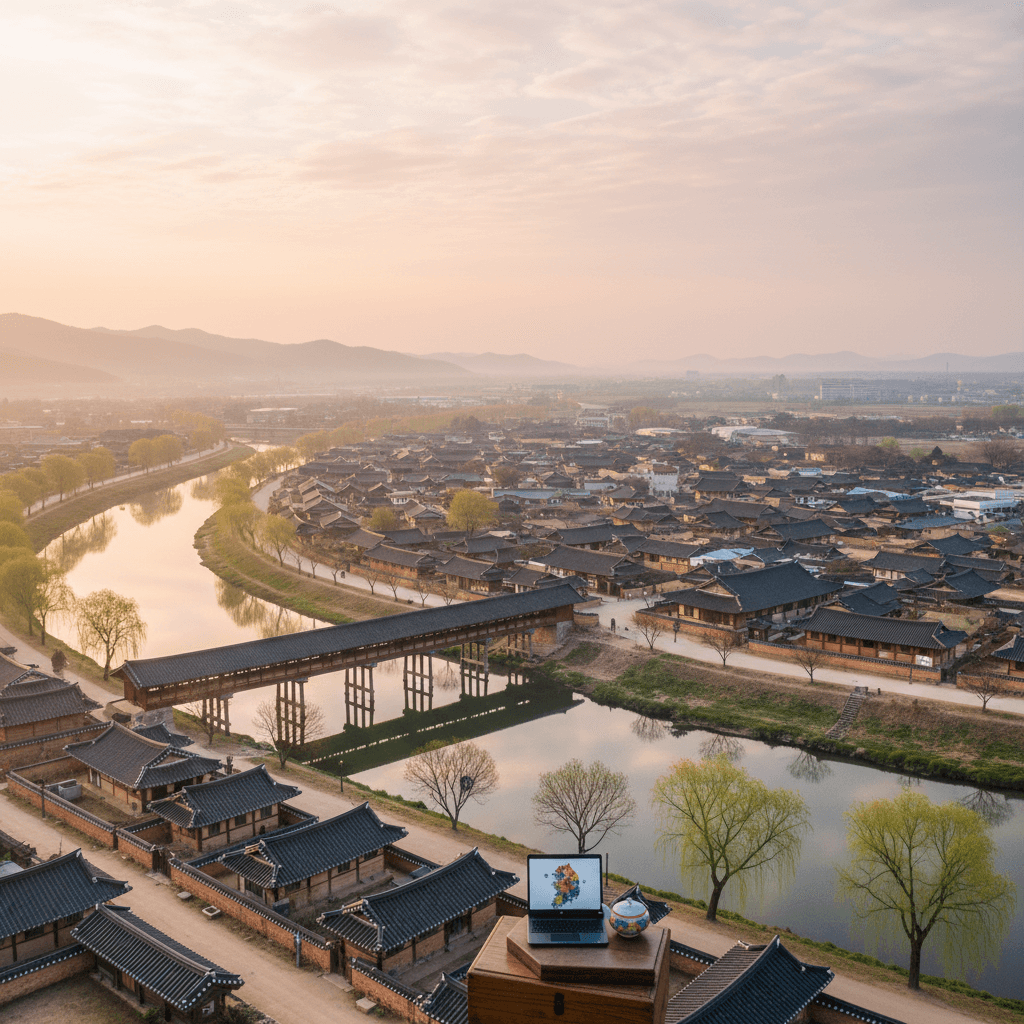
If Seoul is Korea's hyper-caffeinated heart, Andong is its soul, moving at the steady, deliberate pace of a Joseon-era scholar. For nomads who find the neon chaos of Hongdae or the high-rise density of Busan a bit too much for their focus, this city in Gyeongsangbuk-do offers a rare chance to breathe. It is the self-proclaimed capital of Korean spiritual culture, where the scent of old wood and the sight of curved tile roofs replace the glass-and-steel aesthetic of the north.
The Vibe: Tradition Meets Tech
Living here feels like a quiet rebellion against the modern world, yet you are never more than a few feet away from 100 Mbps internet. You might spend your morning working from a cafe overlooking the Nakdong River and your afternoon walking through Hahoe Folk Village, a living UNESCO site where people still reside in thatched-roof houses. The atmosphere is scholarly and reserved. You won't find the same level of English proficiency as you would in Itaewon, so having Papago or Google Translate pinned to your home screen is a must for daily survival.
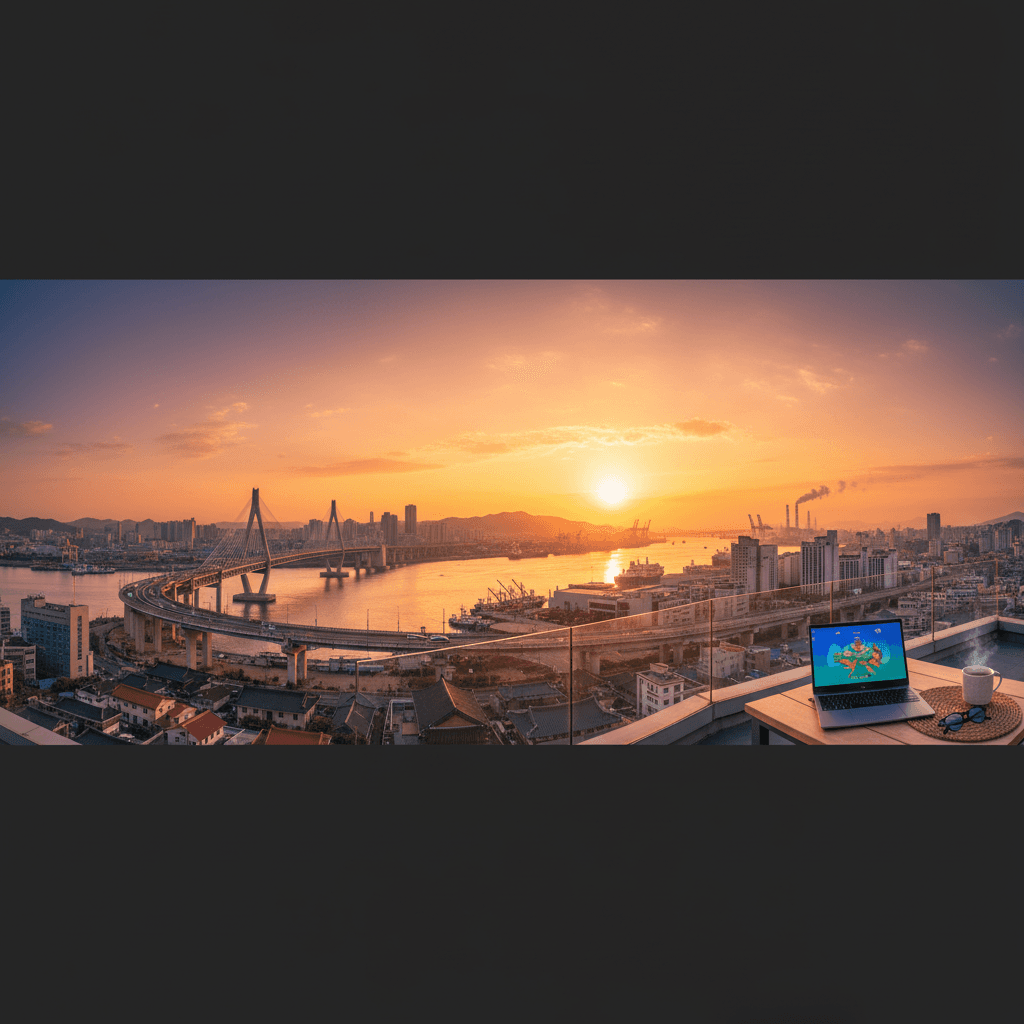
Nomads often find that the "Pali-pali" (hurry-hurry) culture of Korea is softened here. It is a place for deep work and slow evenings. The emotional experience is one of groundedness; there is something deeply settling about watching the sunset over the Woryeonggyo Bridge after a eight-hour sprint on a project. It is not a party town, but it is a town with a deep sense of place.
Cost of Living & Logistics
Your bank account will thank you for choosing Andong over the major hubs. While Seoul can easily eat $2,500 a month for a mid-range lifestyle, you can live comfortably here for closer to $1,500 to $1,800. Rent is significantly lower, and the local food scene is both high-quality and affordable.
- Digital Nomad Visa (F-1-D Workation Visa): Grants 1 year at first, extendable a year at a time up to 3 years. Outside the Seoul capital region, the income bar is 52.41 million won a year for applicants aged 18 to 34 and 78.62 million won for those 35 and older.
- Connectivity: 4G and 5G coverage is nearly 100 percent across the city. You can pick up an eSIM from services like RapidSIM or SK Telecom to stay connected the moment you arrive.
- Transport: The city is walkable in the center, but you will want the Kakao T app for taxis and Kakao Maps for the local bus system. The KTX-Eum train connects you to Seoul in about 2.5 hours when you need a big-city fix.
Where to Set Up Your Desk
Andong does not have the massive coworking chains like Fastfive or Garage yet. Instead, the nomad community here relies on a robust "work-from-cafe" culture. Koreans take their coffee and their study spaces seriously, so finding a spot with a plug and a quiet corner is rarely a struggle. Areas near Andong Station or the central Samsan-dong district offer the best density of amenities, gyms, and grocery stores.
For a more immersive experience, some travelers opt for Hanok stays (traditional houses) in the outskirts. Just be aware that while the aesthetic is unmatched, the insulation in winter can be a challenge. Speaking of weather, aim for April to May for the cherry blossoms or September to October for the crisp autumn air. The humid rainy season in July is best avoided if you don't like constant dampness.
Social Life and Flavors
Socializing here happens over food rather than at clubs. You haven't truly lived in Andong until you've shared a massive plate of Andong Jjimdak (braised chicken with glass noodles) with new friends. The city is also the birthplace of Andong Soju, a much stronger, more traditional version of the green-bottle stuff you see in K-dramas. It is a city that rewards the curious; those who show an interest in local customs and learn basic phrases like "Gamsahamnida" (thank you) will find the locals to be incredibly hospitable, if a bit shy at first.
While Seoul and Busan grab the headlines, Andong is the quiet favorite for nomads who want a "Deep Korea" experience without the sky high prices of the capital. It is a mid sized city in Gyeongsangbuk do province where the cost of living drops significantly compared to the Gangnam district. You will find that your dollar, euro, or pound stretches much further here, especially regarding housing and fresh local produce.
Monthly Budget Tiers
- The Budget Nomad ($1,200 to $1,500): This covers a modest studio (officetel), plenty of street food like Andong jjimdak, and using the efficient local bus system.
- The Mid Range Professional ($2,000 to $2,500): This gets you a modern one bedroom apartment in the newer parts of the city, daily cafe visits for work, and frequent dinners at sit down restaurants.
- The High End Lifestyle ($3,500+): At this level, you are looking at premium housing, frequent weekend trips via the KTX, and upscale dining without ever checking a price tag.
Housing and Utilities
Rent is your biggest saving in Andong. While a decent studio in Seoul might start at $800, you can often find similar quality here for $400 to $600. Keep in mind that Korean rentals often require a "key money" deposit, though many nomads look for short term monthly rentals on apps like Zigbang or Dabang to avoid huge upfront costs.
Utilities are reliable and reasonably priced. Expect to pay around $20 to $22 a month for high speed home broadband. Mobile data is a bit pricier than in some Southeast Asian hubs, with unlimited plans from providers like SK Telecom or KT hovering around $48 per month. Electricity and heating costs fluctuate with the seasons; winters can get quite cold, so your gas bill will peak in January.
Food and Dining
Eating out is a way of life here. You can grab a filling meal of street food for 5,000 to 10,000 KRW. A standard lunch at a local spot usually runs between $7 and $12. If you are a fan of the local specialty, Andong Soju, you will find it much cheaper at the source than in the bars of Itaewon.
- Local Meal: $7 to $12
- Coffee/Latte: $4 to $5
- Domestic Beer (0.5L): $3 to $5
- Weekly Groceries: $50 to $80
Transport and Connectivity
Andong is walkable in the central districts, but you will likely use the Kakao T app for taxis or the local bus network. A typical cross town taxi ride rarely exceeds $10. For digital nomads, the infrastructure is flawless. Even in a traditional city like this, you will find internet speeds exceeding 100 Mbps in almost every cafe. While dedicated coworking spaces like Fastfive haven't reached Andong yet, the city is packed with "study cafes" and work friendly coffee shops that offer 24/7 access for a small daily fee.
The Digital Nomad Visa (F-1-D Workation Visa)
If you are planning to stay long term, the new Hallyu Remote Work Visa is a game changer. It grants one year at first, extendable a year at a time up to three years. In Andong, outside the Seoul capital region, applicants aged 18 to 34 need an annual income of at least 52.41 million won and those 35 and older need 78.62 million won. You will also need a clean criminal record and private health insurance with at least $75,000 in coverage. Most nomads find that the ease of having a legal resident status makes the paperwork worth it, especially for accessing local banking and long term housing contracts.
Andong isn't your typical high-octane Korean metropolis. It's the "Capital of Spirit," where the pace of life slows down to match the flow of the Nakdong River. While most nomads gravitate toward the neon lights of Seoul, those who land here find a city that feels more like a collection of villages connected by world-class infrastructure. You won't find a dedicated "expat district" here, but you will find distinct pockets that cater to different lifestyles depending on how much you value modern convenience versus historical immersion.
Digital Nomads
For those working remotely, the Andong Station (New Station) area in Songhyeon-dong is the most practical choice. Since the station moved to the western edge of the city, this neighborhood has seen a surge in modern studio apartments and infrastructure. You'll find reliable 100 Mbps+ internet as the standard here. While there aren't formal coworking chains like Fastfive yet, the cafe culture is elite. Places like Hollys Coffee or A Twosome Place near the station offer plenty of outlets and a quiet atmosphere for a few hours of deep work.
- Vibe: Functional, modern, and well-connected to the KTX for quick trips to Seoul.
- Housing: Expect to pay around $450 to $650 for a modern one-bedroom "officetel."
- Connectivity: Excellent 5G coverage; most nomads use the Kakao T app to hail taxis when they aren't using the local bus system.
Expats and Long-Termers
If you're planning to stay for a year on the new Hallyu Remote Work Visa, look toward Ok-dong. This is the heartbeat of Andong's social life. It's where you'll find the highest concentration of restaurants, bars, and gym facilities. It feels the most "urban" of Andong's neighborhoods. Expats living here appreciate being within walking distance of Hana Mart and the various international food spots that pop up to serve the local teacher community. It’s the best place to avoid the isolation that can sometimes come with living in a smaller Korean city.
- Vibe: Social, energetic, and convenient for late-night eats.
- Cost: Slightly higher than the outskirts, but still roughly 40% cheaper than Seoul.
- Pro Tip: Use the Zigbang or Dabang apps to scout apartments, but you'll likely need a Korean speaker to help finalize the "Jeonse" or "Wolse" deposit contracts.
Families
Gangnam-dong (not to be confused with the Seoul version) is the go-to for families. Located just across the bridge from the city center, it’s a quieter, residential area with better access to parks and the riverfront. The Andong Riverside Park offers great walking paths and playgrounds that are safe for kids. The schools in this area are well-regarded, and the streets are wider and less congested than the older parts of town. It feels like a suburban retreat while only being a five-minute drive from the city core.
- Vibe: Peaceful, green, and residential.
- Amenities: Close to the Andong Hospital, which provides high-quality care, though having a translation app like Papago is necessary for medical visits.
- Transport: A car is helpful here, though the local bus network is punctual and affordable.
Solo Travelers and Culture Seekers
If you're only in town for a few weeks to soak up the heritage, the Old City Center (Jungang-dong) or the area near Woryeonggyo Bridge is where you want to be. Living here puts you steps away from the Andong Gu Market, famous for its Jjimdak (braised chicken). For a truly unique experience, some travelers opt for a long-term stay in a traditional Hanok near the Hahoe Folk Village, though keep in mind that internet speeds in these older timber-frame buildings can occasionally be spotty compared to the city's concrete towers.
- Vibe: Traditional, walkable, and tourist-friendly.
- Highlights: Easy access to the Mask Dance Festival grounds and the scenic evening lights of the wooden bridge.
- Daily Spend: You can eat well on $25 to $40 a day using local markets and small family-run diners.
Connectivity in the Confucian Heartland
Andong might feel like a step back in time with its wooden pagodas and mask dance festivals, but the internet infrastructure is firmly in the 21st century. South Korea boasts some of the fastest average connection speeds on the planet, often exceeding 100 Mbps. Even in a smaller city like Andong, you can expect 99.94% 4G coverage and rapidly expanding 5G networks. Whether you are tucked away in a traditional hanok or sitting in a modern apartment, the Wi-Fi is rarely an issue.
Most nomads find that their biggest hurdle isn't speed, but access. To get a local SIM card with a sustainable data plan, you usually need an Alien Registration Card (ARC). If you are here on the Hallyu Remote Work Visa or a short term stay, stick to an eSIM. Services like RapidSIM are popular for immediate data, or you can pick up a prepaid KT or SK Telecom SIM at the airport before heading south to Gyeongsangbuk-do.
The Coworking Scene
If you are looking for a sleek, glass-walled coworking hub like Fastfive or Garage, you will likely be disappointed. Those are currently concentrated in Seoul and Busan. In Andong, the "office" of choice is the local cafe. South Korea has a massive cafe culture where staying for several hours with a laptop is socially acceptable, provided you buy a drink every few hours.
- Hollys Coffee (Andong Central): This chain is a favorite for nomads because they specifically design their layouts with "library-style" seating, including individual plugs and dividers.
- A Twosome Place: Another reliable standby with stable Wi-Fi and plenty of table space.
- Local Hanok Cafes: For a more "Andong" vibe, many renovated traditional houses near the city center offer floor seating and quiet corners. Just check the plug situation before you get too comfortable.
Digital Nomad Logistics
Living costs in Andong are significantly lower than in the capital. While a mid-range lifestyle in Seoul might run you $2,500 a month, you can live comfortably in Andong for closer to $1,800 to $2,000. High-speed broadband for your apartment usually costs around $20 to $22 per month, and a robust mobile plan sits at roughly $48.
For navigating the city and finding the best spots to work, ditch Google Maps. It doesn't work well for walking directions or transit in Korea. You will need to download KakaoMap or Naver Maps. These apps are the gold standard for finding hidden cafes with great Wi-Fi. If your Korean is rusty, use Papago for translations; it handles the nuances of the language much better than other services.
Working Remotely on the Nomad Visa
If you are planning to make Andong your base for the long haul, the South Korean Digital Nomad Visa (Workation Visa) is the way to go. It grants one year at first, extendable a year at a time up to three years. In Andong, applicants need an annual income of at least 52.41 million won (ages 18 to 34) or 78.62 million won (35 and older), health insurance cover of 100 million won and a clean criminal record. It is a great path for high-earning freelancers who want to trade the chaos of Gangnam for the quiet hills of Andong.
A Safe Haven in Gyeongsangbuk-do
Andong is remarkably safe, even by South Korea's high standards. Most nomads find they can walk through the city center or back to their guesthouse late at night without a second thought. Street crime is almost nonexistent, and the local culture is deeply rooted in Confucian values, which translates to a high level of respect for personal property and public order.
While you won't find the same level of English proficiency here as you would in Seoul or Busan, the locals are famously helpful. If you look lost near Andong Station, someone will likely try to guide you using a translation app. The biggest "safety" concern you're likely to face is the uneven pavement in the older parts of town or the occasional aggressive delivery scooter on the sidewalk.
- Emergency Numbers: Dial 119 for fire and ambulance services; dial 112 for the police.
- The 1339 Service: This is a dedicated 24/7 medical information hotline for foreigners. They provide interpretation and can tell you which clinics are open nearby.
- Personal Safety: Solo travelers, including women, generally report feeling very secure. Standard common sense applies, but the risk of physical confrontation is extremely low.
Healthcare Quality and Access
South Korea's healthcare system is world-class, and Andong serves as a regional medical hub for the northern part of the province. You'll find modern equipment and highly trained specialists, though the "bedside manner" in Korea can feel a bit clinical and rushed compared to Western norms.
For serious issues, Andong Hospital is the primary facility. It's a large, multi-disciplinary center that handles emergencies and specialized surgeries. Andong Seongso Hospital is another reliable option with a solid reputation. While many doctors speak basic medical English, the administrative staff and nurses often don't, so keep the Papago translation app ready on your phone.
Pharmacies and Everyday Care
Pharmacies, marked by a bright red "Yak" (약) sign, are on almost every corner. For minor ailments like a cold or a headache, you can walk in and get over-the-counter medicine without a prescription. Most pharmacists speak enough English to understand "sore throat" or "fever."
If you need a more formal consultation, "Clinics" (Uiwon) are the way to go. These are small, specialized private practices for things like ENT, dermatology, or internal medicine. They are incredibly efficient; you can usually walk in without an appointment and see a doctor within 20 minutes for a very low out-of-pocket cost.
Health Insurance for Nomads
Holders of Korea's Digital Nomad Visa (Workation, F-1-D) must carry private health insurance with at least ₩100 million in coverage for the whole stay. Most expats and long-term travelers recommend SafetyWing or World Nomads because they understand the lifestyle and cover the specific requirements for the visa application.
- Clinic Visit Cost: Expect to pay $15 to $30 for a basic consultation without local insurance.
- Prescription Costs: Most common medications are highly subsidized and will cost you less than $10 at the pharmacy.
- Dental Care: Andong has excellent dental clinics. A professional cleaning usually costs around $40 to $60 for foreigners.
Practical Tips for Staying Well
The air quality in Andong is generally better than in Seoul, but it can still dip during the "yellow dust" season in the spring. It's smart to check the AirVisual app and wear a KF94 mask on high-pollution days. Also, keep in mind that Korean pharmacies don't typically sell large bottles of painkillers; they usually come in small blister packs of 10, so if you have a preferred brand from home, bring a supply with you.
The Logistics of Getting Around
Andong feels like a breath of fresh air compared to the frantic energy of Seoul. It’s a mid sized city where the pace slows down, but the infrastructure remains remarkably high tech. You won't find a sprawling subway system here, but the combination of a reliable bus network, affordable taxis, and specialized apps makes it easy to transition from a morning Zoom call to an afternoon exploring a riverside village.
Public Transit and Buses
The backbone of local travel is the city bus system. While the routes can feel a bit like a puzzle if you don't speak Korean, they are incredibly punctual and cover almost every corner of the city. You'll want to pick up a T-Money card at any convenience store like GS25 or CU as soon as you arrive. You can tap on and off just like in the bigger cities, and it saves you the hassle of carrying small change. Most local rides hover around 1,500 KRW.
- Bus 210: Bus 210 from Andong Terminal to Hahoe Folk Village takes about 1 hour 10 minutes.
- The Terminal: The Andong Bus Terminal is located slightly outside the main downtown core. It’s the primary hub for intercity travel if you're heading to Daegu or nearby rural spots.
- Digital Tools: Download Naver Maps or KakaoMap. Google Maps is notoriously unreliable for transit directions in Korea, but Naver will show you exactly when the next bus is pulling up to your stop in real time.
Taxis and Ride Hailing
Taxis are everywhere and surprisingly affordable for short hops. If you're staying near the old station area and need to get to a specific cafe or restaurant, a ten minute ride usually costs less than 8,000 KRW. Most drivers are friendly, though their English might be limited to the basics, so having your destination written in Hangul or pinned on a map is a smart move.
The gold standard for ride hailing is Kakao T. It works similarly to Uber, letting you call a taxi to your exact GPS location. You can choose to pay the driver directly with your card or cash if you haven't linked a local bank account to the app yet. It eliminates the stress of trying to explain where you are on a quiet side street.
Trains and Regional Connectivity
Andong is well connected to the rest of the country via the KTX-Eum high speed rail. The new Andong Station is a sleek, modern facility located on the outskirts of town. The KTX-Eum train connects you to Seoul in about 2h 30m [5], making it feasible to head to the capital for a weekend of networking or a visa appointment. Tickets usually cost around 25,000 to 30,000 KRW for a one way trip.
Walking and Biking
The city center and the areas along the Nakdong River are very walkable. The riverfront has paved paths that are perfect for a morning run or a sunset stroll. For those who prefer two wheels, look for Kakao Bike stations. These are electric assisted bikes you can unlock with the same Kakao app you use for taxis. They are perfect for navigating the flatter parts of the city without breaking a sweat in the humid summer months.
Arrival from the Airport
Most nomads fly into Incheon International and take a bus or train down, but Daegu International Airport is actually the closest hub. From Daegu, it's a 1 to 2 hour journey by bus or train. If you're coming straight from Incheon, expect a 3.5 to 4 hour bus ride. It’s a long haul, but the coaches are comfortable, often featuring wide reclining seats and USB charging ports to keep your laptop powered up.
Quick Navigation Tips
- Safety First: Korea has a zero tolerance policy for drinking and driving, and this extends to electric scooters. Stick to the buses or taxis if you've been sampling the local soju.
- Language Hack: If you're stuck, use Papago. It's the most accurate translation app for Korean and even has a voice feature that works well for communicating with bus drivers or ticket agents.
- Walking: Be mindful that sidewalks in older neighborhoods can be narrow or uneven. Wear comfortable shoes if you plan on exploring the traditional districts on foot.
The Language Gap
Expect a significant shift in communication once you leave the gravity of Seoul or Busan. In Andong, Korean is the absolute rule, not the exception. While younger residents and staff at major hotels or the Andong Station tourist office might speak basic English, your daily interactions at the local markets or traditional jjimdak (braised chicken) restaurants will rely heavily on non-verbal cues and technology.
Most nomads find that locals are incredibly patient, but they don't expect you to speak the language. This creates a different social dynamic than the capital; instead of the polished service of a Seoul cafe, you'll get the "Jeong" (warm, social connection) of a smaller city, often involving plenty of hand gestures and friendly smiles. If you're staying near the Hahoe Folk Village, the older generation running the guesthouses will likely speak no English at all, so having your translation apps ready is a must.
Essential Digital Tools
Standard global apps often stumble in South Korea. Google Maps is notoriously unreliable for walking directions here due to government security restrictions on mapping data. To get around Andong without getting lost in the winding alleys of the old town, download Naver Maps or KakaoMap. Both have English interfaces now, though searching for specific locations sometimes works better if you paste in the Korean Hangeul name.
- Papago: This is the gold standard for translation in Korea. It handles the nuances of the language much better than Google Translate. The image-to-text feature is a lifesaver for reading menus at traditional spots near Woryeonggyo Bridge.
- KakaoTalk: Everyone in Korea uses this. If you meet a local friend or need to message a guesthouse owner, they'll ask for your "Kakao" ID, not your phone number or WhatsApp.
- Kakao T: Essential for hailing taxis. You can set it to pay the driver directly with cash or a physical card if you don't have a Korean bank account linked to the app.
Key Phrases for Daily Life
Learning the basics goes a long way in Gyeongsangbuk-do. People appreciate the effort, and it often leads to better service or a free "service" (extra side dish) at dinner. Start with these:
- Annyeong-haseyo: Hello (formal). Use this for everyone.
- Gamsahamnida: Thank you.
- Yeogi-yo: "Over here!" Use this to get a server's attention in a restaurant. It's not considered rude; it's the standard way to get service.
- Olma-eyo?: How much is it?
- Mae-woyo?: Is it spicy? (Crucial in Andong, where the food can pack a punch).
Etiquette and Non-Verbal Cues
Andong is often called the "Capital of Korean Spirit" because of its deep Confucian roots. Communication here is as much about what you do as what you say. When you hand someone money or a credit card, use both hands or support your right forearm with your left hand. It's a small gesture that signals immense respect.
Punctuality is another form of communication. If you're meeting a local contact or a tour guide, being "on time" actually means being five minutes early. If you're applying for the Digital Nomad Visa (K-Work Vacation), remember that official interactions at immigration offices will be very formal. Showing up in professional attire and using the most polite forms of Korean (or having a translator) is highly recommended by the expat community.
Staying Connected
You won't have to worry about the "digital" part of being a nomad. Even in the more rural outskirts of Andong, the 4G and 5G coverage is nearly 100%. Most cafes expect you to stay for a while and work, and they almost always have high-speed Wi-Fi passwords posted on the receipt or a nearby wall. For a reliable mobile connection, pick up a SIM or eSIM from providers like LG Uplus or KT. If you're staying long-term on a visa, you can get a post-paid plan once you have your Alien Registration Card (ARC), which makes verifying your identity on local apps much easier.
The Seasonal Cycle in Gyeongsangbuk-do
Andong experiences a temperate climate with four distinct seasons, each bringing a massive shift in the city's personality. Because it sits further inland than coastal hubs like Busan, the temperature swings can feel a bit more dramatic. You'll want to pack layers regardless of when you arrive, as the mornings in the valley are often crisp even when the afternoons heat up.
Most nomads find the shoulder seasons, April to May and September to October, to be the sweet spots for productivity and exploration. During these windows, the air is clear, the humidity is low, and the traditional architecture of Hahoe Folk Village looks its best against the natural backdrop.
Spring: Cherry Blossoms and Mild Days
Spring usually kicks off in late March, with temperatures hovering between 10°C and 18°C. By mid-April, the city is covered in cherry blossoms. While Seoul gets all the hype, the Nakdonggang River side in Andong offers a more relaxed pace for a "work-from-anywhere" afternoon under the trees.
- Pros: Perfect walking weather; stunning floral displays; low heating/cooling costs.
- Cons: "Yellow Dust" from the Gobi Desert can occasionally spike pollution levels, so keep a high-quality mask handy.
- Best for: Photographers and those who prefer walking or biking to local cafes.
Summer: The Humidity Hurdle
From June through August, things get sticky. Temperatures frequently climb to 30°C or higher. July is typically the wettest month, thanks to the jangma (monsoon season). Expect heavy, sudden downpours that can last for days, making your choice of a housing rental with strong AC and reliable Wi-Fi a top priority.
- Pros: Lush green landscapes; the city is quieter as many locals head to the coast.
- Cons: Intense humidity; frequent rain makes outdoor sightseeing difficult; higher electricity bills for air conditioning.
- Best for: Deep-work sprints inside air-conditioned coworking spaces or cafes.
Autumn: Prime Festival Season
Many expats argue that September and October represent the absolute best time to be in Andong. The humidity vanishes, replaced by cool breezes and temperatures between 15°C and 22°C. This period also coincides with the Andong Mask Dance Festival, usually held in late September or early October. It is the city's biggest event, drawing crowds for traditional performances and local soju tastings.
- Pros: Spectacular fall foliage; the biggest cultural events of the year; ideal hiking weather.
- Cons: Accommodation prices can spike during the festival week; popular spots get crowded.
- Best for: Culture enthusiasts and social nomads looking to connect with locals.
Winter: The Quiet Chill
Winter in the Gyeongsangbuk-do province is dry and cold. From December to February, temperatures often dip below freezing, ranging from -5°C to 5°C. While it doesn't get as much snow as the northern mountainous regions, the wind off the river has a sharp bite. It is a peaceful time to visit if you enjoy a "hygge" lifestyle, spending your days in quiet traditional tea houses.
- Pros: Very few tourists; lowest accommodation rates of the year; beautiful, stark scenery.
- Cons: Biting cold; some smaller outdoor attractions may have reduced hours.
- Best for: Budget-conscious travelers and writers seeking solitude.
Summary of Best Times
- Peak Performance: May and October offer the most comfortable climate for focusing on work while enjoying the city.
- Budget Friendly: January and February are the cheapest months for long-term stays, provided you don't mind the cold.
- Avoid: July, unless you enjoy heavy rain and high humidity.
Connectivity and the Digital Nomad Visa
South Korea recently launched its Workation Visa (Hallyu Visa), allowing remote workers to stay one year at first and extend a year at a time up to three years. To qualify in Andong, applicants need an annual income of at least 52.41 million won (ages 18 to 34) or 78.62 million won (35 and older), plus a clean criminal record and proof of private health insurance. While the paperwork can be a hurdle, it is a game changer for those wanting to settle in a quieter cultural hub like Andong rather than the frantic streets of Seoul.
You won't have to worry about the internet. Even in this traditional corner of Gyeongsangbuk-do, speeds average well over 100 Mbps. Most nomads rely on 4G or 5G coverage which is nearly 100 percent nationwide. For your phone, grab an eSIM from RapidSIM before you land, or visit a KT or SK Telecom shop once you have your residence card to set up a local contract. Expect to pay around $21 for home broadband and $48 for a solid mobile data plan.
Cost of Living
Andong is significantly more affordable than Seoul or Busan. While specific data for this region is leaner, your money goes much further here, especially regarding rent and fresh local food.
- Budget Lifestyle: Around $1,500 per month. This covers a modest studio, plenty of street food like Andong Jjimdak (braised chicken), and public transport.
- Mid-range Lifestyle: Roughly $2,500 per month. This allows for a modern one bedroom apartment, frequent cafe working sessions, and weekend trips.
- High-end Lifestyle: $4,000+ per month. This gets you a premium high rise apartment and upscale dining.
Daily Logistics and Getting Around
The city is well connected to the rest of the country via the KTX train network. You can get to Seoul in a few hours, making it easy to head to the capital for networking events. Locally, the bus system is punctual, though the apps Kakao T for taxis and Naver Maps for navigation are non negotiable. Google Maps is notoriously unreliable for walking directions in Korea, so download the local alternatives immediately.
English isn't widely spoken here compared to Itaewon or Hongdae. You will want the Papago translation app on your home screen. Learning basic phrases like "Gamsahamnida" (Thank you) goes a long way with the locals, who are generally reserved but incredibly helpful if you make an effort with the language.
Work Spaces and Culture
Andong doesn't have the massive coworking franchises like Fastfive or Garage yet. Instead, nomads here lean into the local cafe culture. Korea's "study cafes" are a unique middle ground; they are quiet, have great Wi-Fi, and often provide free coffee or snacks for a small hourly fee. If you need a more formal setup, look for public library spaces or tech incubators near the university districts.
Safety and Health
Safety is one of the biggest perks of living in Korea. Crime rates are remarkably low, and it is common to see people leave their laptops unattended in cafes while they grab a refill. If you do run into trouble, 119 is the number for emergencies. Healthcare is world class, but make sure your insurance covers private clinics, as English speaking doctors are easier to find in those settings. Pharmacies are marked with a green "Yak" sign and are found on almost every street corner for basic ailments.
Best Times to Visit
The weather varies wildly, so timing your stay is vital for your comfort.
- Spring (April to May): The best time to be here. The cherry blossoms are out and the temperature is perfect for walking.
- Autumn (September to October): Crisp air and stunning fall foliage. This is also when the famous Mask Dance Festival usually happens.
- Summer (July to August): Brutally hot and humid with a heavy rainy season. Expect to stay indoors with the AC cranked up.
- Winter (December to February): Cold and dry. Temperatures often drop to -5°C, but it is a great time for quiet, snowy temple visits.
Banking and Admin
Opening a local bank account usually requires your Alien Registration Card (ARC). Until you have that, use Wise for international transfers to avoid massive fees. Most places are cash free now, so having a card that works with local readers is a must. For apartment hunting, locals use apps like Zigbang or Dabang, though you might need a Korean speaking friend to help you navigate the contracts and the "Key Money" deposit system.
Need visa and immigration info for South Korea?
🇰🇷 View South Korea Country GuideHidden Gem
Worth the effort
Monthly Budget Estimates
More cities in South Korea
Daegu
🇰🇷 South Korea
Cheongju
🇰🇷 South Korea
Gangneung
🇰🇷 South Korea