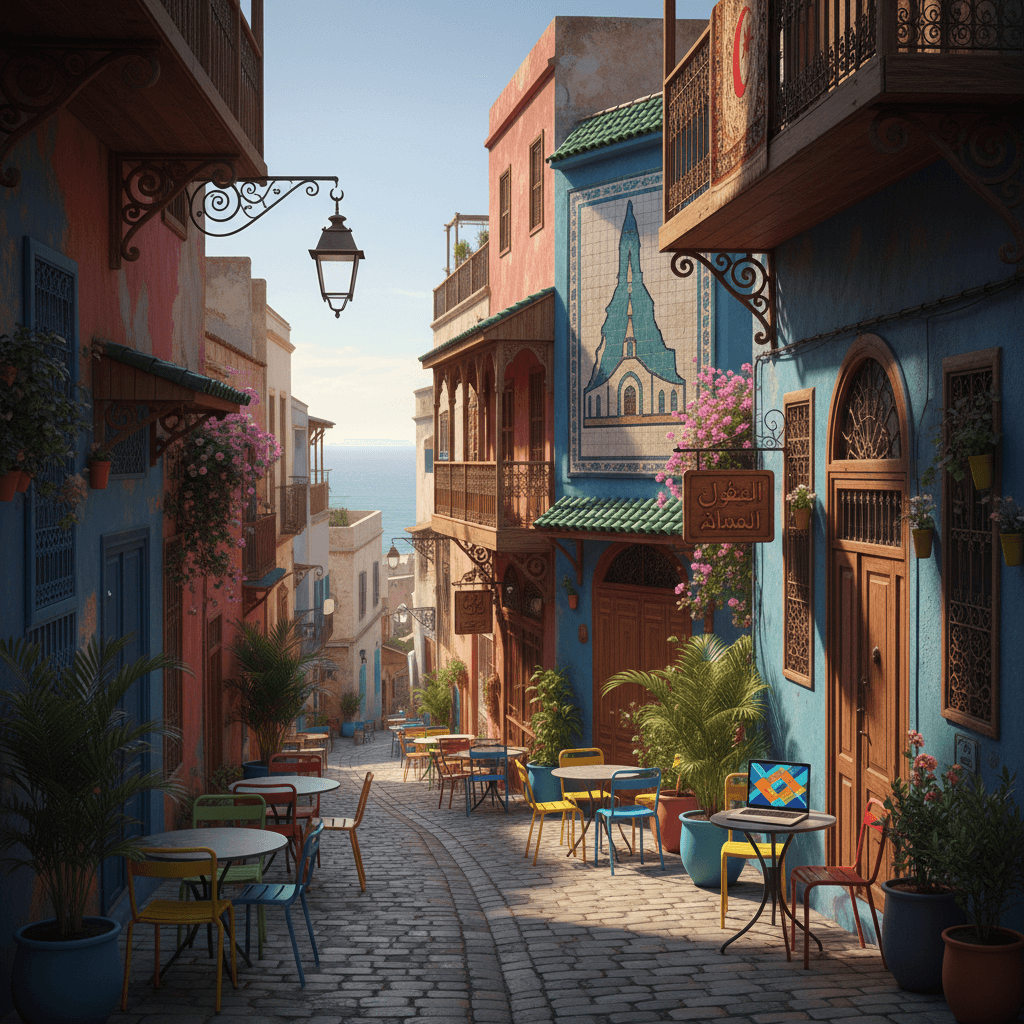
Algiers
🇩🇿 Algeria
The White City Experience
Algiers doesn't try to impress you with the polished, tourist-ready veneer of Marrakech or the high-speed efficiency of Dubai. Instead, Algiers feels like a secret you've stumbled upon. Known as the White City, it tumbles down steep hills toward the Mediterranean in a sea of chalky facades and blue shutters. The vibe is a curious, intoxicating blend of French colonial architecture, ancient Berber roots, and a modern Arab identity that’s still finding its footing in the global nomad scene.
Living here feels slower than most capital cities. You'll spend your mornings dodging scooters in the narrow alleys of the Casbah and your afternoons nursing a mint tea at a sidewalk cafe in Hydra. It’s a place for the patient traveler. You aren't here for lightning-fast fiber optics or 24/7 nightlife; you're here for the raw, unfiltered history and the fact that you can live comfortably on a fraction of what you'd spend in Southern Europe.
What Nomads Actually Think
The community is small but growing. Most nomads who land here are drawn by the affordability and the lack of crowds. You’ll likely find your tribe at coworking spaces like Regus or The Address Coworking. People here are incredibly hospitable, though the language barrier is real. If you don't speak French or Arabic, you'll be leaning heavily on translation apps to get through your grocery run.
- The Draw: It is incredibly cheap. You can grab a street food meal for $2 to $5 and a mid-range dinner for around $15.
- The Trade-off: The internet is the main hurdle. With average city speeds hovering around 2 Mbps, you have to be strategic. Most expats rely on Mobilis or Djezzy SIM cards for hotspots rather than trusting hotel WiFi.
- The Social Scene: It's more about "cozy" than "crazy." Nightlife revolves around live Chaabi music in small bars or late-night coffee culture rather than clubs.
The Neighborhood Breakdown
Choosing where to plant your flag depends on whether you want "old world" charm or "new world" reliability. Most remote workers find themselves gravitating toward the business districts for the infrastructure.
Hydra
- The Vibe: Upscale, leafy, and safe. This is where the embassies and expats congregate.
- Rent: Expect to pay $500 to $800 for a solid one-bedroom apartment.
- Pros: Best access to international grocery stores and private clinics.
The Business District
- The Vibe: Modern and functional. It feels more corporate, but it’s the most practical spot for work.
- Rent: Prices sit around $1,000 for luxury or modern builds.
- Pros: Proximity to the best coworking spaces and more reliable power grids.
The Casbah / Historic Core
- The Vibe: Intense, beautiful, and chaotic. A UNESCO World Heritage site that feels like a time capsule.
- Rent: Budget-friendly at $300 to $500 for basic setups.
- Pros: Immediate access to markets and the most authentic food in the city.
Daily Life and Practicalities
Getting around is an adventure in itself. While the tram is cheap at about $0.50 a ride, it’s often packed. Most nomads use the Yassir app, the local answer to Uber, which usually costs between $3 and $5 for a cross-town trip. It saves you the headache of negotiating taxi fares in broken French.
The climate is one of the city's best features. Spring (March to May) and Fall (September to October) are the sweet spots, with temperatures sitting comfortably around 20 to 25°C. Summers can get heavy and humid, and winters are mild but occasionally rainy. If you're planning a stay in 2026, keep in mind that Ramadan will fall around February and March. During this time, the city's rhythm shifts entirely; days are quiet and many shops close, but the nights come alive with massive feasts and a communal energy that is well worth experiencing.
Budgeting for Algiers is straightforward because your money goes far. A total monthly budget of $1,781 covers a very comfortable lifestyle, including a nice apartment, daily dining out, and a dedicated desk at a coworking space like The Address. It’s a destination for those who want to trade the digital nomad "circuit" for something that feels a bit more like real life.
The Reality of Your Monthly Budget
Algiers is a breath of fresh air for your bank account, especially compared to the skyrocketing costs in European Mediterranean hubs. For a remote worker living a balanced lifestyle, you can expect to spend around $1,781 per month. This covers a comfortable apartment, plenty of dining out, and a dedicated desk at a coworking space. If you're on a tighter budget, it's entirely possible to get by on $30 a day by sticking to local markets and outer neighborhoods.
The local currency is the Algerian Dinar (DZD), and you'll find that cash is still king here. While you can use cards in high end hotels in the Hydra district, you'll want to keep plenty of paper money on hand for your daily tagine or taxi rides. Most nomads use apps like Wise or Revolut for international transfers, but don't count on them for every street side transaction.
Housing and Neighborhood Costs
Where you park your laptop changes your overhead significantly. The city offers everything from historic walkups to high end corporate suites.
Hydra (Upscale and Expat-Heavy)
- Rent: $500 to $800 for a modern one-bedroom.
- Vibe: This is where you'll find the embassies and the safest, greenest streets. It's more expensive, but the infrastructure is more reliable.
The Business District (Near The Hub)
- Rent: $1,000+ for luxury or serviced apartments.
- Vibe: Best for those who want to be steps away from their office. It feels a bit corporate, but it's the most efficient area for getting work done.
Central Algiers and the Casbah
- Rent: $300 to $500 for basic apartments.
- Vibe: Gritty, historic, and loud. You'll save money on rent and street food, but you might struggle with consistent internet speeds in older buildings.
Dining and Groceries
Eating out is one of the best parts of living in Algiers. You can grab a filling street food meal for $2 to $5 at local markets. If you prefer a sit down experience at a cafe, expect to pay between $10 and $15. For a celebratory dinner at a beachfront restaurant, a high end meal will still only run you about $30 per person.
Groceries are incredibly affordable if you buy local. Stick to the seasonal produce at the markets, and you'll find your weekly bill is a fraction of what you'd pay in the US or UK. Imported goods, however, carry a premium, so expect to pay more for your favorite Western snacks or specialty coffee beans.
Connectivity and Workspace Expenses
Since the city wide WiFi averages a sluggish 2 Mbps, most nomads invest in a solid data plan. You can pick up a SIM card from Mobilis, Djezzy, or Ooredoo at the airport or in the city center. A massive 50GB to 100GB data package usually costs between 2,000 and 3,000 DZD, which is roughly $15 to $22. This is the most reliable way to stay connected for calls and maps.
Coworking is a non-negotiable expense here for anyone doing more than just answering emails. The Address in the city center offers flexible memberships for roughly $100 to $200 a month. If you need higher speeds and a professional meeting room, The Hub Algiers in the business district ranges from $150 to $250. For a full community experience, Algiers Coliving provides a room and workspace package starting around $500 per month.
Transport and Daily Logistics
Getting around is cheap, though the traffic can be a headache. Public buses and the tram are a steal at $0.50 per ride, but they get incredibly crowded during peak hours. Most expats and nomads rely on ride-hailing apps like Yassir. A typical trip across town costs between $3 and $5, making it the most convenient way to navigate the sprawl. If you're heading to the airport, a private taxi or app ride will cost you about $10 to $20.
For Digital Nomads: The Business District and Coworking Hubs
If your priority is a stable connection and a professional network, you'll want to stay near the modern business districts like Said Hamdine or Bir Mourad Raïs. This is where you'll find The Hub Algiers, a space that offers the city's most reliable speeds and a corporate environment that feels familiar to Western professionals. Expect to pay between $150 and $250 a month for a premium membership here.
Another solid base for nomads is the area surrounding The Address Coworking. It's more central and offers a bit more soul than the purely corporate zones. Many nomads opt for the Algiers Coliving package, which bundles private rooms and workspace for around $500 a month. It's the easiest way to bypass the headache of setting up local utilities and finding community events.
- Rent: $500 to $800 for a modern 1BR
- Best for: Reliable WiFi, networking, and proximity to workspace
- Top Spot: The Hub for serious deep-work sessions
For Expats: Hydra and El Biar
Hydra is the undisputed heavyweight for expats. It's the hilltop neighborhood where most embassies and international companies are based. It feels different from the rest of Algiers; the streets are greener, the air is slightly cooler, and the villas are more secluded. You'll find the highest concentration of private clinics and international dining here, though you'll pay a premium for the privilege.
El Biar is a slightly more accessible alternative that still maintains a high standard of safety and comfort. It's well connected to the center but stays quiet enough for those working on a European time zone. Rent in these areas usually starts at $800 and can easily climb over $1,000 for luxury apartments or villas with Mediterranean views.
- Rent: $800 to $1,200+
- Food: $30+ for upscale meals at local favorites
- Vibe: Secure, quiet, and affluent
For Families: Dely Ibrahim and Cheraga
Families often look toward the western suburbs like Dely Ibrahim. These neighborhoods are more residential and offer larger floor plans than the cramped apartments in the city center. You're closer to modern shopping malls and sports complexes, which makes weekend logistics much easier with kids in tow. It's less walkable, so you'll definitely need to rely on ride-hailing apps like Yassir for school runs and grocery trips.
The cost of living here is more manageable than in Hydra, but you still get the benefit of modern infrastructure. Most expat families appreciate the proximity to private schools and the lower noise levels compared to the "White City" core.
- Rent: $600 to $900 for larger family units
- Transport: $3 to $5 per trip via apps
- Pros: More space, modern malls, and family-friendly parks
For Solo Travelers: The Casbah and Central Algiers
If you're in Algiers for the soul of the city, you have to stay in the historic core. The Casbah is a labyrinth of white-washed stone, steep alleys, and centuries of history. It's not the place for someone who needs a 4K video connection, as the thick walls and old infrastructure make for patchy internet at best. However, for a few weeks of cultural immersion, it's unbeatable.
Solo travelers usually find the best value in the 19th-century French colonial buildings near the Grande Poste. It's walkable, filled with cheap tea shops, and gives you easy access to the metro and tram lines. Street food like tagines and couscous can be found for $2 to $5, making it the most budget-friendly part of the city. Just be mindful that these areas can get a bit sketchy late at night, so it's best to stick to well-lit main streets after dark.
- Rent: $300 to $500 for traditional or older apartments
- Food: $2 to $10 for local markets and cafes
- Vibe: Intense, historical, and deeply local
The Connectivity Reality Check
If you're planning to work from Algiers, manage your expectations regarding the "last mile." While the city is modernizing, the average citywide WiFi speed hovers around 20-30 Mbps download, but reliability varies. It’s enough for emails and Slack, but you'll feel the lag during heavy video calls or large file uploads. Outages happen, especially as you move further south from the Mediterranean coast, so having a backup plan isn't just smart; it's a requirement for staying employed.
Most seasoned nomads here skip the hotel WiFi entirely and rely on local 4G or 5G data. The cellular networks are surprisingly robust and much more reliable than the landlines. You can grab 50GB to 100GB of data for roughly 2,000 to 3,000 DZD (about $15 to $22). It’s an easy expense to justify for the peace of mind it provides during a Zoom meeting.
Top Coworking Spots
Algiers has a growing professional scene, and the coworking spaces are where you'll find the most stable infrastructure and the best networking. These hubs are the lifeblood of the local startup scene and the best places to meet English speaking locals.
- The Address Coworking: Located centrally, this is the go-to for many travelers. It’s spacious and professional with flexible memberships that typically range between $100 and $200 per month. It feels like a standard global coworking space, which is a relief when you need to get into deep-work mode.
- Sylabs: Situated in the heart of the city, this creative and entrepreneurial hub offers a collaborative environment for professionals. It provides reliable infrastructure and a community-driven atmosphere, making it a popular choice for those looking to connect with the local tech scene.
Mobile Data and SIM Cards
Don't wait until you get to your rental to figure out your internet. Pick up a SIM card at Houari Boumediene Airport or one of the many kiosks in the city center. You’ll need your passport to register the card.
- Mobilis: Often cited for having the best coverage if you plan on taking day trips outside the city.
- Djezzy: Popular with locals and usually offers very competitive data bundles.
- Ooredoo: Known for decent speeds in the urban core and business districts.
The Cafe Culture
Working from cafes is a bit of a mixed bag. While the "laptop lifestyle" is emerging in trendy neighborhoods like Hydra or the Business District, many traditional tea shops in the Casbah aren't set up for long-term looming. They are great for a quick email check over a mint tea, but the power outlets are rare and the noise levels can be high.
If you do choose the cafe route, look for modern spots in the upscale residential areas. Just remember that public WiFi is rarely encrypted or fast, so keep that local SIM topped up and use your phone as a hotspot. Most nomads find that a hybrid approach, using a coworking space for "deep work" and cafes for casual admin, works best in this environment.
Staying Safe in the White City
Algiers feels significantly different from the hyper-touristic hubs of neighboring Morocco or Tunisia. It is a city that requires a bit more situational awareness but rewards you with a lack of aggressive touts. Most nomads find the central districts and business hubs perfectly manageable during the day. However, the historic Casbah is a place where you should keep your wits about you. While it is the soul of the city, its narrow, winding alleys can be disorienting, and petty crime like pickpocketing happens if you look like an easy target. It is best to explore this area with a local guide or in a group, especially as the sun begins to set.
Expats generally recommend sticking to well lit, populated areas after dark. If you are staying in Hydra or the business districts, you will find a more relaxed, secure atmosphere. Solo travelers should avoid isolated streets or beaches at night. If you ever find yourself in a pinch, the emergency numbers are 17 for the police and 14 for an ambulance. A local tip: keep a digital copy of your passport on your phone and carry a physical photocopy while leaving the original in a secure spot at your accommodation.
For getting around safely, skip the late night walks in unfamiliar territory and download Yassir. It is the local answer to Uber and provides a digital paper trail of your journey, which adds a layer of security that traditional street taxis lack. Rides usually cost between $3 and $5, making it an affordable way to prioritize your safety.
Healthcare and Medical Services
The healthcare system in Algiers is a bit of a mixed bag. Public hospitals exist but often face long wait times and varying standards of equipment. For anything beyond a minor scrape, expats and nomads almost exclusively use private clinics. These facilities, particularly those located in Hydra and near the business centers, offer a higher standard of care and are more likely to have staff who speak some English or French.
If you need a specialist or a specific procedure, be prepared to pay in cash upfront. While costs are lower than in the US or Europe, the private system does not always play nice with international insurance cards on the spot. You will likely need to pay out of pocket and then file for reimbursement later. Always ensure your travel insurance specifically covers medical evacuation, just in case of a serious emergency that requires a flight to Europe.
Pharmacies and Everyday Health
Pharmacies are everywhere in Algiers and are easily identified by the green neon cross. They are generally well stocked with French brand medications, and pharmacists are often quite knowledgeable, sometimes acting as a first point of contact for minor ailments. If you have a specific prescription you can't live without, bring a healthy supply from home. While you can find many equivalents, brand names often differ and some specialized medications might be out of stock.
- Tap Water: Do not drink it. Even locals often stick to bottled water for drinking. Use bottled water for brushing your teeth if you have a sensitive stomach.
- Sun Protection: The Mediterranean sun is deceptive. Between May and September, the heat can be intense. Carry water and wear a hat if you are out exploring the ruins or the hills.
- Food Safety: Standard rules apply. Stick to busy stalls where the turnover is high. The street food is delicious, but make sure meat is cooked thoroughly in front of you.
Insurance and Documentation
Since Algeria does not have a dedicated digital nomad visa, most visitors arrive on a 90 day tourist visa. You will need to show proof of travel insurance as part of your visa application. Make sure your policy is comprehensive. While the city is modernizing, it is still a cash-heavy environment. Keep enough Algerian Dinars on hand for medical emergencies, as many smaller private clinics may not accept international credit cards like Visa or Mastercard. Most nomads find that having a mix of cash and a digital backup like Wise or Revolut for larger transfers works best, though local ATM reliability can vary.
The Ride-Hailing Revolution
If you are trying to get across Algiers without a headache, download Yassir immediately. It is the local equivalent of Uber and the gold standard for nomads. While other apps like Heetch operate here, Yassir has the most drivers and the most reliable interface. A typical cross-town trip usually costs between $3 and $5 (roughly 400 to 700 DZD).
Most expats recommend sticking to these apps because the price is fixed. Street taxis are plentiful, but you will often have to haggle over the fare or ensure the meter is running, which can be exhausting if your French or Arabic is shaky. If you do take a traditional cab from Houari Boumediene Airport, expect to pay between $10 and $20 depending on your destination and the time of day.
Mastering the Metro and Tram
Algiers has a surprisingly modern metro system that is clean, safe, and efficient. It is a lifesaver for avoiding the notorious gridlock in the city center. A single ride is incredibly cheap, costing around $0.50 (50 DZD). It connects the historic core with the eastern suburbs, making it a great option if you are staying near the Botanical Garden of Hamma.
The tramway is equally useful, stretching along the coast toward the residential eastern districts. It is bright, airy, and perfect for people-watching, though it gets packed during rush hour. Both systems are lightyears ahead of the local buses, which are often crowded and follow routes that only locals seem to truly understand. Stick to the rails if you want to keep your schedule on track.
Walkability and Neighborhood Vibes
Whether Algiers is walkable depends entirely on where you plant your feet. The Casbah and the historic center are best explored on foot; the narrow, winding alleys weren't built for cars anyway. However, the city is built on steep hills. You will get a serious leg workout moving between the lower seafront and the upper neighborhoods like Hydra.
- The Casbah: Steep, narrow, and pedestrian-only in most parts. Wear shoes with good grip.
- Hydra: More spread out and residential. You will want a ride-hailing app to get between cafes and meetings here.
- The Business District: Modern and paved, but the distances between office towers and coworking spaces like The Hub can be deceptive.
Practical Transit Tips
Traffic is the biggest hurdle for remote workers in Algiers. If you have a Zoom call or a meeting at The Address Coworking, leave thirty minutes earlier than you think you should. The "White City" can turn into a parking lot during the morning and late afternoon peaks.
For those looking to get out of the city, the train station (Gare d'Alger) is a beautiful colonial-era building with reliable connections to Oran or Constantine. It is an affordable way to see the coastline without dealing with highway traffic. Just remember to keep plenty of cash on hand; while ride-hailing apps are digital, the rest of the transport world in Algiers still runs on paper dinars.
Breaking the Language Barrier
In Algiers, language is a layered experience. You'll hear Darja, the local Algerian Arabic dialect, everywhere from the narrow alleys of the Casbah to the upscale cafes in Hydra. It's a unique blend of Arabic, Berber, and French. While Modern Standard Arabic is used for official business and news, the street talk is much more informal and fast-paced.
French remains the unofficial second language and the primary bridge for most expats. Because of the colonial history, many locals in their 30s and older are fluent. You'll see shop signs, menus, and government forms written in French. If you've got a basic grasp of it, you'll find daily life significantly easier than if you're relying solely on English.
English proficiency is growing among the younger generation and tech circles, but it's still quite low in general public spaces. At professional hubs like Regus Hydra or The Address, you can easily find English speakers. Outside those bubbles, you'll need a different strategy to get by.
Digital Survival Tools
Don't expect to wing it without tech. Most nomads recommend downloading Google Translate with the French and Arabic offline packs immediately. It's a lifesaver when you're trying to explain a specific dietary restriction at a local tagine spot or negotiating a price at the market.
- Voice Translation: Use the conversation mode in translation apps for real-time interactions with taxi drivers or vendors.
- Visual Translation: Use your camera to translate menus and street signs instantly.
- Transcription: Apps like Otter can help if you're in a meeting where French is the primary language, though the accuracy for Darja is still hit or miss.
Essential Phrases to Know
Learning a few words in Darja goes a long way in building rapport. Algerians are famously hospitable, and showing effort in their local dialect usually earns you a warm smile and better service.
- Salaam alaikum: The standard greeting (literally "peace be upon you").
- Shukran: Thank you.
- Kam?: How much? (Useful for the markets).
- Iyeh / La: Yes / No.
- Saha: A versatile word for "thanks," "health," or "bye."
- Bsh’hal: How much does this cost?
Communication Etiquette
Communication here is often more about the vibe than the literal words. Small talk is a requirement, not an option. Before asking for a price or a direction, always start with a formal greeting and a quick "How are you?" Rushing straight to the point can come across as rude.
Expats often note that "Inshallah" (God willing) is a phrase you'll hear constantly. If a technician says they'll fix your router tomorrow, "Inshallah," it means they intend to, but it's not a hard guarantee. Learning to navigate this ambiguity is part of the Algiers experience. When it comes to business, face-to-face meetings are always preferred over emails, which often go unanswered. If you need something done, show up in person or use WhatsApp, which is the primary way most locals and small businesses communicate.
Staying Connected
Since English isn't widespread, having a reliable data connection for maps and translation is your biggest priority. Pick up a local SIM card at the Houari Boumediene Airport or a city center kiosk. Mobilis and Djezzy are the most popular choices for nomads.
- Data Costs: Expect to pay around 2,000 to 3,000 DZD (roughly $15 to $22) for a 50GB to 100GB package.
- Network Speed: While citywide WiFi averages a sluggish 2 Mbps, 4G speeds on your phone are usually much faster and more reliable for using translation apps on the go.
The Mediterranean Sweet Spot
Algiers is a city of distinct seasons, but because it hugs the Mediterranean coast, it avoids the extreme desert heat you might expect from North Africa. Most nomads and long term travelers find that the city’s climate dictates their productivity just as much as the local WiFi speeds. If you're planning a stint here, timing your arrival can be the difference between a pleasant seaside experience and a sweaty, uphill climb through the Casbah.
When to Go: The Prime Windows
The best time to base yourself in Algiers is during the Spring (March to May) or Fall (September to October). During these months, the mercury usually hovers between 20°C and 25°C (68°F to 77°F). It’s the perfect temperature for taking your laptop to a cafe terrace without melting, and the air is crisp enough for long walks between the business district and the historic center.
Spring is particularly beautiful as the surrounding hills turn green and the city’s many parks come alive. Fall is equally pleasant, with the Mediterranean still warm enough for a quick trip to the nearby beaches on the weekends. These shoulder seasons are when you'll find the most active community events at spots like The Hub or Algiers Coliving.
Survival Guide: Summer and Winter
Summer in Algiers, specifically June through August, can be a challenge. Temperatures often climb into the 25°C to 35°C (77°F to 95°F) range, and the humidity can make the city feel much heavier. While the coastal breeze helps, the uphill terrain of neighborhoods like the Casbah can feel exhausting. If you’re here in August, expect a slower pace of life as locals retreat to the shade or the water.
Winter runs from November to February and is surprisingly mild, with averages staying between 10°C and 20°C (50°F to 68°F). This is the rainy season, so you can expect occasional downpours. It rarely gets "cold" by Northern European or North American standards, but the lack of central heating in older apartments can make the nights feel chilly. A good sweater and a reliable umbrella are all you really need.
The Ramadan Factor
When planning your trip for 2026, you need to look at the calendar for Ramadan, which is expected to take place around February and March. This is a significant cultural event in Algeria. During the day, most restaurants and cafes close, and the city’s energy dips significantly. Once the sun sets, the city transforms into a lively hub of late night feasts and social gatherings.
- Pros of Ramadan: You'll experience incredible evening hospitality and a unique side of Algerian culture.
- Cons of Ramadan: Finding a place to work or eat during daylight hours becomes much harder, and public services may have shorter hours.
Monthly Climate Quick Look
- March to May: The sweet spot. Ideal for walking, outdoor working, and exploring. 20°C to 25°C.
- June to August: Hot and humid. Best for those who love the beach and don't mind the heat. 25°C to 35°C.
- September to October: The second best window. Warm water and clear skies. 22°C to 27°C.
- November to February: Mild but wet. Quiet and affordable, but bring a jacket. 10°C to 18°C.
Most travelers recommend avoiding the peak of summer if you have a heavy workload. The heat can be draining, and you’ll likely spend more on air conditioned accommodation or coworking memberships just to stay focused. Stick to the shoulder seasons to get the absolute best out of the White City.
Algiers is a city that rewards the prepared. While it doesn't have the polished nomad infrastructure of Lisbon or Bali, its raw Mediterranean charm and low costs make it a compelling choice for those willing to do a little legwork. If you are planning a stint in the White City, keep these boots on the ground details in mind.
Connectivity and Coworking
Internet is the biggest hurdle here. With citywide averages hovering around 2 Mbps, you cannot rely on standard hotel WiFi for Zoom calls. Most nomads skip the landlines and head straight for a local SIM card at the airport or city center. Mobilis, Djezzy, and Ooredoo are the main players. You can grab 50GB to 100GB of data for roughly 2,000 to 3,000 DZD ($15 to $22). It is cheap enough that many expats keep two different SIMs to toggle between networks when one dips.
For a stable workspace, skip the cafes and head to dedicated hubs. The Address in the city center is a favorite for its flexible memberships, usually costing between $100 and $200 a month. The Hub Algiers in the business district offers more corporate speeds and meeting rooms for about $150 to $250. If you want a built in community, Algiers Coliving provides rooms and workspace packages starting around $500 a month.
Money and Budgeting
Algeria is a cash heavy society. While you will find ATMs in malls and upscale hotels, they can be finicky with international cards. Carry a mix of cash and use apps like Wise for larger transfers. Your daily burn rate will be surprisingly low compared to Europe or North America.
- Budget Tier: Plan on $30 a day. This covers street food like tagines or couscous for $2 to $5 and public transport at $0.50 a ride.
- Mid-Range Tier: Around $100 a day gets you a nice apartment in a spot like Hydra and meals at trendy cafes for $10 to $15.
- Comfortable Tier: At $350+ a day, you are looking at luxury business district rentals and upscale beachfront dining for $30 or more.
Navigation and Language
Getting around is easiest with ride hailing apps like Yassir. A typical cross town trip costs between $3 and $5, saving you the headache of negotiating taxi fares. The tram and bus systems are incredibly cheap but often packed during rush hour. If you are staying in the Casbah, your own two feet are the best way to move, though the steep alleys are a workout.
Language can be a barrier. Arabic and French are the dominant tongues, and English proficiency is low once you leave the coworking spaces. Download Google Translate for offline use. Learning a few phrases like Salaam alaikum (hello) and Shukran (thank you) goes a long way with locals. If you are asking for a price, just say Kam?.
Visas and Customs
There is no specific digital nomad visa for Algeria yet. Most travelers enter on a 90 day tourist visa. If you are looking for something more permanent, you will likely need a work visa tied to a local employer. Always double check your specific embassy requirements before flying, as paperwork can be slow.
Respecting local customs is part of the experience. Dress modestly, especially when visiting the Casbah or religious sites. If you are visiting in 2026, note that Ramadan falls around February and March. During this month, many restaurants close during daylight hours, and the city's pace slows down significantly until the evening feast.
Health and Safety
Stick to bottled water and keep an eye on your belongings in crowded markets like those in the historic core. For healthcare, expats generally prefer private clinics in the Hydra or business districts over public hospitals. In an emergency, dial 17 for the police or 14 for an ambulance. Pharmacies are easy to find and well stocked for basic needs.
Need visa and immigration info for Algeria?
🇩🇿 View Algeria Country GuideWild Card
Expect the unexpected