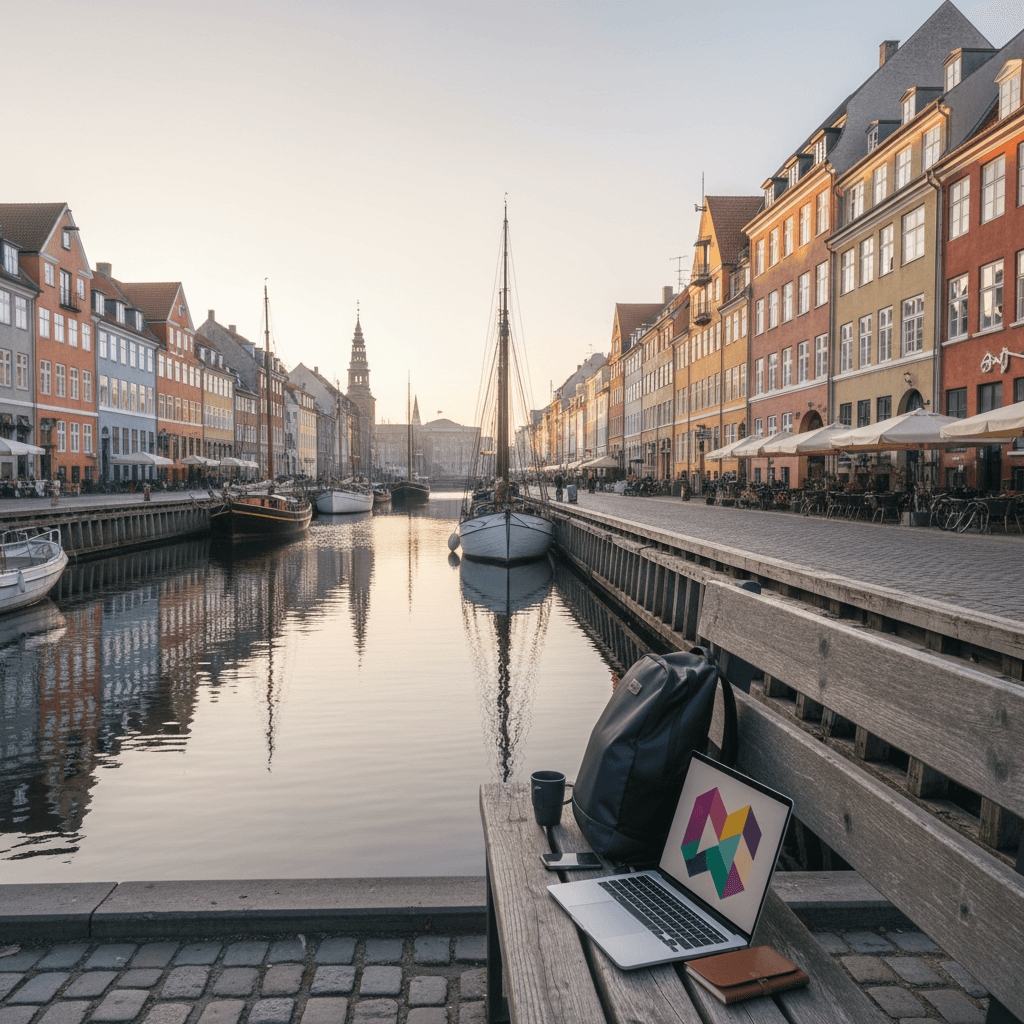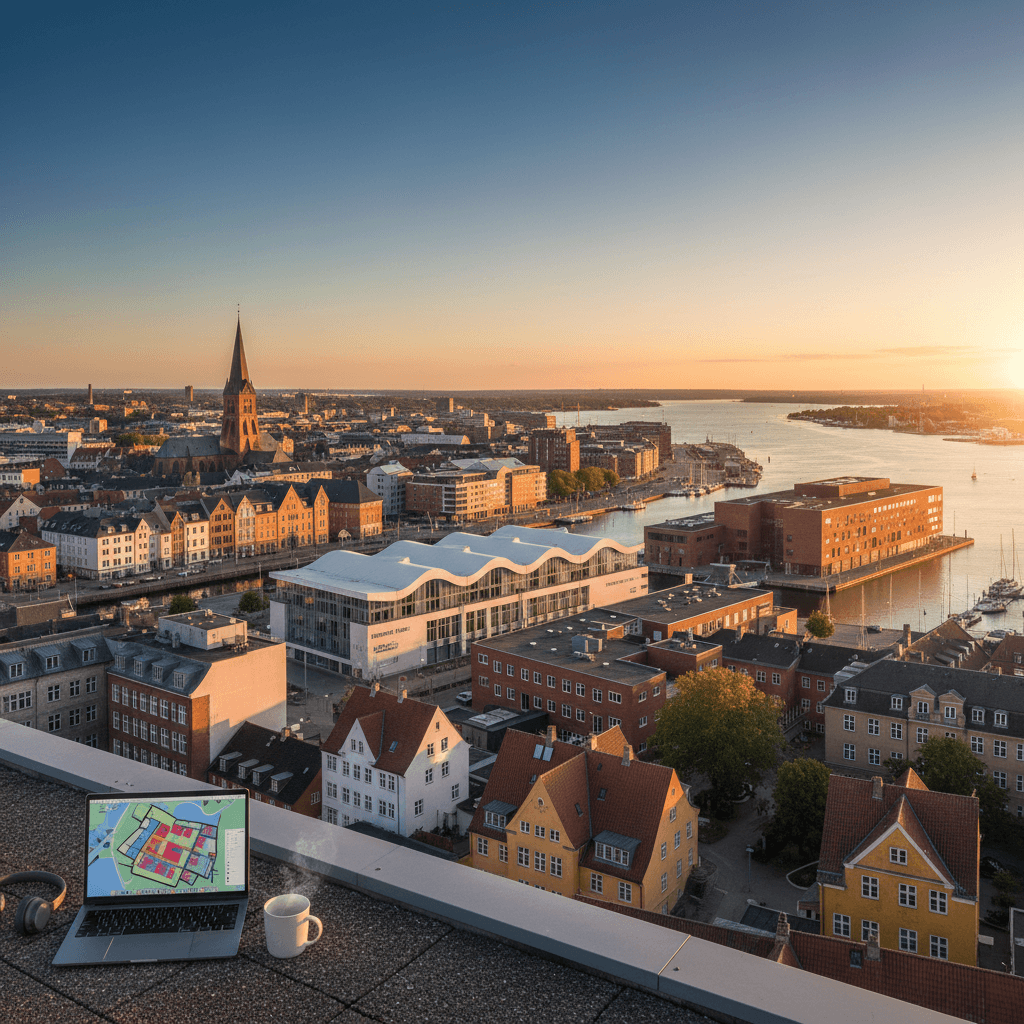
Aalborg
🇩🇰 Denmark
The Industrial Soul of North Jutland
Aalborg doesn't try to be Copenhagen. While the capital feels polished and international, Aalborg retains a gritty, honest charm that reflects its industrial roots. It is a city of contrasts where massive cement factories sit on the horizon, while the waterfront has been transformed into a sleek playground of modern architecture. For nomads, the vibe is decidedly low-key. You get the efficiency of a Scandinavian hub without the overwhelming crowds or the frantic pace of a major metropolis.
The city's personality is defined by the Limfjord, the body of water that cuts through the heart of town. It provides a constant sense of openness. You'll feel it most when walking past the Utzon Center or the Musikkens Hus, where the wind off the water keeps the air sharp and fresh. There is an unmistakable sense of hygge here, but it’s a practical, northern version. It’s about thick wool sweaters, strong coffee at Loves Bog- og Vincafe, and a community that values local breweries and quiet mornings over flashy displays of wealth.
The Nomad Reality: High Costs, High Quality
Living here requires a healthy bankroll. Most nomads find they need roughly $4,330 per month to live comfortably. This isn't a destination for those bootstrapping a new startup on a shoestring budget. Instead, it draws expats and remote workers who prioritize safety, air quality, and infrastructure. You’re paying for a society that works perfectly; the streets are clean, the 200+ Mbps internet is stable, and you can bike everywhere without a second thought.
The community is smaller and more tight-knit than in larger European cities. You won't find a massive nomad meetup every night, but you will find a dedicated crowd at spots like Lynfabrikken or Respace. It’s a place where you actually get to know the baristas and the other regulars at the library. Travelers often say the city feels like a large village where everyone speaks incredible English and the "work-to-live" balance is taken very seriously.
Where to Plant Your Feet
Choosing a neighborhood in Aalborg changes your daily rhythm significantly. Most short-term visitors stick to the center, but each pocket has its own energy.
- Latinerkvarteret (Latin Quarter): This is the scenic heart of the city. It’s packed with boutiques, street art, and cobblestone alleys. It’s the most expensive place to stay, but you’re steps away from the best cafes.
- Old Port Area: This is where the city’s industrial past meets its modern future. It’s popular with expats who want a bit more space and an urban, slightly edgy atmosphere near the local breweries.
- The Waterfront: Ideal for those who want to be near the cultural landmarks. It’s highly bikeable and offers the best views, though it can get crowded during the peak summer months of June through August.
A Seasonal Shift
Timing your stay is vital. The city transforms based on the light. In the summer, the sun barely sets, and the waterfront becomes a communal living room. In the winter, temperatures hover between 0 and 5°C, and the city retreats indoors. While the winter can feel long, it’s the best time to experience the true Danish lifestyle of cozying up in a quiet cafe with a laptop. Most seasoned travelers recommend the shoulder seasons, specifically late spring or autumn, to avoid the highest prices while still enjoying weather that allows for exploring the Lindholm Høje Viking ruins by bike.
Ultimately, Aalborg is for the nomad who is tired of the "top ten" lists and wants a base that feels authentic. It’s a place to focus, get deep work done in a high-tech coworking space, and spend your evenings drinking craft beer by the fjord. It’s expensive, yes, but the quality of life is arguably some of the highest you’ll find in Europe.
The Price of the Danish Dream
Living in Aalborg means embracing the high-tax, high-service Nordic model. It isn't a budget destination, and you'll feel the pinch more here than in many other European hubs. Most digital nomads find they need roughly $2,800-$3,500 per month to live comfortably. This is largely because short-term rentals and the nomad lifestyle carry a premium in a city with a tight housing market.
While the sticker shock is real, the quality of life is the trade-off. You're paying for some of the cleanest air in Europe, tap water that tastes better than bottled, and infrastructure that works like a Swiss watch. Expats often suggest that if you can manage the initial costs, the lack of daily friction makes the price tag easier to swallow.
Monthly Budget Tiers
- The Budget Nomad ($2,500/mo): This requires a bit of hustle. You'll likely be in a shared housing situation or a small studio further from the center. You'll stick to street food, local bakeries, and cooking at home, while relying entirely on a bicycle or the Aalborg Pass for transport.
- The Mid-Range Professional ($3,200/mo): This is the sweet spot for most. It covers a private 1-bedroom apartment, regular visits to coworking spaces like Respace, and dining out a few times a week at mid-range spots.
- The Comfortable Expat ($4,000+/mo): At this level, you're looking at a modern apartment in the Old Port area or a central spot in the Latin Quarter. You can enjoy upscale dining, frequent weekend trips, and the best local gyms without checking your bank balance daily.
Housing and Utilities
Finding a place to stay is the biggest hurdle in Aalborg. Demand is high, and the market moves fast. Most nomads use BoligPortal or DBA to hunt for rentals. Because of the spillover from Copenhagen's housing crisis, prices stay elevated even this far north. Expect to spend a large chunk of your budget on rent, though utilities are generally efficient and high-speed internet is a standard inclusion in most modern builds.
- Studio/1BR Apartment: Prices vary wildly based on proximity to the waterfront, but expect to pay a premium for anything central.
- Internet: Fast, reliable connections are the baseline here. You won't struggle with video calls or large uploads.
- Coworking: A desk at Lynfabrikken or Respace is a smart investment for the community alone. Prices vary, but they're essential for networking in the local tech scene.
Eating and Socializing
Dining out is an expensive hobby in Denmark. A mid-range meal will usually set you back $20 to $30 per person. To save money, follow the locals to the bakeries for sourdough and pastries, or hit up the street food markets. Jomfru Ane Gade is the heart of the social scene, packed with bars and restaurants. It's lively and loud, but it's where you'll find the most action on a Friday night.
Groceries are high-quality but pricey. If you're staying for more than a month, get used to the "hygge" lifestyle of hosting small dinners at home. It's the most authentic way to meet Danes anyway, as the social culture revolves around cozy indoor gatherings rather than flashy nights out.
Transport and Practicalities
The Aalborg Pass is your best friend for saving money on public transport. The city is incredibly walkable and bike-friendly, so you likely won't need a car. For longer trips or grocery hauls, local transport options are available, though they aren't exactly cheap. Most expats recommend getting a Wise account or a similar fintech card to avoid nasty exchange rate fees, as the local economy is almost entirely cashless. You'll rarely, if ever, need to carry physical Danish Krone.
For Solo Travelers and Nomads: The Latin Quarter (Latinerkvarteret)
If you want to be where the action is, head straight for the Latin Quarter. It is the most atmospheric part of the city, characterized by narrow cobblestone streets, colorful 17th century houses, and a heavy concentration of independent boutiques. For nomads, this is the sweet spot because you are never more than a three minute walk from a solid caffeine fix or a place to plug in.
Most nomads gravitate toward Loves Bog- og Vincafe here, which transitions perfectly from a quiet morning workspace to a social wine bar in the evening. The vibe is decidedly artistic, with street art tucked into alleys and a very high walkability score. The trade off for being in the heart of the charm is the price tag; you will pay a premium for short term rentals here, and the weekends can get a bit noisy when the local crowds descend on the cafes.
- Estimated Rent: $1,500 to $2,000 for a central studio or 1BR.
- Vibe: Historic, trendy, and social.
- Best for: Networking and being in the center of the creative scene.
For Expats and Tech Professionals: The Old Port Area
The Old Port is where Aalborg’s industrial past meets its high tech future. It has been heavily redeveloped into an urban hub that feels a bit more "grown up" than the Latin Quarter. This area is a favorite for expats working in tech or design because it houses innovative coworking spaces like Respace and Lynfabrikken. You get a lot of breathing room here, with wide views of the water and plenty of modern apartment complexes that actually have elevators and updated insulation, which is a luxury in older Danish cities.
Living here means you are close to the local breweries and the street food markets. It feels less like a tourist postcard and more like a functional, modern neighborhood. While it still has some industrial remnants that lack the "cute" factor of the city center, the proximity to the waterfront and the high speed 34 Mbps internet infrastructure makes it a practical choice for anyone staying six months or longer.
- Estimated Rent: $1,200 to $1,800 for modern apartments.
- Vibe: Industrial-chic, professional, and spacious.
- Best for: Long term stays and those who need a dedicated office environment.
For Families and Slow Travelers: Central Waterfront
The Waterfront area has undergone a massive transformation, anchored by the iconic Utzon Center and the Kunsten Museum of Modern Art nearby. It is the best pick for families or those who prefer a slower pace because of the massive amount of green space and pedestrian zones. You can easily navigate the entire stretch by bike, and the Aalborg Pass makes it affordable to hop between museums and public harbor baths without overspending.
During the warmer months, this area is the city’s backyard. Families appreciate the safety and the clean air, plus the fact that the grocery stores here are well stocked with organic options. It is quieter than the nightlife districts, though you should expect crowds during the peak summer months of June through August. If you are looking for a house rather than an apartment, check BoligPortal or DBA for listings slightly further back from the water where prices soften a bit.
- Estimated Rent: $1,800 to $2,500 for larger multi-room units.
- Vibe: Relaxed, scenic, and family-friendly.
- Best for: Outdoor access and a quiet night's sleep.
A Note on Costs and Logistics
Regardless of which neighborhood you choose, Aalborg is not a budget destination. Most residents find they need roughly $4,330 per month to live comfortably, though you can shave that down to $3,000 if you opt for shared housing or stick to the excellent local bakeries for most meals. Public transport is efficient, but the city is so compact that a used bike is usually your best investment. If you are hunting for a flat, start your search early; the market is tight, and the best spots in the Latin Quarter go fast.
Connectivity and Speed
You won't have to hunt for a signal in Aalborg. Denmark consistently ranks among the top countries for digital infrastructure, and this city is no exception. Most nomads find the average download speeds of 200 Mbps more than enough for video calls and heavy uploads, though many private fibers in the city center clock in much higher. Mobile coverage is virtually seamless across the city. If you're staying for more than a week, skip the roaming charges and grab a local SIM from Telenor or 3. You can find these at the airport or various shops downtown; they're affordable and provide reliable 5G coverage even when you're out exploring the waterfront.
Top Coworking Spaces
Aalborg has a smaller but more intimate coworking scene than Copenhagen, which makes it easier to actually meet people rather than just sitting next to them. If you want a professional environment with a creative edge, Syndikatet is a go-to spot. It attracts a mix of local designers and tech nomads who appreciate the industrial-chic aesthetics. It's the kind of place where the coffee is strong and the networking happens naturally over lunch.
For those who need a more innovative, tech-focused atmosphere, Mama i MADE it is a solid alternative. It's popular with expats and entrepreneurs who need a dedicated desk and a quiet environment to focus. While prices vary depending on your length of stay, most nomads find the investment worth it for the high-speed reliability and the community access. It's a great way to bypass the isolation that sometimes comes with working from a rental apartment.
Laptop-Friendly Cafes and Public Spaces
If you prefer the hum of a cafe over a formal office, you have plenty of options. Loves Bog- og Vincafe is a local favorite. It's a bookstore and wine bar hybrid that manages to feel cozy rather than cluttered. It's perfect for an afternoon of deep work, especially if you plan on transitioning from coffee to a glass of Riesling once the sun starts to set. The vibe is relaxed, and the staff generally don't mind if you linger with a laptop for a few hours.
For a more modern, open-air feeling, head to the Aalborg Main Library (Hovedbiblioteket). Libraries in Denmark are world-class, offering free, high-speed Wi-Fi, plenty of power outlets, and a quiet atmosphere that's hard to beat for $0.
- Baresso: This is the reliable Danish coffee chain. It's predictable, has plenty of seating, and the Wi-Fi is always stable. You'll find them scattered around the central shopping districts.
- Waterfront Cafes: During the shoulder seasons of spring and autumn, the cafes near the Utzon Center offer great views and decent connectivity, though they can get a bit loud during the peak summer tourist rush.
- Jomfru Ane Gade: While famous for nightlife, some of the spots along this street are surprisingly quiet during the day and offer a unique, historic backdrop for a morning work session.
Practical Tips for Remote Workers
Keep in mind that while Wi-Fi is everywhere, Danes value their "hygge" time. In smaller, independent bakeries, you might find fewer power outlets than you'd expect in a US-based Starbucks. It's always a good idea to show up with a full battery. If you're planning on a long-term stay, check BoligPortal or DBA for apartments; just be aware that the market is tight and you'll want to confirm the internet setup before signing anything. Most modern builds in the Old Port Area are pre-wired for high-speed fiber, making them ideal for heavy users.
A Safe Haven in the North
Denmark consistently ranks as one of the safest countries on the planet, and Aalborg is no exception. Whether you are wandering through the Latin Quarter at midnight or cycling along the waterfront, you'll feel a level of security that is rare in most major cities. Expats frequently mention that the general sense of trust here is palpable; it is the kind of place where people leave their bikes unlocked for a quick errand and parents feel comfortable letting children play in local parks unsupervised.
There are no "no-go" zones or dangerous neighborhoods to avoid. Even Jomfru Ane Gade, the city's famous nightlife hub, is well-monitored and generally safe, though it can get rowdy with weekend crowds. The biggest risks you'll likely face are petty thefts like bicycle larceny or the occasional pickpocket in high-traffic tourist areas. Keep your belongings close in crowded cafes, and you will be fine.
The city's environmental safety is another major draw. The air quality is excellent, and the tap water is some of the cleanest in the world. You can drink straight from the faucet without a second thought, which saves a significant amount on your monthly budget. Food safety standards are also incredibly high, so whether you are grabbing a pastry from a local bakery or street food by the harbor, you can trust the quality.
Navigating the Healthcare System
If you are moving to Aalborg as an expat or long-term nomad, you will find the healthcare system to be efficient, though it operates differently than in the US or UK. The Danish public healthcare system is funded through taxes and provides high-quality care to all residents with a CPR number (civil registration number). Once you are registered, you'll receive a "yellow card," which is your golden ticket to free doctor visits and hospital treatments.
For short-term travelers and nomads on a 90-day Schengen stay, you won't have access to the free public system. In this case, private travel insurance is a requirement. Most nomads recommend providers like SafetyWing or World Nomads to cover any unexpected hiccups. If you need a doctor and don't have a CPR number, you can still visit a local GP, but expect to pay an out-of-pocket fee for the consultation.
- Emergency Services: Dial 112 for life-threatening emergencies (police, fire, or ambulance).
- Non-Emergency Medical: Dial 1818 to reach the after-hours medical service (Lægevagten) in the North Jutland region.
- Pharmacies: Look for the "Apotek" sign. Budolfi Apotek in the city center is one of the most reliable spots for prescriptions and over-the-counter meds.
Practical Medical Tips for Nomads
Pharmacies in Aalborg are widespread, but keep in mind that many medications that are over-the-counter in other countries might require a prescription here. It's a good idea to bring a supply of your specific brands for things like allergy meds or specialized painkillers. If you do need a prescription filled, the process is digital; once a doctor issues it, you can pick it up at any Apotek in the city by showing your ID.
For dental care, be prepared to pay. Unlike general healthcare, dental work is not fully covered for adults in Denmark and can be quite expensive. Most expats suggest getting a check-up before you arrive to avoid the high costs of Danish dental clinics. If you have a minor health concern that doesn't require a doctor, the pharmacists at Aalborg Budolfi Apotek are highly trained and can often provide advice or suggest effective over-the-counter remedies.
Summary of Safety and Health Stats
- General Safety: Very High
- Tap Water: Safe to drink
- Emergency Number: 112
- Healthcare Access: Free for residents with a CPR number; private insurance required for visitors
- Air Quality: Excellent
The Two-Wheeled Way of Life
In Aalborg, your first order of business should be securing a bike. Like most Danish cities, the infrastructure here favors the cyclist over the motorist. The city is flat, compact, and crisscrossed with dedicated lanes that make getting from the Latin Quarter to the Old Port a breeze. You'll find bike rental shops scattered throughout the center, and many long term nomads simply pick up a used frame on DBA or BoligPortal to save on daily rental fees.
Walking is equally viable if you're staying central. Most of the major landmarks, from the Utzon Center to the street art trails, are within a twenty minute stroll of each other. The waterfront is particularly pedestrian friendly, offering wide paths that are perfect for a morning run or a slow walk to a meeting at Lynfabrikken.
Public Transit and the Aalborg Pass
When the North Jutland wind picks up or you're heading further afield, the bus network is your best friend. The buses are punctual, clean, and cover almost every corner of the city and its suburbs. You can pay as you go, but most expats and frequent travelers find the Aalborg Pass to be the most cost effective solution. It covers your transport and grants entry to several museums, making it a solid choice for your first few weeks in town.
- Single Bus Fare: Approximately $3 to $4 depending on the zones.
- Aalborg Pass: Offers significant savings for those hitting the main sights and using transit daily.
- Regional Trains: The main station connects you to the rest of Denmark, with frequent service to Aarhus and Copenhagen.
Airport Connections
Getting into the city from Aalborg Airport (AAB) is refreshingly simple. It's located just about six kilometers from the city center. You won't need to shell out for an expensive private transfer; the local bus service runs frequently and takes about 15 to 20 minutes to reach the central station. If you're arriving late or carrying heavy gear, taxis are available outside the terminal, though they'll set you back significantly more than the bus.
Ride-Hailing and Apps
While Denmark has had a complicated relationship with ride-sharing in the past, apps like Uber and Bolt are now part of the landscape. They're useful for late nights on Jomfru Ane Gade when the buses run less frequently, but they aren't the primary way locals get around. For the most part, you'll find that Rejseplanen is the only app you truly need. It's the gold standard for planning trips across buses, trains, and even ferries throughout Denmark, providing real time updates and platform numbers.
Practical Transport Tips
- Donkey Republic: Look for the bright orange bikes. This app-based rental service is everywhere in Aalborg and is perfect for quick, one way trips.
- Electric Scooters: You'll see various shared scooter brands near the waterfront and university areas. They're fun for short bursts but can get pricey if used as your main transport.
- Parking: If you do decide to rent a car for a day trip to Lindholm Høje, be aware that parking in the city center is expensive and strictly enforced. Stick to the outskirts or designated parking garages.
Most nomads find that between a sturdy pair of walking shoes and a rental bike, they rarely need to spend much on transport. It's a city designed for human scale movement, which fits perfectly with the relaxed, Hygge focused lifestyle you'll find here.
The English Advantage
You can breathe a sigh of relief when landing in Aalborg. Denmark consistently ranks as one of the most proficient non-native English speaking countries in the world. In Aalborg, this translates to a frictionless daily life. You'll find that almost everyone from the barista at Loves Bog- og Vincafe to the librarians at Dokk1 speaks English with near-perfect fluency. For digital nomads, this eliminates the initial "language barrier" stress that usually comes with a new destination.
Most expats find that professional environments and social hubs like Lynfabrikken or Respace operate comfortably in English. You won't struggle to set up a gym membership, ask for directions to the Utzon Center, or discuss your laptop's Wi-Fi connection with tech support. Even the local government and healthcare services are well-equipped to handle English speakers, which is a major weight off your shoulders if you're planning a longer stay.
Danish: The Social Key
While you can easily survive using only English, learning a bit of Danish is the fastest way to move from "tourist" to "local." Danish is a North Germanic language, so if you speak English or German, you'll recognize some vocabulary on signs. However, the pronunciation is notoriously tricky. Danes often joke that the language sounds like speaking with a "hot potato" in your mouth because of its soft consonants and unique vowels.
The real value of learning the local tongue shows up in social settings. While Danes will happily switch to English for you, the local "hygge" (that famous cozy atmosphere) often happens in Danish. If you're staying for more than a few months, consider a local language exchange or using an app to pick up the basics. It shows respect for the culture and helps you break into local social circles that might otherwise feel a bit private.
Essential Phrases to Know
Politeness goes a long way in Jutland. Even if you follow up immediately in English, starting with a Danish greeting changes the energy of the interaction. Here are the basics you'll actually use:
- Hej (Hi): Pronounced like "Hi." You'll hear this everywhere.
- Tak (Thanks): Short and simple. You'll use this at every checkout counter.
- Mange tak (Many thanks): Use this when someone goes out of their way to help you.
- Hej hej (Goodbye): A friendly, casual way to say bye.
- Undskyld (Excuse me/Sorry): Useful when navigating the crowds on Jomfru Ane Gade.
- Ja / Nej (Yes / No): Self-explanatory, but good for quick nods.
Communication Tools and Apps
Since the city is highly digitized, your phone is your best communication tool. Google Translate is the standard for reading menus or signs, though most restaurants in the Latin Quarter have English menus available. For official business, many expats recommend keeping a translation app handy for mail or documents that might arrive in Danish.
Digital nomads should also get comfortable with WhatsApp and Messenger, which are the primary ways locals organize meetups and stay in touch. If you're looking for community, join local expat groups on Facebook or check the notice boards at Dokk1. Most of these groups communicate primarily in English to remain inclusive to the international community.
The Cultural Nuance
Communication in Aalborg is direct. If you ask a Dane for their opinion, don't be surprised if they give it to you straight without much sugar-coating. This isn't rudeness; it's a cultural preference for honesty and efficiency. This directness makes business meetings and networking at places like Respace very productive. You'll know exactly where you stand, which most nomads find refreshing once they get used to it.
The Seasonal Vibe
Aalborg lives and breathes by its maritime climate. It's rarely extreme, but it's consistently fickle. You'll experience a cool, temperate environment where the thermometer usually hovers between 0°C and 5°C (32-41°F) in the heart of winter and climbs to a comfortable 15°C to 20°C (59-68°F) during the peak of summer. Because of the coastal winds, locals often say it feels closer to 7°C or 15°C regardless of what the app tells you.
Rain is a year round companion in Northern Jutland. There isn't a specific "monsoon" or "dry" season, so a high quality waterproof shell is more than just a fashion choice; it's a requirement for survival if you're biking to Lynfabrikken or Respace for a work session. If you can handle a bit of drizzle, the city remains functional and beautiful through every month.
When to Touch Down
Most nomads and long term expats find that the shoulder seasons of spring and autumn are the absolute sweet spots for a stay. During these months, the tourist crowds at the Utzon Center and Lindholm Høje thin out significantly, and the prices for short term rentals on platforms like BoligPortal might be slightly more negotiable than during the summer rush.
Spring brings a sense of renewal to the waterfront, while autumn offers that classic Danish "hygge" feeling as the cafes on Jomfru Ane Gade start lighting candles and breaking out the heavy blankets for outdoor seating. You'll get the best of the city's social life without the frantic energy of the peak vacation months.
High Summer: June to August
Summer in Aalborg is glorious but comes with caveats. This is when the city truly wakes up, with locals flocking to the harbor and the street art tours in Latinerkvarteret at their peak. However, it's also the rainiest time of year and the most expensive. Since Aalborg already carries a high price tag, often reaching $4,330 per month for a comfortable nomad lifestyle, the summer premium can sting. If you do visit then, grab an Aalborg Pass to offset the costs of attractions and transport.
The Winter Reality
Winter isn't for the faint of heart, but it has its own charm. The days are short, and the damp cold can feel bone chilling. Most travelers avoid this period because of the gray skies and the high cost of heating an apartment. That said, if your goal is to hunker down at the Aalborg Main Library and get deep work done with 34 Mbps internet, the winter silence provides a distraction free environment. Just be prepared for the sun to disappear by mid afternoon.
Quick Seasonal Breakdown
- Spring (April to May): Crisp air, blooming parks, and manageable prices. Ideal for those who like to explore by bike.
- Summer (June to August): Lively atmosphere and long days, but expect frequent rain and the highest accommodation rates.
- Autumn (September to October): Golden foliage and a cozy vibe. Great for networking in coworking spaces as everyone returns from summer holidays.
- Winter (November to March): Dark and chilly. Best for budget conscious travelers who don't mind the cold and want to focus on indoor culture and museums like Kunsten.
Connectivity and Workspace
You won't have to hunt for a signal here. Denmark is famous for its infrastructure, and Aalborg is no exception with average speeds around 34 Mbps. Most nomads find the mobile coverage from providers like Telenor or 3 to be rock solid, even when you're out by the waterfront. You can pick up a SIM card at the airport or at various shops in the city center.
For a dedicated desk, Lynfabrikken and Respace are the top picks for the remote crowd. They’ve got that sleek Scandinavian design that makes you actually want to get through your inbox. If you prefer a more relaxed vibe, Loves Bog- og Vincafe is a local favorite where you can transition from coffee to wine without moving your laptop. The Dokk1 public library is another fantastic, free resource with plenty of power outlets and quiet corners.
Money and Budgeting
Let's be real: Aalborg isn't a budget destination. You should plan for a monthly spend of about $4,330 if you want a comfortable lifestyle. While the local average income sits around $2,500, short term rentals and dining out will eat into your funds quickly. Cards are king here, and you'll rarely need physical cash. Expats recommend using Wise or similar fintech apps to avoid nasty exchange fees at the ATM.
- Budget Tier ($3,000/mo): Shared housing, cooking at home, and sticking to street food or bakeries.
- Mid-range Tier ($4,000/mo): A private 1BR apartment, regular cafe visits, and mid-range dining.
- Comfortable Tier ($5,000+/mo): High end apartment, frequent meals on Jomfru Ane Gade, and private gyms.
Housing and Neighborhoods
The rental market is tight. If you're looking for a long term stay, start your search early on BoligPortal or DBA. Most expats suggest looking in Latinerkvarteret if you want to be in the heart of the action, though it gets pricey. The Old Port Area is a great alternative if you like an industrial-chic vibe and proximity to local breweries.
Getting Around
Aalborg is incredibly walkable, but the locals live on their bikes. You can rent a cycle or a scooter to explore the waterfront, which is the best way to see the Utzon Center. For longer trips, the bus and train network is excellent. Grab an Aalborg Pass to save some money if you're planning on hitting the main attractions like Lindholm Høje or the Kunsten Museum.
Climate and Timing
The weather is a bit of a wildcard. It rains throughout the year, so a waterproof jacket is a non-negotiable part of your wardrobe. Summers are mild, usually hovering between 15-20°C (59-68°F), while winters stay just above freezing. Most travelers say the shoulder seasons of spring and autumn are the sweet spots. You'll avoid the peak summer crowds but still get enough daylight to enjoy the city's street art and outdoor spaces.
Language and Culture
While Danish is the official language, English proficiency is through the roof. You'll have no trouble ordering a coffee or asking for directions. That said, learning a few basics like "Tak" (thanks) and "Hej" (hello) goes a long way. The local culture revolves around Hygge, that specific Danish brand of coziness and community. You'll feel it most in the smaller cafes and independent bakeries tucked away in the side streets.
Visa Requirements
Denmark doesn't currently offer a specific digital nomad visa. Most non-EU nomads enter on a 90-day Schengen visa. If you're planning a longer stay, you'll need to look into specific residency permits, which can be a bit more complex. Always check the latest requirements for your specific nationality before booking your flight.
Need visa and immigration info for Denmark?
🇩🇰 View Denmark Country GuideEasy Landing
Settle in, no stress
Monthly Budget Estimates
More cities in Denmark
Aarhus
🇩🇰 Denmark
Esbjerg
🇩🇰 Denmark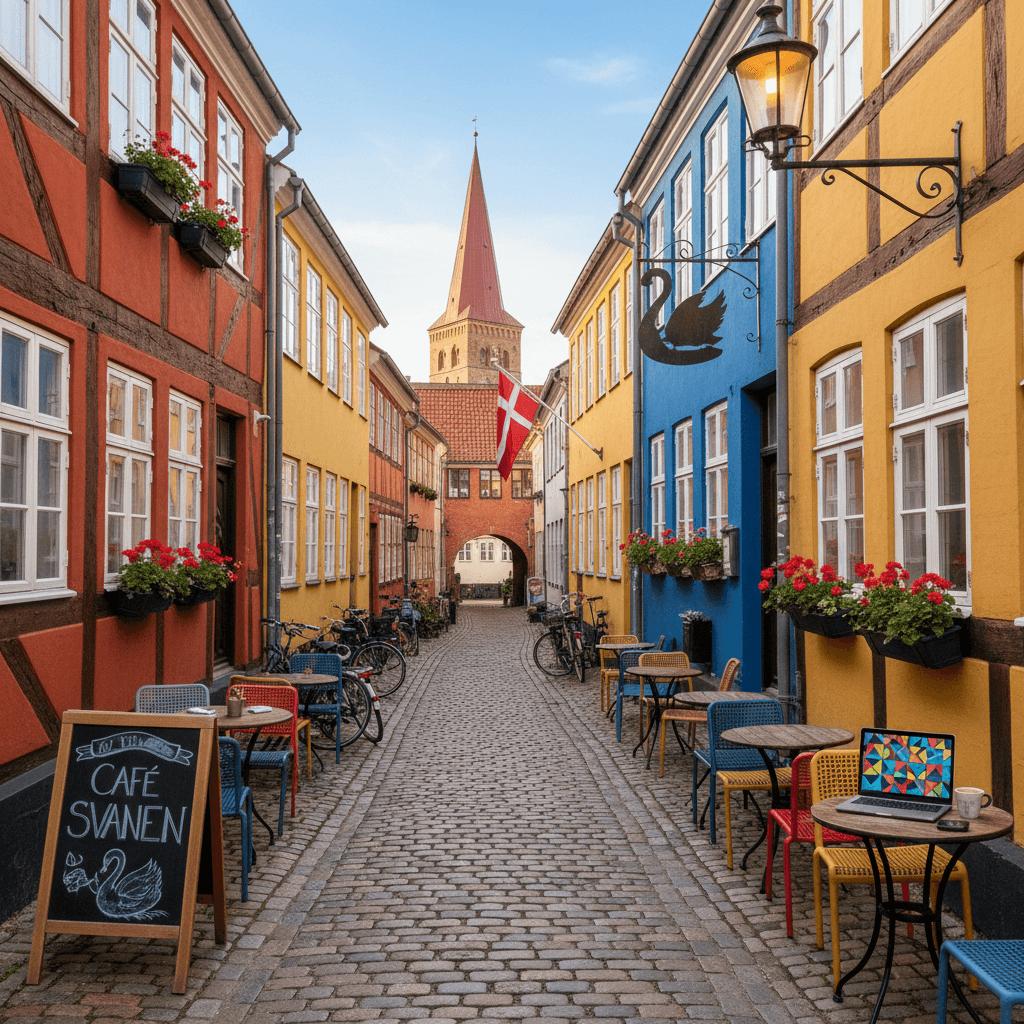
Odense
🇩🇰 Denmark