The Geography of Exclusion


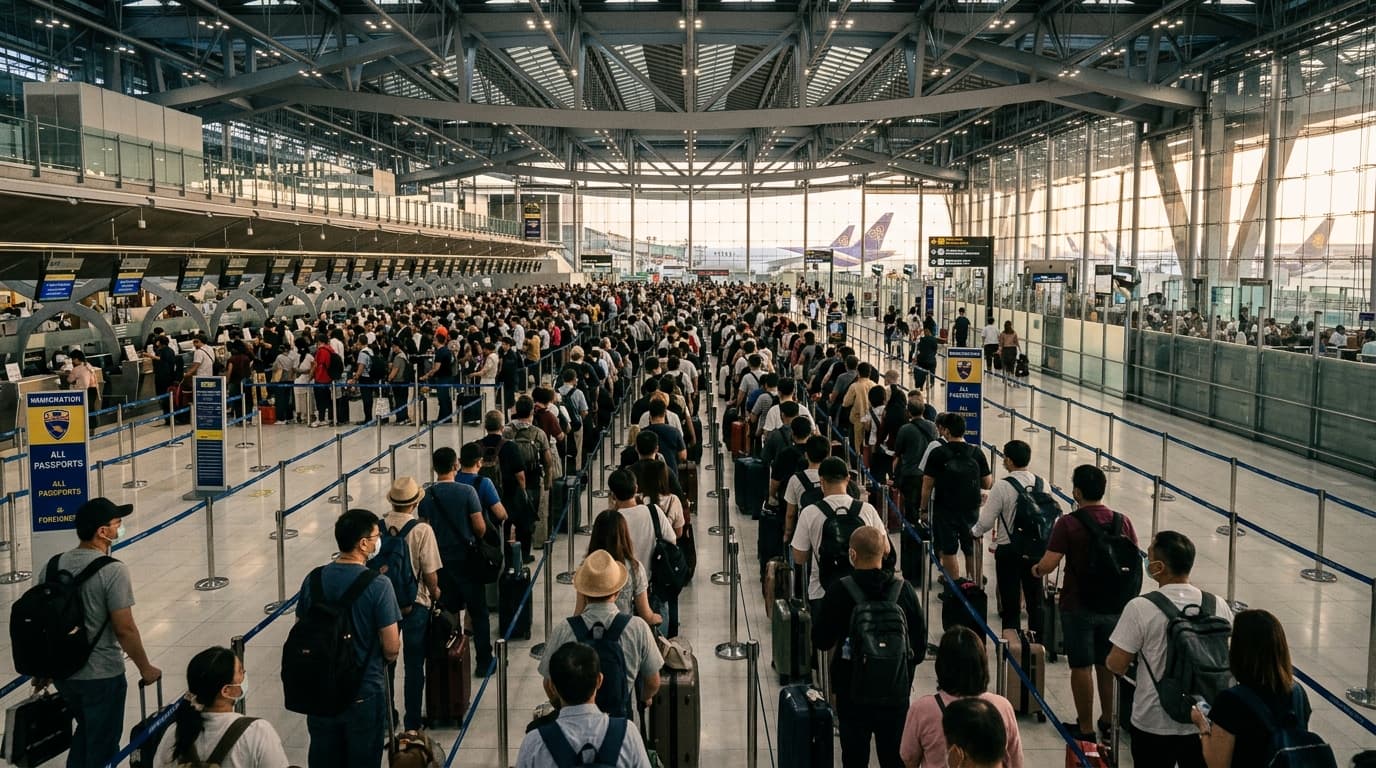
War is bad for the people, the planet, and travel... yet it somehow still persists in the age of super intelligence smh. In addition to the pain it causes to actual lives of people in those war zones, it has also made nomadism that much harder (I know, pretty low on the todem pole, but still...). Higher gas prices, longer ques, and cancelled flights... all a nightmare scenario. Let' s hope cooler heads prevail, and we can get back to exploration of the planet. How has the war impacted you?
The era of the $400 cross-continental flight wasn't a natural evolution of technology; it was a historical anomaly. As of March 2026, that anomaly has officially ended.
The digital nomad dream was built on a foundation of cheap kerosene and frictionless borders, but that foundation is fracturing. Between the spiraling Iran-Israel-U.S. conflict and a new wave of protectionist travel bans, the "War on Travel" isn't just a headline. It's a direct tax on your global mobility that is fundamentally changing where, and if, you can go.
The Geography of Exclusion
We are witnessing a shift where "low-risk" is no longer about your behavior, but about the passport you hold and the current diplomatic temperature of your home country. While the 2025 Travel Ban (EO 14161) targets 12 nations under the guise of security, the data tells a story of geopolitical posturing rather than safety.
African nations are currently facing 57-61% student visa denial rates, suggesting that Western powers are favoring strategic allies over actual security metrics. Take Chad, for example. It faces bans despite having only 451 overstay cases, while nations with over 50,000 absolute overstays remain untouched because they are deemed "strategic partners."
If you're a nomad from a restricted nation like Venezuela or Myanmar, the visa rule changes of 2026 mean you can no longer pivot easily via tourist visas. This creates a "bifurcated world" where travel is seamless for a select few and a bureaucratic nightmare for the rest. When we restrict travel based on posturing, we lose the "soft power" of cultural exchange, and the American Security Project suggests the strategic costs of these bans may far outweigh any statistical gains.
The $200 Barrel and the Death of the Budget Long-Haul
Fuel has been weaponized. Following the U.S.-Israeli strikes on Iran in early March 2026, jet fuel prices skyrocketed from $90 to $200 per barrel. This isn't an abstract commodity spike; it's a direct surcharge on your next flight.
Carriers like Qantas and Air New Zealand have already pulled the trigger, adding approximately NZ$90 ($60) to long-haul tickets. SAS has characterized these as "necessary reactions" to maintain operations in a world of unhedged fuel spikes. This creates a volatile pricing landscape where your flight to London might stay affordable while your flight to Tokyo doubles overnight.
The divide comes down to the "Hedging Lottery." Airlines like British Airways (IAG) that hedged their fuel costs are holding prices steady for now. Unhedged airlines are passing every cent of that $200 barrel directly to your credit card. Before you book your next trip, check our country comparison tool to see if the cost of living in your destination still offsets the massive spike in transit costs.
Airspace as a Finite Resource
The sky is becoming a chessboard. Middle Eastern airspace closures have forced massive rerouting on Asia-Europe corridors. Hubs like Emirates and Qatar Airways are seeing capacity reduced by up to one-third, turning a 12-hour flight into a 15-hour endurance test with a price tag to match.
The IATA 2025 Annual Security Report labels this the most dangerous year for aviation since the MH17 tragedy in 2014. With over 2,500 incidents of GPS jamming and drone strikes in Sudan, the "safe" routes are disappearing. While Europe and the CIS regions already bear a 3-6% fuel premium due to the Ukraine war, the Asia-Pacific region is now the hardest hit by the Iran conflict.
This is effectively "boxing in" traditional nomad hubs. If you are currently in Thailand or Vietnam, you'll notice that "quick hops" to Europe now carry a 35% surcharge due to the fuel and time required to skirt around conflict zones.
The High Cost of Investor Fear
A University of Portsmouth study reveals that geopolitical fear tanks airline stocks for up to a year. When investors panic, airlines cut "risky" routes. These are often the off-the-beaten-path destinations that the Stamped Nomad community loves most.
With net profit margins thinning to a razor-thin 3.6%, airlines no longer have a cushion. Every geopolitical tremor is now an immediate price hike. Interestingly, the same study found that climate policy uncertainty can actually boost airline stocks in the short term as companies adapt. It seems airlines are more afraid of a missile than a carbon tax.
What You Should Do Now
The "War on Travel" requires a shift in how you manage your mobility. You can't rely on last-minute, low-cost flexibility anymore.
Prioritize Hedged Carriers: When booking long-haul, favor airlines with strong fuel hedging positions like IAG (British Airways) or Iberia. They are less likely to hit you with "emergency" fuel surcharges mid-route.
Slow Down: The cost of moving has increased by 20-30% in fuel and time alone. Instead of monthly hops, consider three-month stays in stable regions. Use a visa finder quiz to identify countries offering longer-term residency to avoid the "border run" trap, which is now prohibitively expensive.
Watch the Hubs: Avoid booking connections through volatile regions. If a route relies on Middle Eastern airspace, expect delays or sudden cancellations. Routes through North America or the Pacific are currently more stable, even if they look longer on a map.
The "Global Citizen" is becoming an endangered species. If the cost of moving between cultures continues to be used as a diplomatic lever, we have to decide if freedom of movement is a right worth fighting for, or a luxury we can no longer afford. The sky isn't open anymore; it's guarded. Plan accordingly.