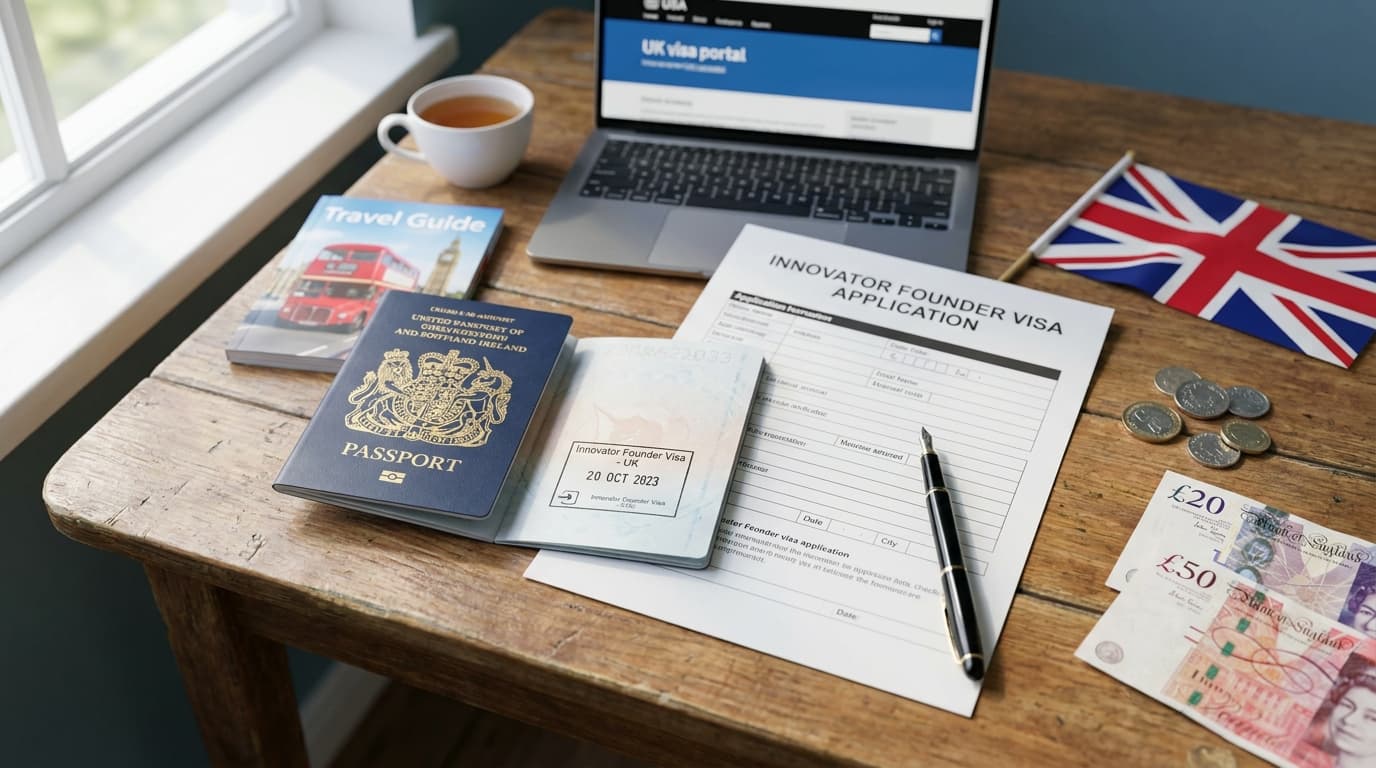
UK Innovator Founder Visa
Visa Data Sheet
- $1,625 in savings
- $1,735 – $2,165
- 6 weeks
The UK doesn’t have a digital nomad visa. For founders, the main business route is the Innovator Founder visa and it’s a very different animal from a Standard Visitor visa. Visitors can come for short stays, usually up to 6 months, for tourism or limited business meetings. They can’t start or run a UK business.
The Innovator Founder route is for people who want to set up and run a business in the UK that's innovative, viable and scalable. The business has to be new, so you can’t join one that’s already trading. It also has to be endorsed by a Home Office-approved endorsing body before you apply.
That endorsement is the real gatekeeper. The endorsing body has to say your idea is genuinely original, has growth potential and that you’ll play an active, central role in building it. You’ll also need to meet the usual rules on age, English language and financial maintenance, plus general suitability checks.
- Age: You must be at least 18.
- English: You normally need CEFR level B2.
- Maintenance funds: Most new applicants need at least £1,270 held for 28 consecutive days, unless exempt.
- Business backing: You need an endorsement letter from an approved body.
The visa lets you set up one or more businesses, work for those businesses as a director or self-employed partner and do other work at skill level 3 or above, as long as it doesn’t get in the way of the endorsed business. You can also bring eligible dependants.
It’s normally granted for 3 years. If your business keeps meeting the rules, you can extend for further 3-year periods and there’s no limit on extensions. Better still, it can lead to settlement after 3 years if you meet the business-growth and endorsement requirements.
- Application fee from outside the UK: £1,357 per person.
- Application fee inside the UK: £1,693 per person.
- Endorsement fee: Usually £1,000.
- Contact-point meeting fee: £500 for each mandatory meeting, usually at least two during your permission.
This route isn't cheap and the paperwork is heavier than a visitor entry. But if you’re serious about building a UK business, it’s the main route that actually fits the job.
To qualify for the UK Innovator Founder visa, you need to be 18 or older, have an endorsed business idea and meet the English and maintenance rules. There isn’t a nationality cap, but you do need to be a non-UK, non-Irish national and you can’t fall foul of the general refusal rules in the immigration system.
The main test is the business itself. It has to be innovative, viable and scalable and it has to be a new business you’re setting up and running in the UK. You can’t just join an existing trading business and call it a startup. An approved endorsing body also has to back your idea before you apply.
- Age: You must be 18 or over.
- Endorsement: Your business idea must be approved by an endorsing body.
- Business type: It has to be new, innovative, viable and scalable.
- English: You need level B2 on the CEFR scale, unless you’re exempt.
- Funds: You must meet the maintenance requirement.
- Refusal rules: You can’t be refused under Part 9 of the immigration rules.
The money side is a bit more manageable than some UK routes. There’s no fixed business investment threshold like the old £50,000 rule, but you do need to show you’ve got enough money to launch and run the business. For personal maintenance, the standard figure is £1,270 held for 28 consecutive days before you apply, if you’re applying from outside the UK or you’ve been in the UK for less than 12 months.
You can also bring family members. The route allows a partner and children under 18 as dependants, but each dependant has to make their own application and may need to meet separate maintenance rules.
Once you’re on the visa, you’re expected to keep working on the endorsed business and stay in touch with the endorsing body. You can run more than one business and do other skilled work outside your own company, but that outside work has to be at least RQF level 3. You can’t work as a professional sportsperson or sports coach.
The visa is normally granted for 3 years. It can be extended and it can lead to settlement after 3 years if you meet the extra Home Office criteria. The official guidance doesn’t give a fixed processing time, so don’t assume this is a quick application.
The Innovator Founder route is paperwork-heavy and the Home Office is picky about the order. You need an endorsement first, then you build the visa application around it. No endorsement letter, no application.
- Endorsement letter: This must be issued no more than 3 months before you apply and it can’t have been withdrawn.
- Passport or travel document: Your identity document for the application.
- Biometrics: You’ll need to provide these when asked.
- English language: The route requires English at B2 level.
- Maintenance funds: You need £1,270 held for 28 consecutive days unless you’ve already had permission to stay in the UK for at least 12 months.
- Immigration Health Charge: This has to be paid with the application.
The endorsement letter itself has to be detailed. It should name the endorsing body, give the endorsement reference number, issue date, your full name, date of birth, nationality and passport number, plus contact details for the person who can verify it.
For a new business, the letter must also say you’ve got a business plan, you created or made the plan’s ideas, you’ll take a day-to-day role, you’ll attend at least 2 contact-point meetings and you’re either the sole founder or an instrumental member of the founding team. The business also has to be judged innovative, viable and scalable, which means original, realistic and capable of growing in UK and international markets.
If you’re applying for the same business, the rules shift a bit. The letter needs to confirm the business was already endorsed, is active or trading, shows significant progress and that you’re still involved in day-to-day management. The company also has to be registered with Companies House and you need to be listed as a director or member.
- Extra funds for dependants: £285 for a partner, £315 for the first child and £200 for each additional child.
- Translations: If you apply from overseas and your documents aren’t in English or Welsh, you need the original plus a full independently verified translation.
- TB test: A TB certificate is only required if your country falls under the official TB rules.
The fee side isn't cheap. The Home Office visa fee is £1,357 if you apply from outside the UK or £1,693 if you’re switching or extending from inside the UK. The endorsing body also charges £1,000, plus £500 for each required contact-point meeting after a successful visa application.
Decision times are usually 3 weeks outside the UK and 8 weeks inside the UK, once you’ve applied, proved your identity and uploaded the documents. The visa can be granted for up to 3 years and you can extend it for another 3 years with no cap on extensions.
Settlement is possible after 3 years if you meet the business and residence tests. That means the endorsement, continuous residence and Life in the UK requirements still matter, so don’t treat this as a loose visa. The route is built for people who can show a real business, not just a pitch deck.
The Innovator Founder visa isn’t cheap and the Home Office fees are only part of the bill. The main government charges are the visa application fee and the Immigration Health Surcharge, then you may still have endorsement-body charges, legal help and dependant costs on top.
- Application fee, outside the UK: £1,357 per person.
- Application fee, inside the UK: £1,693 per person if you’re switching or extending.
- Immigration Health Surcharge: £1,035 per year for most adult applicants and adult dependants.
- Reduced IHS rate: £776 per year for children under 18.
The visa is normally granted for 3 years, so the health surcharge is paid upfront for the full period. That means £3,105 for an adult applicant or the same amount for an adult dependant. A child dependant would usually pay £2,328 for 3 years.
Dependants also pay the visa fee themselves. So a partner and child can make the total climb fast, especially once you add their health surcharge and the funds you need to show for maintenance.
- Partner maintenance funds: £285.
- One child maintenance funds: £315.
- Each additional child: £200.
Those aren't fees you hand over to the Home Office, but you do need to have the money available in your account for the required period. The official guidance uses the maintenance rules as a financial test, so don’t treat them as optional.
There’s also an endorsement cost to think about. The fee regulations include a £1,000 endorsement fee under the Innovator Founder route, though that’s charged by the endorsing body, not by UKVI. In practice, the total can be higher and some bodies may add VAT or split the charge across reviews. The government doesn’t publish one fixed private-sector fee, so you’ll need to check the endorsing body directly.
Professional advice is another variable. You can apply without a lawyer, but if your business plan is messy or your evidence needs work, specialist help can get expensive quickly. The Home Office doesn’t cap those fees, so there’s no official benchmark to rely on.
The Innovator Founder visa is the UK route for entrepreneurs with a business idea that’s new, innovative, viable and scalable. You apply online, either from outside the UK or from inside the UK if you’re switching or extending. Decisions are usually made in 3 to 8 weeks, though the official guidance doesn’t promise a fixed turnaround.
What you need first
You can’t skip the endorsement step. An approved endorsing body has to review your plan and issue an endorsement letter before you apply. The idea also has to be your own or at least not part of an existing trading business you’re joining.
- Age: You must be 18 or older.
- English: You need to meet the English language requirement.
- Maintenance funds: You need at least £1,270 in your account for 28 consecutive days before you apply or before you switch or extend if you’ve been in the UK for less than a year.
- Business funding: There’s no fixed Home Office minimum for investment, but for a new business you must show the endorsing body that you have enough funding and explain where it came from.
That £1,270 is a one-off savings test, not a monthly income threshold. It can’t come from your business investment funds and it can’t come from illegal work in the UK.
Fees
- Visa fee, outside the UK: £1,357
- Visa fee, inside the UK: £1,693
- Initial endorsement fee: £1,000
- Check-in fee: £500 each time you meet the endorsing body and you have to do that at least twice
- Immigration Health Surcharge: You have to pay it, but the Innovator Founder guidance doesn’t give the rate on the page itself
Documents to prepare
- Endorsement letter: From an approved endorsing body
- Passport or travel document: Valid identity document
- Bank evidence: Proof of the £1,270 maintenance funds
- English evidence: SELT, qualifying degree or approved nationality evidence
- TB certificate: Only if your country requires one
- Funding evidence: For a new business, proof of available funds and source of funds
- Translations: Certified translations for anything not in English or Welsh
How the application works
- Get your business idea endorsed.
- Gather your documents and financial evidence.
- Apply online.
- Pay the visa fee, endorsement fee and health surcharge.
- Give biometrics if you’re applying in the UK.
The visa lasts 3 years. You can extend it for another 3 years at a time, with no cap on extensions if you keep meeting the rules. After 3 years, you may be able to apply for settlement, but only if your endorsement is still valid and your business hits the required success criteria.
The Innovator Founder visa starts with a 3-year grant. If your business is still eligible, you can extend it for another 3 years at a time and there’s no stated cap on how many times you can renew.
That said, renewal isn’t automatic. You have to reapply before your current visa expires and your business or idea will be assessed again by an endorsing body. In practice, that means keeping your endorsement relationship in good shape and not waiting until the last minute.
If the business performs well enough, the route can also lead to settlement after 3 years in the UK. That’s the main attraction here, because it gives founders a faster path to indefinite leave to remain than many other UK visa routes.
- Initial validity: 3 years.
- Extension length: another 3 years each time.
- Renewal rule: reapply before expiry and get reassessed by an endorsing body.
- Maximum stay: no stated limit on the number of extensions, if you stay eligible.
- Settlement path: possible after 3 years in the UK, if you meet the settlement criteria.
The fees aren't light. The visa application costs £1,357 if you apply outside the UK or £1,693 if you apply inside the UK to extend or switch. There’s also a £1,000 endorsement fee paid directly to the endorsing body, plus £500 per mandatory contact point meeting and you need to attend at least two of those during your stay.
- Outside the UK: £1,357 visa fee.
- Inside the UK: £1,693 visa fee to extend or switch.
- Endorsement fee: £1,000.
- Contact point meetings: £500 each, with at least two required.
- Biometrics: no fee when extending or switching in the UK.
Processing is fairly predictable. Decisions usually take 3 weeks if you apply outside the UK or 8 weeks if you apply inside the UK.
You’ll also need to show £1,270 in personal savings held for 28 consecutive days before you apply, along with your endorsement letter, passport, English language proof and any required tuberculosis test results. If any document isn’t in English or Welsh, you’ll need a certified translation.
Taxes & considerations
The UK Innovator Founder visa doesn’t come with any special tax deal. You’re taxed under the normal UK rules, so your bill depends on tax residence, where the income comes from and, for years up to 2024/25, whether you can use the remittance basis if you’re UK-resident and non-domiciled.
If you’re UK-resident, the default position is simple enough, even if the paperwork isn’t. You’re usually taxed on worldwide income and gains, including salary, business profits, dividends and rental income. If you’re not UK-resident, you generally won’t pay UK tax on foreign income, though UK-source income can still be taxable.
Residence is decided under the Statutory Residence Test, not by the visa itself. HMRC looks at days in the UK and other ties and you’re usually UK-resident if you meet an automatic UK test such as spending 183 days or more in the country in a tax year. If none of the automatic tests apply, HMRC moves on to the “sufficient ties” test.
- UK tax resident: usually taxed on worldwide income and gains.
- Non-resident: generally taxed only on UK-source income.
- Self Assessment: usually needed if you have taxable foreign income or gains.
The foreign-income rules are changing too. From 6 April 2025, the remittance-basis system is being replaced by a new foreign income and gains regime tied to residence, not domicile. Overseas Workday Relief is also being reworked as part of that shift, but it’s not a visa-specific perk and the detailed rules still matter.
Double-taxation treaties can help if another country also taxes the same income. In practice, you usually claim relief through Self Assessment, often using the foreign income pages and, where relevant, residence pages. The UK has a wide treaty network, but the exact treatment depends on the treaty and the type of income.
- Foreign income: report it through Self Assessment if it’s taxable in the UK.
- Treaty relief: may reduce or offset tax paid abroad.
- Business income: normal income tax, National Insurance and, if relevant, corporation tax rules still apply.
For Innovator Founder visa holders running a UK business, there’s no special reduced rate and no immigration-based tax shelter. If you’re living and working in the UK, assume the standard rules apply, then get proper advice for your exact mix of income, because the new regime is still being settled out in the details.
United Kingdom Digital Nomad Guide
Cost of living, internet, healthcare, coworking, and every visa option for United Kingdom.
Visa rules change. We'll tell you.
Get notified about policy updates and new requirements for the UK Innovator Founder Visa and other United Kingdom visas.
