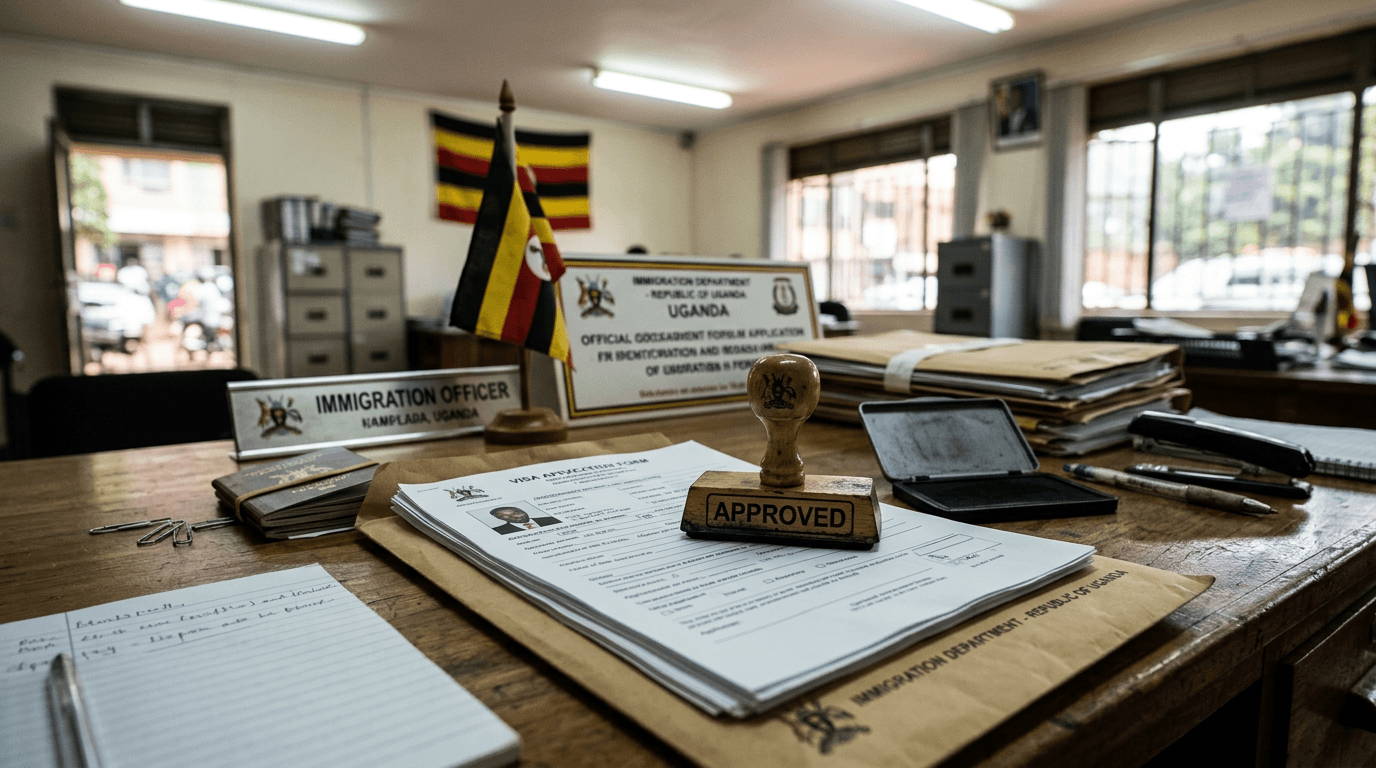
Uganda Class H Permit

At a Glance
- $36,000 a yearassured income from sources outside Uganda, not less than · main applicant
- $1,500 one-time12-month permit · main applicant
- $3,000 one-time24-month permit, including a USD 1,500 non-refundable fee · main applicant
- $4,500 one-time36-month permit, including a USD 1,500 non-refundable fee · main applicant
- $750 one-time6-month permit · main applicant
- 36 monthsup to; issued for 6, 12, 24 or 36 months · main applicant
- Online through the Uganda immigration portal (visas.immigration.go.ug), then biometric capture at an immigration office or border post after approvalall applicants
- Nopermit holder
- Yesthrough a separate Dependant Pass · spouse, children under 18 and other relatives
- No direct path. A Certificate of Residence for long stay requires 10 years of continuous residence and a contribution to Uganda's socio-economic developmentall applicants
Uganda's Class H Entry Permit is for ordinary residents: people with an assured income from sources outside Uganda who undertake not to accept employment of any kind, according to the Directorate of Citizenship and Immigration Control (NCIC).
It is a residence permit, not a work permit. Applicants sign a letter undertaking not to accept any employment or engage in any income-generating activity in Uganda. The official page does not carve out remote work for foreign employers or clients, so the permit fits retirees and others living on pensions, investments or other passive income rather than people working remotely.
Key terms
- Status: active
- Income: at least $36,000 a year from sources outside Uganda
- Validity: chosen at application, up to 36 months
- Fees: from $750 for 6 months to $4,500 for 36 months
- Local employment allowed: No
- Where to apply: Online through the Uganda immigration portal (visas.immigration.go.ug), then biometric capture at an immigration office or border post after approval
Class H is open to foreigners who can show an assured income of at least $36,000 a year from sources outside Uganda, according to the official Class H page. The page sets no age limit and names no nationality restrictions.
Every applicant signs an undertaking not to accept any employment or engage in any income-generating activity in Uganda. Nothing official exempts work done remotely for foreign employers or clients, so people who plan to keep working while in Uganda should not rely on this permit.
Applicants also need a valid police or Interpol clearance, and those already in Uganda must show their current immigration status.
Family members do not join the permit itself. A spouse, children under 18 and other relatives of a foreign resident with legal stay can apply for a Dependant Pass.
The official Class H page lists these documents:
- A valid passport (bio-data page)
- A recent passport-size photograph
- A covering or application letter from the applicant
- A valid Interpol clearance letter or police clearance from the home country, issued within the last 6 months
- Proof of current immigration status
- Documentary proof of an assured income of at least $36,000 a year
- A letter of undertaking not to accept any employment or engage in any income-generating activity
The page lists no health insurance or medical certificate. All documents are uploaded to the online portal, and the originals come along to the biometric appointment after approval.
- 6 months: $750
- 12 months: $1,500
- 24 months: $3,000, including a non-refundable prepayment
- 36 months: $4,500, including a non-refundable prepayment
All four figures come from the official Class H fee schedule. Family members pay separately for a Dependant Pass.
Other costs depend on the applicant's documents, such as the police clearance and any translations. No official figures are published for these.
- Log into the immigration portal, start a new application and accept the disclaimer.
- Choose the permit type, category and subcategory for Class H, complete the form and upload the documents. The system issues an application ID to use as a reference.
- Pay the prepayment where the chosen period requires one.
- After approval, pay any top-up due. The approval letter is then emailed to the applicant.
- Report to an immigration office or border post for biometric capture with the uploaded documents, payment receipts, approval letter and passport.
These steps follow the official Class H page, which publishes no processing time. Applicants should leave room for review and the biometric visit before any fixed travel date.
Class H is issued for a period chosen and paid for at application, from 6 months up to 36 months.
The official page publishes no renewal procedure. Holders who want to stay longer should ask NCIC how to renew well before the permit ends.
Path to residence: No direct path. A Certificate of Residence for long stay requires 10 years of continuous residence and a contribution to Uganda's socio-economic development. The Certificate of Residence page does not say whether years on Class H count toward that period.
The permit rules say nothing about tax. According to the Uganda Revenue Authority, an individual is tax resident after 183 days or more in any 12-month period that starts or ends in the income year, after averaging more than 122 days a year over the income year and the two before it, or with a permanent home in Uganda. The income year runs July 1 to June 30.
A Class H holder who lives in Uganda for most of the year meets that test. No official source describes a special tax regime for Class H holders or for foreign pensions and investment income.
Applicants should check how Uganda and their current country of tax residence treat that income before moving.
Frequently Asked Questions
How much income does the Uganda Class H permit require?
An assured income of at least $36,000 a year from sources outside Uganda.
How much does the Class H permit cost?
$750 for 6 months, $1,500 for 12 months, $3,000 for 24 months or $4,500 for 36 months.
Can Class H holders work remotely from Uganda?
The permit requires an undertaking not to accept any employment or engage in any income-generating activity in Uganda, and no official source exempts remote work. It is not a remote work permit.
How is the Class H permit applied for?
Online through the Uganda immigration portal (visas.immigration.go.ug), then biometric capture at an immigration office or border post after approval.
Does Class H lead to permanent residence?
No direct path. A Certificate of Residence for long stay requires 10 years of continuous residence and a contribution to Uganda's socio-economic development.
How It Compares
Similar visas elsewhere
| Program | Country | Income | Fee | Max stay | Renewable |
|---|---|---|---|---|---|
| Liechtenstein Financially Independent Residence Permit | Liechtenstein | CHF 2,600/mo | CHF 1,060↓ | 12 mo | |
| Italy Elective Residence Visa | Italy | €31,000/yr | €116↓ | 12 mo | |
| Dominican Republic Pensionado / Rentista | Dominican Republic | $1,500/mo | $200↓ | 12 mo | |
| Lebanon Income-Based Residency Permit | Lebanon | LBP 50,000,000/mo | LBP 18,000,000 | 12 mo | - |
Uganda Digital Nomad Guide
Cost of living, internet, healthcare, coworking, and every visa option for Uganda.
Visa rules change. We'll tell you.
Get notified about policy updates and new requirements for the Uganda Class H Permit and other Uganda visas.