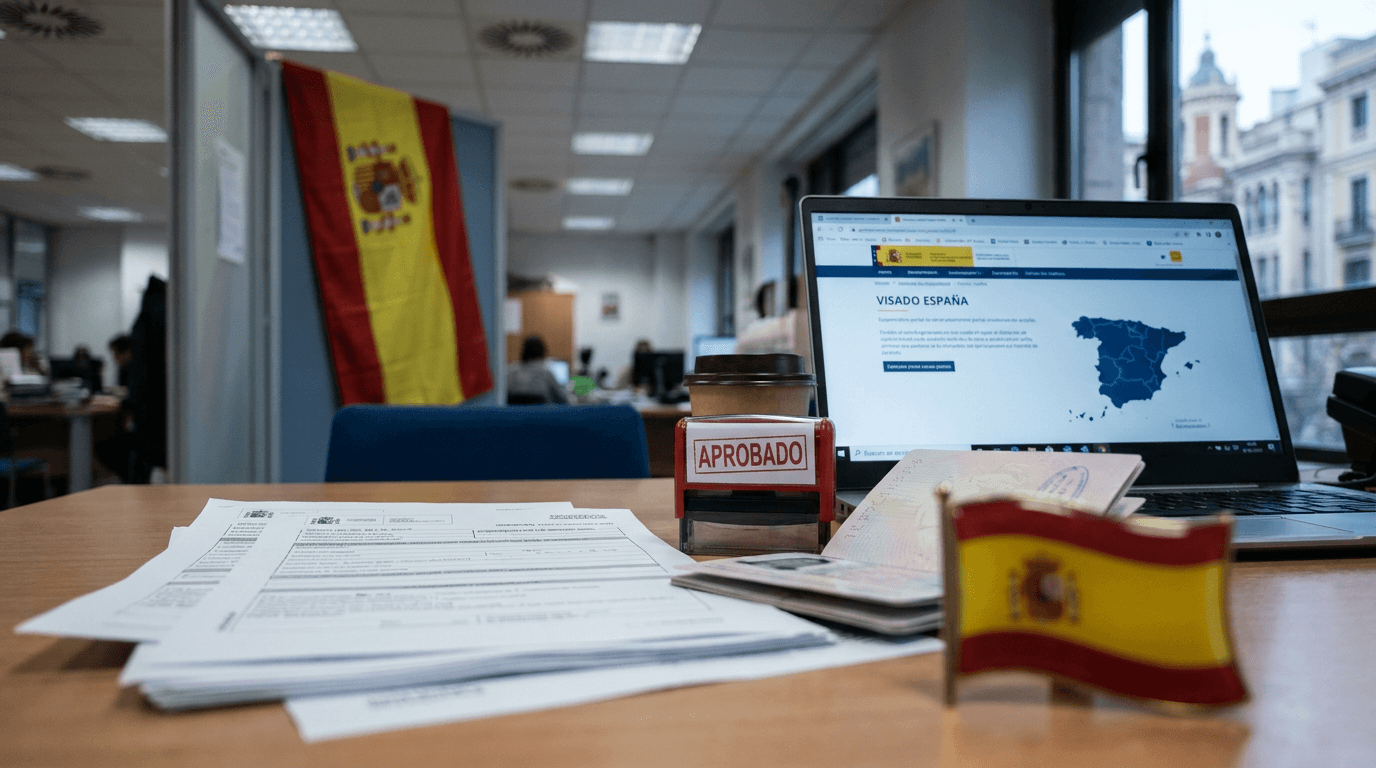
Spain Family Reunion Visa

At a Glance
- €900 a month150% of the monthly IPREM (EUR 600) for a two-person family; lower thresholds apply when reuniting minors · sponsor reuniting one family member
- €300 a month50% of the monthly IPREM per member beyond two · each additional family member
- 1 yearSame end date as the sponsor's permit, with a minimum of one year · reunited family member
- Renewed permits last four years and allow unrestricted employed or self-employed work, tied to the sponsor's permit.RD 1155/2024 art. 71 · reunited family members
- The sponsor applies in Spain, in person at the provincial immigration office or online through the Mercurio platform. Once approved, the family member applies in person for the visa at the Spanish consulate where they live, within two months of the notification.RD 1155/2024 arts. 40.1.a and 68.2 · sponsor and family member
- 2 monthsNo answer in time means refusal; the consular visa is then decided within one month · sponsor's application
- YesRD 1155/2024 art. 65.2 · spouse or partner and working-age children
- A spouse or partner can get independent residence after one year of reunification with their own means, among other routes. Long-term residence is available after five years of continuous legal residence.RD 1155/2024 arts. 69 and 183.1 · reunited family members
Family reunification lets foreign residents of Spain bring close relatives who aren't EU, EEA or Swiss citizens to live with them. The sponsor applies in Spain first. Once that's approved, the relative applies for a visa at the Spanish consulate where they live.
The route covers the families of non-EU residents. Relatives of Spanish or other EU citizens follow different rules.
The sponsor must have lived in Spain for at least one year and have applied to stay at least one more year. Families of digital nomad visa and entrepreneur permit holders use a separate route with no one-year wait. Those families can apply with the holder under the digital nomad visa or entrepreneur residence rules.
Reunited spouses, partners and working-age children can work in Spain, employed or self-employed, without further paperwork.
The sponsor can reunite:
- Spouse: over 18 and not separated. Only one spouse or partner can be reunited.
- Unmarried partner: over 18, with the relationship registered in a public register of an EU country or proven by at least 12 months of living together. The 12 months aren't required if the couple has children together.
- Children: of the sponsor or the partner, under 18 when the application is filed. Older children qualify if they have a disability that requires support or can't provide for themselves because of their health.
- Parents: of the sponsor or the partner, if they're dependent, over 65 and have reasons that justify living in Spain. Younger parents qualify only on humanitarian grounds.
- Carer child: an adult child who will care for a sponsor with an officially recognized level of dependency.
The sponsor must show:
- Income: €900 a month for a two-person household, which is 150% of the IPREM income indicator, plus €300 a month for each extra member. Lower amounts can apply when the relatives are minors.
- Housing: adequate housing, shown with a report from the regional government or town hall that is no more than six months old.
- Health insurance: cover for the sponsor and the relatives.
- Schooling: school enrollment for any school-age children already in Spain.
Relatives must have no criminal record in Spain or in the countries they lived in during the past five years. They also can't have any of the diseases covered by the 2005 International Health Regulations.
The sponsor files form EX-02 with:
- Identity: a copy of the sponsor's passport, travel document or registration card plus a full passport copy for each relative.
- Income proof: for employees, the contract and payslips for the last six months, plus the last income tax return if there is one. Self-employed sponsors show their activity and their last annual return or last two quarterly returns. Sponsors who don't work in Spain can use certified checks, credit cards backed by a bank certificate or a bank certificate.
- Housing report: or other proof if the report isn't issued within a month of the request.
- Family ties: documents proving the relationship and, where relevant, dependency. Sponsors reuniting parents also show money sent or expenses paid for them during their last year in Spain.
- Declaration: for a spouse or partner, a sworn statement that no other spouse or partner lives with the sponsor in Spain.
- Health insurance: for the sponsor and the relatives.
For the visa, the relative brings a valid passport, a criminal record certificate covering the past five years if an adult, a medical certificate and the original documents proving the family tie. Documents from other countries need a sworn Spanish translation. Foreign public documents also need legalization or an apostille, according to the ministry's information sheet.
- Authorization fee: paid by the sponsor on form 790, code 052, section 2.1.2, within 10 working days of filing. The ministry's information sheet doesn't state the amount.
- Visa fee: paid by the relative at the consulate.
- Documents: the housing report, health insurance, medical certificates, sworn translations and apostilles.
The income test is proof of fixed and regular resources, not a payment.
The sponsor applies in Spain, in person at the provincial immigration office or online through the Mercurio platform. Once approved, the family member applies in person for the visa at the Spanish consulate where they live, within two months of the notification.
- The sponsor files form EX-02 and pays the fee on form 790, code 052, section 2.1.2, within 10 working days.
- The immigration office decides within 2 months. No answer by then means refusal.
- After approval, the relative applies for the visa in person; a representative applies for minors. The consulate decides within a month.
- The relative collects the visa in person within a month of the notice and enters Spain within a month of collecting it.
- Within a month of arrival, the relative applies in person for the foreigner identity card (TIE) at a police station.
- First permit: runs to the same end date as the sponsor's permit on the day the relative enters Spain, with a minimum of 1 year.
- Renewal: Renewed permits last four years and allow unrestricted employed or self-employed work, tied to the sponsor's permit. Requests go in during the two months before expiry or up to three months after. The office has three months to decide. Silence counts as approval.
- Independence: A spouse or partner can get independent residence after one year of reunification with their own means, among other routes. Long-term residence is available after five years of continuous legal residence.
When the sponsor is a long-term resident, the relative's first permit runs to the end date of the sponsor's identity card. The next one is long-term residence.
Tax status follows the general residency test, not the permit.
A person who spends more than 183 days in Spain in a calendar year, counting sporadic absences, is tax-resident there. So is anyone whose main base of activities or economic interests is in Spain. The tax agency applies the status to the whole calendar year.
Frequently Asked Questions
How much income does the sponsor need?
The sponsor needs €900 a month for a household of two, which is 150% of Spain's IPREM income indicator. Each extra relative adds €300 a month. Lower amounts can apply when the relatives are minors.
How long must the sponsor have lived in Spain?
The sponsor must have lived in Spain for at least one year and have applied to stay at least one more year. Families of digital nomad visa and entrepreneur permit holders use a separate route with no one-year wait.
Can reunited family members work in Spain?
Yes. A reunited spouse, partner or working-age child can work as an employee or self-employed anywhere in Spain without further paperwork.
Can parents be reunited?
Yes, if they depend on the sponsor, are over 65 and have reasons that justify living in Spain. Younger parents qualify only on humanitarian grounds. The sponsor must show money sent or expenses covered during the last year in Spain.
How long does family reunification take?
The immigration office decides within 2 months. No answer means refusal. The relative then has two months to apply for the visa, which the consulate decides within a month.
How It Compares
More Spain programs
| Program | Country | Income | Fee | Max stay | Renewable |
|---|---|---|---|---|---|
| Spain Digital Nomad Visa | Spain | €2,442/mo | €73↓ | 12 mo | |
| Spain Entrepreneur Residence (Startup Law) | Spain | €2,442/mo | $94↓ | 36 mo | |
| Spain Freelance (Self-Employed) Visa | Spain | - | - | 12 mo | - |
| Spain Golden Visa | Spain | €500,000 saved | - | - | |
| Spain Non-Lucrative Visa | Spain | €2,400/mo | - | 12 mo |
Similar visas elsewhere
| Program | Country | Income | Fee | Max stay | Renewable |
|---|---|---|---|---|---|
| Lithuania Startup Visa | Lithuania | €1,153/mo | €160 | 24 mo | |
| Ethiopia Digital Nomad Visa (Not Available) | Ethiopia | - | - | - | - |
| Antigua Nomad Digital Residence (Closed) | Antigua and Barbuda | - | - | - | - |
| Palau Digital Residency ID (Not a Visa) | Palau | - | $288 | - |
Spain Digital Nomad Guide
Cost of living, internet, healthcare, coworking, and every visa option for Spain.
Visa rules change. We'll tell you.
Get notified about policy updates and new requirements for the Spain Family Reunion Visa and other Spain visas.