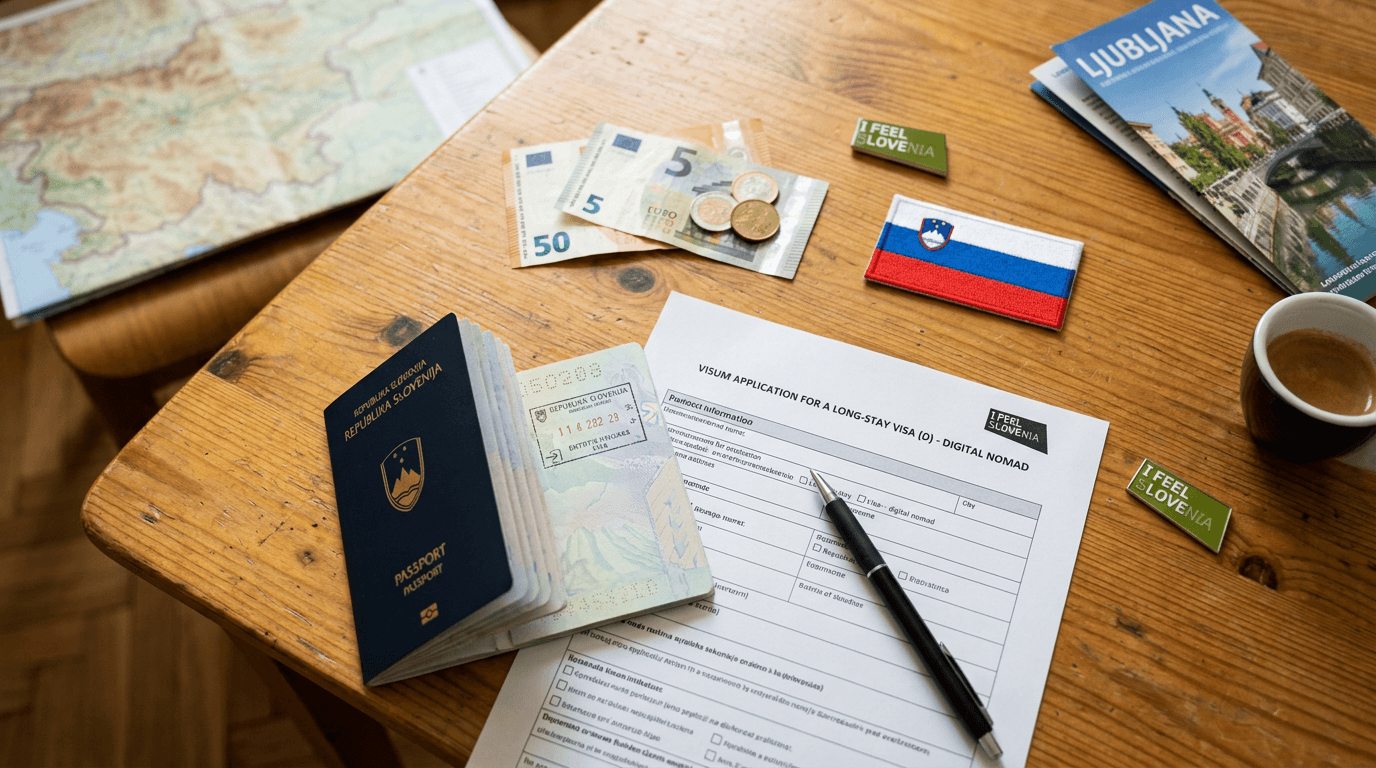
Slovenia Digital Nomad Visa

Visa Data Sheet
Slovenia’s digital nomad visa is really a temporary residence permit for digital nomads, introduced on Nov. 21, 2025 for non-EU and non-EEA remote workers. It’s built for people who earn their income from employers or clients based outside Slovenia and it lets them live in the country while working remotely for up to one year.
This isn’t a tourist workaround. The permit is separate from a short-stay visa and it doesn’t put you into the Slovenian labour market, so you don’t need the usual local work authorization. The official rules define a digital nomad as a foreigner who’s not an EU or EEA citizen and who works remotely as an employee, contractor or self-employed person for a business entity outside Slovenia.
The structure is straightforward, but there’s a catch: the permit is non-renewable. If you want to come back, you can reapply six months after it expires. That makes it useful for a defined stay, not for settling in long term on the same permit.
There’s one part of the framework that’s more generous than many people expect. Immediate family reunification is treated more favorably than in standard temporary residence categories, which matters if you’re planning to move with a spouse or children. The official guidance also says that if you later want to take up local employment, you can apply for a different type of residence permit instead.
- Who it’s for: Non-EU and non-EEA remote workers
- Work setup: Employment, civil-law contract or self-employment for an entity outside Slovenia
- Main benefit: Legal residence in Slovenia while working remotely
- Validity: Up to 1 year
- Renewal: Not renewable, but you can reapply after 6 months
- Labour market access: No entry into the Slovenian labour market under this permit
Official tourism and government publications match on the core point, Slovenia opened this route on Nov. 21, 2025 and it’s meant for remote workers who can support themselves from abroad. If you’re looking for a way to stay longer than a tourist visit without taking a local job, this is the country’s dedicated option.
Slovenia’s digital nomad permit is for non-EU and non-EEA nationals who work remotely for employers, clients or their own business based outside Slovenia. If your income comes from a Slovenian company, you don’t fit this route, because the permit doesn’t let you enter the local labour market.
The work itself has to be remote and done through information and communication technologies. That means employees, freelancers, contractors and self-employed applicants can qualify, so long as the arrangement stays outside Slovenia.
You’ll also need to show enough money to support yourself. The official rule is monthly funds of at least twice the average monthly net salary in Slovenia, calculated using the most recently published average monthly gross salary in the Official Gazette. Tourism guidance gives an example of roughly 3,200 euros a month, based on an average net salary of about 1,600 euros, but that example isn’t presented as a fixed figure.
- Nationality: a valid passport from a non-EU or non-EEA country.
- Work setup: remote work for an employer, client or business outside Slovenia.
- Income: proof of sufficient lawful funds, at the minimum monthly level set by the salary formula above.
- Background check: a certificate of no criminal record.
- Health cover: valid and appropriate international health insurance for the stay.
The permit is set up for a straight one-year stay and it’s non-renewable. You can reapply after six months, which isn't especially generous, but that’s the rule. Family members can join you right away under a more flexible reunification regime than standard temporary residence permits, though the official texts don’t spell out a separate income amount per dependent.
Official sources don’t mention an age limit or extra disqualifying factors beyond the basics above. They also don’t add special labour-market steps for this permit, because the whole point is that you’re not working in Slovenia.
Slovenia’s digital nomad permit is for non-EU and non-EEA citizens who work remotely for employers or clients based outside Slovenia. It’s a temporary residence permit, so it’s not the same thing as a tourist visa and it doesn’t let you enter the Slovenian labor market.
The paperwork list is fairly tight, but the income rule is the part most applicants will care about. You need to show monthly funds equal to at least twice the average monthly net salary in Slovenia, based on the latest official salary statistics. The official guidance doesn’t spell out exactly which documents you must use to prove that income, so the key is making sure your evidence clearly shows you meet the threshold.
- Valid passport: You must be a citizen of a non-EU or non-EEA country and hold a valid passport. The official text doesn’t give a separate minimum passport-validity period for this permit.
- Proof of remote work: You need to show that you work remotely as an employee, freelancer, contractor or self-employed person for a company or clients based abroad.
- Proof of sufficient income: Your funds must meet the twice-average-net-salary rule. The government materials don’t say whether this has to be bank statements, contracts, invoices or something else, so applicants should be ready to document it clearly.
- Certificate of no criminal record: This has to come from the relevant authority in your country of nationality or residence.
- International health insurance: You need valid coverage that pays medical costs in Slovenia for the full stay.
That’s the core checklist in the official tourism guidance. General Slovenian residence rules may still affect how you prepare foreign documents, especially if they need legalization or translation into Slovenian, but the digital nomad materials don’t give a special checklist for that. The permit is also non-renewable, though you can reapply six months after it expires.
One more thing that helps: the regime is more generous on family reunification than standard temporary residence categories. Still, the main burden is on you to prove remote work, income and clean paperwork, so don’t assume a loose application will pass.
Slovenia’s digital nomad route is a temporary residence permit, not a short-stay visa and the official materials don’t publish a fixed application fee for it. That’s frustrating, but it’s the honest answer right now: the exact charge for the digital nomad permit isn’t listed in the government or tourism-board guidance we reviewed.
That leaves you with a few costs that are clearly part of the process, even if the official sources don’t put euro amounts on them:
- Application fee: Not publicly specified for this permit category.
- Consular or service-provider charges: Applications are submitted in person at diplomatic missions or consular posts or through external service providers, so you should expect some kind of filing charge, but no official figure is given.
- Health insurance: Mandatory, though the official sources don’t state a standard premium or minimum cost.
- Translation and legalization: Foreign documents may need translation or legalization under general rules, but no official cost range is published.
- Legal help: Optional and again there’s no official price range for this category.
The permit itself is valid for up to one year and it’s non-renewable. If you want to stay longer, you can reapply after six months once it expires, but that doesn’t lower the first-year cost, it just means you’re looking at the same process again later.
One more thing that matters for budgeting: this permit sits outside Slovenia’s labor market, so it’s meant for people earning from employers or clients based outside Slovenia. It also comes with a more favorable family-reunification setup than standard temporary residence categories, but the official sources still don’t break out any separate fee for family members.
If you’re planning your budget, the safest move is to assume the visa itself won’t be free, then add insurance, document prep and possible consular charges on top. The annoying part is that Slovenia’s official guidance still doesn’t give applicants a clean, itemized price list.
Foreign nationals apply for Slovenia’s temporary residence permit for digital nomads in person at a Slovenian diplomatic representation or consular post abroad. If you already live legally in Slovenia, you can submit the application at any administrative unit in the country.
The process is pretty straightforward on paper, but it still means gathering the right proof before you go. The official sources say the permit is for non-EU and non-EEA remote workers who earn their income from employers or clients outside Slovenia and you’ll need to show that you meet the stay and income conditions set for the category.
- Where to apply: At a Slovenian diplomatic representation or consular post abroad, in person.
- Alternative filing point: Any administrative unit in Slovenia, if you’re already legally residing there.
- What you’ll need: A valid passport, proof of remote work for foreign entities, proof of sufficient income, a certificate of no criminal record and health insurance.
- What you get if approved: A temporary residence permit for digital nomads valid for up to one year.
The official materials don’t give a fixed processing time, so don’t count on a published number of days or weeks. That’s annoying, but it’s the reality of the current guidance. Once the permit is issued, it’s non-renewable, though you can reapply six months after it expires if you want to return as a digital nomad.
If your plans change while the permit is still valid, you can apply for a different temporary residence permit based on another purpose, such as employment in Slovenia. That switch is possible during the permit’s validity, but you’d have to meet the rules for the new category.
Slovenia’s digital nomad permit is set up as a one-year stay, not a long-term track. The permit may be issued for up to 12 months and it can’t be extended once it’s granted.
That’s a bit restrictive, but it’s also very clear. The government says the limit fits the highly mobile nature of digital nomads and the tourism board says the same thing in plainer language, the visa is valid for 12 months without extension.
If you want to come back on the same basis, you can, but not immediately. You may reapply for a temporary residence permit for digital nomads six months after your previous permit expires.
- Single stay: Up to 12 months
- Extension: Not allowed
- Reapplication: Allowed after a six-month gap
That six-month waiting period matters. It means this permit works best as a defined, time-limited stay, not as a way to live in Slovenia year after year without interruption.
There’s no official figure for a maximum total stay across repeated digital nomad permits, so the rules stop at the one-year permit and the six-month cooling-off period. If you want to stay in Slovenia on a different basis, you can apply for another type of temporary residence permit while your digital nomad permit is still valid.
Just don’t treat this as a direct path to permanent residence or citizenship. The digital nomad permit stands on its own and it isn’t designed to roll into long-term status. If your plans change, you’ll need to switch to a different immigration category that fits what you’re actually doing in Slovenia.
Taxes & considerations
The digital nomad permit lets you live in Slovenia for up to one year and work remotely for employers or clients outside Slovenia. It does not mean you automatically get a special tax deal, because the official guidance on this permit doesn’t spell one out.
That’s the part people often miss. Immigration status and tax residency aren’t the same thing and a one-year stay can still put you on the radar for Slovenian tax residency under general tax rules, depending on things like where you live, how long you stay and where your center of vital interests is.
The official materials don’t say how foreign income from digital nomads is taxed, whether there’s any reduced rate or exemption or how double-taxation treaties are applied in this case. They also don’t lay out filing duties, registration steps with the tax authority or annual reporting rules for this visa category.
So the practical takeaway is simple, if a bit annoying: don’t assume this permit keeps you outside the tax system. If you’re planning a full year in Slovenia, you’ll want to check your residency exposure and income reporting obligations before you move, not after.
- Permit length: up to one year.
- Work limit: remote work only for employers or clients based outside Slovenia.
- Tax rule clarity: no special digital nomad tax regime is set out in the official permit guidance.
- Residency risk: general Slovenian tax rules may still apply if your stay and personal ties point to tax residency.
If you’ve got income from more than one country or you’re unsure where you’ll be tax resident, get local tax advice. The visa may be straightforward enough, but the tax side isn’t spelled out for you.
How It Compares
Similar visas elsewhere
| Program | Country | Income / month | Fee | Max stay | Renewable |
|---|---|---|---|---|---|
| Georgia Digital Nomad Program (Remotely from Georgia) | Georgia | - | - | - | |
| Kyrgyzstan Digital Nomad Status | Kyrgyzstan | - | - | 12 mo | |
| Kenya Class N Permit | Kenya | - | $200 | 24 mo | |
| Nepal Digital Nomad Visa (Not Yet Open) | Nepal | - | - | - |
Slovenia Digital Nomad Guide
Cost of living, internet, healthcare, coworking, and every visa option for Slovenia.
Visa rules change. We'll tell you.
Get notified about policy updates and new requirements for the Slovenia Digital Nomad Visa and other Slovenia visas.