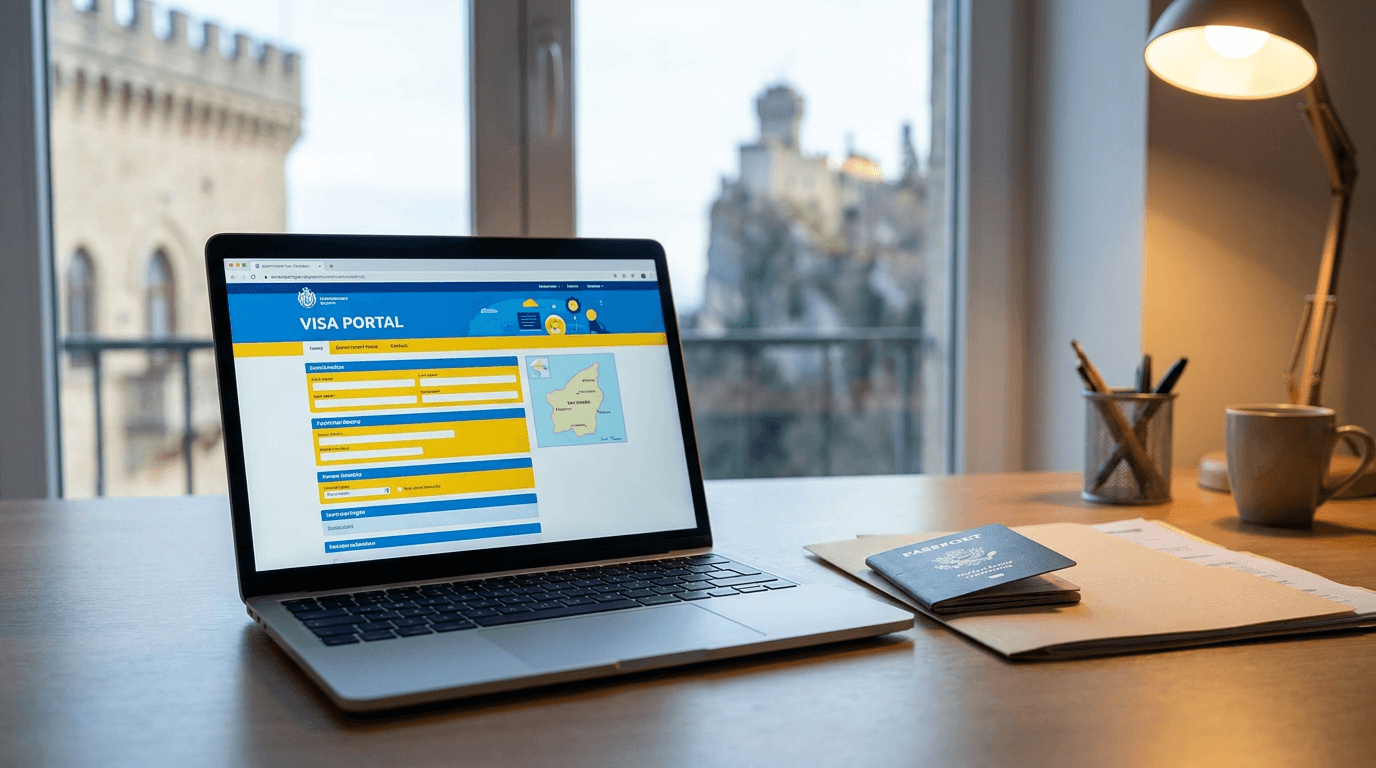
San Marino Permit for Independent Workers

Visa Data Sheet
San Marino doesn’t hand out a standard “independent worker visa.” Instead, foreign nationals are handled through stay permits and residence permits and the right route depends on what you’re actually doing in the country. If you’re working for yourself, the relevant path is usually a stay permit for work or a residence permit tied to business, entrepreneurial or professional activity.
The system is split into two main buckets. Stay permits are temporary, usually valid for 3 months up to 12 months and they can be renewed. Residence permits are for longer stays and cover cases like registered residence for people who establish a business or hold management positions, plus other residence categories for economic reasons.
That split matters because tourism status doesn’t cover working. San Marino’s tourism permits only regularize non-working stays of up to 12 months, so they’re not the right fit if you plan to carry out independent work, launch a business or take on entrepreneurial activity.
The official framework also includes Law 25 January 2019 no. 15, which introduced residence for economic reasons and stay permits for entrepreneurial motives and the coordinated text of Law 118/2010 on entry and stay of foreigners, updated through 9 April 2024. What the public guidance doesn’t give you is a clean standalone category called “independent worker” with fixed income thresholds, fee amounts or remote-work rules.
So the practical takeaway is simple, if a bit annoying: San Marino regulates self-employed and entrepreneurial activity through broader residence and stay rules, not a neat one-size-fits-all permit. If you’re serious about applying, you’ll need to confirm the current operational requirements directly with the Foreign Affairs Department or the Gendarmerie.
- Temporary route: stay permits for work-related reasons, valid from 3 to 12 months and renewable.
- Long-term route: residence permits, including registered residence for business owners and certain managers.
- Entrepreneurial route: residence for economic reasons or a stay permit for entrepreneurial motives.
- Not the right route: tourism permits, since they don’t authorize working.
San Marino doesn’t publish a neat, standalone "independent worker" visa category with fixed income rules. The official framework is built around stay permits and residence permits, so independent workers usually fit under permits tied to work, entrepreneurial activity or establishing a business in the country.
The basic test is simple: if you want to stay longer than 30 days and you’ll be working or setting up activity in San Marino, you need to regularize your status. Tourism permits aren't enough, because those only cover non-working stays of up to 12 months.
Who tends to qualify? Foreign nationals who want to establish a business in San Marino, carry out entrepreneurial or professional activity or obtain residence for economic reasons. The official summaries also mention registered residence for foreigners who establish a business or hold management positions. What they don’t spell out online is just as important, there’s no public list of minimum income, capital or business-viability figures for this route.
- Foreign nationality: The public guidance is framed for foreign nationals and it doesn’t post a nationality-by-nationality ban for work or business permits.
- Work or business purpose: You need a real work-related basis, such as entrepreneurship, professional activity or business establishment.
- Longer stay: If you’re staying more than 30 days, you need the right permit, not just a tourist stay.
- Health insurance: This shows up in related residence categories and is part of the broader compliance picture.
There are also a few built-in limits. Some residence types, like elective residence or atypical residence, require income or assets from abroad and come with restrictions on public-sector work and state support. Those aren’t the same as the independent worker route, but they show how tightly San Marino separates working status from passive residence.
One more wrinkle, the public information doesn’t give a clean list of disqualifiers for independent workers. Serious criminal proceedings or public-order concerns appear in broader residence guidance, but the official pages don’t spell out a detailed refusal list for this specific route, so applicants need to check directly with the Foreign Affairs Department or the Gendarmerie.
San Marino doesn’t publish a clean, standalone checklist for an “independent worker” permit. What it does have is a system of stay permits and residence permits for work, business setup and entrepreneurial activity. So the first thing to sort out is which route fits your plan, because a tourism permit won’t cover working in the country.
The official portal says stay permits and residence permits are needed for stays over 30 days. For independent work, the relevant file is usually tied to a stay permit for work or a residence permit linked to establishing a business or carrying out professional activity. The portal doesn’t spell out a separate freelance category and it also doesn’t publish fixed income thresholds for this route in the English summary pages.
What the portal does make clear is that the detailed document lists sit inside Italian-language sections, many of which are marked as under construction in the extracted content. That means you may need to work directly from the linked legal texts or ask the Foreign Affairs Department or the Gendarmerie for the live checklist before you apply.
- Correct permit route: stay permit for work or residence permit tied to business or professional activity
- Length of stay: permits are needed for stays over 30 days
- Application file: the official portal points to Italian-language document packets, but the itemized lists weren’t visible in the published summary
- Health insurance: required for some residence categories, including elective and atypical residence, which suggests insurance may come up in related cases
The portal also refers to residence for economic reasons and stay permits for entrepreneurial motives, including routes for people setting up a company and for certain family members. It doesn’t clearly say which supporting papers are mandatory in every case and it doesn’t publish online guidance on passport validity, police certificates, translations or apostilles for independent workers in the summary text.
That’s the annoying part. The legal framework exists, but the public-facing guidance is thin, so you’ll want direct confirmation before you spend time assembling a full file. If you’re planning a business or professional move, treat the official website as a starting point, not the final word.
San Marino’s official immigration pages don’t publish a fixed fee schedule for independent workers. That means there isn’t a public, reliable number for an application fee, issuance fee or renewal fee tied to this route and I wouldn’t guess one.
The bigger issue is that San Marino doesn’t frame this as a simple “independent worker visa.” The relevant pathways are stay permits for work, residence for economic reasons and stay permits for entrepreneurial motives. In practice, the cost depends on which legal route you qualify under and the public summary pages don’t break those costs out in a way applicants can use.
What the official sources also leave out is just as important. They don’t publish a clear fee list for:
- Application fees: no public amount listed for the independent-worker route.
- Issuance fees: no public amount listed on the main immigration pages.
- Renewal fees: no public amount listed for work or residence permits linked to professional activity.
- Related admin costs: no official cost breakdown for translation, legalization, private health insurance or legal assistance.
So the real budget question isn’t just the permit itself. You’ll likely face extra out-of-pocket costs for document handling and local guidance, but the official pages don’t quantify any of that. That makes the process harder to price up before you start.
The cleanest move is to confirm the exact fee with the Foreign Affairs Department or the Gendarmerie before you file anything. San Marino’s legal framework has been updated through later amendments, including Law 15/2019 and Law 223/2020, but the accessible public summaries still don’t give you the numbers you need.
San Marino doesn’t use a standard entry-visa system. If you want to work independently, you’re usually dealing with a stay permit for work or a residence route tied to opening a business or carrying out professional activity, not a tourism permit that only regularizes non-working stays.
The practical first step is to check which channel fits your case. The official material points applicants to the Gendarmerie, Foreigners’ Office, for stay permits and to the Department of Foreign Affairs for guidance on residence and related forms. The stay permit is a temporary authorization for stays of 3 months to 1 year, with a maximum validity of 12 months.
- Confirm the right route: work stay permit, residence for economic reasons or a residence category tied to entrepreneurial activity.
- Get the current form: residence applications use specific moduli and the official page says to attach the documents listed for that residence type.
- Submit through the competent office: the Gendarmerie, Foreigners’ Office, handles stay permits, while Foreign Affairs gives the relevant procedural guidance.
The official page doesn’t spell out a clean, step-by-step timeline and it doesn’t give fixed processing times. It also doesn’t clearly say whether you can start the full process from abroad or only after arrival, though it does make one thing plain, San Marino doesn’t issue entry visas, so foreign nationals must regularize their stay if they remain longer than 30 days.
That leaves a bit of homework on your side. Before you file anything, confirm the current requirements directly with the Department of Foreign Affairs or the Foreigners’ Office, because the public guidance is broad and the operational details are thinner than you’d want.
San Marino doesn’t treat this as a simple, open-ended visa. For independent workers, the practical route is usually a stay permit for work or a residence permit tied to setting up a business or carrying out professional activity. Tourism permits are a different track and they only regularize non-working stays for up to 12 months.
For stay permits, the official portal is clear on the basics: they’re temporary, they can cover stays from 3 months to 1 year and their maximum validity is 12 months. They can also be renewed at the holder’s request. What the portal doesn’t spell out is a fixed cap on how many times a work-related stay permit can be renewed, so you’ll want direct confirmation from the Foreign Affairs Department or the Gendarmerie before you build a long-term plan around it.
Longer-term options work differently. San Marino’s residence permits for economic or business reasons, including registered residence and related categories, are designed for people who establish a business or hold management roles. The official material says elective and atypical residence can later consolidate into registered residence with full rights after 10 years of continuous compliance.
What that means for renewal
- Stay permits: Temporary, valid for up to 12 months and renewable on request.
- Residence tied to business activity: Built for longer-term establishment, not short visits.
- Long-term consolidation: Some residence categories can lead to registered residence after 10 years of continuous compliance.
There’s one more wrinkle. Official guidance also points to a general rule that 5 years of ordinary or special residence are usually required before residence is granted, but the public material doesn’t map that cleanly onto every independent-worker case. So if you’re trying to decide whether you can keep renewing a stay permit or should move toward a residence route, don’t assume the answer from the broad categories alone.
The short version is simple: a work-related stay permit is temporary and renewable, while business-linked residence is the more stable path. The frustrating part is that San Marino’s public guidance doesn’t give a neat, one-size-fits-all timeline for independent workers, so the final answer depends on which category the authorities apply to your case.
Taxes and considerations
San Marino doesn’t spell out a separate tax page for independent workers on its immigration portal, so you won’t find a clean list of income thresholds, filing rules or tax rates there. That’s frustrating, but it also means you need to separate the permit question from the tax question and check the tax code directly before you rely on any assumptions.
The main immigration routes for work are stay permits for entrepreneurial or professional activity or a residence permit tied to setting up a business. Those are different from tourism permits, which only regularize non-working stays of up to 12 months. The official materials don’t describe a standalone “independent worker” category with remote-work rules, so don’t assume a freelancer fits neatly into a box that the portal never defines.
There are two special residence regimes that matter if you’re planning a more permanent move.
- Atypical residence with a facilitated tax regime: for foreign citizens who take up residence in San Marino, haven’t been fiscally resident there and generate income abroad.
- RFND or “Residenza fiscale non domiciliata”: a temporary stay permit for people staying in high-standard hotels, for a minimum of 30 days and a maximum of 150 days per calendar year.
Both atypical residence categories, including the pensioner version, come with strings attached. Applicants must produce income abroad, they’re excluded from employment in the public sector and they don’t receive state contributions. On the upside, the official materials say they can be granted registered residence and related rights after 10 years.
What the portal doesn’t clearly give you is the part most applicants actually need: the tax rate, the filing burden and how San Marino handles foreign-earned income or double-taxation questions for permit holders. Those details sit in the tax laws and circulars, not in the immigration summary, so if taxes are part of your plan, you’ll want local advice before you move forward.
How It Compares
Similar visas elsewhere
| Program | Country | Income / month | Fee | Max stay | Renewable |
|---|---|---|---|---|---|
| Slovenia Digital Nomad Visa | Slovenia | €3,391/mo | €50 | 12 mo | |
| Belize Work Where You Vacation Program | Belize | $75,000-100,000/yr | BZD 200-500 | 6 mo | |
| Kazakhstan Neo Nomad Visa | Kazakhstan | $3,000/mo | £170 | 12 mo | |
| Bahamas Digital Nomad Visa | Bahamas | - | $25 | 12 mo |
San Marino Digital Nomad Guide
Cost of living, internet, healthcare, coworking, and every visa option for San Marino.
Visa rules change. We'll tell you.
Get notified about policy updates and new requirements for the San Marino Permit for Independent Workers and other San Marino visas.