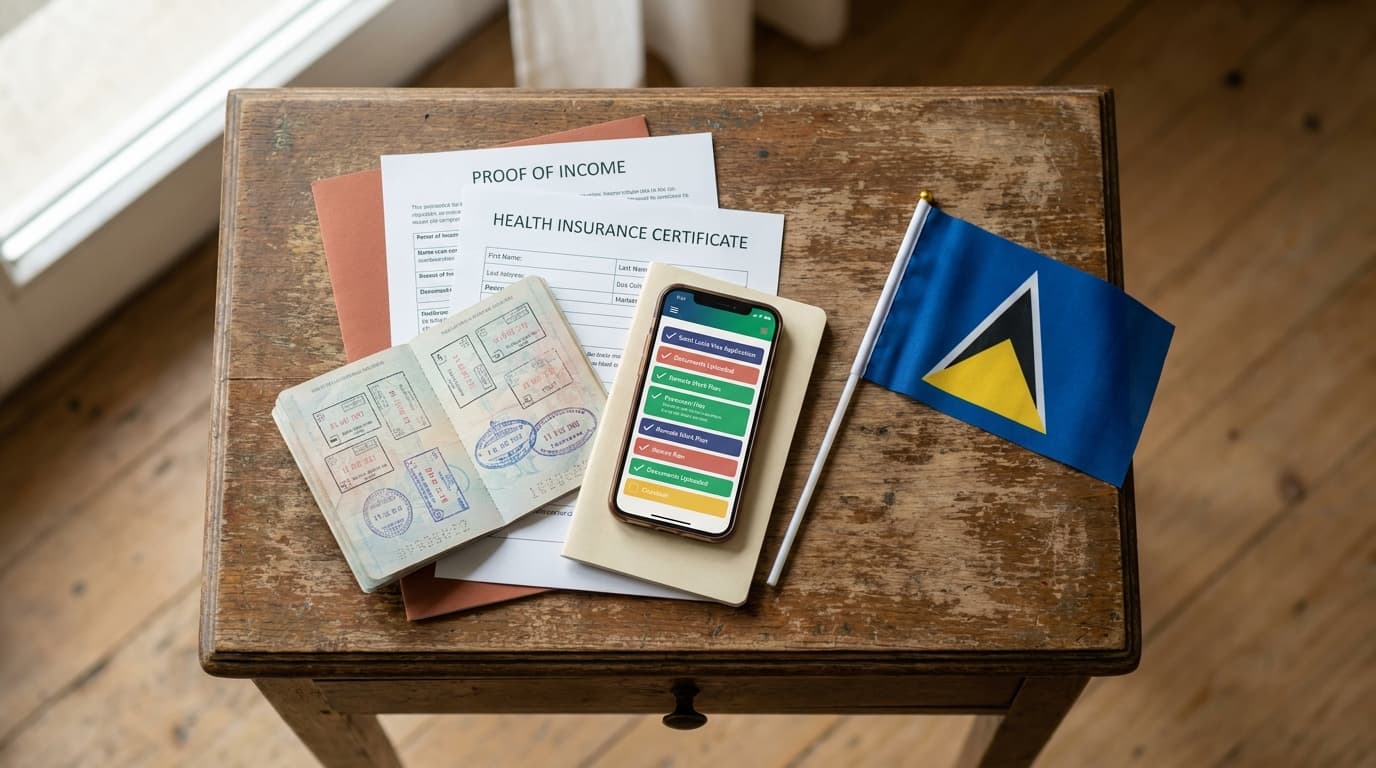
Saint Lucia Digital Nomad Visa

Visa Data Sheet
- $46 – $72
- 1 week
- 12 months
Saint Lucia’s “Live it” program is best understood as an extended-stay tourism scheme, not a separate digital nomad visa in law. The government launched it in April 2021 to let visitors stay longer, work remotely and settle into island life, but the paperwork still runs through the standard non-immigrant visa framework.
For many travelers, the first entry is simple. Visa-exempt nationals can enter without applying in advance, then stay for up to 42 days under the branded Live it approach. The official immigration rules also allow a one-year multiple-entry non-immigrant visa, which is the main route if you want a longer stay or need a visa before flying.
There isn’t a published Live it-specific income threshold, tax rule or separate work permit class on the official immigration pages. That’s the annoying part. Saint Lucia does say remote work is part of the concept, but the program is framed around tourism, not a codified right to work for a local employer.
- Single-entry non-immigrant visa: EC$125, valid for 3 months.
- Multiple-entry non-immigrant visa: EC$190, valid for 1 year.
- Processing time: about 5 working days, with applications submitted at least 2 weeks before travel.
The standard visa file is pretty straightforward. You’ll need a passport with at least 6 months’ validity, 2 certified passport-sized photos, a return ticket, proof of accommodation and a travel itinerary. If you’re staying in a villa, hotel or with a host, have the address and contact details ready, because immigration can ask for them.
The Live it pitch is aimed at families, remote workers and long-stay visitors who want more than a quick beach break. In practice, it gives you a cleaner way to base yourself on the island while you keep your income tied to somewhere else. Just don’t confuse that with permission to take local employment, because the official guidance doesn’t give you that.
Who qualifies
Saint Lucia doesn’t have a separate digital nomad visa in law. Remote workers usually apply under the standard non-immigrant visa, which is what the government uses for business, pleasure or study and what tourism materials often call the “Live It” option.
The key point is simple, if a little fuzzy: this isn’t a formal work visa. It’s a visitor visa that can cover remote work in practice, as long as you’re not taking a job with a Saint Lucian employer or stepping into the local labor market.
Who needs it? Only nationals from countries that aren’t visa-exempt for Saint Lucia. The official government page doesn’t publish the full country list in the HTML we can see, so you’ll need to check the visa requirements notice linked from the immigration site if you’re unsure. If you’re from a visa-free country and staying within that allowance, you don’t need this visa structure at all.
There’s no published minimum income requirement. That’s the good news. The less tidy part is that you still need to show you can support yourself and the immigration form asks for the basics of your stay, not a formal salary threshold.
- Passport: Valid for at least 6 months.
- Photos: Two certified passport-size photographs.
- Trip details: Return ticket and travel itinerary.
- Where you’ll stay: Hotel booking, private accommodation or a host invitation if applicable.
- Remote-work proof: The official list doesn’t name this specifically, but third-party “Live It” guidance commonly expects evidence that you work remotely.
For the visa itself, the published fees are EC$125 for a single-entry visa, valid for a 3-month period and EC$190 for a multiple-entry visa over a one-year period. Processing is listed at 5 working days and you’re supposed to submit the application at least 2 weeks before travel.
That one-year multiple-entry visa is the version most remote workers use. It’s the closest thing Saint Lucia has to a digital nomad route, even if the paperwork never uses that label.
Saint Lucia’s Live It visa is officially filed as a non-immigrant visa and the government keeps the paperwork fairly lean. The public service page says applications should be submitted to Immigration at least 2 weeks before travel and processing takes 5 working days.
The fee is straightforward too. A single-entry visa costs EC$125, about US$46.30 and a multiple-entry visa costs EC$190, about US$70.37 using the fixed Eastern Caribbean dollar peg. Those USD figures are estimates, not official government conversions.
What you need to submit
- 2 certified passport-size photographs: Recent and properly certified.
- Valid passport: It should have up to 6 months of validity.
- Return ticket: Proof of travel back to your port of origin.
- Travel itinerary: Your planned dates and trip details.
- Accommodation proof: Hotel booking or private accommodation details.
- Invitation letter: Only if a friend or relative is inviting you.
That’s the confirmed list from the government page. It doesn’t publish a separate digital-nomad checklist with a minimum income threshold, health insurance requirement, police certificate or apostille rule, so I wouldn’t build your application around those claims unless Immigration asks for them directly.
What the official page doesn’t spell out
The government source I could verify also doesn’t say this visa leads to permanent residence or another long-term status. So if you’re planning a longer stay, treat the Live It visa as a temporary permit first, then check the immigration office for any next step instead of assuming there’s a built-in residency path.
One practical annoyance, the process isn’t fully self-serve in the way some nomads expect. You’ll still need to line up the documents above, submit them properly and keep your timing tight so you’re not scrambling inside the 2-week window.
Saint Lucia doesn’t have a separate, branded digital nomad fee table. Remote workers use the standard Non-Immigrant Visa, so the costs are the same whether you’re coming for a few months or using the island as a longer base.
The official government fees are pretty straightforward and there’s no separate “Live It” charge listed on the current service page.
- Single-entry visa: EC$125 or about $46 to $47, valid for 3 months.
- Multiple-entry visa: EC$190 or about $70 to $71, valid for 1 year.
That’s the core government cost. The official non-immigrant visa page doesn’t list an extra processing fee, service fee or expedite fee, so don’t assume one exists just because some generic visa sites mention it. If you apply through a private agent, that’s different, you’ll pay their service charge on top of the state fee.
There are a few other costs most applicants should budget for. Saint Lucia’s paperwork is in English, so if any of your documents aren’t, you may need certified translations. You’ll also want to factor in insurance, passport photos and any police clearance or medical paperwork your application calls for.
- Insurance: there’s no official price, but long-stay medical cover often runs about $40 to $100 a month for a healthy adult.
- Translations: roughly $20 to $50 per page, depending on language and country.
- Notarization or legalization: often $20 to $100 or more per document, depending on where you do it.
- Passport photos: usually $5 to $15 per set.
- Police certificate or medical exam: costs vary by country, but they’re often modest compared with the visa itself.
Families should be careful here. The government’s fee schedule doesn’t publish a separate family rate, so the safest assumption is that each person who needs a visa pays the standard fee. If you’re bringing dependents, confirm that with Immigration before you book.
One last point, the fee is only part of the bill. If you’re mailing documents, paying for scans or using an agency because you don’t want to deal with the paperwork yourself, those extras can add up fast.
Saint Lucia doesn’t run a separate, officially branded digital nomad visa. In practice, remote workers use the standard non-immigrant visa route, usually through the one-year multiple-entry option tied to the “Live It” extended-stay program. That keeps the paperwork fairly ordinary, but it also means you’re dealing with visitor visa rules, not a bespoke remote-work statute.
The good news is that Saint Lucia doesn’t publish a fixed minimum income requirement for this route. The bad news is that you still need to show you can support yourself and immigration can ask for extra proof if your file looks thin.
What to prepare
- Passport: Valid for at least six months.
- Photos: Two certified passport-size photos.
- Travel details: Return ticket and a copy of your itinerary.
- Accommodation proof: Hotel booking, villa reservation, rental agreement or a letter from your host.
- Funds: Recent bank statements or other proof that you can cover your stay.
- Work proof: Employment letter, freelance contracts or other evidence that your income comes from outside Saint Lucia.
Submit your application through the Immigration Department or the official visa process, then send it in at least two weeks before you plan to travel. Standard processing is usually about 5 working days, assuming your paperwork is complete. If anything is missing, that timeline can slip fast.
Fees and validity
- Single-entry non-immigrant visa: EC$125, about $46 to $47, usually for a short stay within a three-month period.
- Multiple-entry non-immigrant visa: EC$190, about $70 to $72, valid for up to one year.
For most remote workers, the multiple-entry visa is the one that matters. It’s the closest thing Saint Lucia has to a digital nomad permit and it’s the route the Live It program points you toward.
There isn’t a clearly published in-country renewal process for this visa path and there’s no official statement that it leads straight to residency. If you want to stay longer-term, don’t assume this visa will quietly turn into something more permanent. You’ll need to check the next legal step before your current status runs out.
Saint Lucia doesn’t publish a separate, named digital nomad visa class. Remote workers are handled under the standard Non-Immigrant Visa, so the key dates are the same ones used for other visitors: a single-entry visa is valid for entry within a 3-month period and a multiple-entry visa is valid for multiple entries over 1 year. The government doesn’t spell out a special 12-month stay for nomads, so don’t treat the visa’s 1-year validity as a guaranteed continuous stay.
That’s the part that trips people up. The official portal gives the validity of the visa document, but it doesn’t clearly state the maximum length of stay per entry or the maximum cumulative stay over time. If you want a written answer for your situation, get it from the Immigration Department before you rely on a long stay plan.
For visitors already on the island, the clearest on-the-ground option is an extension of stay. The Immigration Department says extensions cost EC$200 for a 1 to 30 day extension and processing takes about 5 working days. You’ll need to show a valid passport, passport-size photo, copy of the bio-data page, copy of your entry stamp, return ticket and proof of funds, plus extra documents depending on your situation.
- Single-entry visa: valid for entry within 3 months.
- Multiple-entry visa: valid for multiple entries over 1 year.
- Extension of stay: EC$200 for 1 to 30 days.
- Extension processing time: about 5 working days.
There’s no official public rule for how many times you can extend and no published maximum cumulative stay for repeated extensions. Renewal of the visa itself is also not laid out as a special in-country process for remote workers, so the safest reading is that a new non-immigrant visa usually means a fresh application, often before travel. If you’re trying to stay longer term, don’t assume the paperwork will quietly roll over. It usually won’t.
Saint Lucia doesn’t give Live It visa holders a special tax break. The program is just a multiple-entry non-immigrant visa for a longer stay, so your tax position still falls under the normal Income Tax Act and the country’s tax-residency rules.
The biggest line in the sand is 183 days. If you’re physically present in Saint Lucia for 183 days or more in a year of income or if the island becomes your permanent place of abode, you can be treated as tax-resident. That matters more than the visa label and the immigration stamp won’t override it.
- Non-resident treatment: generally taxed only on Saint Lucia-source income under the ordinary rules.
- Tax-resident treatment: subject to the standard individual income-tax regime, with a wider tax base than a non-resident.
- No special nomad regime: the law doesn’t carve out a separate rate, exemption or digital-nomad category for Live It holders.
For most remote workers, the practical question is source of income. If your work is performed for foreign clients or employers and you stay non-resident, Saint Lucia generally doesn’t tax that foreign income just because you’re on the island. But that’s a result of the ordinary source and residency rules, not a specific nomad exemption. If you start working for a Saint Lucian employer or carrying on local business, that’s a different story.
Double-tax relief can get messy fast. Saint Lucia participates in CARICOM tax arrangements, but it doesn’t have broad treaty coverage with every major nomad home country. The UK doesn’t have a current income-tax treaty with Saint Lucia and the United States doesn’t have a full income-tax treaty either, so you may need to rely on your home country’s foreign tax rules to avoid being taxed twice.
If you’re planning a long stay, keep a clean record of arrival and departure dates. That’s the difference between staying comfortably under the residency line and accidentally stepping into a tax filing headache.
How It Compares
More Saint Lucia programs
| Program | Country | Income / month | Fee | Max stay | Renewable |
|---|---|---|---|---|---|
| Saint Lucia Citizenship by Investment | Saint Lucia | $240,000-300,000 saved | $9,500-15,500 | - |
Similar visas elsewhere
| Program | Country | Income / month | Fee | Max stay | Renewable |
|---|---|---|---|---|---|
| Georgia Digital Nomad Program (Remotely from Georgia) | Georgia | - | - | - | |
| Kyrgyzstan Digital Nomad Status | Kyrgyzstan | - | - | 12 mo | |
| Kenya Class N Permit | Kenya | - | $200 | 24 mo | |
| Nepal Digital Nomad Visa (Not Yet Open) | Nepal | - | - | - |
Saint Lucia Digital Nomad Guide
Cost of living, internet, healthcare, coworking, and every visa option for Saint Lucia.
Visa rules change. We'll tell you.
Get notified about policy updates and new requirements for the Saint Lucia Digital Nomad Visa and other Saint Lucia visas.