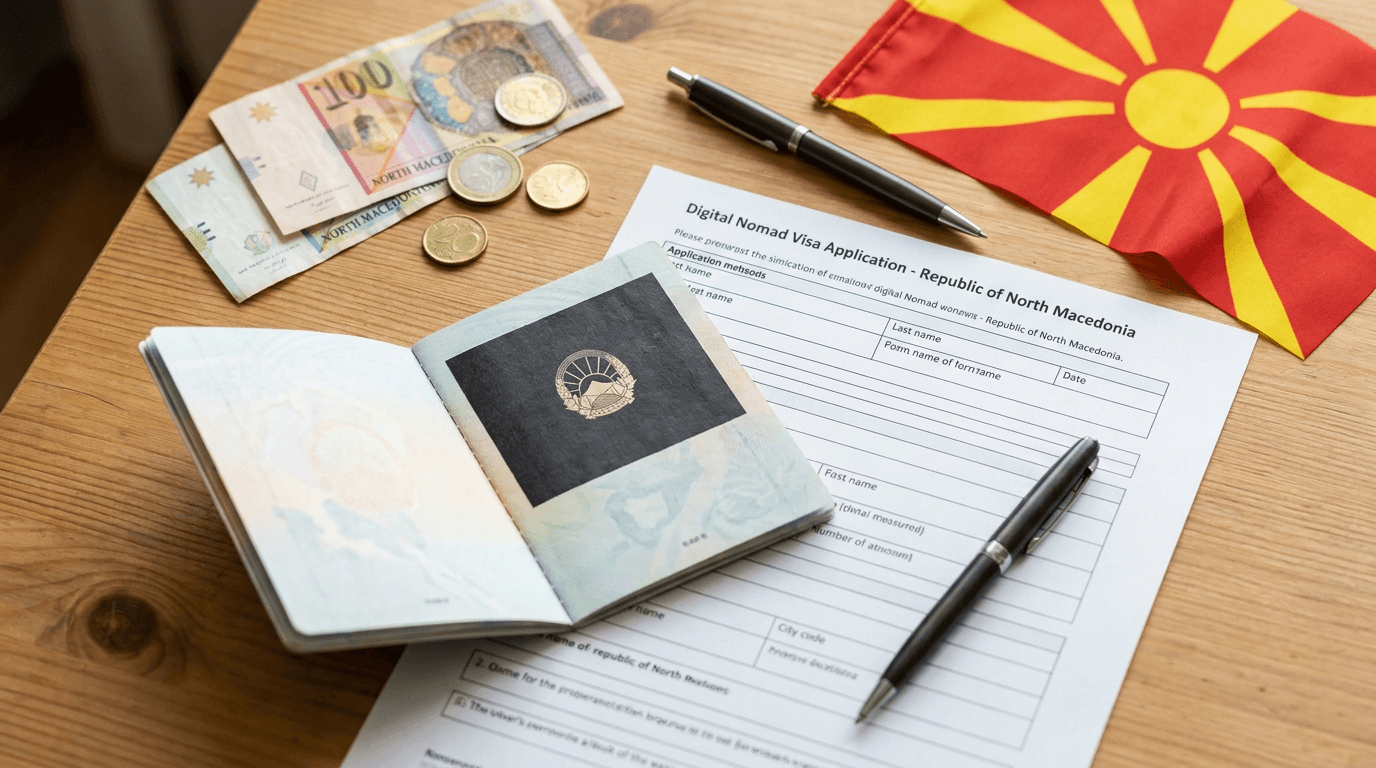
North Macedonia Digital Nomad Visa — North Macedonia

Visa Program Briefing

North Macedonia Digital Nomad Visa

North MacedoniaDigital Nomad Visa
Brandon Richards
Brandon Richards ·

Visa Data Sheet

Application Fee
$65
Processing Time
6 weeks
Maximum Stay
3 months
RenewableResidency PathRemote Work
The Full Briefing

North Macedonia doesn’t have a formally defined digital nomad visa in its current immigration system. That’s the plain answer. The official visa framework only lists Airport Transit Visa, Short-Stay and Transit Visa C and Long-Stay Visa D tied to a prior temporary residence decision from the Ministry of Interior.

That means the much-touted “digital nomad visa” is more of a label than a legal category right now. Remote workers usually fall into one of two buckets, either they enter visa-free or on a C visa for up to 90 days in a 180-day period or they try to qualify for temporary residence under another recognised ground.

What the current rules actually allow

For short stays, North Macedonia is fairly straightforward. If your passport is on the visa-free list, you can usually enter for 90 days within any 180-day window. Some travelers with valid multiple-entry Schengen C visas or certain UK, US or Canadian multiple-entry visas, can also enter for 15 days per visit under a temporary exemption that runs through Dec. 31, 2026.

  • Short stay: Visa-free entry or a C visa for up to 90 days in 180 days.
  • Long stay: D visa only after a temporary residence decision from the Ministry of Interior.
  • Remote work: Not listed as a separate official residence ground.

If you want to stay longer, the paperwork gets more annoying. The official residence grounds cover work, study, research, volunteering, family reunion and similar categories, but not “digital nomad” or “remote work” by name. So a long-term stay usually depends on fitting into one of those existing buckets, not on a special nomad route.

What this means for remote workers

In practice, many nomads treat North Macedonia like a 90-day base and keep working online for foreign clients while they’re there. That’s common, but it isn’t a separate legal status. If you need more than a short stay, you should assume you’ll need to qualify for temporary residence under the standard system and the official portals don’t publish a nomad-specific application path or fixed processing timeline.

There are lots of blogs calling this a digital nomad visa. The government doesn’t. That gap matters, because any income threshold, permit length or special tax treatment you see online isn’t confirmed in the official framework.

North Macedonia doesn’t have a real digital nomad visa yet, so there’s no separate “nomad” category to apply for. The government still uses the standard visa and residence routes, which means remote workers have to fit into existing rules that were built for tourists, employees, students and family members, not freelancers.

For a short stay, the usual path is visa-free entry or a C-type short-stay visa, depending on your passport. That covers up to 90 days in a 180-day period. If you need to stay longer, the country uses a D visa and temporary residence, but that’s only available if you qualify under one of the recognized grounds in law.

Who can apply

  • Visa-free travelers: Nationals of countries that already get visa-free entry can use the standard 90-day stay.
  • C-visa applicants: Travelers whose nationality requires a visa can apply for a short-stay visa at a Macedonian embassy or consulate.
  • Long-stay applicants: People who qualify for temporary residence through work, study, research, volunteering, medical treatment, family reunion or property ownership can pursue the D visa route.
  • Property owners: EU and OECD nationals who own an apartment or house in North Macedonia worth at least €40,000 ($43,200) can qualify under the property-based residence route.

That last route is one of the few practical options for remote workers who want to stay longer, but it’s not a digital nomad visa in name or design. If you’re just working online for a foreign employer, that alone doesn’t create a legal basis for residence.

There’s no official income threshold for a digital nomad visa because there isn’t one in law. The government also doesn’t publish a dedicated fee schedule, document checklist or processing time for remote workers. For the standard short-stay visa, the fee is €60 ($65) for adults and €35 ($38) for children aged 6 to 12.

What remote workers need to show

  • Passport: Valid for at least 3 months beyond your planned stay for a C visa and typically longer for residence applications.
  • Funds: Proof that you can support yourself during the stay, but no fixed amount is published for nomads.
  • Insurance: Travel or health insurance, depending on the visa or residence route.
  • Purpose of stay: Evidence that you fit one of the legal residence categories, not just that you work remotely.

So if you’re asking who qualifies today, the honest answer is simple: anyone who meets North Macedonia’s normal visa or residence rules. If you’re hoping for a dedicated digital nomad track, that still isn’t on the books.

Source 1 | Source 2

North Macedonia doesn’t have a real digital nomad visa yet and there’s no official nomad-only checklist to work from. Remote workers still have to fit into the country’s general visa and residence rules, usually either a short-stay C visa or a D visa tied to work, self-employment or business.

Short-stay C visa: what you need

If you only need up to 90 days in a 180-day period, the C visa is the cleanest option for many nomads. The Ministry of Foreign Affairs publishes an actual document list for this route and it’s pretty standard, though the invitation requirement can be annoying if you don’t have a local host.

  • Passport: valid for at least 3 months beyond your planned stay.
  • Application form: completed neatly and signed.
  • Photo: one color photo, 3.5 x 4.5 cm, white background.
  • Travel insurance: issued by a legal insurer in your country of residence.
  • Financial proof: bank statement or credit card statement showing sufficient funds for the stay.
  • Invitation letter: notarized warranty or invitation letter from a Macedonian person or company.
  • Fee receipt: proof you paid the visa processing fee.

The official fee for a C visa is €60 for adults and €35 for children aged 6 to 12. The public rules don't set a fixed minimum income or cash balance, so consulates may ask for different levels of proof depending on your case.

D visa and temporary residence: longer stays

There still isn’t a separate digital nomad residence category, so longer stays usually mean applying under a general D visa and then temporary residence. The D visa is issued only after the Ministry of Interior approves the temporary residence basis, so this isn’t a simple stamp-and-go process.

  • Passport copy: certified true to the original, with enough validity left.
  • Criminal record: a clean record and, in many cases, proof of no pending proceedings, usually apostilled.
  • Accommodation: lease agreement or other proof of housing in North Macedonia, notarized.
  • Health insurance: valid private coverage for the stay.
  • Work or business proof: employment contract, company documents or self-employment paperwork, depending on your route.
  • Supporting documents: diploma, professional references and, for work cases, a request for employment mediation.
  • White card: police registration after entry, usually within 48 hours.

There’s no published nomad income threshold for this route either. For self-employment or business cases, you should expect to show real financial means and supporting business documents, not just a vague promise that you work online.

Source

Costs & fees

North Macedonia doesn’t have a live digital nomad visa program yet, so there’s no separate fee schedule for remote workers. If you’re planning a longer stay, you’ll be using the standard C-type or D-type route, plus the temporary residence process that follows.

The official fees that are clearly published are pretty modest on paper, but the paperwork can still get expensive once you add translations, insurance and legalization. The government doesn’t publish a single, clean price list for the whole process.

  • C-type short-stay visa: €60 for adults, €35 for children aged 6 to 12.
  • Residence permit card: €100 per foreigner, based on a 2025 fee update. That’s a big jump from the old 3 EUR charge.
  • D-type long-stay visa: The official sites consulted don’t clearly publish a separate fee amount, so don’t rely on random numbers you find online.

Beyond the government charges, budget for a few unavoidable extras. Travel or health insurance is typically required, but the state doesn’t give a fixed minimum premium. Certified translation into Macedonian, notarization and apostilles can add up fast, especially if you’ve got several documents.

  • Certified translations: Market-based, usually charged per document.
  • Notarization and legalization: Extra out-of-pocket costs, depending on the documents and where they were issued.
  • Legal help: Optional, but many foreigners hire a local lawyer or consultant because the process is still fairly manual.

There’s also no official digital nomad income threshold to budget around, because there isn’t a dedicated nomad category yet. The visa guidance does require proof of sufficient funds, but it doesn’t set a fixed euro amount. That means your real cost is a mix of visa fees, residence charges and the admin costs that come with proving you can support yourself.

Source

North Macedonia doesn’t have a launched digital nomad visa, so there’s no special application form, income threshold or dedicated online portal for remote workers. What nomads use instead is the regular visa system or the temporary residence permit route if they want to stay longer.

Start with the right entry route

If your passport is visa-free for North Macedonia, you can usually enter for up to 90 days in a 180-day period and work remotely while staying within the rules for short visits. If you need a visa, the standard option is a C-type short-stay visa, which also covers stays of up to 90 days.

North Macedonia doesn’t offer an e-visa or visa on arrival, so applications go through a North Macedonian embassy or consulate. The official portal says you’ll need a valid passport, travel insurance, proof of enough funds for your stay, a notarized warranty or invitation letter, a completed application form, a photo and proof of fee payment.

How longer stays work

For a longer stay, remote workers use the general temporary residence permit system. It’s not branded as a nomad program and the government hasn’t published nomad-specific income rules. In practice, you apply under an existing ground, then follow the residence procedure tied to that category.

The paperwork usually includes a passport, proof of purpose, proof of accommodation, health insurance and a clean criminal record. The 2025 amendments also simplified the criminal record requirement, so in some cases it now focuses on the country where you lived during the last 12 months.

What to expect on timing and fees

The official site doesn’t list a fixed processing time for a digital nomad application, because that category doesn’t exist yet. For general residence cases, current guidance points to a process that can take weeks and work-permit style cases are often described as taking about 45 days, plus consulate time.

There’s also no official nomad fee. For standard visas, the consular fee depends on the mission where you apply, while residence permit fees are set under the general foreigner rules and can vary by application type.

Practical steps

  • Check your entry status: visa-free, short-stay visa or longer-stay residence route.
  • Gather proof early: passport, insurance, funds and accommodation documents.
  • Apply through the embassy or consulate: there’s no nomad-specific online application.
  • Use the residence system for long stays: that’s the legal path remote workers use now.

North Macedonia doesn’t have a functioning digital nomad visa, so there’s no official answer for how long a “nomad” stay lasts or how it gets renewed. The government has discussed a remote-work-style option, but there’s still no live program, no published nomad fee and no separate document list for one.

What exists instead is the normal visa system. Short stays run under the standard 90 days in any 180-day period, whether you enter visa-free or on a type C visa. There’s no trick to extend that into a nomad status. If you want to stay longer, you have to switch into a real residence ground, like employment, investment or family reunion.

What longer stays actually look like

For standard temporary residence permits, the pattern is much clearer. Work-based permits are typically issued for one year and can be renewed as long as the underlying job or contract still exists. Investor and manager permits also tend to run for one year at a time with repeated renewals. Some seconded-employee routes are tighter and can cap total stay on that basis at about two years.

Renewal timing matters now. Under the updated foreigner rules, renewal applications must be filed no earlier than 90 days before expiry and no later than 5 days before the permit runs out. Miss that window and you’re in trouble. The late-filing safety net is gone.

  • Initial validity for a digital nomad visa: No official duration exists because the program isn’t operating.
  • Renewal fee for a nomad visa: No official fee exists for the same reason.
  • Maximum stay on a nomad permit: Not defined in law.
  • Short-stay ceiling: 90 days in any 180-day period for C visa holders and visa-free visitors.

If you’re trying to build a longer life here, don’t wait for a nomad category that isn’t there yet. The practical route is to qualify under an existing residence basis and renew that permit on its own rules. That’s slower and less elegant, but it’s the only real path on offer right now.

North Macedonia doesn’t give digital nomads a special tax break just for holding a visa. Tax treatment follows the normal rules, so the big question is whether you become a North Macedonian tax resident.

The main trigger the official tax rules confirm is 183 days or more in the country within any 12-month period. If you cross that line, North Macedonia generally treats you as a resident, which means your worldwide income can fall into the taxable base. If you stay under that threshold and remain a non-resident, you’re taxed only on income sourced in North Macedonia.

The standard personal income tax rate is 10% for most income. The official tax pages also mention a 15% rate for gambling winnings, but that’s not the rate most remote workers will care about. I couldn’t confirm any separate, reduced or visa-specific regime for digital nomads, so don’t assume your foreign client income is automatically off the hook.

  • Tax residents: taxed on income earned in North Macedonia and abroad.
  • Non-residents: taxed only on income earned on North Macedonian territory.
  • General rate: 10% for most personal income.
  • Tax return timing: the Public Revenue Office prepares the annual return, sends it by April 30 and you have until May 31 to confirm or correct it.

North Macedonia also has double-tax treaties with many countries and treaty relief can override the domestic rate for the income category covered. If you pay tax abroad, the Ministry of Finance says relief may be available under the relevant treaty, so it’s worth checking your home country’s agreement rather than guessing.

One practical headache here is paperwork. If you become a tax resident, don’t expect a nomad-friendly shortcut, because the normal reporting rules still apply and the tax office will expect you to stay on top of the annual return. If your situation is borderline, a local tax adviser is the safest call. The rules are simple on paper, but the residency test can get messy fast.

Full Country Guide

North Macedonia Digital Nomad Guide

Cost of living, internet, healthcare, coworking, and every visa option for North Macedonia.

Stay Current

Visa rules change. We'll tell you.

Get notified about policy updates and new requirements for the North Macedonia Digital Nomad Visa and other North Macedonia visas.