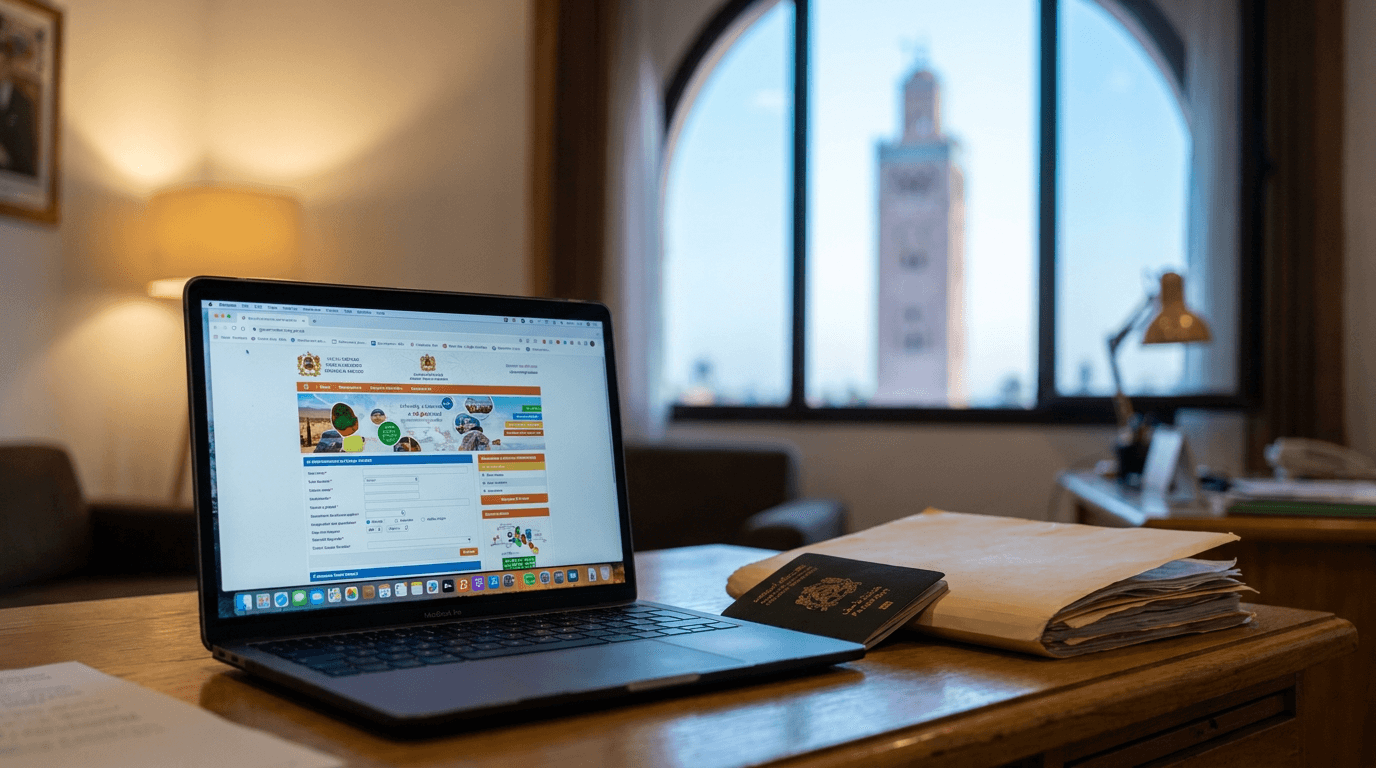
Morocco Digital Nomad Visa
Visa Data Sheet
Morocco still doesn’t have an official digital nomad visa. The government’s own visa pages point to short-stay tourism and business entry, plus a separate residency track for people who want to stay longer. That means remote workers are using Morocco’s existing system, not a purpose-built nomad program.
For many visitors, entry is simple. If your passport is from a visa-exempt country, you can usually enter without applying first and stay for up to 90 days. Your passport should be valid for at least 6 months and you’ll need a blank page for the entry stamp.
If you’re not visa-exempt, Morocco’s official route is the eVisa through Accès Maroc. It’s a single-person authorization for tourism or business, not a remote-work visa and it allows a stay of up to 30 days. The eVisa is valid for up to 180 days from the date it’s issued.
- Who can apply: Eligible nationals, residents of approved countries with valid residence permits and holders of certain qualifying multiple-entry visas.
- What it covers: Tourism and business only.
- What it doesn't do: It doesn't create a path to residency on its own.
That last point matters. The official eVisa is a short-stay entry permit, so it won’t solve the problem if you’re trying to live in Morocco while working remotely for months at a time.
For a longer stay, Morocco relies on its residency framework, usually through a visa de séjour or residence permit process once you’re in the country. The paperwork is more old-school and the official sources don’t present it as a digital nomad category. If you’re planning to work from Morocco for a while, that’s the route to look at, not a fictional nomad visa.
There’s one more catch. If you spend more than 183 days in Morocco, you can trigger tax residency, which may expose your worldwide income to Moroccan tax rules. That doesn’t mean you can’t work there, but it does mean you should think ahead before turning a three-month stay into a long-term base.
Morocco doesn’t have a dedicated digital nomad visa and that matters here. There’s no official remote-work category with its own income threshold, so eligibility is really about using the standard visitor route or, if you want to stay longer, the general residence permit system.
Short-stay entry: who qualifies
For many passport holders, the easiest route is visa-free entry for up to 90 days. Others need to apply through the Accès-Maroc e-visa system before they fly. The official portal checks nationality and, in some cases, whether you hold a valid visa or residence permit from places like the U.S., UK or Schengen area.
- Visa-free travelers: Citizens of eligible countries can usually enter for short stays without applying in advance.
- E-visa applicants: Travelers from countries that aren’t visa-exempt can apply online for tourism or business visits.
- Short-stay purpose: The official visitor routes are for tourism or business, not a separate remote-work status.
The government doesn’t publish a fixed monthly income figure for visitor entry. Instead, you’re expected to show sufficient funds for your stay and the official pages don’t give a set dirham or dollar amount.
Longer stays: the residence route
If you want to stay beyond the visitor window, Morocco’s legal framework uses general residence permits, including the carte d’immatriculation and carte de séjour. There’s no special digital nomad lane inside that system either, so remote workers usually apply under a visitor-style category and prove they can support themselves without local employment.
- Foreign income: You’ll need proof that your money comes from outside Morocco, such as salary, freelance income or pension payments.
- No local job: These permits don’t give you the right to work for a Moroccan employer.
- No fixed minimum: Moroccan law and official guidance don’t publish a standard income floor for this route.
That’s the key tradeoff. Morocco is fairly workable for remote workers, but it doesn’t hand out a clean, dedicated nomad visa. If your plan is to stay longer, you’ll need to fit into the ordinary visitor or residence rules and bring enough paperwork to show you’re living off foreign income.
Morocco doesn’t have an official digital nomad visa, so there’s no government-issued checklist built just for remote workers. If you’re planning to stay, you’ll usually be using the standard short-stay route, then moving into a long-stay visa and a residence permit, called a carte de séjour, if you want more time in the country.
That matters because the documents depend on the visa path, not on some special nomad category. The official portals don’t publish a fixed income threshold, a nomad-specific fee or a dedicated application form for remote workers. So if you see a “Morocco digital nomad visa” with neat monthly income rules, take it with a grain of salt.
What you’ll usually need
- Passport: Valid for at least six months from entry, with at least one blank page.
- Visa application form: Required for long-stay or consular applications.
- Passport photos: Recent, passport-sized photos.
- Proof of accommodation: A lease, hotel booking or other address in Morocco.
- Proof of financial means: Bank statements, pay slips or other evidence that you can support yourself without local work.
- Work or business proof: For longer stays, this can mean a remote-work contract, proof of self-employment or business registration, depending on the category.
- Criminal background check: Often requested for long-stay and residence applications.
- Medical or health insurance: Commonly required for long stays and residence permits.
For standard work or residence cases, some consulates also ask for a signed employment contract with a Moroccan employer, proof of qualifications and a medical certificate. That’s the annoying part, because the list can change by consulate and category, so you can’t assume one office will want exactly the same pile of papers as another.
What the official rules don’t give you
There’s no official digital-nomad income floor, no published nomad fee and no single processing time you can rely on. For short stays, many travelers get 90 days visa-free if their passport qualifies. For anything longer, expect to work through the normal visa and residency system, not a special remote-worker lane.
Morocco still doesn’t have a dedicated digital nomad visa, so there’s no special fee schedule for remote workers. In practice, you’ll pay for either visa-free entry, a short-stay visa or an e-visa, then, if you stay long term, the residence or registration card fees that apply to everyone else.
For many passport holders, the entry cost is zero. If you’re visa-exempt, Morocco gives you up to 90 days with no application fee, just the usual travel costs like flights, insurance and accommodation.
If you need a consular visa, the commonly cited official-style fee structure is:
- Single-entry visa, up to 90 days: 220 MAD, about $23.
- Double-entry visa, up to 90 days: 330 MAD, about $34.
- Transit visa: 170 MAD, about $18.
Morocco’s e-visa system is a little messier. The public portal confirms that you pay online by card, but it doesn’t publish one fixed fee in a clean, always-up-to-date public schedule. So the safest move is to start the application and check the amount shown before you pay. Don’t rely on old forum posts or third-party visa sites.
For longer stays, the main cost is the residence or registration card. The standard government fee is about 100 MAD per year, paid as fiscal stamps. That’s the number you should budget around if you’re applying under the visitor or remote-worker route.
There are also a few annoying but minor extras that can pile up:
- Criminal record extracts: small fees or stamp duties, usually under 100 MAD per document.
- Document legalization: small local stamp charges, but the exact amount can vary by office.
- Health insurance: not a government fee, but many nomads buy international coverage that often runs about $50 to $150 a month.
- Translations and copies: not officially fixed, though you’ll likely pay for them if your file is heavy.
The frustrating part is that Morocco’s real cost isn’t just the visa fee, it’s the paperwork around it. Budget for stamps, copies, legalizations and insurance, because those smaller charges are what usually catch people off guard.
Morocco doesn’t have a dedicated digital nomad visa and there’s no official application path for one. Remote workers use the same old routes everyone else does, which means visa-free entry for eligible nationalities, the Morocco e-Visa for travelers who need one or a residence permit if they plan to stay longer.
For many passport holders, there’s no application at all before arrival. You enter visa-free for up to 90 days, then deal with extensions or residency later if you need more time. If you do need an e-Visa, the process runs through the Accès Maroc portal and can be done entirely online from outside Morocco.
- Check eligibility: Confirm whether your nationality, residence status or existing visa makes you eligible for the e-Visa.
- Create an account: Register on the Accès Maroc platform with your email and password.
- Complete the form: Enter your passport details exactly as they appear in your travel document and choose tourism or business.
- Upload documents: Submit a passport photo and a color scan of your passport. Some applicants also need a valid residence card or multiple-entry visa, while business applicants need an invitation or supporting letter.
- Pay and submit: Review everything carefully, then pay online and send it off.
- Track the file: Log in to see whether it’s in process, waiting to be completed or refused.
The official processing times are straightforward. The standard e-Visa takes 72 working hours and the express option takes 24 working hours. That said, the government doesn’t publish a single universal fee table in English or French, so the exact amount appears during the application.
If you’re trying to stay longer than a 30-day e-Visa or a 90-day tourist entry, you’ll need to switch to a residence permit, usually the visitor carte de séjour. That application is handled in Morocco, not from your couch back home and the paperwork is slower and more annoying than the e-Visa route. There’s no official digital nomad fee, no fixed income threshold and no special remote-worker form. Those numbers you see on blogs aren’t backed by Moroccan government rules.
Morocco doesn’t have a dedicated digital nomad visa, so there’s no official nomad-specific clock to track, renew or extend. If you want to stay longer than a standard tourist entry, you’re working through Morocco’s normal visa and residence permit system, not a separate remote-work program.
For many travelers, that starts with visa-free entry for up to 90 days. That short stay is fine for remote work tied to a foreign employer or clients, but it doesn’t give you a special right to keep living in Morocco past the usual tourist window.
What long-term stays look like
The usual long-term route is a Type D long-stay visa, then a carte de séjour after you arrive. The residence permit process is handled through local police or prefecture offices and the initial card is typically issued for 1 year.
- Initial validity: Usually 1 year for a first residence card.
- Renewal: Generally annual, if you still meet the conditions for your category.
- Longer cards: In some cases, authorities may later issue 2-, 3-, 5- or even 10-year cards.
- Maximum stay: There’s no fixed overall cap built into the residence regime, as long as you keep renewing and still qualify.
That’s the part people often miss. Morocco doesn’t publish a digital-nomad-only renewal rule, a separate fee schedule or a special income threshold for remote workers. Any numbers you see online for a “Morocco digital nomad visa” are usually unofficial.
Renewal and what to expect
Renewal means re-submitting your file to the local authorities and proving you still fit your residence category. That usually means showing continued income or funds, housing in Morocco and the other standard documents tied to your status, whether that’s visitor, employee, entrepreneur or retiree.
If you’re trying to build toward a longer stay, the residence system can work, but it’s not slick. It’s paperwork-heavy and slow compared with branded digital nomad programs elsewhere and there’s no automatic bridge from remote work to permanent residency or citizenship.
- Permanent status: Possible through the normal residency path, not a nomad-specific fast track.
- Citizenship: Can be sought after years of lawful residence, but it follows standard Moroccan rules and discretion.
For most remote workers, the practical takeaway is simple. Morocco can be a good base, but if you want to stay beyond the tourist window, plan on the standard residence permit process and expect annual renewal unless your situation later qualifies for a longer card.
Taxes & considerations
Morocco doesn’t have a dedicated digital nomad visa and that matters for taxes. Remote workers on long-stay or residence permits are taxed under the country’s normal personal income tax rules, with no separate reduced regime for nomads. The visa label doesn’t change the tax test, your residence status does.
The big trigger is Moroccan tax residency. The tax administration treats you as resident if you have a permanent home in Morocco, your center of economic interests is there or you stay in the country for more than 183 days in any 365-day period. If you rent an apartment and start treating it like home, you can be pulled into residency before you hit the 183-day mark.
If you’re tax-resident, Morocco taxes your worldwide income. That includes remote work for foreign clients or a foreign employer, because there’s no official carve-out for digital nomads. The one clear foreign-income relief the tax administration has spelled out is for foreign pensions, not active freelance or employment income.
- Tax resident: Taxed on worldwide income under Morocco’s personal income tax system.
- Non-resident: Taxed only on Moroccan-source income.
- Foreign remote work: No special nomad exemption has been published.
- Foreign pensions: Subject to a separate relief rule that doesn’t apply to normal remote work.
Double-taxation treaties can help if your home country also says you’re resident there. Morocco has a broad treaty network and those agreements can sort out residency tie-breakers and give credit for foreign tax paid. If you’re planning to stay long enough to test residency, get proper tax advice before you cross the line. The rules are ordinary, but the consequences aren’t.
One more practical point, taking on Moroccan clients or creating a local business presence can change the tax picture fast. Even if you’re paid from abroad, local work can raise Moroccan-source income issues or create a permanent-establishment problem for your business. That’s the sort of headache most nomads don’t need.
Morocco Digital Nomad Guide
Cost of living, internet, healthcare, coworking, and every visa option for Morocco.
Visa rules change. We'll tell you.
Get notified about policy updates and new requirements for the Morocco Digital Nomad Visa and other Morocco visas.
