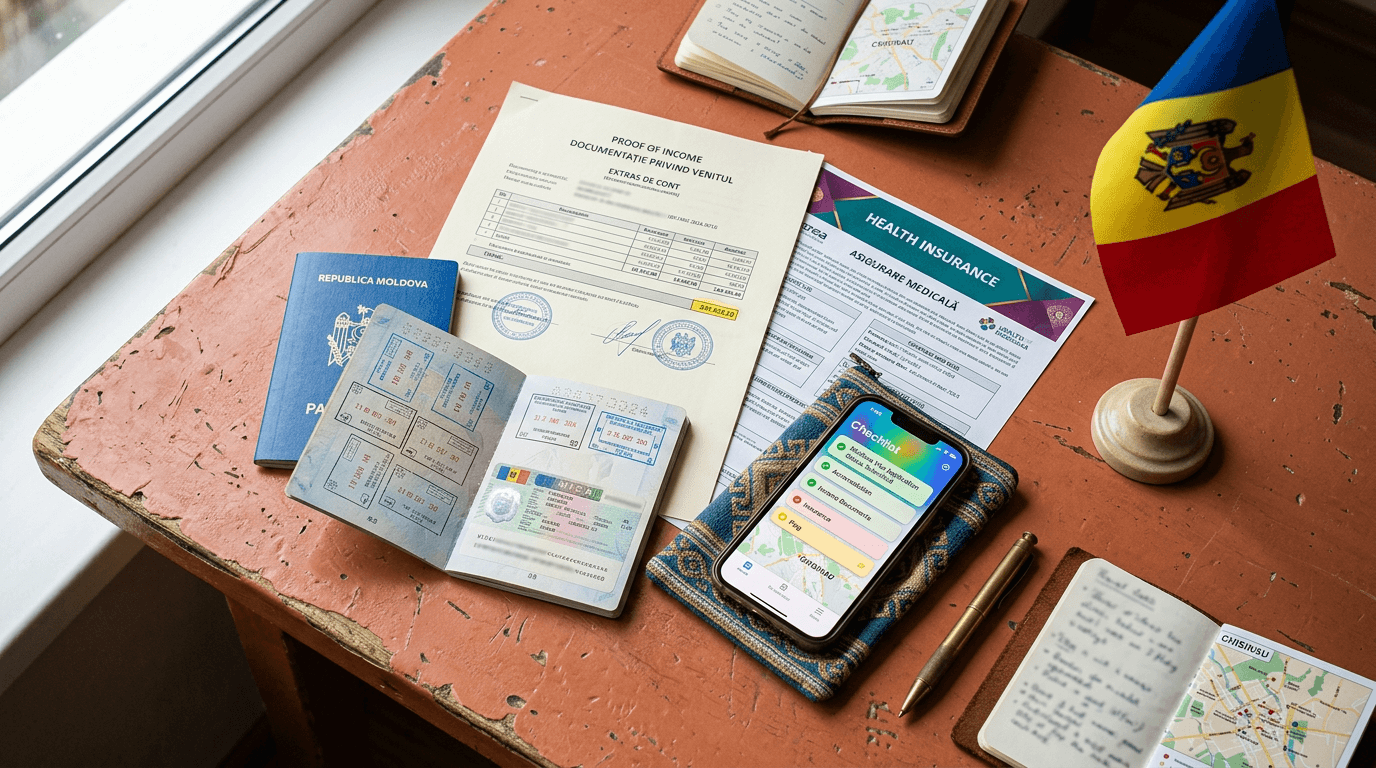
Moldova Digital Nomad Visa

Visa Data Sheet
Moldova doesn’t appear to have a separate, officially published digital nomad visa category. Instead, remote workers who want to stay longer than the 90-day tourist limit use the country’s general long-stay or Type D, visa and then ask for temporary residence through the Bureau of Migration and Asylum.
That makes the process less tidy than in countries with a named nomad program. The upside is that Moldova does have a legal route for long stays. The downside is that the remote-work-specific rules sit inside Article 372 of the Law on the regime of foreigners and the full text isn’t publicly available in English on the main government portals.
Official sites list airport transit, transit, short-stay and Type D visas for purposes such as employment, study, family reunification, entrepreneurial activity and IT work. They do not list “digital nomad” as a separate visa type, so applicants shouldn’t expect a neatly branded program page with a fixed checklist, published income threshold or clear renewal terms.
What’s clear is the basic structure. Tourists can enter on a short-stay visa or visa-free for up to 90 days in any 6-month period, but that doesn’t cover long-term residence. If you plan to work remotely from Moldova for longer, the state says you need the right of residence through the Bureau of Migration and Asylum.
Invest Moldova says digital nomads can obtain and extend temporary residence under Article 372, but the official public material leaves several key points unconfirmed. These include:
- Income threshold: not publicly verified from accessible government sources
- Validity period: not clearly published for a dedicated nomad category
- Renewal mechanics: unclear in the public material
- Tax treatment: not spelled out in the accessible official sources
So the safe read is simple. Moldova seems to allow a path for remote workers, but it’s folded into the broader residence system rather than offered as a standalone digital nomad visa. If you want to stay past 90 days, you’ll need to work through the long-stay and residence route and some of the practical details still aren’t clearly public.
Moldova doesn’t have a clearly published, standalone digital nomad visa page. Instead, remote workers are folded into the general long-stay Type D visa and temporary residence process. That matters, because tourists can only stay for up to 90 days in any 6-month period and that short stay doesn’t give you a legal path to live there long term.
The basic profile is straightforward, even if the detailed rules aren’t. Moldova’s official material points to foreign nationals who earn their income from abroad and then ask the Bureau for Migration and Asylum for temporary residence. The government also says foreigners who stay more than 90 days need to apply for provisional or temporary residence.
What’s missing is the part applicants usually care about most. The official sources available in English don’t publish a fixed minimum income, a list of accepted remote-work arrangements, age limits, dependent rules or clear disqualifying criteria for digital nomads. Article 372 of the Law on the regime of foreigners is the legal hook, but the text itself isn’t publicly accessible in English, so those program details can’t be confirmed from primary sources.
So, who qualifies? In practical terms, you should expect Moldova to look for someone who:
- Works remotely for income earned abroad: the official materials point to foreign income, not local employment.
- Needs to stay longer than 90 days: short-stay entry or visa-free travel won’t cover that.
- Applies through the temporary residence channel: that’s the route named by the Bureau for Migration and Asylum.
Nationality rules are also fairly loose in the public guidance. EU citizens and many other nationalities can enter visa-free for up to 90 days in a 6-month period, but the official sources don’t add any special nationality filter for digital nomad applicants. If you’re looking for a neat checklist with income thresholds and dependent rules, Moldova’s current public guidance doesn’t give you one.
Moldova doesn’t publish a separate, standalone digital nomad visa checklist. Instead, remote workers seem to use the general long-stay Type D visa route, then apply for temporary residence with the Bureau of Migration and Asylum. The catch is that the remote-work-specific rules sit in Article 372 of the law on foreigners and that text isn’t publicly available in English, so the official digital-nomad requirements are still unclear.
For the standard long-stay Type D visa, the Ministry of Foreign Affairs lists these core documents:
- Completed application form: The standard visa form.
- Valid passport: It has to be current and acceptable for long-stay entry.
- Recent photo: A passport-style photo.
- Invitation or residence decision: Proof that temporary residence has been approved or requested.
- Criminal record: A police clearance document.
- Proof of means of subsistence: Evidence that you can support yourself.
- Travel medical insurance: Coverage of at least €30,000 ($32,550).
Residence guidance adds more paperwork for stays beyond 90 days. That can include a medical certificate, an HIV/AIDS test, a copy of your passport with a valid visa, marital status documents where relevant, proof of housing, study documents if they apply, multiple photos and proof that state fees were paid.
The annoying part is what’s missing. The official portals don’t give a digital-nomad-specific checklist, so documents like proof of foreign-sourced income, remote employment contracts or client agreements can’t be confirmed from primary government sources. If you’re planning to stay long term, assume the generic Type D and residence paperwork applies, then be ready for extra requests from the authorities.
Moldova doesn’t publish a standalone digital nomad fee schedule, so you can’t check out a neat price list for this route. Digital nomads appear to use the general long-stay Type D visa and then a temporary residence process, but the government hasn’t posted a separate fee for that category.
The clearest number on the consular side is 40 EUR for most Type C and Type D visas. Airport transit visas are listed at 20 EUR. There’s no special digital-nomad visa fee shown on the official visa schedule, so applicants shouldn’t assume the remote-work path costs the same as another residence category, because the government doesn’t say that.
The residence permit side is messier. The Ministry of Foreign Affairs mentions a state fee for the temporary residence process, but it doesn’t publish the amount in the material available here and it doesn’t break out a separate charge for digital nomads. That means the government fee for an Article 372 remote-work residence application is unknown, not just hard to find.
So the cost picture is only partly clear:
- Type D visa fee: 40 EUR for most cases
- Airport transit visa fee: 20 EUR
- Digital nomad visa fee: not officially listed
- Temporary residence state fee: mentioned, but not quantified
- Dependent fees: not published separately for this route
That leaves a frustrating gap for budget planning. If you’re applying through Moldova’s long-stay and residence system, expect to confirm the fee directly with the relevant authorities rather than relying on a public digital-nomad price sheet, because there isn’t one.
Moldova doesn’t publish a standalone, official “digital nomad visa” flow. Instead, remote workers use the country’s general long-stay Type D visa and then ask for a temporary right of residence through the Bureau for Migration and Asylum if they want to stay beyond 90 days.
That makes the process a little awkward. The short-stay side is clear, you can enter visa-free or with a short-stay visa for up to 90 days in any 6-month period, but that doesn’t get you long-term residence. For a longer stay, the rules are tied to Article 372 of Moldova’s foreigners law and the detailed remote-work requirements aren’t publicly available in English.
How the application works
- Step 1: Check whether you need a Type D visa to enter Moldova for a longer stay or whether you can enter first under the short-stay rules.
- Step 2: Prepare the documents the authorities require for residence, which include medical, identity, housing and other supporting papers.
- Step 3: Submit your residence request in person at the Bureau for Migration and Asylum office in Chișinău.
- Step 4: Wait for the authorities to process the request, then follow their instructions for any next administrative steps.
The official government guidance doesn’t spell out a separate online application for digital nomads. Entry visas, including Type D visas, are typically handled through diplomatic missions or the official eVisa portal for eligible categories, but the published materials don’t show a dedicated remote-worker track.
That also means some practical details stay fuzzy. The government doesn’t publish fixed processing times for digital-nomad-related residence applications and it doesn’t clearly say whether you can complete every step from abroad or have to arrive first on another basis. If you’re planning this route, expect some back-and-forth with the Bureau, because the public guidance leaves real gaps.
Moldova doesn’t appear to have a standalone, officially documented digital nomad visa with its own fixed validity period. Instead, remote workers use the general long-stay Type D visa and then ask the Bureau of Migration and Asylum for a right of temporary residence if they want to stay beyond the normal 90-day limit.
The part that trips people up is simple, if annoying: the Type D visa is just the entry document. The Ministry of Foreign Affairs says it’s non-renewable, so it doesn’t keep extending your stay on its own. Once you’re in Moldova, any longer stay depends on the separate residence process.
Official sources don’t publish a fixed duration for the digital nomad route under Article 372 and they also don’t spell out a renewal schedule, maximum cumulative stay or a clean path from nomad status to permanent residence. That means there’s no verified answer on how long this status lasts in practice, at least not from public government material.
What is clear is the general framework for foreigners:
- Short stay: Visa-free or short-stay entry is limited to 90 days in any 6-month period.
- Long stay: Type D visas are for entry, not extension.
- Residence: Staying longer than 90 days requires a valid residence card and temporary residence permission.
So if you’re planning a longer remote stay, don’t assume the visa itself buys you time. The safer read is that your actual stay depends on the residence decision from migration authorities, not on a simple visa renewal.
There’s also a broader immigration path in Moldova. The government says long-term legal residence can, in general, lead to permanent residence and later citizenship under the country’s immigration rules. But the official materials don’t say that digital nomad status automatically gets you there, so don’t count on it unless you’ve got written confirmation.
Moldova doesn’t appear to have a separately documented tax package for digital nomads. The official material points instead to the general long-stay visa and temporary residence framework, so if you’re staying and working remotely from there, the tax treatment falls back to Moldova’s normal rules unless the authorities say otherwise.
The basic line is simple enough. A foreign national becomes a Moldovan tax resident after spending more than 183 days in the country in a tax year or by meeting other residency criteria. Tax residents are generally taxed on worldwide income, which means foreign-source earnings can matter once you cross that residency line.
There’s no official guidance in the sources reviewed that creates a special exemption for people living in Moldova under a digital-nomad-type status. That’s the awkward part. The legal basis for remote-work stays is tied to Article 372 of the law on the regime of foreigners, but the detailed rules aren't publicly accessible in English, so income thresholds, tax carve-outs, renewal mechanics and other program specifics can’t be confirmed from primary government sources.
If you’re planning a longer stay, keep the tax and immigration pieces separate in your head, because Moldova does. A long-stay D visa is only the entry basis and continued residence requires a residence card from the Bureau of Migration and Asylum. Tourist entry is a different track and doesn’t give you the right to settle in for the long haul.
What to check before you go:
- Tax residency: Whether your stay will pass the 183-day mark.
- Worldwide income: Whether your foreign earnings could become taxable in Moldova once you’re a resident.
- Treaty position: How any double-taxation treaty applies to your situation.
- Local filings: Whether your residence status triggers reporting or registration steps.
The safest assumption is that there’s no special digital-nomad tax break unless a Moldovan authority tells you so in writing. If you want certainty, ask about your exact facts before you move money, sign a lease or stay long enough to trigger residency.
How It Compares
Similar visas elsewhere
| Program | Country | Income | Fee | Max stay | Renewable |
|---|---|---|---|---|---|
| Seychelles Workcation Program | Seychelles | - | €10↓ | 12 mo | - |
| Namibia Digital Nomad Visa | Namibia | $2,000/mo | NAD 3,300 | 6 mo | |
| Andorra Digital Nomad Residence Permit | Andorra | €56,472/yr | €225 | 24 mo | |
| Montserrat Remote Worker Stamp | Montserrat | XCD 189,000/yr | XCD 1,350 | 12 mo |
Moldova Digital Nomad Guide
Cost of living, internet, healthcare, coworking, and every visa option for Moldova.
Visa rules change. We'll tell you.
Get notified about policy updates and new requirements for the Moldova Digital Nomad Visa and other Moldova visas.