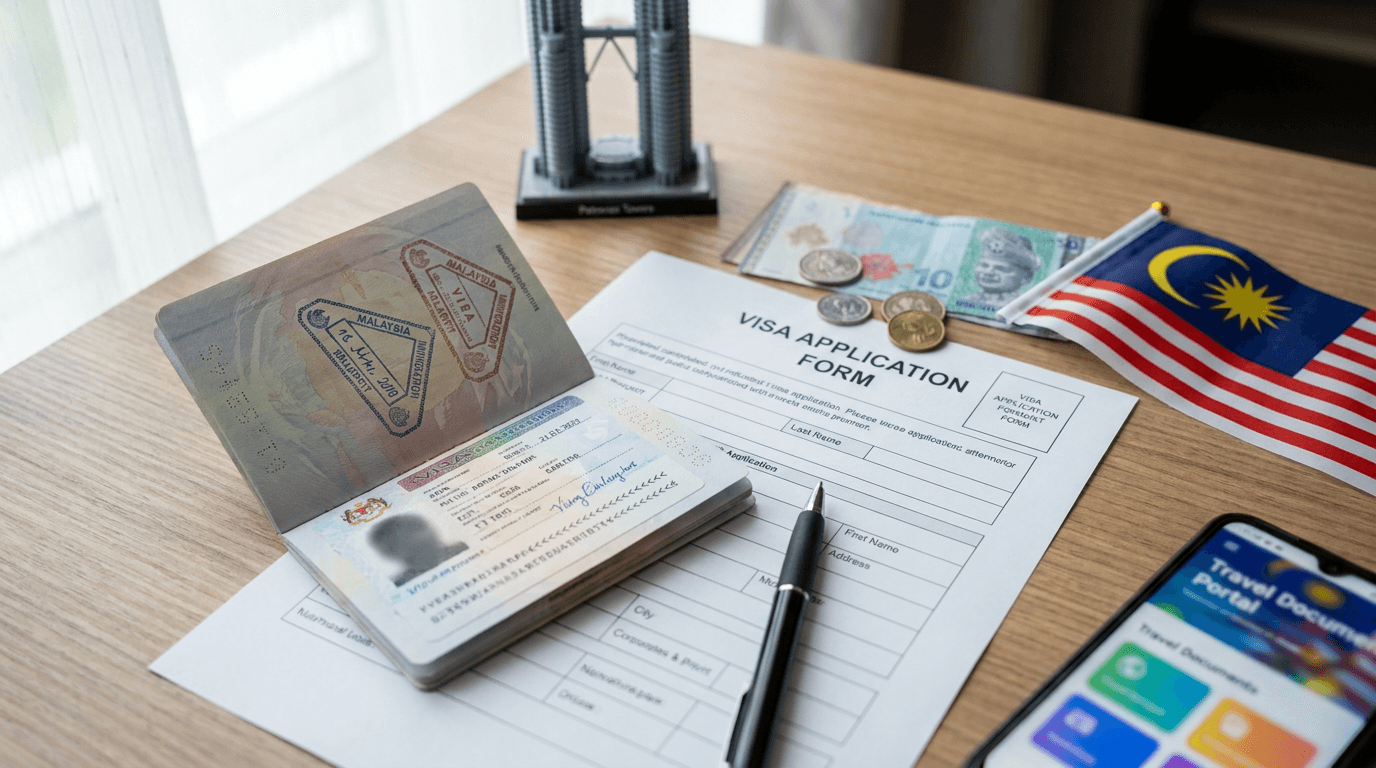
Malaysia Short-Term Social Visit Pass

At a Glance
- Extensions only on special grounds such as illness, accident or war at home, with evidence and a confirmed onward ticket, applied for in person with Form IMM.55all visitors (Chinese visa-free stays cannot be extended)
- Visa-exempt visitors receive the pass on arrival at the immigration counter after submitting MDAC; nationals who need a visa first get an eVISA through the MyVISA portal (malaysiavisa.imi.gov.my) or a Malaysian missionall visitors
- Noall visitors
The Short-Term Social Visit Pass is the entry permission Malaysia gives foreign visitors on arrival for short visits. Visa-exempt visitors receive the pass on arrival at the immigration counter after submitting MDAC; nationals who need a visa first get an eVISA through the MyVISA portal (malaysiavisa.imi.gov.my) or a Malaysian mission.
Stays run 14 to 90 days depending on nationality, set on arrival, for most visa-exempt nationalities, with separate rules for ASEAN, Chinese, Indian and Myanmar citizens.
- Permitted purposes: Social visits, visiting relatives, tourism, journalism, meetings and conferences, business discussions, factory inspections, auditing company accounts, signing agreements, surveying investment opportunities, seminars, student goodwill missions or exams, sports competitions and other activities approved by the Director General of Immigration
Remote work isn't among them. Malaysia has published no rule on working remotely for a foreign employer or clients during a visit. The official route for remote workers is the DE Rantau Nomad Pass; a tourist pass can't be converted into one.
Nationals of most countries can enter visa-free and receive the pass on arrival. These nationalities need a visa before travel: Afghanistan (visa approval letter first), Angola*, Bangladesh, Bhutan, Burkina Faso*, Burundi*, Cameroon*, Central African Republic*, Colombia, Democratic Republic of Congo*, Congo Republic*, Djibouti*, Equatorial Guinea*, Eritrea*, Ethiopia*, Ghana*, Guinea-Bissau*, India (visa-exempt until 31 Dec 2026), Ivory Coast*, Liberia*, Mali*, Montenegro, Mozambique*, Nepal, Nigeria*, Niger*, Pakistan, Rwanda*, Serbia, Sri Lanka. * = may enter by air only.
- ASEAN nationals except Myanmar: no visa for stays of less than 1 month. Brunei and Singapore nationals need no visa for longer stays either.
- Chinese citizens: visa-free under a mutual visa exemption agreement in force since July 17, 2025
- Indian citizens: visa-exempt until Dec. 31, 2026
- Myanmar citizens: visa-free for social visits since Oct. 1, 2025
The pass carries no right to work. Urgent professional work needs a separate permission, PLS@XPATS, which the national portal for non-citizens describes as a social visit pass that lets foreign professionals work temporarily on emergency and critical tasks.
- Passport: At least 6 months beyond the date of entry
- Digital arrival card: Foreign visitors must submit the MDAC online at imigresen-online.imi.gov.my/mdac within 3 days before arrival. Exempt: Singapore citizens; diplomatic and official passport holders; Malaysian permanent residents and long-term pass holders; Brunei GCI holders; Brunei-Malaysia Frequent Traveller Facility holders; Thailand border pass holders; Indonesian cross-border (PLB) holders
- Onward travel: a return or onward ticket, with flight and hotel details ready to show at the border
- Funds: some travelers may be asked for bank statements or other proof that they can support themselves
- Visa, where needed: an eVISA or a visa from a Malaysian mission, obtained before travel
- Since Sept. 1, 2026: Multiple Entry Visas are limited to 31 eligible nationalities and to Fly & Cruise, Business, Medical Treatment and Wedding Tourism purposes
Extensions need an in-person visit to an immigration office with the passport, Form IMM.55, supporting documents and a confirmed ticket home or a visa and ticket to a third country.
The Immigration Department lists no fee for the pass itself. Nationals who need a visa pay a visa fee, which the department's fee table sets by nationality.
Some visitors may be asked to show they can fund the trip, but Malaysia publishes no minimum amount.
- Visa-exempt visitors: submit the MDAC before arrival, then receive the pass at the immigration counter
- Visa-required visitors: apply for an eVISA through the MyVISA portal (malaysiavisa.imi.gov.my) or a visa from a Malaysian mission before travel, then receive the pass on arrival
- At the border: officers may ask about the purpose of the visit, so visitors should carry return or onward tickets and accommodation details
- Most visa-exempt nationalities: 14 to 90 days depending on nationality, set on arrival
- ASEAN nationals except Myanmar: less than 1 month without a visa
- Chinese citizens: 30 days per entry and no more than 90 days in any 180-day period; stays before July 17, 2025 don't count toward the limit
- Indian citizens: up to 30 days per visit until Dec. 31, 2026
- Myanmar citizens: 14 days for social visits
Extensions only on special grounds such as illness, accident or war at home, with evidence and a confirmed onward ticket, applied for in person with Form IMM.55. Visa-free stays for Chinese citizens can't be extended.
A visit pass carries no tax status of its own. The Inland Revenue Board of Malaysia (LHDN) decides residence mainly by days in the country: 182 days or more in a calendar year. Shorter stays can also count when they link to a long stay in an adjoining year or follow long stays in earlier years.
Remote work isn't a permitted purpose of this pass. MDEC's FAQ for the DE Rantau Nomad Pass sets out how nomads on that pass are taxed.
Frequently Asked Questions
How long can visitors stay in Malaysia without a visa?
Visa-exempt visitors get 14 to 90 days depending on nationality, set on arrival. ASEAN nationals other than Myanmar need no visa for stays of less than 1 month. Chinese citizens get 30 days per entry and no more than 90 days in any 180-day period. Indian citizens get up to 30 days until Dec. 31, 2026. Myanmar citizens get 14 days.
Can visitors work remotely on a Short-Term Social Visit Pass?
The pass covers listed purposes only; remote work isn't among them. Malaysia has published no rule on remote work during a visit. The official route for remote workers is the DE Rantau Nomad Pass.
Can a Short-Term Social Visit Pass be extended?
Extensions only on special grounds such as illness, accident or war at home, with evidence and a confirmed onward ticket, applied for in person with Form IMM.55. Visa-free stays for Chinese citizens can't be extended.
Do visitors need the Malaysia Digital Arrival Card?
Most do. Foreign visitors must submit the MDAC online at imigresen-online.imi.gov.my/mdac within 3 days before arrival. Exempt: Singapore citizens; diplomatic and official passport holders; Malaysian permanent residents and long-term pass holders; Brunei GCI holders; Brunei-Malaysia Frequent Traveller Facility holders; Thailand border pass holders; Indonesian cross-border (PLB) holders.
How It Compares
More Malaysia programs
| Program | Country | Income | Fee | Max stay | Renewable |
|---|---|---|---|---|---|
| Malaysia DE Rantau Nomad Pass | Malaysia | $24,000-60,000/yr | MYR 540-1,080 | 24 mo | |
| Malaysia My Second Home (MM2H) | Malaysia | - | MYR 5,000 | 240 mo | |
| Malaysia Professional Visit Pass | Malaysia | - | MYR 1,296 | 12 mo |
Similar visas elsewhere
| Program | Country | Income | Fee | Max stay | Renewable |
|---|---|---|---|---|---|
| Lithuania Startup Visa | Lithuania | €1,153/mo | €160 | 24 mo | |
| Ethiopia Digital Nomad Visa (Not Available) | Ethiopia | - | - | - | - |
| Antigua Nomad Digital Residence (Closed) | Antigua and Barbuda | - | - | - | - |
| Palau Digital Residency ID (Not a Visa) | Palau | - | $288 | - |
Malaysia Digital Nomad Guide
Cost of living, internet, healthcare, coworking, and every visa option for Malaysia.
Visa rules change. We'll tell you.
Get notified about policy updates and new requirements for the Malaysia Short-Term Social Visit Pass and other Malaysia visas.