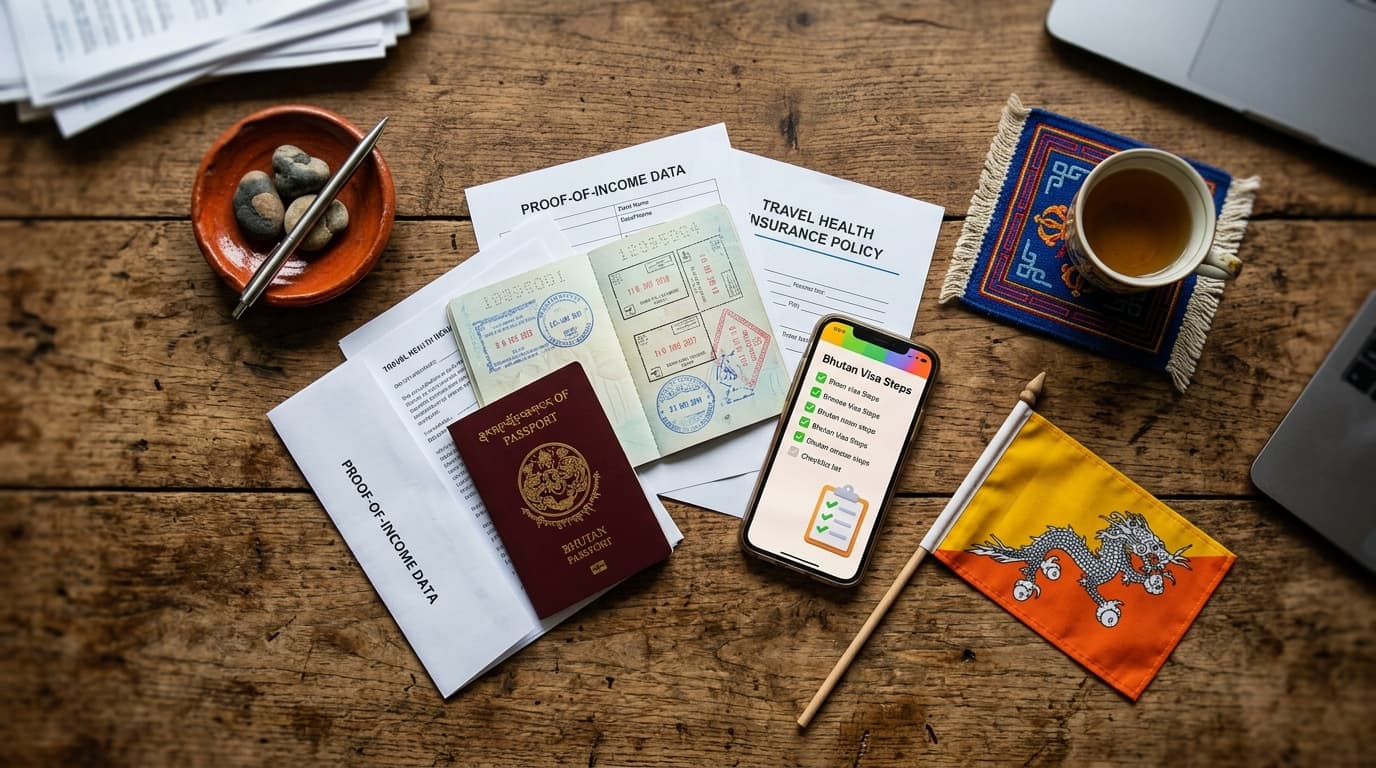
Bhutan Gelephu Mindfulness City Residency
Visa Data Sheet
Bhutan’s Gelephu Mindfulness City or GMC, isn't the same thing as the country’s standard tourist system. It sits inside a Special Administrative Region created by Royal Charter in December 2024, under a "one country, two systems" setup that gives GMC its own immigration and economic rules while still remaining part of Bhutan.
The residency route being tested there's the GMC sandbox Digital Nomad Visa, run by the Gelephu Mindfulness City Authority with Nomad Club. It’s aimed at remote workers, entrepreneurs and professionals who fit GMC’s focus on mindful, sustainable development. This is still a pilot program, not a nationwide Bhutanese nomad visa and the Department of Immigration has confirmed there isn’t a separate digital nomad category for the rest of Bhutan.
For applicants, the main appeal is simple: the permit gives legal residence for 12 months and can be extended. There’s no fixed minimum income requirement, which sets it apart from many other long-stay options. The tradeoff is the upfront cost and the program’s own financial structure.
- Annual program fee: $2,800, non-refundable.
- Refundable deposit: $10,000 in TER tokens.
- Stay length: 12 months, with extension possible.
- Income test: No fixed minimum income requirement.
- Scope: Limited to GMC’s sandbox program, not the rest of Bhutan.
That makes this a niche path, not a casual one. If you want to live in Bhutan outside GMC, the normal immigration and tourism rules still apply, including the Sustainable Development Fee. If you do qualify for the sandbox permit, you’re signing up for a specialized residency scheme tied to Bhutan’s newest economic experiment, not a standard visa route.
The Gelephu Mindfulness City Digital Nomad Visa isn’t Bhutan’s general remote-work visa. It’s a sandbox permit for the Gelephu Special Administrative Region, run by the Gelephu Mindfulness City Authority with Nomad Club and it’s built for foreign remote workers, entrepreneurs and professionals who fit GMC’s model of mindful, sustainable development.
The big selling point is that there’s no fixed minimum income requirement. That makes it different from a lot of other residency programs that force you to prove a certain monthly earnings level just to get in the door. Instead, the program looks at your professional activity, compliance history and whether you can meet the financial entry conditions.
Here’s what the official material does make clear:
- Program fee: $2,800 per year, paid upfront.
- Security deposit: $10,000, refundable, held in TER token form.
- Initial validity: 12 months, with the option to extend.
- Purpose: For remote work, entrepreneurship and professional activity outside Bhutan.
You also need to pass the program’s screening. The available descriptions mention background and AML checks, so this isn’t the kind of residency you get just because you can pay. If your profile raises compliance concerns, you’re unlikely to get far. The official and semi-official materials don’t publish a detailed nationality list, age cutoff, dependent policy or a neat list of automatic disqualifiers, so those parts are still unclear.
One more thing: this isn’t a nationwide Bhutan digital nomad visa. The Department of Immigration has said the GMC program is limited to Gelephu Mindfulness City and there’s still no separate digital nomad category for the rest of the country. If you want this route, you need to fit GMC’s rules, not Bhutan’s standard tourist setup.
The Gelephu Mindfulness City or GMC, digital nomad visa isn't Bhutan’s standard tourist visa with a new label slapped on it. It’s a separate sandbox program inside the Gelephu Special Administrative Region, built for remote workers, entrepreneurs and professionals who fit GMC’s long-term development plan.
The headline terms are straightforward and pricey. The permit gives you legal residence for 12 months, with renewal possible and there’s no fixed minimum income requirement. Instead, applicants pay a $2,800 annual program fee and place a $10,000 refundable security deposit in TER, a gold-backed token managed through a DK Bank account.
What you need to prepare
- Valid passport: The official GMC materials assume standard immigration checks, but they don’t publish a fixed passport-validity rule for this visa.
- Digital onboarding documents: You’ll go through the Nomad Club application flow and DK Bank compliance steps.
- Proof of remote work: You need to show you work for a non-Bhutanese entity.
- Health and background checks: These are implied by the program, but the official checklist doesn’t spell out exact document rules.
That missing checklist matters. There’s no official public statement yet on police certificates, insurance requirements, apostilles or translation rules for this specific permit, so don’t assume the paperwork is the same as for a regular Bhutan visa.
How the money side works
You open a DK Bank account, complete the onboarding checks and buy the TER deposit inside GMC’s financial system. The deposit stays locked while you’re in the program and it’s refundable when you leave if you’ve kept to the rules. If you pull the TER balance out early, you’re likely done.
One more thing people miss: this permit doesn’t wipe out Bhutan’s Sustainable Development Fee everywhere. If you travel outside GMC into other parts of Bhutan, the usual SDF still applies under national immigration rules.
There’s also no separate nationwide digital nomad visa waiting in the wings. For now, this GMC route is the only official remote-work-style long-stay option being run inside Bhutan’s current system.
Bhutan’s Gelephu Mindfulness City Residency isn't a cheap workaround for the country’s normal visa rules. It’s a separate sandbox program inside the Gelephu Special Administrative Region, built for remote workers, entrepreneurs and professionals who fit GMC’s vision of sustainable development.
The big difference is the cost structure. Instead of Bhutan’s daily Sustainable Development Fee, GMC uses a fixed annual program fee and a refundable token deposit. The official setup is still a pilot, so the fee list is short and a lot of the usual immigration fine print hasn’t been published yet.
What you’ll pay
- Annual program fee: USD 2,800, non-refundable.
- Security deposit: USD 10,000, refundable.
- Deposit form: TER tokens held in a DK Bank account.
The USD 10,000 deposit isn’t a fee, it’s collateral. It has to stay at or above that value during participation and it’s refunded when you leave the program in good standing.
There’s also no fixed minimum income requirement in the published GMC materials. That’s unusual and, for many applicants, it’s the main appeal. The trade-off is obvious, though, because the upfront cash commitment is heavy and the program fee isn’t small.
What the official materials don’t spell out
- Processing fee: No separate government tariff has been published.
- Dependent fees: No fixed official schedule is listed.
- Renewal charges: You should expect to pay the annual program fee again for each year of participation, but no extra government fee table has been released.
- Extra costs: Health insurance, legal help, translations and banking charges aren’t priced out in the core materials.
If you travel outside GMC, Bhutan’s regular SDF can still apply. That means your total spend can climb fast if you mix a GMC residency with broader travel around the country.
Bottom line, this isn’t a bargain residency. It’s a premium pilot program with a blunt price tag and the refundable deposit is only refundable if you stay in good standing and keep the tokens in place.
The Gelephu Mindfulness City Digital Nomad Visa isn’t part of Bhutan’s regular immigration system. It’s a sandbox permit run by the Gelephu Mindfulness City Authority with Nomad Club and it’s built for remote workers, entrepreneurs and professionals who fit GMC’s sustainability pitch.
The application starts online and you can apply from abroad before you arrive. There’s no public standard for how long approval takes, so don’t assume it’ll be quick just because the process is digital. The first approved cohort is being accepted under the 2026 pilot framework.
What you need to prepare
- Program fee: $2,800 a year, non-refundable.
- Security deposit: $10,000, refundable, held in TER tokens through a DK Bank account.
- Employment proof: You must show that you work for a non-Bhutanese employer.
- Basic documents: A valid passport, digital photo and health declaration.
The financial side is the part that stops most people. You pay the annual fee, open the DK Bank account, then place the $10,000 equivalent in TER tokens before the visa is issued. The program doesn’t list a fixed minimum income requirement, which is unusual, but the deposit requirement is still a serious barrier.
How the process works
- Complete the online eligibility and compliance check.
- Pay the annual program fee.
- Open a DK Bank account.
- Deposit the required TER token amount.
- Receive the visa and residence documentation once everything clears.
Once approved, the permit gives you 12 months of residence and it can be extended, though the public rules don’t spell out the exact extension process. If you want to move around Bhutan outside Gelephu, that may be possible under normal immigration rules and with the Sustainable Development Fee paid where required. The GMC permit isn’t a back door to general Bhutan residency and the Department of Immigration says there’s still no separate nationwide digital nomad visa for the rest of the country.
The Gelephu Mindfulness City residency is a different animal from Bhutan’s standard tourist visa. It sits inside GMC’s “one country, two systems” setup, so the special administrative region gets its own immigration and economic rules while still remaining part of Bhutan. In plain English, this is a sandbox program for remote workers, entrepreneurs and professionals who fit GMC’s development model, not a general nomad visa for the rest of the kingdom.
The current pilot grants an initial 12-month residence permit. Official and semi-official materials say it can be renewed or extended, but the total cap isn’t fully settled in the public record. Some descriptions point to a 24-month maximum, while later commentary mentions up to 36 months. There’s no clear public guidance on repeated renewals beyond that pilot limit, so don’t assume this is a long-term workaround.
What’s clear is the money side. Instead of Bhutan’s daily Sustainable Development Fee, GMC uses a program fee and a refundable token deposit.
- Annual program fee: $2,800, non-refundable.
- Security deposit: $10,000, refundable.
- Deposit format: TER gold-backed tokens held through DK Bank.
- Income test: No fixed minimum monthly income requirement is published.
The no-income-threshold part is unusual and probably the biggest draw for people who qualify. That said, the deposit requirement is still steep and the program is clearly aimed at applicants with stable outside income and a willingness to lock up capital for the length of the stay.
It’s also a sandbox, not a finished residency system. GMC is running it with Nomad Club and Bhutan’s Department of Immigration has confirmed there isn’t a separate nationwide digital nomad visa outside Gelephu. There’s also no authoritative sign yet that time spent on this permit leads directly to permanent residence or Bhutanese citizenship.
If you’re looking at GMC, treat it as a time-limited residence option with moving parts. The basic shape is clear, 12 months in, possible extension, $2,800 a year and a refundable $10,000 deposit. The long-term rules are still being written.
The Gelephu Mindfulness City digital nomad permit sits in a strange middle ground. It’s not Bhutan’s standard tourist visa and it’s not a nationwide remote-work visa either. It’s a sandbox program inside Gelephu’s special administrative setup, so the rules are being built for that zone, not the whole country.
That matters for taxes. Bhutan hasn’t published a GMC-specific tax code for this permit, so there’s no official guidance yet on tax residency, foreign income treatment or special concessions for participants. In plain terms, you can’t assume your remote salary is tax-free and you also can’t point to a published rule that says it will be taxed a certain way.
- Annual program fee: $2,800
- Refundable deposit: $10,000 in TER tokens
- Initial stay: 12 months, with renewal possible
- Minimum income: None stated in the official program summary
The cleanest read is that Bhutan’s national tax rules still apply unless and until GMC publishes its own system under its autonomous powers. That could change later, but there’s no public tax schedule to rely on right now. If you’re earning from a foreign employer, don’t build your planning around a presumed exemption.
There are also practical limits baked into the permit. You’re expected to work for a non-Bhutanese employer and the program isn’t designed for local job hunting. If your income starts coming from Bhutanese sources, you should expect national tax rules to matter, but the exact reporting obligations for this visa haven’t been spelled out in public program materials.
The safest move is to treat the permit like a long-stay residence product with unresolved tax treatment, not a tax shortcut. If you’re considering it seriously, get advice from a Bhutanese tax professional before moving funds or signing an employment arrangement. The official material is clear on the fee structure, but not on the tax bill.
Bhutan Digital Nomad Guide
Cost of living, internet, healthcare, coworking, and every visa option for Bhutan.
Visa rules change. We'll tell you.
Get notified about policy updates and new requirements for the Bhutan Gelephu Mindfulness City Residency and other Bhutan visas.
