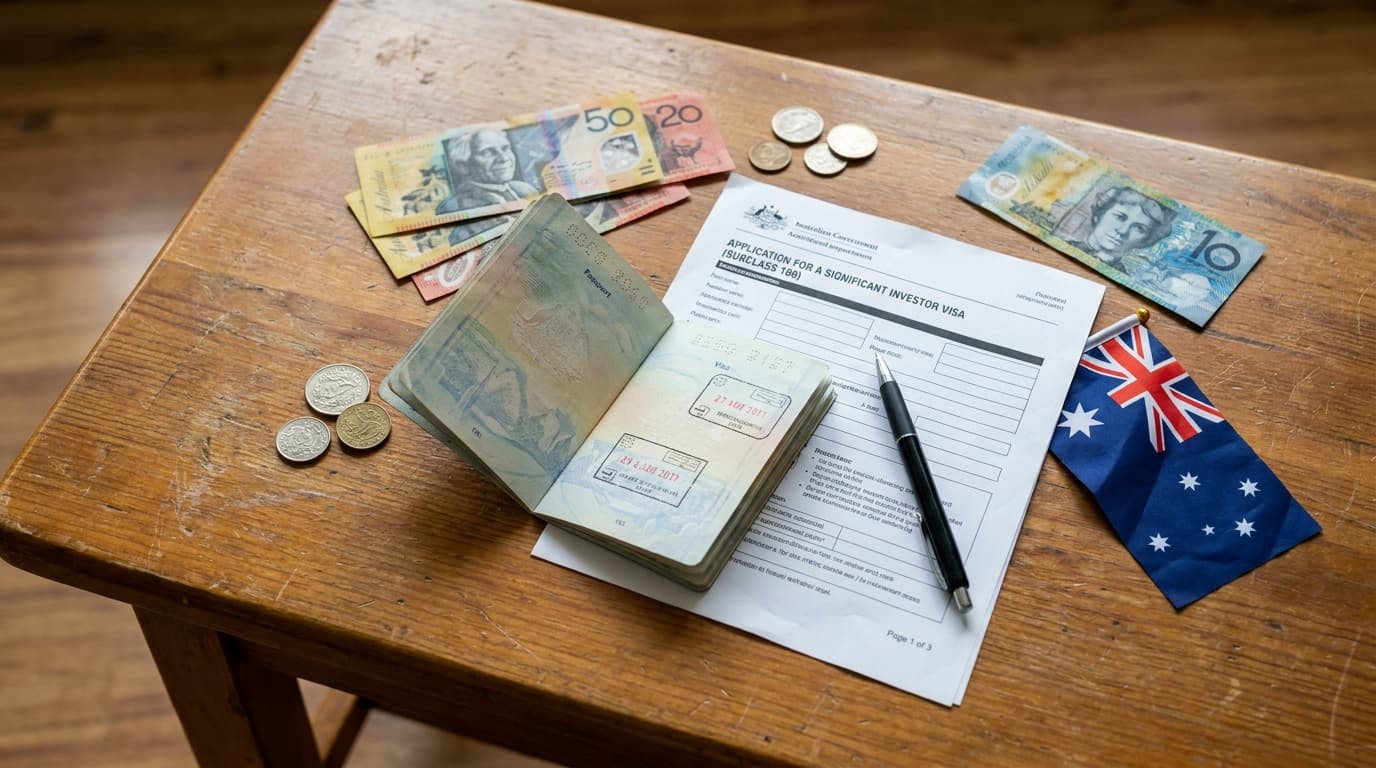
Australia Significant Investor Visa (Subclass 188)

At a Glance
- closedClosed to new applications from 31 July 2024. The Significant Investor Extension stream and the subclass 888 permanent visa stay open to existing holders.
- A$5,000,000 one-timeComplying significant investment held for the life of the provisional visa: at least AUD 1 million in venture capital and growth private equity funds, AUD 1.5 million in approved emerging-company managed funds and an AUD 2.5 million balancing investment · main applicant (existing holders; no new applications since July 31, 2024)
- 5 yearsFor applicants invited on or after 1 July 2021; 4 years and 3 months for those invited before
- Up to two Significant Investor Extension stream visas, each needing state or territory nomination and a complying investment held throughout. For invitees from July 1, 2021 the first extension runs to 7 years and the second to 9 years from the original grant (6 and 8 years for earlier invitees).
- 9 yearsFrom grant of the first subclass 188 visa, with two extensions, for invitees on or after 1 July 2021; 8 years for earlier invitees
- No new initial applications. Existing holders seeking an extension first get nomination from a state or territory government (NSW issues Home Affairs Form 1414), then lodge the visa application with the Department of Home Affairs.
- Yes
- Subclass 888 Business Innovation and Investment (Permanent) visa, Significant Investor stream, after holding the subclass 188 for at least three years (invitees from July 1, 2021) with the complying investment kept for the whole provisional period and state or territory nomination.
Last checked Oct. 1, 2026
The Significant Investor stream of the Business Innovation and Investment (Provisional) visa, subclass 188, was one of Australia's investor visas. It gave provisional residence to people who made a complying significant investment of at least A$5,000,000 in Australia, with nomination from a state or territory government.
The stream is closed to new applicants. Under the Migration Amendment (Business Innovation and Investment Program Closure) Regulations 2024, new subclass 188 applications in this and the other business and investor streams had to be made before July 31, 2024.
The visa still matters to people already in the program. Current holders can apply for the Significant Investor Extension stream and for the permanent subclass 888 visa, and members of a current holder's family unit can still apply as secondary applicants.
Investors weighing Australia now should start with the Australia guide, which covers the routes that remain open.
No one can lodge a new initial application. Eligibility now matters only for current holders who want to extend their stay or move to permanent residence.
- Investment: the complying significant investment of at least A$5,000,000 must be held for the whole provisional period.
- Nomination: each extension and the subclass 888 visa need nomination by a state or territory government. NSW, for example, considers extension nominations from holders who have held the subclass 188 for at least three years and had no more than one earlier extension.
- Residence: nominating governments set their own residence conditions. NSW's subclass 888 nomination requires the holder to have lived in NSW for most of the time spent in Australia.
- Family: members of a current holder's family unit can still be added as secondary applicants.
Because the stream is closed, there is no checklist for new applicants. A holder preparing an extension or a subclass 888 application needs:
- A nomination approval: NSW emails approved nominees a signed copy of Home Affairs Form 1414. Holders first nominated by another state or territory need a release letter from that government before applying to NSW.
- Proof of the investment: records showing the complying significant investment of at least A$5,000,000 was kept for the life of the provisional visa. For invitees from July 1, 2021, it is split between venture capital and growth private equity funds, approved emerging-company managed funds and a balancing investment.
Each state and territory publishes its own nomination checklist, so the exact documents depend on the nominating government.
No initial application fee applies any more, since the stream takes no new initial applications.
Current holders still face these costs:
- Visa application charges: the Significant Investor Extension stream and the subclass 888 visa each carry a Home Affairs charge. Home Affairs sets the amounts and revises them from time to time, so check its fee list before lodging.
- Nomination: some state and territory governments charge for nomination.
- The investment: the complying significant investment of at least A$5,000,000 has to stay in place for the life of the provisional visa.
Health checks, police certificates, translations and professional advice are paid to third parties, and their prices vary.
No new initial applications. Existing holders seeking an extension first get nomination from a state or territory government (NSW issues Home Affairs Form 1414), then lodge the visa application with the Department of Home Affairs.
For a current holder, the order is:
- Confirm the investment has stayed compliant for the whole visa period.
- Apply for nomination to the state or territory that nominated the original visa, or get a release letter before applying to another one.
- Once nominated, lodge the extension or subclass 888 application with the Department of Home Affairs.
Subclass 188 applications lodged before July 31, 2024 are still processed. Home Affairs does not publish a fixed processing time for these streams.
For applicants invited on or after July 1, 2021, the first subclass 188 visa runs 5 years. Earlier invitees received a shorter first visa.
Up to two Significant Investor Extension stream visas, each needing state or territory nomination and a complying investment held throughout. For invitees from July 1, 2021 the first extension runs to 7 years and the second to 9 years from the original grant (6 and 8 years for earlier invitees).
That puts the longest provisional stay at 9 years from the first grant for invitees from July 1, 2021.
Holders who want to stay on can apply for the Subclass 888 Business Innovation and Investment (Permanent) visa, Significant Investor stream, after holding the subclass 188 for at least three years (invitees from July 1, 2021) with the complying investment kept for the whole provisional period and state or territory nomination.
The visa carries no special tax treatment. Tax status follows Australia's general residency rules, which the Australian Taxation Office (ATO) applies to everyone.
Under the day-count test, a person who spends more than half of the income year (July 1 to June 30) in Australia, roughly 183 days, is a resident unless their usual home is outside Australia and they do not intend to take up residence. The other statutory tests look at where a person ordinarily resides, their domicile and membership of certain Commonwealth superannuation funds.
Days alone do not settle the question. The ATO's ruling TR 2023/1 says people on an extended holiday are not treated as residents merely because of the number of days spent in Australia. Investors who split time between countries should also check any tax treaty between Australia and their home country.
Frequently Asked Questions
Can new investors still apply for the Significant Investor visa?
No. The stream is closed to new applicants: new subclass 188 applications had to be made before July 31, 2024.
What happens to people who already hold the visa?
They keep it and can apply for the Significant Investor Extension stream or the permanent subclass 888 visa, with state or territory nomination and the investment held throughout.
How long can a holder stay on the provisional visa?
Up to 9 years from the first grant with two extensions, for invitees from July 1, 2021. Earlier invitees have shorter limits.
When can a holder apply for permanent residence?
Holders can apply for the Subclass 888 Business Innovation and Investment (Permanent) visa, Significant Investor stream, after holding the subclass 188 for at least three years (invitees from July 1, 2021) with the complying investment kept for the whole provisional period and state or territory nomination.
Can family members still be added?
Yes. Members of a current holder's family unit can still apply as secondary applicants after the closure.
How It Compares
Similar visas elsewhere
| Program | Country | Income | Fee | Max stay | Renewable |
|---|---|---|---|---|---|
| Egypt Citizenship by Investment | Egypt | $250,000 saved | $10,000 | - | |
| Antigua and Barbuda Citizenship by Investment | Antigua and Barbuda | - | $10,000 | - | - |
| Malta Permanent Residence Programme (MPRP) | Malta | €375,000 saved | €60,000 | 60 mo | |
| Dominica Citizenship by Investment | Dominica | $200,000 saved | $1,000 | - |
Australia Digital Nomad Guide
Cost of living, internet, healthcare, coworking, and every visa option for Australia.
Visa rules change. We'll tell you.
Get notified about policy updates and new requirements for the Australia Significant Investor Visa (Subclass 188) and other Australia visas.