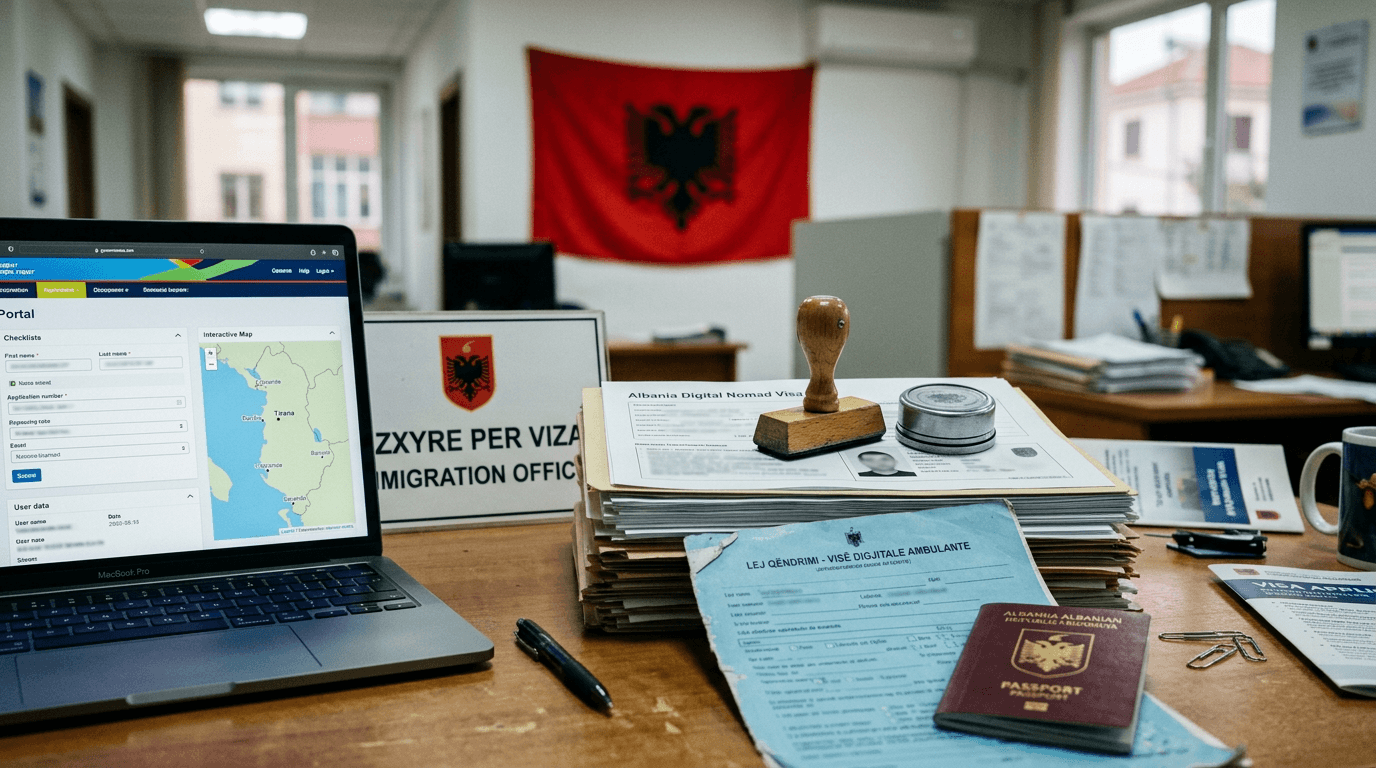
Albania Digital Nomad Visa

At a Glance
- ALL 50,000 a monthmonthly income not below the national minimum wage (DCM 858/2021 Ch. III sec. A point 10(c), replaced by DCM 240/2026); minimum wage ALL 50,000 from 01.01.2026 (DCM 776/2025) · main applicant; alternative to the bank-deposit route
- ALL 300,000 one-timedeposit certificate from an Albanian second-tier bank, personal or family, at least ALL 300,000 per person covering one calendar year (DCM 858/2021 Ch. III sec. A point 10(a)) · each person covered; alternative to the income route
- ALL 4,500 one-timeDCM 858/2021 Annex 6 service fee for the unique permit for digital mobile workers; renewal ALL 2,250 · main applicant
- 1 yearLaw 79/2021 Art. 68. As stated: up to 1 year for the first permit · first-time applicants (US and Kosovo citizens may receive a 5-year first residence permit under Art. 33(5))
- Renewable; apply within the 60 days before expiry; one-year permits can be renewed no more than 5 consecutive times; renewal fee ALL 2,250Law 79/2021 Art. 37(1) and Art. 33(4)(a); renewal fee per Ministry of Interior page · permit holders
- Online on e-Albania ('Aplikim për Leje Unike', motive 'Lëvizës Digital'), from the country of residence or from inside Albania when lawfully present; visa nationals get a D/LD visa through the same filing; the permit is issued by the border and migration authoritye-Albania service 15146; DCM 858/2021; Ministry of Interior procedures page · all applicants
- 12 weekse-Albania service description · complete applications
- NoLaw 79/2021 Art. 68(a): contract with an employer or client abroad; local employment needs another unique permit · permit holders
- Permanent residence possible after 5 consecutive years of lawful stay with lasting ties or activity in AlbaniaLaw 79/2021 Art. 33(4)(ç) · permit holders
Albania's digital nomad route is the unique permit for digital mobile workers, a combined residence and work permit under Article 68 of Law 79/2021 on foreigners. It's for people who work remotely with IT tools for an employer or clients based abroad, without a fixed office.
- Income: at least the minimum wage of ALL 50,000 a month. A bank deposit of ALL 300,000 per person also qualifies.
- First permit: 1 year, renewable.
- Processing: up to 12 weeks.
The income rule changed on April 15, 2026, when a Council of Ministers decision replaced a fixed monthly amount with the national minimum wage. Pages that still show a lower fixed figure are out of date.
The Albania guide covers living costs and the other residence routes.
Article 68 has no nationality limit. It sets these conditions:
- Remote work: an employment contract or service contract with an employer, contractor or client based abroad, for tasks done with IT tools and without a fixed workplace.
- Income: enough to support the applicant and any dependents. Council of Ministers rules set this as monthly income of at least ALL 50,000 or a deposit of at least ALL 300,000 per person in an Albanian bank.
- Accommodation: proof of housing and a home address in Albania.
- Health insurance: a policy valid for at least one year.
- Criminal record: a criminal record certificate.
- Work for Albanian employers: No. Local jobs need a different unique permit under the same law.
Documents follow the Article 68 conditions and the list set by Council of Ministers decision (Article 33):
- Passport: a valid travel document.
- Contract: the employment or service contract with the employer or client abroad.
- Proof of means: an income certificate at or above the minimum wage or a bank deposit certificate.
- Accommodation: proof of an address in Albania.
- Health insurance: valid for at least one year.
- Criminal record: a criminal record certificate.
- First application: ALL 4,500 government service fee, according to the Ministry of Internal Affairs.
- Renewal: a lower fee, listed with the renewal rules below.
- D visa: visa-required nationals also pay the visa fee.
- Where: Online on e-Albania ('Aplikim për Leje Unike', motive 'Lëvizës Digital'), from the country of residence or from inside Albania when lawfully present; visa nationals get a D/LD visa through the same filing; the permit is issued by the border and migration authority.
- Timing: applicants who enter Albania first apply within 30 days of entry. Visa-free entrants must also apply before their permitted stay ends (Article 37).
- Approval: the border and migration authority approves the permit after consulting the State Intelligence Service and the police (Article 33).
- Processing: up to 12 weeks from the application date, according to e-Albania.
Nationals of visa-exempt countries can stay 90 days in any 180-day period without a permit. Longer stays need a residence permit (Article 2). US citizens should confirm their visa-free allowance with Albania's Border and Migration Police.
- First permit: 1 year (Article 68).
- Renewal terms: Renewable; apply within the 60 days before expiry; one-year permits can be renewed no more than 5 consecutive times; renewal fee ALL 2,250.
- Longer term: Permanent residence possible after 5 consecutive years of lawful stay with lasting ties or activity in Albania.
Renewal can be refused if the holder no longer meets the permit's conditions, such as the remote-work contract, income or insurance (Article 34).
- Tax residency: a permanent home in Albania during the tax year makes a person tax resident, as does a stay of 183 days or more in the tax year (Law 29/2023 on income tax, Article 8).
The permit rules in Law 79/2021 contain no tax exemption for digital mobile workers. Nomads who meet either residency test should get advice on how Albania taxes their foreign income and whether a tax treaty with their home country applies.
Frequently Asked Questions
What income does Albania's digital nomad permit require?
At least the national minimum wage, ALL 50,000 a month since April 15, 2026. Applicants without that income can instead show a deposit of at least ALL 300,000 per person in an Albanian bank.
How long is Albania's unique permit for digital mobile workers valid?
The first permit lasts 1 year. Renewal terms: Renewable; apply within the 60 days before expiry; one-year permits can be renewed no more than 5 consecutive times; renewal fee ALL 2,250.
How long can visitors stay in Albania without a permit?
Nationals of visa-exempt countries can stay 90 days in any 180-day period. US citizens should confirm their visa-free allowance with Albania's Border and Migration Police.
Where do applicants apply?
Online on e-Albania ('Aplikim për Leje Unike', motive 'Lëvizës Digital'), from the country of residence or from inside Albania when lawfully present; visa nationals get a D/LD visa through the same filing; the permit is issued by the border and migration authority.
Can permit holders work for Albanian companies?
No. The permit covers work for employers or clients abroad. Local jobs need a different unique permit.
How It Compares
Similar visas elsewhere
| Program | Country | Income / month | Fee | Max stay | Renewable |
|---|---|---|---|---|---|
| Georgia Digital Nomad Program (Remotely from Georgia) | Georgia | - | - | - | |
| Kyrgyzstan Digital Nomad Status | Kyrgyzstan | - | - | 12 mo | |
| Kenya Class N Permit | Kenya | - | $200↓ | 24 mo | |
| Nepal Digital Nomad Visa (Not Yet Open) | Nepal | - | - | - |
Albania Digital Nomad Guide
Cost of living, internet, healthcare, coworking, and every visa option for Albania.
Visa rules change. We'll tell you.
Get notified about policy updates and new requirements for the Albania Digital Nomad Visa and other Albania visas.