South Africa mandates yellow fever cards for layovers over 12 hours

| Exempt Transit | 12 hours |
|---|---|
| Vaccination Required | 13 hours |
South African border officials may request proof of yellow fever vaccination when a traveler arrives from or spent more than 12 hours in transit through, a yellow-fever-risk country.
The 12-hour threshold
The rule applies to travelers of all nationalities who are 1 or older. A connection longer than 12 hours counts even when the passenger remained inside the airport, while transit of 12 hours or less is exempt if the passenger didn’t leave the transit area.
Travelers arriving from Zambia, Tanzania, Eritrea, Somalia, São Tomé and Príncipe or Rwanda are among those exempt under current airline and travel-health guidance. The requirement depends on the itinerary, not whether the traveler is a tourist, expat or remote worker.
Certificates and border checks
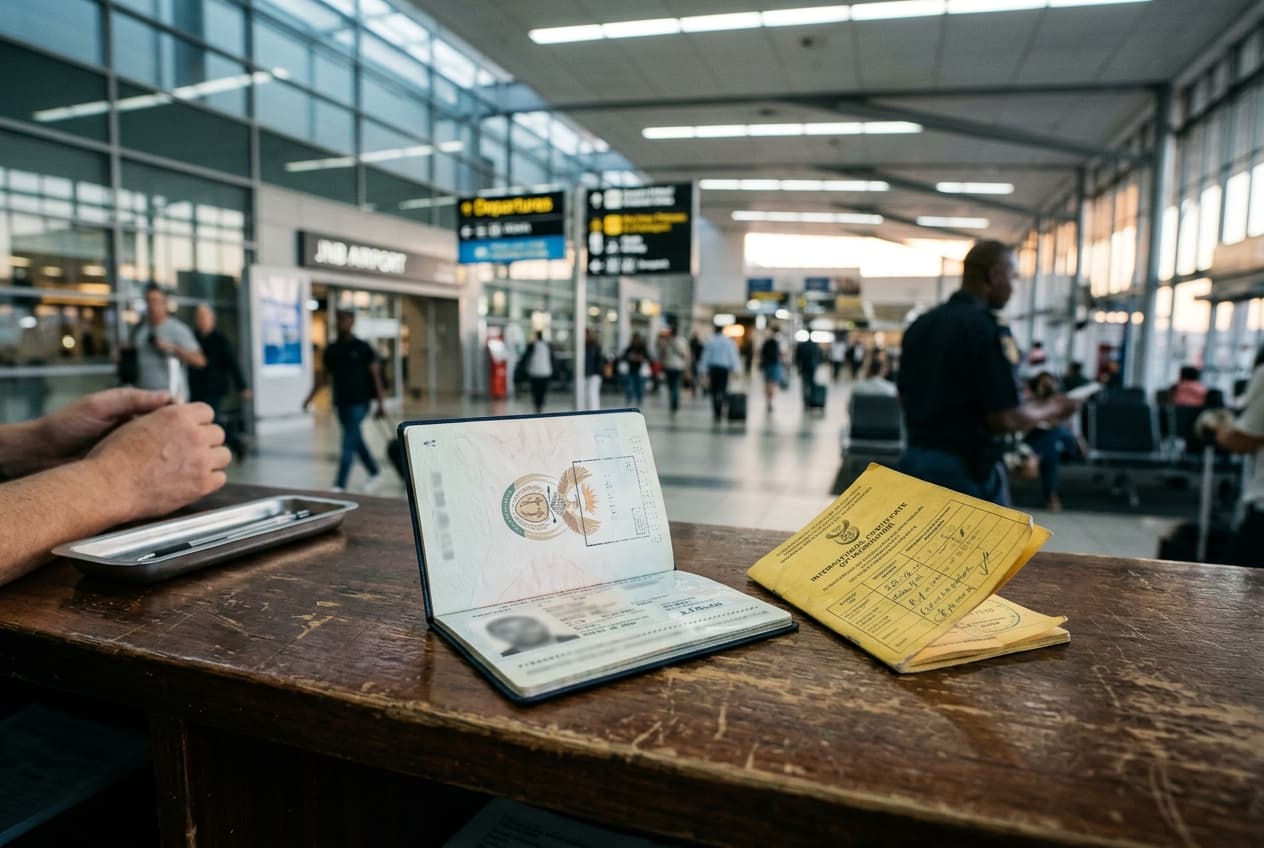
The International Certificate of Vaccination or Prophylaxis, commonly called the yellow card, becomes valid 10 days after vaccination. South Africa accepts one properly documented dose for the traveler’s lifetime.
Travelers without a valid certificate may be refused entry or quarantined for up to six days. Medical waivers are generally accepted for people who can’t receive the vaccine, though border officials retain final discretion.
Before departure, affected travelers should check every connection against the yellow fever risk list, receive the vaccine at least 10 days before arrival and carry the original paper certificate. A digital copy isn’t a substitute at the border. Other entry and residency details are covered in the South Africa guide.
Malaria is a separate risk
South Africa doesn’t require malaria medication for entry. However, prophylaxis is recommended or strongly considered for Kruger National Park and parts of northeastern Limpopo and Mpumalanga, particularly during the higher-risk period from roughly September through May.
Cape Town, Johannesburg, Durban, the Garden Route and most of the Western Cape aren’t malaria-risk areas. Risk around Kruger is lower from June through August, but it isn’t zero.
Frequently asked questions
How long can I transit through a yellow-fever-risk country without needing South Africa’s yellow fever card?
Who has to show a yellow fever vaccination certificate when entering South Africa?
How long before arrival must I get the yellow fever vaccine for South Africa?
Does South Africa accept a digital copy of the yellow fever certificate?
What happens if I arrive in South Africa without a valid yellow fever certificate?
Do I need malaria medication to enter South Africa?
Stay updated on South Africa
Visa changes, travel alerts, and destination news — delivered when they actually matter.