Mandatory EES checks now required at all external Schengen borders

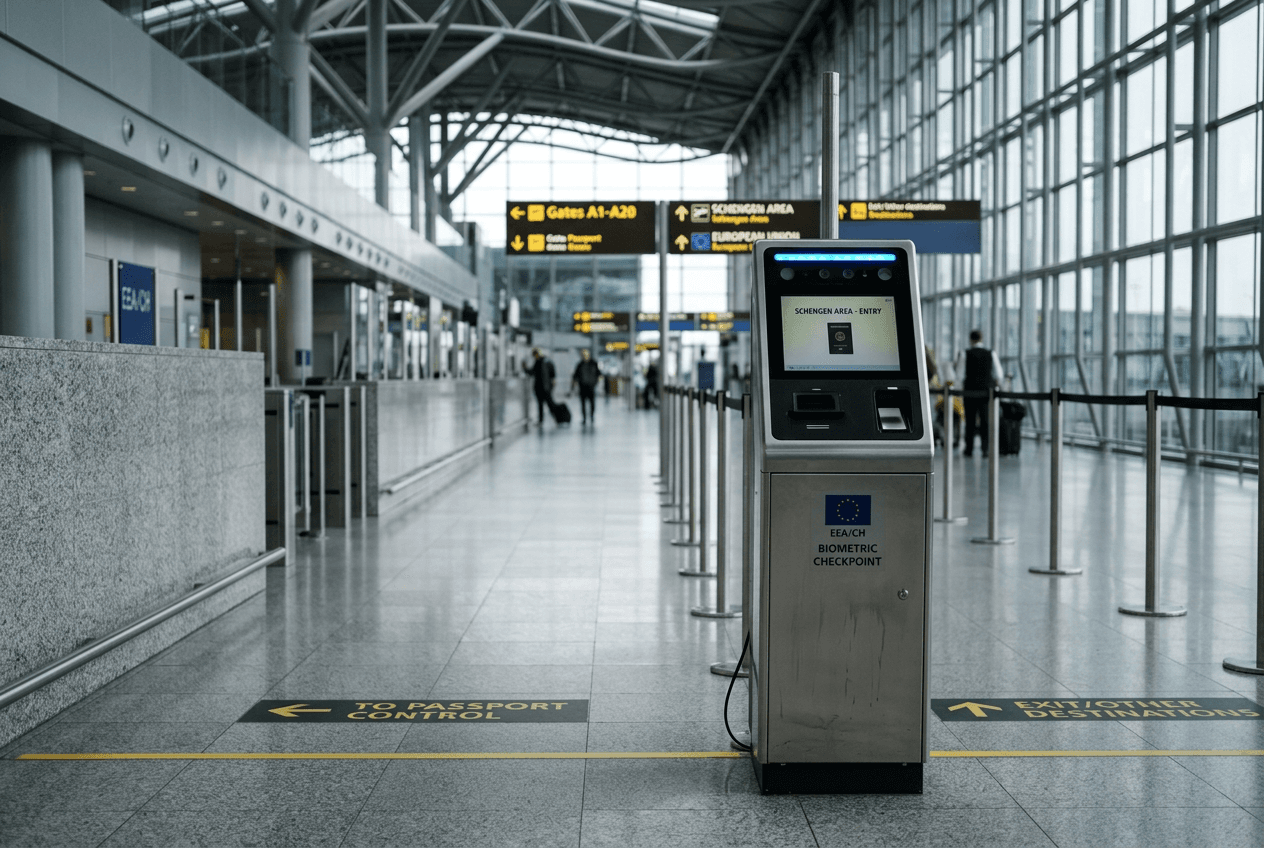
External Schengen border posts ended emergency biometric waivers Sept. 6, 2026, meaning non-EU short-stay travelers must now complete full biometric screening at entry and exit regardless of terminal queue lengths.
Stricter border controls across 29 Schengen states
Border authorities across 29 European countries can no longer suspend biometric collection during severe congestion, following the expiration of temporary flexibility measures Sept. 6, 2026. The European Commission initially allowed border checkpoints to temporarily waive biometric collection during extreme passenger surges while the Entry/Exit System (EES) took effect. That emergency relief valve is now gone, requiring border posts to process every non-EU short-stay traveler through full biometric recording, Euronews reported.
The shift solidifies the operating rules for the automated border infrastructure. The system originally began a progressive rollout on Oct. 12, 2025, before completing that phase on April 9, 2026. The platform became fully operational across all external Schengen border crossing points on April 10, 2026, the European Commission confirmed.
Travel groups and airline industry associations pressed European authorities to extend the flexibility provisions through late 2026 because of queue risks and potential missed flight connections, Euronews reported. A European Commission spokesperson said on Sept. 1, 2026 that the system had broadly worked well over the summer and noted that the Commission remained in contact with member states needing operational adjustments at specific border crossings.
With the expiration of those temporary measures, border guards at external air, sea and land crossings must maintain standard biometric procedures during peak travel windows. Border authorities have fewer official options to relax checks when queues build, meaning travelers must prepare for longer lines at primary border gates.
Biometric capture steps and digital record retention
First-time travelers entering the Schengen zone without an EU short-stay visa must submit four fingerprints and have a live facial photograph taken at the border control point. Travelers who already hold a Schengen short-stay visa will have their facial image stored, while their fingerprints are omitted from the border collection step because they were already gathered during the initial visa application, official EU guidance confirmed.
The registration requires no advance paperwork and carries no cost for travelers, the UK government confirmed in its border guidance. The entire process takes place directly at the border gate or at pre-registration self-service terminals where available.
Where border points offer self-service systems, travelers can pre-register their travel details and biometric data before reaching the control booth. Using those kiosks helps reduce counter processing time and keeps passenger queues moving, EU travel guidance noted.
A completed EES registration creates a digital file that's retained for 3 years, according to UK government guidance. Subsequent border crossings within that three-year window verify the existing digital profile rather than requiring a brand new registration from scratch.
The digital file stores several core identity markers:
The traveler's full name and travel document data
Fingerprints and captured facial images
Exact entry and exit dates and the specific crossing place
Any formal refusals of entry recorded by border guards
Exemption categories and document requirements
Biometric registration applies broadly to third-country nationals entering the Schengen area for a short stay of up to 90 days in any 180-day period, the EU travel portal stated. This requirement includes tourists, business travelers, remote workers traveling on tourist status and British passport holders.
Several traveler groups are exempt from standard EES biometric registration:
EU citizens and qualifying family members covered under free-movement regulations
Residence permit holders who carry a qualifying residency card issued by a member state
Long-stay visa holders residing in a Schengen nation
Withdrawal Agreement beneficiaries who hold qualifying residency documents issued to British nationals
Children under 12, whose fingerprints aren't scanned, though other EES procedures still apply
Expats and long-term residents living in Europe who hold non-EU passports should present their physical residence card alongside their passport at border gates, EU advisories noted. Presenting proper residency documents prevents border officials from mistakenly logging qualifying residents as standard short-stay visitors.
Digital tracking replaces physical passport stamps
The system replaces manual ink passport stamps with an automated digital log that calculates every entry and departure across the 29 participating European countries. The central database records exact border movements, identifying travelers who exceed their legal stay limits across the zone, European Commission documentation stated.
Digital nomads and frequent visitors can no longer rely on manual stamp reviews to determine their remaining days. The rolling 90-day limit in any 180-day period applies across all Schengen states combined rather than on a country-by-country basis, UK border guidance noted.
The database also retains records of any entry refusals alongside valid crossing logs for the duration of the 3-year retention window. Remote workers planning complex travel across European territories can review route regulations and entry policies through updated destination guides before traveling between Schengen and non-Schengen destinations.
Processing delays and traveler workarounds
The primary operational disruption from ending the waiver rules is slower processing at external Schengen borders, particularly during peak travel hours and for passengers completing first-time biometric enrollment. The UK government specifically warned British passport holders to expect longer border waits when entering or exiting the Schengen area.
Travelers face higher risks of border bottlenecks because authorities can no longer temporarily suspend fingerprinting and facial scans when arrivals surge. To manage these delays, travelers crossing external Schengen borders should factor in extra buffer time for terminal transfers and connecting departures.
What Travelers Should Do
Passengers should use automated self-service kiosks immediately upon entering the arrivals hall whenever a border post provides them. Completing the facial capture and passport scan at a kiosk before reaching the border booth significantly reduces processing time with border officers, EU portal guidance confirmed.
Travelers should also verify the specific operational setup at their departure and arrival points before heading to the terminal. Checking whether an airport, seaport or rail station offers self-service lanes helps travelers select routes with smoother border infrastructure.
Frequently asked questions
What changed at Schengen borders on 6 September 2026?
What biometric data does the EES collect?
Are British passport holders subject to EES checks?
Which travellers are exempt from EES registration?
What happens if a traveller refuses biometric capture at the border?
How should digital nomads plan for EES border checks?
Don't miss the next nomad update
Visa changes, travel alerts, and destination news — delivered when they actually matter.