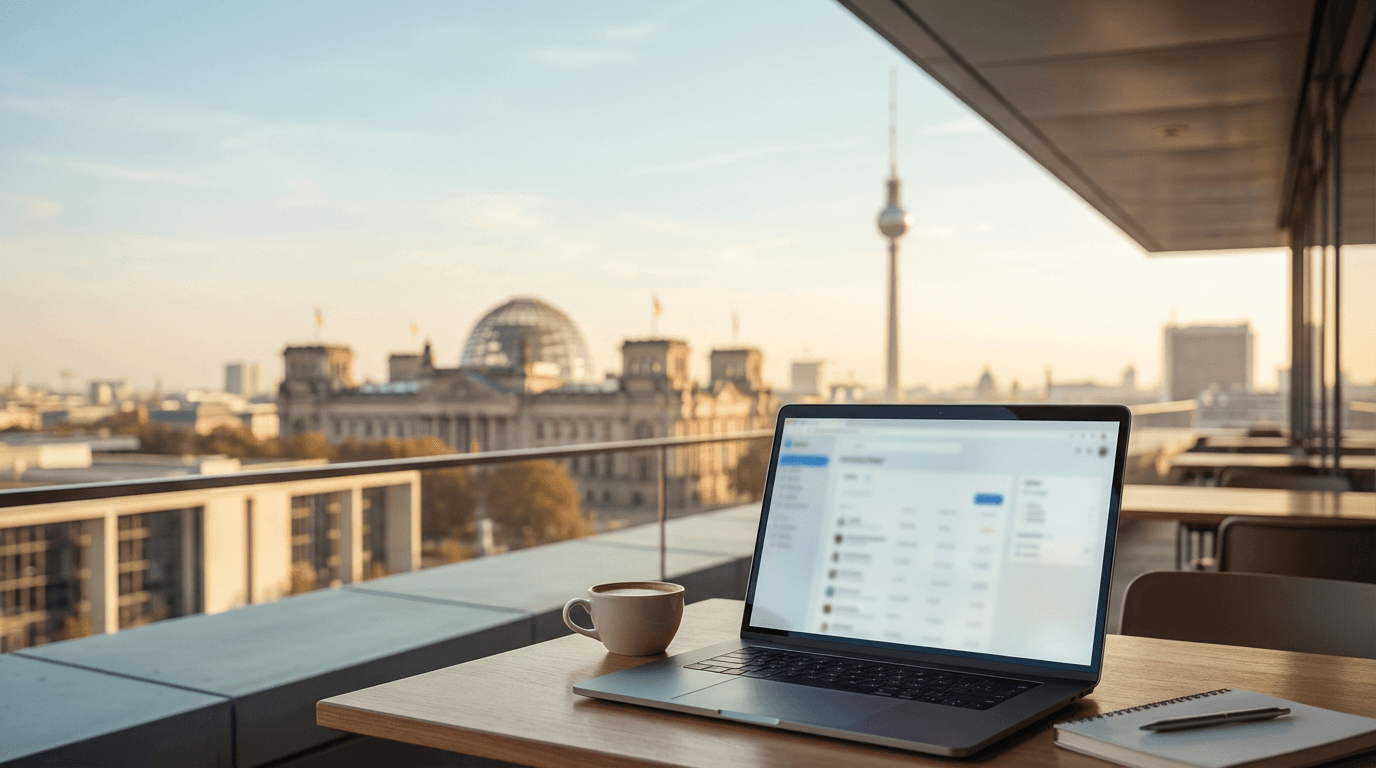
Germany

Policy Stability
Stamped Nomad ExclusiveHow likely visa and immigration policies are to remain unchanged
Quick Facts
$2,500/mo
204 Mbps
9/10
High
High
High
CET, CEST
Entry Methods Available
Best For
Last verified: September 25, 2026
Compare Visa Programs
| Program | Best for | Minimum income or savings | Government fee | Initial stay | Where to apply |
|---|---|---|---|---|---|
| Germany Freelance Visa | Freelance Visa | — | €75 one-time | — | At the German embassy or consulate responsible for the place of residence, before entry. Nationals of Australia, Canada, Israel, Japan, New Zealand, South Korea, the UK and the US may enter visa-free and apply to the local foreigners authority in Germany within 90 days. |
| Germany Jobseeker Visa | Freelance Visa | Closed since June 1, 2024 | — | — | — |
| Germany Opportunity Card (Chancenkarte) | Freelance Visa | €1,091 a month | €75 one-time | 12 months | At the German embassy or consulate responsible for the place of residence, usually through the Federal Foreign Office Consular Services Portal (Auslandsportal). |
Germany has no digital nomad visa. Remote professionals who want to live there choose between a permit to work freelance and a permit to look for a job.
Choosing a route
- Freelancers with their own clients: the residence permit for freelance work covers the liberal professions, such as writing, teaching, engineering, design and translation. There is no fixed income floor; the authority judges the business plan and whether earnings cover living costs and health insurance. The foreigners authority sets its length, and it can lead to settlement after five years.
- Qualified people who want a German job: the Opportunity Card gives up to 12 months to search, with part-time work allowed. It needs a recognized qualification or enough points, and €1,091 a month in proof of funds.
- Anyone reading older advice: the job seeker visa closed in 2024 and was folded into the Opportunity Card.
At the German embassy or consulate responsible for the place of residence, before entry. Nationals of Australia, Canada, Israel, Japan, New Zealand, South Korea, the UK and the US may enter visa-free and apply to the local foreigners authority in Germany within 90 days. Other nationals start with a national visa at a German mission.
Visits without a permit
Germany is in the Schengen area, so nationals of visa-exempt countries can stay 90 days in any 180-day period. That allowance is shared across all Schengen countries, not counted per country, and days on a residence permit or national visa do not count toward it.
The EU's Entry/Exit System has registered short-stay visitors at external borders since Oct. 12, 2025, taking fingerprints and a facial image. On ETIAS, the travel authorization planned for visa-exempt visitors, the official position is this: Not yet operating and no official start date. The EU says it will announce the date several months before launch. The earlier official target, the last quarter of 2026, was removed from the official ETIAS website on July 14-17, 2026.
Germany Freelance Visa
Eligibility, required documents, and how to apply for the Germany Freelance Visa.
Germany Jobseeker Visa
Eligibility, required documents, and how to apply for the Germany Jobseeker Visa.
Germany Opportunity Card (Chancenkarte)
Eligibility, required documents, and how to apply for the Germany Opportunity Card (Chancenkarte).
Germany uses the euro. In Numbeo's crowd-sourced prices, a single person's monthly spending excluding rent ran from about €1,010 in Hamburg to €1,100 in Munich. Rent is what separates the cities.
| City | One-bedroom, outside the center | One-bedroom, center | Other monthly costs | Monthly total | Numbeo data |
|---|---|---|---|---|---|
| Berlin | €969 | €1,304 | €1,051 | €2,020 to €2,360 | Aug. 2026 |
| Hamburg | €861 | €1,143 | €1,010 | €1,870 to €2,150 | June 2026 |
| Munich | €1,182 | €1,438 | €1,096 | €2,280 to €2,530 | June 2026 |
| Cologne | €759 | €1,037 | €1,065 | €1,820 to €2,100 | Sept. 2026 |
Each total adds the average one-bedroom rent, outside the center and in it, to Numbeo's estimate of a single person's other monthly costs. The figures are averages of user reports, not official statistics, and furnished short lets usually cost more than the long-term rents behind them.
A realistic budget for one remote worker renting a one-bedroom apartment is therefore about €1,800 to €2,150 a month in Cologne or Hamburg, €2,000 to €2,350 in Berlin and €2,300 to €2,550 in Munich. The Opportunity Card's proof of funds, €1,091 a month, sits below every total in the table, so a job search in a big city needs more money than the legal minimum.
- Berlin: the largest freelance and startup scene in the country, with English common in tech and creative work. Rents run above Hamburg's and Cologne's, and long-term flats are hard to find.
- Hamburg: a port city with media, design and trade firms, lower average rents than Berlin in Numbeo's data and plenty of water and green space.
- Munich: the most expensive of the four big cities for rent, with a strong tech and engineering job market and the Alps close by for weekends.
- Cologne: the cheapest of the four for rent, a relaxed city on the Rhine with fast rail links to Belgium and the Netherlands.
- Leipzig: a smaller eastern city popular with artists and students, for those who want city life at a lower pace.
Job seekers on the Opportunity Card usually base themselves where the employers in their field are. Freelancers can choose freely, but their foreigners authority is the one for the city where they register.
Germany's median fixed broadband speed was about 204 Mbps and its median mobile speed about 305 Mbps in the Speedtest Global Index for August 2026. Mobile data outpaces many home lines, which makes a data plan a workable backup for calls.
Speeds vary by building and contract. Older apartments may still run on copper lines, so asking a landlord for the actual connection speed before signing saves trouble. Coworking spaces are common in Berlin, Hamburg, Munich, Cologne and Frankfurt, with day passes and monthly desks, and many cafes in the big cities welcome laptops outside peak meal times.
Visitors with a SIM from another EU country roam at home prices for periodic travel, but EU roaming rules cover travel, not permanent use, so long stays call for a German plan.
Germany taxes residents on worldwide income. Residency starts with a home in Germany, or with a habitual abode: a continuous stay of more than 6 months, with short breaks ignored, under Section 9 of the Fiscal Code. That is a six-month test rather than the 183-day count many countries use, and renting a flat can create a home from the first day.
Freelancers
- Starting freelance work must be reported to the local tax office under Section 138 of the Fiscal Code.
- The liberal professions listed in Section 18 of the Income Tax Act are taxed as freelance income. Trade tax falls on commercial businesses, so a genuine freelancer normally pays income tax but no trade tax.
- VAT registration and social insurance depend on turnover and profession, and the tax office confirms them case by case.
What to check
Germany has no special tax regime for remote workers or new arrivals. Nomads who keep a home abroad should check the tax treaty between Germany and that country, which decides where income is taxed when both countries claim residency. Short stays on the Schengen allowance stay well under the residency test, unless the person keeps a home in Germany.
- Address registration: anyone who moves into a flat must register it with the local registration office within two weeks. The registration certificate is needed for the residence permit, a bank account and a tax ID.
- Health insurance: every residence permit requires adequate health cover. Freelancers choose between statutory and private insurance; the permit application needs proof before it is granted.
- Getting around: the monthly Deutschlandticket covers local and regional public transport across the whole country. Long-distance trains are not included.
- Money: Germany uses the euro. Cards work in most shops, but some small cafes and bakeries still take cash only.
- Emergencies: 112 reaches fire and ambulance services free of charge, as everywhere in the EU.
- Paperwork: authorities often work in German and by appointment. Booking a foreigners authority appointment early, and keeping copies of every document, avoids gaps between visa and permit.
Frequently asked questions
Does Germany have a digital nomad visa?
How long can visitors stay in Germany without a visa?
Is the German job seeker visa still available?
When does a nomad become tax resident in Germany?
Can freelancers apply for the permit from inside Germany?
Latest Nomad News
Mandatory EES checks now required at all external Schengen borders
On 6 September 2026, the European Union’s Entry/Exit System (EES) emergency flexibility measures expired, meaning Schengen states can no longer routinely suspend biometric data collection at busy border points.[10][6] Non‑EU travellers, including British passport holders, now face mandatory biometric registration on every entry and exit, with longer processing times and fewer options for relaxation during peak congestion.[6][10] Digital nomads and expats should plan for slower queues at external Schengen borders and factor in extra time for flights and cross‑border trips.
EU bans return ticket cancellations and sets 250 euro delay payouts
The European Commission’s transport page states that the EU has advanced a landmark agreement to modernise and strengthen air passenger rights across the EU, and it also lists new Commission proposals to simplify regional, long-distance, and cross-border travel planning while improving rail-passenger protection. For travelers who move between Western European countries, this is relevant because it points to a broader EU-level change affecting how cross-border trips and compensation rules are handled.[2] This is a policy-development item rather than an immediate operational rule change, and the
Germany caps remote work tax write-offs at 1,260 euros for nomads
Germany has approved tax policy updates under the Annual Tax Act that revise remote work allowances and cross-border worker tax obligations. The changes clarify fiscal liabilities and home-office deductions for international mobile employees. Expats and cross-border remote workers should review their residency status and cross-border tax filings.
Non-EU bank customers face service cuts as Germany ends waivers Jan. 11
Implementation of EU banking compliance rules under Article 21(c) imposes stricter oversight and restrictions on foreign residents in Germany holding accounts outside the bloc. Expats may face new reporting requirements, transfer limits, or compliance hurdles when managing non-EU funds. Foreigners living in Germany should review their cross-border banking setups to ensure full compliance.
Germany moves toward AI-assisted visa processing for 28 national categories
The German government has approved a bill to integrate artificial intelligence into the processing of visa and residence permit applications. This move aims to standardize decisions and significantly reduce wait times for foreigners applying to live or work in Germany.
More Guides from Europe
Stay Updated on Germany
Get notified about visa changes, policy updates, and new information for digital nomads in Germany.