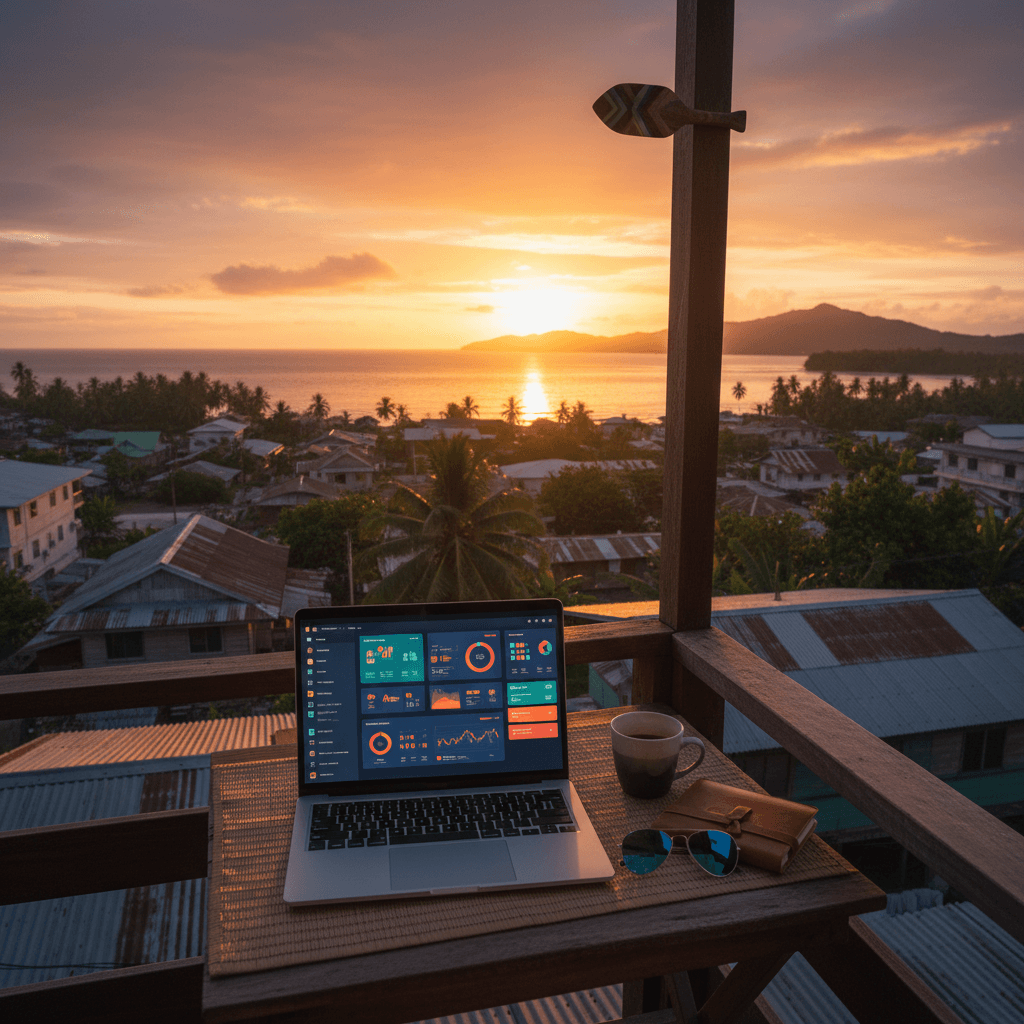
Solomon Islands

Policy Stability
Stamped Nomad ExclusiveHow likely visa and immigration policies are to remain unchanged
Quick Facts
N/A
5 months
Yes
$2,100/mo
25 Mbps
4/10
Low
Low
High
UTC+11
Entry Methods Available
Best For
The E-Visa Revolution
For a long time, getting into the Solomon Islands felt like a bit of a bureaucratic scavenger hunt. Thankfully, the government has modernized the process with a centralized e-visa portal. Almost every traveler, whether you are coming for a scouting trip or a short-term project, will handle their paperwork through this online system. It is generally efficient, with most approvals landing in your inbox within 3 days.
While the system is digital, the entry requirements are still strictly enforced at Henderson International Airport. You will need to show a printed copy of your approval, a passport with at least six months of validity, and proof of an onward flight. The government is also quite protective of the local labor market, so if you are entering on a visitor or business visa, make sure your activities don't cross the line into paid local employment.
Tourist Visas for Scouting
If you are heading to Honiara to see if the pace of life suits your remote work style, the Tourist Visa is your best bet. This is a single-entry permit that gives you 30 days on the ground. If you fall in love with the diving in Munda or the quiet of Gizo, you can extend this stay in increments up to a total of 150 days. Just make sure you file for the extension before your current stamp expires.
- Lodgement Fee: $50 USD
- Application Fee: $100 USD (payable in SBD equivalent)
- Extension Fee: $100 USD
- Requirements: Passport bio-page, return ticket, and proof of sufficient funds for your stay.
Business and Consultancy Stays
Digital nomads often find themselves in a grey area, but if you are attending meetings, conducting site visits, or providing short-term consultancy for a local entity, the Business Visa is the correct path. These are valid for 90 days and can be issued for single or multiple entries, which is handy if you plan on hopping over to Fiji or Brisbane and coming back. You can stay for up to 180 days total under this category.
- Admin Fee: $50 USD
- Application Fee: $450 USD
- Requirements: Business profile or invitation letter, return ticket, and certified passport copies.
Visa-Free Access and Special Exemptions
A few lucky nationalities can skip the e-visa portal entirely. Citizens of Melanesian Spearhead Group (MSG) nations, including Fiji, Papua New Guinea, and Vanuatu, receive 60 days of visa-free access upon arrival. This can even be extended up to a full year under specific conditions.
Recent diplomatic shifts have also opened doors for Chinese travelers. As of January 2025, holders of ordinary passports from the People’s Republic of China can enter the Solomon Islands visa-free for up to 90 days. Additionally, official and diplomatic passport holders from the EU, UAE, India, and Indonesia generally enjoy 90-day exemptions. If you don't fall into these groups, assume you need to apply online before you pack your bags.
Long-Term Options and Specialized Entry
For those looking to settle in for a year or more, the requirements become more rigorous. If you land a contract with a local firm or an NGO, you will move into the Employment or Volunteer categories. These require more paperwork but offer much longer stability.
- Employment Visa: Costs between $300 and $450 USD, valid for 6 months to 2 years.
- Student/Dependent Visa: Costs $150 USD, valid for up to 2 years.
- Volunteer/Aid Worker: Costs $100 USD for a 1-year multiple-entry permit.
- Yacht Crew: Specifically for the sailing community, offering up to 180 days for a single entry.
Keep in mind that while fees are often quoted in USD for international clarity, the e-visa portal will convert these to Solomon Islands Dollars (SBD) at the current treasury rate. For a standard visitor, the total cost usually hovers around $800 SBD. Always double-check the portal right before you apply, as fee structures are updated periodically to match inflation and exchange rate shifts.
Source 1 | Source 2
If you are looking for a formal "Digital Nomad Visa" with a fancy title and a multi-year residency permit, you will not find it in the Solomon Islands just yet. While the government has expressed interest in welcoming remote workers, they haven't rolled out a specific program dedicated to the laptop-lifestyle crowd. For now, most nomads entering the Hapi Isles rely on the standard Visitor Visa to stay legal while they work.
The Visitor Visa Route
The Visitor Visa is the primary gateway for those wanting to experience the archipelago's incredible diving and WWII history. It allows you to stay for up to 90 days, which is plenty of time to hop between islands or settle into a rhythm in Honiara. It is important to remember that this visa is technically for tourism, so you should not be seeking local employment or conducting business with Solomon Islands-based companies while on it.
Applying is relatively straightforward since the government moved their systems online. You can submit your application via the official Immigration portal from anywhere in the world. You will typically need to provide a valid passport, proof that you have a flight out of the country, and evidence that you have enough money to support yourself during your stay. Expect a processing time of 5 to 10 business days, though it is always smart to apply a few weeks before your departure.
Costs and Renewals
Staying in the Solomon Islands carries a bit of an upfront cost. The initial fee for a Visitor Visa is SBD $800.00, which works out to roughly USD $100. If you decide 90 days is not enough and want to extend your stay, you can apply for a renewal. Keep in mind that renewal fees generally mirror the initial application price, so factor that into your long-term budget.
- Visa Type: Visitor Visa (Tourist)
- Maximum Stay: 90 days
- Application Fee: SBD $800.00
- Processing Window: 5 to 10 business days
- Income Requirement: None specified, but you must show "sufficient funds"
Alternative Options for Long-Termers
If your plans involve more than just remote work for a foreign company, you might need to look at more permanent options. Those who are actually working for a local entity or starting a physical business will need to pivot toward a Working Resident Visa or a Business Visa. These are more expensive and involve significantly more paperwork.
A Working Resident Visa costs around SBD $600.00, while a Business Visa sits at SBD $1,000.00. These paths are much more formal and usually require a local sponsor or a registered business entity. For the average nomad just looking for a desk with a view of the Pacific, the 90-day tourist entry remains the path of least resistance.
Important Considerations
Since there is no official digital nomad framework, tax laws for remote workers remain a bit of a gray area. Most nomads staying for short periods on a tourist visa continue to pay taxes in their home country, but it is wise to consult a professional if you plan on staying for the better part of a year.
The Immigration Department in Honiara is open Monday through Friday, 8:00 AM to 4:30 PM. If you run into issues with your online application, you can reach them via email or phone, though response times can be island-style. Double-check your documents before hitting submit to avoid delays, particularly ensuring your passport has at least six months of validity remaining.
Source 1 | Source 2
The Lowdown on Landing
Entering the Solomon Islands is surprisingly straightforward for most travelers, though the rules differ depending on which passport you carry. Most visitors from the EU, Commonwealth nations like Australia, New Zealand, and Canada, and the United States can enter without a prior visa. You will simply get a visitor permit stamped into your passport upon arrival, typically valid for up to 90 days.
To make this happen, you need three things ready at the border: a passport with at least 6 months of validity, a confirmed return or onward ticket, and proof that you have enough cash to support yourself. Immigration officers want to see that you are a genuine traveler, so having a rough itinerary or a hotel booking for your first few nights is a smart move.
Visa on Arrival and E-Visas
If you aren't from a visa-exempt country, you likely qualify for a Visa on Arrival. This is common for citizens of several Asian nations, including Japan, Singapore, and Malaysia. This initial permit usually grants you 30 days. While you can handle this at the border, the government has been pushing its electronic portal for smoother processing.
The e-visa process is digital, though the payment system can sometimes be finicky. You will need to upload your passport bio-page, your flight itinerary, and bank statements showing your funds. The total cost sits around $150 USD, which breaks down into a $50 USD lodgement fee and a $100 USD visa fee. Once approved, you receive a grant letter via email. Print this out; you will need to show it to the airline at check-in and to the officer when you land in Honiara.
Staying Longer: Extensions
For the nomad who wants to settle into the island rhythm, the initial 30 or 90 days might not be enough. You can extend your stay as long as you do so before your current permit expires. All extensions are handled at the Immigration Division office in Honiara. It is a bit of a bureaucratic exercise, so bring a book and some patience.
- Maximum Stay: You can generally extend your stay up to a total of 150 days.
- Extension Fee: Each extension costs $100 USD, which is roughly 800 SBD depending on current exchange rates.
- Restrictions: Tourist visas are strictly for leisure. You cannot work, even for local non-profits, while on this permit.
- Entry Type: These are single-entry permits. If you leave the country to visit Vanuatu or Fiji, your permit cancels, and you start the process over when you return.
The "Border Run" Reality
While some nomads try to reset their clocks by hopping over to a neighboring country for a weekend, the Solomon Islands authorities look at this with a skeptical eye. The Immigration Act 2012 gives officers broad discretion. If they suspect you are living there permanently on a tourist visa, they can deny you entry based on "genuine visitor" concerns.
It is almost always better to pay for the official extension in Honiara than to risk a border run. If you overstay your visa, you face more than just a fine. The government can cancel your visa entirely, deport you, or even slap you with a multi-year entry ban. If you find yourself nearing your expiration date, get to the immigration office at least a week early to keep your record clean.
Cost Summary
- Visa-Free Entry: Free for eligible nationalities.
- E-Visa/Tourist Visa: $150 USD total (Lodgement + Application).
- Visa Extension: $100 USD per request.
- Overstay Penalty: Varies, but includes potential deportation and future bans.
Source
The Long-Term Landscape
If you have fallen for the slow pace of Honiara or the quiet beauty of the Western Province, you will quickly realize the Solomon Islands doesn't have a "digital nomad" visa in the modern sense. There are no specialized paths for remote workers or sun-seeking retirees. Instead, staying long-term requires fitting into traditional categories like employment, business, or investment.
Most travelers start with a standard visitor permit, but for anything longer than a few months, you will need to use the official eVisa portal. The system is relatively straightforward, but it requires a lot of paperwork upfront. You will need to secure your visa before you arrive if you plan to stay for years rather than weeks.
Long-Term Visa Categories
The most common route for a multi-year stay is the Long-Term Employment visa. While this is designed for those working for local companies, it is the primary bridge for anyone looking to establish a life here. If you are running your own operation, the business visa is your best bet.
- Long-Term Employment: This lasts for 2 years and is extendable. It costs USD $450. You must have a work permit from the Labour Commissioner and proof of business details from your employer.
- Short-Term Business: Good for 180 days with multiple entries. It also costs USD $450 and is renewable if you can prove ongoing business activities.
- Student or Dependent Visas: These are valid for 2 years and cost USD $150. You will need enrollment proof or evidence of a sponsor.
- Family Relationship Visas: For those with a local spouse or family ties, these 2-year permits cost USD $300.
Every application requires a valid passport, a clean police report, a medical certificate, and a sponsor indemnity form. Expect to pay these fees in USD through the online portal.
Residency and Permanent Options
The Solomon Islands uses a "Residents (Long Term)" visa as its main residency permit. This is not something you can get on day one. You generally need to have lived in the country for at least 5 years on valid work or business visas before you can apply. This permit lasts for 5 years and costs USD $1,500 plus a small admin fee.
If you are an investor, CEO, or director, this is your ultimate goal. It provides more stability than a standard work visa, though it does not grant automatic work rights. Your professional history is assessed during the application to determine what you are allowed to do. You will need to show "BMS" residency proof, which is essentially a record of your legal stay from the Border Management System.
The Reality for Freelancers and Retirees
If you are a freelancer or a retiree, you have to get creative. There is no "Golden Visa" or citizenship-by-investment program here. You cannot simply buy a property and get a passport. For retirees, the best path is usually a long-term business or investment visa, or simply renewing visitor permits, though the latter offers no security and can be rejected at any time.
Freelancers technically fall under the employment or business categories. To stay legally, you would likely need to register a business with the Foreign Investment Division. This involves more red tape but opens the door to a 2-year renewable visa and puts you on the path toward residency after 5 years.
The Path to Citizenship
The Solomon Islands is a place for the patient. After you have held a Permanent Resident Visa and completed a total of 5 to 10 years of residence, you can look into citizenship. This process is rigorous and requires proof of good character and a solid knowledge of English. It is a long road, but for those who want to truly call these islands home, the pathway is clearly defined through the eVisa system.
The Price of Paradise
Living as a digital nomad in the Solomon Islands is a unique balancing act. While it is not as expensive as neighboring Australia or the high-end resorts of French Polynesia, it carries the "island premium" typical of remote Pacific nations. Most nomads find themselves spending between $1,400 and $2,100 per month. This range covers a comfortable lifestyle in the main hubs, though your final tally depends heavily on how much you rely on imported goods versus local markets.
The economy here is largely cash-based, and the local currency is the Solomon Islands Dollar (SBD). For quick mental math, $1 USD settles at roughly 8 SBD. You will notice a sharp divide between local prices and expat-oriented services. If you eat like a local and use public minibuses, your costs will plummet. If you require air conditioning, imported cheese, and private taxis, you will quickly find yourself at the higher end of the $2,500+ premium tier.
Honiara: The Urban Hub
Honiara is the primary landing spot for anyone needing reliable infrastructure. As the capital, it offers the best access to high-speed internet and the few dedicated coworking spaces in the country. However, you pay for that convenience. Rent in central or coastal areas is the biggest expense, often requiring some boots-on-the-ground hunting to find the best deals.
- 1BR Rent: Budget stays start at $250–$450; comfortable modern apartments range from $450–$600; premium expat housing exceeds $600.
- Food & Dining: Expect to spend $300–$460 depending on your mix of Central Market trips and waterfront dinners.
- Transport: Local minibuses are cheap at $30–$50 a month, while regular taxi use pushes this to $100+.
- Connectivity: Coworking access or high-speed home setups run $100–$200 monthly.
Gizo: The Coastal Alternative
For those who prefer a slower pace and immediate access to world-class diving, Gizo in the Western Province is the go-to alternative. It is roughly 20% to 25% cheaper than Honiara across the board. The trade-off is the internet speed, which can be temperamental. It is a location better suited for nomads with flexible deadlines or those who can work offline for chunks of the day.
- 1BR Rent: Basic local setups cost $200–$400; comfortable coastal bungalows run $400–$500.
- Food & Dining: Fresh fish and local produce are abundant, keeping costs between $250 and $400.
- Transport: Most of Gizo is walkable or reachable by small boat, with monthly costs averaging $20–$80.
- Connectivity: Dedicated coworking does not really exist here; most nomads spend $80–$150 on data SIMs and cafe tabs.
Daily Expenses and Lifestyle Tips
Groceries are where most nomads see their budgets fluctuate. The Honiara Central Market is a vibrant, affordable spot for tropical fruits, vegetables, and fresh catch. Conversely, stepping into a supermarket for Western brands like cereal or wine will result in sticker shock. Most imported goods are taxed heavily and travel long distances to get here.
Health insurance is another non-negotiable cost. Standard nomad plans generally cost between $50 and $150 per month. Given the limited medical facilities on the outer islands, ensure your plan includes medical evacuation to Australia or New Zealand for anything serious. This is a standard precaution for the region rather than a commentary on daily safety.
To keep your budget under control, embrace the local rhythm. Drink "green gold" (local beer) or fresh coconuts instead of imported spirits. Use the public "route buses" in Honiara, which are 2-SBD per trip and a great way to meet locals. By shifting your habits toward the local style, a $1,500 monthly budget provides a very high quality of life with plenty of room for weekend island-hopping excursions.
Honiara: The Urban Hub
Honiara is the logical starting point for most nomads arriving in the Solomon Islands. As the nation's capital, it serves as the only real commercial center where you will find the infrastructure necessary for a consistent work week. You will find the most robust coworking options here, specifically Hub Honiara and the Honiara Business Hub. These spaces offer high-speed access for daily rates between $15 and $37, which is a lifesaver when your hotel Wi-Fi inevitably dips.
The digital nomad community is small but active, mostly congregating in Facebook groups or at popular spots like Lime Lounge. For after-hours socializing, Club 106 is the local go-to for nightlife. While the city provides the most amenities, it comes with a higher price tag and some safety concerns. You should exercise caution at night, particularly near squatter settlements where robberies are more common. Stick to the main areas and use reputable transport after dark.
- Monthly Living Costs: $2,100 to $2,600
- Rent (1-bedroom): Approx $570
- Internet Speeds: 10 to 43 Mbps via Solomon Telekom
- The Vibe: Busy, hot, and practical for those who need a real office setup.
Gizo: The Tropical Alternative
If Honiara feels too congested, Gizo is the breath of fresh air you are looking for. Located in the Western Province, it is famous for its diving and stunning coastal views. Surprisingly, the internet here can actually be more reliable than in the capital, often clocking in 40% faster with speeds reaching 43 Mbps. There is a small dedicated coworking space in town, though many nomads prefer working from resort decks overlooking the water.
Life in Gizo is significantly more affordable than in Honiara, with total monthly expenses averaging about 22.9% less. It is also considered much safer, making it a better fit for solo travelers who want to explore without constant vigilance. The trade-off is the lack of variety; nightlife is almost non-existent and shopping is limited to basic necessities. It is the ideal spot for a "workation" where the focus is on the ocean rather than the city lights.
- Monthly Living Costs: Around $2,100
- Rent: Significantly lower than Honiara
- Internet Speeds: Up to 43 Mbps
- The Vibe: Relaxed, safe, and perfect for outdoor enthusiasts.
Auki: Cultural Immersion
Auki is the capital of Malaita and sits firmly off the beaten path. This is not a place for someone with back-to-back Zoom calls or heavy data needs. It is best suited for writers, researchers, or those who can work offline for long stretches. You will not find dedicated coworking spaces here, so you will be relying on guesthouse Wi-Fi which typically hovers around 10 Mbps and can be sporadic.
The draw of Auki is the authenticity and the price. Costs are low, matching the $2,100 monthly average of Gizo, but with even fewer temptations to spend money. The safety level is moderate; it is a peaceful town, but the infrastructure is very basic. Come here if you want to experience the local culture and pristine beaches without the "expat bubble" found in Honiara.
- Monthly Living Costs: Approx $2,100
- Rent: Very low, mostly guesthouse-style accommodations
- Internet Speeds: 10 Mbps (unreliable)
- The Vibe: Quiet, isolated, and deeply traditional.
Quick Comparison Data
Honiara
- Rent: $570
- Total Living: $2,100 - $2,600
- Internet: 10-43 Mbps
- Safety: Caution needed
Gizo
- Rent: Lower than Capital
- Total Living: $2,100
- Internet: Faster (up to 43 Mbps)
- Safety: High
Auki
- Rent: Low
- Total Living: $2,100
- Internet: 10 Mbps
- Safety: Moderate
Connectivity Reality Check
Working from the Solomon Islands requires a mindset shift. While the Coral Sea Cable System has brought fiber optic speeds to the capital, internet here remains a precious commodity rather than a background utility. In the business districts of Honiara, you can find speeds ranging from 10 to 41 Mbps, but once you step outside those pockets, expect a drop to 4 to 18 Mbps.
For the remote worker, this means your workflow needs to be intentional. Heavy video editing or constant cloud syncing will be a struggle on standard broadband. However, the recent introduction of Starlink has been a game changer for nomads venturing into the provinces, pushing speeds north of 50 Mbps in areas where traditional infrastructure fails.
Best Coworking Spaces
The coworking scene is small but functional, centered almost entirely in Honiara. Don't expect the sprawling, neon-lit tech hubs of Bali; these are practical spaces designed for local professionals and visiting consultants.
- Solomon Islands Coworking Space: Located right in the city center, this is the most reliable spot for a professional setup. They offer hot desks, private offices, and meeting rooms if you need to take a sensitive call.
- Honiara Hub: Situated in Point Cruz, this space is favored for its high-speed fiber connection. It includes kitchen amenities and a collaborative atmosphere that makes it easy to network with the local expat community.
- Hub Honiara: Another solid alternative for shared workspace within the capital.
- Gizo Shared Space: While listings exist for a space in Gizo, it is much more informal. Always check locally before relying on it for a deadline.
The Cost of a Desk
Pricing is surprisingly affordable compared to other Pacific island hubs. You can generally secure a spot without breaking your budget, though amenities like printing or high-speed bursts might cost extra.
- Monthly Pass: SBD 200 to SBD 500 (Approx. USD 25 to USD 62.50)
- Daily Rate: Expect to pay around USD 15 for a one-off drop-in.
Cafe WiFi & Remote Work Culture
If you prefer a laptop-and-latte vibe, Honiara has a few reliable haunts. Lime Lounge and the Heritage Park Hotel are the go-to spots for nomads. The WiFi is usually free for customers but rarely exceeds 10 Mbps, making it better for clearing emails than joining a Zoom marathon.
In Gizo and Munda, your best bet is sticking to the larger resorts. They usually have the most stable connections in the provinces. A pro tip for any nomad here: download a WiFi mapping app to check recent speed tests from other travelers before you commit to a seat.
Mobile Data Plans
A local SIM card is your best insurance policy against a blackout. Our Telekom and Bmobile are the two main players. Our Telekom is generally preferred for its broader coverage across the islands. You can pick up a SIM at the airport or in town easily.
Our Telekom Prepaid Options:
- Small Plan: 100 to 500 MB (1 day validity) for SBD 6 to SBD 7.
- Medium Plan: 1.7 to 4 GB (14 to 30 days validity) for SBD 44 to SBD 111.
- Large Plan: 6.8 to 20 GB (28 days validity) for SBD 440 to SBD 1,170.
For those who prefer eSIMs, providers like Nomad offer coverage in Honiara and Gizo. These plans typically start around USD 75 for 1 GB valid for 7 days. It is a more expensive route, but it saves you the hassle of hunting down a physical SIM card upon arrival.
The Reality of Healthcare in the Solomons
Living as a digital nomad in the Solomon Islands requires a shift in expectations when it comes to medical care. While the islands offer incredible natural beauty, the healthcare system is basic and often struggles with resource shortages. Public facilities are free for locals but generally aren't the right fit for expats due to long wait times and a lack of specialized equipment. With only about 2.4 doctors per 10,000 people, the system is stretched thin.
Most medical infrastructure is centered in Honiara. Once you leave the capital, quality drops significantly. Rural areas rely on small clinics run by nurses who handle primary care, while provincial hospitals can only manage basic surgical procedures. If you have a chronic condition or require regular specialist visits, you'll find the local landscape challenging.
Public vs. Private Facilities
The National Referral Hospital (NRH) in Honiara is the main tertiary center. It handles surgeries and pediatrics, but it lacks advanced diagnostic tools like CT scanners and does not have a high-level intensive care unit. For most nomads, private options are the preferred route. These facilities offer shorter waits and English-speaking staff who are accustomed to working with international patients.
- National Referral Hospital (Honiara): The largest public facility, used for emergencies and basic specialist consultations.
- Atoifi Adventist Hospital: A private alternative located on Malaita. It is often cited by expats for having better standards of care, though it still lacks high-tech medical machinery.
- Private Clinics: Small private practices in Honiara are your best bet for routine check-ups or minor illnesses. You will typically pay upfront and file for reimbursement later.
Insurance is Non-Negotiable
Since expats aren't eligible for public health coverage, carrying a robust international private medical insurance (IPMI) plan is a requirement for peace of mind. Your policy must include medical evacuation coverage to Australia or New Zealand. In the event of a serious accident or illness, a medevac flight can easily cost upwards of $50,000 out of pocket.
Nomad-specific plans from providers like Allianz, Cigna, or MSH International are popular choices. These plans usually start around $56 per month and cover emergencies and hospitalization. Always double-check that your policy includes 24/7 assistance and covers the specific remote activities you plan to do, like scuba diving or trekking.
Pharmacy Access and Costs
Finding specific medications can be a gamble. Pharmacies in Honiara and larger towns are prone to chronic shortages, with essential drug availability hovering around 59%. If you rely on daily prescriptions, bring a multi-month supply with you, along with copies of your prescriptions and a doctor's letter. Do not expect to find niche or specialized medications locally.
While public care is low-cost, the "hidden" costs of getting sick in the Solomons add up. For instance, data shows that treating a serious condition like TB can cost a median of $716 USD. Most of that spend goes toward non-medical needs like specialized nutrition ($85) and travel to a capable facility ($46). A standard stay in a hospital might run between $36 and $58 USD per day, excluding specialized treatments.
Emergency Services
Emergency response is not what you might be used to at home. Services are often slow and lack the advanced life-support equipment found in Western ambulances. In an emergency, it is often faster to arrange private transport to a hospital or contact your insurance provider's emergency line immediately to coordinate a response.
- Police and General Emergency: Dial 999
- St. John Ambulance: Dial 111
- Honiara Specific Emergency: Dial 911
Keep these numbers saved, but always have a backup plan. Most nomads keep a well-stocked first aid kit and a satellite communication device if they plan on exploring the more remote provinces where phone signals and medical help are non-existent.
The Local Banking Scene
If you are planning a long-term stint in the Solomon Islands, opening a local bank account is doable but requires a bit of old-school legwork. You cannot just click a button on an app; you will need to walk into a branch of Bank South Pacific (BSP) or ANZ. These are the two heavy hitters in the country, and they handle the bulk of expat finances.
To get started, bring your passport and proof of a local address, such as a rental agreement. Most importantly, you will need to show a residency or work permit. The initial deposit is quite low, usually between SBD 100 and SBD 500. Expect the process to take a few days to finalize, so do not expect to walk out with an active debit card the same hour you apply.
Using Wise and Revolut
For most digital nomads, a local account is overkill unless you are being paid by a local company. If you already have a Wise or Revolut card, you are in good shape. These cards work well for swiping at larger hotels in Honiara or withdrawing cash from ATMs. They offer much better exchange rates than traditional banks, often sticking close to the mid-market rate.
The catch is that these services do not issue new cards to people living permanently in the Solomon Islands. If your card expires while you are there, you might have a hard time getting a replacement shipped to you. It is best to ensure your cards are valid for the duration of your stay before you leave home.
Managing ATM Fees
Cash is still the primary way people pay for things here, especially once you leave Honiara. When you use an international card at a local ATM, the costs can add up quickly. Local banks often charge around SBD 30 per transaction for foreign cards, and your home bank might tack on another 2.5% cross-border fee.
- Withdrawal Strategy: Take out the maximum amount allowed in one go to minimize per-transaction fees.
- Fee-Free Windows: Use your Wise or Revolut monthly fee-free withdrawal limit first.
- Local Currency: Always choose to be charged in SBD rather than your home currency if the ATM screen asks. This prevents the bank from using a predatory "dynamic currency conversion" rate.
Currency and Daily Spending
The Solomon Islands Dollar (SBD) is the only currency you can use for day-to-day life. While some high-end resorts might quote prices in USD or AUD, you will pay the bill in SBD. Outside of the capital, plastic is rarely accepted. If you are heading to the outer provinces for diving or trekking, carry enough cash to cover your entire trip.
If you need to exchange physical cash, stick to the major banks or the BSP counters at the airport. They generally accept USD, AUD, and NZD. Avoid street money changers, as the rates are rarely in your favor and the risk of counterfeit notes is not worth the hassle.
Moving Money Internationally
Sending money into the country is relatively straightforward. Digital platforms like Wise and OFX are far superior to traditional bank wires. A standard bank-to-bank wire can be slow and expensive, with fees ranging from SBD 0 to SBD 50 plus hidden margins on the exchange rate.
For urgent situations where you need someone to send you cash for pickup, MoneyGram has a solid presence. It is more expensive than a digital transfer, but it is reliable if you find yourself in a pinch without a working ATM nearby.
The Reality of Crypto
Do not expect to pay for your coffee or rent with Bitcoin. The Central Bank of Solomon Islands has been clear that cryptocurrencies are unregulated and not legal tender. There are no specific laws banning you from holding crypto, but there is zero consumer protection. There are no local crypto exchanges or Bitcoin ATMs, so keep your digital assets for investment rather than daily survival.
The Logistics of Bringing the Family
Moving your family to the Solomon Islands is a bold choice that requires a bit of paperwork. If you are heading over on a resident or employment visa, your spouse and children can join you on Accompanying Family Visas. You will need to provide birth and marriage certificates to prove your relationship, and these visas are usually tied to your primary record number. The cost sits at $50 USD for administration plus a $300 USD application fee per person. These are valid for up to two years and allow for multiple entries, though keep in mind that dependents do not have automatic rights to work.
For those with a spouse who is a Solomon Islands citizen, the process moves through the eVisa portal. The fees remain the same, but there is a bit more flexibility; if the sponsoring citizen is unemployed, the dependent might be granted the right to work to support the household. It is a straightforward system, but like everything in the Pacific, it pays to have your documents organized well in advance.
Schooling and Education
If you are looking for an international curriculum, Honiara is your only real home base. Woodford International School is the heavyweight here. They offer the IB Primary Years Programme and Cambridge IGCSE for older kids. It is a high-quality environment, but the price reflects that. Annual tuition can range from $32,440 to over $71,180 depending on the grade level. It is a significant investment that often matches or exceeds private school costs in Western countries.
For a more budget-friendly alternative, New Hope Academy is a private option often supported by international aid. Their fees are much lower, with kindergarten terms previously landing around 350 SBD. While the facilities are more modest than Woodford, it provides a community-focused environment that many expat families appreciate.
Healthcare and Wellness for Kids
The Solomon Islands has made strides in pediatric care through the Expanded Programme on Immunization. Most clinics are now equipped with solar-powered cold chains to keep vaccines effective, even in remote areas. Primary care for children usually bundles immunizations with growth monitoring and vitamin A supplements.
The National Referral Hospital in Honiara is the main hub for specialized care and births. While the government is working on a 2028 initiative to improve water and sanitation in clinics, the current infrastructure can be basic. Most nomad families rely on private clinics for minor issues and keep a robust travel insurance policy for anything serious that might require a flight to Australia or Fiji.
Life in the Community
Honiara is the center of gravity for families. Neighborhoods like Naha, Panatina, Vura, and Lau Valley are popular choices because they sit close to schools and the airport. You will find that Pacific culture is incredibly welcoming to children. It is common for kids to be included in almost every social gathering, and hotel pools or eco-lodges like Titiru often become the weekend hangout spots.
Daily costs for younger children are relatively manageable. A private preschool for one child averages about $97 USD (800 SBD) per month. This is a fraction of what you would pay in the U.S. or Europe, making it easier to balance the high cost of international primary schools.
Safety and Realities
While the islands are generally hospitable, there are social challenges to be aware of. Local schools and communities still deal with issues like physical punishment and bullying, though programs like Protektim Pikinini are working to change these norms. For older kids, online safety is a growing concern, with nearly 50% of youth reporting various risks in digital spaces.
In terms of physical safety, most expats find the environment relaxed but advise caution in rural areas. It is a place where you need to be proactive about child protection and stay aware of your surroundings, but the reward is a childhood spent outdoors, integrated into a vibrant and unique culture.
Safety in the Solomons
While the Solomon Islands offers a raw, untouched beauty that many nomads crave, it isn't a place where you can leave your guard down. Petty theft and opportunistic crimes are common in crowded areas like Honiara’s central markets. More concerning for foreigners is the risk of home break-ins and armed robberies, as expats are often perceived as wealthy targets. Crime rates tend to spike during the Christmas season, so be extra vigilant if you are visiting in December.
Honiara has several high-risk zones where you should exercise extreme caution. Areas like White River, Burns Creek, Lungga Bridge, and the squatter settlements surrounding the capital are best avoided. Even the beaches around Honiara can be risky; knifepoint robberies have occurred, especially after dark or following major sporting events. If you are staying long-term, ensure your residence has secure gates, locks, and perimeter walls.
To stay safe, keep your electronics out of sight and never leave valuables in your vehicle. Stick to well-lit areas, travel in groups when possible, and avoid walking alone at night. If you’re heading out to bars or nightclubs, be aware that many venues lack basic fire safety precautions, so keep an eye on your exits.
LGBTQ+ Considerations
The Solomon Islands is a deeply conservative society where same-sex sexual activity remains illegal. Laws are strict, with penalties reaching up to 14 years in prison. Public displays of affection between same-sex couples can be prosecuted as "gross indecency," which carries a 5-year sentence.
The government has shown no interest in changing these laws, and there are no legal protections against discrimination. For LGBTQ+ nomads, extreme discretion is necessary. It is best to avoid any public discussion or display of your orientation to ensure your safety and avoid legal trouble.
Cultural Etiquette and "Kastom"
Local culture, or "Kastom," is built on a foundation of respect, restraint, and community hierarchy. When meeting locals, a simple handshake with a smile and eye contact is the standard. Avoid hugging or touching people you don't know well. A friendly "Halo" or "Gud de" goes a long way in building rapport.
- Dress Modestly: Keep your shoulders and knees covered. This is especially important when you leave the resort areas or visit local villages.
- Voice and Demeanor: Speak softly. Loud, aggressive behavior is seen as a sign of poor character and is highly disrespectful.
- Dining Habits: Always use your right hand for eating or passing food, as the left hand is considered unclean. If someone offers you food, accept a small portion politely; a flat refusal can cause offense.
- Sacred Spaces: Always remove your shoes before entering a home or sacred site. Always ask for permission before taking photos of people or local landmarks.
Language and Communication
English is the official language, so you won't have trouble with paperwork or official business. However, Solomon Islands Pijin is the true heartbeat of the country. It is an English-based creole spoken by about half the population, and it helps bridge the gap between the 70+ local languages found across the islands.
While you can get by with English, learning a few Pijin phrases will change how locals perceive you. It shows you aren't just passing through, but actually respect the local way of life. The grammar is straightforward, and since many words are derived from English, you'll pick it up faster than you might expect.
Social Integration for Nomads
The nomad scene here is tiny and infrastructure is a major hurdle. With monthly costs in Honiara averaging around $3,433 and internet speeds often crawling at 0.5 mbps, it takes a very patient person to work from here. Most remote workers congregate in hotel lobbies or resorts in Honiara and Gizo where the Wi-Fi is most reliable.
To find your tribe, look for Facebook groups like "Expats Living In Solomon Islands" or "The Solomon Islands Expat Social Network." These are your best resources for finding community meetups and getting practical advice on everything from finding a reliable landlord to locating the best grocery spots. Showing a genuine interest in local village events and community gatherings is the fastest way to feel like more than just a tourist.
The 183-Day Rule
Understanding your tax liability in the Solomon Islands starts with a single number: 183. If you reside or intend to reside in the country for more than six months within a tax year, the Inland Revenue Division considers you a tax resident. This shift is significant because residents are taxed on their worldwide income, regardless of where the client or employer is located.
Most digital nomads choose to stay under this threshold. As a non-resident, you are generally only liable for tax on income sourced directly within the Solomon Islands. If you are working remotely for a company in London or New York and staying for a few months, you typically remain outside the local tax net. However, you should still track your entry and exit dates meticulously to prove your non-resident status if questioned.
Income Tax Brackets for Residents
If you decide to settle in for the long haul and trigger residency, you will fall into a progressive tax system. These rates apply to your assessable income after any allowable deductions. The currency used is the Solomon Islands Dollar (SBD).
- Income up to $15,000: Taxed at a flat 11%.
- Income from $15,001 to $30,000: A base tax of $1,650 plus 23% of the amount over $15,000.
- Income from $30,001 to $60,000: A base tax of $5,100 plus 35% of the amount over $30,000.
- Income over $60,000: A base tax of $15,600 plus 40% of the excess.
The Treaty Gap
The Solomon Islands does not have an extensive network of modern double taxation agreements. There is a long-standing agreement with the United Kingdom that dates back to 1950, but you will not find comprehensive treaties with the United States, Australia, or most EU nations. This lack of formal treaties means you rely heavily on unilateral tax credits provided by your home country to avoid being taxed twice on the same dollar.
Because there is no dedicated digital nomad visa or specific tax incentive for remote workers, you are subject to the same rules as any other expatriate. There are no "startup" tax breaks or "tech nomad" exemptions here. You are either a visitor passing through or a resident contributing to the national coffers.
Cryptocurrency and Digital Assets
The local tax code has not yet been updated to include specific language regarding Bitcoin or other digital assets. In the absence of specific crypto laws, the authorities apply general income and capital gains principles. If you are trading crypto or receiving it as payment while a resident, those gains are reportable as part of your worldwide income.
Since crypto is not recognized as legal tender, disposals or barter transactions are treated similarly to the sale of other property. If your gains exceed standard thresholds, expect to include them in your annual filing. For non-residents, the lack of local infrastructure for crypto means these assets rarely trigger a local tax event.
Filing and Deadlines
If you earn income that requires reporting, you need to obtain a Taxpayer Identification Number (TIN). Residents must file an annual return, specifically the IR21 form, by March 31 each year. While the filing happens in the spring, any remaining balance on your tax bill is usually due by September 30.
- Provisional Tax: This is paid in four quarterly installments due on March 20, June 20, September 20, and December 20.
- Record Keeping: Save all receipts and invoices for at least seven years, as the revenue office can audit historical filings.
- Monthly Obligations: If you run a local business or employ staff, goods tax and PAYE filings are generally due by the 15th or 30th of each month.
The system is relatively manual and requires proactive management. Most nomads find that staying under the 183-day mark is the most straightforward way to keep their financial life simple while enjoying the islands.
Getting Connected
Success as a nomad in the Solomon Islands starts at the airport. Once you clear customs at Honiara International (HIR), look for the Our Telekom or bmobile booths. They usually hand out free prepaid SIM cards to travelers. Grab an Our Telekom SIM if you plan on exploring beyond the capital; their 4G coverage is significantly more reliable in the outer provinces. You will need your passport for registration.
Avoid expensive international eSIM providers that charge upwards of $75 USD for a single gigabyte. Instead, stick to local data. You can activate a 2GB daily plan for about $1.30 USD by dialing *155#. Topping up is a manual process; look for "Top Up Hia" signs at small stalls and shops. These vendors take cash and will send credit directly to your number.
Navigating Honiara
Don't bother looking for Uber or Grab here. Transportation is old school. You can hail white taxis on the street or call dispatch services like Kings Cab (+677 27 888) or Trans Taxi (+677 38 000). Always confirm the fare before the driver pulls away to avoid "tourist pricing."
For a more local experience, hop on a minibus. These follow set routes through Honiara for a flat fare of roughly $1-2 USD. If you are brave enough to tackle the rough, potholed roads yourself, car rentals are available at the airport. Just make sure you have an international driving permit and a high tolerance for bumpy rides. For shorter distances, some local spots rent out bicycles for about $10 USD a day.
Where to Base Yourself
Honiara is a collection of distinct neighborhoods, and where you land will dictate your productivity. Most nomads gravitate toward Point Cruz. It is the hub of the city with the best harbor views and easy access to the few reliable Wi-Fi cafes. Ranadi is another solid choice if you prefer being closer to industrial-style shops and expat-heavy restaurants. If you want to be near the water, White River offers a more relaxed pace.
- Point Cruz: Rent is $550-750 USD per month. Quiet, professional, and well-located.
- Ranadi: Rent is $425-625 USD per month. Lively atmosphere with plenty of amenities.
- White River: Rent is $300-500 USD per month. Ideal for beach access and lower costs.
When booking, prioritize Airbnb or Booking.com for furnished apartments. Look for secure compounds like Ridgeback Oceanview. These spots are designed for expats and usually offer the security and backup power systems you need for remote work.
Food and Daily Life
The food delivery scene is in its infancy. You might have some luck with the CAB'IT Foody app or Solomons Eats, but don't count on them for every meal. Most nomads walk to local markets for fresh produce. Expect to spend $12-25 USD a week on groceries if you cook at home. For dining out, stick to the main hotel restaurants or the Central Market for cheap, local bites.
While English is the official language, the local Pijin is what you will hear on the street. Download the Learn Pijin app before you arrive. It has a massive dictionary and audio clips that will help you build rapport with locals. Even a few basic phrases go a long way in making your stay smoother.
Safety and Common Pitfalls
The Solomon Islands are generally welcoming, but petty crime is a reality in Honiara. Keep a low profile and avoid flashy jewelry or expensive tech in public. Walking alone at night is a bad idea, even in "safe" areas; take a taxi instead. If you find yourself in a bind, use these emergency numbers:
- Police: 999
- Ambulance: 911 (Honiara) or 111 (St John)
- Fire: 988
The biggest mistake is overestimating the infrastructure. Internet in rural areas is virtually non-existent for heavy work. If you have a deadline, stay in Honiara. Always carry enough cash for your day's expenses, as card machines are prone to going offline without warning.
Stay Updated on Solomon Islands
Get notified about visa changes, policy updates, and new information for digital nomads in Solomon Islands.