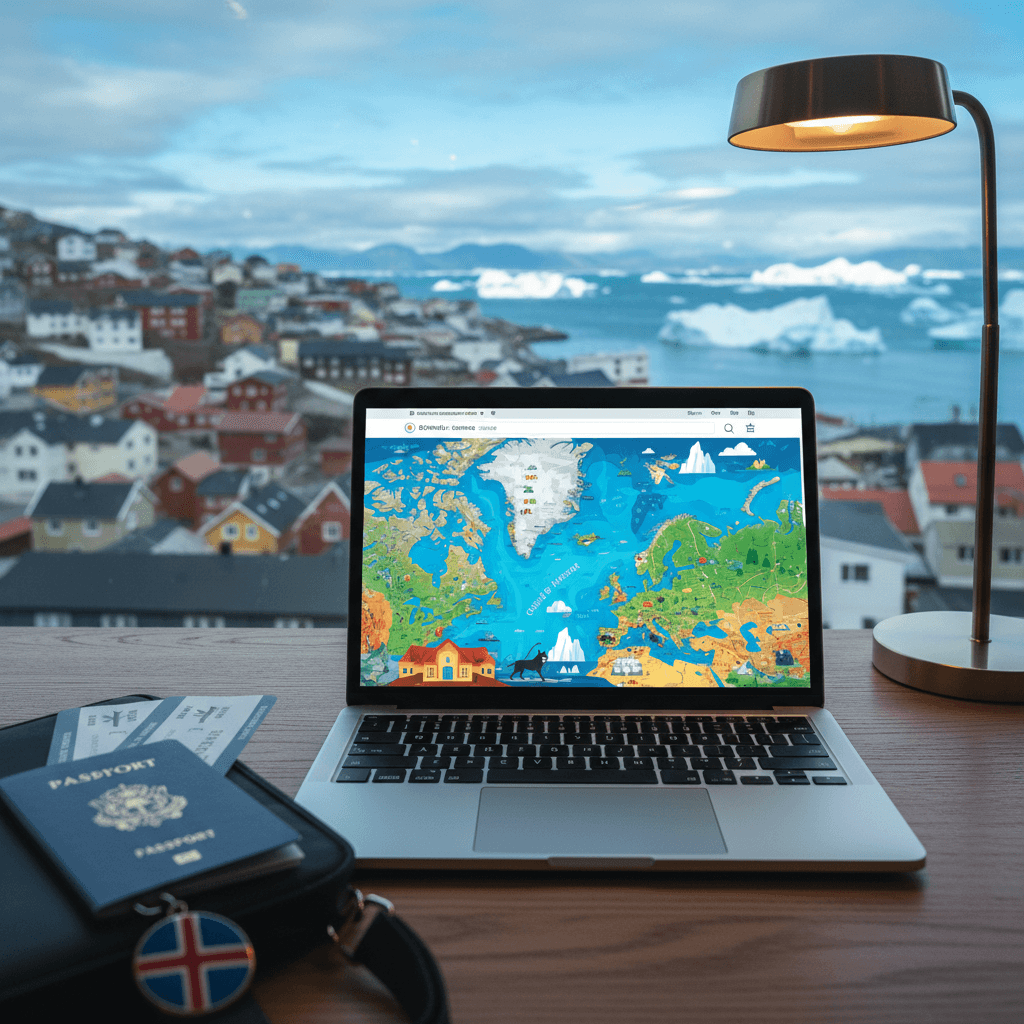
Greenland

Policy Stability
Stamped Nomad ExclusiveHow likely visa and immigration policies are to remain unchanged
Quick Facts
N/A
3 months
No
$2,857/mo
31 Mbps
8/10
Medium
Low
Medium
UTC-2, UTC-1, UTC+0, UTC-3
Entry Methods Available
Best For
Understanding the Greenlandic System
First things first: Greenland is a unique administrative beast. While it is part of the Kingdom of Denmark, it is not part of the EU or the Schengen Area. This is the most common trap for travelers. You cannot simply hop on a flight from Copenhagen with a standard Schengen visa and expect to pass through immigration in Nuuk. Your visa must specifically state "Valid for Greenland" in the comments section, or you will likely be turned back at the gate.
For many of you, the entry process is relatively painless. Citizens from over 60 countries, including the United States, Canada, Australia, and most of Europe, can enter visa-free. You get 90 days within a 180-day period to explore, scout locations, or work remotely. If you happen to be a citizen of a Nordic country, you hit the jackpot; you have total freedom of movement and can live or work here indefinitely without any paperwork.
Short-Term Stays and Business
If your nationality isn't on the visa-free list, you will need to head to a Danish diplomatic mission to apply for a tourist visa. The cost is usually around €60. While the process mirrors the Schengen application, remember that this is a standalone permit for Greenland specifically. These visas are strictly for 90 days. Don't count on extending your stay once you arrive; the government only grants extensions for extreme cases like medical emergencies or major humanitarian issues.
Business travelers generally follow the same rules as tourists. U.S. citizens can handle business meetings, networking, and scouting for up to 90 days without any special permits. Everyone else requiring a visa just needs to ensure their entry permit covers business activities during the application process.
Setting Up Long-Term: Work and Residence
If you decide the Arctic life is for you and want to stay beyond the three-month mark, things get a bit more formal. Greenland does not currently offer a specific "Digital Nomad Visa." To stay long-term, you typically need a residence and work permit sponsored by a local employer. This is a combined permit, meaning your right to live in the country is tied to your job.
The good news is that the rules have recently become much more friendly for foreigners. Permits are now issued for up to two years at a time, rather than requiring the old annual renewal. This change aligns the permits with municipal terms and saves you a massive amount of paperwork. Here is a breakdown of the current costs and timelines for residency:
- Application Fee: Approximately DKK 6,810 (roughly €910).
- Permit Duration: Up to 2 years.
- Processing Time: Usually 3 months, though it can take 5 months if they need more documents.
- Extension Fee: Currently DKK 0, though you must apply at least three months before your current permit expires.
Important Logistics
There is no visa-on-arrival system in Greenland. You need to have your paperwork sorted before your boots hit the permafrost. Most applications are handled through the Danish Agency for International Recruitment and Integration (SIRI) or the Danish Immigration Service. If you are applying for a work permit, your employer will usually handle their side of the portal, but the fee falls on you.
Keep in mind that if you hold a passport that requires biometrics, like an e-passport, make sure it is up to date. Some nationalities only qualify for visa-free entry if they are carrying a biometric version of their travel document. Always double-check your passport type before booking those expensive flights to the far north.
Source 1 | Source 2
If you are looking for a official "Digital Nomad Visa" with a sleek application portal and a sticker for your passport that says "Remote Worker," you are going to be disappointed. Greenland does not have a dedicated visa for digital nomads. The territory operates under a strict immigration framework managed by the Danish government, and they have not yet jumped on the remote work bandwagon that has swept through Southern Europe or the Caribbean.
The Reality of Staying in Greenland
Because there is no specific nomad program, your ability to stay and work depends entirely on your passport. The rules are rigid, and the authorities do not generally recognize "working for a company back home" as a valid reason for a long-term residency permit. You are either a tourist, a Nordic citizen, or a local employee.
For most nomads, the only viable path is the short-term stay. If you try to stay longer than 90 days without a local job contract, you will likely run into a legal wall. Greenlandic immigration is handled by the Danish Agency for International Recruitment and Integration (SIRI), and they are thorough.
Your Entry Options
- Nordic Citizens: If you hold a passport from Denmark, Finland, Iceland, Norway, or Sweden, you have hit the jackpot. You can enter, live, and work in Greenland indefinitely without a visa. No paperwork, no permits, just show up and find a place to stay.
- EU and Schengen Nationals: You can visit visa-free for up to 90 days. You will need a valid passport and a return ticket. While you are technically there as a tourist, many nomads work quietly on their laptops during this window.
- U.S., Canadian, and UK Citizens: You fall into the same category as EU citizens. You get 90 days of visa-free entry. Keep in mind that this is for the entire Schengen area in many cases, though Greenland has its own specific entry requirements that are closely tied to Denmark.
The Long-Term Path: Employment Permits
If you are determined to stay longer than three months and you aren't from a Nordic country, you need a local job. There is no "freelance" or "self-employment" visa category that fits the typical nomad profile. To get a residence permit, you generally need a formal offer from a Greenlandic company.
The application process for these permits, specifically the GL1 or GL5 forms, is handled digitally. You should expect a processing time of at least 3 months. This isn't a "move first, figure it out later" situation; the permit must be approved before you settle in. The government of Greenland, known as Naalakkersuisut, has a final say in these approvals to ensure local labor needs are met.
Legal and Tax Warnings
Greenlandic authorities consider working while physically present in the country to be "work," even if your employer is in New York or London. On a tourist visa, this is technically a gray area. While no one is likely to kick down your door for sending emails from a cafe in Nuuk, you cannot use remote work as a justification to extend your stay.
Tax residency is another factor. If you manage to stay long-term, you will likely trigger tax obligations. Greenland has its own tax laws separate from Denmark, and they can be quite high. If you stay long enough to be considered a resident, the government will expect a cut of your global income. Professional advice is a must if you plan on staying past the 90-day mark.
The Bottom Line
Greenland is a "visit, don't move" destination for most digital nomads. Without a local employer or a Nordic passport, you are capped at 90 days. Treat it like a long-term retreat rather than a permanent relocation. The lack of a nomad visa means the community is small and transient, but for those who can work within the 3-month window, it remains one of the most unique remote work frontiers on the planet.
Source 1 | Source 2
The Denmark Connection
First things first: Greenland is an autonomous territory within the Kingdom of Denmark. While it has its own government, Denmark handles the borders. This means you won’t be dealing with a "Greenlandic Embassy." Instead, you’ll be working through Danish authorities and the Nyidanmark (New to Denmark) system.
The most important detail to remember is that Greenland is not part of the Schengen Area. Even though Denmark is a Schengen member, your standard Schengen visa does not automatically grant you entry to Greenland. If you need a visa for Europe, you need a specific version that explicitly mentions Greenland on the sticker.
Who Can Enter Visa-Free?
If your nationality allows you to enter the Schengen Area without a visa for short stays, you generally have the green light for Greenland too. This includes citizens of the US, Canada, UK, Australia, and most of Europe.
- Nordic Citizens: If you are from Denmark, Finland, Iceland, Norway, or Sweden, you can enter, live, and work in Greenland with very few restrictions. You just need a valid photo ID.
- Visa-Exempt Nationalities: You can stay for up to 90 days within any 180-day period.
- EU/EEA Citizens: While you don't need a visa, you must bring a passport. A national ID card is usually enough for mainland Europe, but it won't get you through the gate for Greenland.
The "90/180" Rule for Nomads
For digital nomads planning a stint in the Arctic, the math is important. Your 90 days are shared across the entire Schengen region, the Faroe Islands, and Greenland. If you’ve already spent 60 days in France and Italy, you only have 30 days left for your Greenlandic adventure before you have to exit the zone entirely.
Don't count on extending a tourist stay once you arrive. Extensions are typically only granted for emergencies, like a serious medical issue that prevents travel. If you want to stay longer than three months, you’ll need to look into a residence permit rather than a tourist visa.
Applying if You Need a Visa
If your home country requires a visa for Denmark, you have to apply for a short-stay visa that is specifically valid for Greenland. There is no such thing as a "Visa on Arrival" or a pure e-visa for Greenland. You have to start the process before you leave home.
- The Portal: You must use the ApplyVisa online portal managed by the Danish Ministry of Foreign Affairs.
- The Application: You can apply up to six months before your trip. Most travelers apply for their Schengen visa and their Greenland entry in one single application to save time and fees.
- The Appointment: After paying the fee online, you still have to visit a Danish embassy or consulate to provide your biometrics and show your passport.
- Documentation: Be ready to show proof of funds, a return flight, and travel insurance that covers the specific conditions of the Arctic.
Entry Requirements for Everyone
Regardless of whether you need a visa or not, the border guards expect you to meet the basic entry criteria. This means having a passport that is valid for at least three months beyond your planned departure date. You should also be able to show that you have enough money to support yourself during your stay and a way to get back home.
Since Greenland is a high-cost destination, having your accommodation booked in advance is highly recommended. Authorities may ask where you are staying, especially if you are arriving in smaller towns with limited infrastructure.
Source
The Reality of Long-Term Stays
If you are dreaming of setting up a remote workstation overlooking the icebergs of Ilulissat, you need to understand how Greenland handles residency. Unlike many European neighbors, Greenland hasn't jumped on the digital nomad visa bandwagon. There are no specialized paths for retirees, investors, or freelancers. To stay here long-term, you generally need to be part of the local workforce.
The system is managed through the Danish Agency for International Recruitment and Integration (SIRI). Even though Greenland is part of the Kingdom of Denmark, your residency here is specific to the island. A permit to live in Nuuk doesn't give you the right to live in Copenhagen or travel freely through the Schengen Area. It is a unique, standalone arrangement.
The Employment Path
The most common way to secure a spot in Greenland is through a work-based residence permit. These are granted based on specific business needs within the country. The government recently updated the rules to allow these permits to be issued for two years at a time. This is a significant improvement over the old one-year limit, giving you much more breathing room before you have to worry about renewals.
To qualify, you usually need a firm job offer that meets Greenlandic standards for salary and working conditions. You also have to prove you can support yourself and any family members you bring along without relying on public funds.
The Fast-Track Agreement
For those who want to move quickly, the Fast-Track Agreement is the gold standard. This program is designed for employers who have pre-approval from the Government of Greenland. If you land a job with one of these companies, the bureaucracy moves much faster. Here is what you need to know about the Fast-Track route:
- Processing Time: Usually around one month, though it can take up to three if the paperwork is messy.
- Application Fee: There is no fee for Fast-Track applications.
- Work Requirements: You must be employed full-time (40 hours per week).
- Family: You can bring your spouse, cohabiting partner, and children under 18 years old.
Settling in Permanently
Greenland isn't just a place for a short stint; some nomads find they never want to leave. If you decide to make it your forever home, there are two primary routes to permanent residency. The timeline depends entirely on why you are there in the first place.
- The Work and Study Route: If you are on a standard work or study permit, you can apply for permanent residency after seven years of living on the island.
- The Family Route: If you moved to Greenland to be with a spouse or partner who is already a resident, the timeline is much shorter. You can typically apply after three years.
To secure permanent status, you must still meet the original requirements of your temporary permit. You also need to keep your finances in order. The government checks for public debt; if you owe more than DKK 97,436.38 (roughly USD 13,000) to the state, your application will likely be rejected.
Important Restrictions
Greenland's immigration policy is functional and focused on the labor market. This means there are some hard "no"s for certain types of travelers. You won't find a path here if you are looking for:
- Investment Visas: Buying property or starting a small business doesn't automatically grant you the right to live here.
- Freelancer Visas: Without a local employer or a specific business permit, working for yourself on a tourist visa is not a legal path to long-term residency.
- Retirement Visas: There is no specific program for retirees to relocate without a work or family connection.
If you are serious about a long-term stay, your best bet is to target industries like tourism, construction, or specialized consulting where local firms are actively looking for international talent.
Greenland is a bucket-list destination for a reason, but it isn't the place to go if you are looking to stretch your budget. The remote geography and heavy reliance on imports mean you will be paying a premium for almost everything. For a solo nomad in Nuuk, expect your monthly burn to land somewhere between $2,529 and $3,960 depending on how much you value city-center living and imported comforts.
Housing Breakdown by City
Finding a place to stay is your biggest hurdle. The market is tight, and prices reflect the limited infrastructure. Nuuk is the most developed for nomads, while destinations like Ilulissat command higher prices due to their status as tourism magnets.
- Nuuk (The Capital): A one-bedroom in the city center averages $1,208. If you move toward the outskirts, you can find spots for around $925, with some budget options dipping to $630.
- Ilulissat (The Tourist Hub): This is the most expensive base. Expect to pay roughly $2,904 per month including rent, as short-term housing often competes with high-paying tourists.
- Sisimiut (The Adventure Hub): This is the most affordable major town. Rent can be significantly lower here, with some one-bedroom apartments starting around $300 to $355, though availability is often very limited.
The Monthly Budget
To give you a realistic idea of the daily grind, here is how the costs shake out across three different lifestyles. These figures include rent, food, workspace, and basic utilities.
The Budget Nomad: $1,572 – $2,097
- Rent: $630 (Shared or peripheral housing)
- Groceries: $400
- Internet: $152
- Workspace: $150 (Hot desk or cafes)
The Comfortable Nomad: $2,342 – $2,857
- Rent: $925 (Private apartment outside center)
- Groceries/Dining: $700
- Internet: $152
- Workspace: $225 (Dedicated coworking)
The Premium Nomad: $3,252 – $3,960
- Rent: $1,208 (Modern city center flat)
- Dining/Social: $1,000+
- Internet: $152
- Workspace: $300+ (Premium office setup)
Food and Dining Out
Groceries will likely give you sticker shock. Because almost everything is flown or shipped in, prices for fresh produce and dairy are high. A liter of milk sits at $2.89, a loaf of bread is $3.81, and a kilo of chicken fillets can run you a staggering $24.77.
Dining out is a luxury. A basic meal at a casual spot costs about $15.50, while a mid-range dinner for two will easily clear $82.00. If you are on a budget, you will be doing a lot of your own cooking and perhaps leaning into local catches like fish or reindeer when available.
Getting Around
Nuuk has a reliable bus system with a monthly pass costing about $89.40. Taxis are available but expensive, starting at $5.81 just to get in the car. The real expense comes if you want to see other towns. There are no roads between cities; you have to fly or take a ferry, and domestic flights are notoriously pricey.
Connectivity and Coworking
Internet is a fixed, high cost. Most nomads pay around $152 per month for a reliable connection. If you prefer a professional environment, Nuuk has a few solid options:
- Nuuk Coworking: Located in the Quinnga neighborhood, offering hot desks for $150 a month.
- Katuaq Coworking: Right in the city center for $225 a month.
- Cafe Thor: Good for shorter sessions, charging between $7 and $15 per hour for workspace.
Healthcare and Insurance
The public healthcare system is free for registered residents, but most nomads will not fall into this category. Medical evacuations from remote areas are incredibly expensive. Digital nomad insurance is a requirement for peace of mind. Plans from providers like SafetyWing start around $161.50 a month, while more specialized expat plans can range from $50 to over $300 depending on your age and coverage needs.
Nuuk: The Modern Arctic Capital
Nuuk is the only place in Greenland that feels like a traditional city, though it still maintains a small-town atmosphere with around 19,000 residents. It functions as the country's economic and political hub, making it the most practical choice for anyone working remotely. You will find the best internet infrastructure here, along with a surprisingly trendy cafe culture that rivals smaller Scandinavian cities.
The city offers a blend of colonial history and modern architecture. While the cost of living is high, the amenities are reliable. You have access to the Katuaq Cultural Centre, several well-equipped gyms, and the nation's largest supermarkets. It is the best base if you need high-speed fiber internet and a community of international professionals.
- Estimated Monthly Rent: $1,200 to $1,800 for a central apartment
- Internet Quality: High (Fiber available in most areas)
- Coworking: Limited dedicated spaces, but excellent cafe culture at places like Katuaq or Cafe Pascucci
- Transportation: Reliable bus network and walkable city center
Ilulissat: The Visual Masterpiece
If your priority is scenery over city lights, Ilulissat is the top contender. Located on the edge of the Disko Bay, this town is famous for the Ilulissat Icefjord. It is significantly smaller than Nuuk, with a population of about 4,700, but it punches above its weight due to a massive tourism industry. This means better-than-average English proficiency and plenty of high-end dining options.
Living here feels like being on the edge of the world. The "rush hour" consists of sled dogs howling in the morning. For a nomad, the trade-off is a slower pace and slightly more expensive groceries. Internet speeds are generally good, but you may experience higher latency than in the capital. It is the perfect spot for a month-long "deep work" retreat.
- Estimated Monthly Rent: $1,000 to $1,500 (Housing is scarce due to tourism demand)
- Internet Quality: Moderate to High (4G is stable, home Wi-Fi varies)
- Vibe: Tourist-heavy in summer, quiet and traditional in winter
- Top Perk: Immediate access to some of the best hiking trails and iceberg viewing on the planet
Sisimiut: The Adventure Hub
Sisimiut is Greenland's second-largest city and serves as the gateway for outdoor enthusiasts. It is located just north of the Arctic Circle and stays ice-free year-round, which keeps the harbor active. It has a rugged, industrious feel compared to the polished look of Nuuk. For nomads who spend their weekends backcountry skiing or hiking the Arctic Circle Trail, this is the place to be.
The town has a strong educational presence thanks to the local technical university, which gives it a younger, more energetic demographic. While it lacks the sheer number of cafes found in Nuuk, the sense of community is strong. It is often easier to meet locals here, and the cost of living is slightly more manageable than in the capital or the tourist heights of Ilulissat.
- Estimated Monthly Rent: $900 to $1,400
- Internet Quality: Reliable (Standard broadband and 4G)
- Community: Active student population and local artisan scene
- Climate: Significant snowfall, perfect for winter sports enthusiasts
Qaqortoq: The Southern Charm
Qaqortoq is often cited as the most beautiful town in Greenland. Located in the south, the climate is noticeably milder, and the hillsides are dotted with colorful houses. With a population of around 3,000, it offers a very intimate living experience. It is famous for the "Stone and Man" project, where dozens of sculptures are carved directly into the rock faces around town.
The pace of life here is slow. It suits a nomad who is looking to disconnect from the frantic energy of major hubs while still maintaining a stable connection to the outside world. Keep in mind that logistics in the south can be tricky; you will likely rely on helicopters or coastal ferries to get around, as there are no roads connecting the towns.
- Estimated Monthly Rent: $800 to $1,300
- Internet Quality: Stable but can be expensive for high data usage
- Atmosphere: Creative, artistic, and exceptionally friendly
- Best For: Creative writers or those seeking a quiet, scenic environment
Connectivity in the Arctic
Working from Greenland is a unique experience that requires a bit of technical planning. While you are technically in the shadows of the Arctic Circle, the infrastructure is surprisingly robust for such a remote location. Most of the country relies on a massive undersea fiber optic cable connecting to Europe, meaning you aren't just relying on spotty satellite signals in the major hubs.
The average broadband speed sits around 31 Mbps, though your actual experience will vary wildly depending on your location. In Nuuk, you can find connections reaching up to 55 Mbps, which is plenty for video calls and standard remote workflows. If you need serious speed, 5G has arrived in the capital via Tusass, offering downloads up to 80 Mbps for fixed home setups.
Coworking in Nuuk
Nuuk is the only place in Greenland where you will find a traditional coworking culture. It is small but high-quality, catering to the growing community of entrepreneurs and remote professionals in the city. If you prefer a structured environment over a kitchen table, you have a few solid options.
- Katuaq Coworking: Located right in the city center within the iconic cultural center. It offers everything from hot desks to private offices. Monthly passes start around 1,500 DKK ($225 USD).
- Nuuk Coworking: Situated in the Quinnga neighborhood, this spot is great for those who need high-speed internet and a communal kitchen. Plans start at 1,000 DKK ($150 USD) per month.
- Nuuk Digital: A reliable choice for those who need 24/7 access, which is a lifesaver if you are working for clients in vastly different time zones.
The Cafe Office Scene
If you enjoy the hum of a coffee shop, Nuuk has a handful of spots where laptops are welcome. Reliability can be hit or miss compared to dedicated offices, so always have a backup data plan ready. Cafe Thor is a local favorite for nomads, offering fast internet and a solid menu, though they sometimes charge a small hourly fee of 50 to 100 DKK ($7-$15 USD) for extended stays.
For a more relaxed vibe, Cafe Toqqorfik is widely considered the best spot for a quality brew while you clear your inbox. Just keep in mind that public WiFi in Greenland is rarely "open" in the way you might find in London or New York; you will often need to ask for a code or be a paying customer.
Staying Mobile: SIMs and eSIMs
Mobile data is surprisingly affordable if you stick to local providers. Tusass (formerly Tele Greenland) is the primary carrier. You can grab a prepaid SIM card for roughly 200 to 300 DKK ($30-$45 USD). A 10GB data package usually costs around $9 USD, which is a bargain given the geography.
If you prefer to have your data sorted before you land, eSIMs are the way to go. Several international providers offer Greenland-specific packages:
- Nomad eSIM: Offers tiered plans from 1GB to 20GB, with prices ranging from $8 to $79 USD.
- Yesim: Provides flexible prepaid options starting at approximately $35 USD.
- eSIMFOX: Great for short trips, with 7-day or 30-day packages starting as low as €0.99 per GB.
- Roamless: A good choice for those who want pay-as-you-go credits that never expire.
While 4G and LTE coverage is excellent within the town limits of Nuuk, Sisimiut, and Ilulissat, don't expect a signal once you head out on a boat or a hike. The wilderness here is truly off-grid.
Understanding the Public System
In Greenland, the healthcare system is entirely government-run and free at the point of delivery for registered residents. This covers everything from your standard GP visit to hospital stays, specialist consults, and even most dental work. However, there is a major catch for the nomad community: you are only covered once you have legal residency and a local CPR number. If you are just passing through on a tourist visa or waiting for your paperwork to clear, you are effectively on your own.
The system is decentralized across five regional hospitals in Ilulissat, Aasiaat, Sisimiut, Qaqortoq, and Tasiilaq. These spots handle basic care, but for anything serious, all roads lead to Queen Ingrid’s Hospital in Nuuk. It is the only facility in the country equipped with intensive care units, MRI scanners, and surgical suites. If you are based in a remote settlement, your first point of contact will likely be a telemedicine station rather than a physical doctor.
The Reality of Private Care
If you are used to the convenience of private clinics or "express" healthcare, Greenland will be a reality check. There are no private hospitals here. Most expats who need specialized elective procedures or high-end diagnostic work end up flying to Denmark. Because the local system prioritizes medical necessity over convenience, you cannot simply pay to jump the queue for a non-urgent issue.
Insurance Must-Haves
Since the European Health Insurance Card (EHIC) is not recognized here, having a robust international policy is non-negotiable. You should look for plans that specifically include medical evacuation. A standard policy might cover a doctor's visit, but it won't cover the $20,000 to $50,000 cost of a private medevac flight to Copenhagen.
- Public Healthcare: Best for employed expats with a work permit. Provides full coverage after registration.
- International Health Insurance: Companies like Allianz or William Russell are the gold standard here. Look for annual limits between $2.5 million and $5 million.
- Nomad-Specific Plans: PassportCard Nomads is a popular choice for those moving between countries, as they offer global coverage and easy access to local providers.
- Nordic Convention: If you are a citizen of Denmark, Iceland, Norway, Sweden, or Finland, you have reciprocal rights to care while working in Greenland.
Managing Medications
Pharmacies as standalone shops don't really exist. You get your prescriptions directly from the regional hospitals or Queen Ingrid’s. You have to pay for these upon receipt, and the selection is surprisingly narrow. The government maintains a strict list of approved medications, so if you rely on a specific brand-name drug for a chronic condition, there is a high chance it won't be in stock.
Over-the-counter options are equally sparse. You might find basic painkillers in a grocery store, but for anything else, you’ll be heading to the hospital. Always bring a three-month supply of your necessary meds when you first arrive.
Emergency Logistics
In an emergency, the logistics are more complex than the medicine itself. The country relies on a single Beechcraft King Air ambulance plane to move patients from regional hubs to Nuuk. These flights are prioritized strictly by medical urgency; your insurance company cannot "book" one for you. If the weather turns, which it often does, you might be grounded for days regardless of your medical status.
For immediate emergencies, the on-call doctor at Queen Ingrid’s can be reached at +299 55 99 55. If you are in a settlement with no resident medic, you will be treated via a telemedicine link until a ship or helicopter can reach you. It is a rugged system designed for a rugged environment, so self-reliance and good insurance are your best tools.
Quick Tips for New Arrivals
- Bridge the Gap: Secure one to three months of private insurance to cover the period before your residency registration is finalized.
- Dental is Basic: While public dental care exists, it is mostly for emergencies and basic maintenance. Specialized cosmetic work isn't available.
- Evacuation is Key: Ensure your policy covers "repatriation of remains" and "emergency medical evacuation" to a country with advanced facilities.
- Check the List: If you have a chronic illness, contact the Greenlandic health authorities before moving to see if your specific medication is even allowed in the country.
Money Matters in the Land of the Midnight Sun
Managing your finances in Greenland is a bit of a paradox. On one hand, the country operates under Danish financial regulations, meaning the systems are modern and secure. On the other hand, the physical geography makes cash a necessity the moment you step outside the main hubs like Nuuk or Ilulissat.
The local currency is the Danish Krone (DKK). Because it is pegged to the Euro at a rate of 7.46, you won't see wild fluctuations in value, which makes budgeting for your stay much easier. While the infrastructure is solid, the barriers to entry for local banking are high for anyone just passing through for a few months.
The Local Bank Hurdle
Opening a traditional bank account in Greenland is rarely worth the effort for a digital nomad. To get an account with a local institution, you need a CPR number (a personal registration number). You can only get this after registering as a resident, a process that requires a long-term permit and a fixed address.
If you are planning a long-term stay and decide to go this route, you will need your passport, proof of address, and your CPR number. You will also be set up with MitID, the Danish digital ID system used for everything from taxes to checking your balance. For most nomads, however, the paperwork is a non-starter.
Smarter Alternatives: Wise and Revolut
Since local banks are mostly out of reach, digital nomads should rely on international fintech platforms. These are generally accepted and much easier to manage from a laptop.
- Wise: This is the top choice for Greenland. You can open an account in about 30 to 45 minutes using your home country's address. It allows you to hold DKK and convert funds at the mid-market rate, which usually saves you between 0.4% and 2.6% compared to traditional banks.
- Revolut: A great secondary option, though it is primarily geared toward EU residents. If your home base is outside the EU, you might run into account restrictions. It is excellent for quick transfers and has a user-friendly app for tracking daily spending.
ATM Access and Spending
You can use major credit cards like Visa, Mastercard, and American Express in hotels, larger grocery stores, and restaurants in town. However, Greenland is a place where "offline" still exists. If you are buying fresh fish at the harbor or visiting a small settlement, you need physical krone.
ATMs are available in larger towns, but they are non-existent in smaller villages. When using a foreign card, be aware of the limits and fees:
- Foreign cards often have a daily withdrawal limit of 2,000 DKK.
- Local Visa/Dankort holders have a higher limit of 6,000 DKK.
- Expect a transaction fee from the local bank on top of whatever your home bank charges.
Moving Money and Crypto
If you need to move larger sums of money, a standard bank transfer is your best bet for keeping fees low. For speed, using a debit or credit card through a service like Xoom or MoneyGram works, but you will pay a premium for that convenience. Wise remains the most balanced option for both speed and transparent pricing.
For the crypto-inclined, Greenland doesn't have its own specific digital asset laws. Instead, it follows the general financial frameworks overseen by the Danish Financial Supervisory Authority. This means there are no specific protections for stablecoins or mandatory audit standards for crypto firms operating here. It is treated like any other speculative investment under anti-money-laundering rules.
Quick Banking Comparison
Traditional Greenlandic Bank
- Residency Required: Yes (CPR number needed)
- Setup Time: Several weeks
- Best For: Expats staying more than a year
Wise
- Residency Required: No
- Setup Time: Under an hour
- Best For: International transfers and daily DKK spending
Cash and ATMs
- Availability: Town centers only
- Daily Limit: 2,000 DKK for foreign cards
- Best For: Small settlements and local markets
Navigating the Move with Minors
Bringing your family to Greenland involves a bit of paperwork through the Danish immigration authorities (SIRI). If you aren't a Nordic citizen, you'll generally need to apply for family reunification. Your children must be under 18 and you must prove you have adequate housing and the financial means to support them without government assistance.
For those arriving from the EU or EEA, make sure you have original birth certificates and passports for everyone in the family. If only one parent is traveling, you'll need documented proof of full custody or a notarized consent form from the other parent. It’s a straightforward process, but the documentation must be exact to avoid delays in the Arctic mail system.
The Reality of Education
The most important thing for nomad parents to know is that there are no international schools in Greenland. Education is mandatory for children aged 6 to 16, and the public system is free for residents. However, the curriculum is taught in Greenlandic and Danish. Unless your children are already bilingual or very young and able to pick up languages quickly, the transition to a local classroom can be a hurdle.
Many expat families choose to homeschool or use online private schools to maintain a curriculum in their native language. For those who want their children to experience the local system, the 10-year compulsory cycle is broken down into three stages:
- Primary: Years 1 through 3
- Middle School: Years 4 through 7
- Senior School: Years 8 through 10
Healthcare and Pediatric Services
Greenland operates a public healthcare system that is free for all residents. You’ll find primary health clinics in every town, and five regional hospitals serve the larger hubs. Nuuk houses the largest and most advanced facility, which is where you’ll likely head for anything beyond a routine checkup.
Common childhood ailments like respiratory issues and ear infections are the most frequent reasons for clinic visits here. While the care is high quality, the remote nature of the country means that specialized pediatric surgery or complex long-term treatments often require a flight to Denmark. It’s a good idea to ensure your private insurance covers medical evacuation just in case.
Top Towns for Families
While you can live in smaller settlements, most nomads with children gravitate toward three main areas:
Nuuk
- Amenities: The capital offers the most "normal" urban life, featuring the Katuaq Cultural Centre, a cinema, and multiple sports halls.
- Education: Home to several schools and the University of Greenland, making it the most academically focused environment.
- Lifestyle: Best for families who want a mix of modern shopping and easy access to the fjord system.
Sisimiut
- Safety: Known for being incredibly safe with almost non-existent crime rates.
- Activities: Perfect for active families; it’s the gateway to the Arctic Circle Trail and has a vibrant youth culture center called Taseralik.
- Environment: Offers a tight-knit community feel where children often play outside unsupervised.
South Greenland (Igaliku or Qassiarsuk)
- Vibe: These are sheep-farming villages that look like something out of a storybook.
- Pros: Stunning landscapes and a much milder climate than the north.
- Cons: Very limited social circles for children and fewer professional services.
Childcare and Daily Safety
Childcare is heavily subsidized by the government, which is a massive perk for working nomads. About 75% of children aged five and under are enrolled in municipal daycare. The fees are based on your total household income, so it remains affordable even if you are earning a high remote salary. Most towns have at least one nursery (vuggestue) and a kindergarten (børnehave).
Safety in Greenland is less about crime and more about the elements. You won't worry about your kids walking home from school alone, but you will worry about them having the right gear for a sudden blizzard. The culture is very child-centric, and you'll find that locals are generally very welcoming to new families. Just be prepared for the isolation; the lack of roads between towns means your social circle will be limited to the people in your immediate community.
Safety in the Wild
Greenland is one of the safest places you will ever visit. Violent crime is virtually nonexistent, and the country boasts a safety index of 80 out of 100. You won't find the typical big-city headaches like professional pickpockets or muggers here. The biggest threats to your well-being aren't other people; they are the elements and the wildlife.
While the U.S. maintains a Level 2 travel advisory, this is purely due to the unpredictable Arctic weather and the presence of polar bears. If you do run into trouble, you can reach the local police at +299 70 14 48. The government even maintains a victim compensation fund for serious incidents, though it is rarely needed by travelers.
Avoiding Scams
Scams are rare, but they aren't impossible. Most issues stem from disorganized tour operators rather than intentional fraud. Stick to established companies and verify prices with locals or official tourism channels before booking. Be wary of "unofficial" tourist offices or deep discounts that seem too good to be true for such an expensive destination. Always use a credit card for large bookings to ensure you have recourse if a provider fails to deliver.
A Culture of Respect
Greenlandic culture is built on a deep connection to the land and a quiet, communal respect. When you meet someone, a warm handshake is the standard. Use "Aluu" for a casual hello, but keep things polite with "Aap" (sir) or "Amaq" (madam) when addressing elders. Building trust here takes time; locals value consistency and authenticity over flashy networking.
The Kaffemik is the heartbeat of social life. These open-house gatherings celebrate everything from birthdays to first hunting catches. If you are invited, show up with a small gift, take off your shoes at the door, and enjoy the coffee and cake. It is the most genuine way to integrate into the community.
LGBTQ+ Acceptance
You will find Greenland to be incredibly progressive. Same-sex marriage has been legal since 2016, and a comprehensive anti-discrimination law passed in May 2024 protects against bias based on sexual orientation and gender identity. While the capital, Nuuk, is the only place with a recognizable "scene," the overall atmosphere across the islands is one of quiet acceptance. Many LGBTQ+ locals move to Copenhagen for larger social circles, but visitors are welcomed warmly regardless of who they love.
The Language Barrier
Greenlandic (Kalaallisut) is the official language and is structurally nothing like English or Danish. While most younger people and city dwellers speak English well, the nuances of the culture are locked inside the local tongue. Danish is the most common second language and is widely understood. In remote villages, English might fail you, so having a translation app and a few basic Greenlandic phrases is a sign of respect that goes a long way.
Community and Integration
The expat community is small but tight-knit, mostly centered in Nuuk. Because the total population is under 60,000, everyone tends to know everyone. To find your feet, look for these groups:
- Nuuk Digital Nomads: A Facebook hub for remote workers.
- Greenland Expats: Best for practical advice on local lifestyle.
- Nuuk Startup Community: Great for networking with local entrepreneurs.
The best way to make friends is through shared hobbies. Join a hiking group, try your hand at dog sledding, or head to Barista or Godthåbsfjord for a drink. Mark June 21 on your calendar; National Day is the biggest social event of the year and the perfect time to see traditional music and dress.
The Nomad Reality Check
Greenland is a challenging "hub" for the average nomad. There is no specific digital nomad visa, and the cost of living is high. Internet speeds hover between 34 and 55 Mbps, often with data caps that make heavy video conferencing difficult.
Nuuk Monthly Estimates
- Total Cost of Living: $2,996 to $5,854
- One-Bedroom Rent: $750 to $1,800
- Coworking Space: $150 to $450
- Mid-range Dinner: $30 to $45
This destination is best suited for high-income earners who crave isolation and can work asynchronously. If you need a bustling coworking scene and cheap street food, this isn't the place for you.
The Six-Month Threshold
Greenland doesn't play by the standard 183-day rule you might be used to in Europe or Southeast Asia. Here, the trigger for full tax residency is a flat 6 months. If you stay for half a year, including short trips away for vacation, the government considers you a resident for tax purposes. This means you are liable for tax on your worldwide income, not just what you earn while sitting in a cafe in Nuuk.
If your stay is shorter than six months, you generally fall under limited tax liability. You’ll only be taxed on income earned from work actually performed within Greenland. However, there is a small "grace period" for short-term visitors. If you are working for a foreign employer with no local office and your stay is 14 consecutive days or less, you usually won't owe Greenlandic tax on that income.
Understanding the Tax Rates
Living in the Arctic isn't exactly a tax haven experience. Greenland utilizes a progressive system that combines municipal and national taxes. Depending on where you set up your home office, you are looking at a total tax rate between 42% and 44%. Most nomads find themselves paying closer to 44% in the more populated municipalities.
There are some very specific exceptions for those working in specialized industries like mineral exploration or large-scale construction outside of established towns. These workers often qualify for a flat 35% tax rate with no deductions allowed. Unless you are moonlighting as a geologist or building a remote weather station, you should plan for the higher municipal rates.
Treaties and Double Taxation
This is where things get tricky for the average remote worker. Greenland has a very limited network of Double Taxation Treaties (DTT). Currently, active treaties only exist with a handful of neighbors and partners:
- Denmark and the Faroe Islands
- Iceland and Norway
- Guernsey, Jersey, and the Isle of Man
If you are from the United States, Canada, or the UK, there is no formal treaty to protect you from being taxed twice on the same dollar. You will need to look closely at your home country's foreign tax credit rules to ensure you aren't paying 44% to Greenland and another 20% or more back home.
The Crypto Question
Greenlandic tax law hasn't quite caught up to the nuances of decentralized finance, but the general rules for capital gains apply. Most individuals in Greenland don't pay tax on capital gains unless the transaction involves specific financial contracts or derivatives. While this sounds like a win for crypto traders, keep in mind that Greenland participates in the Common Reporting Standard (CRS) and has a FATCA agreement with the U.S. Your digital assets aren't invisible to the tax authorities here.
Reporting and Compliance
Greenland uses a "taxation-at-source" system. If you were working for a local company, they would handle the withholding. As a nomad, the burden of reporting falls on you. You'll need to keep meticulous records of your dates of entry and exit, as that 6-month mark is the difference between paying tax on your local earnings or your entire global portfolio.
Since there is no dedicated "Digital Nomad Visa" with built-in tax perks like you might find in Spain or Malta, you are treated like any other resident. Professional advice is a must if you plan on staying long enough to see the midnight sun turn into the polar night.
Connectivity and Communication
Staying online in Greenland is a unique challenge that requires a bit of strategy. While 4G/LTE is common in major towns through providers like Tusass, the costs are significantly higher than what you might be used to in Europe or North America. A monthly plan with 10GB of data can set you back anywhere from $109 to $168.
For most nomads, eSIMs are the way to go. Providers like Yesim, GetNomad, and Snap eSIM allow you to bypass physical stores and keep your home number active for messaging. Just keep in mind that Greenland's internet relies on a mix of undersea cables and satellite links. Outages happen, especially in East Greenland, so always ask your host for a speed test screenshot before booking long-term stays.
Getting Around
Forget about Uber or Lyft. Ride-sharing doesn't exist here. Within towns like Sisimiut or Nuuk, taxis are your primary lifeline. You can use local apps like Sisimiut Taxa to hail a ride, but in most places, you'll just call a local dispatch or walk. Greenland is also famous for having no roads between towns. To move from one settlement to another, you'll be booking a flight or a coastal ferry, so your "commute" between cities requires a bit more logistics than a typical train ride.
Where to Set Up Your Base
Not all Greenlandic towns are created equal for remote work. Here is how the main hubs break down for a nomad budget:
Nuuk
- The Vibe: The capital and only true urban center. This is where you will find the most reliable Wi-Fi and the best social scene.
- City Center Rent: Approximately $864 per month.
- Outside Center Rent: Approximately $857 per month.
Sisimiut
- The Vibe: The second-largest town. It offers a quieter, more traditional feel with decent connectivity, though housing is harder to find.
- Pros: Great for hikers and those who want a slower pace without losing 4G access.
Ilulissat
- The Vibe: Stunningly beautiful but geared almost entirely toward short-term tourists.
- Warning: Seasonal prices here are aggressive. A hotel room that costs $122 in February can spike to $285 in August.
Finding a Place to Stay
Standard platforms like Airbnb are your best bet for finding monthly rentals in Nuuk. If you are looking for a community feel, Mapmelon and Nomad Stays occasionally list coliving spaces or nomad-friendly apartments. Always prioritize places with "verified Wi-Fi" tags. Because housing demand is so high in the capital, try to book at least two to three months in advance if you plan on staying through the summer.
Food and Daily Life
Don't expect a buzzing food delivery culture. While you might find a few local spots that deliver by phone, major apps like Uber Eats aren't a thing here. You'll be doing a lot of your own cooking. Grocery prices are high because almost everything is imported. A solo nomad should budget roughly $1,738 per month for living expenses before even considering rent. Total monthly costs often hover around $2,904.
Language and Integration
While Danish is widely spoken and very useful, learning some Greenlandic (Kalaallisut) goes a long way with the locals. Apps like Drops or uTalk are great for picking up the basics. If you want to get serious, Oqaasileriffik provides excellent free tools and dictionaries. Even a simple "Haluu" (Hello) or "Qujanaq" (Thank you) changes the dynamic of your interactions.
Safety and Emergencies
Greenland is incredibly safe in terms of crime, but the environment is less forgiving. For any emergency, dial 112 from your mobile phone. If you are using a local landline, you'll need to call the specific local emergency number for that town. The country code is +299. Make sure your travel insurance covers medical evacuation, as specialized care often requires a flight to Denmark.
Mistakes to Avoid
- Assuming 24/7 stability: The internet can and does go down. Have an offline workflow ready for those moments.
- Packing light on the budget: Greenland is one of the most expensive places on earth. If your budget is tight, the stress will outweigh the scenery.
- Ignoring the seasons: If you arrive in winter, expect limited services and very short days. If you arrive in summer, expect to pay double for everything.
- Isolation: The lack of roads means you can't just "drive to the next town" if you get bored. Pick your base town carefully.
Stay Updated on Greenland
Get notified about visa changes, policy updates, and new information for digital nomads in Greenland.