Cuba

Policy Stability
Stamped Nomad ExclusiveHow likely visa and immigration policies are to remain unchanged
Quick Facts
N/A
6 months
Yes
$900/mo
3 Mbps
7/10
Medium
Low
Low
CST, CDT
Entry Methods Available
Best For
The New Digital Era: Cuba's E-Visa
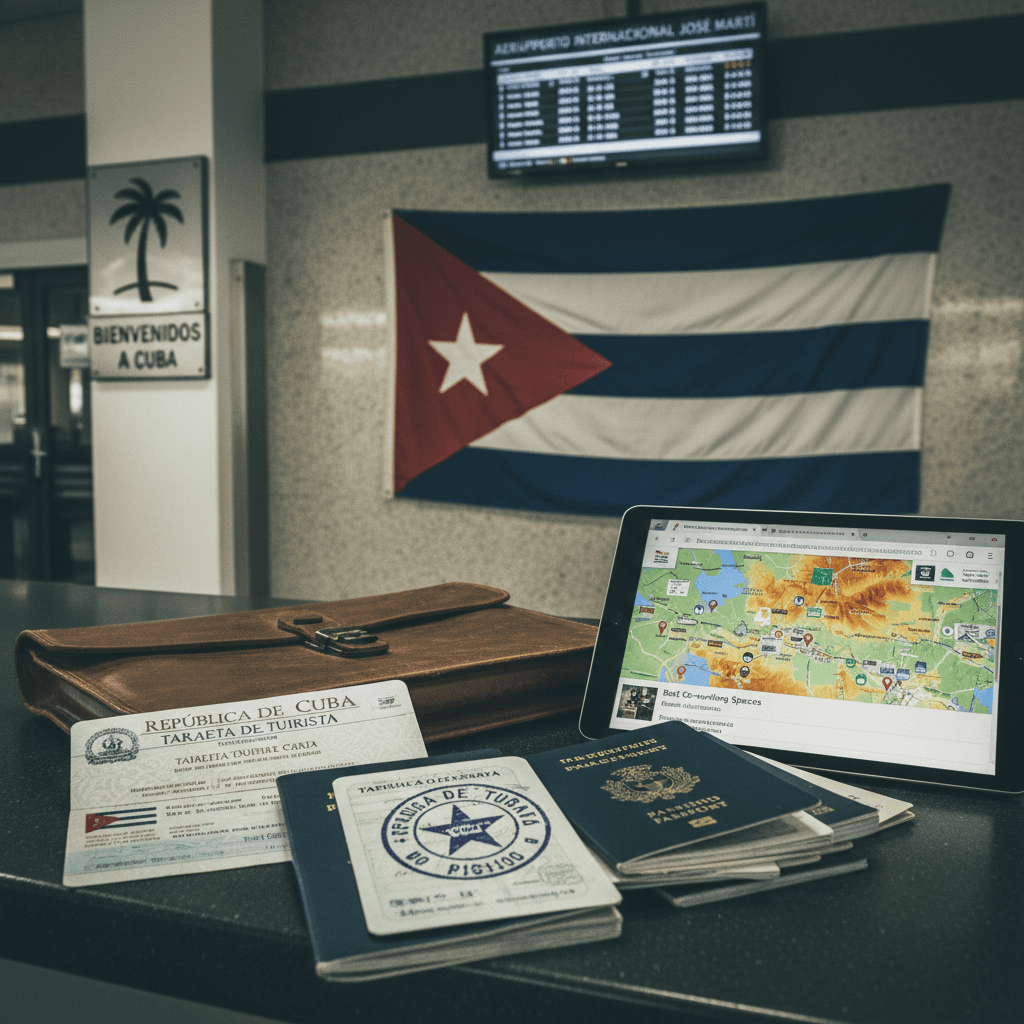
Cuba has finally stepped into the digital age regarding entry requirements. The old paper tourist cards, which were often a headache to track down at consulates or airline counters, are being phased out. Since July 2025, the government has transitioned to a mandatory e-visa system for all tourists.
If you still happen to have a physical tourist card tucked away in a drawer, you can use it until December 31, 2025. After that, the system is entirely digital. You apply online through the official portal, pay the fee, and receive a code via email. It is a 24/7 service designed to make the pre-departure process smoother for remote workers and travelers alike.
Tourist Visa Basics
For the vast majority of digital nomads, the tourist e-visa is the path of least resistance. It allows for a 90-day single-entry stay. This is a significant improvement over the old 30-day limits, giving you three full months to find your favorite cafe in Vedado or a quiet corner in Trinidad.
- Duration: 90 days, with the option to extend for another 90 days at a local immigration office.
- Cost: Generally ranges between €22 and €50, though this fluctuates depending on your nationality and whether you use a third-party agency.
- Extension: You must visit an immigration office (Extranjería) within Cuba to double your stay to a total of 180 days.
U.S. travelers have a slightly different experience. If you are flying from a U.S. airport, you usually purchase your visa through the airline or a specialized travel provider. You also need to ensure your travel falls under one of the authorized categories, such as "Support for the Cuban People," rather than "Tourism."
Long-Term and Business Stays
If you are planning to stay beyond the six months allowed by a tourist visa and its extension, or if you are moving to the island for a specific project, you will need to look into a business or student visa. These are not available through the quick online portal.
Business visas require a formal invitation from a Cuban entity. You will need to coordinate with the nearest Cuban consulate or embassy to submit your passport, proof of purpose, and the necessary supporting documents. These visas are handled on a case-by-case basis, and the costs and durations are not standardized like the tourist e-visa.
Visa-Free Entry
While Cuba is open to most of the world, very few nationalities can enter without any visa at all. Chinese citizens are currently exempt from visa requirements, thanks to bilateral agreements. A handful of other countries have similar pacts, but these rules change frequently. It is best to check the current MINREX (Ministry of Foreign Affairs) directory for your specific country before booking a flight.
The D'Viajeros Requirement
Regardless of which visa you hold, there is one piece of digital paperwork you cannot skip. Every traveler must complete the D'Viajeros form online before arrival. This is a combined customs and health declaration. You can fill it out within 48 hours of your flight. Once finished, you get a QR code that you must show to authorities upon landing. No one is exempt from this step, and there is no option to do it on arrival.
Important Reminders
- No Visa on Arrival: Do not show up at the airport in Havana or Varadero expecting to buy a visa at the desk. You will be denied boarding at your point of origin.
- Single Entry: The standard tourist visa is single entry. If you decide to take a weekend trip to Mexico or Jamaica, your visa expires the moment you leave Cuba, and you will need a new one to return.
- Passport Validity: Ensure your passport is valid for at least six months beyond your planned date of departure.
Source 1 | Source 2
The Reality of Remote Work in Cuba
If you are looking for a shiny, government-branded "Digital Nomad Visa" with a streamlined online portal, you won't find it here. Cuba hasn't joined the ranks of its Caribbean neighbors in creating a specific permit for remote workers. Instead, nomads who make Havana or Trinidad their base usually piece together their stay using traditional immigration pathways.
Living here as a remote worker requires a bit of a "make it work" attitude. You are essentially operating in a legal gray area where you are a long-term visitor rather than a recognized resident professional. For most, the journey starts with the standard entry requirements before deciding if a more permanent setup is worth the paperwork.
The eVisa and Short-Term Stays
The most common route for nomads is the standard Tourist Visa, which has recently transitioned to a fully digital eVisa system. This replaces the old paper tourist cards that travelers used to buy from airlines or travel agencies. This electronic permit grants you an initial 30-day stay.
If you find yourself falling in love with the Malecón and want to stay longer, you can renew this visa for an additional 30 days. You usually handle this at local immigration offices or through certain hotels. It is a simple process, but it limits your total stay to about two months, making it better for "slowmads" rather than those looking to settle in for a year.
Going Long-Term: Temporary Residency
For those committed to the island for the long haul, the Temporary Residency Visa is the primary option. This is a significant step up from a tourist permit and involves a much higher level of commitment and bureaucracy. To qualify, you have to prove you aren't a burden on the state and that you have the means to support yourself without taking a local job.
- Financial Deposit: You must deposit 5,000 CUC into a Cuban bank account.
- Proof of Income: You need to show documented evidence of foreign income, whether that is from a remote job, a pension, or investments.
- Duration: This permit allows you to stay beyond the 90-day mark and is renewable.
- Exit Permits: One quirk of residency is that you may need to apply for permission to leave the country once you are officially a resident.
There is also a Family Visa for those married to Cuban citizens. The requirements are similar to temporary residency, including the 5,000 CUC deposit and a clean criminal record check, but it offers a more stable path for those with local roots.
The Tax Situation
Money is complicated in Cuba, and taxes are no exception. If you are just passing through on a tourist visa, you generally won't be on the radar of the Cuban tax office. However, if you stay long enough to be considered a tax resident, which usually happens after 183 days in a calendar year, things change.
- Foreign Income: Remote workers earning money from companies outside of Cuba generally face a 4% tax on that income, provided there isn't a double taxation treaty in place.
- Local Income: If you somehow manage to secure local work, which is rare given that most government roles are reserved for citizens, the tax rate is 15%.
- The "Why": Keep in mind that the average local salary is only about $25 monthly, so the government's tax focus is rarely on high-earning foreign nomads, but it is important to stay compliant if you are seeking residency.
Important Limitations
Do not come to Cuba expecting to find a local "side hustle." Employment opportunities for foreigners are extremely restricted. The system is designed to protect local labor, and the pay scales are not viable for someone maintaining a Western lifestyle. Your income must come from outside the borders.
While the lack of a formal nomad visa might seem like a hurdle, many find the challenge part of the island's charm. It keeps the community small and ensures that those who do stay are truly dedicated to the Cuban experience.
Source 1 | Source 2
The New Digital Era: The Cuban eVisa
Cuba has finally stepped into the digital age for travelers. The old paper "tourist cards" are being phased out in favor of a streamlined eVisa system. This electronic permit is a single-entry authorization valid for a 90-day stay. It is the standard requirement for almost every traveler, including those from the US, Canada, and Europe.
The application happens entirely online. You will need to provide your passport details, which must be valid for at least 6 months from your date of entry. Once approved, you receive a 10-character code via email. This code is your golden ticket; you must enter it into the mandatory D'Viajeros digital entry form before you fly to generate the QR code required by immigration officials at the airport.
While the system is faster than the old mail-in method, do not leave it until you are standing at the boarding gate. Aim to apply at least 72 hours before your flight, though 15 days in advance is the sweet spot to account for any technical glitches or processing delays.
Visa-Free Entry and Restrictions
Very few nationalities can skip the visa process entirely. Currently, citizens of China holding a valid passport enjoy visa-free entry for tourism. A handful of other nations, such as Serbia and Montenegro, also have bilateral agreements that allow entry without a visa for short stays. If you do not hold a passport from one of these specific countries, you need an eVisa. There are no "visa on arrival" options available at the border for tourists; if you show up without your digital paperwork, you will likely be denied boarding by your airline.
Costs and Payments
The price of the eVisa fluctuates depending on where you are applying from and the specific service provider used. You can expect to pay anywhere from €22 to US$50. For travelers coming from the United States, the fee is typically on the higher end, often around US$50. Payments are generally handled via credit or debit card through the official online platform. Keep in mind that these fees are non-refundable, even if your travel plans change or your application is denied.
Staying Longer: Extensions and Renewals
For nomads who fall in love with the crumbling colonial charm of Havana or the quiet shores of Viñales, 90 days might not be enough. You can extend your stay once for an additional 90 days, giving you a total of 180 days in the country. To do this, you must visit a local immigration office (DIIE) before your initial permit expires.
To secure an extension, bring the following to the immigration office:
- Your valid passport and current visa details.
- Proof of local accommodation (such as a receipt from a Casa Particular).
- Proof of sufficient funds for the remainder of your stay.
- The extension fee, which is approximately 25 to 40 CUP in stamps or official fees.
The Risk of Overstaying
Cuba takes its immigration laws seriously. Overstaying your visa is not a minor oversight; it results in immediate fines that can reach hundreds of dollars. Beyond the financial hit, you risk being deported, blacklisted, or banned from re-entering the country for anywhere from 1 to 5 years. If you find yourself approaching your expiration date, always head to an immigration office rather than trying to "wing it" at the airport on your way out.
Border Runs and Residency
Some nomads try to "reset" their 90-day clock by flying to Mexico or Florida for a weekend and returning on a new visa. While this is technically possible, immigration officials monitor these patterns closely. If they suspect you are using tourist visas to live in Cuba indefinitely without proper residency, they have the authority to deny your entry. Each new entry requires a completely fresh eVisa application and a new fee; your old code will not work twice.
Source
The Reality of Staying Long-Term
Cuba isn't your typical digital nomad hub where you can just hop on a "freelancer visa" and call it a day. The island operates on a much more traditional, bureaucratic system managed by the Dirección de Identificación, Inmigración y Extranjería (DIIE). If you want to stay beyond the standard tourist window, you have to fit into a specific box.
There are no "golden visas" or dedicated retirement schemes here. Instead, you are looking at two main paths: Temporary Residency or Permanent Residency. Both require a fair amount of paperwork, medical exams, and patience, as processing times usually hover between 3 to 6 months.
Temporary Residency (Residencia Temporal)
This is the most common route for professionals and investors. It is usually granted for 1 to 2 years and is renewable. To qualify, you generally need a specific reason to be on the island that benefits the Cuban state or your own documented interests.
- Work: You must have a formal employment contract with a Cuban entity or a registered foreign company operating in Cuba.
- Investment: This covers entrepreneurs involved in joint ventures or approved development projects, particularly in tourism.
- Real Estate: If you own property or have a long-term rental contract in specific designated zones, you can apply for residency.
- Family & Study: Family reunification or enrollment in a recognized Cuban educational institution are also valid pathways.
The paperwork is standard but strict. You will need a valid passport, proof of health insurance, a clean criminal record from your home country, and financial statements. You also have to pass a local medical exam including a chest X-ray, blood work, and an HIV test that must be less than 6 months old.
Permanent Residency (Residencia Permanente)
Permanent residency is a much higher hurdle and is mostly reserved for those with deep ties to the country. While it offers more stability, it comes with the expectation that you are making Cuba your primary home.
- Eligibility: Primarily for those married to Cuban citizens or parents/children of Cuban nationals.
- Financial Proof: You must prove you won't be a burden on the state. Historically, this involved a bank deposit of around 5,000 CUP, though officials may look for higher proof of global solvency now.
- Technical Capacity: If you are between 16 and 60 years old, you need to show your "technical capacity," which means proving your education or work experience to show how you contribute to society.
- Cost: The application requires 5,000 CUP in government stamps, plus 250 CUP for your foreigner ID card, which is valid for 5 years.
The Nomad and Retiree Gap
If you are a remote worker or a retiree, you fall into a gray area. There is no specific visa for digital nomads. Most remote workers operate on a Temporary Residency permit or simply manage their stays via tourist card extensions, though the latter doesn't grant legal residency status. Retirees are treated similarly; you can apply for temporary residency by showing a steady pension and proof of health insurance, but you will need to report your residence to the DIIE periodically.
The Path to Naturalization
For those looking at the ultimate long game, naturalization is possible but rare. After holding residency for 5 or more years, you can apply for citizenship. This involves a good conduct review and a citizenship exam to prove you have integrated into Cuban culture and society. Most foreigners stick to permanent residency, as it provides almost all the same benefits without the complexities of changing your nationality.
Applications can be started at Cuban consulates abroad, but most of the heavy lifting happens at the DIIE offices in Havana, specifically the main branch at Ave. 3ra y 22 in Playa. Be prepared for multiple visits and a lot of physical paperwork; digital processing is still in its infancy here.
The Price of Paradise: Budgeting for Cuba
Living in Cuba as a nomad is a unique financial experience. Unlike many digital nomad hubs where you can simply tap a credit card, Cuba operates on a cash-heavy system with a dual economy that can be tricky to master. For the 2025–2026 period, most solo nomads should plan for a monthly spend between $500 and $1,600, depending on how much they value air conditioning and imported snacks.
Havana remains the most expensive base due to its urban sprawl and infrastructure. If you head to the tobacco fields of Viñales or the cobblestone streets of Trinidad, your dollar stretches further, though you might sacrifice some internet stability for those lower price tags.
Monthly Housing and Local Costs
Most nomads stay in casas particulares, which are private guesthouses that offer a more authentic (and often more reliable) experience than government hotels. These are usually furnished and include utilities, though you should always confirm if Wi-Fi is included in the price.
Havana (The Urban Hub)
- Budget: $240–$300 for a modest room in a shared casa.
- Comfortable: $300–$500 for a private 1BR apartment in Vedado or Old Havana.
- Premium: $500–$700 for high-end colonial renovations with modern amenities.
Viñales (The Nature Retreat)
- Budget: $100–$200 for basic rural lodging.
- Comfortable: $200–$400 for a private porch and mountain views.
- Premium: $450+ for boutique eco-stays.
Trinidad (The Colonial Classic)
- Budget: $200–$300 for simple rooms near the city center.
- Comfortable: $300–$500 for well-maintained colonial homes.
- Premium: $500–$800 for luxury stays with rooftop terraces and proximity to Playa Ancón.
Dining and Groceries
Eating like a local is the key to staying under budget. If you stick to seasonal produce from street markets and "paladares" (private restaurants), you can eat well for $100–$170 a month. Those who prefer a mix of home cooking and dining out should budget $200–$300. If you are hunting for imported brands or frequenting upscale tourist spots in Havana, expect to pay $400–$550.
Getting Around
Transportation is one of the more fragmented costs. In Havana, you will likely use a mix of local buses at $0.20 per ride or shared "almendrones" (classic cars). A monthly budget of $15–$30 covers the basics. For more comfort, private taxis start around $2 plus $0.80 per mile, pushing monthly costs to $40–$50. Inter-city travel via Viazul buses or private transfers can easily add another $100 to your monthly total if you explore frequently.
Workspace and Connectivity
Coworking is still a budding concept in Cuba. Havana has a few dedicated spots with day passes, typically costing up to $75 a month for a consistent desk. In smaller towns like Viñales and Trinidad, you will mostly work from cafes or your casa, budgeting roughly $50–$100 for extra data cards and coffee. Premium users who need dedicated high-speed setups should set aside $75 or more for specialized spaces.
Health and Insurance
You cannot skip this part. Cuba requires health insurance for extended stays. A basic nomad plan starts around $50–$70 a month. If you want comprehensive coverage that includes private clinics and emergency evacuation, plan for $100–$400. Hospitalization costs for foreigners can exceed $150 per day without a solid policy, so having this sorted is a non-negotiable part of your overhead.
The Bottom Line
To summarize the monthly investment for a solo nomad:
- Budget Tier: $500–$800
- Comfortable Tier: $900–$1,300
- Premium Tier: $1,500–$2,500+
Havana: The Pulse of the Island
Havana is the only city in Cuba that feels like a legitimate hub for remote work. It is where you will find the most reliable infrastructure, even if "reliable" is a relative term here. The neighborhood of Vedado is the sweetheart of the nomad scene, offering a mix of crumbling mansions and modern apartments. If you need a professional environment, Amarillo Coworking and Havana Coworking provide stable desks and speeds reaching up to 42 Mbps, which is lightning fast by local standards.
The community here is the largest in the country. You can connect with over 1,000 members in local Facebook groups to find apartment leads or weekend meetups. When the laptop closes, Havana rewards you with the best nightlife in the Caribbean. You can catch avant-garde art and live DJ sets at Fabrica de Arte Cubano (FAC) or join the locals for a bottle of rum on the Malecón seawall.
- Monthly Cost: Approximately $866 (Rent averages $323)
- Internet: 4 to 42 Mbps
- Coworking: Excellent options like Amarillo and Havana Coworking
- Safety: Good, though keep an eye on your phone in crowded spots like Habana Vieja
- Vibe: High energy, historic, and culturally dense
Viñales: The Digital Retreat
If your work involves writing, strategy, or anything that requires deep focus without the distraction of a bustling city, Viñales is your spot. This valley village is famous for its limestone mogotes and tobacco farms. You won't find dedicated coworking spaces here. Instead, you will be working from the porch of a casa particular or from cafes like 3Js.
The internet is slow, hovering around 3 Mbps, so this is not the place for heavy video editing or back-to-back Zoom calls. However, the cost of living is manageable and the safety is unparalleled. It is the kind of place where everyone knows everyone. Your "office view" will likely be a farmer leading an ox through a field, making it the ultimate location for a digital detox while still staying somewhat connected.
- Monthly Cost: Around $1,165
- Internet: 3 Mbps (Best for light tasks and emails)
- Coworking: None; cafe-based work only
- Safety: Very high; a peaceful rural atmosphere
- Vibe: Laid-back, nature-focused, and rustic
Trinidad: Colonial Charm and Cobblestones
Trinidad is a UNESCO World Heritage site that feels frozen in the 1800s. It is incredibly walkable, safe, and visually stunning. For a nomad, the draw here is the balance between a small-town feel and a lively social scene. While the nomad community is tiny, you will never feel alone. The nightlife centers around the Plaza Mayor, where live rumba and salsa fill the air every evening.
Working here requires patience. Like Viñales, speeds average about 3 Mbps. You will be relying on ETECSA hotspots and local cafes to get things done. It is a bit more expensive than Havana due to its popularity with tourists, but it offers a unique "work-from-history" experience that is hard to find anywhere else in the world.
- Monthly Cost: Approximately $1,590
- Internet: 3 Mbps
- Coworking: Scarce; limited to cafes and guesthouses
- Safety: High; very tourist-friendly and secure
- Vibe: Artistic, historic, and vibrant
Which City Fits Your Workflow?
Choosing between these three depends entirely on your technical requirements. Havana is the only real choice if your job depends on consistent connectivity and professional networking. The $100-200 monthly fee for a coworking desk is a solid investment for peace of mind.
If you are on a "work-cation" and can afford to be offline for chunks of the day, Viñales offers the best scenery and the most relaxed pace. Trinidad serves as the middle ground, offering a more developed social scene than the countryside but without the grit and noise of the capital city. Regardless of where you land, grab an ETECSA SIM card for about $10 as soon as you arrive to ensure you have a backup data source.
The Reality of Connection in Cuba
Working from Cuba requires a shift in mindset. You are trading high-speed fiber for colonial charm and a slower pace of life. Infrastructure remains a challenge; average fixed broadband speeds hover around 7.4 Mbps, while mobile data typically sits at 3.4 Mbps. While state provider ETECSA is slowly expanding fiber in select Havana corridors, home broadband is still a luxury that few locals possess.
To succeed here, you need a backup for your backup. Power outages and signal fluctuations are part of the experience. Focus your high-bandwidth tasks for the early morning hours and save your offline work for the afternoons when network congestion tends to peak.
Best Coworking Spaces
The traditional coworking scene is still in its infancy, so many nomads rely on hotel business centers or boutique guest houses that have invested in private routers. Havana is your best bet for a stable setup.
- Melia Cohiba Business Center (Vedado): This is the gold standard for many. It offers reliable speeds up to 10 Mbps, professional meeting rooms, and a quiet environment away from the street noise.
- ESTAMPA Collection: These boutique houses cater specifically to a more professional crowd and often provide better-than-average connectivity for guests.
- Espiral Servicios Audiovisuales: A creative hub that occasionally opens its doors to digital professionals looking for a collaborative atmosphere.
- Old Havana Boutique Hotels: Several smaller high-end spots in the historic center offer quiet corners and decent signals, though you should always test the speed before settling in for the day.
Monthly Pass Costs
Because there are few dedicated coworking franchises, pricing is often tied to high-end hotel amenities or private arrangements. You should budget significantly more for a "guaranteed" connection than you would in Mexico or Colombia.
- Premium Business Centers: Expect to pay around $200 per month for consistent access to a desk and reliable Wi-Fi at places like the Melia Cohiba.
- Daily Rates: Many hotels offer day passes for their business centers ranging from $15 to $30, which usually includes a coffee or a snack.
- Budget Options: Local hubs are rare; most nomads find it more cost-effective to pay for a high-end rental with a dedicated router than to seek out a daily office space.
Cafe WiFi Reliability
Working from cafes in Cuba is a gamble. Signals often drop when a crowd gathers, especially in the late afternoon. If you need to jump on a call, arrive early and have a local SIM card ready for tethering just in case.
- HAV Coffee & Art (Habana Vieja): A favorite for its aesthetic and generally functional internet.
- El Café (Old Havana): Great food and a popular nomad haunt, though it can get loud during the lunch rush.
- Café Fortuna Joe (Miramar): Known for its quirky decor and pockets of decent signal.
- 3Js (Viñales): One of the few reliable spots if you head out into the countryside for a few days.
- Hotel Nacional: Their garden area offers free, relatively stable access and one of the best views in the city.
Mobile Data Plans for Nomads
Your phone will be your lifeline. You can go the local route through ETECSA or opt for an eSIM to avoid the long queues at the airport or telecommunications offices. Local prices are set in CUP, with an official exchange rate near 1 USD to 24 CUP, though the street rate fluctuates wildly.
- ETECSA Daily: $25 CUP for 200 MB, best for quick map checks.
- ETECSA Monthly: $120 CUP for 2 GB or $360 CUP for 6 GB. These are the most common plans for long-term stays.
- Yesim eSIM: Unlimited data options start around $54 per day, which is pricey but saves you the hassle of local registration.
- GigSky: 1 GB for $20, a solid middle-ground for those who just need a backup.
- Nomad eSIM: Ranges from $21 for 1 GB up to $69 for 5 GB.
The Two-Tier Reality
Cuba presents a unique medical landscape for digital nomads. While the country is famous for its high doctor-to-patient ratio and focus on preventative care, the system is strictly divided. Public hospitals are free for locals but often suffer from severe shortages of basic supplies, medication, and modern equipment. As a nomad, you won't be using these facilities unless it is a dire emergency in a remote area.
Instead, you will be directed to the Servimed network. These are government-run international clinics specifically designed for foreigners. They offer air-conditioned rooms, English-speaking staff, and better access to medical supplies. While the quality is significantly higher than public options, keep in mind that "private" hospitals don't exist here in the traditional sense; everything is state-managed.
Top International Clinics
If you need medical attention while working from Havana, these are your primary options:
- Clínica Central Cira García: Located in Havana, this is the gold standard for expats and diplomats. It features the most modern equipment in the country and a wide range of specialists.
- Clínica Internacional Camilo Cienfuegos: Another solid Havana choice, particularly known for ophthalmology but capable of handling general medical needs.
- Regional Clinics: If you are based in Varadero or Santa Lucía, look for the local international clinics. They are smaller than Havana's facilities but far better equipped than the local community hospitals.
Insurance Requirements
Health insurance isn't just a good idea; it is a legal requirement for entry. You must show proof of a policy that covers medical emergencies, hospitalization, and medical evacuation. If you land without it, you will be forced to buy a local policy from Asistur at the airport. While this local insurance is affordable, the coverage is basic, usually capped at $25,000, and lacks the global support of a major provider.
Most nomads opt for international providers that understand the Cuban context. Reliable options include:
- Allianz Care
- Cigna Global
- IMG
- GeoBlue
Expect to pay around $3,000 annually for a robust plan that includes evacuation. This is vital because if you face a complex surgical need or a specialized condition, you may need to be flown to Miami or Mexico City.
The Cost of Care
Medical services for foreigners are priced in hard currency. A major quirk of the Cuban system is that many clinics do not accept foreign credit cards due to banking restrictions. You should always have enough cash on hand to pay for treatment upfront and seek reimbursement from your insurance provider later.
Typical costs for common procedures include:
- General Consultation: Between $25 and $75.
- Hospital Stay: $100 to $500 per day, depending on the level of care.
- Appendectomy: Approximately $1,923, including a two-day hospital stay.
- Inguinal Hernia Repair: Around $1,533.
- Hysterectomy: Between $2,648 and $2,868.
- Vasectomy: Roughly $775 on an outpatient basis.
Pharmacies and Prescriptions
Finding specific medications can be a challenge. Local pharmacies often have empty shelves, so you should head to one of the 46 international pharmacies located primarily in Havana and major tourist hotels. These shops stock imported drugs that aren't available to the general public. However, because of the trade embargo, you will not find American brands.
Even at international pharmacies, supply chains are unpredictable. Bring a multi-month supply of any maintenance medications, along with a basic first-aid kit containing ibuprofen, antihistamines, and antibiotics. If you do need a prescription filled locally, you will first need to visit a Cuban doctor to get a local script.
Emergency Protocol
In a medical crisis, dial 104 for an ambulance or 106 for general emergencies. Response times vary wildly, especially if you are outside the capital. If you are in a rural province, it is often faster to arrange a private car to the nearest international clinic than to wait for an ambulance. Always keep a printed copy of your insurance policy and your passport handy, as clinics will require these before beginning non-life-threatening treatment.
The Cash Economy and Currency Realities
Money in Cuba is a bit of a puzzle. Officially, the country uses the Cuban Peso (CUP). While you can get this at official exchange offices (CADECA), you will get a much better deal on the street. The official rate often sits around 120 CUP per USD, while the informal market rate can soar past 320 CUP. Bringing cash is non-negotiable for a digital nomad here.
Euros are your best friend. While USD is accepted, official exchanges often slap a 10% to 13% penalty on American currency. Bring crisp, high-denomination Euro bills to exchange as you go. You will also encounter MLC (Moneda Libremente Convertible), a digital currency used in state-run stores for high-end goods. You can’t get physical MLC bills; it exists only on cards.
Local Banking for Nomads
You can open a local bank account as a foreigner, but it requires a trip to a branch of Banco Metropolitano, BPA, or Bandec. You will need to bring your valid passport, your Cuban visa, and proof of your local address. Some branches might ask for proof of income or a criminal record certificate, so it helps to be prepared for a bit of bureaucracy.
These accounts allow you to hold CUP or foreign currencies. If you have permanent residency, the process is smoother, but most nomads stick to a temporary account. Be aware that these banks charge maintenance fees, and the digital infrastructure is often slow. It is a good backup, but rarely your primary way to move money.
The Problem with Digital Banks
If you rely on Wise or Revolut, you need a backup plan before you land. These platforms do not work in Cuba. Because of international sanctions, Revolut excludes the country entirely, and Wise will block your transactions or account access if they detect you are using the app on a Cuban IP address. Do not count on these cards for ATMs or point-of-sale payments.
ATM Access and Fees
ATMs are found in major cities like Havana and Santiago, but they are notoriously finicky. They only dispense CUP, and they will never give you the favorable street rate. Expect a 3% to 5% local fee on top of whatever your home bank charges. Daily withdrawal limits are tight, often capped around 1000 CUP, which is not much in practical terms.
- U.S. Cards: Any card issued by a U.S. bank is blocked and will not work.
- International Cards: Non-U.S. Visa and Mastercards work occasionally at hotels or airports, but system outages are frequent.
- Reliability: Never rely on an ATM for your next meal; always keep a cash reserve.
Moving Money Digitally
Since traditional wire transfers are a headache, nomads use specialized services to keep their wallets full. Fonmoney is a popular choice for sending funds directly to Cuban bank accounts or AIS cards. Tropipay is another favorite, acting as a digital wallet that allows peer-to-peer transfers in Euros.
- Fonmoney: Good for cash pickups and topping up local debit cards.
- DUCapp: Useful for USD delivery and card top-ups.
- Envirodinero: Specializes in MLC and CUP card transfers.
- Fees: Expect to pay around 10% in fees for most transfer methods.
Cryptocurrency Regulations
Cuba is surprisingly forward-thinking regarding crypto. Since 2021, the Central Bank has regulated virtual assets under Resolution 215. It is legal to use crypto for payments, and many locals use it to bypass banking restrictions. If you use crypto, stick to licensed providers and be ready for KYC (Know Your Customer) checks. It is one of the most reliable ways to move larger sums of money into the country without carrying stacks of physical cash.
Visas and Residency for Dependents
Moving your family to Cuba usually requires a specific legal path. Most nomadic families with local ties utilize the Family Reunion Visa (E-1). This is designed for the spouses, children, or parents of Cuban citizens and residents. You will need to provide original birth or marriage certificates, a clean criminal record, and a health certificate. This visa allows for a stay of up to two years and is renewable, though it does not permit you to work for a local company.
If you don't have Cuban family ties, you will likely be under a business or work visa. In these cases, dependent status for children is handled on a case-by-case basis through your nearest Cuban consulate. Regardless of the visa type, every family member must have medical insurance with at least €30,000 in coverage to enter the country.
International Education Options
Havana is the only realistic hub for international schooling. Most expat families settle in the Miramar or Playa districts to be near these campuses. The curriculum is high-quality, but the costs reflect a premium for the region.
- International School of Havana (ISH): Located in Miramar, this is the most popular choice for English speakers. They offer the IB and IGCSE programs for ages 2.5 to 18. Annual tuition ranges from $5,195 for early years to $14,385 for high school. Expect a $4,000 registration fee and a $400 annual levy.
- Lycée Français Alejo Carpentier: This school follows the French national curriculum. It is more affordable than ISH, with annual fees between €1,950 and €2,550.
- Centro Educativo Español: Located in the Siboney area, this school is ideal for families wanting a Spanish bachillerato education.
Healthcare and Pediatric Services
Cuba is famous for its focus on preventive pediatrics and low infant mortality rates, but the experience for nomads is different than for locals. You won't typically use the public clinics. Instead, you will head to specialized international facilities like Cira García or Servimed.
These clinics require payment in foreign currency or via your international insurance. While the doctors are highly skilled, the country faces significant supply chain issues. You should pack a "home pharmacy" with children's ibuprofen, antibiotics, bandages, and any specialized prescriptions, as these are often impossible to find in local pharmacies.
Where to Live with Kids
Location is everything when you have a family in tow. While Old Havana is charming for a weekend, it is loud and lacks green space. Most families choose the following neighborhoods:
- Miramar and Playa: These are the "diplomatic" quarters. The streets are wider, there are more trees, and you are close to the international schools and clinics. It feels more like a quiet suburb than a bustling capital.
- Trinidad: If you don't need a formal school building, this colonial town is incredibly safe and pedestrian-friendly. It offers a much slower pace of life.
- Varadero: Known for its beaches, this area has better infrastructure and more consistent power than the rest of the island, though it can feel a bit like a tourist bubble.
Childcare and Daily Costs
Daily life for a family involves navigating some unique hurdles. Private daycares or preschools are surprisingly affordable, averaging around $108 to $112 per month. Hiring a private nanny for the evenings is a common practice among the expat community and is quite easy to arrange through local networks.
Setting up a nursery can be pricey due to import costs. A basic crib and stroller can cost between 700 and 750 units in foreign-equivalent currency. Shortages of diapers and specialized baby formula are frequent, so many nomads choose to ship these items in bulk or bring a large supply from home.
Safety and Environment
Cuba is generally safer for children than many other Latin American hubs. Violent crime is extremely rare. However, petty crime like pickpocketing exists, and you may encounter "baby milk" scams where locals ask you to buy expensive milk for them at a high markup. The biggest "safety" concerns for families are actually the frequent power outages and the lack of consistent internet, which can make homeschooling or remote work a challenge. Stick to the residential areas of Miramar and Playa, and you will find a welcoming, family-oriented culture where children are embraced in almost every social setting.
Safety on the Ground
Cuba remains one of the safest destinations in the Caribbean when it comes to violent crime. With a homicide rate of 4 to 5 per 100,000 people, it is statistically much safer than many of its neighbors. That said, the economic situation has led to a rise in petty theft. Pickpocketing and bag snatching are frequent in high-traffic hubs like Havana, Santiago de Cuba, and Holguín.
While neighborhoods like Habana Vieja and Vedado are the heart of the nomad experience, they are also where scammers congregate. Residential zones like Miramar and Playa offer a quieter, more secure atmosphere for those planning a longer stay. Keep your belongings close, avoid flashing expensive tech in public, and try not to walk alone in poorly lit areas at night.
Mastering the "Jineterismo"
Street hustlers, known locally as jineteros, are masters of the long game. They often use emotional hooks to separate you from your cash. The milk scam is a classic: a parent asks you to buy overpriced baby formula at a specific shop, only to return it later and split the profit with the clerk. Other common traps include:
- The Bar Setup: A friendly local invites you for a "typical" mojito, only for you to be stuck with a massive bill that includes their secret commission.
- Currency Confusion: Scammers may try to swap Cuban Pesos (CUP) at unfavorable rates or pass off old bank notes. Always use official exchange houses called CADECAs.
- The Fake Closure: Someone tells you your guesthouse is closed or a museum is under renovation to redirect you to a spot where they get a kickback.
- Counterfeit Goods: Never buy cigars on the street. Authentic Habanos are only sold in state stores with holographic seals.
LGBTQ+ Life
Cuba has undergone a massive legal shift recently. Same-sex marriage and adoption became legal in 2022, and the 2019 Constitution explicitly prohibits discrimination based on sexual orientation. Havana is the center of the scene, boasting drag cabarets and inclusive bars that feel vibrant and welcoming.
While the government officially supports Pride marches, rural areas remain more traditional. You likely won't face open hostility, but public displays of affection might draw stares in smaller towns. For the most part, the island is increasingly progressive compared to much of Latin America.
Social Codes and "Sociolismo"
Cuban culture is built on sociolismo—a play on the word socialism that refers to the informal network of contacts used to get things done. Building a "relational fabric" is more important than having a fast internet connection. If you need a specific grocery item or a mechanic, it usually comes through a neighbor rather than a Google search.
Expect a higher level of physical touch than in Europe or North America. A firm handshake and a smile work for new acquaintances, but don't be surprised if people stand closer to you than you're used to. Small talk is a requirement; jumping straight into business or a request is considered rude. Always ask about someone's family or the weather before getting to the point.
The Language Gap
Spanish is the heartbeat of the island. Outside of major hotels in Varadero or Havana, English proficiency is low, with less than 10% of the population speaking it fluently. Cuban Spanish is also notoriously fast. Locals often drop the "s" at the end of words or skip the "d" in the middle, which can be a hurdle even for fluent speakers.
Learning functional Spanish isn't just a courtesy; it is a survival tool. It helps you negotiate taxi fares, understand the ever-changing availability of goods, and integrate into the expat circles that meet through groups like Expats in Cuba or InterNations.
Integration Strategy
- Embrace the "Tranquilo" Pace: Things take time in Cuba. Bureaucracy and shortages are part of the deal. Getting frustrated only marks you as a tourist.
- Accept the Coffee: If a neighbor invites you in for a spontaneous espresso, say yes. These informal moments are where the best tips and friendships are formed.
- Digital Privacy: Use a VPN. It is a non-negotiable tool for accessing blocked sites and keeping your data secure on public networks.
- Avoid Politics: While Cubans may vent about daily hardships, it is best for foreigners to listen rather than criticize the government or join political activities.
- Dress the Part: Casual wear is the norm, but keep it respectful. Cover your shoulders and knees if you are entering a church or a government building.
The 183-Day Threshold
Cuba follows the standard international playbook when it comes to tax residency. If you spend 183 days or more in the country during a single calendar year, you are officially a tax resident. Keep in mind that partial days count as full days for this calculation. While the primary trigger is physical presence, officials also look at where you maintain a permanent home or where your primary economic interests lie.
If you hit that residency mark, you are required to register with the National Tax Administration Office (ONAT) to receive a Tax Identification Number, known locally as a NIT. Even if you stay slightly less than that, say 180 days, you might still find yourself on the hook for taxes on any income generated within Cuban borders.
Territorial Taxation and Remote Work
The silver lining for digital nomads is Cuba's territorial tax system. Generally, the government focuses its energy on Cuban-sourced income. If you are working for a company in London or freelancing for clients in New York while sitting in a Havana cafe, that foreign-sourced income is typically exempt from local taxation. This makes the lack of a specific "nomad visa" less of a headache than it first appears.
However, if you decide to dip your toes into the local economy or pick up work for a Cuban entity, things get expensive quickly. Personal income tax is progressive and aggressive. The rates start at 15% for lower brackets and climb all the way to 50% for high earners making over 1 million CUP annually. Most nomads will want to keep their professional life strictly international to avoid these steep brackets.
The Double Taxation Gap
Cuba has a very limited network of tax treaties. While they have agreements with countries like Portugal, Spain, China, and Vietnam, they lack treaties with the United States, the UK, or Germany. Without a treaty in place, you run the risk of being taxed twice on the same dollar.
- Treaty Countries: Residents can request a fiscal residence certificate from ONAT to avoid double hits.
- Non-Treaty Countries: Expatriates may be subject to a 4% tax on foreign income if no protective agreement exists.
- US Citizens: Because of the unique political relationship and the lack of a treaty, Americans should be particularly careful about tracking their physical presence to manage their IRS obligations alongside Cuban rules.
Handling Crypto and Digital Assets
The Cuban government recognized cryptocurrency as a legal means of payment in 2021, but the tax code is still catching up. There is no specific "crypto tax" yet. Instead, any gains you realize might be lumped under general income tax rules or treated as a capital gain at a flat 35% rate. Because the regulatory environment is evolving, it is best to keep your digital asset movements off the local radar whenever possible.
Filing and Compliance
If you do trigger residency or earn local income, you must file an annual sworn income tax return with ONAT. The system rewards those who stay ahead of the curve. You can often find discounts for filing your paperwork early or using digital submission platforms. If you are working locally as a cuentapropista (self-employed worker), you can deduct certain business expenses, though the record-keeping requirements are strict.
The most important habit for a nomad in Cuba is meticulous record-keeping of your entry and exit dates. Since the 183-day rule is the primary switch for tax liability, knowing exactly where you stand at any point in the year is the best way to avoid an unexpected bill from the ONAT office. Penalties for non-compliance can be stiff, and the bureaucracy is rarely fast-moving.
Cuba is a place where your usual digital nomad habits will need a serious upgrade. Success here depends on preparation rather than spontaneity. If you arrive expecting seamless 5G and ubiquitous card payments, you are going to have a rough week. Follow these boots on the ground tips to keep your workflow steady and your stress levels low.
Staying Connected
Connectivity is your biggest hurdle. You should pre-order a Cubacel Tur tourist SIM before you land. You can pick these up at Terminal 3 of the Havana airport. The Basic plan costs $13.99 and gives you 4GB of data for 7 days. If you are staying longer, the Plus plan at $34.99 is better, offering 10GB and unlimited WhatsApp for 30 days.
If your phone supports eSIMs, providers like Roamless or Nomad offer plans between $16 and $25. These activate instantly, which saves you from waiting in airport lines. Just remember to set your APN to "nauta" to get the data flowing. For recharges, use sites like Suena or Ding to add data and extend your validity up to 90 days.
Where to Set Up Your Base
Location is everything when you need to hit a deadline. Vedado is the gold standard for nomads. It is safer, more modern, and full of cafes that double as unofficial coworking spaces. If you want something quieter and more upscale, Miramar is home to many embassies and offers more reliable Wi-Fi in its high-end cafes.
Habana Vieja is beautiful for the gram, but the connection is hit or miss. Centro Habana is great for soaking up local life, but it is loud and the internet is often a struggle. Stick to Vedado if you actually have to get work done.
Finding a Place to Sleep
Airbnb is the easiest way to find casas particulares (private homestays) that are already set up for remote work. Look for listings that specifically mention workspaces and Wi-Fi. For a more local experience or better long-term rates, check cubabookingroom.com. If you are looking for a community vibe, platforms like Mapmelon or Hostelz list coliving spaces in Havana that prioritize high-speed internet and shared desks.
Getting Around and Eating
Forget Uber. Download Cuba E-Taxi instead. It allows you to track your ride, schedule pickups, and see a price breakdown before you get in. Nuevataxi is another solid option for licensed rides. Always look for official signage on the car to avoid unlicensed "gypsy" cabs that might overcharge you.
Food delivery is a new concept here. Cuber Eats is the main player in Havana, delivering classics like ropa vieja and tostones. However, service can be spotty. It is a good idea to keep some cash on hand for street food or to buy groceries at local markets if the apps are down.
Communication and Safety
English is not widely spoken once you leave the tourist bubbles. Talkio AI is a great tool for practicing the specific nuances of Cuban Spanish before you arrive. Pimsleur is also excellent for offline audio lessons. For quick translations, keep Google Translate downloaded for offline use.
Memorize these emergency numbers because they are not 911:
- 106: Police
- 104: Ambulance
- 105: Fire Brigade
- 103: Anti-drug assistance
- (53) 72743008: Poison control
Common Pitfalls to Avoid
The biggest mistake is assuming you can wing it. Always have a VPN installed and tested before you arrive, as many sites are blocked. Do not rely on your credit card; Cuba is a cash-heavy economy, and you should bring plenty of USD or EUR to exchange. Power outages happen, so keep your devices charged and have a backup power bank ready. Finally, always tip your servers and housekeepers in cash; it goes a long way in the local economy.
Latest Nomad News
Sanctions on GAESA leave Cuba with 22 hour daily power cuts
New U.S. sanctions targeting Cuba's energy and military sectors are expected to worsen local fuel shortages and disrupt transportation for international visitors. Travelers and expats should prepare for increased costs and logistical hurdles when navigating the island.
Cuba Updates Energy Restrictions and Transport Protocols
Energy-related austerity in Cuba has led to the cancellation of domestic flight routes and a sharp increase in fuel prices, significantly complicating local travel logistics and increasing daily costs for visitors.
More Guides from Caribbean
Stay Updated on Cuba
Get notified about visa changes, policy updates, and new information for digital nomads in Cuba.