Why digital nomads became housing's easiest villain

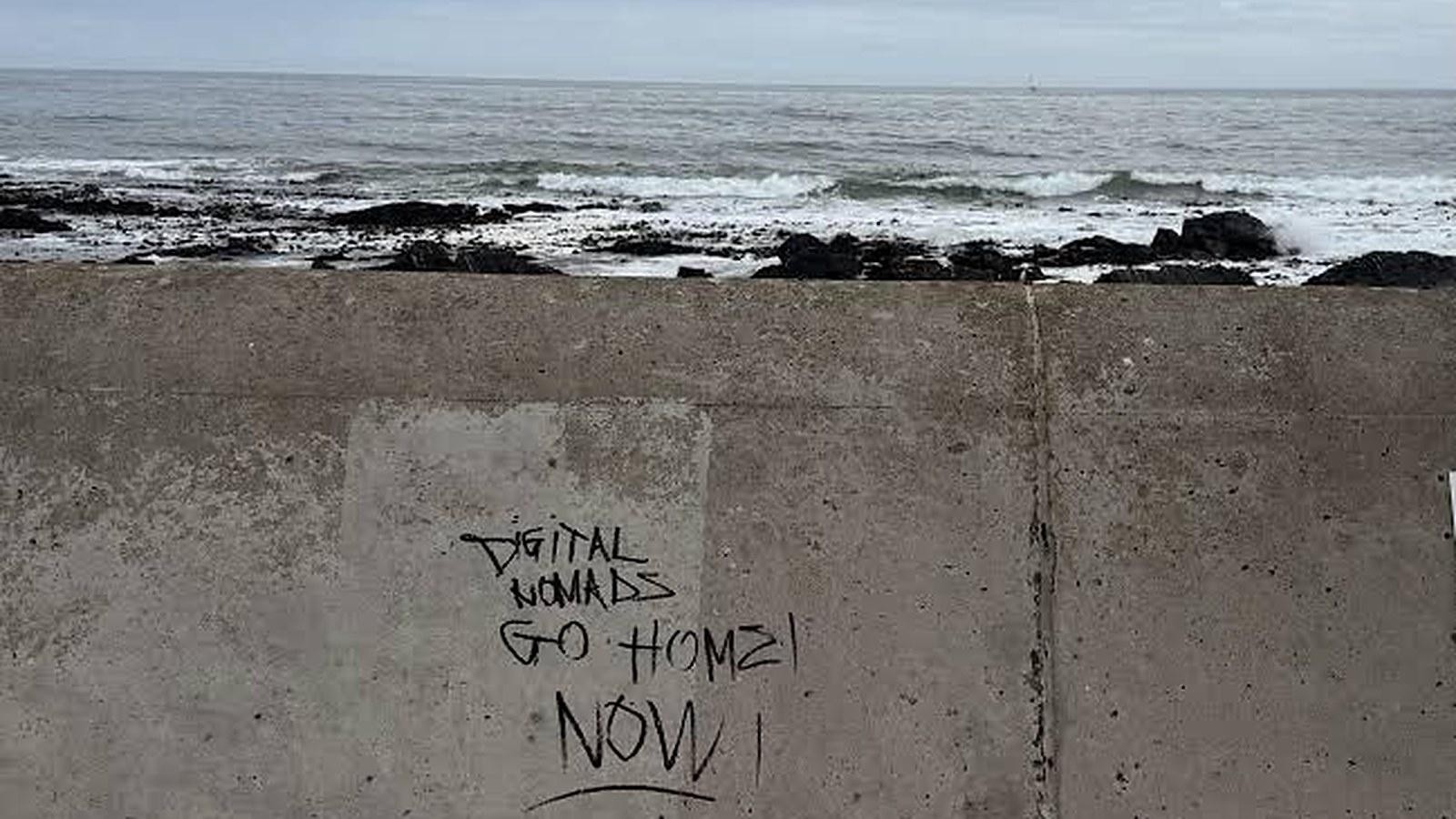
In March 2026, someone spray-painted "Digital nomads go home! Now!" on the promenade in Sea Point, on Cape Town's wealthy Atlantic Seaboard. South Africa and Mexico City had spent the previous few years courting remote workers. Now the same people get the blame for rents locals can't pay.
The anger is real and so is the rent pressure. What's missing is a count. The governments that invited nomads still can't say how many came, and the few numbers on record are tiny next to everything else in these housing markets.
Two places that invited them first
South Africa launched a remote-work visa on Oct. 9, 2024. It requires a gross income of ZAR 650,796 a year, proven with three months of bank statements, runs for up to three years and bars local employment. The state wanted foreign salaries spent locally, not foreign workers competing for local jobs.
By March 2025 it had issued 24 of those visas. Home Affairs told Parliament it doesn't record where digital nomads live once they arrive.
Mexico City went further. The city government partnered with Airbnb and UNESCO to attract digital nomads, presenting the capital as one of Airbnb's 20 global destinations for them. The headline figure, US$1.4 billion a year, was a projection based on the city capturing 5% of the global digital-nomad segment, not a measured outcome.
The memorandum with Airbnb ran for two years and proposed a statistical-information portal. It never produced a population estimate. The welcome came with a target and no counter attached.
Why nobody can say how many nomads there are
On Nov. 8, 2026, a report named Mexico City the leading destination for digital nomads and conceded in the same breath that they're hard to quantify. A city official said the concentration of foreigners in neighborhoods such as Roma "can generate the perception that their presence is much larger" across the capital as a whole.
Part of the problem is legal. Mexico allows visitor stays of up to 180 days, set by officers at entry, with no permission to work and no residence card. Residence data never sees those visitors.
The gap is enormous. In 2025, US nationals made 14 million air entries into Mexico, nearly 2 million of them through Mexico City's airport. Mexico issued 12,324 new temporary resident cards to US nationals that year. Across all nationalities, only 2,315 new cards went through the rentista route for people living on their own income, the one closest to remote work.
That route is narrow by design. It requires MX$79,770.80 a month, net of tax, over the previous six months, as of Feb. 1, 2026, or an average monthly balance of approximately MX$1,344,372.60 over 12 months. Many remote workers fall short. Others don't bother.
The word "nomad" also hides a crowd. Long-stay tourists, foreign students, expatriate employees, retirees and foreign property owners look alike on a café terrace, but they put different kinds of pressure on housing. Mexico City, Cape Town and the Cayman Islands have no dependable public count of the digital nomads living there.
What Mexico City's own numbers show
Mexico City had 9,209,944 residents in the 2020 census, and its housing shortfall long predates remote work. Citing the 2020 ENVI survey, the city's housing institute found that 27% of households, about 1.3 million families, included someone who needed or planned to rent, buy or build a home. Its 2025 rental-assistance program targeted 33,600 grants.
Short-term rentals are easier to see. The city had 30,468 Airbnb listings in September 2026, two-thirds of them entire homes and 46.5% in Cuauhtémoc, the borough that holds Roma and Condesa. A city registry now requires those rentals to sign up. As of Nov. 3, 2026, only 650 properties had.
The neighborhood story holds up. In Roma Norte, Roma Sur, Condesa and Hipódromo, Airbnb listings rose 74%, from 2,898 in December 2019 to 5,033 in January 2023, while one-bedroom rents in the central zone climbed 30%. The authors argue nomads accelerate gentrification there, but their evidence is listings and rents, not a headcount.
Urban studies professor Moreno Carranco has lived in La Condesa for more than 20 years. "Everything is crazy expensive for us with Mexican salaries," she told CBC's The Current. "And the rents are just skyrocketing."
Both things can be true. Rents in Condesa and Roma can climb sharply while the citywide crisis rests on a much older gap between incomes and housing supply. A spike in one district shows where foreign demand is easiest to see. It doesn't prove nomads caused it.
Cape Town's anger has more than one target
The Sea Point graffiti didn't appear in isolation. Social media in Cape Town filled with complaints about American and German accents, foreign property buyers and homes listed on Airbnb, all blamed for soaring housing costs. The city's population grew 65% to 4.8 million between 2001 and 2022, and more than 400,000 people were on its social housing waiting list in September 2024.
Those complaints name three separate forces. A remote worker renting a flat for six months isn't the same economic actor as a foreigner buying a seafront apartment, and neither is a local owner who switches a long-term lease to short-term listings. Public anger merges them into one figure: the outsider with a laptop and a foreign accent.
The listings are countable. Cape Town had 27,760 Airbnb listings in September 2026, 84.5% of them entire homes and 62.5% run by hosts with more than one listing. Nearly 44% sit in three central wards, including Ward 54, which covers Sea Point.
So are rents. Western Cape tenants paid an average of ZAR 11,894 a month in the last quarter of 2025, 26% above the national average. That gap widened from ZAR 1,520 to ZAR 2,432 in two years.
The wealthiest newcomers use a different door: a financially independent permit, which grants permanent residence and requires a net worth of ZAR 12 million. None of these series counts nomads. Without that count, the graffiti measures anger, not cause.
The Cayman Islands closed its nomad program and rents kept rising
The Cayman Islands is the clearest test of the villain theory. Its remote-work scheme, the Global Citizen Concierge Program, stopped taking applications on Oct. 31, 2022, and its regulations expired Nov. 30, 2024. At the last published count, in October 2021, 219 families held certificates, about 430 people.
The Auditor General's August 2026 housing report doesn't mention digital nomads once. It found the population rose 27% to 88,833 between 2019 and 2024, average rents rose 42% and the average rent took 39% of an average Caymanian salary. It points to work-permit holders, who usually rent when they arrive. There were 37,173 work permits at the end of 2025, up 71.4% since 2016. The government's own housing plan counts about 1,100 short-term rental units pulled from the long-term market.
Other routes aim squarely at property. A certificate of permanent residency through investment requires KYD 2,000,000 in developed real estate, and since May 1, 2026, a successful applicant pays an issue fee of KYD 200,000. Visitors can stay up to six months, extendable, and the islands have no direct taxation, so tax filings offer no headcount either.
Antigua and Barbuda and Bermuda have also wound down nomad programs, though even coverage of that trend notes that housing pressure can't automatically be pinned on digital nomads or holiday rentals.
The currency gap is the real friction
What makes nomads a convenient target isn't their number. It's the visible mismatch between incomes, and the visa rules build it in.
Mexico's income test works out to 3.9 times the average formal wage of MX$664.70 a day. South Africa's ZAR 650,796 bar is 1.8 times average monthly earnings of ZAR 30,611. Neither visa allows local work: Mexico's solvency-based residents need a separate work permit tied to a Mexican job offer, and South Africa's remote-work visa bars local employment outright. By design, the people invited earn elsewhere and spend locally.
That's the policy working as intended and it's also the source of the resentment. When a landlord in Roma or Sea Point can price a flat for someone earning in dollars or euros, local tenants feel the gap even if foreign renters are a small share of the city. Calling it a nomad invasion overstates the headcount. Calling it nothing ignores what tenants are living through.
What remote workers can do now
None of these steps will fix a supply shortage. They do reduce the legal risk for nomads and make it harder to cast them as the problem.
Get the right status: Applying in South Africa through VFS costs a DHA fee of ZAR 425, as of Nov. 17, 2026. In Mexico, the consular visa fee is approximately MX$990.79 and a one-year resident card costs approximately MX$11,140.74. A visitor stay carries no permission to work.
Handle tax registration: South Africa's remote-work visa holders who are tax resident in a country with a double tax agreement must register with SARS if they're present more than 183 days in any 12-month period. Holders from other countries must register regardless of days. Mexico uses no day count; tax residence turns on having a home there and, where there's also a home abroad, on the center of vital interests.
Look beyond the hotspots: Concentration is what makes foreigners look more numerous than they are. Renting outside Roma, Condesa or Sea Point eases that pressure and often costs less.
Prefer standard leases for long stays: A multi-month stay on a regular lease from a local landlord doesn't add to the short-term rental stock that residents cite most often.
Know the time limits: Mexico caps temporary residence at four years, after which permanent residence becomes available. South Africa's remote-work visa runs up to three years, with no renewal route beyond that cap on the official sheet.
The questions that would settle the debate remain unanswered: how many remote workers live in each city, which neighborhoods they rent in and what share of short-term listings they occupy. Until officials produce those counts, the graffiti will keep doing the work that data should.