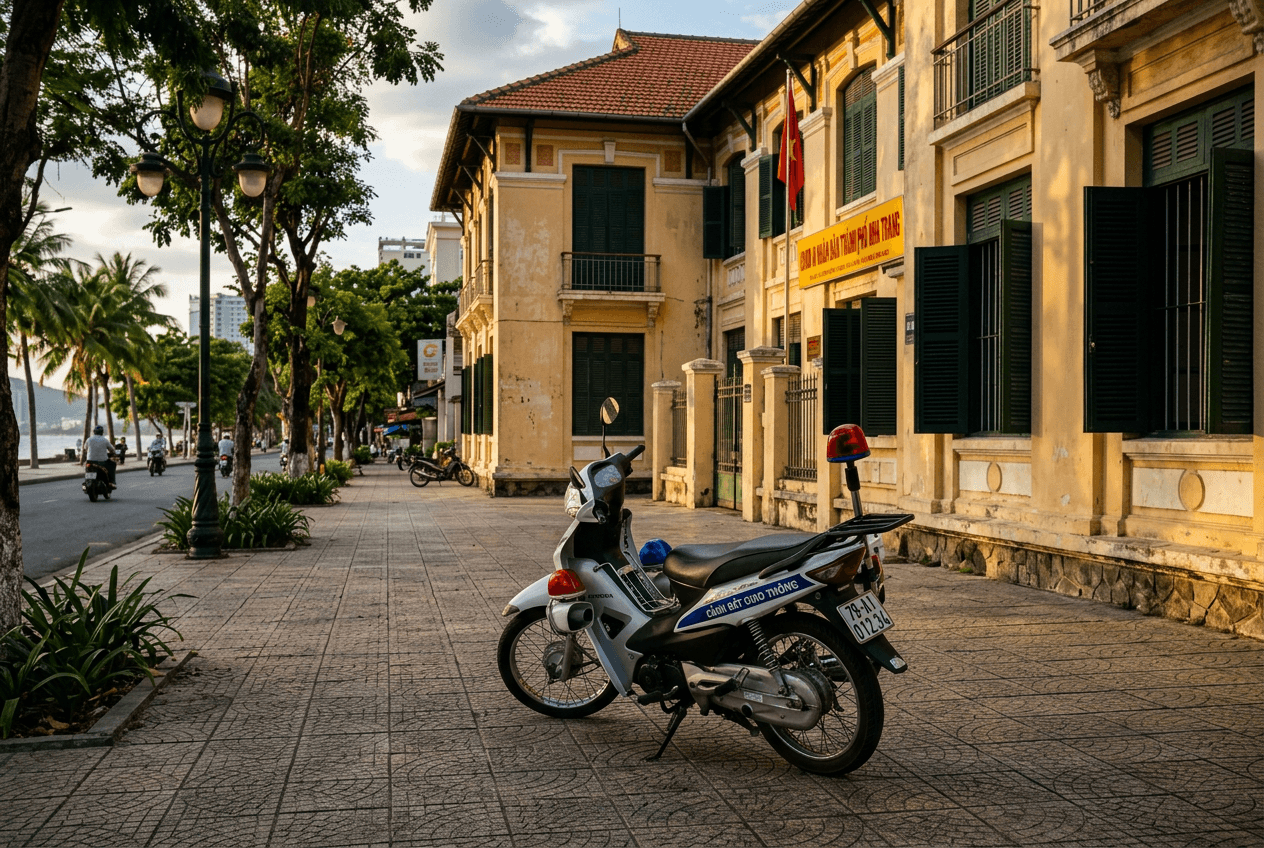
Vietnam police increased immigration checks for Nha Trang nomads Oct. 4

| 1-3 guests (min) | 3,000,000 VND |
|---|---|
| 1-3 guests (max) | 5,000,000 VND |
| 4-8 guests (min) | 10,000,000 VND |
| 4-8 guests (max) | 15,000,000 VND |
| 9+ guests (min) | 15,000,000 VND |
| 9+ guests (max) | 20,000,000 VND |
Foreign travelers and remote workers in Nha Trang face tightened immigration and accommodation checks after provincial authorities launched an enforcement push targeting undeclared stays, visa overstays and unauthorized local work.
Khanh Hoa police widen inspections across Nha Trang
Police in Khanh Hoa province are stepping up checks on foreign visitors, accommodation providers, tour operators and foreign-linked businesses, provincial public security officials announced Oct. 4, 2026.
The coordinated campaign follows a surge in tourism, with Khanh Hoa recording more than 20.4 million visitors in the first nine months of 2026, including 7.1 million international travelers. Nha Trang Ward alone logged more than 2.29 million foreign visitors through September, Nha Trang Ward Deputy Chairman Huynh Quang Tu reported.
Provincial authorities have flagged risks involving foreigners operating unauthorized businesses through local corporate entities, undocumented tour guiding, illegal payment processing and long-term visa overstays. Khanh Hoa police will scrutinize entry and exit records, foreign employment, lodging declarations and online business activities, Khanh Hoa Department of Public Security Deputy Director Colonel Pham Anh Tuan confirmed.
The announcement reinforces existing legal frameworks rather than establishing a new visa category, nomad-specific permit or blanket inspection timetable.
Mandatory electronic declarations for all lodging types
Under Circular 87/2026/TT-BCA, which took effect July 24, 2026, all accommodation providers must register foreign guests through the provincial electronic declaration portal immediately upon check-in. Manual paper filings must be completed within 12 hours of arrival, extended to 24 hours in remote areas.
The electronic reporting requirement covers hotels, serviced apartments, homestays, private house rentals and residential visits with family members. A separate declaration must be submitted for each individual traveler using a foreign passport.
Landlords must close out records upon checkout and file a fresh declaration if a guest returns or extends a lease. Anyone navigating Vietnam's residency rules should note that an accommodation registration filed by a landlord doesn't renew, alter or extend an underlying immigration visa or temporary residence card.
Fines for hosts and recent overstay enforcement
Lodging operators who fail to declare foreign guests face tiered financial penalties under Decree 282/2025/ND-CP, which took effect Dec. 15, 2025:
VND 3 million to VND 5 million ($120 to $200) for failing to declare one to three foreign guests.
VND 10 million to VND 15 million ($400 to $600) for failing to declare four to eight foreign guests.
VND 15 million to VND 20 million ($600 to $800) for failing to declare nine or more foreign guests.
Penalties double for corporate entities and licensed lodging businesses. While the decree levies these fines directly against property owners rather than guests, undeclared properties draw direct scrutiny from municipal inspection teams.
Targeted enforcement is already underway. A joint task force from the Ministry of Public Security and Khanh Hoa police conducted surprise inspections at two Nha Trang accommodations on Aug. 5, 2026, uncovering six foreign nationals who had overstayed their permitted residency by more than one year.
What remote workers and long-term guests should check
Remote workers and long-term visitors in private rentals should present their passport and entry stamp at check-in and request written or digital confirmation that the host submitted the electronic declaration.
Tourist visas and visa exemptions don't permit local employment, local corporate management or unauthorized professional practice within Vietnam. Remote workers should ensure their activities remain strictly confined to overseas employers and offshore income, as provincial police are monitoring local commercial ties, payments and work arrangements.
Travelers switching apartments or extending long-term leases in Nha Trang should verify that their host updates the electronic checkout and renewal dates. Questions regarding local registration procedures can be directed to the Khanh Hoa Immigration Management Division at 47 Ly Tu Trong in Nha Trang.
Frequently asked questions
How should foreign guests be registered at accommodation in Nha Trang?
Do landlords need to file a separate declaration for each foreign traveler?
Do accommodation registrations extend a visa or temporary residence card?
What happens if a host fails to declare foreign guests in Vietnam?
Can remote workers in Nha Trang work for local clients or manage a local company?
What should long-term guests do when they extend a lease or change apartments in Nha Trang?
Stay updated on Vietnam
Visa changes, travel alerts, and destination news — delivered when they actually matter.