Japan shoppers must pay 10% tax upfront and claim refunds at departure Nov. 1

| Through Oct 31, 2026 | 500,000 ¥ |
|---|---|
| From Nov 1, 2026 | 0 ¥ |
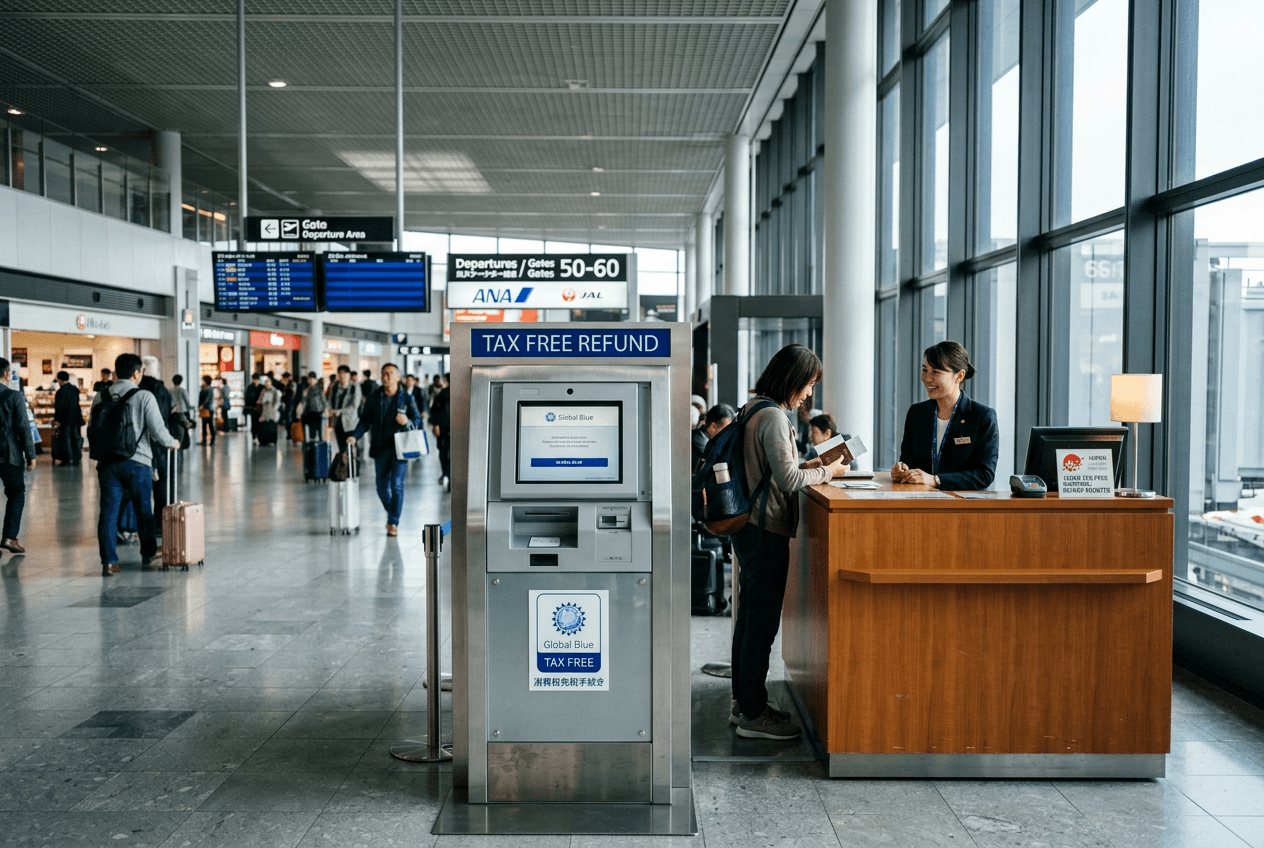
Japan will end its instant point-of-sale tax exemption for overseas shoppers on Nov. 1, requiring visitors to pay consumption tax upfront and claim refunds at departure checkpoints.
How departure refunds replace point-of-sale discounts
Under the current system running through Oct. 31, eligible foreign visitors receive an immediate tax exemption at the register when presenting a passport. Starting Nov. 1, retailers will transition entirely to the Refund Method, with no dual-system overlap period permitted by the National Tax Agency.
Shoppers will pay the standard tax-inclusive price at checkout, which includes Japan's 10% consumption tax on standard goods or 8% on qualifying food and beverage items. Relief is granted only after Customs confirms at an airport or seaport that the purchased merchandise is leaving the country. Retailers or contracted refund operators will then issue the tax-equivalent reimbursement through payment channels such as credit cards, bank transfers, mobile apps or departure-port cash counters.
Spending limits and revised packaging rules
The reform unifies purchase categories by eliminating the previous regulatory distinction between general merchandise and consumable items. Starting Nov. 1, a flat minimum spend of ¥5,000 ($35) before tax per store per day applies across all eligible goods.
The update scraps the former ¥500,000 ($3,480) daily ceiling on consumables, alongside the requirement for stores to seal food, cosmetics and medicines in tamper-evident plastic bags. Abolishing the packaging rule doesn't allow consumption inside the country, however. If travelers consume or unpack items before departure, the entire transaction can lose eligibility during the export check.
For luxury items priced at ¥1 million ($6,960) or more before tax, shops must record specific identifiers, including serial numbers and warranty details, which Customs officers may audit before departure.
Verification steps before airline baggage drop
Purchases must clear Customs inspection within a strict 90-day window that starts the day after the transaction date. For example, items purchased on Nov. 1 must clear departure processing by Jan. 30.
Travelers must scan their passports at automated tax-free terminals in international departure halls before checking luggage with airlines. The system produces either a green approval or a red flag that directs the passenger to a manual inspection station:
Terminal scan: Travelers present their passport at airport kiosks before bag drop.
Manual inspection: If flagged, passengers must present the physical items and itemized receipts to Customs officers.
Online integration: Major gateways including Narita, Haneda, Kansai, Chubu, Fukuoka, New Chitose and Naha permit initial processing via Visit Japan Web before security lines.
Connecting itineraries: Passengers on domestic-to-international transfers must process their goods at the final exit airport.
Because goods packed into checked luggage can't be retrieved once handed to airline staff, packing tax-free purchases into checked bags before terminal validation forfeits the refund, the Japan Tourism Agency confirmed.
Eligibility rules and processing costs
The updated procedure applies to short-term tourists, foreign visitors under specific transit or port-of-call permissions and Japanese nationals who have maintained continuous overseas residency for at least two years. Holding a foreign passport doesn't automatically qualify a buyer. Foreign residents, expatriates and digital nomads living under visas that confer domestic tax residency remain ineligible to make tax-free purchases, as outlined in Japan's residency rules.
The reform also shifts initial out-of-pocket costs onto travelers, who must maintain sufficient credit lines or cash balances to cover the gross sales tax until airport clearance. Japan's Consumption Tax Act doesn't standardize merchant processing charges or payout timelines. While the law mandates a refund equal to the consumption tax amount, individual private refund operators may deduct service fees before settling the balance.
Frequently asked questions
When does Japan stop offering point-of-sale tax exemptions for foreign visitors?
How do shoppers get a tax refund in Japan after Nov. 1?
What is the minimum spend for tax-free purchases in Japan after Nov. 1?
Can travelers use tax-free items inside Japan before departure?
Which travelers are eligible for Japan's tax refund system?
How long do travelers have to clear Customs for tax-free goods in Japan?
Where can travelers process tax-free purchases before baggage drop in Japan?
- world.storm.mg
- nta.go.jp
- nta.go.jp
- nta.go.jp
- world.storm.mg
- world.storm.mg
- nta.go.jp
- world.storm.mg
- nta.go.jp
- economictimes.indiatimes.com
- nta.go.jp
- japan.travel
- nta.go.jp
- japan-guide.com
- travelandtourworld.com
- mlit.go.jp
- mlit.go.jp
- mlit.go.jp
- mlit.go.jp
- mlit.go.jp
- mlit.go.jp
- mlit.go.jp
- mlit.go.jp
- mlit.go.jp
- mlit.go.jp
- nta.go.jp
- mlit.go.jp
- gltjp.com
- matcha-jp.com
- grantthornton.jp
- livejapan.com
- japan.travel
- japan.travel
- en.japantravel.com
- travelandtourworld.com
- thejapanode.com
- nta.go.jp
- mlit.go.jp
- nta.go.jp
- nta.go.jp
- nta.go.jp
- world.storm.mg
- world.storm.mg
- x.com
- mlit.go.jp
- nta.go.jp
- japan-experience.com
- tokyocheapo.com
- travel.rakuten.com
- gotokyo.org
Stay updated on Japan
Visa changes, travel alerts, and destination news — delivered when they actually matter.