What El Salvador's 90-Day Stay Rule Means for Temporary Residents

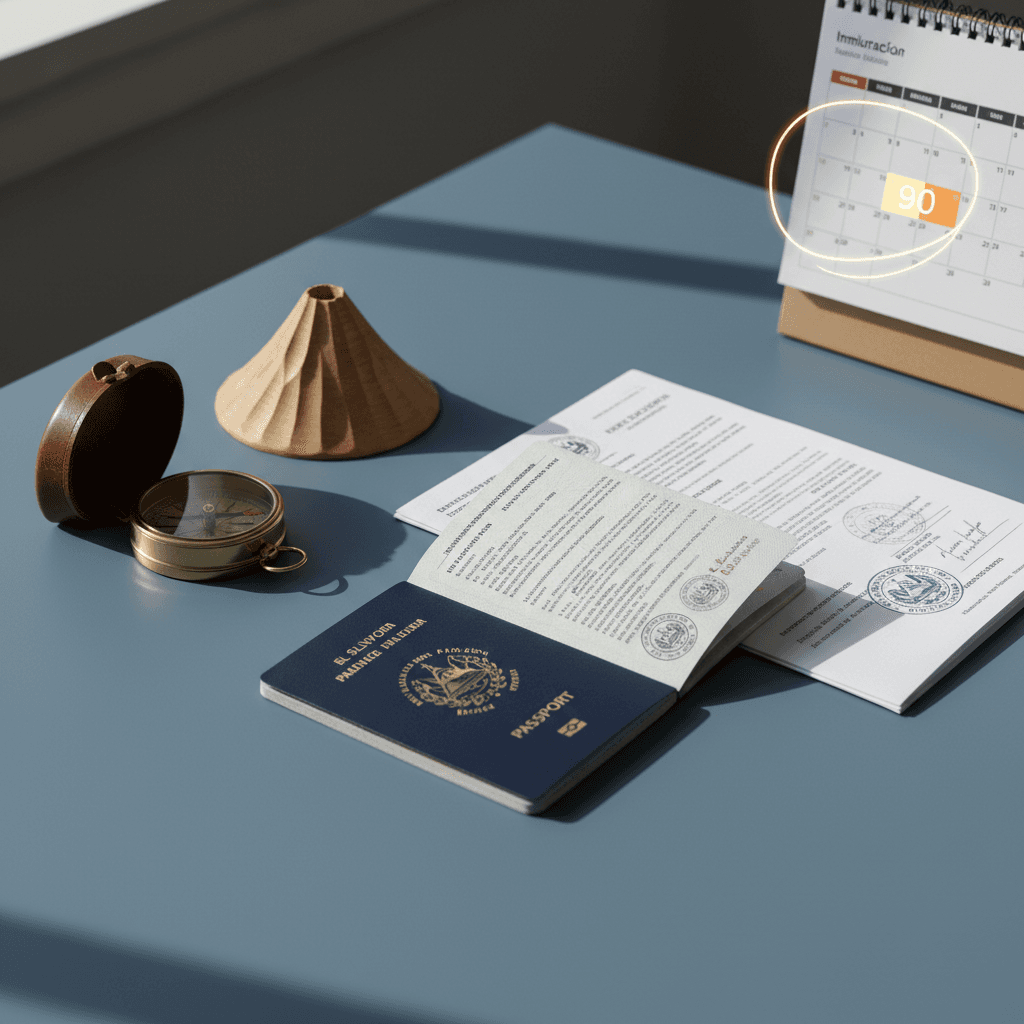
El Salvador quietly updated its residency rules this spring. Amendments to the Special Law on Migration and Foreigners, approved March 17, 2026 and in force since March 31, 2026, now require all temporary residents to spend at least 90 calendar days per year in the country, either consecutively or in chunks or risk losing their status. That's, turns out, a significant loosening from the previous rule, which required temporary residents to stay nine months a year, according to the DGME.
The only exceptions are force majeure cases, reviewed and approved by the General Directorate of Migration and Foreigners (DGME). No exceptions, no flexibility outside that channel.
Who's affected? Temporary residents across the board: investors, retirees, students, workers and digital nomads holding visas in the F3-F30 categories. Tourists on the standard CA-4 90-day visa waiver aren't touched by this and neither are permanent residents. So if you're just passing through, nothing changes, keep doing what you're doing.
For digital nomads and expats who honestly spend half their time bouncing between countries, 90 days is a much easier bar to clear than nine months. That's the good news. The risk, though, is complacency: if you hold a 1-4 year temporary residency and let your in-country time slip without documenting it, the DGME can revoke your status. Track your entry and exit stamps carefully, they're your proof.
What to do:
- Count your days. Entry and exit stamps are your record; keep them organized and accessible.
- Apply for exceptions early if a medical issue or emergency will keep you out of the country. Don't wait until renewal time to explain a six-month absence.
- Check your visa category against the DGME's F3-F30 list to confirm you're under temporary residency, not permanent.
- El Salvador has no dedicated digital nomad visa. Remote workers with foreign income usually apply for rentista temporary residence, which requires at least $1,635.20 a month, with health insurance and a clean background check still required at application.
The reforms also add nationality loss rules for naturalized citizens, though that's a separate issue for most nomads.
For the full breakdown on visas, costs and how to apply, read our El Salvador guide and stay current with nomad news as the DGME rolls out any implementation guidance.
Correction, Oct. 2, 2026: An earlier version of this article gave the previous minimum stay as about 180 days a year. It was nine months a year when the reform passed. It also gave the income requirement for digital nomad applicants as $1,460 a month. El Salvador had no dedicated digital nomad visa, and the rentista temporary residence used by remote workers required $1,635.20 a month when this article was published.
Frequently asked questions
How many days do temporary residents have to spend in El Salvador each year?
What happens if a temporary resident does not meet the 90-day stay rule in El Salvador?
Who is affected by El Salvador's 90-day residency rule?
Can temporary residents in El Salvador get an exception to the 90-day rule?
What should temporary residents use as proof of time spent in El Salvador?
What is the income requirement for digital nomad applicants in El Salvador?
Stay updated on El Salvador
Visa changes, travel alerts, and destination news — delivered when they actually matter.