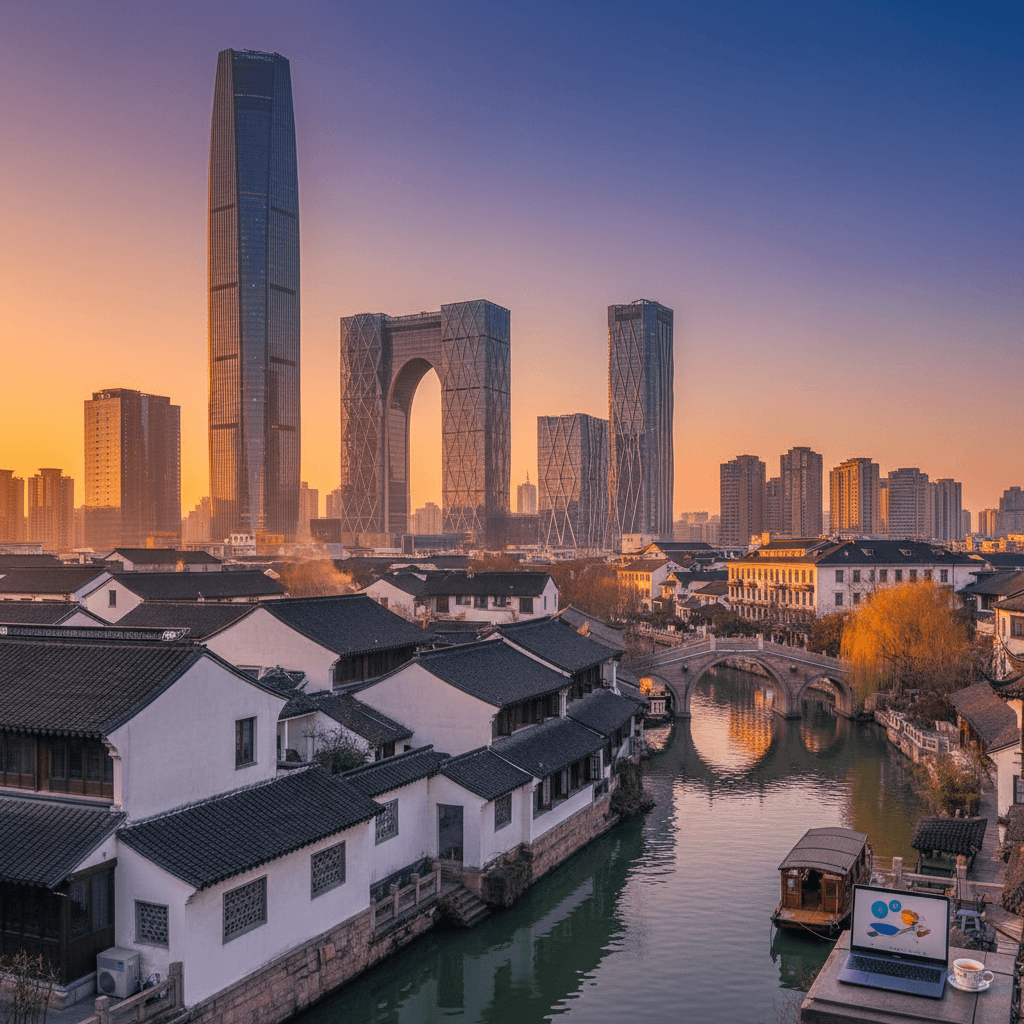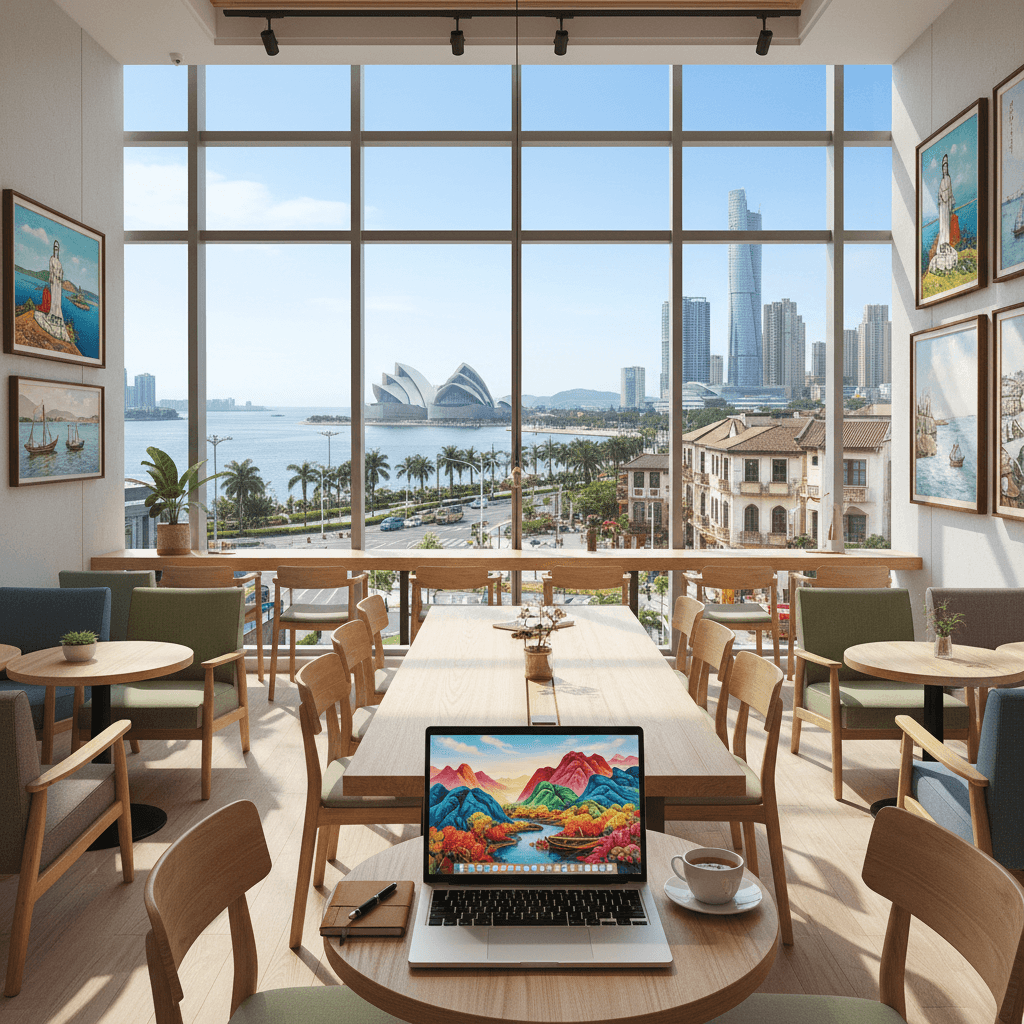
Zhuhai
🇨🇳 China
The Garden City Vibe
Zhuhai is the breath of fresh air you didn't think you'd find in industrial Guangdong. While neighbors like Shenzhen and Guangzhou are defined by a relentless, high speed grind, Zhuhai feels like the region finally decided to exhale. It is known locally as the City of Romantics, and you'll feel that personality along the Lovers' Road, a massive coastal promenade where the South China Sea breeze does a lot of the heavy lifting for your mental health.
The pace here is noticeably slower. You'll see retirees practicing tai chi in lush parks and expats lingering over coffee rather than sprinting to the next meeting. It is a city that prioritizes livability over sheer scale. For digital nomads, this means you get the perks of Chinese infrastructure, like lightning fast delivery and high tech convenience, without the crushing weight of a tier one mega city. It’s the kind of place where you can finish a deep work session and be on a beach or a hiking trail in fifteen minutes.
The Gateway Experience
What really sets Zhuhai apart is its physical connection to the world. You’re not just in China; you’re on the doorstep of two distinct international hubs. The city sits directly against the Macau border, and the Hong Kong-Zhuhai-Macau Bridge makes a weekend trip to Hong Kong a simple bus ride away. Most nomads find this proximity a lifesaver for banking needs, snagging international SIM cards, or just escaping the Great Firewall for a weekend without a VPN.
The social scene is anchored by the ZIA Expat Club. Since the nomad community here is smaller and more tight knit than in Shanghai, people tend to look out for one another. You’ll find coffee mornings, weekend trips, and evening mixers that feel more like a neighborhood gathering than a corporate networking event. It’s easy to integrate if you’re willing to put yourself out there, though you'll definitely want WeChat and Alipay installed before you even clear customs.
Living Costs & Logistics
Your dollar, euro, or pound goes significantly further here than in the West or even in China’s primary hubs. A comfortable lifestyle usually lands between $1,500 and $2,200 per month, but you can live quite well on less if you lean into the local lifestyle.
- Budget Lifestyle: $1,000 to $1,500. This involves living in the suburbs, eating plenty of $3 street food, and using the excellent $0.30 bus system.
- Mid-range Lifestyle: $1,500 to $2,200. You can afford a modern apartment in Xiangzhou, regular DiDi rides, and mid range meals costing $10 to $20.
- Comfortable Lifestyle: $2,200+. This covers high end expat housing, frequent trips to Macau or Hong Kong, and upscale dining.
The Reality Check
It isn't all palm trees and easy living. The "Great Firewall" is a constant presence. You will need at least two reliable VPNs installed on all devices before you arrive, as local internet will block Google, Slack, and WhatsApp. English proficiency is also quite low. You’ll find yourself relying heavily on Pleco or the translation features within WeChat to get daily tasks done. Most travelers say the initial learning curve is steep, but once you’ve mastered the apps, the city becomes incredibly convenient.
Air quality is generally better than in the north, but you'll still see days where the AQI hovers around 110. It’s a trade off for being in one of the most affordable, scenic, and well connected coastal cities in Asia. If you want the "China experience" without the "China stress," Zhuhai is your spot.
The Budget Breakdown
Zhuhai is often called the garden city of the Pearl River Delta, and for digital nomads, it serves as a massive budget stretcher compared to the eye watering prices in Hong Kong or Shanghai. Most nomads find they can live a high quality life here on $1,800 to $2,500 per month. If you are aggressive about eating local and living slightly outside the central districts, you could even get by on $1,000 to $1,300 without feeling like you are struggling.
Expats generally recommend Zhuhai because it offers the infrastructure of a Tier 1 city at a Tier 2 price point. You get the same high speed rail access and modern malls as Shenzhen, but your rent and dining costs will be roughly 20% to 30% lower. It is the kind of place where you can afford a sea view apartment without having a corporate housing allowance.
Housing and Rent
Rent will be your biggest variable. While there are no dedicated nomad "hubs" yet, the market is accessible if you use local apps or find a friendly agent. Most expats gravitate toward the coastal areas for the breeze and the social scene.
- Budget (Suburbs/Doumen): Expect to pay $300 to $500 for a basic studio. You will get more space, but you will be further from the action and the ferry terminals.
- Mid-range (Xiangzhou): This is the sweet spot. A modern 1BR near the beaches or city center typically runs $500 to $800. This puts you within walking distance of parks and the best dining.
- Comfortable (Shizimen/Expat Enclaves): For a high end apartment with Western amenities near the Macau border, prices range from $800 to $1,200.
Eating and Drinking
Food is where Zhuhai really shines for the wallet. You can eat like a king on a pauper's budget if you stick to Cantonese staples and local seafood. Street food like rice noodle rolls or baozi will only set you back $2 to $4. A filling lunch at a local "point and choose" canteen usually costs under $6.
If you want a sit down meal at a mid range restaurant in a mall or near the Lovers Road waterfront, expect to pay between $10 and $20 per person. Upscale dining, especially high end seafood or international cuisine in the major hotels, starts around $30 and goes up from there. Travelers often say that the proximity to the ocean makes the seafood here some of the freshest and most affordable in the region.
Transport and Connectivity
Getting around is incredibly cheap. The bus system is extensive and costs about $0.30 per ride. Most nomads skip the bus and rely on DiDi, the local version of Uber. A 15 minute cross town trip rarely exceeds $5. If you are heading to Hong Kong or Macau, the bridge bus or ferry will be your main expense, usually costing between $15 and $30 for a round trip.
For your digital setup, don't forget the "Great Firewall" tax. You'll need to pay for at least two reliable VPNs to stay connected to Western sites. Local SIM cards from China Unicom or China Mobile are affordable, usually $10 to $20 a month for more data than you will likely ever use. Some nomads recommend picking up a Hong Kong SIM card first to enjoy easier initial setup for your banking and apps.
Working Spaces
Dedicated coworking spaces are still a bit thin on the ground compared to Shenzhen. Most nomads work from their apartments or frequent the coffee shops in Xiangzhou. If you do find a formal desk, expect to pay $100 to $200 a month for a hot desk. Many people find that the ZIA Expat Club is a better resource for finding community and informal work spots than searching for a traditional office.
For Digital Nomads: Xiangzhou District
If you're landing in Zhuhai to work remotely, Xiangzhou is where you'll likely want to plant your flag. It is the heart of the city, offering the best balance of coastal relaxation and urban infrastructure. Most nomads head here for the proximity to Gongbei Port, which makes those essential "visa runs" or banking trips to Macau a simple walk across the border.
The neighborhood is famous for Lovers' Road, a massive stretch of coastline perfect for morning runs or evening walks. You'll find plenty of cafes where you can set up your laptop, though you'll need a rock-solid VPN to access Slack or Google. Rent for a decent studio in a modern building usually runs between $500 and $800. While it can get crowded on weekends with tourists from the mainland, the weekday vibe is surprisingly chill for a Chinese city center. One downside is the air quality, which can sometimes hit AQI levels around 109, so keep an eye on your weather app.
For Expats and Social Seekers: Shizimen
If your priority is a social life and high-end amenities, Shizimen is a top choice. This area is rapidly developing into a sleek financial hub and sits right across the water from Macau. It's a favorite for expats because it feels more international and polished than the older parts of town. You'll find a more concentrated group of English speakers here, and it's easier to connect with the ZIA Expat Club crowd for coffee mornings or evening mixers.
Living here isn't the cheapest option in Zhuhai. Expect to pay $1,000 to $1,500 for a comfortable apartment in a high-rise with a view. The trade-off is the sheer convenience; the cross-border access is seamless via the bridge or ferry. It’s the best spot if you want to enjoy the low cost of living in mainland China while keeping one foot in the more Westernized atmosphere of Hong Kong and Macau.
For Families and Nature Lovers: Doumen District
Expats with kids or those who just want to escape the concrete jungle usually gravitate toward Doumen. Located in the northern part of the city, it’s significantly quieter and greener than the central districts. You’ll get much more space for your money here, with larger apartments and even villas available at prices that would be impossible in Xiangzhou. Rent often drops to the $300 to $500 range for those willing to live further out.
The vibe is decidedly local and scenic, with lush parks and a slower pace of life. The catch is the commute. You're far from the nightlife and the main international transport hubs. You'll definitely want to master the DiDi app for getting around, as public transport out here is a bit more of a trek. It's a great choice if your work is fully remote and you value fresh air over being near the nearest craft beer bar.
For Short-Term Travelers: Jinwan District
Jinwan is the area surrounding the airport, and it's best suited for travelers who are just passing through or staying for a few weeks. It has a modern, industrial feel and is home to several new developments and tech parks. While it lacks the historic charm of the older districts, it offers very high-standard housing and hotel options.
Most travelers find it a bit isolated for a long-term stay, but it's incredibly convenient if you have frequent domestic flights. A DiDi ride to the city center takes about 30 to 60 minutes and costs roughly $10 to $20. It’s an efficient, no-nonsense base for getting your bearings before moving to the coast.
Quick Neighborhood Comparison
- Xiangzhou: Best for beach access and transport to Hong Kong. Rent is $500 to $800.
- Shizimen: Best for luxury living and Macau proximity. Rent is $1,000 to $1,500.
- Doumen: Best for quiet, green spaces and low budgets. Rent is $300 to $500.
- Jinwan: Best for airport proximity and short stays. Rent is $400 to $700.
The Great Firewall and Your Connection
Working from Zhuhai means dancing with the Great Firewall. You can expect baseline internet speeds between 10 Mbps and 75 Mbps, which is plenty for video calls, provided your connection is stable. However, the reality of working here is that your favorite Western tools like Slack, Google Workspace, and WhatsApp are blocked. You need to have at least two reliable VPNs installed on your devices before you cross the border. Most seasoned nomads recommend having a backup on your phone and laptop because services can be temperamental during local holidays or political events.
Public WiFi in hotels and malls is notoriously spotty and often requires a Chinese phone number to authenticate. Your best bet for a stable connection is using your phone as a hotspot. If you are coming from Hong Kong or Macau, try to pick up a travel SIM there first; they often allow you to bypass the firewall for a short period without a VPN, though they can be pricier for long term data.
Coworking and Where to Work
Zhuhai doesn't have the massive density of dedicated coworking brands you'll find in Shenzhen or Shanghai. While you won't find a WeWork on every corner, the city makes up for it with a massive cafe culture. Most nomads gravitate toward the Xiangzhou District, where the proximity to the coast and modern shopping malls provides plenty of laptop friendly spots. Expect to pay between $150 and $250 per month for a dedicated desk in a shared office space, though options are limited, so many locals just opt for the price of a daily latte.
- Xiangzhou District: This is the heart of the action. You'll find plenty of modern cafes with reliable power outlets and decent seating. It's the most expat friendly area, so staff are generally used to people lingering over laptops.
- ZIA Expat Club: While not a coworking space in the traditional sense, this group is the lifeline for the local community. They often host coffee mornings and social events that are perfect for networking and finding out which new cafes have the best upload speeds.
- Hotel Lounges: If you need a professional environment for an afternoon, the upscale hotels near the Lovers Road waterfront offer quiet lounges with reliable service, though you'll pay a premium for the coffee.
Mobile Data and Connectivity
Once you've settled in, getting a local SIM is a priority for your wallet. China Mobile and China Unicom are the big players here. You can usually grab a plan with generous or even unlimited data for $10 to $20 per month. You'll need your passport to register, and it's much easier to handle the setup if you already have Alipay or WeChat Pay linked to your international card. These apps are the backbone of life in Zhuhai; you'll use them for everything from paying your phone bill to unlocking a shared bike.
Practical Tips for Remote Workers
If your work relies heavily on low latency for gaming or heavy cloud uploads, Zhuhai can be a bit of a challenge compared to Hong Kong. Most expats recommend having a "digital survival kit" ready. This includes a high quality power bank, a physical Ethernet adapter for your laptop to use in older apartments, and a translation app like Pleco or Google Translate with the offline pack downloaded. Since English proficiency is quite low, around a 1 or 2 out of 5, being able to translate a WiFi password request or a technical issue with your router is a lifesaver.
For those who find the internet restrictions too stifling for a big deadline, the proximity to Macau is a huge plus. You can hop on a ferry or take the bridge and be in a completely different internet ecosystem in under an hour. Many nomads use these "Macau runs" to handle banking, update large software packages, or just enjoy a weekend of unrestricted browsing.
Zhuhai is widely considered one of the safest cities in China for foreigners. The atmosphere is noticeably more relaxed than the frantic pace of nearby Shenzhen or Guangzhou, and violent crime is virtually non-existent. Most nomads find they can walk alone at night in areas like Xiangzhou or along the Lovers' Road coastal path without a second thought. While petty theft like pickpocketing can happen in crowded transit hubs, it's rare compared to European capitals.
Day-to-Day Safety
The biggest daily risk isn't crime; it's the traffic. While Zhuhai is more pedestrian-friendly than many Chinese cities, delivery scooters often zip along sidewalks and drivers don't always yield at crosswalks. Always look twice, even when you have a green light.
- Emergency Numbers: Dial 110 for police and 120 for medical emergencies.
- Scams: Be wary of overly friendly strangers in tourist areas asking to "practice English" or inviting you to a tea ceremony, though this is less common here than in Beijing.
- Solo Travel: Female travelers generally report feeling very secure, even late at night.
Air Quality and Environment
While Zhuhai enjoys better air than the northern industrial hubs, the Air Quality Index (AQI) still fluctuates. It typically sits between 100 and 120, which can be irritating for those with asthma or sensitive lungs. Expats recommend keeping a few N95 masks on hand for high-pollution days and using apps like AirVisual to track daily levels. The subtropical humidity is also a factor; mold can grow quickly in apartments during the rainy season, so ensure your place has a good dehumidifier or an AC unit with a dry setting.
Healthcare Infrastructure
Healthcare in Zhuhai is modern and efficient, particularly in the central districts. You won't find the same density of international "Western-style" clinics as you would in Shanghai, but the major public hospitals have VIP wings (called texu) that cater to expats with shorter wait times and occasionally English-speaking staff.
For serious issues, many nomads take advantage of Zhuhai's location. Since Macau and Hong Kong are just a bridge or ferry ride away, it's easy to access world-class international hospitals if you prefer a Western healthcare environment or need specific medications that are hard to find on the mainland.
Top Medical Facilities
- The Fifth Affiliated Hospital of Sun Yat-sen University: Located in Xiangzhou, this is the go-to for most expats. It's a large, comprehensive facility with modern equipment.
- Zhuhai Municipal People's Hospital: Another reliable public option with a dedicated international department.
- Pharmacies: Local pharmacies are everywhere. You can find most basic over-the-counter meds, but it helps to have a translation app like Pleco or Google Translate (with an offline pack) to show the pharmacist the specific chemical name of what you need.
Health Tips for Nomads
Don't drink the tap water. Even locals boil it or buy large 5-gallon jugs for their homes. Most apartments have a water dispenser, and a large bottle usually costs around $2 to $4. When eating out, stick to busy spots with high turnover. Street food in Zhuhai is generally safe and delicious, but your stomach might need a week or two to adjust to the local oils and spices.
Make sure your health insurance covers international evacuation or at least private hospital stays. While a standard consultation at a public hospital might only cost $5 to $15, costs for major procedures or private care can climb quickly. Most nomads find that a basic international plan provides enough peace of mind for their stay.
Getting from A to B
Zhuhai is surprisingly easy to navigate once you've set up the right apps. While it lacks a massive subway system like neighboring Shenzhen, the city makes up for it with a high quality bus network and wide, scenic roads that keep traffic relatively manageable. Most nomads find the central areas of Xiangzhou very walkable, especially along the Lovers' Road coastal path.
For everything else, DiDi is your best friend. It's the local version of Uber, and it's remarkably affordable. Most rides within the city center will only set you back $2 to $5. You can use it directly within Alipay or WeChat, which handles the language barrier by letting you type your destination in English and translating messages with the driver automatically.
- Public Buses: Flat fares are usually around $0.30 (2 RMB). You'll need to pay via the transport QR code in your Alipay or WeChat wallet.
- Shared Bikes: Look for the blue (HelloBike) or yellow (Meituan) bicycles parked on every corner. They cost pennies to unlock and are perfect for short hops between cafes.
- Taxis: Traditional cabs are still around, but they're often more expensive and less convenient than a DiDi.
The Macau and Hong Kong Connection
One of the biggest perks of living in Zhuhai is how effortlessly you can leave the mainland. If you need a break from the Great Firewall or just want a change of pace, the border is right there. The Gongbei Port and Hengqin Port are the main gateways into Macau. You can literally walk across the border in Xiangzhou and be in a different legal and digital jurisdiction within minutes.
Getting to Hong Kong is just as seamless thanks to the Hong Kong, Zhuhai, Macau Bridge. Shuttle buses run 24 hours a day and take about 45 minutes to reach the other side. Tickets are roughly $12 to $15. Alternatively, ferries from the Jiuzhou Port offer a more scenic route directly to Central or Tsim Sha Tsui for about $25.
Regional Travel
For longer trips, the Zhuhai Railway Station (located right next to the Macau border) connects you to China's massive high speed rail network. You can reach Guangzhou in under an hour for about $10. Expats recommend using the Trip.com app to book tickets, as it accepts international credit cards and provides English support.
If you're flying, Zhuhai Jinwan Airport is about 45 to 60 minutes from the city center. A DiDi to the airport usually costs between $15 and $20, or you can take the dedicated airport express bus for around $4. While Jinwan handles plenty of domestic flights, most nomads head to Hong Kong or Macau airports for international long hauls.
Practical Tips for New Arrivals
Don't expect to find many English signs once you leave the ferry terminal or train station. Before you head out, make sure you have Alipay set up with a linked international card. Cash is rarely used here, and many bus drivers won't even have change. If you're planning to cycle, download Pleco or Google Translate (with the offline pack) to help you navigate the registration screens on the bike apps.
- Peak Hours: Avoid the Gongbei border crossing on weekend mornings or Friday evenings, as the queues can take over an hour.
- Weather Prep: During the rainy season, keep an eye on the AQI and local weather alerts. Flooding can occasionally disrupt bus routes in the older parts of Xiangzhou.
- Navigation: Google Maps is notoriously inaccurate in China. Use Apple Maps (which works well without a VPN) or Amap if you can navigate the Chinese interface.
The Language Barrier
Expect a bit of a steep learning curve when you first land. Zhuhai isn't Shanghai or Hong Kong; English proficiency here is quite low, often rated around a 1 or 2 out of 5 by long term residents. While you might find English speakers in high end hotels or near the Shizimenjie area close to Macau, your daily interactions at local markets and noodle shops will be almost entirely in Mandarin or Cantonese.
Mandarin is the official language and what you'll hear most in business and schools. However, because of Zhuhai's location in Guangdong province, Cantonese is still widely spoken among locals. You don't need to be fluent in both, but learning a few Mandarin basics like Ni hao (hello) and Xiexie (thank you) goes a long way in building rapport with the community.
Essential Tech for Communication
In Zhuhai, your smartphone is your lifeline. You won't get far without WeChat. It isn't just a messaging app; it's how you'll talk to landlords, join expat groups, and even pay for your morning coffee. Most nomads find that once they're in a WeChat group, the built in translation tool becomes their best friend for navigating social life.
For face to face hurdles, download Pleco. It's the gold standard for Chinese dictionaries and works offline. You'll also want Google Translate, but remember it won't work without a solid VPN. Many travelers recommend downloading the offline Chinese language pack before you arrive so you aren't stranded if your connection drops.
Digital Communication and the Great Firewall
Staying connected to the outside world requires some prep work. The Great Firewall blocks most Western platforms you likely use for work, including Slack, WhatsApp, and Google. To keep your remote job running smoothly, you'll need at least two reliable VPNs installed on your devices before you cross the border. It's much harder to set these up once you're already behind the firewall.
For your mobile data, expats often suggest picking up a SIM card in Hong Kong or Macau first. These often allow for easier access to restricted sites compared to mainland SIMs. If you go local, China Mobile or China Unicom are the main providers. You can expect to pay around $10 to $20 per month for a plan with plenty of data, which you can manage directly through Alipay or WeChat.
Social Integration and Networking
Since the nomad scene is smaller here than in neighboring Shenzhen, finding your tribe takes a little more effort. The ZIA Expat Club is the primary hub for English speakers in the city. They host coffee mornings, weekend trips, and parties that help bridge the gap for newcomers. Most nomads find these gatherings through the MacauZhuhai.com forums or specific WeChat invitation links.
If you're looking for a more professional vibe, keep an eye on the Shizimenjie district. Its proximity to Macau means a slightly more international crowd and more frequent networking opportunities. While dedicated coworking spaces are sparse, the local cafe culture is welcoming to laptop workers, provided you have your own hotspot or a reliable VPN to bypass the often spotty public Wi-Fi.
Quick Reference for Communication
- Primary Languages: Mandarin (official), Cantonese (local).
- English Level: Low; keep translation apps ready.
- Must-Have Apps: WeChat, Pleco, Waygo (for menus), and a DiDi for ride hailing.
- Connectivity: Reliable 10 to 75 Mbps speeds, but strictly censored without a VPN.
- Local SIM Cost: $10 to $20 for unlimited or high data packages.
The Seasonal Sweet Spot
Zhuhai enjoys a humid subtropical climate that keeps things green and lush year round, but the humidity can be a beast if you time your arrival wrong. Most digital nomads and expats agree that October through December is the absolute goldilocks zone. During these autumn months, the oppressive summer heat breaks, the skies clear up, and the air quality is generally at its best. You can expect comfortable temperatures ranging from 18°C to 25°C (64°F to 77°F), which is perfect for working from a beachside cafe in Xiangzhou or taking the ferry over to Hong Kong.
Spring, specifically March and April, is the second best window. It is pleasantly warm, though you should prepare for frequent "plum rains" and high humidity that can make your apartment feel a bit damp. If you are sensitive to air quality, keep an eye on the AQI during the transition months. While Zhuhai is cleaner than many Chinese industrial hubs, the index can still hover between 100 and 120, so bringing a few high quality masks is a smart move for hazy days.
Surviving the Summer Swelter
From June to September, Zhuhai turns into a steam room. Temperatures consistently hit 32°C (90°F) or higher, but the real kicker is the humidity, which often stays above 80 percent. This is also peak typhoon season. While the city infrastructure is built to handle heavy rain, a major storm can shut down the ferries to Macau and Hong Kong for a day or two. If you are here during the summer, you will likely find yourself hopping between air conditioned malls and coworking spots rather than lounging on the sand.
The Winter Chill
Winter in Zhuhai is short and mild compared to northern China, lasting from January to February. Temperatures rarely drop below 10°C (50°F), but it feels colder than the thermostat suggests because most apartments and local restaurants do not have central heating. You will see locals wearing light down jackets indoors. This is also the time of the Lunar New Year. While the festive atmosphere is great, be aware that many small businesses close for two weeks, and travel prices for trains and flights skyrocket as the country moves at once.
Timing Your Move: A Quick Breakdown
- Peak Season (October to December): Clear skies, low humidity, and the best outdoor working conditions. Expect slightly higher prices for short term rentals.
- Shoulder Season (March to May): Warm temperatures but frequent rain. Great for those who don't mind a misty, tropical vibe.
- Off-Peak (June to August): Intense heat and typhoon risks. You can find the best deals on accommodation, but you will be reliant on strong AC.
- The Holiday Factor: Avoid arriving during Golden Week (early October) or Chinese New Year (January or February) unless you enjoy massive crowds and fully booked transport.
For those planning a long term stay, aim to land in late October. You will have a solid three or four months of perfect weather to find your footing, join the ZIA Expat Club events, and explore the coastal districts before the damp spring air sets in. Just remember to pack a solid waterproof shell for the summer rains and a heavy hoodie for the surprisingly brisk winter nights.
Connectivity and the Great Firewall
Living in Zhuhai means navigating China's unique digital environment. The Great Firewall is a reality here; you won't be able to access Google, Slack, or WhatsApp without a solid strategy. Most nomads recommend installing at least two different VPNs on all your devices before you even cross the border. Once you're on the ground, download WeChat and Alipay immediately. These aren't just messaging apps; they're how you pay for everything from street food to your rent.
Internet speeds generally hover between 10 and 75 Mbps. While that's plenty for video calls, public WiFi in hotels and cafes can be hit or miss. Many remote workers prefer using a local SIM card as a mobile hotspot. You can pick up a China Mobile or China Unicom card for about $10 to $20 a month for a generous data plan. A pro tip from the expat community: if you're coming from Hong Kong or Macau, grab a cross-border SIM there first. It often makes the initial setup much smoother.
Getting Around Town
Zhuhai is surprisingly easy to navigate, especially compared to the chaotic pace of Guangzhou or Shanghai. The city’s bus system is incredibly cheap, costing just $0.30 per ride. For more direct trips, the DiDi app is your best friend. It’s the local version of Uber, usually costing between $2 and $5 for most trips within the city center. It’s significantly cheaper and more convenient than hailing a traditional taxi on the street.
For short distances, look for the colorful shared bikes from HelloBike or Meituan. You can unlock these directly through Alipay. If you're heading out of town, the high speed rail and ferries make weekend trips to Hong Kong or Macau a breeze. The bridge or ferry ride usually takes about one hour and is a staple for nomads who need a quick "international" break for banking or visa runs.
Language and Communication
Don't expect much English once you step away from the major ferry terminals or high end hotels. Proficiency is quite low, so you'll want to have Pleco or Google Translate (with the offline pack downloaded) ready to go. Learning a few basics like ni hao (hello) and xiexie (thanks) goes a long way with the locals.
Because everything runs on WeChat, you can often use the app's built-in translation feature to communicate with landlords or service providers. It’s a lifesaver for reading menus or text messages. Most expats find that while the language barrier is real, people in Zhuhai are generally patient and used to seeing foreigners near the Macau border.
Health and Safety
Zhuhai is exceptionally safe. You can walk through almost any neighborhood at night without a second thought. Crime against travelers is rare, and the overall vibe is very laid back. The biggest health concern for most is the air quality. While better than many Chinese industrial hubs, the AQI often sits between 100 and 120. It's smart to keep a few high quality masks on hand for smoggy days.
If you get sick, the healthcare in the Xiangzhou District is modern and efficient. Pharmacies are on almost every corner, and many common medications are available over the counter. For emergencies, dial 120 for an ambulance or 110 for the police. Most expats suggest joining the ZIA Expat Club via their website or WeChat group; they are a goldmine of info for finding English speaking doctors or specific western amenities.
Budgeting for the Coastal Life
Your money goes a lot further here than in the "Tier 1" cities. A comfortable lifestyle usually costs between $1,500 and $2,200 per month. Here is a breakdown of what to expect:
- Budget Tier ($1,000 to $1,500): You'll be staying in the suburbs with rent around $300 to $500. You'll mostly eat street food for $2 to $4 a meal and use the bus.
- Mid-range Tier ($1,500 to $2,200): This covers a central apartment in Xiangzhou for $500 to $800. You can afford frequent DiDi rides and nice meals at mid-range spots for $10 to $15.
- Comfortable Tier ($2,200+): You'll live in expat-heavy areas or near the Macau border with rent over $800. This lifestyle includes upscale dining at $30+ per plate and frequent travel to Hong Kong.
Need visa and immigration info for China?
🇨🇳 View China Country GuideHidden Gem
Worth the effort
Monthly Budget Estimates
More cities in China
Fuzhou
🇨🇳 China
Xiamen
🇨🇳 China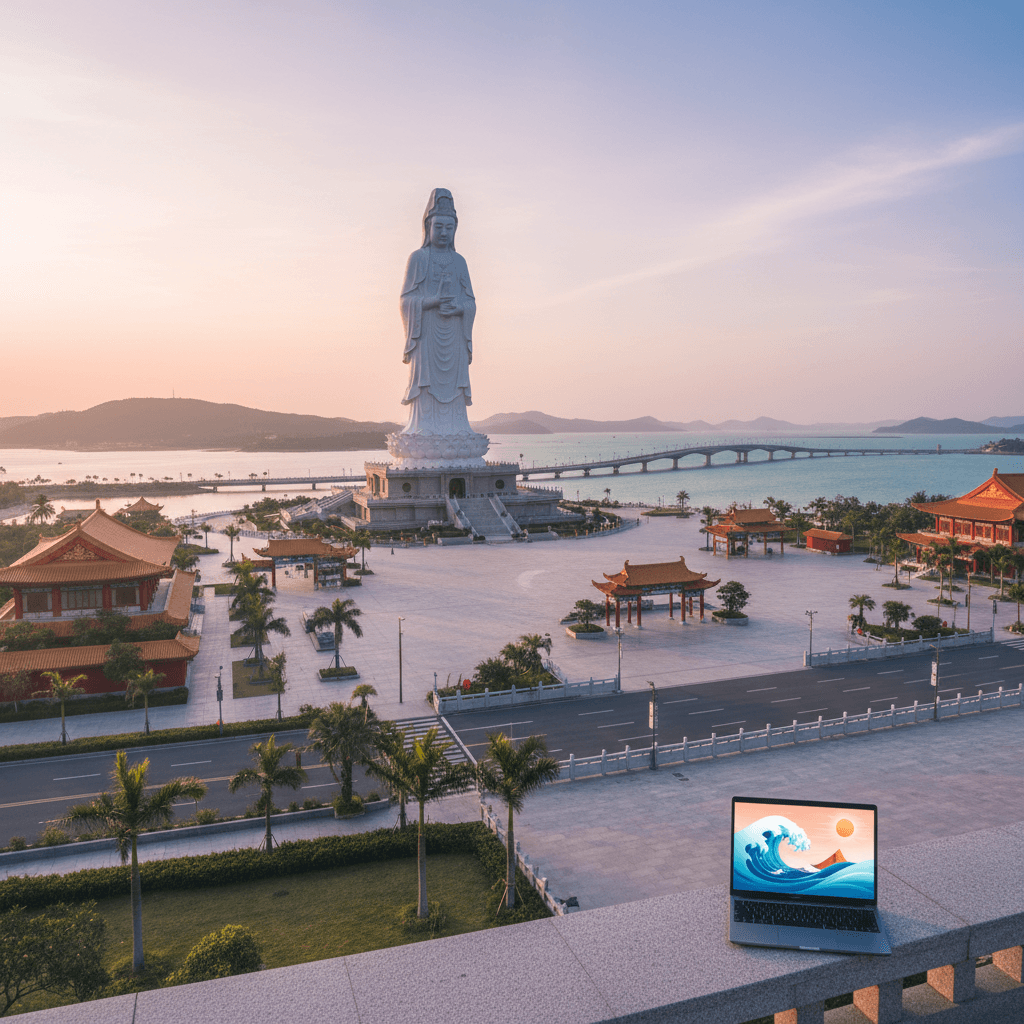
Sanya
🇨🇳 China